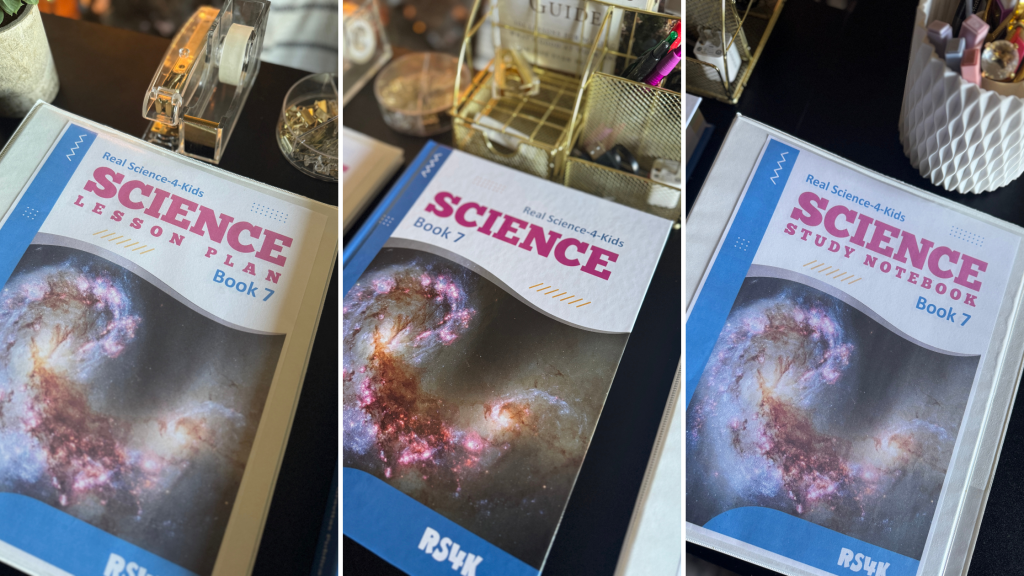
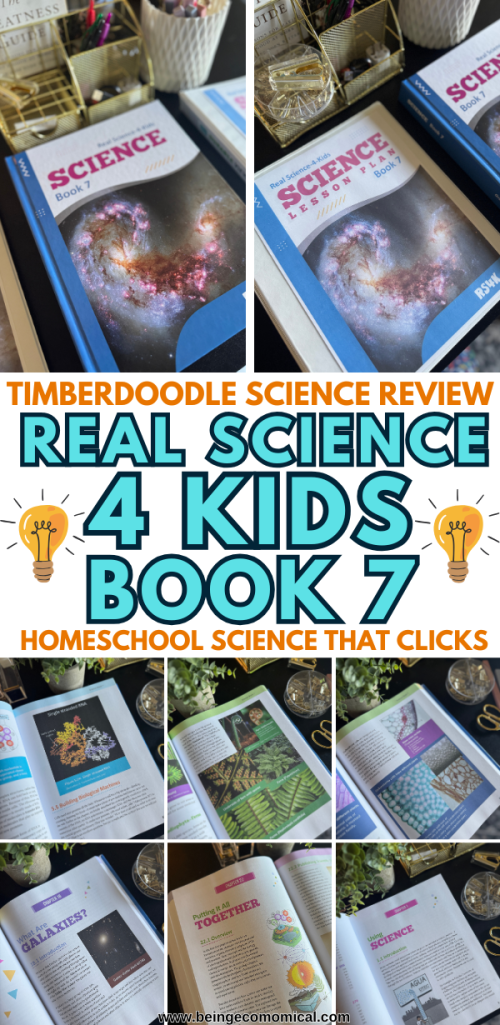
If you’re looking for a middle school science program that actually makes sense — both for you as the teacher and for your child — Real Science 4 Kids Book 7 might be the answer. We’ve been using it through Timberdoodle, and it’s been such a refreshing mix of structure, curiosity, and fun.
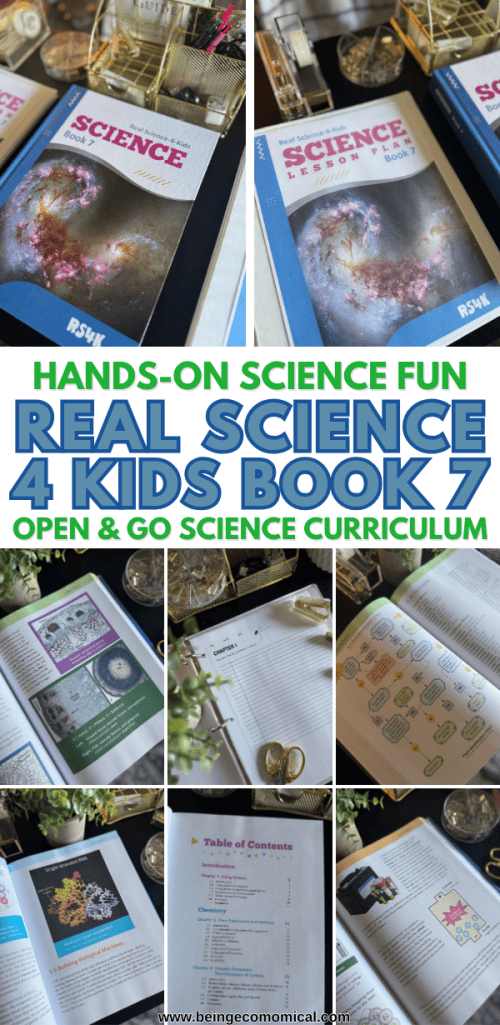
The set comes with three components:
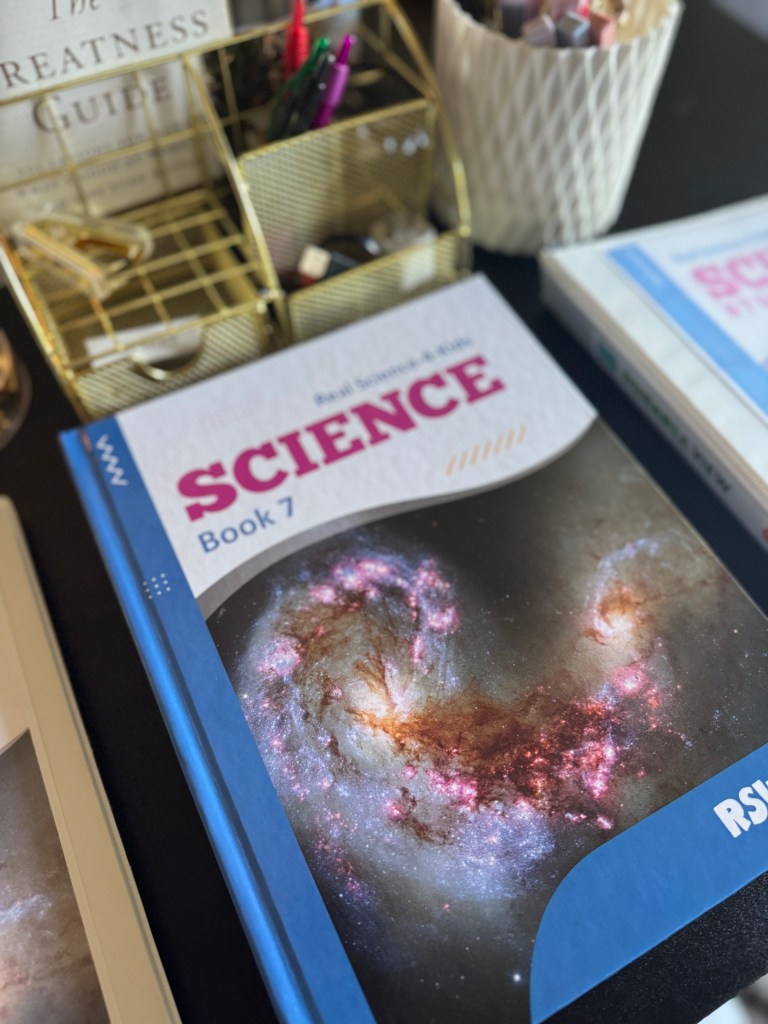
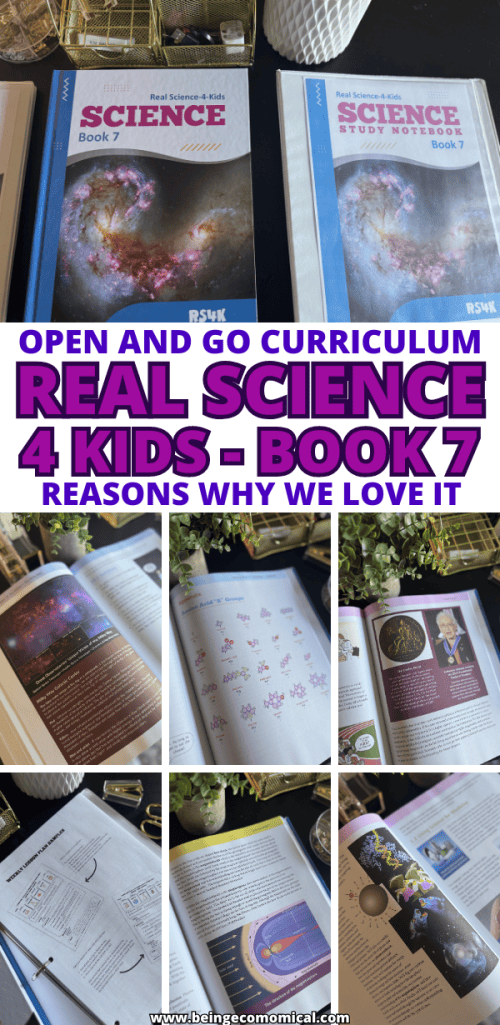
- The Textbook — clear, colorful, and beautifully laid out.
- The Lesson Plan — tells you exactly what to do each day.
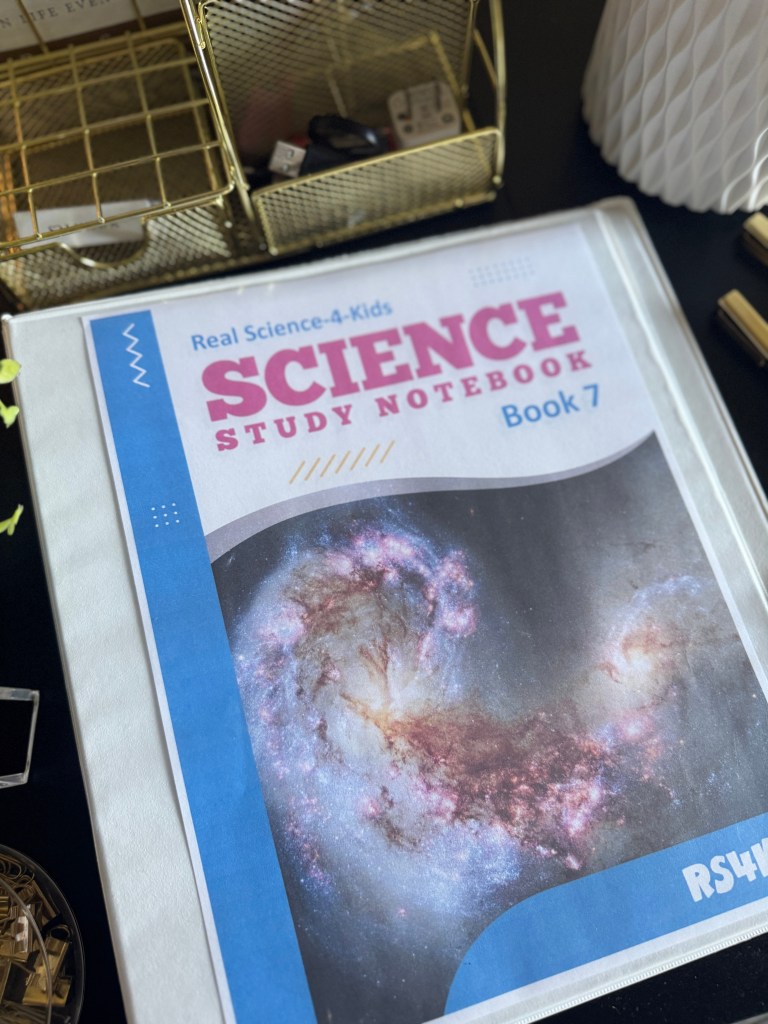
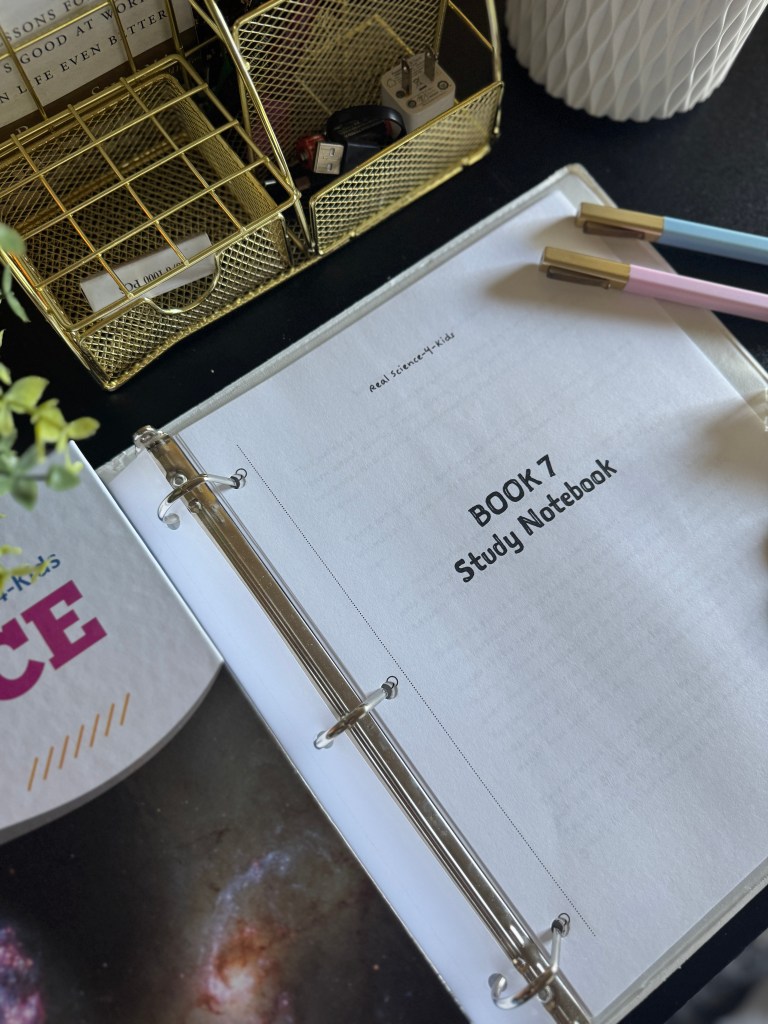
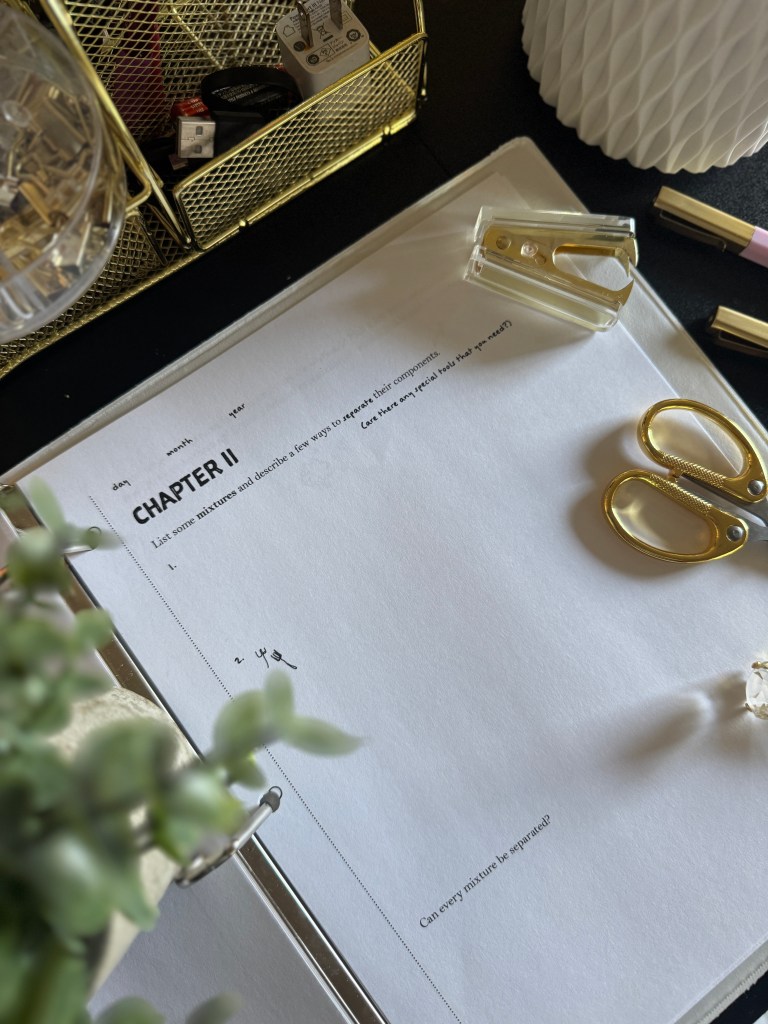
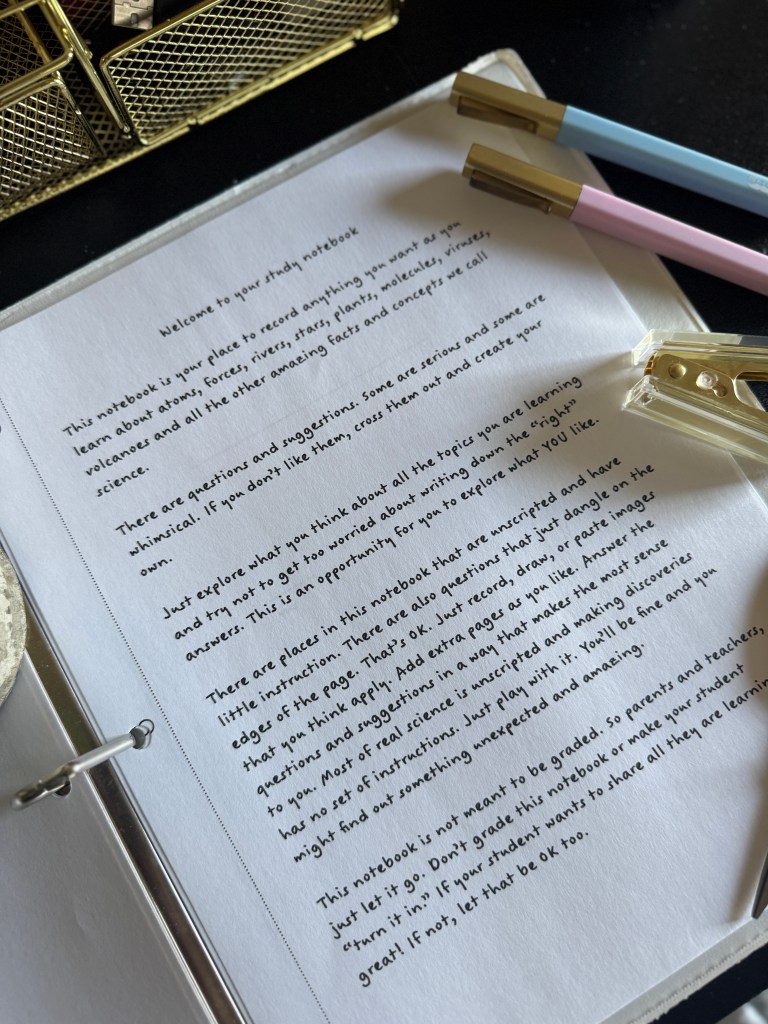
- The Study Notebook — gives your student room to write, sketch, and really absorb what they’re learning.
As a homeschool mom juggling multiple grades, I really appreciate how easy RS4K makes it to stay on track without needing to over-plan. Everything connects — from reading to experiments — and it’s written in a way that encourages genuine understanding instead of memorization.
A Peek Inside Real Science 4 Kids Book 7
One of my favorite things about Real Science 4 Kids Book 7 is how clearly everything is laid out. The Table of Contents alone shows just how balanced and well-rounded this program is — it’s not just chemistry or biology, it’s a full year of integrated science.
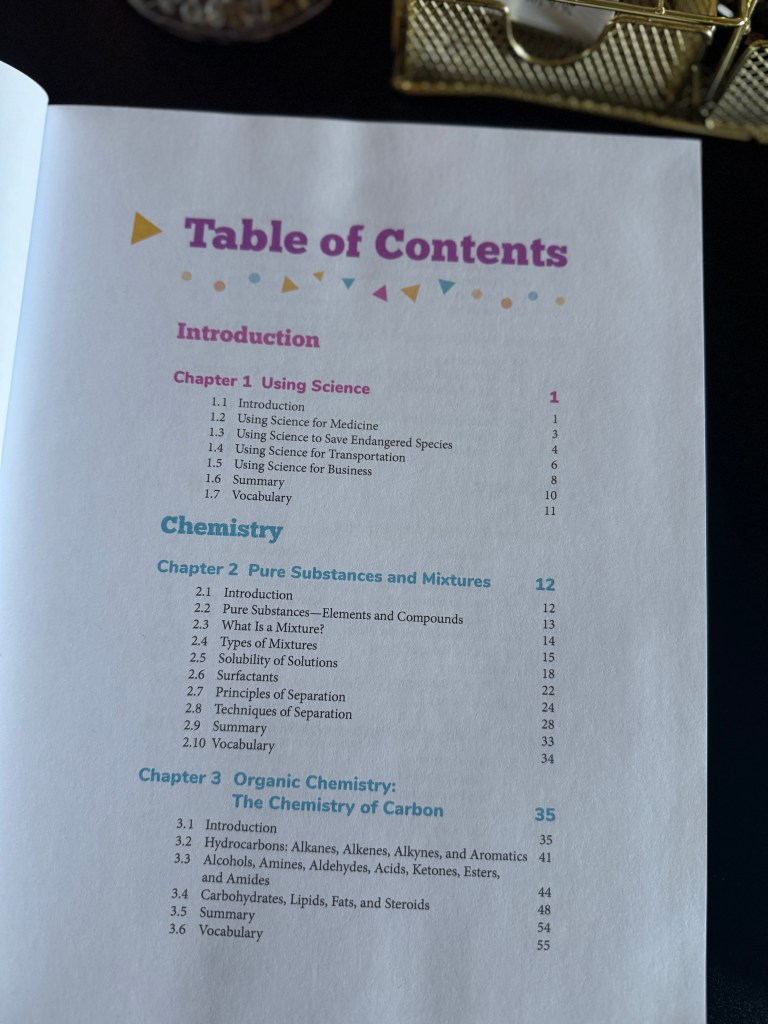
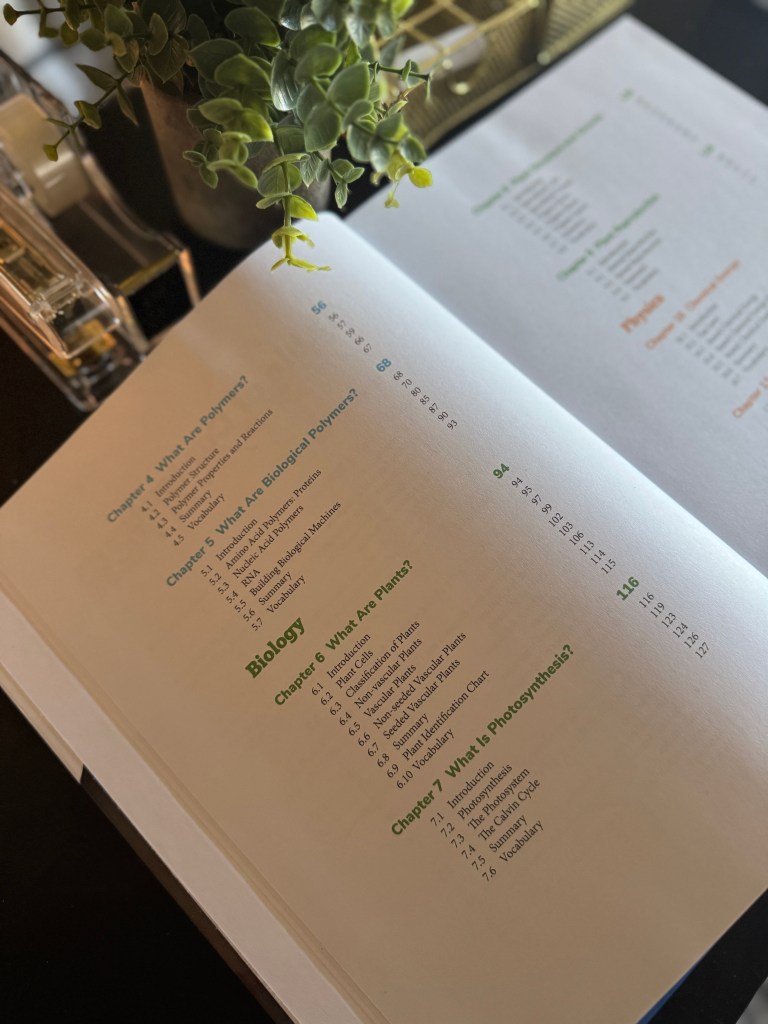
Each section flows beautifully into the next, introducing topics in a way that builds real understanding rather than surface-level memorization. You can tell it was written by someone who understands how kids think — curious, literal, and full of wonder.
The book is divided into five major branches of science:
Chemistry — starting with pure substances and mixtures, then exploring organic chemistry and polymers.
Biology — diving into plants, photosynthesis, and how life sustains itself.
Physics — covering everything from energy and electrostatics to magnetism and motion.
Geology — exploring Earth’s systems, the hydrosphere, and the biosphere.
Astronomy — ending the year with galaxies, our Milky Way, and the universe as a whole.
What I love most is that it reads in a way that feels approachable. Each chapter includes short summaries and vocabulary sections that make it easy to review or discuss together — perfect for those days when you need to simplify without losing substance.
Whether you follow the lesson plan exactly or move at your child’s pace, RS4K Book 7 gives you the flexibility to do both. It’s a complete program that fits seamlessly into a busy homeschool rhythm — especially for moms teaching multiple grades at once.
Related Posts:
Chapter 1: Using Science
Before diving into the heavier concepts, Real Science 4 Kids Book 7 begins with a chapter called Using Science — and honestly, it’s such a great way to start the year. This first chapter helps kids see that science isn’t just something that happens in a lab — it’s everywhere. From the medicine we use, to the way we grow food, to how we travel and even run businesses, science touches every part of our daily lives.
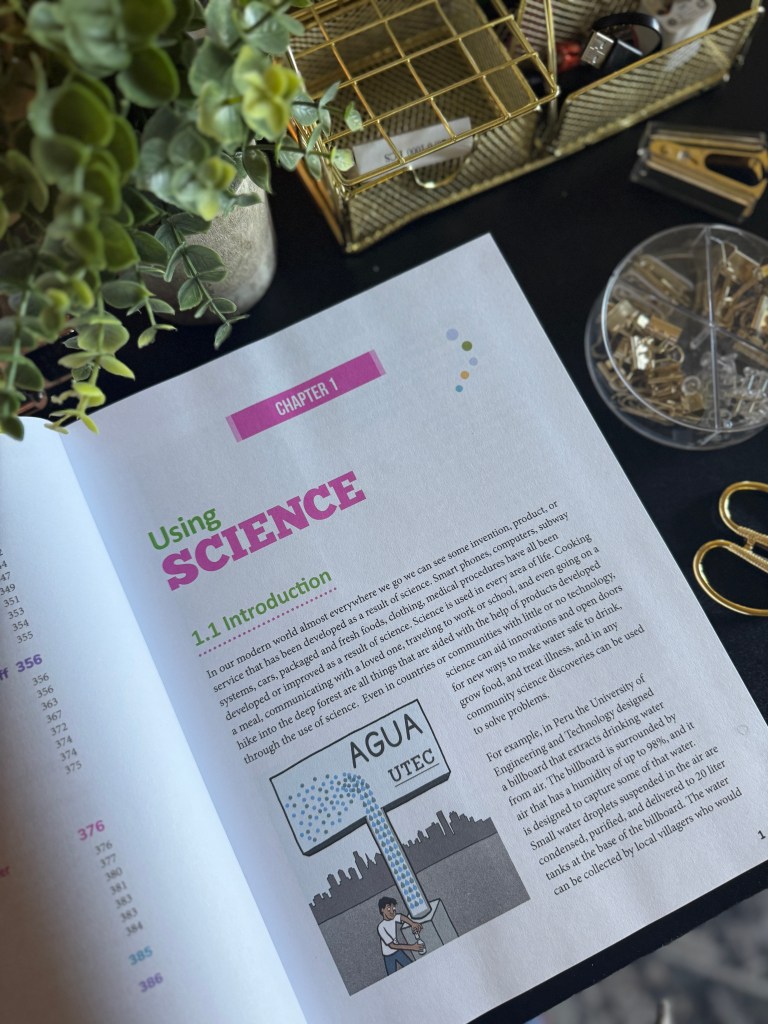
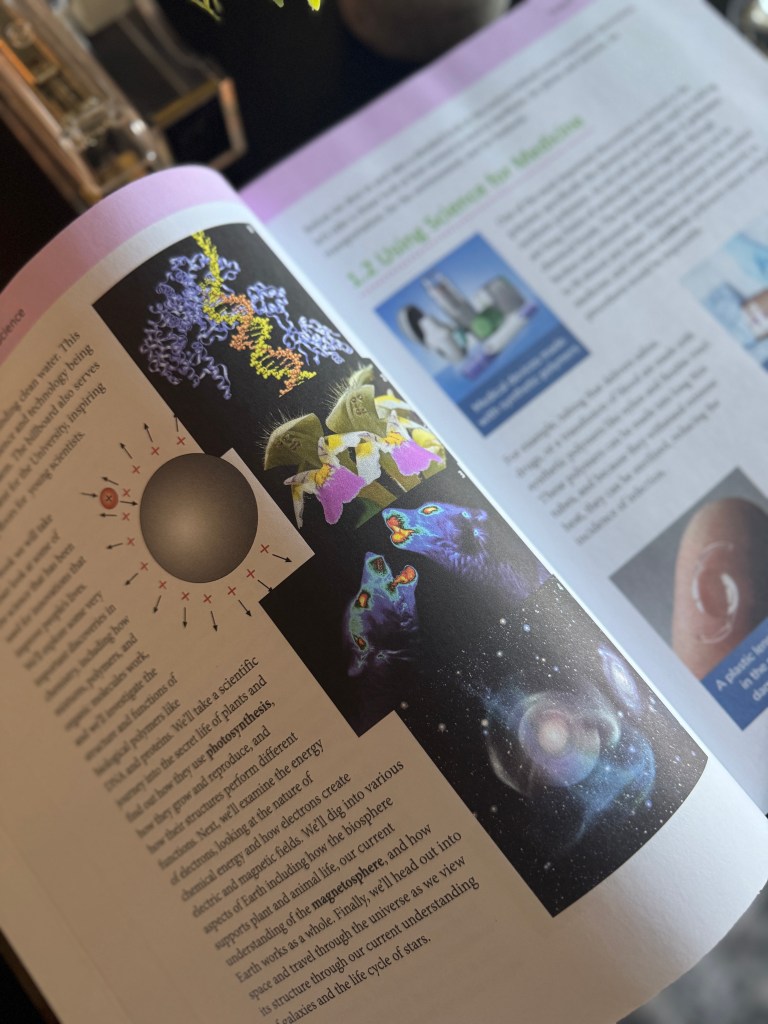
I really love how this chapter gives students a reason to care about what they’re learning. It connects the dots between what’s in the textbook and what they experience in the real world. The section on Using Science for Medicine especially stood out to my kids — showing how materials like polymers are used to make things like IV tubes, lenses, and even dentures! It made science feel tangible and purposeful.
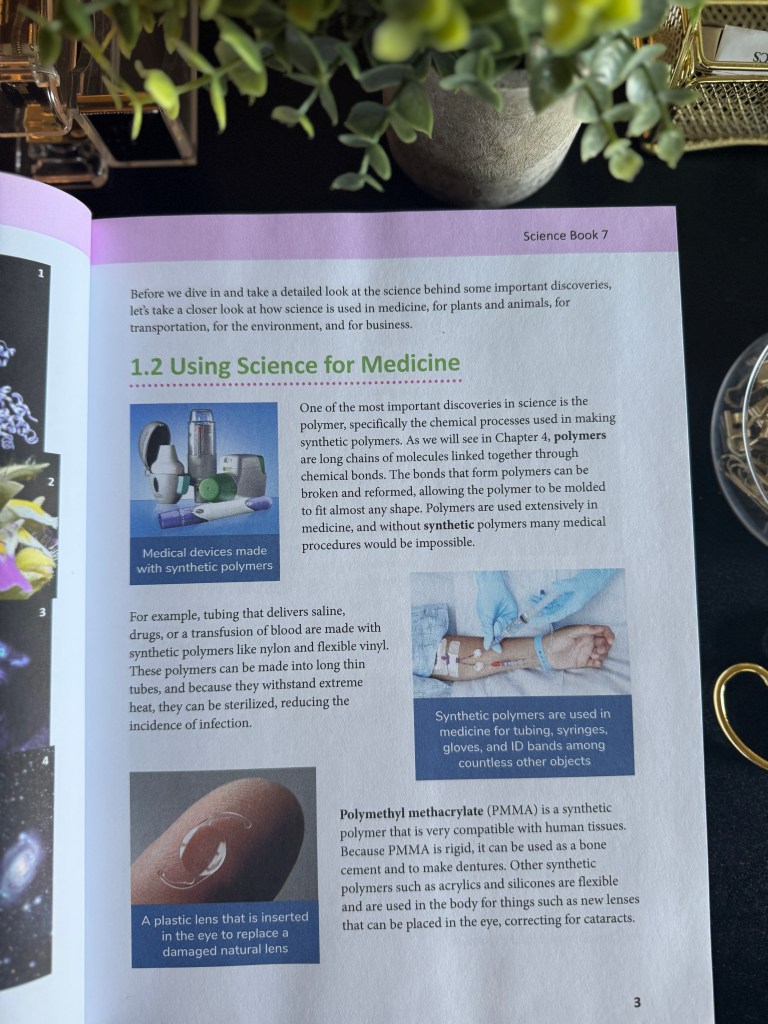
Visually, this unit is colorful, interesting, and full of examples that prompt good discussion. It sets the tone for the rest of the book — science as a tool for understanding and improving the world, not just memorizing facts.
Chemistry: From Mixtures to Molecules
If you’ve ever worried that chemistry might feel too abstract or overwhelming for middle school, Real Science 4 Kids Book 7 will put your mind at ease. The chemistry chapters start simple — defining pure substances and mixtures — but they’re written in such a visual and logical way that students naturally build confidence as they go.
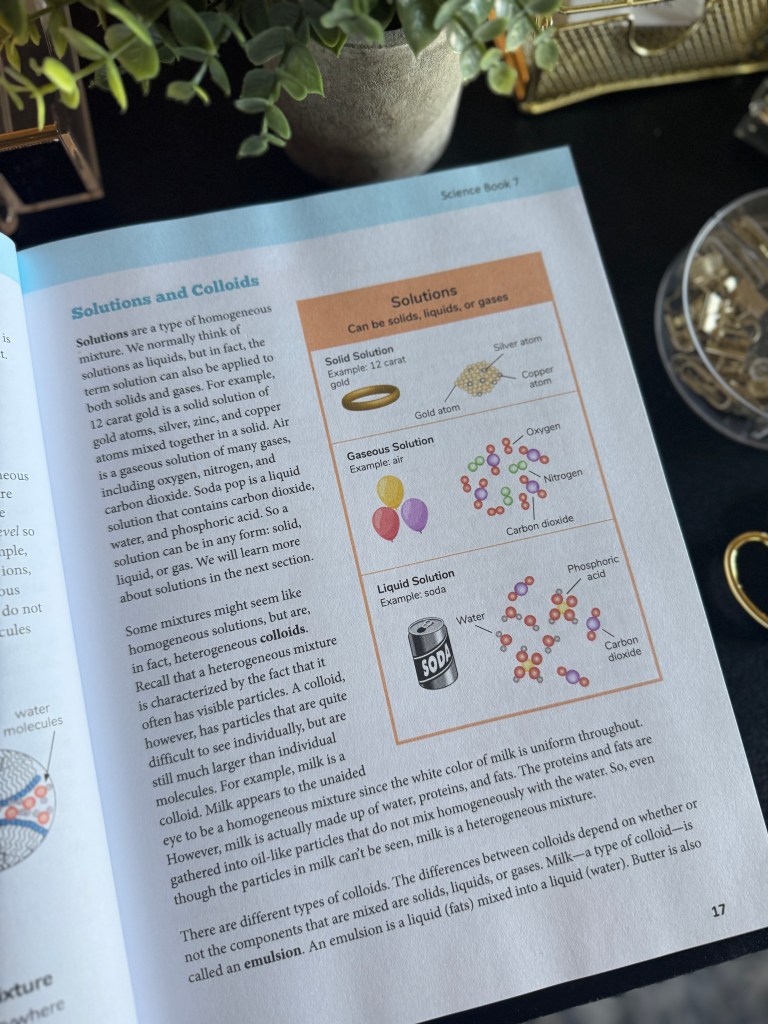
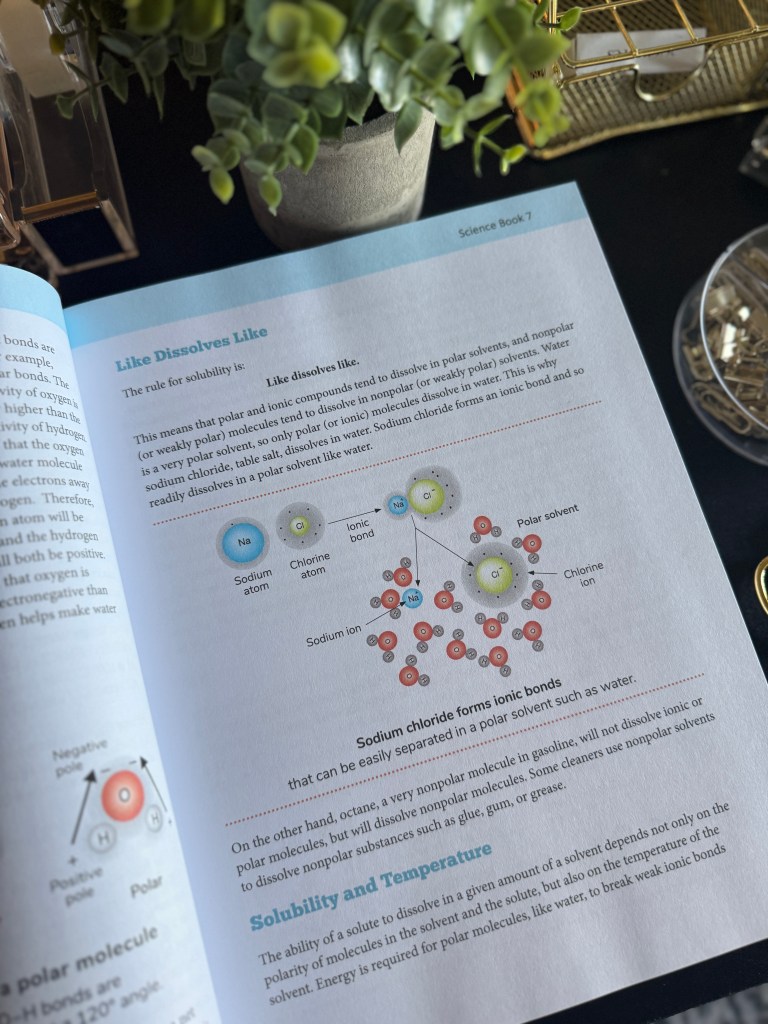
The section on Solutions and Colloids was one of our favorites. It explains that solutions aren’t just liquids — they can be solids (like 12-carat gold) or gases (like air). The colorful visuals make it so easy to see how different particles mix together. My kids especially liked the examples that connect science to everyday life — like soda, milk, and butter.
Then we moved into “Like Dissolves Like,” where the book explains why some substances dissolve and others don’t. It’s full of clear illustrations that make it easy to grasp why salt dissolves in water but oil doesn’t. This simple rule actually sets the stage for understanding real-life chemistry later on — from cooking to cleaning and even how medicines are made.
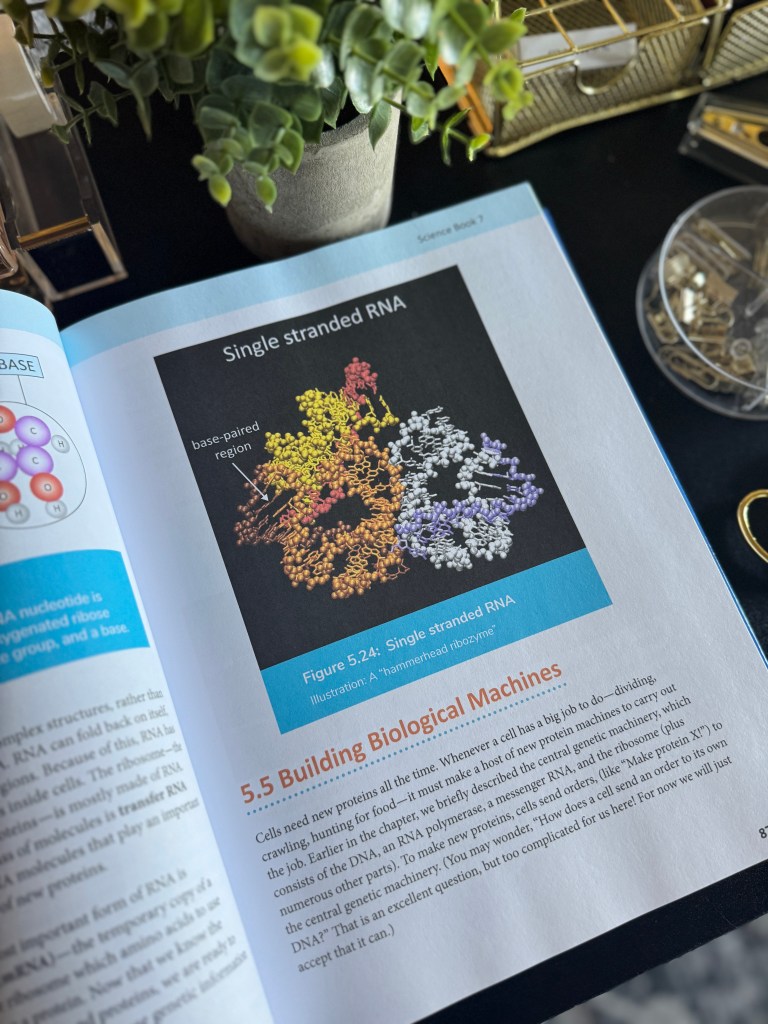
As the lessons progress, they transition smoothly into organic chemistry and biological polymers — showing how chemistry connects to biology and the way life actually functions. One of the later pages, titled “Building Biological Machines,” blew us away with how beautifully it explains RNA and proteins. It’s advanced material, but the writing makes it accessible, almost like a conversation instead of a lecture.
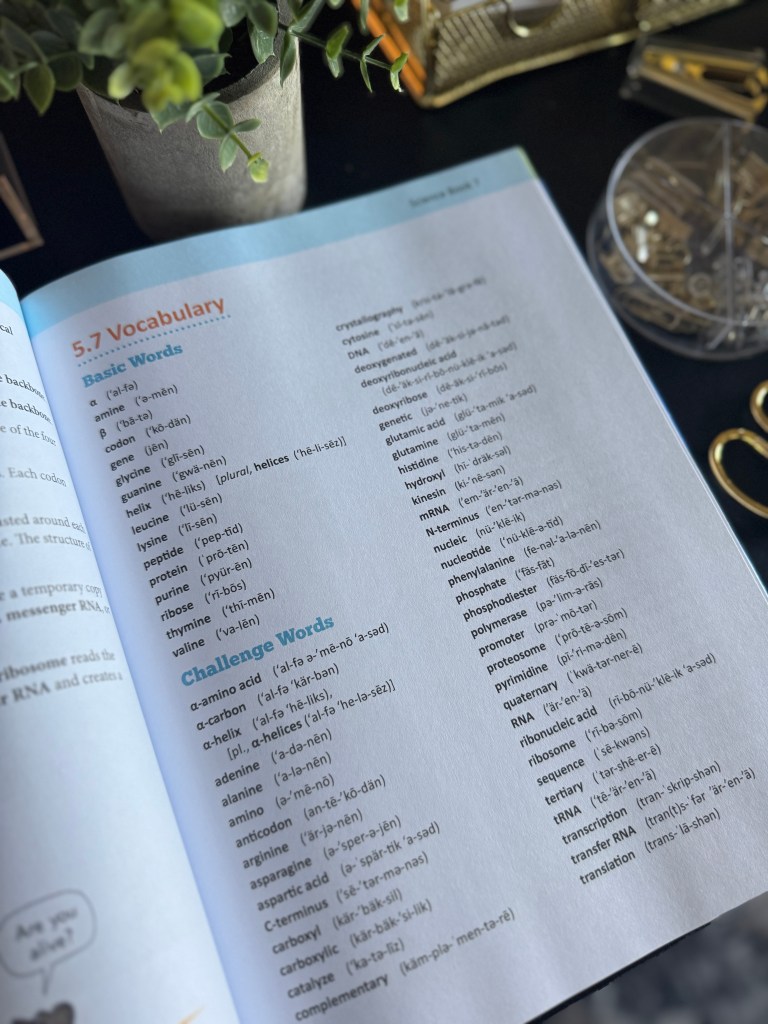
Even the vocabulary section feels helpful rather than intimidating. Each word is broken down by pronunciation and meaning — so instead of feeling lost, students are empowered to actually use these scientific terms confidently.
This is where RS4K really shines: it’s rigorous enough to prepare middle schoolers for high school science, but still gentle and engaging enough to fit a family-style homeschool rhythm. It’s science that feels alive, connected, and achievable.
Biology: Exploring the Living World
The Biology chapters of Real Science 4 Kids Book 7 are absolutely beautiful — and they make learning about plants feel alive (literally!). From identifying ferns and mosses to exploring plant cells and tissues under the microscope, this section is full of detail yet totally approachable for middle schoolers.
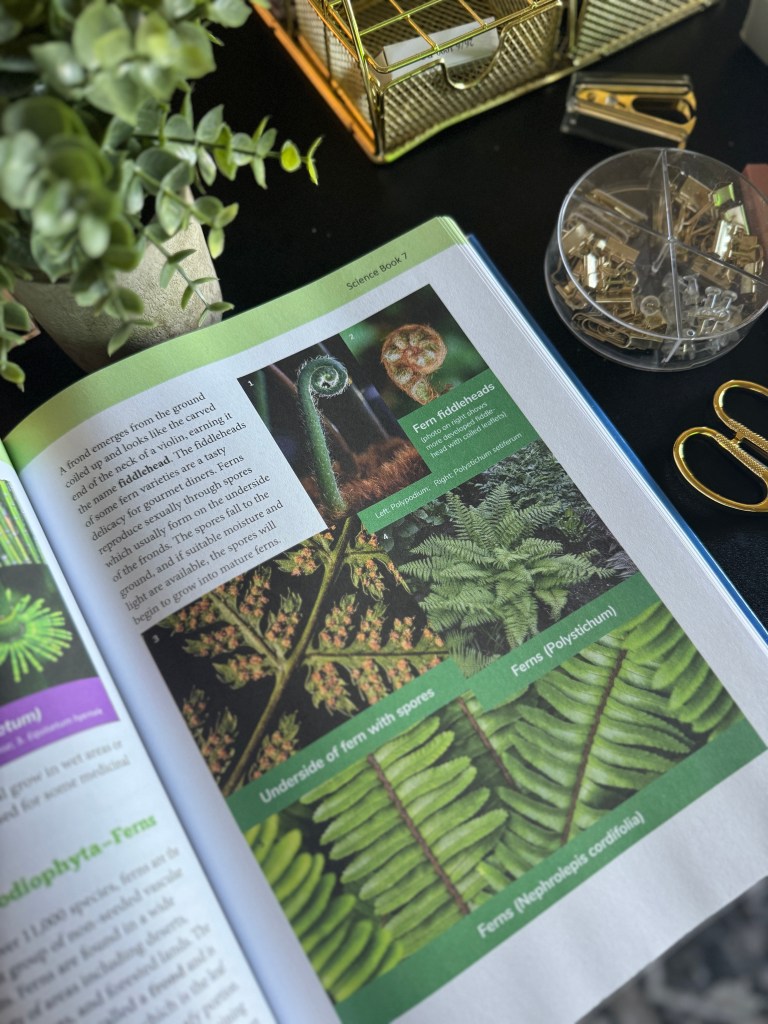
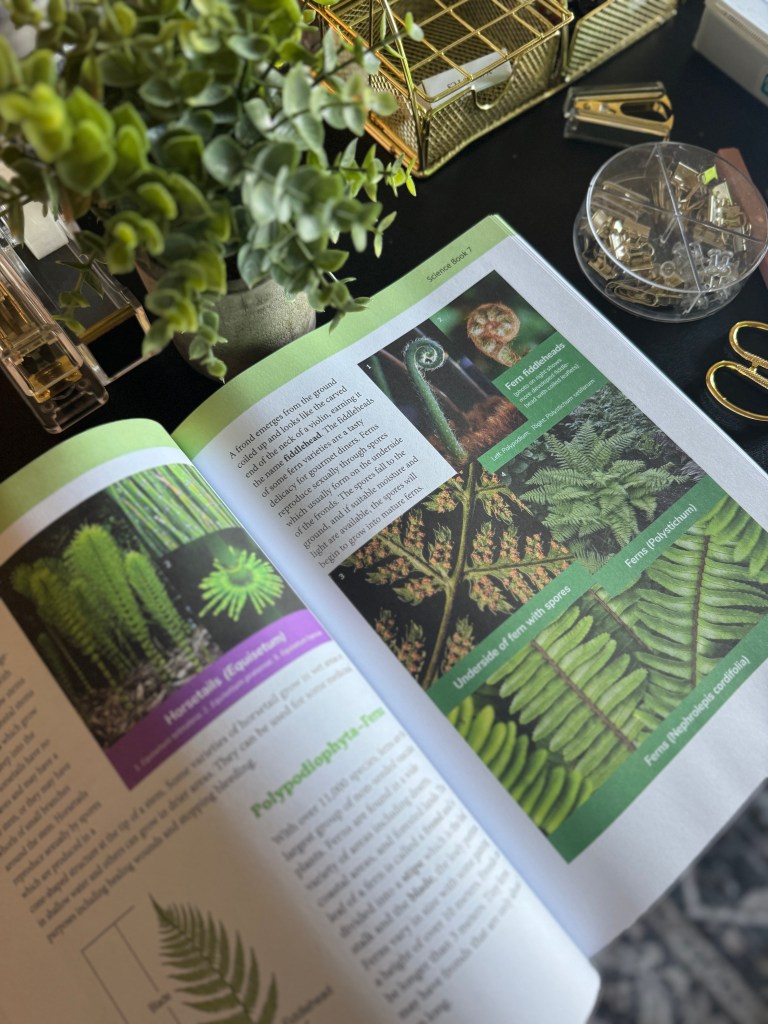
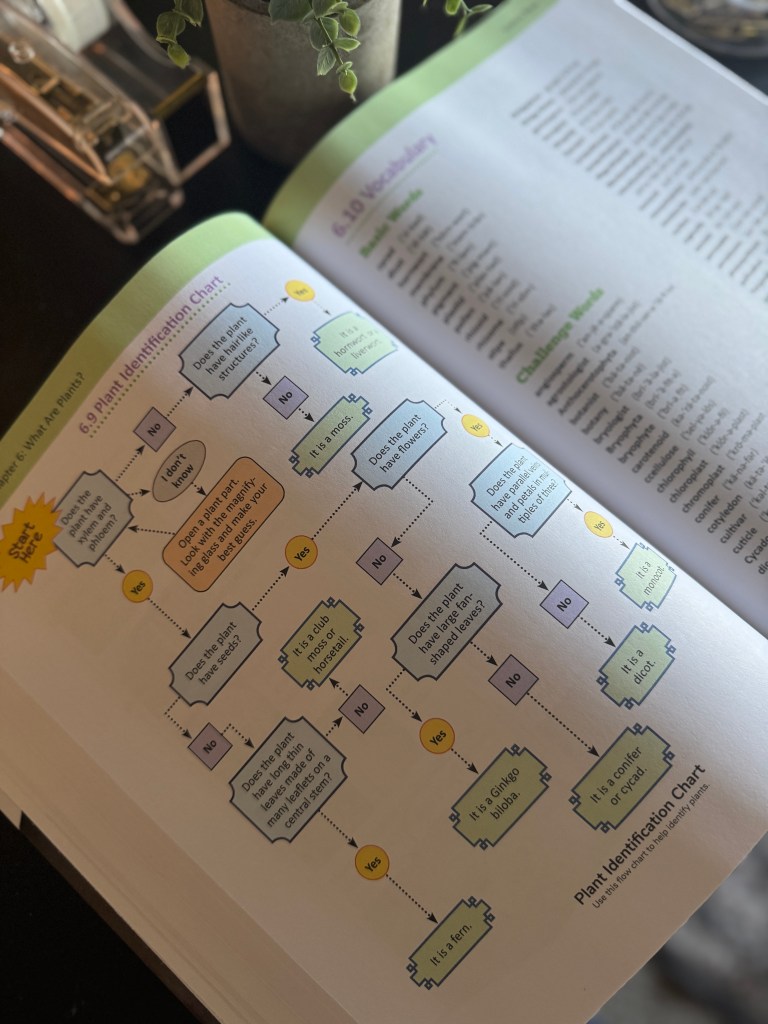
The photos and diagrams are vibrant and clear — my kids loved flipping through the close-up shots of fern fiddleheads, spores, and vascular tissues. It’s the kind of visual science that inspires curiosity without overwhelming them. The Plant Identification Chart might just be my favorite part — it walks students through a series of “yes” and “no” questions that help them identify a plant step-by-step. It feels like a real-life science adventure they can use outside on nature walks.
What’s great about this unit is that it doesn’t just teach what plants are — it explains how they work. The diagrams showing collenchyma cells, xylem, and phloem tie everything together beautifully, giving kids a deeper understanding of how plants grow, transport water, and make their own food through photosynthesis.
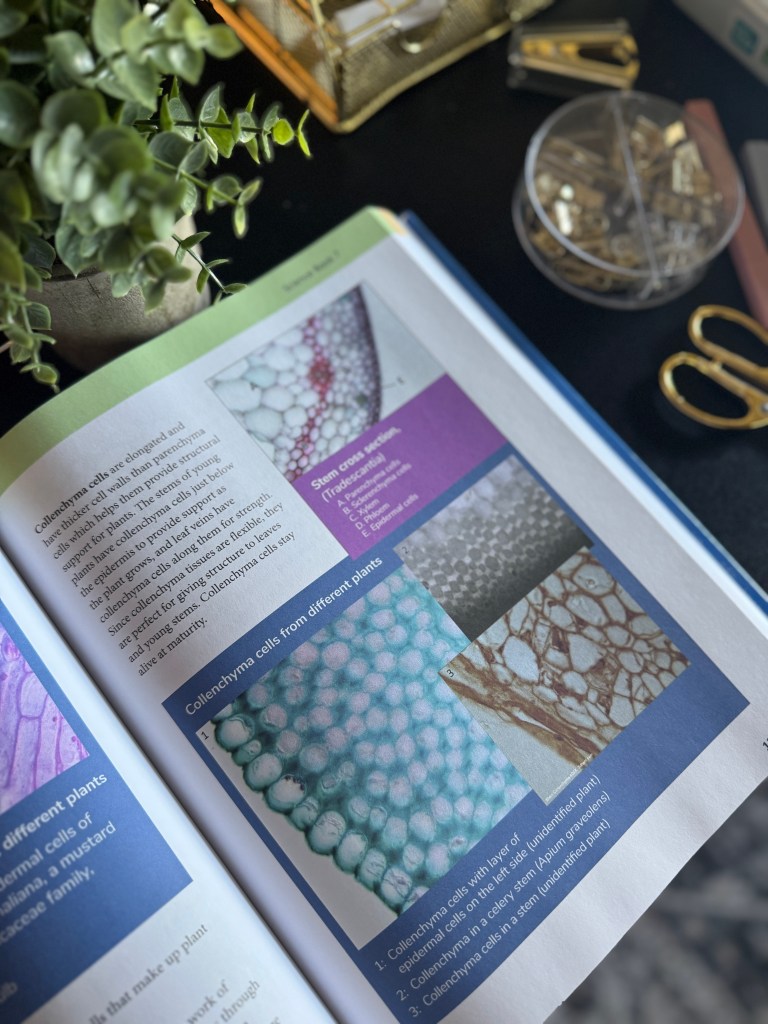
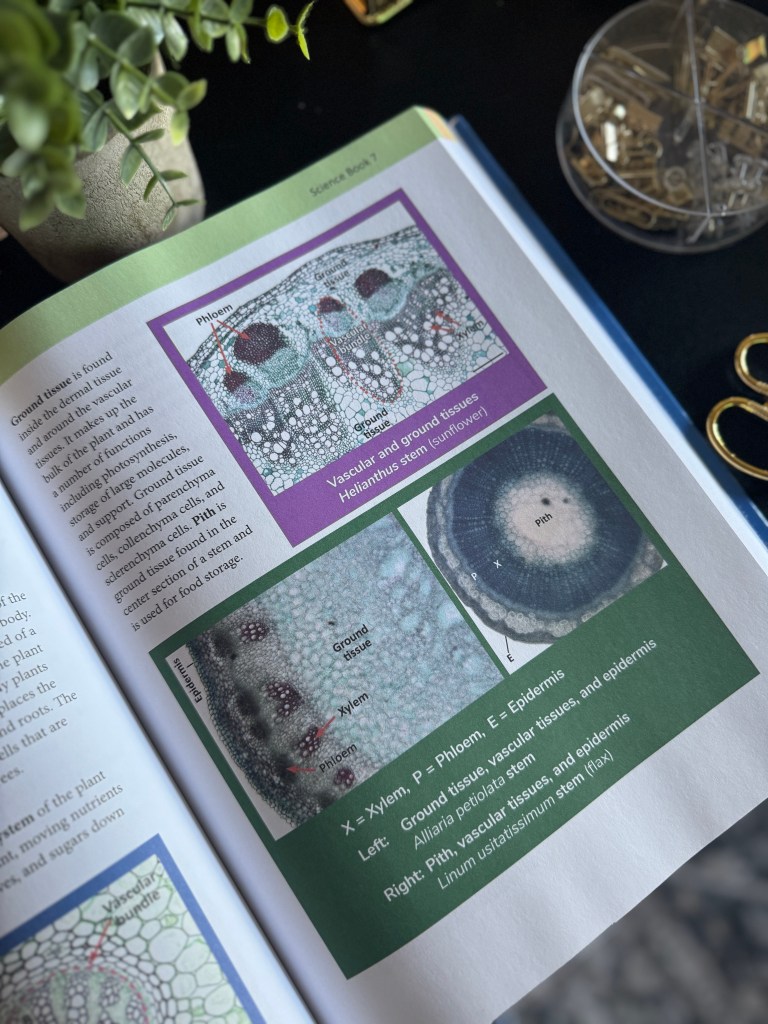
This section naturally invites hands-on learning. You can easily pair it with simple nature journaling, leaf rubbings, or microscope observations to make it even more interactive. It’s the perfect balance of textbook structure and real-world exploration — exactly what a homeschool mom needs to keep lessons engaging and stress-free.
Physics: Bringing Energy to Life
The Physics chapters in Real Science 4 Kids Book 7 are such a pleasant surprise. Instead of throwing equations and formulas at students right away, it introduces energy and electricity in a clear, approachable way that actually makes sense — even for moms who haven’t looked at a physics problem in years!
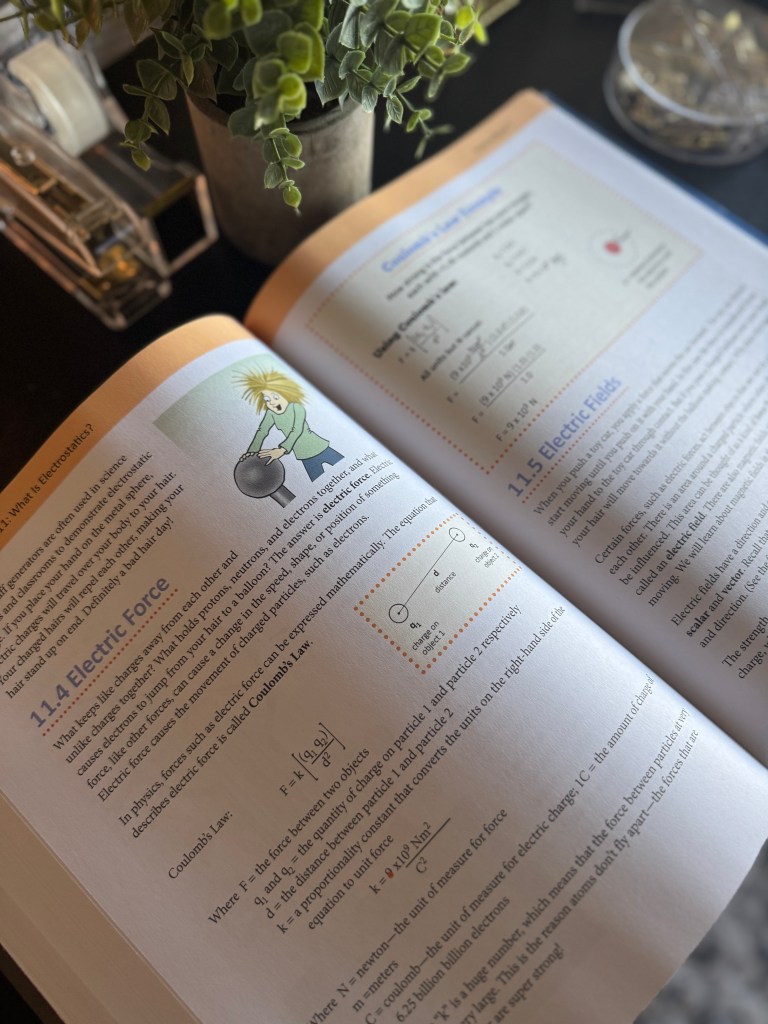
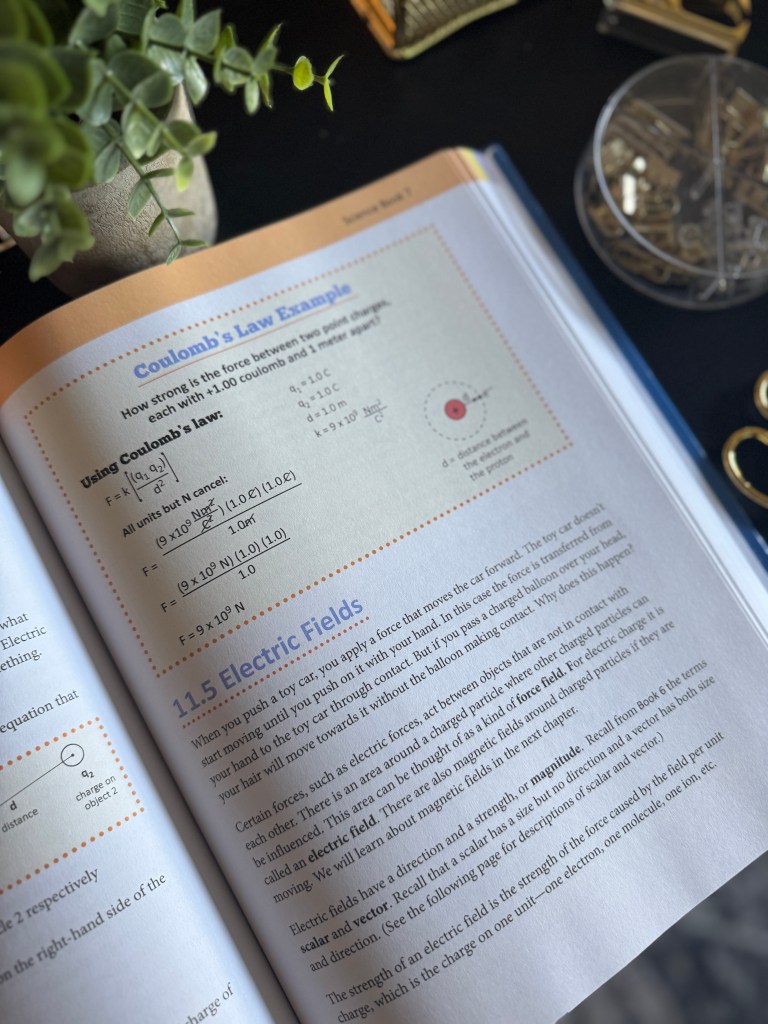
These lessons start with familiar, everyday examples — like batteries, static electricity, and electric circuits — before gradually introducing more advanced ideas like electric fields, Ohm’s Law, and magnetism. The visuals make a huge difference. You can see how the text explains what’s happening inside a battery, why electrons move from one side to the other, and how this flow of energy powers everything from flashlights to computers.
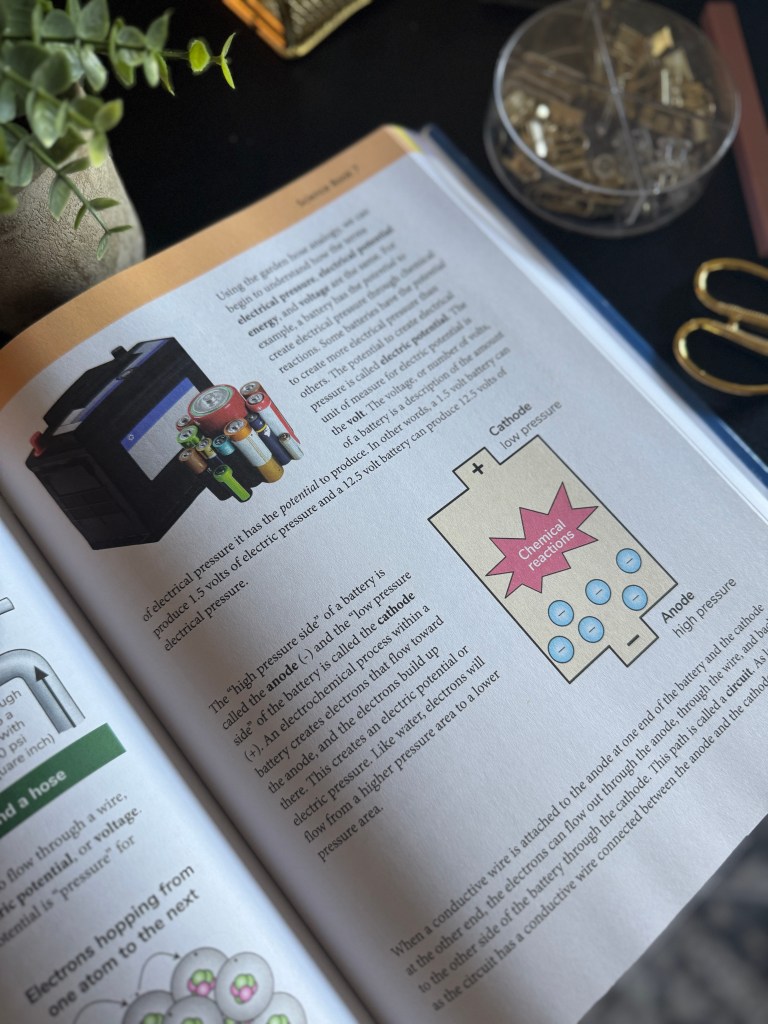
One of my kids’ favorite moments was reading about superconductors and the Japanese maglev train prototype. Seeing a photo of a train floating using magnetic force made the concept of electromagnetism instantly real — and exciting! It’s these kinds of modern-day examples that keep students engaged and remind them why science matters.
Even the sections that include math, like Coulomb’s Law, are explained step-by-step. The equations are presented alongside diagrams and short explanations that feel more like a guided story than a textbook. It’s the perfect blend of visual learning and conceptual understanding — no memorization, just genuine connection.
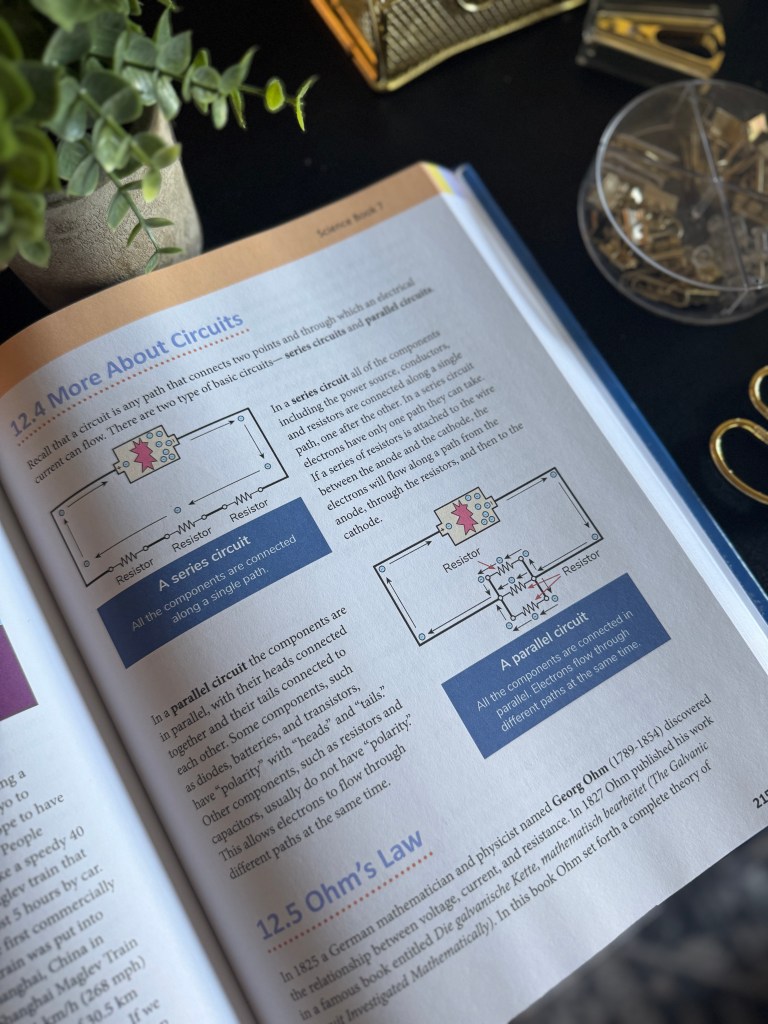
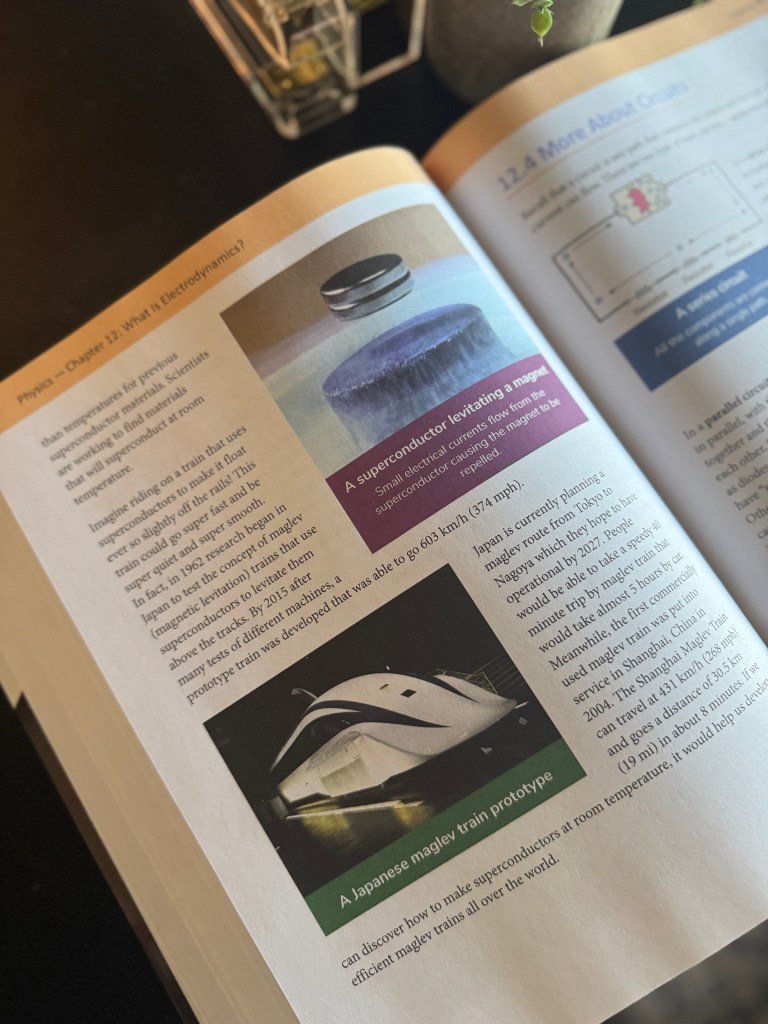
If your child is curious about how things work — how electricity flows, what makes magnets attract, or how we harness energy — this section gives them a solid foundation while sparking big-picture curiosity about engineering and technology.
Geology & Astronomy: Earth, Space, and Everything In Between
The final section of Real Science 4 Kids Book 7 ties the whole year together with a deep dive into Earth and space sciences — and it’s nothing short of stunning. These chapters feel like a natural transition from physics, showing how all those forces we just learned about (magnetism, energy, and matter) come together to shape the world and universe we live in.
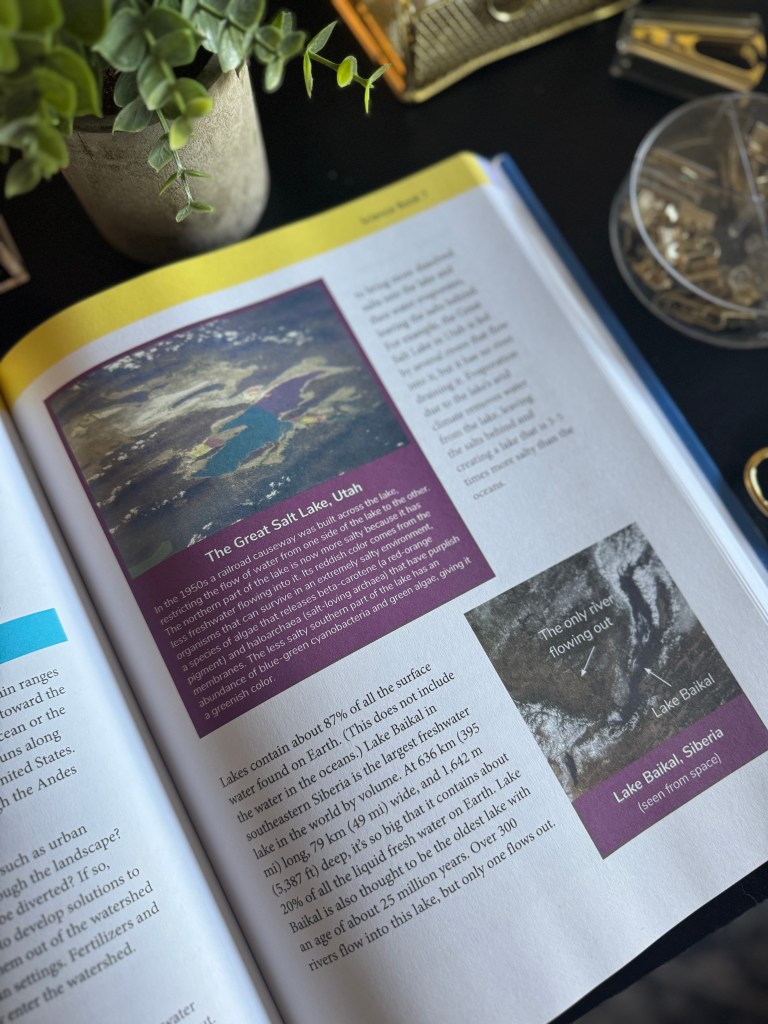
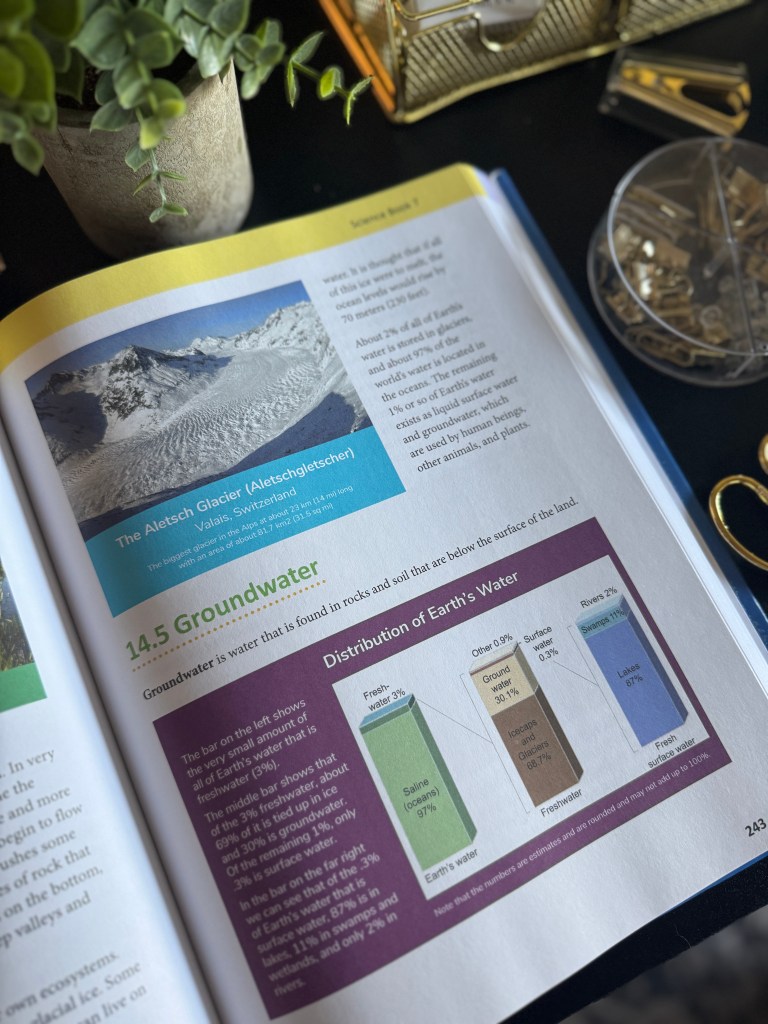
We started with Earth’s water systems, where colorful charts and real photos (like glaciers, rivers, and lakes) helped us visualize how water moves and is stored across the planet. The Distribution of Earth’s Water chart makes complex data super simple — even for younger siblings listening in. The kids were fascinated to see how little freshwater actually exists compared to the vast amount of salt water on Earth.
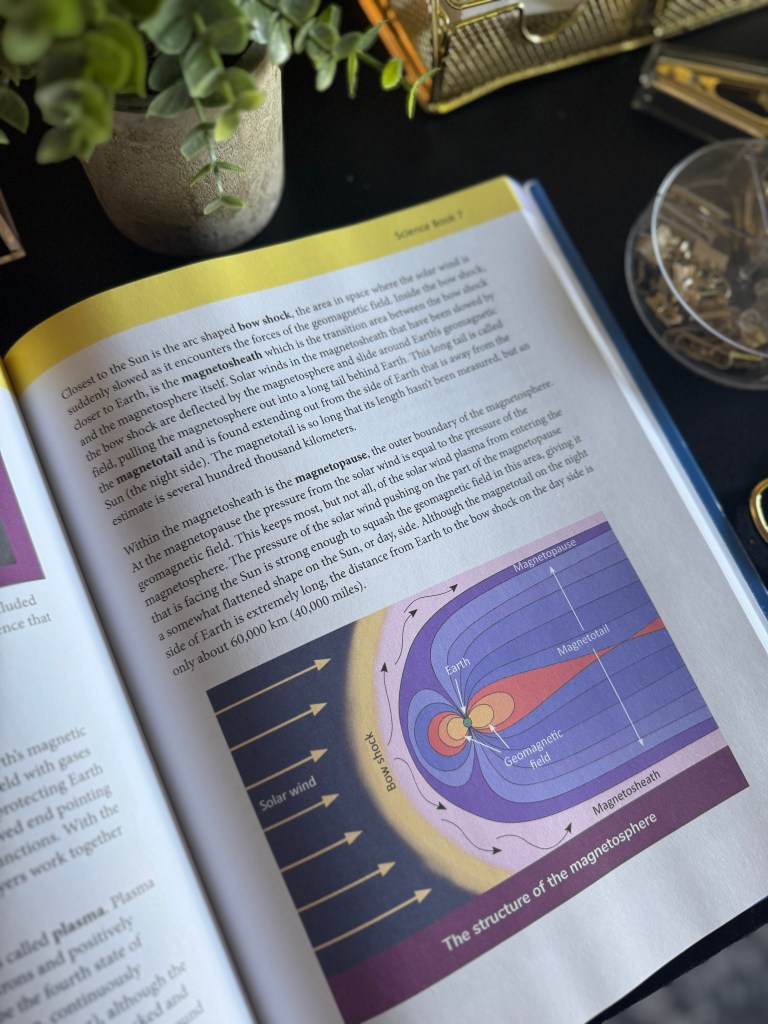
Next, the lessons explore Earth’s magnetic field and the magnetosphere, explaining how the planet protects itself from solar winds and radiation. The diagram in this section is one of the most beautiful in the entire book — it’s bold, detailed, and surprisingly easy to follow. It led us into a great conversation about space weather and how the Sun’s energy affects life on Earth.
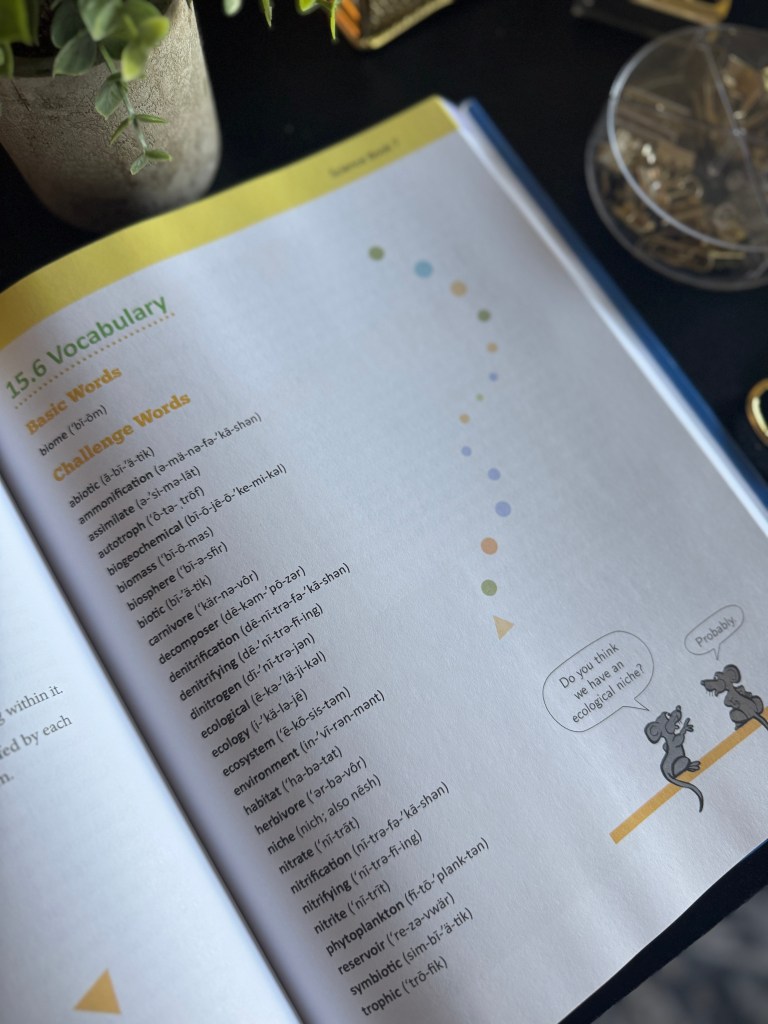
There are also real-world examples woven throughout — from the Great Salt Lake in Utah to Lake Baikal in Siberia — connecting Earth science to geography and helping students see the living, breathing planet beneath the facts. The unit finishes strong with ecology and vocabulary, bridging the gap between Earth systems and living organisms.
What I love most is how this section balances wonder with understanding. It gives middle schoolers a sense of awe about the natural world while also teaching them the science behind it — a perfect mix for homeschoolers who love hands-on learning and deep discussions.
Astronomy: From Earth to the Edge of the Universe
The final chapters of Real Science 4 Kids Book 7 take learners beyond Earth — straight into the cosmos — and it’s every bit as breathtaking as it sounds.
These lessons cover galaxies, stars, and the structure of our universe in a way that feels both awe-inspiring and doable for middle schoolers. The text introduces new terms like elliptical, lenticular, and spiral galaxies through vivid, high-quality photos that make the concepts instantly click. My kids especially loved the Milky Way diagrams — they make it so clear where our little solar system sits within the vastness of space.
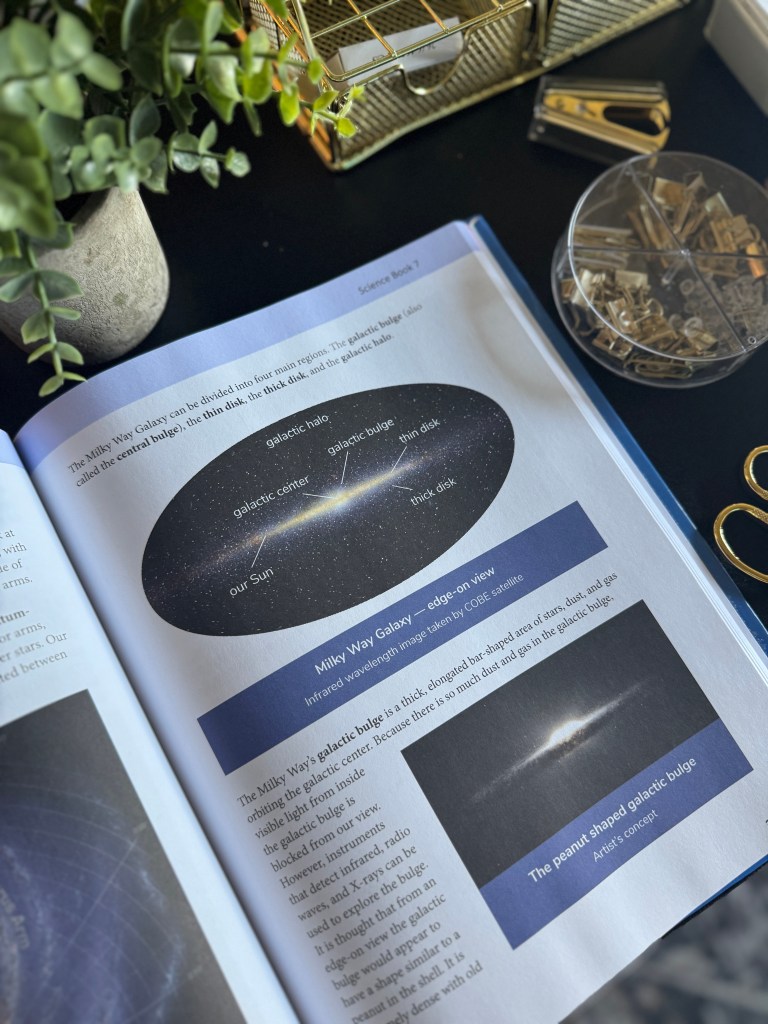
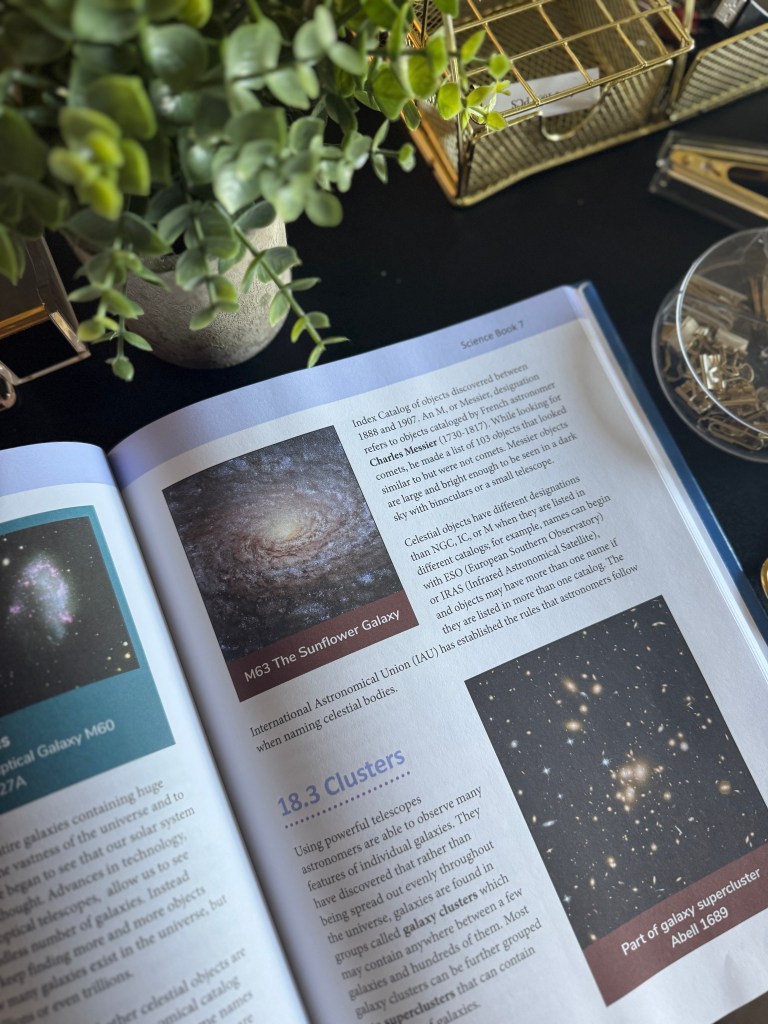
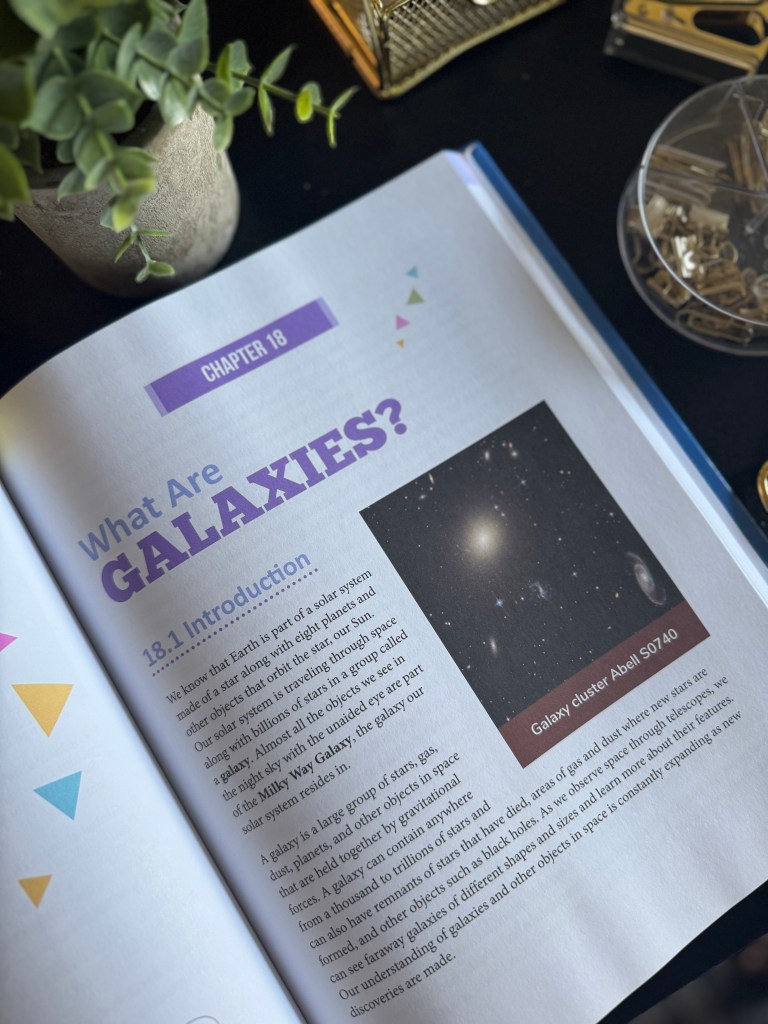
I was impressed by how math and science come together here. Activities like “Elliptical Math” and “Astronomical Math” walk students through real equations astronomers use to measure and classify galaxies and stars — all while keeping things simple enough for beginners to understand. It’s a perfect way to blend scientific curiosity with gentle exposure to advanced concepts.
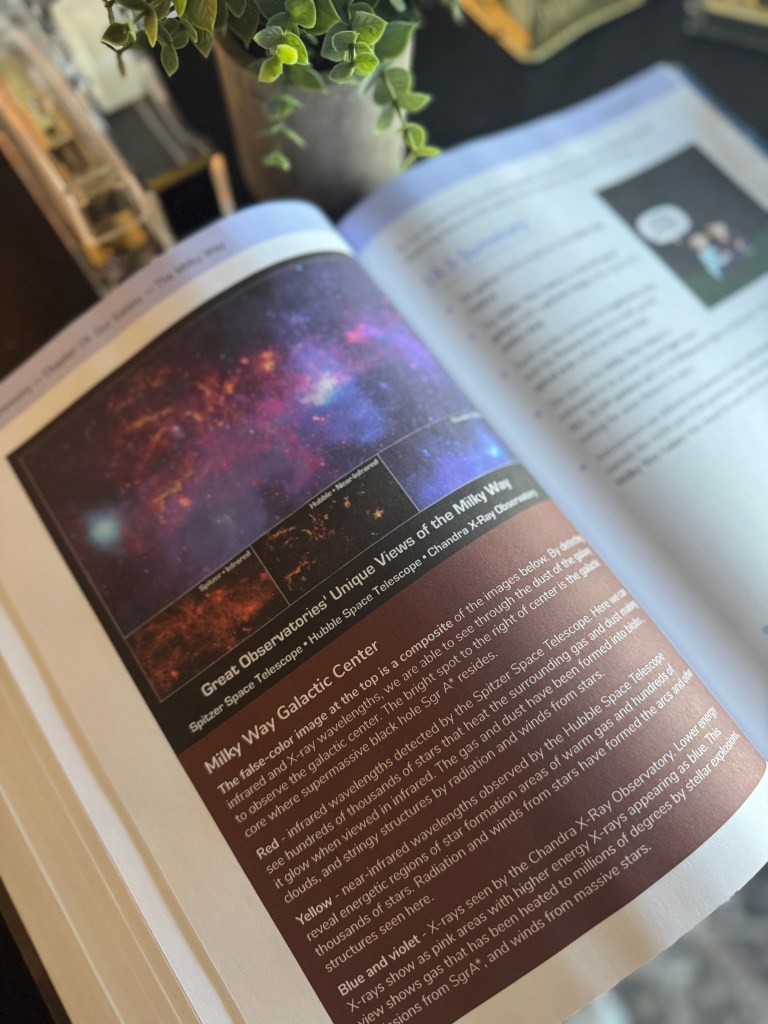
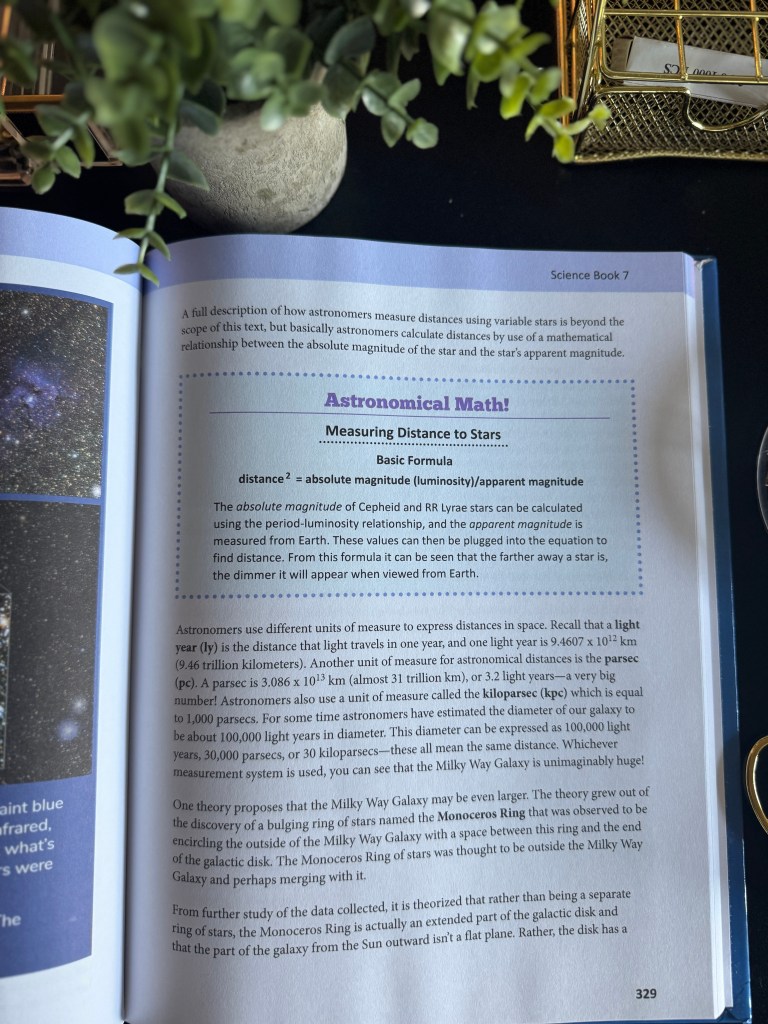
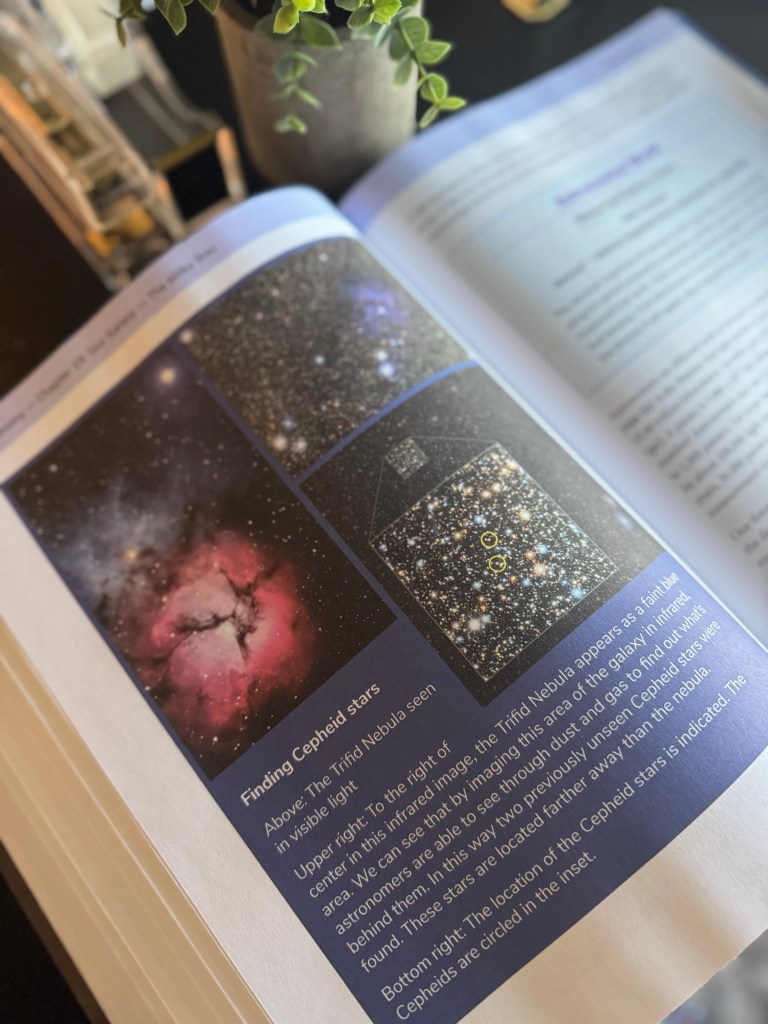
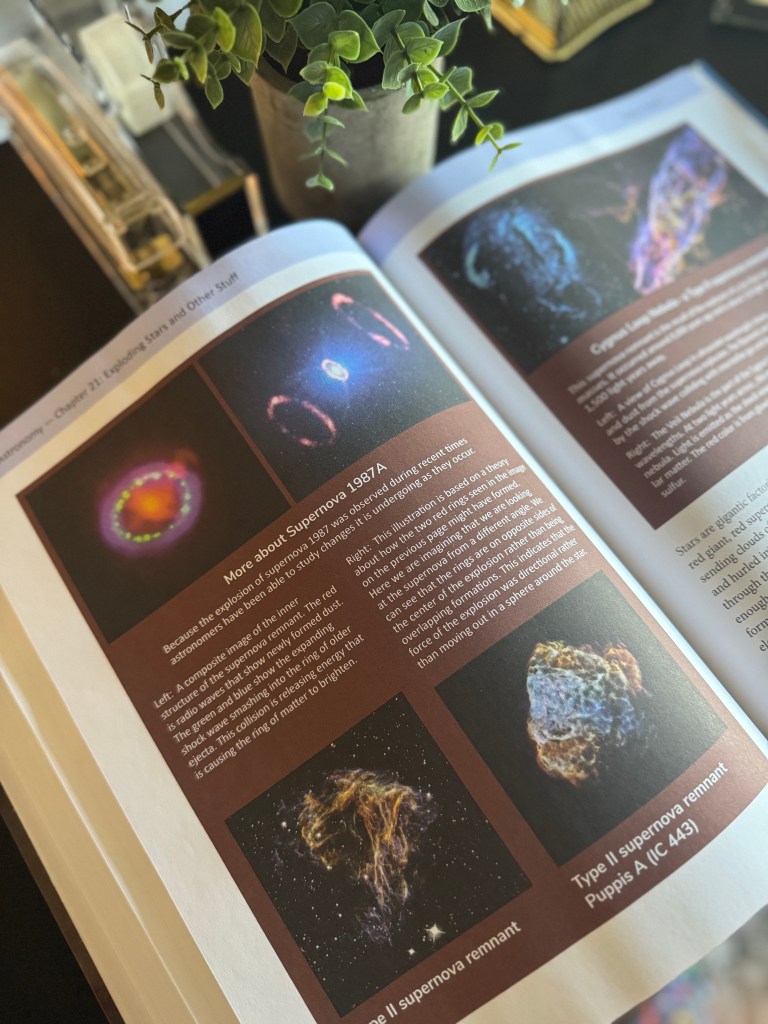
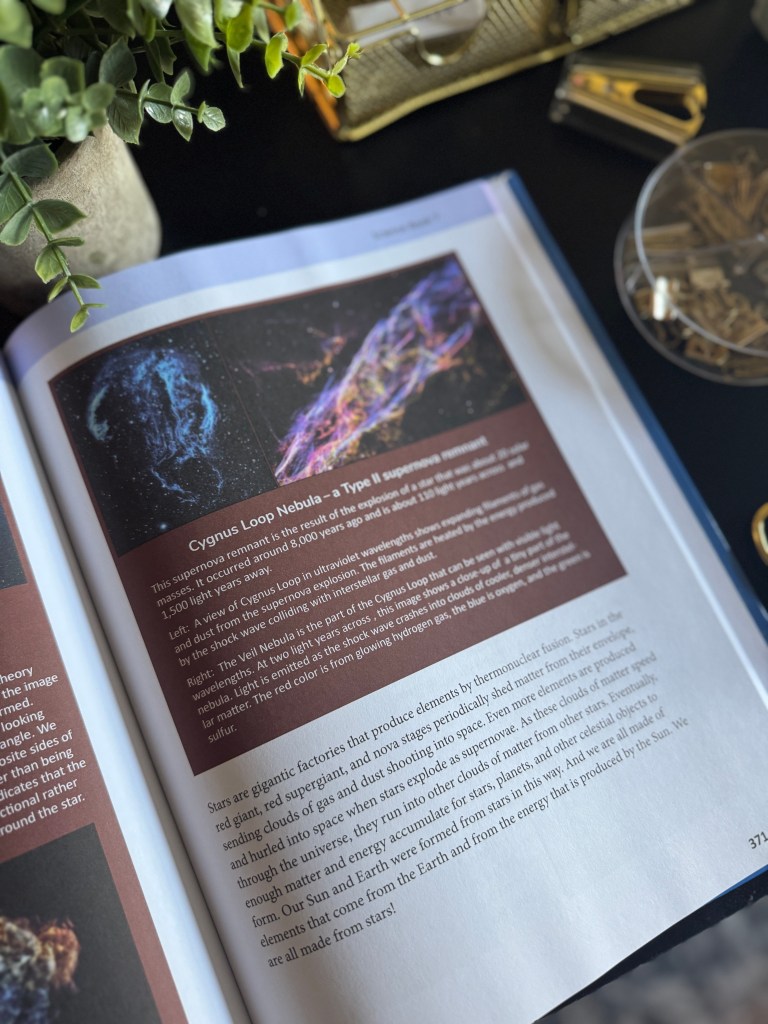
The supernova and nebula images near the end of the book are nothing short of stunning. They sparked so many questions and deep conversations in our home — like how stars explode, recycle their elements, and become the building blocks for new planets (and even life itself!). These visuals make it easy to see the connection between what happens in space and the very matter that forms everything around us.
It’s the perfect way to end the year — reminding kids that science isn’t just something we study; it’s something we’re part of.
Bringing It All Together
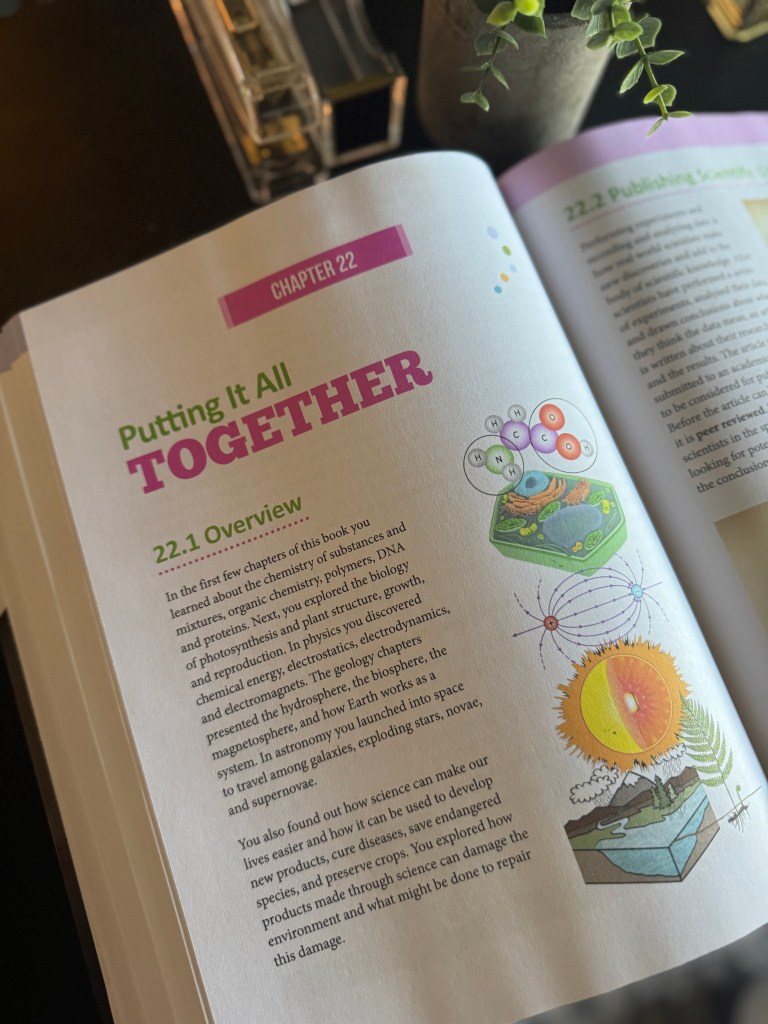
The final chapter of Real Science 4 Kids Book 7 does exactly what its title promises — it brings the entire year of science together in a way that feels meaningful, complete, and truly rewarding for both students and parents.
This section reviews everything covered throughout the book — from the building blocks of chemistry and biology to the forces of physics, systems of Earth, and mysteries of space. It’s like watching all the puzzle pieces fall into place. The illustrations and summaries help kids see how every branch of science is connected — that the same atoms we study in chemistry form the DNA we explore in biology, which powers the energy systems explained in physics, and ultimately shapes the planet and universe described in geology and astronomy.
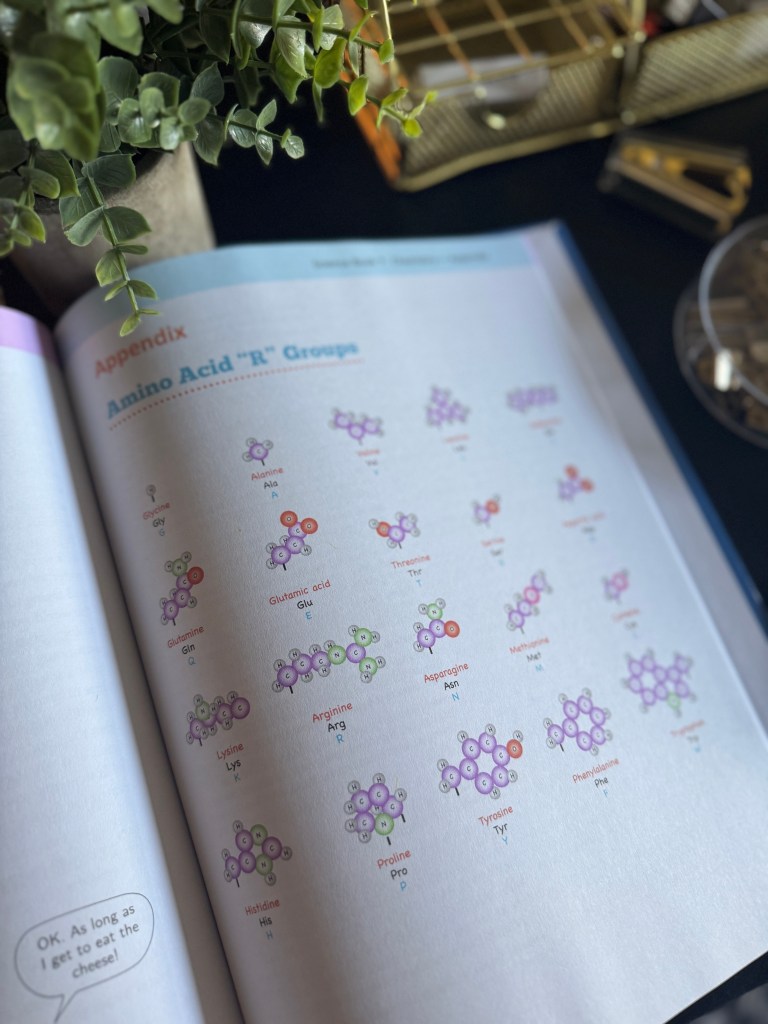
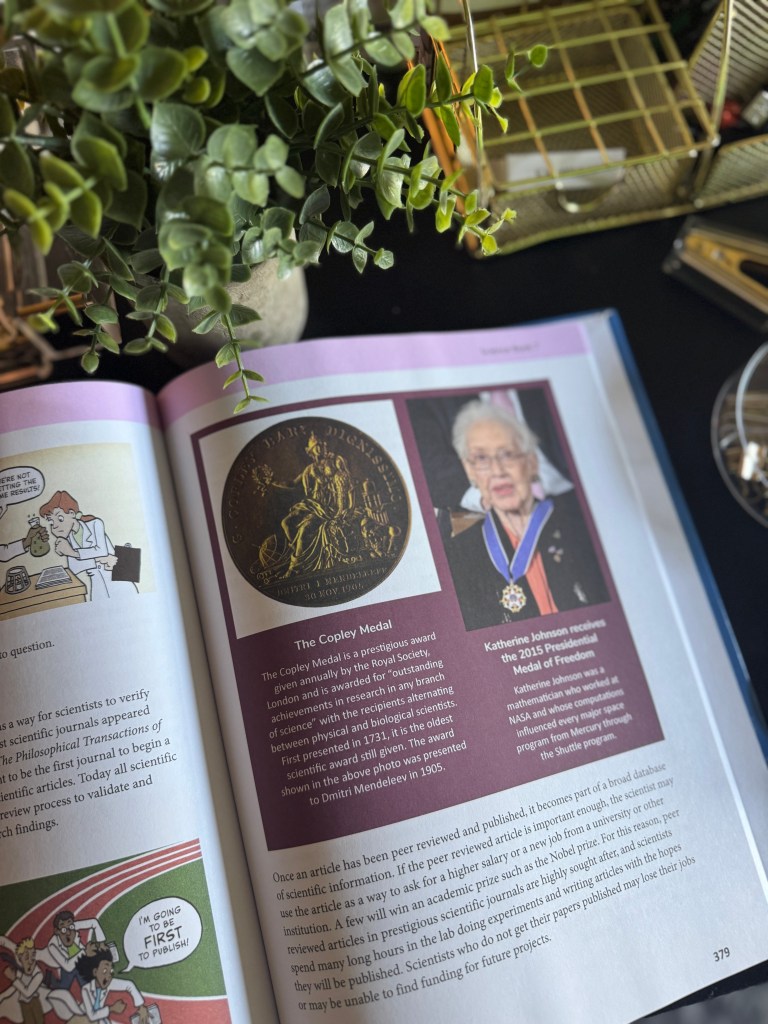
I also loved the inclusion of real-world scientific context — like the Copley Medal and Katherine Johnson’s Medal of Freedom — showing how scientific discovery isn’t just about memorizing facts, but about innovation, perseverance, and human achievement. The Amino Acid “R” Groups appendix is another wonderful touch for hands-on learners who love visuals and want to explore deeper into biochemistry.
This final unit leaves you with a sense of wonder and closure — the kind that makes kids want to keep learning, exploring, and asking questions long after the book is closed.
Final Thoughts: A Complete Homeschool Science Experience
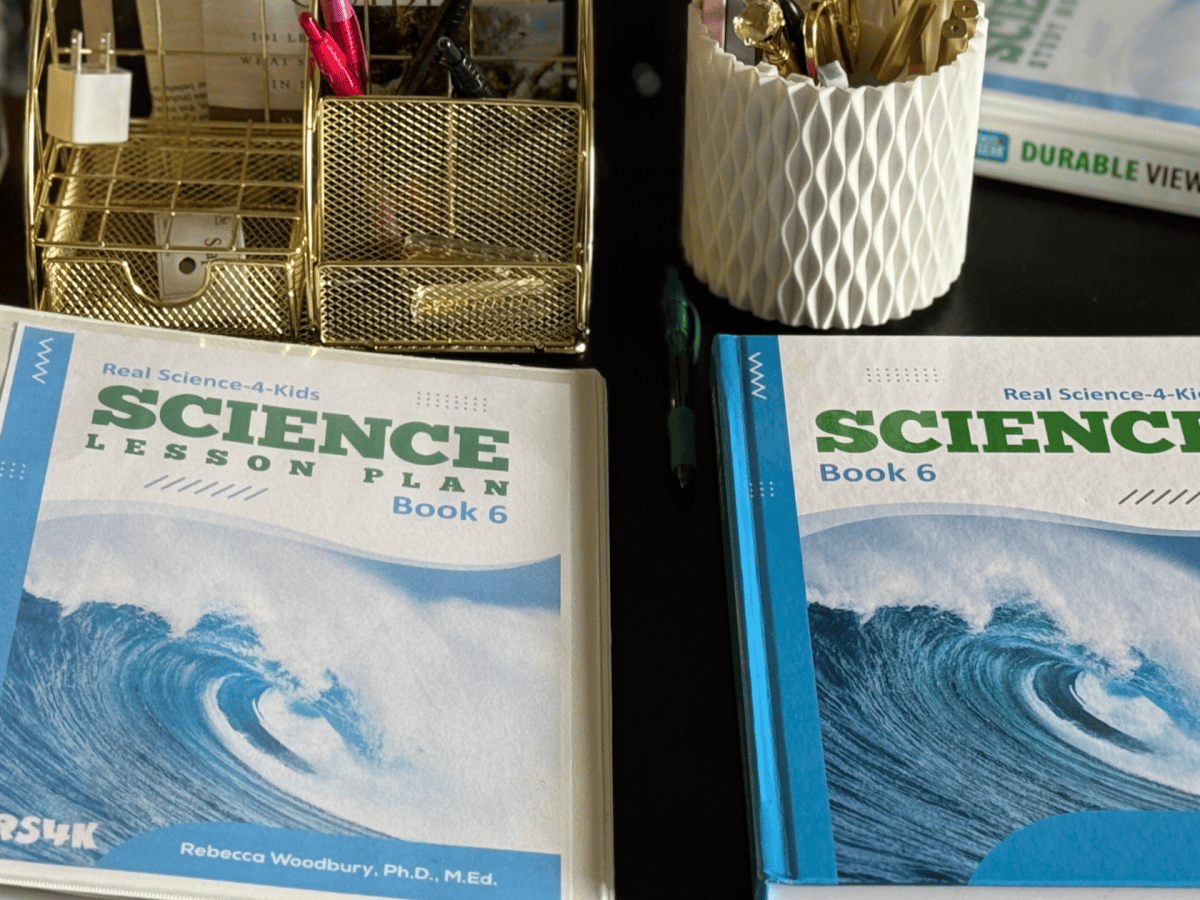
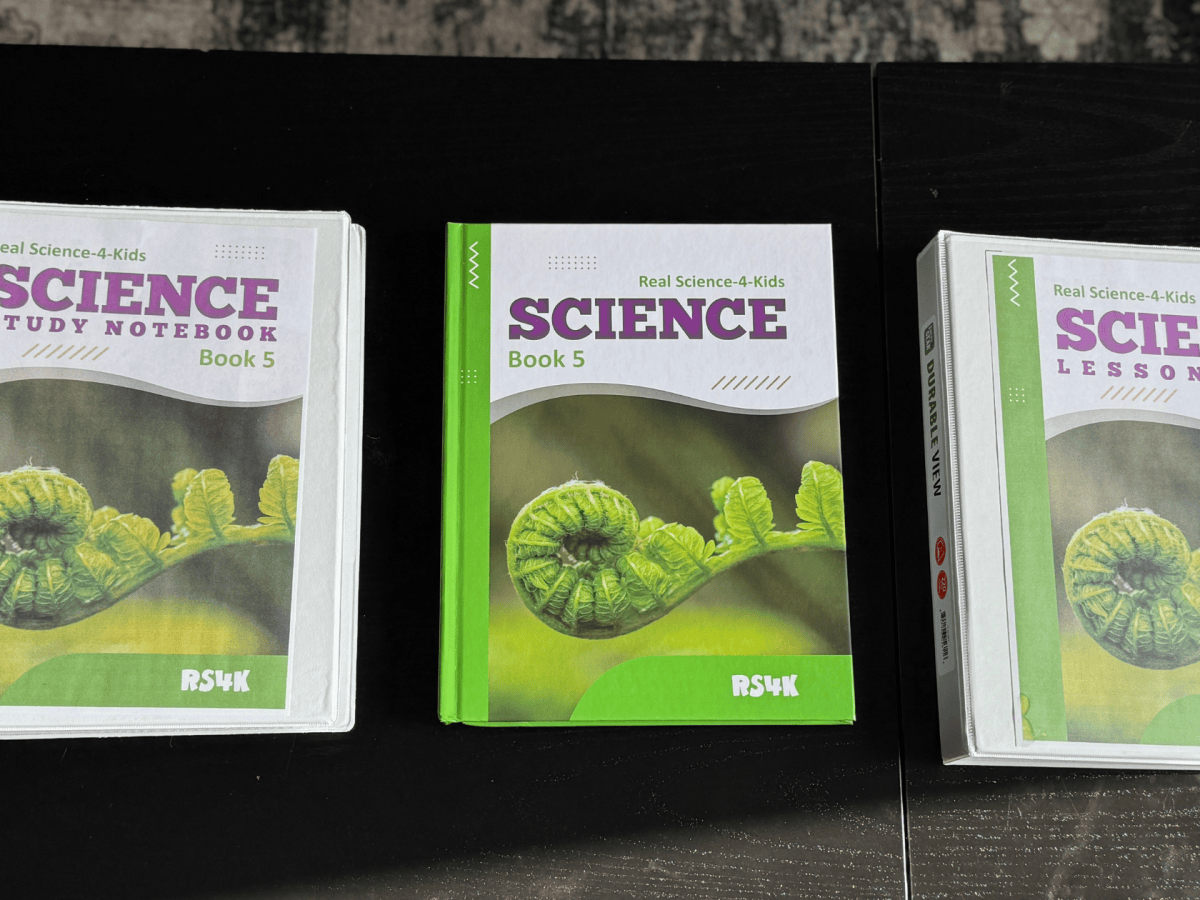
One of my favorite things about the Real Science-4-Kids curriculum is how thoughtfully it’s designed for homeschool families. Not only does it include a beautifully illustrated textbook that captures every concept through color and clarity, but it also comes with a Study Notebook for students and a Lesson Plan Binder for parents.
The Study Notebook encourages hands-on learning and reflection. It invites students to write, draw, and explore what they’ve learned — all in their own words. There’s space for journaling, questions, and even creative thinking, helping students connect science to their everyday lives.
Meanwhile, the Lesson Plan makes teaching simple and structured for parents. It outlines weekly objectives, suggested activities, and cross-curricular connections in history, philosophy, art, technology, and language. Each week’s plan includes lab experiments, self-tests, and prompts that tie science to real-world application — perfect for busy homeschool families who value both depth and flexibility.
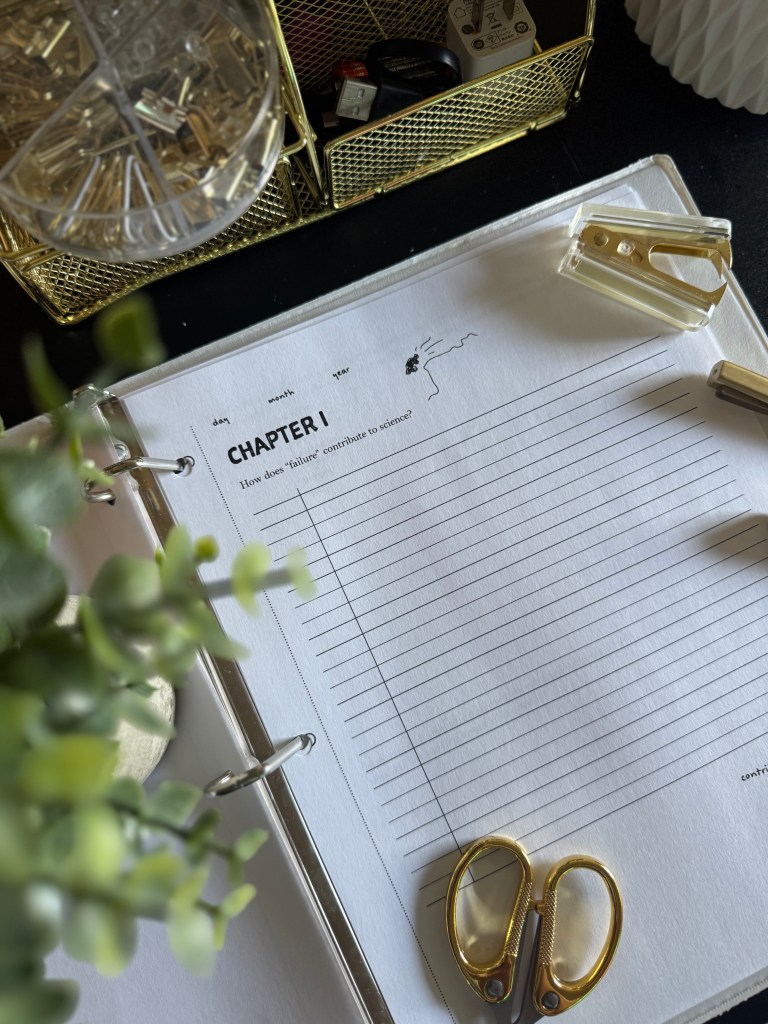
Together, these resources make Real Science-4-Kids Book 7 more than just a science program — it’s a full learning experience that grows with your child and simplifies the homeschool parent’s role.
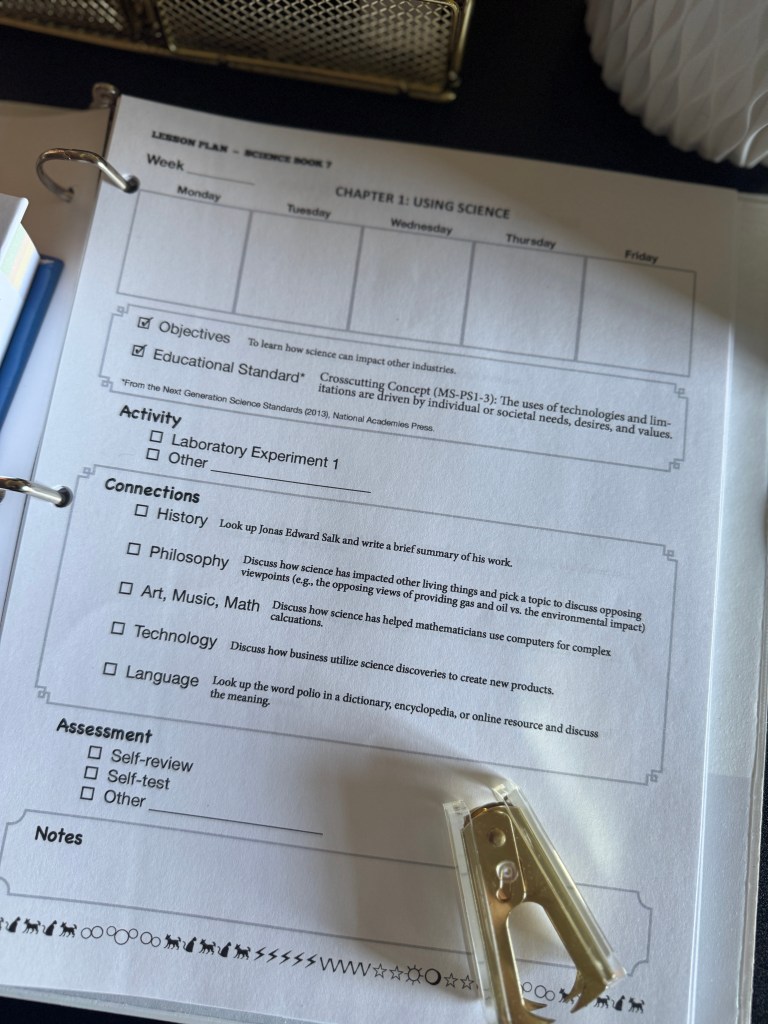
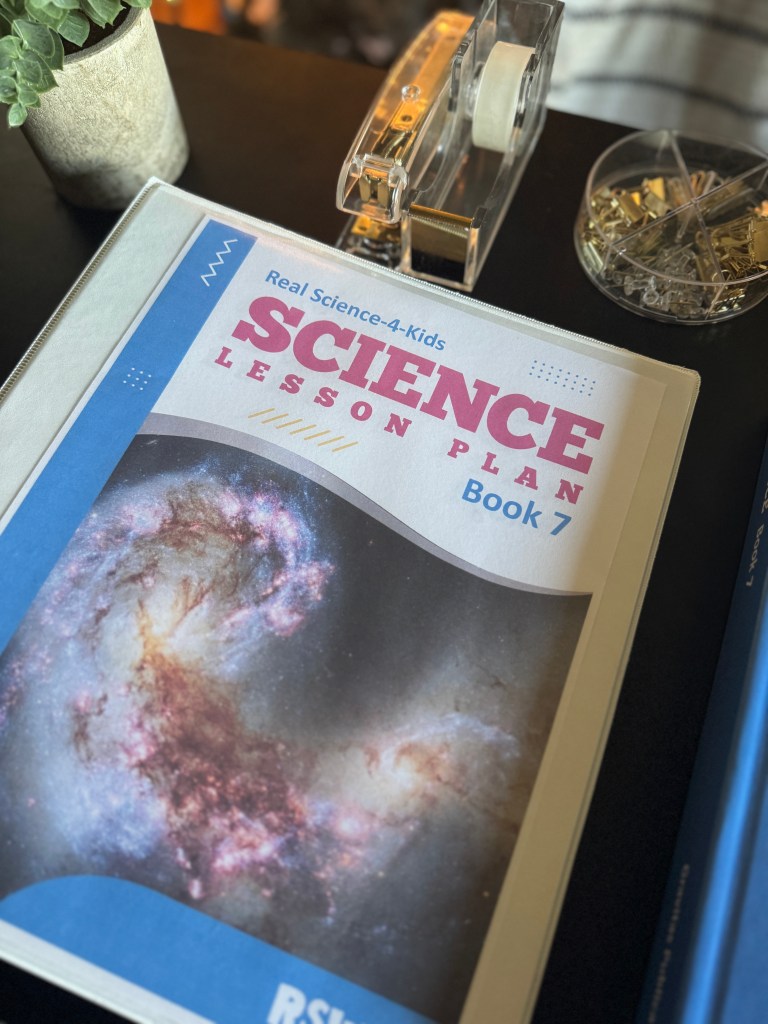
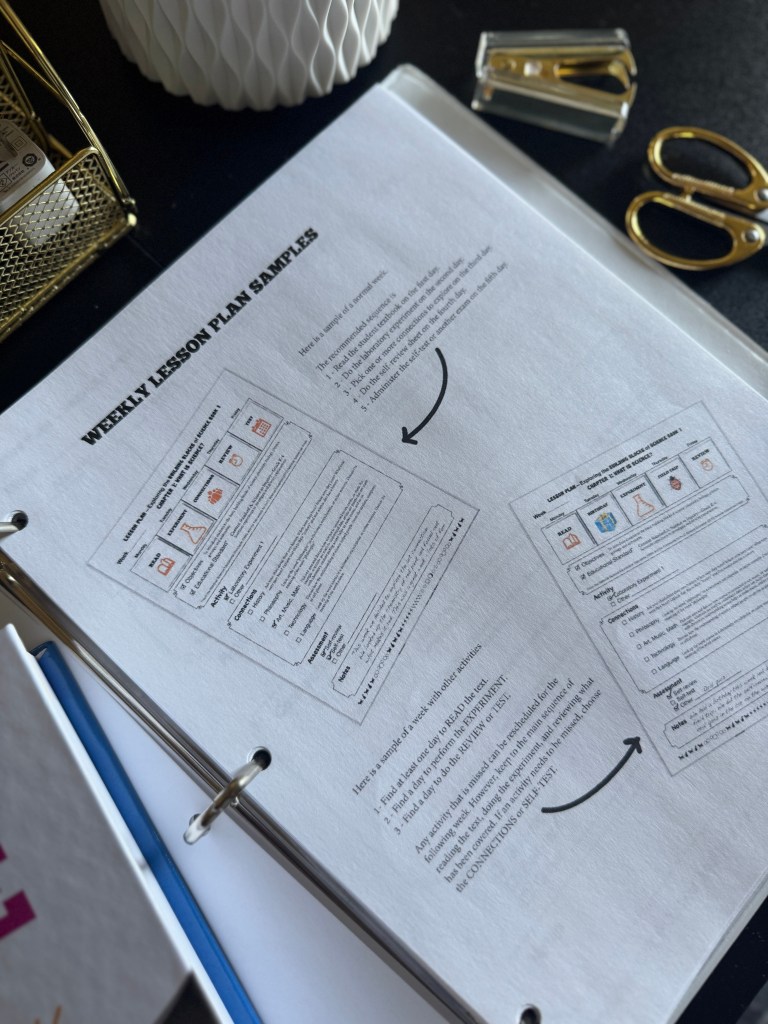
You can learn more about Real Science-4-Kids Book 7 or grab your own copy through Timberdoodle — and see why it’s become one of our favorite homeschool science finds of the year!
Pin These For Later…


Leave a Reply