If you have a two-year-old, you already know that getting them to sit down for a formal “lesson” is probably not happening.
And honestly, it doesn’t need to.
At two years old, play is learning.
Pouring water from one cup to another, pointing out the dog in a picture book, sorting toys by color, stacking blocks, helping you put laundry into a basket — all of these simple activities are helping your toddler build important skills.
So if you’re looking for learning activities for 2 year olds, you don’t need an elaborate toddler curriculum or a house full of educational toys. There are plenty of easy activities you can do at home using toys and supplies you probably already have.
Below are some of my favorite educational activities for 2 year olds that work on early language, colors, numbers, fine motor skills, gross motor skills, problem-solving and more.
What Should a 2 Year Old Be Learning?
Before jumping into the activities, it helps to remember that learning at this age looks very different from traditional school.
Two-year-olds are learning through touching, moving, talking, repeating, pretending and exploring.
At around this age, toddlers may begin sorting objects by shapes and colors, using simple phrases, following simple directions, engaging in pretend play and becoming increasingly independent.
They are also developing physical skills through activities like running, climbing, kicking and throwing.
That means something as simple as saying, “Can you bring me the red block?” can work on listening skills, vocabulary and color recognition at the same time.
You don’t need to recreate preschool in your living room.
A few intentional moments throughout the day are plenty.
1. Sort Toys by Color
Grab a few containers, bowls or baskets and ask your toddler to sort toys by color.
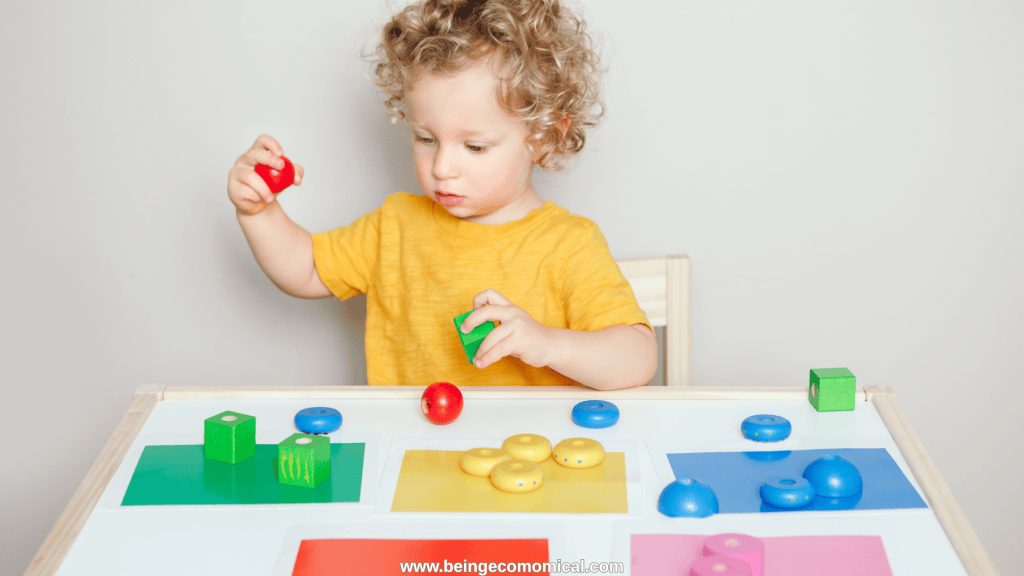
You could use:
- Blocks
- Toy cars
- Pom-poms
- Large plastic animals
- Building bricks
- Balls
Start with just two colors.
For example:
“Let’s put all the red blocks here and all the blue blocks here.”
As your child gets better at sorting, add more colors.
Skills practiced: color recognition, matching, sorting, vocabulary and early problem-solving.
2. Have a Toddler Color Hunt
This is one of the easiest learning activities for two year olds because you don’t need to prepare anything.
Choose a color and walk around the house looking for objects that match it.
“Can you find something yellow?”
Your toddler might point to a banana, toy, blanket or shirt.
You can also do this outside, at the grocery store or while riding in the car.
Once your toddler understands the game, let them choose the color.
Skills practiced: color recognition, observation, vocabulary and listening.
3. Read Picture Books and Point Things Out
Reading with a two-year-old doesn’t always mean quietly reading every sentence from beginning to end.
Sometimes we spend more time talking about the pictures than actually reading the book — and that’s perfectly fine.

Point to familiar objects and ask:
“Where’s the cat?”
“What is the baby holding?”
“Can you find the apple?”
“What color is the truck?”
You can also point to simple words and letters as you read.
The goal isn’t to quiz your toddler. You’re simply introducing language naturally while enjoying the book together.
Skills practiced: vocabulary, listening, language development, early literacy and attention.
Related Post: Wimmelbook My First 100 Words Review
4. Name Everyday Objects
You don’t necessarily need a special activity for language development.
Just narrate everyday life.
“This is your blue cup.”
“I’m cutting the banana.”
“Let’s put your shoes on.”
“That’s a big truck!”
Toddlers learn an incredible amount simply from hearing us describe the world around them.
Try adding descriptive words such as:
- Big
- Small
- Hot
- Cold
- Soft
- Loud
- Fast
- Slow
- Up
- Down
Skills practiced: vocabulary, communication and comprehension.
5. Play With Animal Sounds
Animal sounds are usually a toddler favorite.
Use toy animals, flashcards or a picture book and ask:
“What does the cow say?”
“What sound does the lion make?”
Then switch it around.
“Which animal says moo?”
You can eventually add where animals live, what they eat and how they move.
Skills practiced: memory, vocabulary, listening and animal recognition.
6. Count Everything
You don’t need worksheets to introduce numbers to a two-year-old.
Count objects during everyday activities.
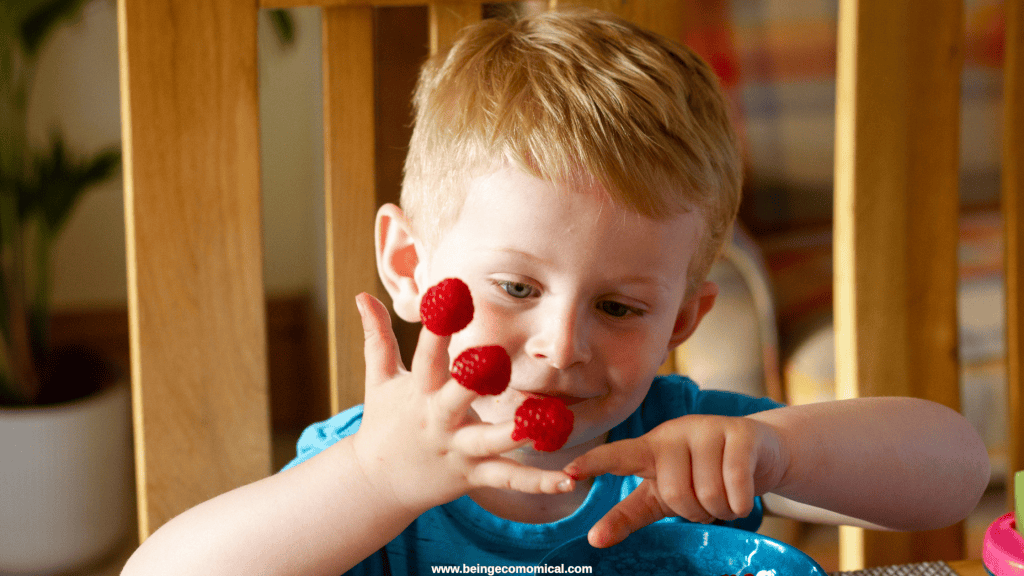
Count:
- Crackers on their plate
- Blocks in a tower
- Steps as you walk upstairs
- Toy cars
- Grapes
- Fingers
- Bath toys
- Shoes
At this age, I care much more about exposing toddlers to number words and counting than whether they can correctly count ten objects independently.
Keep repeating it.
“One, two, three blocks!”
Eventually, they’ll start joining in.
Skills practiced: counting, number recognition and early math.
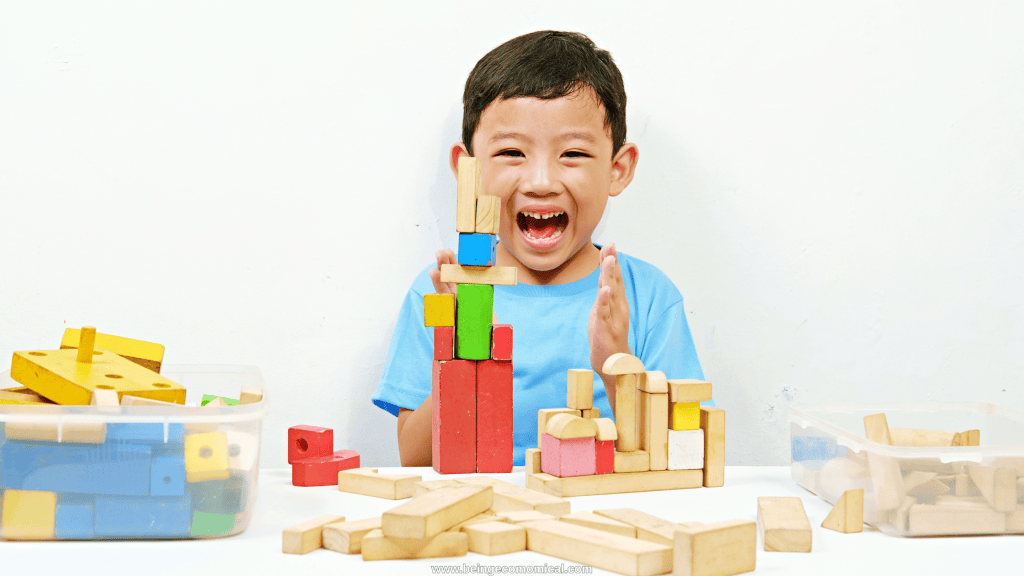
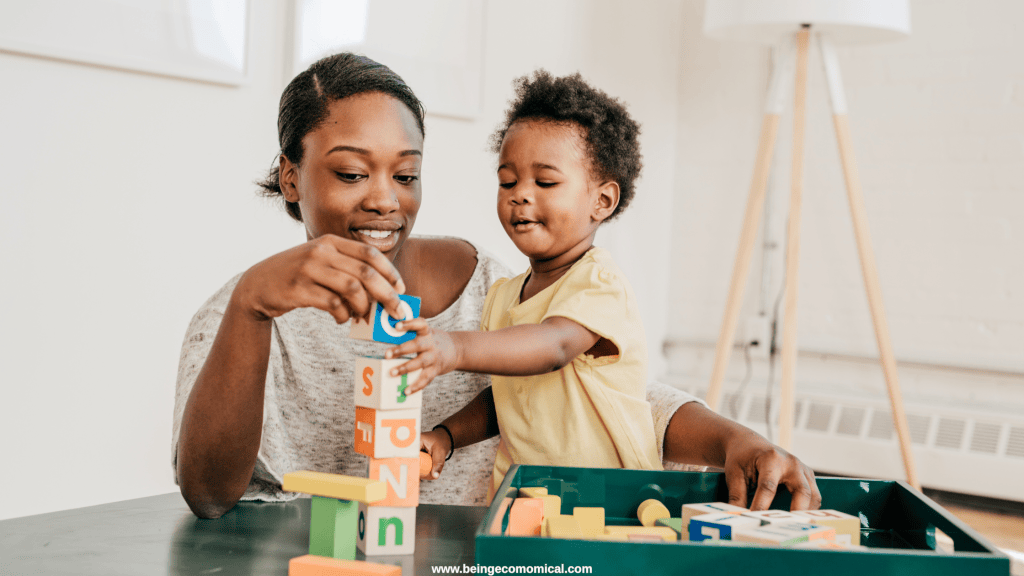
7. Build Block Towers
Give your toddler blocks and let them build.
You can count the blocks as the tower gets taller or talk about colors while you’re building.
Try:
“Can you put the yellow block on top?”
“Let’s build a BIG tower.”
“Uh-oh! It fell DOWN!”
Then, of course, let them knock the whole thing over because that’s probably their favorite part anyway.
Skills practiced: fine motor skills, spatial awareness, problem-solving, colors and early math.
8. Match Socks
Laundry can officially become preschool.
Put several pairs of socks in front of your toddler and ask them to find the ones that match.
Start with pairs that look noticeably different from each other.
Once they understand the activity, add more.
And yes, they can help put them into the laundry basket afterward too.
Skills practiced: matching, visual discrimination, problem-solving and practical life skills.
9. Pour Water Between Cups
Toddlers can spend an astonishing amount of time pouring water.
Put a small amount of water into a container and provide a few toddler-safe cups.
Let your child scoop, pour and transfer the water.
This works beautifully in the bathtub, outside or with a shallow sensory bin.
Always supervise young children closely around water.
Skills practiced: hand-eye coordination, fine motor skills, concentration and cause-and-effect.
10. Scoop and Transfer
You can do the same type of activity without water.
Give your toddler a large spoon or scoop and have them transfer toddler-safe items from one container to another.
Use appropriately sized materials that don’t pose a choking hazard.
The activity is simple, but it takes a surprising amount of coordination.
Skills practiced: hand-eye coordination, fine motor control and concentration.
11. Make Play Dough Shapes
Play dough is fantastic for little hands.
Let your toddler squeeze it, roll it, flatten it and pull it apart.
You can also make simple shapes together.
“Let’s make a circle.”
“Can you make a ball?”
“Let’s make a long snake!”
You don’t have to turn it into a structured activity every time. Simply manipulating the dough is valuable.
Skills practiced: hand strength, fine motor development, creativity and shape recognition.
12. Scribble With Crayons
Give your toddler chunky crayons and plenty of paper.
At two, we’re not worried about creating recognizable drawings.
Scribbling helps toddlers practice controlling their hands and using writing tools — skills they’ll eventually need for drawing letters and writing their names.
Talk about the colors they choose while they draw.
“You picked purple!”
Skills practiced: pre-writing skills, hand control, creativity and color recognition.
13. Use Stickers
Peeling stickers from a sheet is serious toddler work.
Give your toddler a sheet of large stickers and paper and let them peel and stick.
You can make the activity slightly more educational by drawing colored circles and asking them to place matching stickers inside them.
But free sticker play works just fine too.
Skills practiced: fine motor skills, hand-eye coordination, concentration and creativity.
14. Do Simple Puzzles
Start with chunky wooden puzzles or simple inset puzzles with familiar pictures.
Animals, vehicles, foods and shapes are all great choices.
Instead of immediately putting the piece in for your toddler, give them a moment to figure it out.
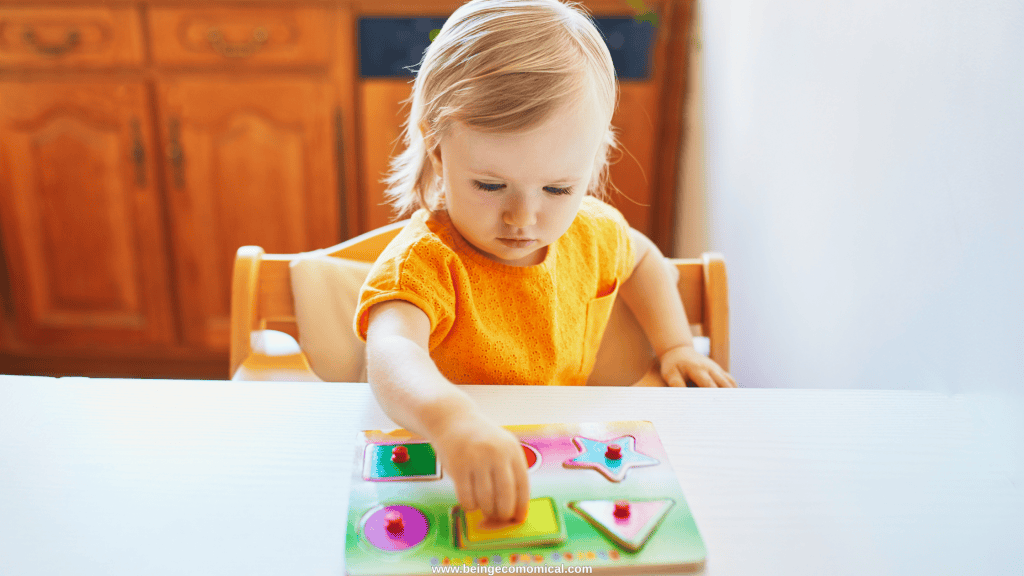
Try saying:
“Hmm. Where do you think this one goes?”
That little bit of frustration followed by figuring it out is part of the learning process.
Skills practiced: problem-solving, spatial awareness, patience and fine motor skills.
15. Match Objects to Pictures
Place a few familiar toys next to pictures of those same objects.
For example, place a toy car, toy cow and ball beside pictures of a car, cow and ball.
Ask your toddler to place each object on its matching picture.
You can easily make your own cards by printing photos or even using pictures from magazines.
Skills practiced: matching, object recognition, vocabulary and visual discrimination.
16. Sing Action Songs
Songs that include movement are perfect for toddlers.
Try songs that encourage your child to:
- Clap
- Stomp
- Jump
- Spin
- Touch body parts
- Freeze
- Follow directions
Songs such as Head, Shoulders, Knees and Toes can also help children learn body-part vocabulary.
Skills practiced: listening, memory, coordination, language and gross motor skills.
17. Have a Dance-and-Freeze Party
Turn on music and dance together.
Randomly pause the music and yell:
“FREEZE!”
Then start again.
Once your toddler understands the game, they will probably think freezing in ridiculous positions is hilarious.
That’s the lesson.
Learning does not have to look serious to be valuable.
Skills practiced: listening, impulse control, coordination and gross motor development.
18. Make an Indoor Obstacle Course
Use pillows, couch cushions, painter’s tape or other safe household items to create a simple obstacle course.
Your toddler can:
- Step over a pillow
- Crawl under a chair
- Walk along a taped line
- Jump onto a cushion
- Crawl through a tunnel
Keep everything low and toddler-safe.
Skills practiced: balance, coordination, following directions and gross motor development.
19. Walk Like Animals
Ask your toddler to move around the room like different animals.
“Hop like a bunny!”
“Stomp like an elephant!”
“Waddle like a duck!”
“Crawl like a bear!”
Add animal sounds for even more fun.
Skills practiced: imagination, vocabulary, coordination and gross motor skills.
20. Play Follow the Leader
Take turns being the leader.
Clap.
Stomp.
Touch your head.
Spin around.
Jump.
Wave.
Then encourage your toddler to copy you.
Later, let your toddler lead while you copy them.
Skills practiced: imitation, listening, body awareness and social-emotional development.
21. Play Pretend Kitchen
Pretend play doesn’t require an expensive play kitchen.
Give your toddler toddler-safe bowls, wooden spoons, measuring cups and a small pot.
Let them pretend to make soup, bake a cake or cook dinner.
Ask questions about what they’re making.
“What’s in your soup?”
“Can Mommy have some?”
Their answers may make absolutely no sense, which makes it even better.
Skills practiced: imagination, language, social skills and everyday-life understanding.
22. Let Them Help With Real Chores
Two-year-olds LOVE being involved in whatever you’re doing.
Take advantage of it.
Let them:
- Put clothes into the hamper
- Carry napkins to the table
- Put toys into a basket
- Wipe the table
- Match socks
- Put plastic dishes away
- Throw something into the trash
- Help pour ingredients while cooking
It may take three times longer, but they’re learning.
Skills practiced: independence, following directions, coordination and practical life skills.
23. Sort Big and Small Objects
Choose several safe objects in noticeably different sizes.
Ask:
“Which one is BIG?”
“Which one is SMALL?”
Then create a big pile and a small pile.
You can also compare objects throughout the day.
“Mommy has a big shoe. You have a small shoe.”
Skills practiced: early math concepts, comparison and vocabulary.
24. Learn Body Parts
Ask your toddler to point to different parts of their body.
“Where’s your nose?”
“Show me your knees.”
“Where are your ears?”
Then let them find the same body part on you, a doll or a stuffed animal.
Make it silly.
“Where’s Mommy’s nose?”
If they poke you directly in the nostril, you technically asked for it.
Skills practiced: vocabulary, body awareness and listening.
25. Go on a Nature Walk
A walk outside can become an entire toddler lesson.
Look for:
- Birds
- Bugs
- Flowers
- Trees
- Rocks
- Leaves
- Clouds
- Cars
- Dogs
Talk about what you see.
“That’s a green leaf.”
“Look at the tiny ant.”
“Do you hear the bird?”
Let your toddler stop and investigate things instead of worrying about getting somewhere quickly.
Skills practiced: observation, vocabulary, science concepts and gross motor development.
26. Make a Simple Shape Hunt
Once your toddler begins recognizing shapes, start finding them around the house.
“The clock is a circle.”
“The window is a rectangle.”
“This block is a square.”
You don’t have to introduce every shape at once. Start with circles, squares and triangles and build from there.
Skills practiced: shape recognition, observation and early math.
27. Play With Toy Cars and Make Roads
Put painter’s tape on the floor to create simple roads for toy cars.
Add a few turns, intersections and parking spaces.
As your toddler drives, introduce directional words naturally:
“Go forward!”
“Turn!”
“The car is under the chair.”
“Park beside the blue car.”
Skills practiced: positional vocabulary, imagination, coordination and problem-solving.
28. Play Hide and Find
Hide a familiar toy somewhere easy and ask your toddler to find it.
Give clues if necessary.
“Look under the table.”
“Maybe it’s behind the pillow.”
Eventually, allow your toddler to hide something for you.
Skills practiced: problem-solving, memory, spatial vocabulary and listening.
29. Look Through Family Photos
Toddlers usually love seeing people they recognize.
Scroll through family photos or use a photo album and talk about who’s in each picture.
“Who is that?”
“There’s Grandma!”
“Look! You’re at the zoo.”
You can talk about places, family members, animals and memories while building language skills at the same time.
Skills practiced: vocabulary, memory, family recognition and communication.
30. Let Your Two-Year-Old Lead
One of the easiest toddler learning activities is simply following whatever your child is currently interested in.
If they love trucks, count trucks.
If they love dinosaurs, learn dinosaur names.
If they love animals, read animal books.
If they want to point at the same cat in the same book 47 times, talk about the cat 47 times.
Toddlers are naturally curious.
Following their interests often keeps them engaged much longer than trying to force an activity we chose for them.
How Long Should Learning Activities Be for a 2 Year Old?
Short.
Seriously.
You do not need to schedule an hour-long learning block for your two-year-old.
Some activities might keep their attention for 15 minutes.
Another might last three.
And another might unexpectedly entertain them for half an hour.
I prefer offering short learning opportunities throughout the day instead of expecting a toddler to sit through a traditional lesson.
You might read together after breakfast, count toys while cleaning up, do play dough before lunch and talk about colors while you’re outside later.
It all counts.
What Skills Can You Teach a 2 Year Old at Home?
There are plenty of early concepts you can begin introducing around age two, including:
- Colors
- Shapes
- Counting
- Numbers
- Letters
- Animal names and sounds
- Body parts
- Opposites
- Big and small
- Matching
- Sorting
- Following simple directions
- Vocabulary
- Fine motor skills
- Gross motor skills
- Pretend play
- Independence
Your two-year-old does not need to master all of these right now.
Think exposure, repetition and play.
Do 2 Year Olds Need Worksheets?
Not necessarily.
There is plenty of time for worksheets later.
At two years old, I would much rather let a child manipulate blocks, scribble with crayons, match objects, pour water, look through books and run around outside.
Hands-on play gives toddlers the opportunity to actually experience many of the concepts we’re trying to teach.
You can certainly introduce simple printable activities if your toddler enjoys them, but they aren’t required for learning at this age.
You Don’t Have to Entertain Your Toddler All Day
This one is important.
A list of learning activities for two-year-olds can quickly make parents feel like we’re supposed to become full-time cruise directors for our toddlers.
We’re not.
You don’t need Pinterest-worthy sensory bins waiting every morning.
You don’t need a perfectly organized toddler classroom.
You don’t need to turn every second of the day into a lesson.
Give your toddler safe opportunities to explore, talk to them, read together, involve them in everyday life and occasionally pull out a simple activity.
Then let them play.
Independent play is valuable too.
Final Thoughts on Learning Activities for 2 Year Olds
The best learning activities for 2-year-olds are usually the simplest ones.
Read books.
Count snacks.
Sort toys.
Dance.
Build towers.
Go outside.
Talk about everything.
Let them help you.
Let them pretend.
Let them explore.
Your toddler doesn’t need to realize they’re doing an “educational activity.”
To them, they’re just playing with you.
And that’s exactly how it should feel.
RELATED TODDLER & PRESCHOOL ACTIVITIES
As I share more of what we’re doing at home, I’ll be adding even more toddler and preschool learning ideas, including activities for teaching colors, letters, numbers, fine motor skills and early preschool concepts.
So if you’re currently in the toddler years too, save this one — we’re just getting started.
Check out my post on My Big Wimmelbook: My First 100 Words and our Kindergarten unboxing with Timberdoodle.
Pin this for later:
Frequently Asked Questions About Learning Activities for 2 Year Olds
What should a 2 year old be learning?
At two years old, learning is mostly about exposure, repetition and play. You can begin introducing colors, shapes, counting, simple letters, animal names and sounds, body parts, matching, sorting and basic vocabulary while also working on fine motor, gross motor and communication skills.
What activities are good for a 2 year old?
Some of the best activities for two-year-olds are simple ones like reading picture books, building with blocks, coloring, sorting toys, doing puzzles, playing with play dough, dancing, helping with household chores and exploring outside. Activities that allow toddlers to move, touch, talk and experiment are especially helpful at this age.
How do I teach my 2 year old at home?
You can teach your two-year-old at home by working learning into your normal routine. Count snacks, name colors while getting dressed, point out letters in books, talk about what you see outside and let your toddler help with simple household tasks. You don’t need a formal homeschool schedule or long lessons at this age.
How long should learning activities be for a 2 year old?
Learning activities for two-year-olds can be very short. Some toddlers may stay interested for 10 or 15 minutes, while another activity may only hold their attention for a few minutes. Instead of focusing on a specific amount of time, follow your child’s interest and offer several short opportunities to learn throughout the day.
What educational activities can I do with my 2 year old?
You can try color sorting, counting toys, simple puzzles, matching games, water pouring, play dough, sticker activities, shape hunts, pretend play, animal sounds, action songs and nature walks. Many everyday activities can become educational simply by talking about what your toddler is seeing and doing.
Should a 2 year old know colors?
Some two-year-olds may begin identifying or matching basic colors, while others are still learning them. There is no need to pressure your toddler to memorize every color. Instead, casually name colors throughout the day and use games such as color sorting and color hunts to give them plenty of exposure.
Should a 2 year old know numbers?
A two-year-old may begin recognizing number words or joining in while you count, but they do not need to be able to count perfectly. Counting everyday objects like crackers, toys, steps and fingers is an easy way to introduce early number concepts naturally.
Should a 2 year old know the alphabet?
Two-year-olds do not need to know the entire alphabet. Some toddlers may recognize a few letters, especially letters they see often, such as the first letter of their name. Reading together, singing the alphabet song and casually pointing out letters are simple ways to build early letter awareness without turning it into a formal lesson.
Do 2 year olds need worksheets?
No. Worksheets are not necessary for most two-year-olds. Hands-on activities like stacking, sorting, scribbling, matching, pouring, pretending and exploring allow toddlers to practice many of the same early skills in a way that is more appropriate for how they naturally learn.
How do I keep my 2 year old busy at home?
Rotate between independent play, books, movement, simple learning activities and opportunities to help you with everyday tasks. You don’t have to entertain your toddler every minute of the day. A basket of blocks, crayons and paper, a simple puzzle, a dance party or even helping sort laundry can keep a two-year-old engaged while supporting development.


Leave a Reply