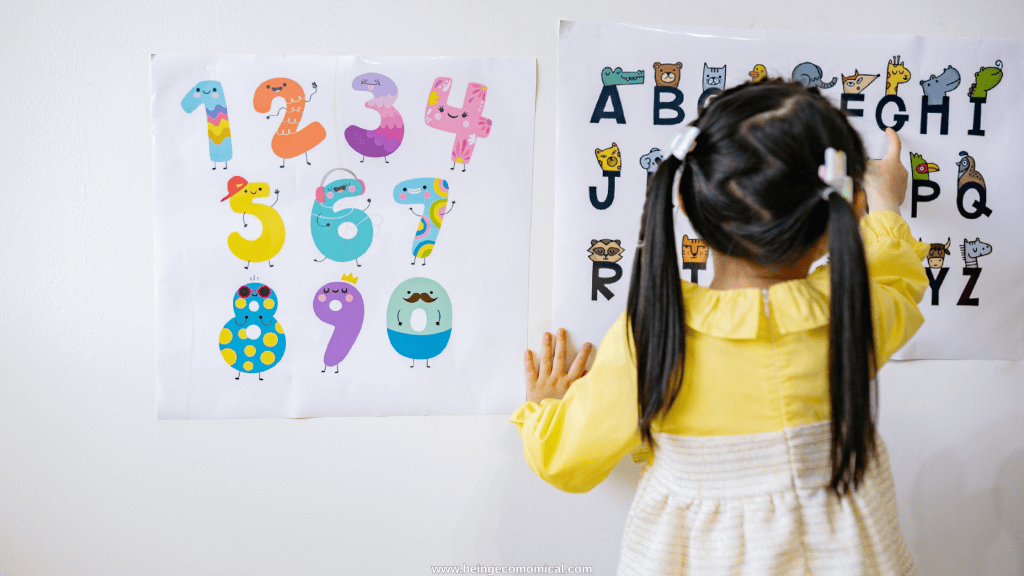
If you’re looking for learning activities for 3 year olds, you definitely don’t need to turn your house into a preschool classroom.
At three, kids are entering such a fun stage because they can do a little more independently, follow more detailed directions, have longer conversations and begin working on some of those early preschool skills.
But they’re still three.
That means there should be plenty of playing, moving, building, creating and exploring mixed in with any structured learning you do.
As a former teacher and homeschooling mom, one thing I’ve learned is that learning with young children does not have to look like sitting at a table doing worksheets all day.
In fact, some of the best learning activities for 3 year olds look a whole lot like playing.
Building a block tower can involve counting and problem-solving. Play dough can strengthen the muscles they’ll eventually use for writing. Talking about a favorite book builds vocabulary and comprehension.
So whether you’re homeschooling preschool, preparing your child for preschool, or simply looking for educational activities to do at home, these easy activities can help your three-year-old practice important early learning skills while still having fun.
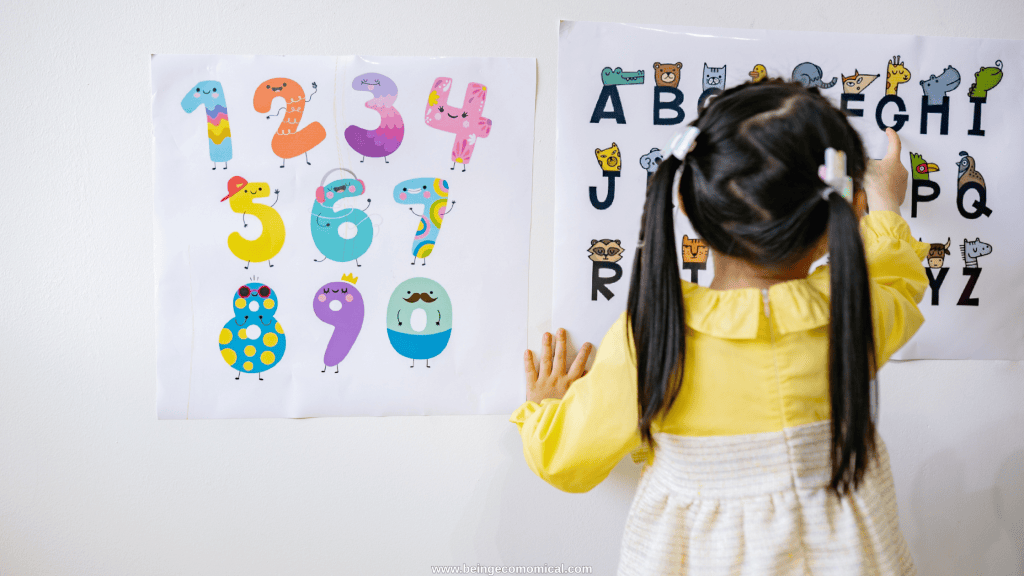
What Should a 3 Year Old Be Learning?
Before getting into the activities, it helps to remember that your three-year-old doesn’t need to master a huge academic checklist.
At this age, I focus much more on exposure, practice and building confidence.
Some skills you may begin working on with a three-year-old include:
- Recognizing colors
- Identifying basic shapes
- Counting objects
- Recognizing some numbers
- Recognizing some letters
- Recognizing the letters in their name
- Beginning to recognize their written name
- Listening for beginning sounds
- Building vocabulary
- Listening to and talking about stories
- Following one- and two-step directions
- Sorting and matching
- Completing simple patterns
- Developing fine motor skills
- Practicing pre-writing strokes
- Strengthening gross motor skills
- Solving simple problems
- Practicing independence
- Using imagination through pretend play
Your child doesn’t need to know all of these things by a specific day.
Three-year-olds develop at different rates, and repetition matters.
Instead of trying to check off every skill, introduce them naturally throughout your child’s day.
If your child is a little younger, I also put together 30 learning activities for 2 year olds with simple play-based ideas for todlers.
1. Practice Name Recognition
A child’s name is one of my favorite places to begin with early literacy because it already means something to them.
Write your child’s name in large letters on a piece of paper.
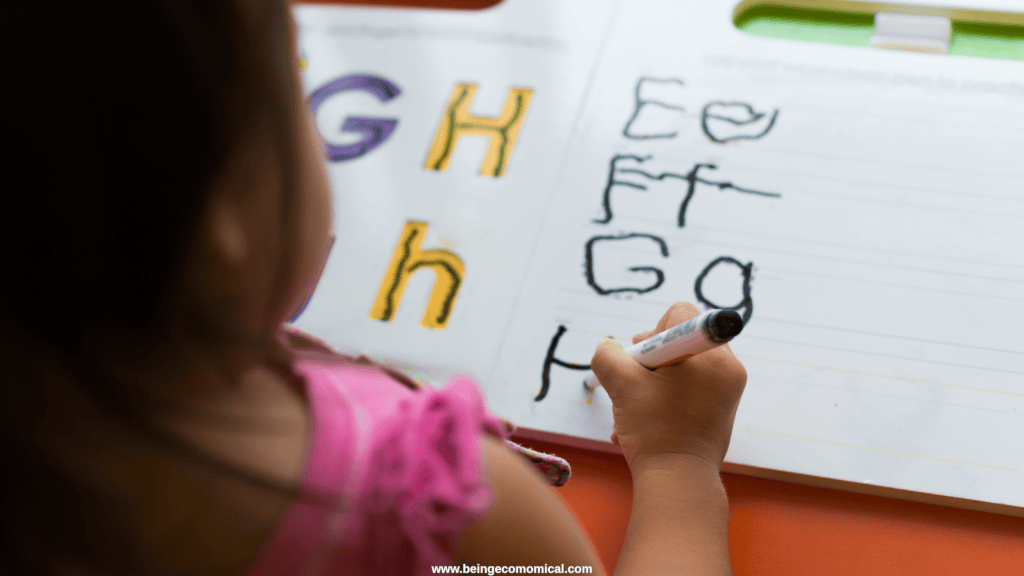
Point to each letter and say its name.
You can also write your child’s name on:
- Artwork
- A bedroom sign
- A reusable name card
- Their learning supplies
Over time, ask them to find their name among two or three other names.
You don’t have to expect them to spell or write it perfectly yet. Simply recognizing, “That’s my name!” is an important beginning skill.
2. Build Their Name With Letter Magnets
Once your three-year-old is familiar with their name, give them the letters they need to build it.
Magnetic letters work great for this.
Write their name on a piece of paper and let them match each magnetic letter to the correct letter.
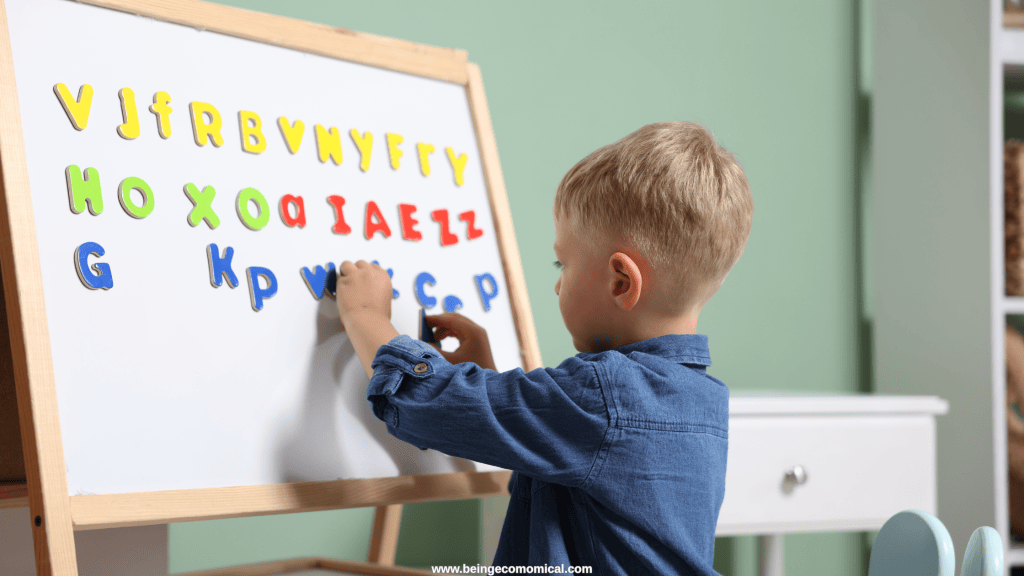
Eventually, see if they can build their name using the letters without the model underneath.
This works on letter recognition, matching and early spelling skills.
3. Go on a Letter Hunt
Choose one letter and look for it around your home.
You might find letters on:
- Food boxes
- Book covers
- Signs
- Clothing
- Toys
- Magazines
- Refrigerator magnets
I especially like using letters from a child’s name first because they’re usually more interested in finding something familiar.
You don’t need to introduce several letters at once.
One letter can become the letter you casually notice throughout the day or even throughout the week.
4. Match Uppercase and Lowercase Letters
If your child already recognizes a few letters, start introducing the idea that letters can look different.
Write a few uppercase and lowercase pairs on index cards.
For example:
A — a
B — b
C — c
Start with only a few pairs.
Have your child match the uppercase letter with its lowercase partner.
There is no need to work through the entire alphabet at once.
5. Listen for Beginning Sounds
Choose simple words your child already knows.
For example:
“Ball starts with b-b-b.”
“Baby starts with b-b-b.”
“Book starts with b-b-b.”
Then look around and see if you can find something else that begins with the same sound.
At three, this should still feel playful.
You’re simply helping your child begin noticing that words are made up of different sounds.
6. Read and Ask Questions
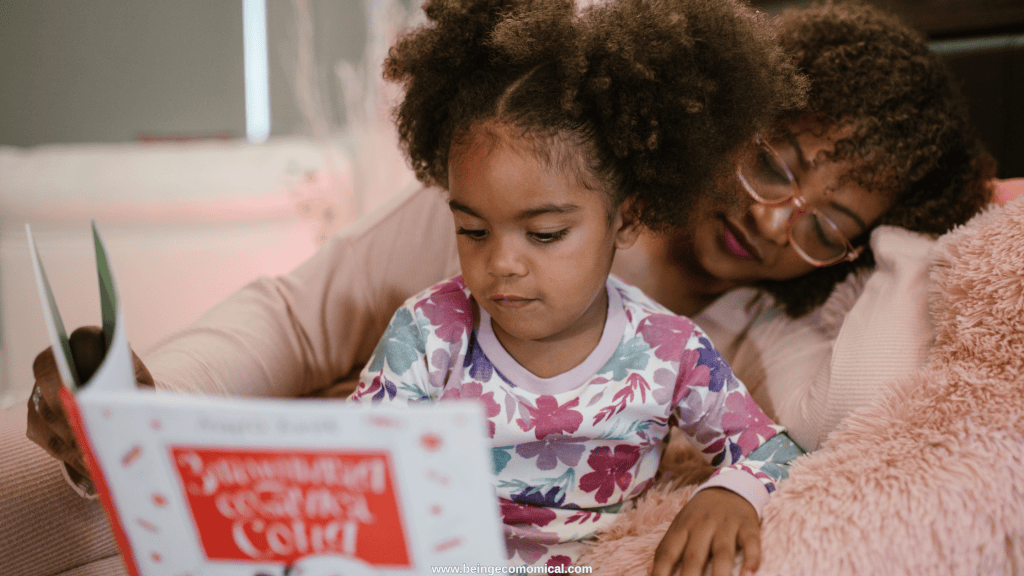
Reading aloud is already one of the best learning activities you can do with a three-year-old.
You can build even more language and comprehension skills by talking about what you’re reading.
Ask simple questions such as:
- What do you see?
- What color is that?
- What is the character doing?
- How do you think they feel?
- Where is the dog?
- What do you think will happen next?
Don’t feel like you have to quiz your child on every page.
Just weave questions into the conversation naturally.
7. Let Them Retell a Favorite Story
Three-year-olds often want to hear the same book approximately 782 times anyway, so use that repetition to your advantage.
After reading a familiar story, flip through the pictures and ask:
“What happened here?”
Then:
“What happened next?”
Your child’s version doesn’t need to be perfect.
Story retelling helps with memory, sequencing, vocabulary and comprehension.
8. Put a Simple Story in Order
You can also practice sequencing without a book.
Talk through something your child already understands.
For example:
“First we put toothpaste on the toothbrush. Then we brush our teeth. Then we rinse.”
Or print or draw three simple pictures showing an activity and have your child put them in order.
Understanding what comes first, next and last is an important preschool skill.
9. Count Objects to 10
At three, you can begin moving beyond simply reciting numbers and practice actually counting objects.
Grab a small group of toys.
Touch each toy as you count:
“One, two, three, four…”
This teaches one-to-one correspondence—the understanding that each object represents one number as you count.
Start with smaller groups and work your way toward ten.

10. Count Their Favorite Snacks
Snack time absolutely counts as preschool.
Give your child a few crackers, grapes, blueberries or another favorite snack.
Ask:
“How many do you have?”
Count them together before eating.
Then change the amount.
“You ate one. How many are left?”
We’re not trying to teach formal subtraction at three. We’re simply helping them notice quantity in everyday life.
11. Match Numbers to Groups of Objects
Once your child starts recognizing a few written numbers, make a simple matching activity.
Write numbers 1 through 5 on separate pieces of paper.
Then make small groups of objects.
For example:
1 block
2 toy cars
3 crayons
Have your child match the written number with the correct quantity.
Start small and add more numbers as they become comfortable.
12. Make Simple Patterns
Use blocks, toy cars, snacks, stickers or anything else you have around the house.
Create an easy AB pattern:
Red, blue, red, blue…
Then ask:
“What comes next?”
Once your child understands that pattern, experiment with others.
For example:
Clap, stomp, clap, stomp.
Or:
Car, block, car, block.
Recognizing patterns builds early mathematical thinking and prediction skills.
13. Sort by Color
Grab a collection of blocks, toy cars, large pom-poms or other colorful objects.
Ask your child to separate them by color.
Make a red group.
A blue group.
A yellow group.
Sorting teaches children to notice similarities and differences while building early classification skills.
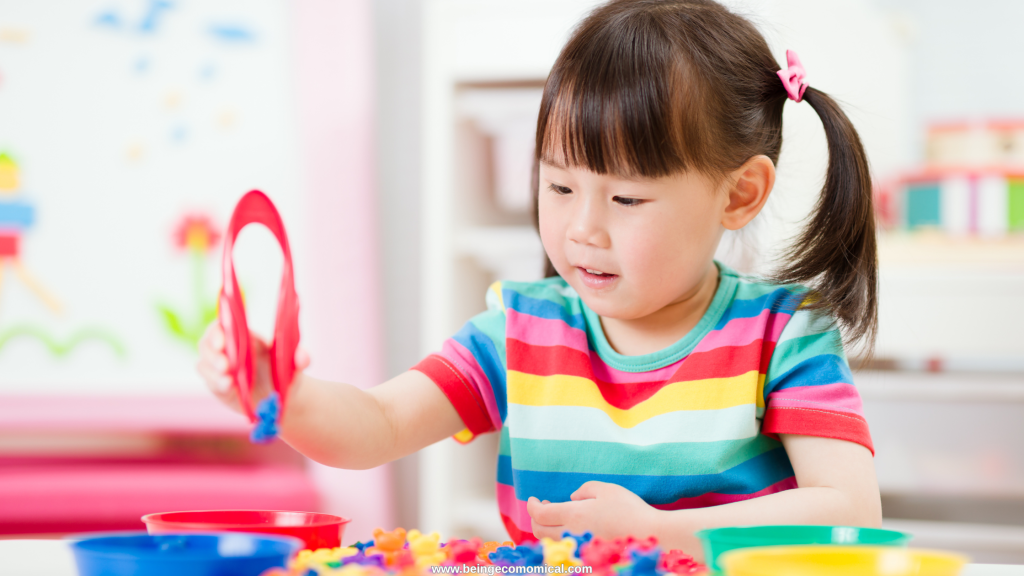
14. Sort Objects Two Different Ways
This is where we can level the activity up from the toddler version.
First, sort toys by color.
Then mix everything back together and ask:
“Can we sort them a different way?”
Maybe this time you sort by:
- Size
- Shape
- Type of toy
- Animal versus vehicle
- Big versus small
This helps kids understand that the same objects can be classified in different ways.
15. Find What Doesn’t Belong
Place three or four objects in front of your child.
For example:
- Spoon
- Fork
- Plate
- Toy car
Ask:
“Which one doesn’t belong?”
Then talk about why.
This is such a simple activity, but it builds reasoning, categorization and language skills.
And sometimes your child will come up with an answer you weren’t expecting—which can be even more interesting.
16. Practice Basic Shapes
Practice identifying basic shapes such as:
- Circle
- Square
- Triangle
- Rectangle
You don’t necessarily need flashcards.
Look for shapes in real life.
A plate is a circle.
A door is a rectangle.
A cracker might be a square.
A slice of pizza resembles a triangle.
Connecting shapes to everyday objects can make them easier to remember.
17. Go on a Shape Hunt
Once your child knows a few shapes, turn it into a scavenger hunt.
Say:
“Let’s find circles!”
Walk through the house looking for things that are circular.
Then try another shape.
You can also play this while shopping, riding in the car or walking around your neighborhood.
18. Practice Pre-Writing Lines
Before expecting perfect letters, practice the strokes children eventually use to make them.
Draw large:
- Straight lines
- Horizontal lines
- Curved lines
- Zigzags
- Circles
- Crosses
Have your child trace over them with a crayon or washable marker.
You can even put the paper inside a reusable sleeve and use a dry-erase marker so they can practice again.
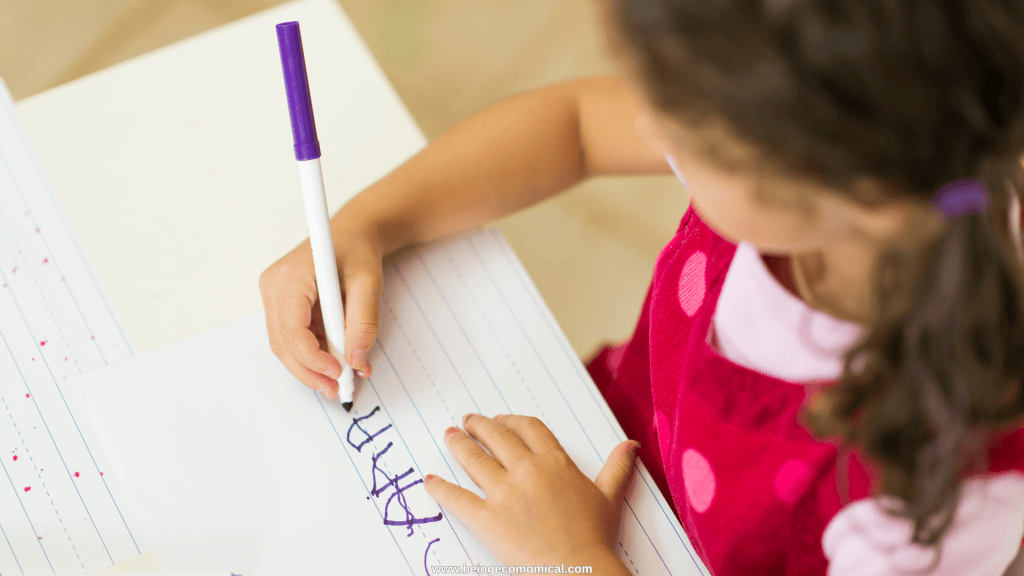
19. Trace the Letters in Their Name
Once your child is comfortable tracing basic lines and curves, introduce the letters in their name.
Write their name in large letters.
Let them trace over the letters.
At first, you can use dotted letters or a light-colored marker for them to follow.
Don’t worry about perfect handwriting.
We’re building familiarity and control.
20. Play With Play Dough
Play dough is one of those preschool supplies that does a lot more than keep kids busy.
Rolling, pinching, squeezing and flattening dough strengthens the small muscles in their hands and fingers.
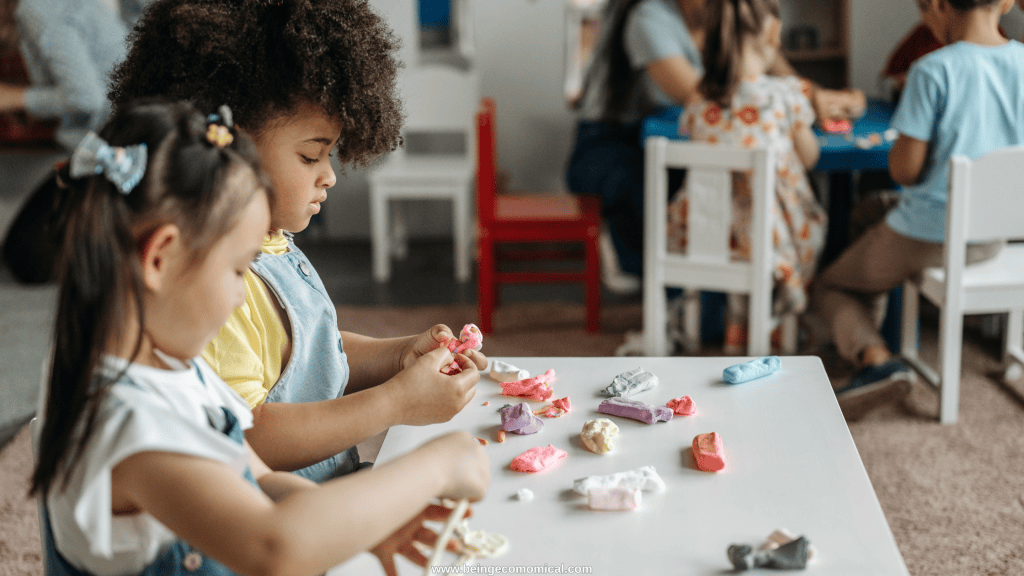
Those muscles are eventually used for:
- Writing
- Cutting
- Buttoning
- Zipping
- Drawing
You can also use play dough to form letters, numbers and shapes.
21. Practice Cutting With Child-Safe Scissors
With close supervision and age-appropriate scissors, three can be a great age to begin practicing cutting.
Start by letting your child simply snip paper.
Once they get comfortable opening and closing the scissors, draw thick straight lines for them to try to follow.
Eventually, introduce curved lines.
Cutting strengthens hand muscles and also requires both sides of the body to work together.
22. Peel and Place Stickers
Stickers are surprisingly good fine motor practice.
Peeling stickers from a sheet requires your child to pinch and manipulate something small.
Give your child paper and let them create freely.
Or draw several circles and ask them to place one sticker inside each circle.
You can also use stickers to practice counting.
“Can you put five stickers on this page?”
23. Tear and Glue Paper
Give your child colorful paper and let them tear it into smaller pieces.
Then use a glue stick to attach the pieces to another sheet.
You can make:
- A rainbow
- A letter
- A shape
- A picture
- A completely unidentifiable masterpiece
Tearing paper strengthens little hands, while placing and gluing pieces works on coordination.
24. Complete Simple Puzzles
Age-appropriate puzzles are great for three-year-olds because they encourage:
- Problem-solving
- Spatial awareness
- Fine motor skills
- Visual discrimination
- Persistence
When your child struggles with a piece, try not to immediately place it for them.
You can say:
“Try turning it.”
Or:
“Do you see another space where it might fit?”
Give them a chance to work through the problem.
25. Play a Simple Memory Game
Place three familiar objects on the table.
Let your child look at them.
Ask them to close their eyes while you remove one.
Then ask:
“What’s missing?”
Once that becomes easy, add another object.
This simple game works on memory, concentration and observation.
26. Practice Following Two-Step Directions
By age three, you can begin practicing slightly longer directions during play.
For example:
“Pick up the red block and put it in the basket.”
Or:
“Bring me the book and then sit on the couch.”
Start with simple directions involving things your child already understands.
Following directions helps build listening skills, working memory and independence.
27. Make a Preschool Scavenger Hunt
Create a short scavenger hunt around the house.
Ask your child to find:
- Something red
- Something soft
- A circle
- Three blocks
- Something that starts with B
- Something small
- Their favorite book
This one activity can cover colors, shapes, counting, vocabulary, letter sounds and following directions.
And because they’re moving around, it doesn’t necessarily feel like “school.”
28. Play Pretend Store
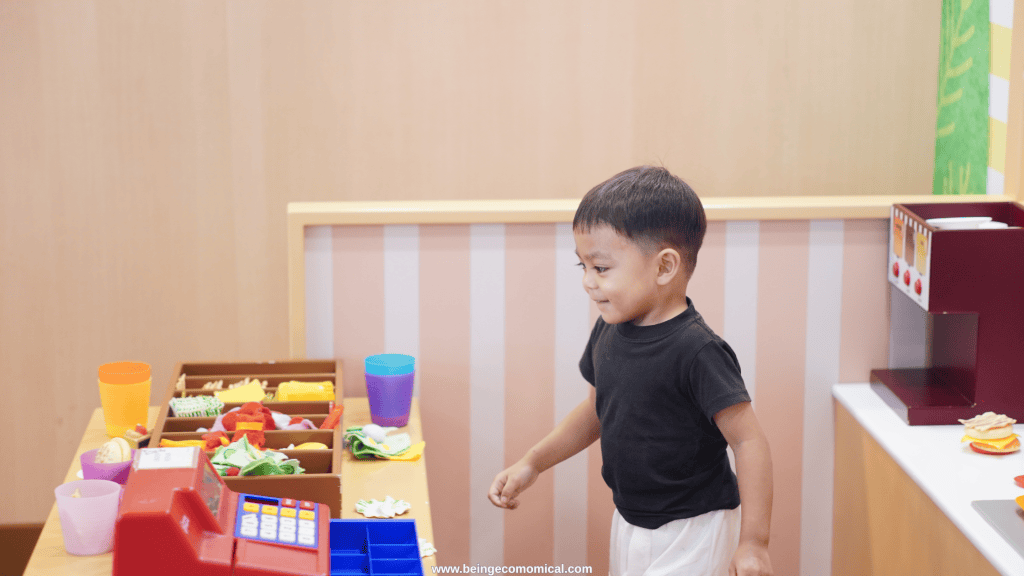
Set up some play food or safe groceries and turn your kitchen or playroom into a store.
Your child can be the shopper while you work the register—or switch roles.
Try giving them requests:
“I need two apples.”
“Can I buy one banana?”
“Can you find something green?”
Pretend play supports language, imagination, social skills and early math.
29. Help in the Kitchen
Real life provides some of the best preschool learning opportunities.
With appropriate supervision, your three-year-old may be able to help:
- Pour pre-measured ingredients
- Stir
- Sprinkle toppings
- Count ingredients
- Wash produce
- Tear lettuce
- Carry lightweight items
- Help set the table
Talk through the steps as you’re cooking.
“First we’re pouring the flour. Next we’re adding the milk.”
Now you’re working on sequencing, vocabulary, counting and practical life skills at the same time.
30. Make an Indoor or Outdoor Obstacle Course
Three-year-olds still need lots of movement.
Create a simple obstacle course using safe household items or outdoor equipment.
Your child might:
- Crawl under something
- Step over something
- Walk along a line
- Jump onto a pillow
- Toss a ball into a basket
- Run to a certain spot
- Balance on one foot
Add directions such as:
“Jump two times, then crawl to the pillow.”
Now you’re combining gross motor development with counting, listening and following directions.
How Long Should Learning Activities Be for a 3 Year Old?
Short.
You do not need to require a three-year-old to sit through a 30- or 45-minute lesson.
Some activities may keep their attention for five minutes.
Something they really enjoy might hold their attention much longer.
I focus much less on the clock and much more on the child.
If they’re engaged, keep going.
If they have completely checked out, it’s okay to move on and come back to the skill another day.
At three, learning should still include plenty of movement, imagination, exploration and free play.
Do I Need a Preschool Curriculum for My 3 Year Old?
Not necessarily.
Some families love having a preschool curriculum because it provides structure and takes some of the guesswork out of deciding what to teach.
Other families prefer a relaxed, play-based preschool year.
And plenty of families fall somewhere in between.
We homeschool, and one of the things I love about learning at home is being able to use structured resources when they’re helpful while still recognizing all of the learning that happens during normal life.
At three, I would worry much less about recreating a traditional classroom and much more about helping your child enjoy learning.
If you’re starting to look ahead at more structured learning, I also shared our experience with the Timberdoodle Kindergarten Curriculum Kit.
It’s a helpful look at what an all-in-one homeschool curriculum can include and may give you ideas for resources you want to introduce as your child gets older.
How Can I Teach My 3 Year Old at Home?
You can keep your preschool routine incredibly simple.
For example:
Read: Read one or two books together.
Learn: Do one short activity involving letters, numbers, shapes, colors or another preschool skill.
Create: Draw, paint, use play dough, cut, glue or make something.
Move: Go outside, dance, take a walk or do a gross motor activity.
Play: Give your child plenty of time for independent and imaginative play.
You can spread those things throughout your day instead of trying to fit everything into one long preschool session.
And some days?
Reading books, cooking together and going outside may be enough.
Have a younger toddler at home too? You can also check out these easy learning activities for 2 year olds.
What Are the Best Educational Activities for 3 Year Olds?
The best learning activities are usually the ones your child actually wants to participate in.
At three, I especially love activities that work on several areas of development at the same time.
Play dough can strengthen fine motor skills while introducing letters.
Cooking can include counting, sequencing and vocabulary.
Reading can develop language, comprehension, memory and imagination.
A scavenger hunt can involve colors, shapes, letters, listening and movement.
That’s why I wouldn’t get too caught up in whether something looks “educational” enough.
If your three-year-old is exploring, talking, building, moving, creating, pretending, asking questions and figuring things out, they are learning.
Keep Learning Simple at Three
There are so many learning activities for 3-year-olds that you could try, but you don’t need to do all of them.
Pick a few that work well for your child and repeat them.
Repetition may feel boring to us, but young children are strengthening skills every time they do something again.
And if an adorable activity you spent 30 minutes preparing keeps your child’s attention for approximately 47 seconds?
Welcome to preschool.
Sometimes the cardboard box is going to win.
Keep books accessible. Keep crayons and paper nearby. Count things throughout the day. Talk to your child. Let them help you. Build things. Make things. Get outside. Play.
There is already so much learning happening there.
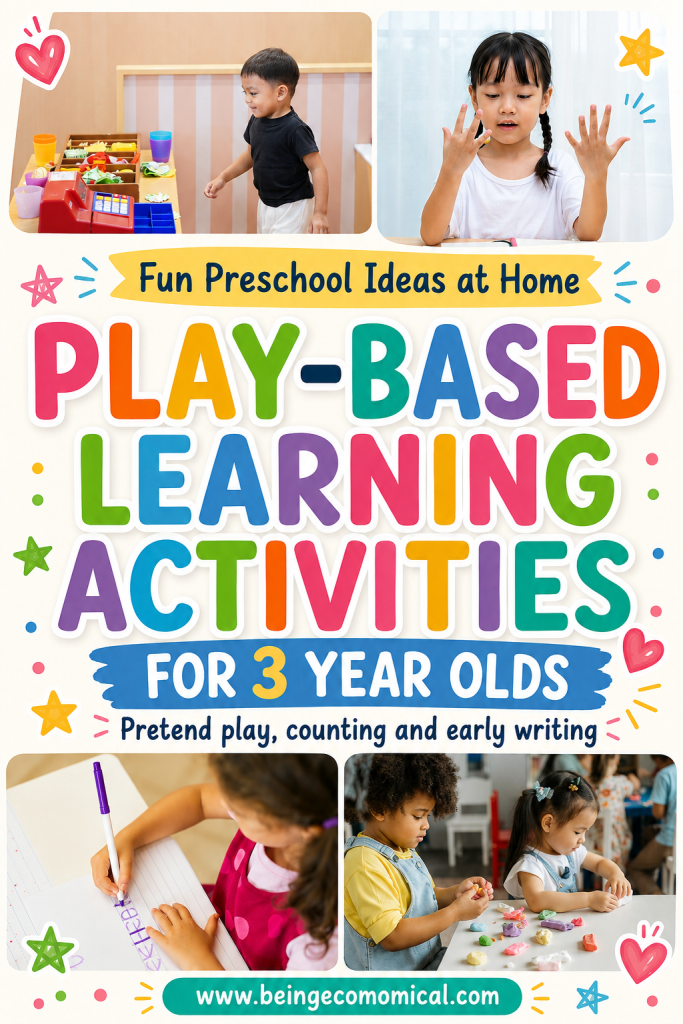
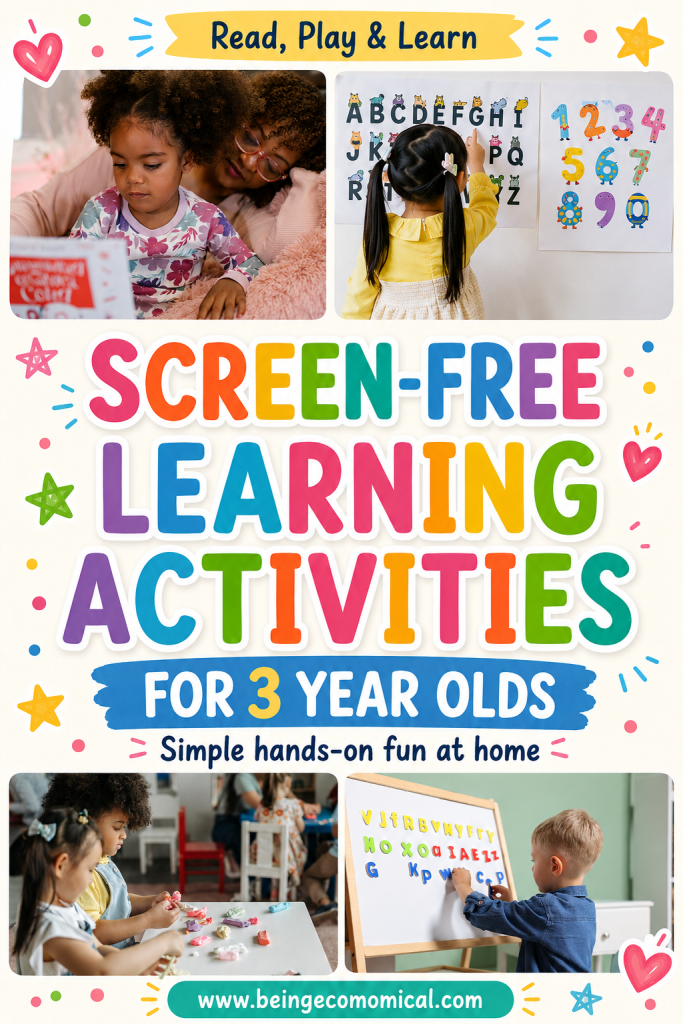
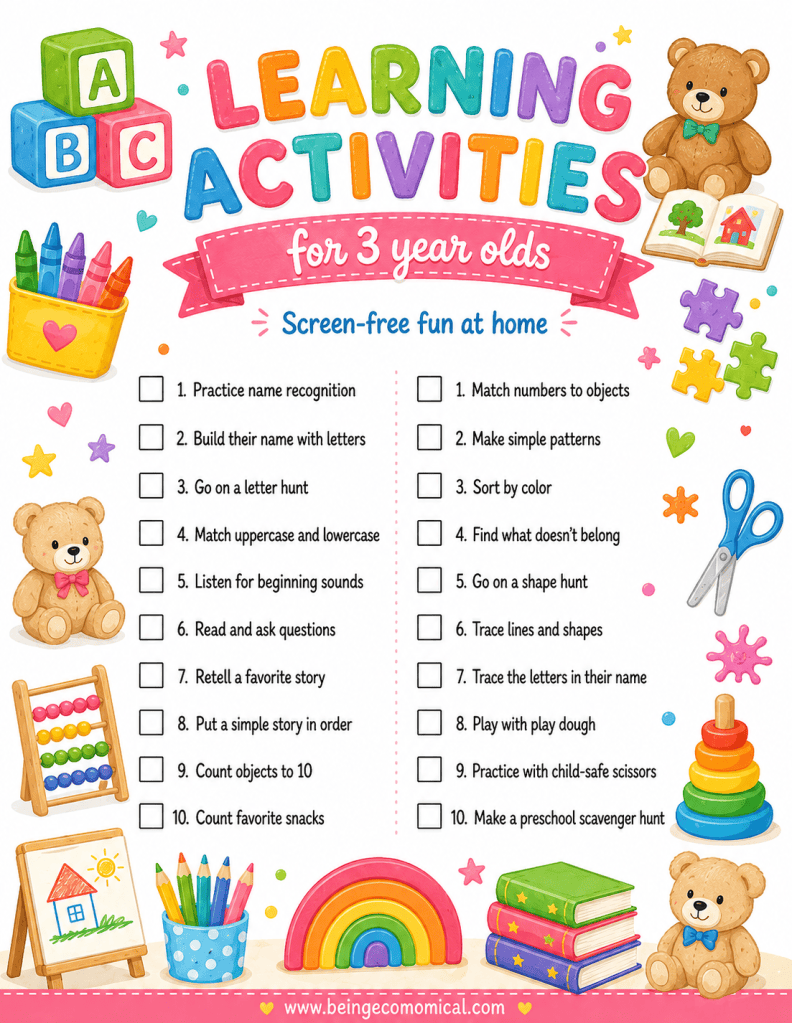
Pin these for later:
Frequently Asked Questions About Learning Activities for 3 Year Olds
What should a 3 year old be learning at home?
At three years old, children can begin working on basic preschool skills like colors, shapes, counting, letter recognition, name recognition, early letter sounds, fine motor skills, following directions and simple patterns.
You do not need to teach all of these skills through formal lessons. Reading, playing, cooking, sorting toys, talking and exploring together can all become learning opportunities.
What educational activities are best for a 3 year old?
Some of the best educational activities for 3 year olds include reading together, counting objects, sorting colors and shapes, playing with puzzles, using play dough, practicing with child-safe scissors, doing simple scavenger hunts and playing pretend.
Activities that combine learning with movement and play are especially helpful at this age.
How long should a 3 year old do learning activities?
Learning activities for a three-year-old can be short.
You may only spend five to fifteen minutes on a structured activity before moving on to something else. If your child is interested and wants to continue, you can always keep going.
The goal is not to make your three-year-old sit for a certain amount of time. Short, positive learning experiences throughout the day can work beautifully.
Should a 3 year old know the alphabet?
A three-year-old does not need to know the entire alphabet.
Many children begin recognizing some letters between ages three and four, especially letters they see frequently, like the letters in their own name.
You can introduce letters gradually through books, songs, magnetic letters, letter hunts and everyday play.
Should a 3 year old be able to count to 10?
Some three-year-olds can recite the numbers to 10, while others are still learning.
More important than simply memorizing the number sequence is beginning to understand that numbers represent quantities.
Practice counting actual objects like blocks, snacks, toy cars or steps so your child can begin connecting number words to real amounts.
Should a 3 year old be able to write their name?
Most three-year-olds are still developing the fine motor control needed for handwriting, so they do not need to be able to write their name independently.
You can begin with name recognition, tracing large letters, drawing lines and shapes, using play dough and other fine motor activities.
Those early skills help prepare their hands for writing later.
What are good fine motor activities for 3 year olds?
Good fine motor activities for three-year-olds include play dough, stickers, puzzles, tearing paper, gluing, drawing, stringing large beads, building with blocks and practicing with child-safe scissors.
Fine motor activities help strengthen the hands and fingers children eventually use for writing, dressing and other everyday tasks.
How can I teach my 3 year old without worksheets?
There are plenty of ways to teach a three-year-old without worksheets.
You can count toys, hunt for letters, sort household objects, read books, cook together, make patterns, build with blocks, play pretend, go on scavenger hunts and practice shapes using objects around the house.
At this age, hands-on learning often feels much more natural than sitting down with paperwork.
Do 3 year olds need preschool curriculum?
A formal preschool curriculum is optional at age three.
Some parents enjoy having a curriculum because it provides ideas and structure. Others prefer to follow their child’s interests and use books, play and everyday experiences.
You can also combine the two approaches by using a simple curriculum for guidance while keeping most of your preschool day relaxed and play-based.
How do I keep my 3 year old interested in learning?
Start with things your child already enjoys.
If they love cars, count cars, sort them by color and make patterns with them. If they love animals, use toy animals for matching, vocabulary and pretend play.
Keep activities short, include plenty of movement and don’t be afraid to stop when your child loses interest.
Learning at three should feel like something they get to do—not something they have to endure.


Leave a Reply