-
Where to Stay in Pigeon Forge With Kids: Home2 Suites by Hilton Pigeon Forge

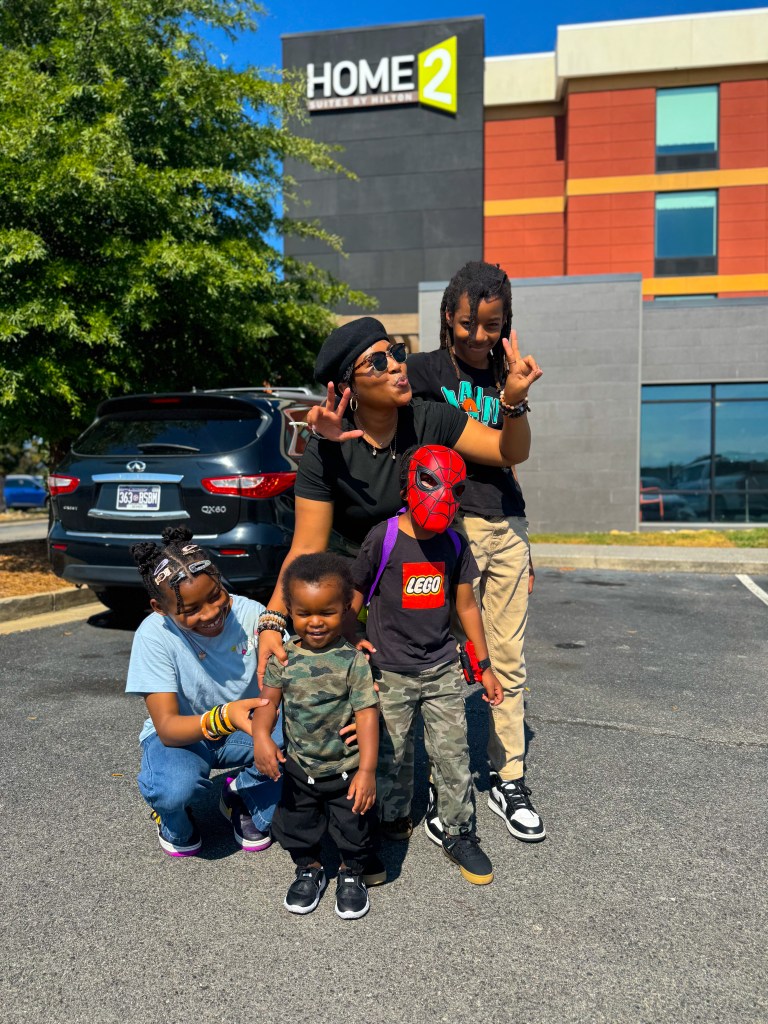
If you’re planning a family trip to Pigeon Forge, Tennessee, one of the biggest decisions you’ll make is where to stay. There are so many hotels, cabins and resorts around the Smoky Mountains, but after staying at Home2 Suites by Hilton Pigeon Forge, I realized how much the right location can simplify an already busy family vacation.
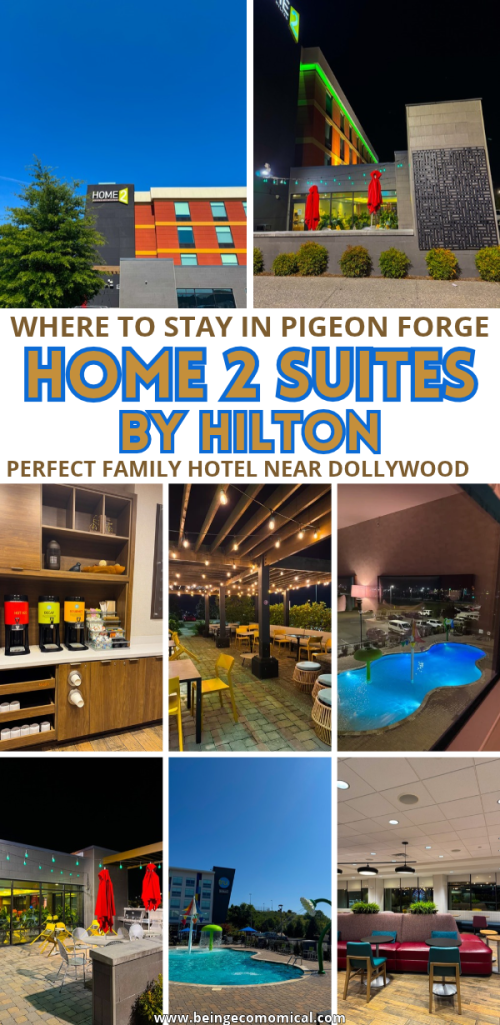
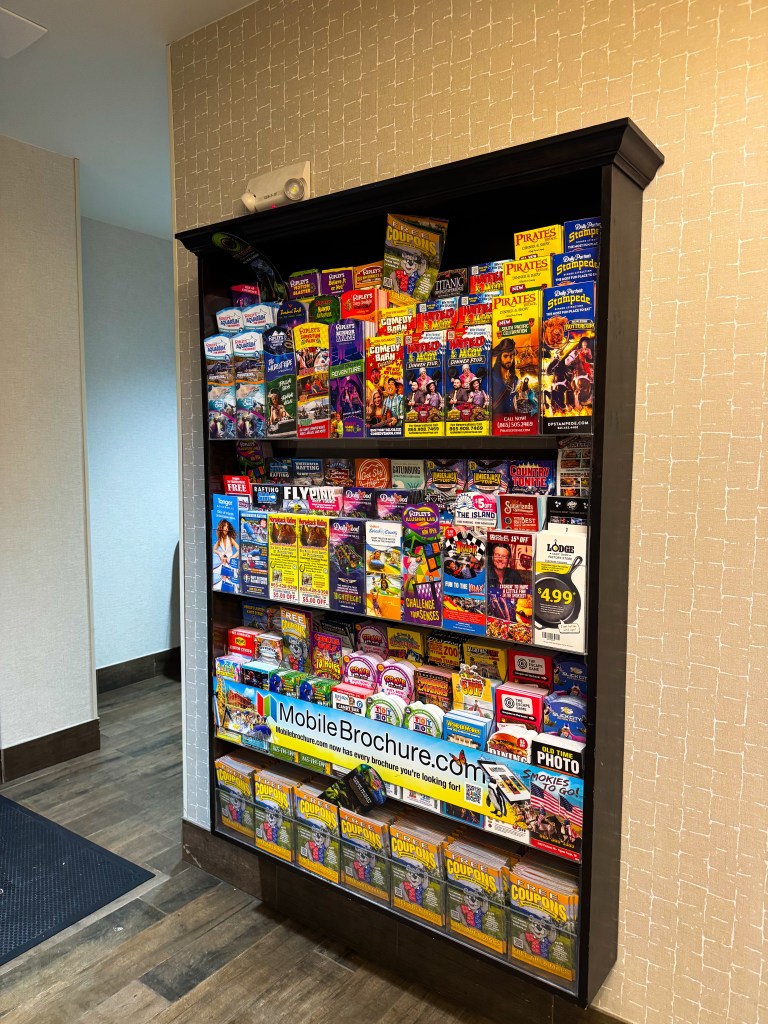
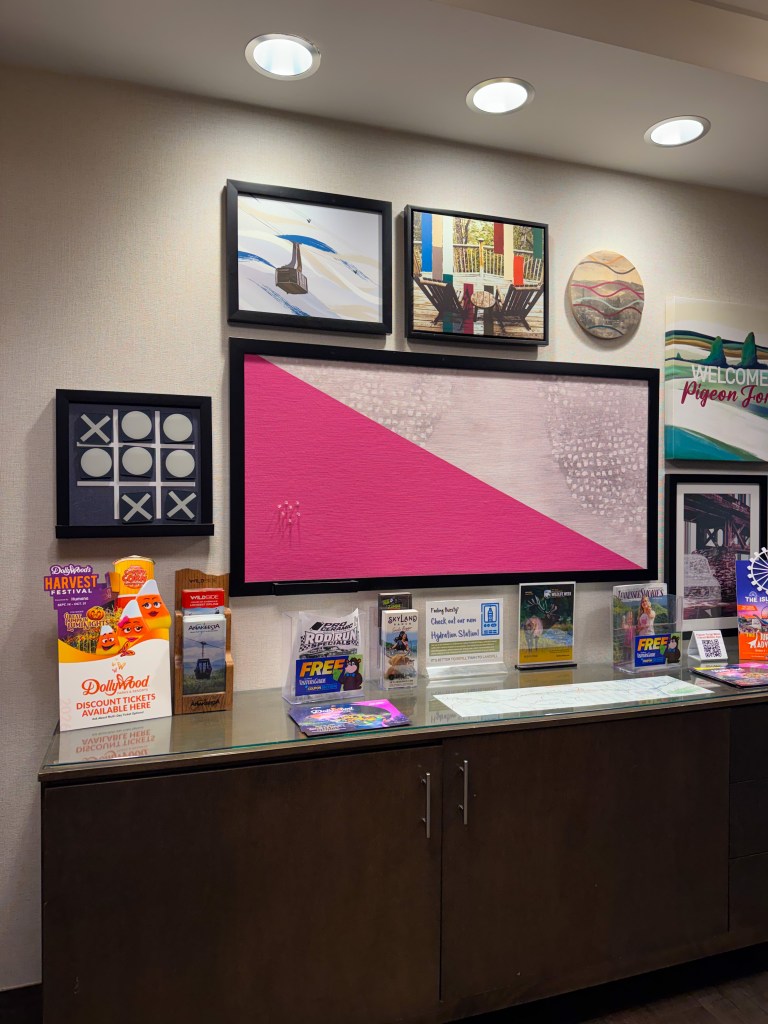
Home2 Suites sits on Teaster Lane in the heart of Pigeon Forge, close to many of the attractions families come here to experience. Hilton lists Dollywood at just 2 miles away, The Ripken Experience at only half a mile, and downtown Pigeon Forge about a mile from the hotel.
But one of my favorite parts about the location? The Island in Pigeon Forge is right across the way.
When you’re traveling with kids, being this close to food, entertainment and things to do makes such a difference.
A Convenient Pigeon Forge Hotel Near Everything
Home2 Suites by Hilton Pigeon Forge is located at 2819 Teaster Lane, between The Ripken Experience and the LeConte Center.
Hilton describes the property as being in the heart of Pigeon Forge, and after staying here, I completely understand why.
You can spend your day exploring Pigeon Forge without feeling like you’re constantly making long drives back and forth to your hotel.

You’re close to:
- The Island in Pigeon Forge
- Dollywood
- The Ripken Experience
- LeConte Center
- restaurants
- family attractions
- shopping
- the Pigeon Forge Parkway
Dollywood itself is listed approximately 2 miles from the hotel, which was incredibly convenient for our trip.
And The Island is one of those places where you can easily spend an entire afternoon or evening. It has shopping, dining, family attractions, the Great Smoky Mountain Wheel and its show fountain all in one destination.
That means you can head back to the hotel after a full day at Dollywood, take a break, and still have plenty nearby when everybody suddenly decides they aren’t ready for the day to end.
And with kids? That convenience matters.
The Suites Make Traveling With Kids So Much Easier
This is probably where Home2 Suites won me over.
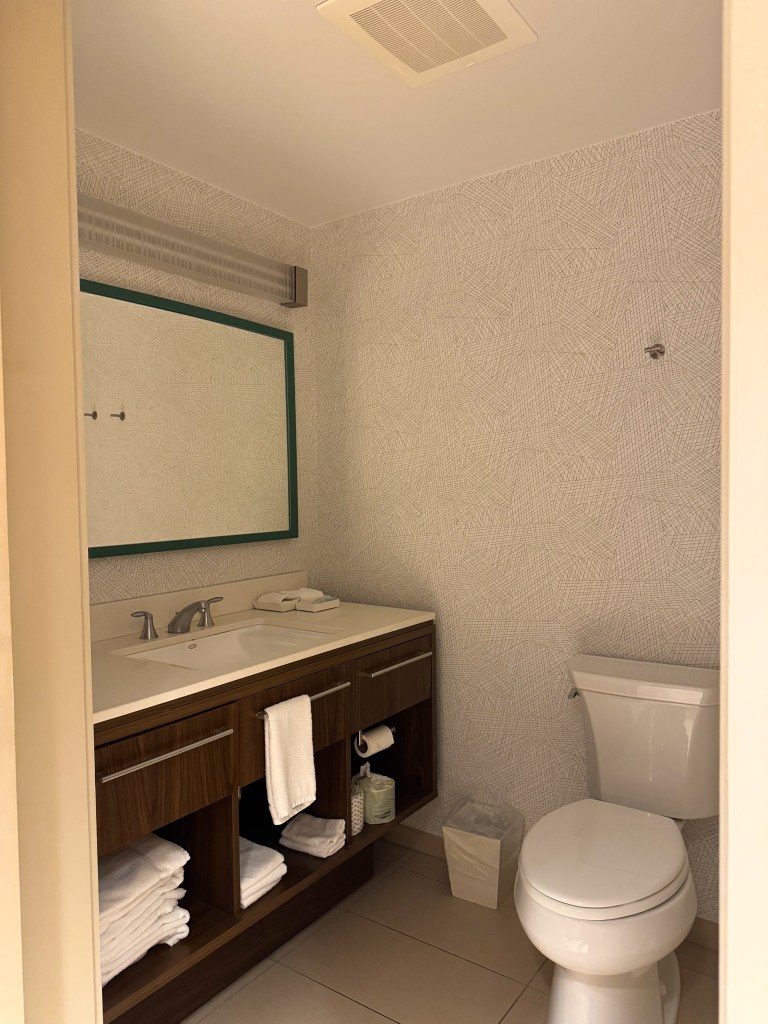
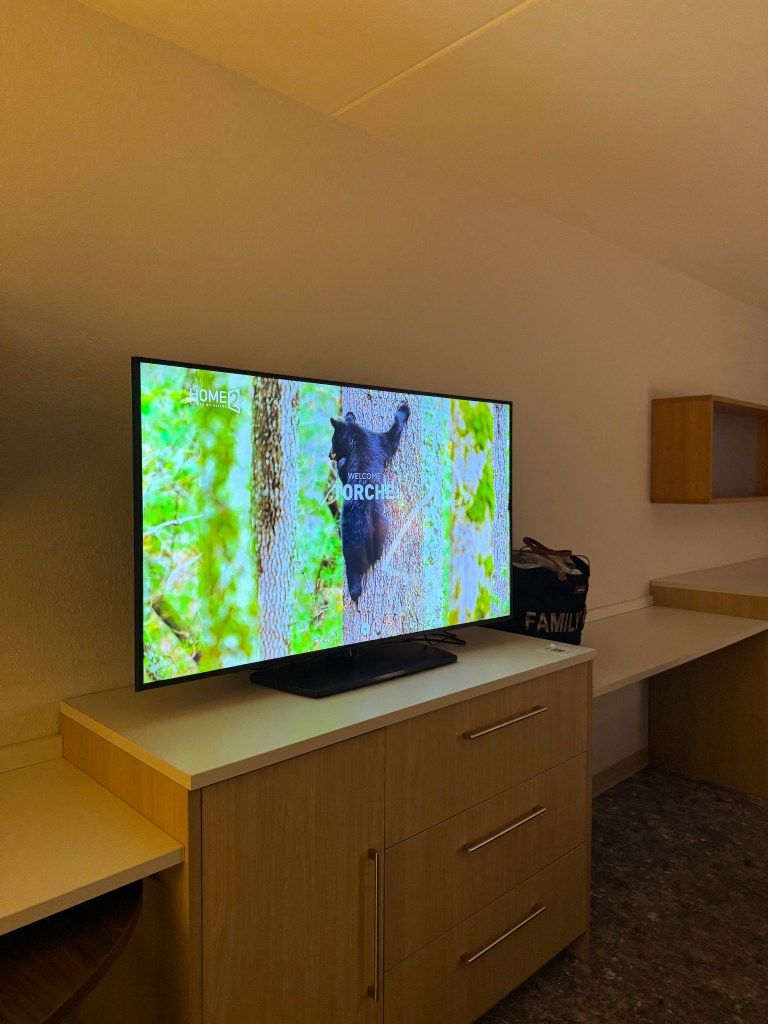
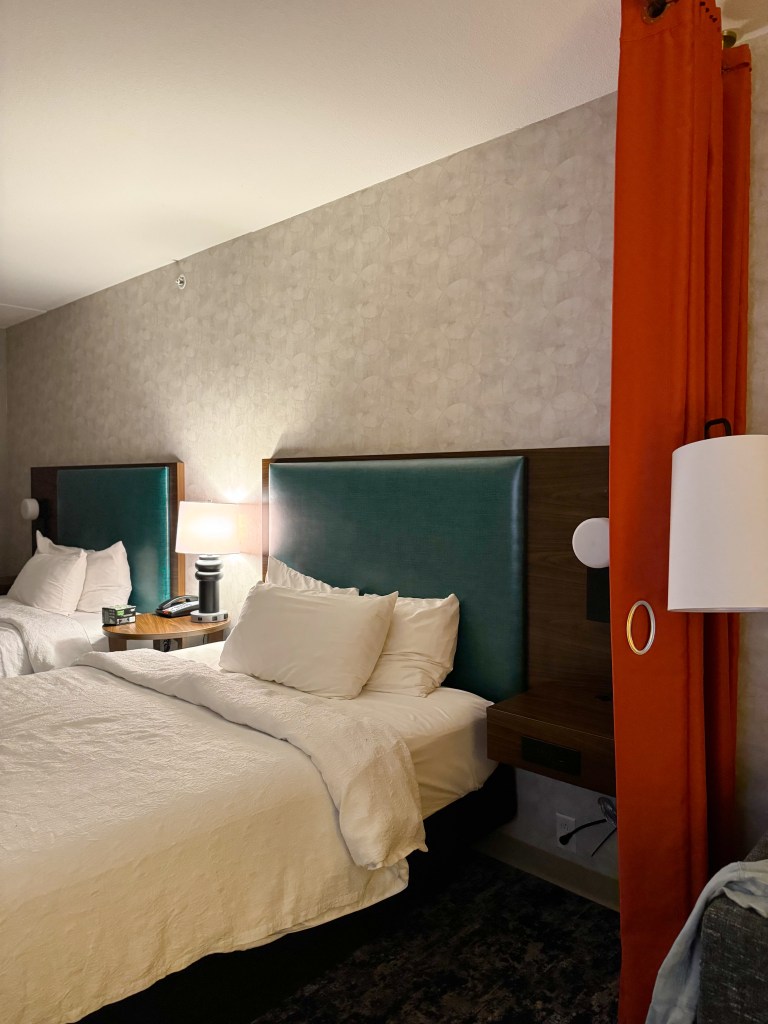
Our room didn’t feel like a standard hotel room where everyone is surrounded by luggage for the entire trip. There was room to actually settle in, plus plenty of storage and counter space.
Even better was the kitchenette.
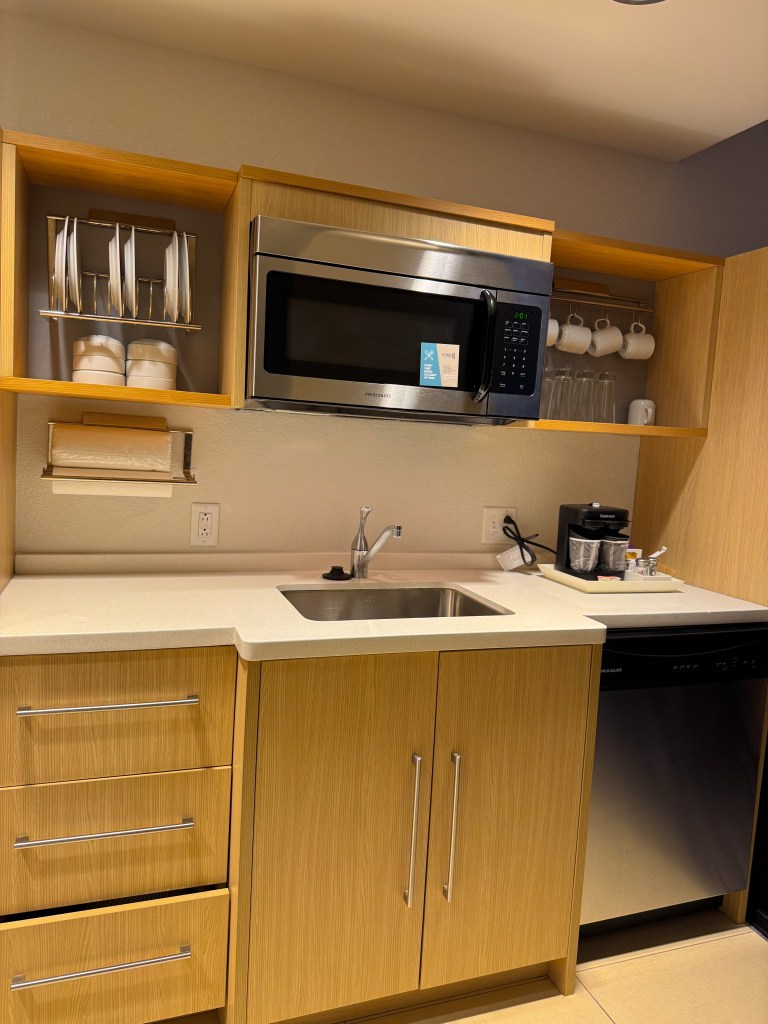
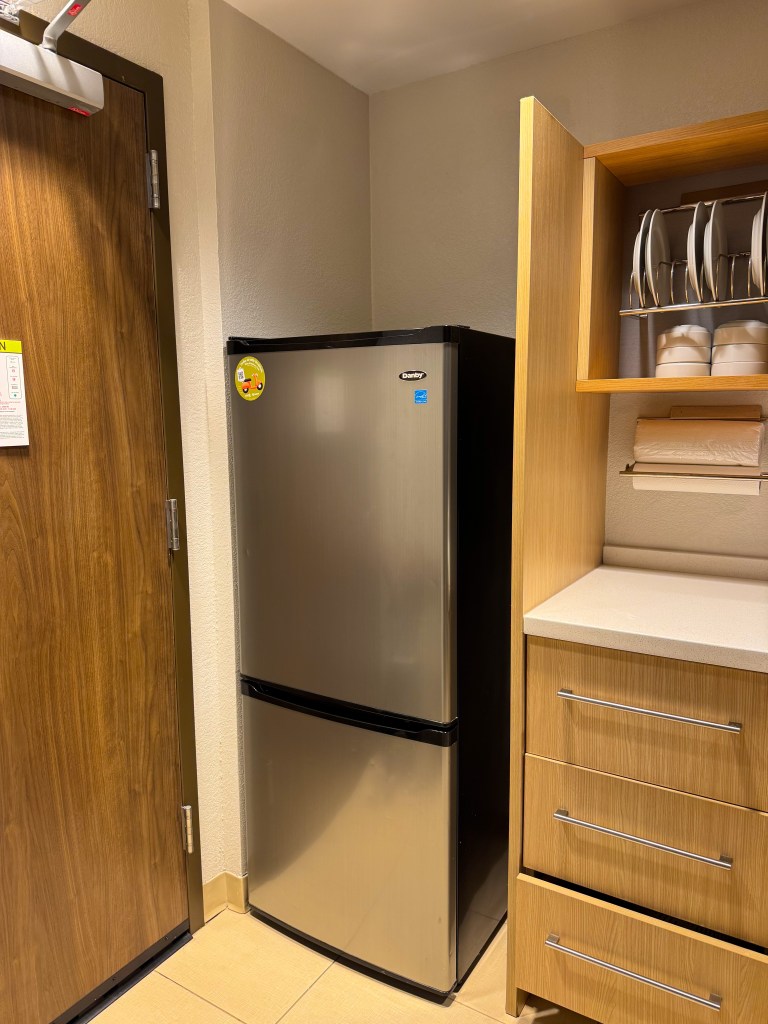
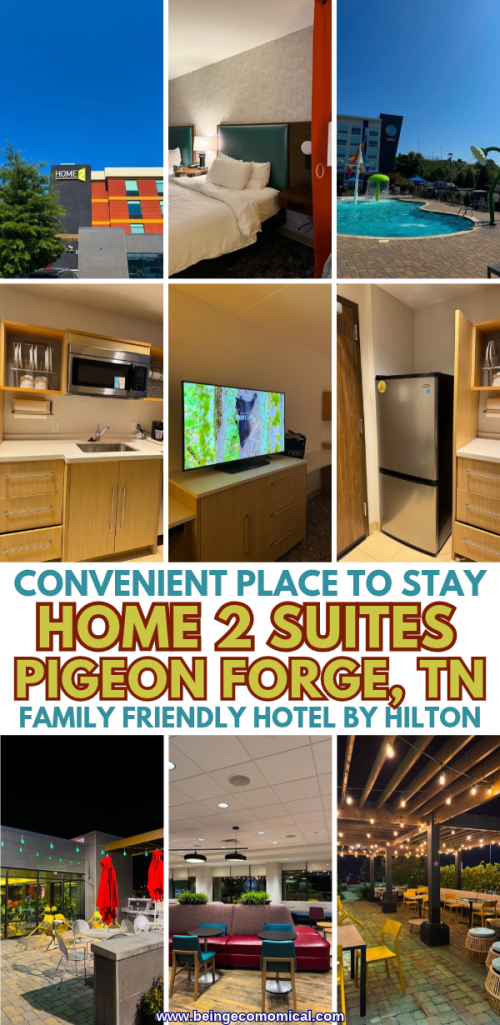
Our suite included a refrigerator, microwave, sink, dishwasher, dishes, cups and additional kitchen storage.
For families, having a kitchen setup inside the room is incredibly useful.
You can keep:
fruit and snacks cold, leftovers from restaurants, drinks for the kids, breakfast items, desserts you inevitably bring back from somewhere in Pigeon Forge, and everything else that normally ends up stuffed into a tiny hotel refrigerator.
It’s a small feature that makes a multi-day trip feel significantly easier.
Complimentary Breakfast Before a Full Pigeon Forge Day
Another thing I appreciate when traveling with kids is not having to figure out breakfast every single morning.
Home2 Suites offers complimentary hot breakfast, so you can feed everybody before heading out for the day.

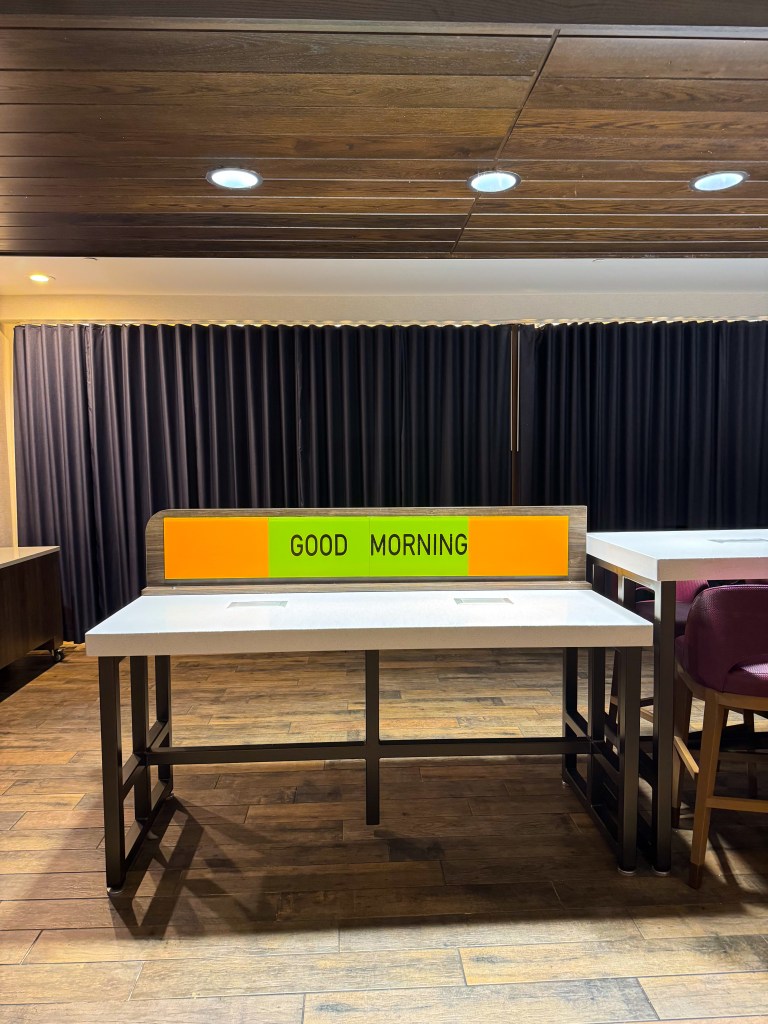
When you’re trying to get an entire family dressed, packed up and out the door for Dollywood, eliminating one restaurant stop from the morning is a win.
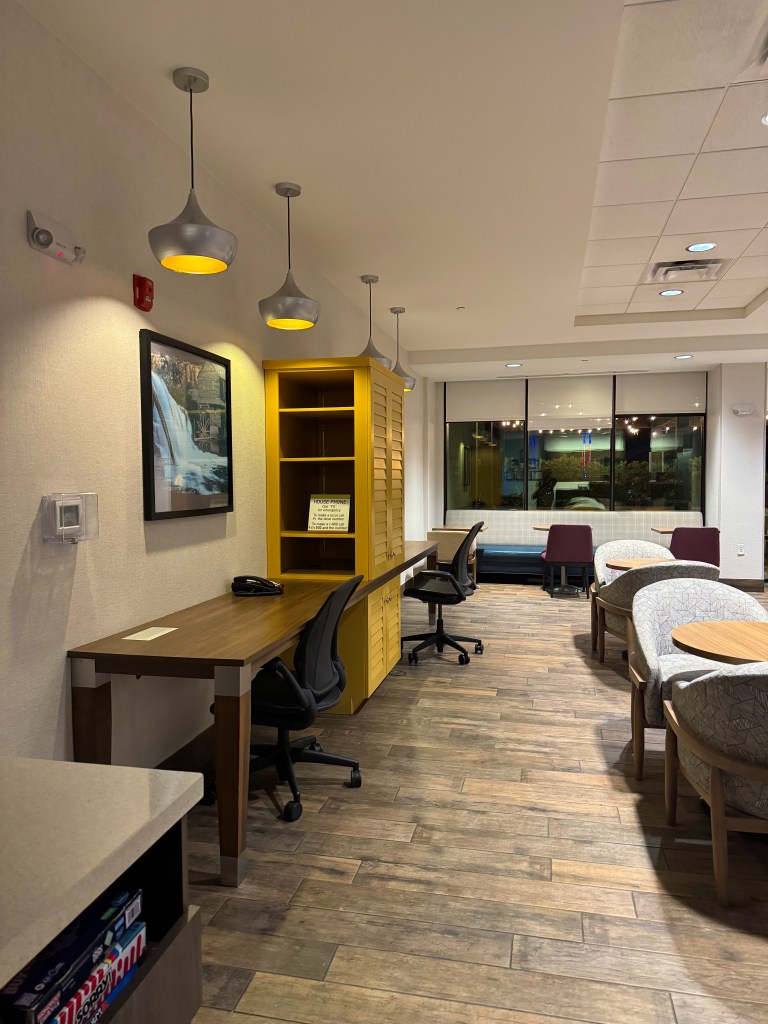
There is also a large common area with plenty of tables and seating.
For our homeschool family, I especially liked having spaces outside of the room where we could sit down, work for a bit, plan our day or simply spread out.

There Is Plenty to Do at the Hotel Too
You don’t necessarily have to leave the property every time the kids want something to do.
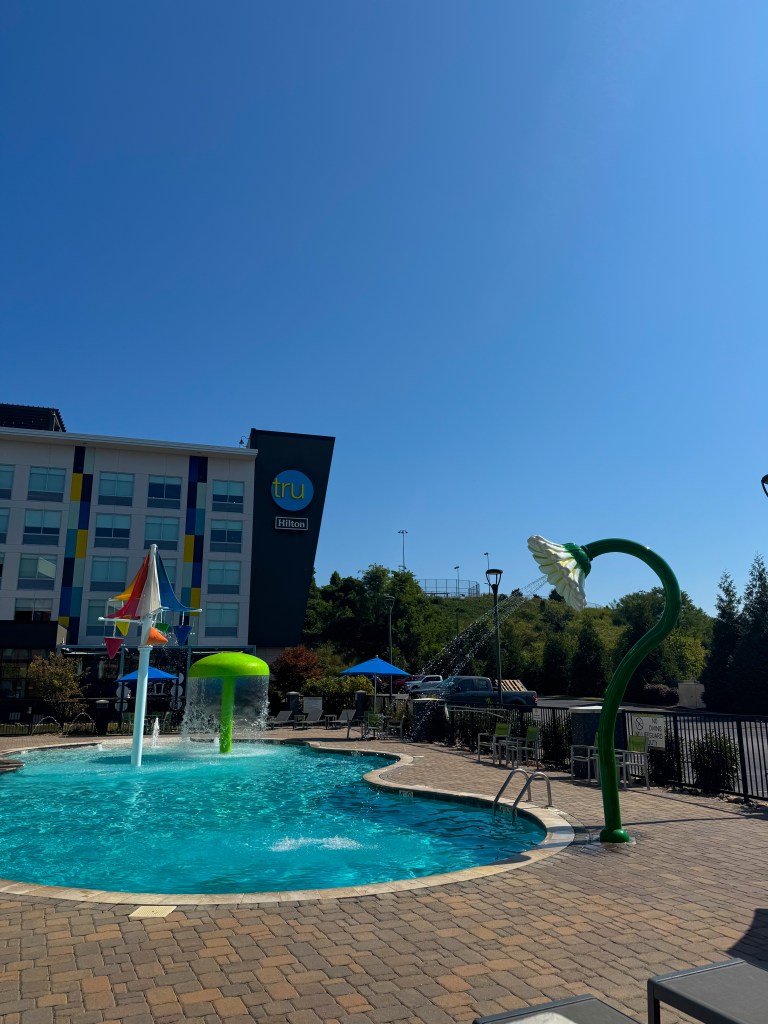
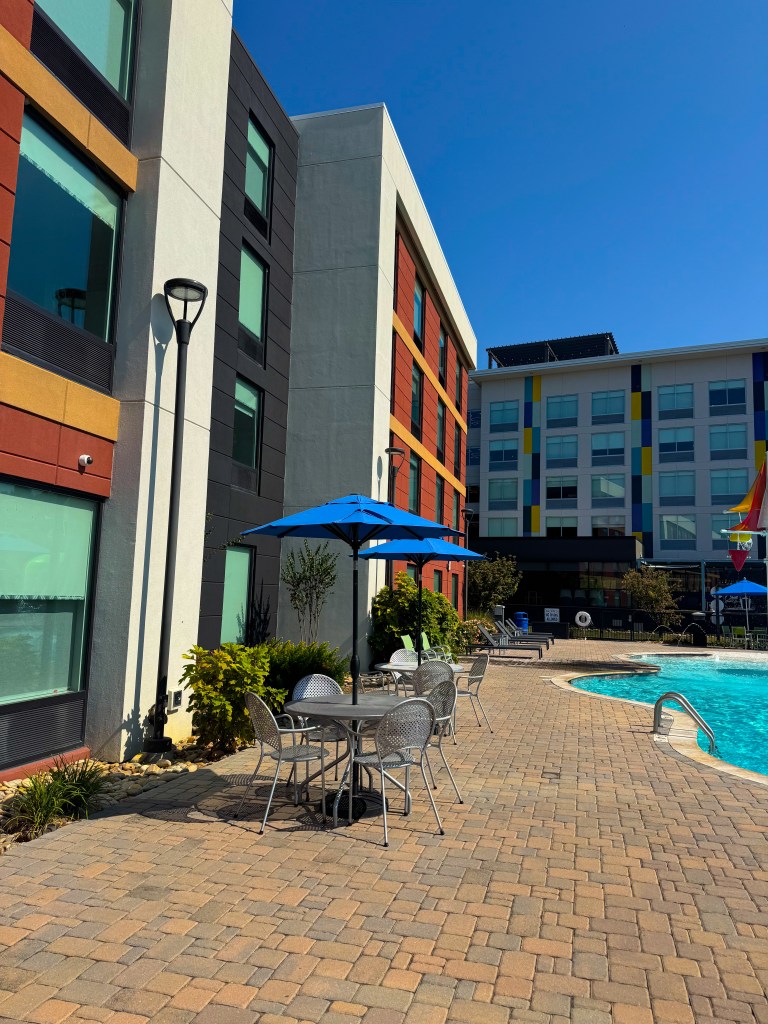
The outdoor pool ended up being one of my favorite family-friendly features.
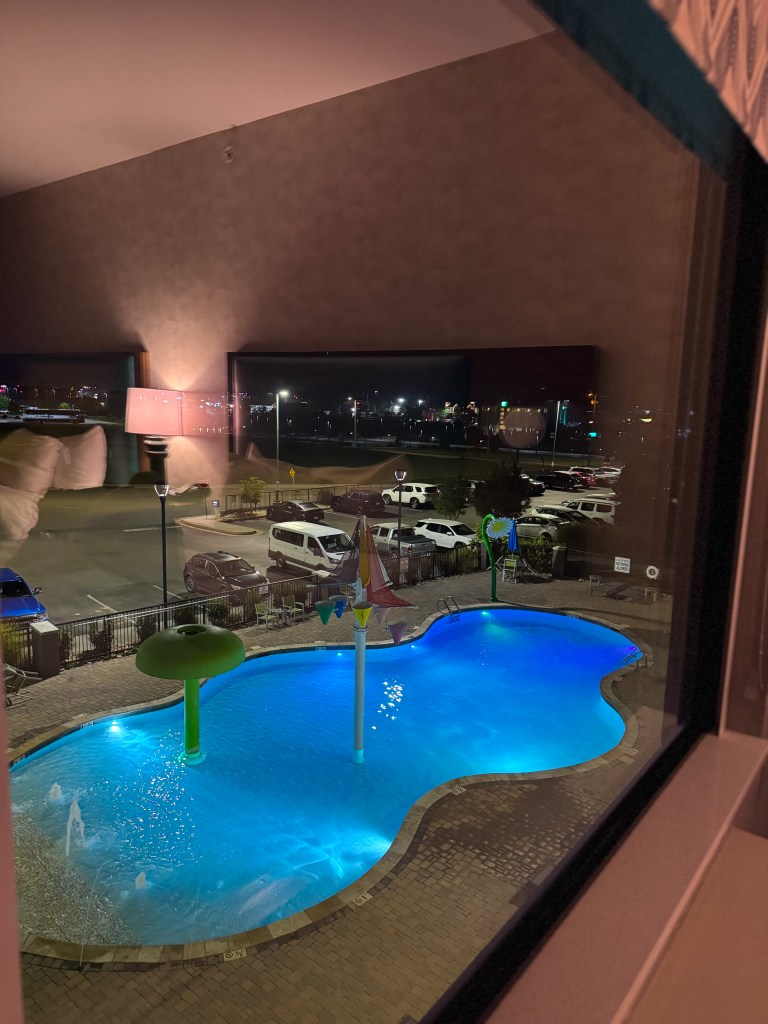
It has colorful water features and plenty of seating surrounding the pool, so it feels much more playful than your standard rectangular hotel pool.
After spending the day exploring Pigeon Forge, being able to come back and let the kids swim was perfect.
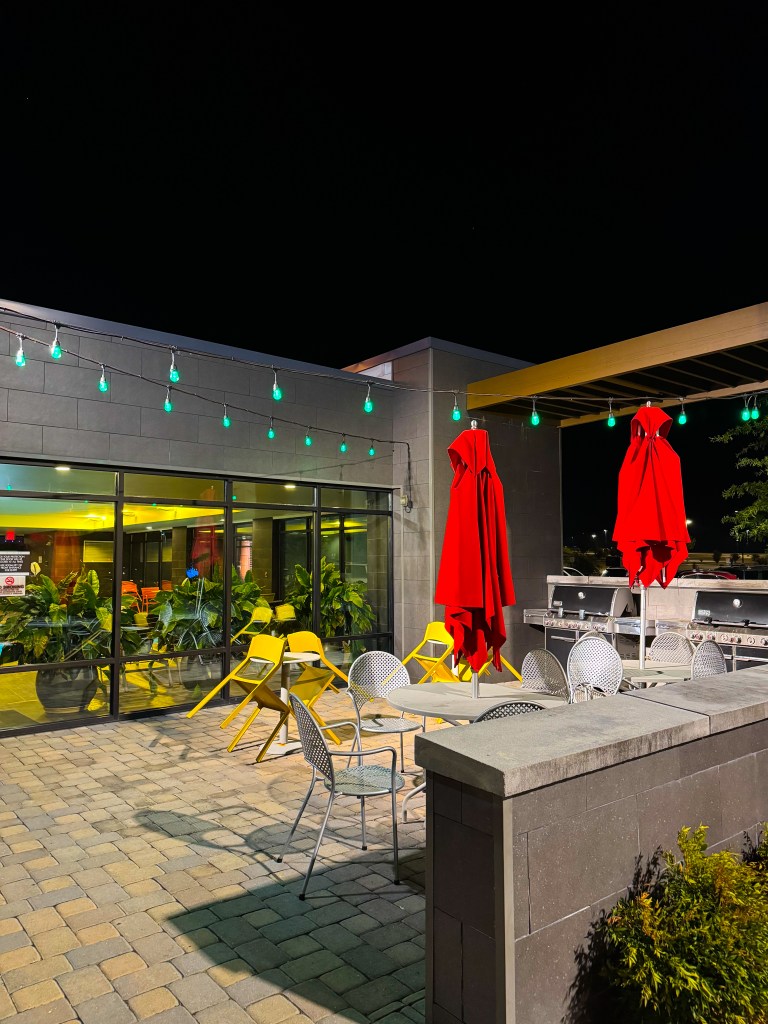
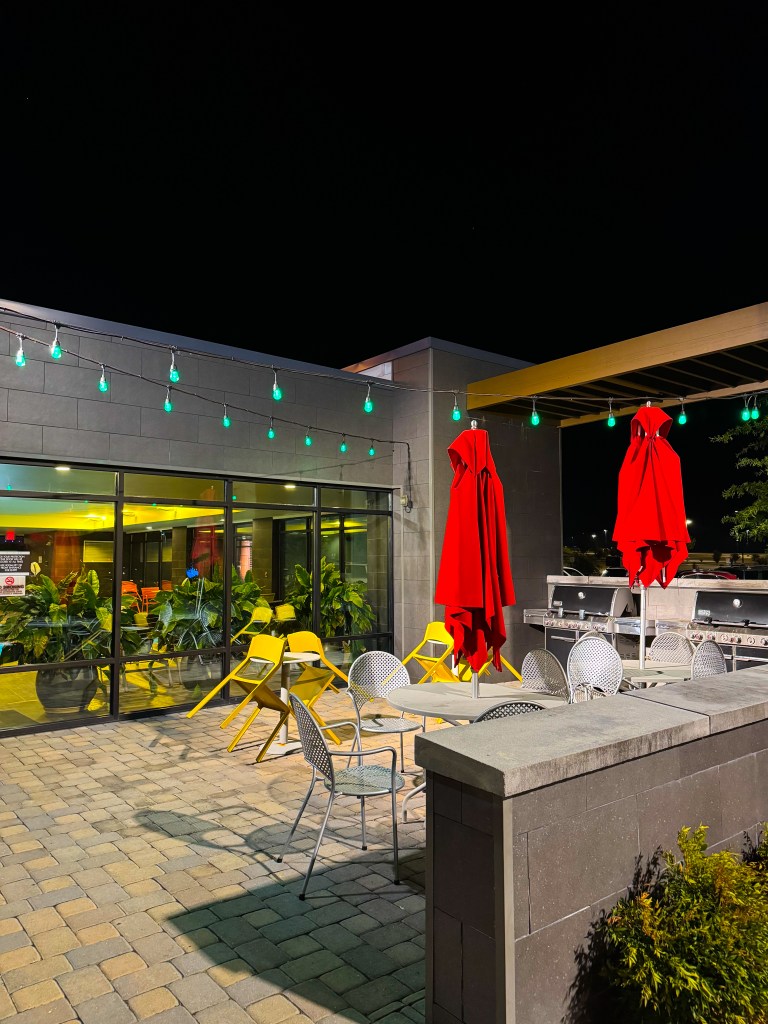
There are also outdoor gathering spaces with tables, comfortable seating, grills and a fire pit.
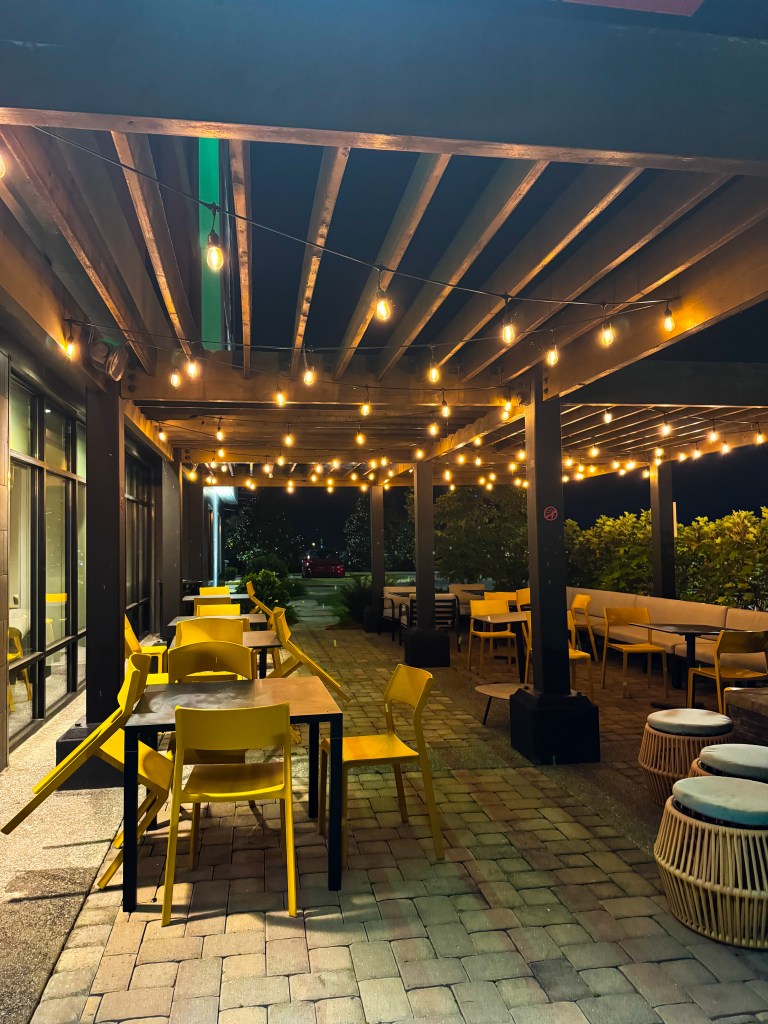

I loved this part of the property because it gives families another place to relax without being confined to the hotel room.
There Are Laundry Facilities — Parents, You Understand
Home2 Suites also has guest laundry facilities.
And if you’re traveling with several children, I probably don’t even have to explain why this deserves its own section.
Between swimming, amusement parks, spills and multiple outfit changes, being able to wash clothes during a longer vacation can save both luggage space and sanity.
It’s another reason this property works especially well for families planning a multi-day Pigeon Forge vacation.
Perfect for a Dollywood Family Trip
If Dollywood is the main reason you’re visiting Pigeon Forge, this location makes even more sense.
Hilton places Dollywood approximately 2 miles away from Home2 Suites Pigeon Forge.
That means you can spend the day riding rides, exploring seasonal festivals and eating your way through the park without facing a long drive back afterward.
Dollywood is located at 2700 Dollywood Parks Boulevard in Pigeon Forge, placing one of the area’s biggest family attractions just a short drive from the hotel.
For us, that proximity was one of the biggest advantages of staying here.

And Then There’s The Island in Pigeon Forge
One of the things that makes this location especially fun is having The Island in Pigeon Forge practically at your doorstep.
The Island is located at 131 The Island Drive and includes rides, restaurants, shopping, entertainment and the 200-foot Great Smoky Mountain Wheel.

It also has free admission and free parking, which makes it easy to stop by without feeling like you need to dedicate an entire vacation day to it.
We could spend the day exploring somewhere else in Pigeon Forge and still have The Island nearby for dinner, shopping or evening entertainment.
That’s exactly the kind of flexibility I want on a family vacation.
Why Home2 Suites Pigeon Forge Works So Well for Families
There are certainly plenty of places to stay in Pigeon Forge, but Home2 Suites by Hilton Pigeon Forge combines the things that matter most to me when we’re traveling as a family.


You’re close to the attractions.
You have space inside your room.
There’s a kitchenette.
Breakfast is included.
There’s a pool for the kids.
There are outdoor areas where everyone can spread out.
There’s laundry when somebody inevitably gets something all over their clothes.
And at the end of a busy day, you’re not driving miles away from everything just to get back to your hotel.
That’s what made this stay so convenient for us.
Is Home2 Suites Pigeon Forge Worth Staying At With Kids?
For families who want to stay close to Dollywood, The Island and many of Pigeon Forge’s most popular things to do, Home2 Suites by Hilton Pigeon Forge is absolutely one to put on your list.
It gave us something that’s surprisingly valuable on a family trip: ease.
Instead of making the hotel another logistical part of the vacation, it became an easy home base between everything we wanted to experience in Pigeon Forge.
And when you’re traveling with kids, sometimes that’s exactly what makes a good vacation great.
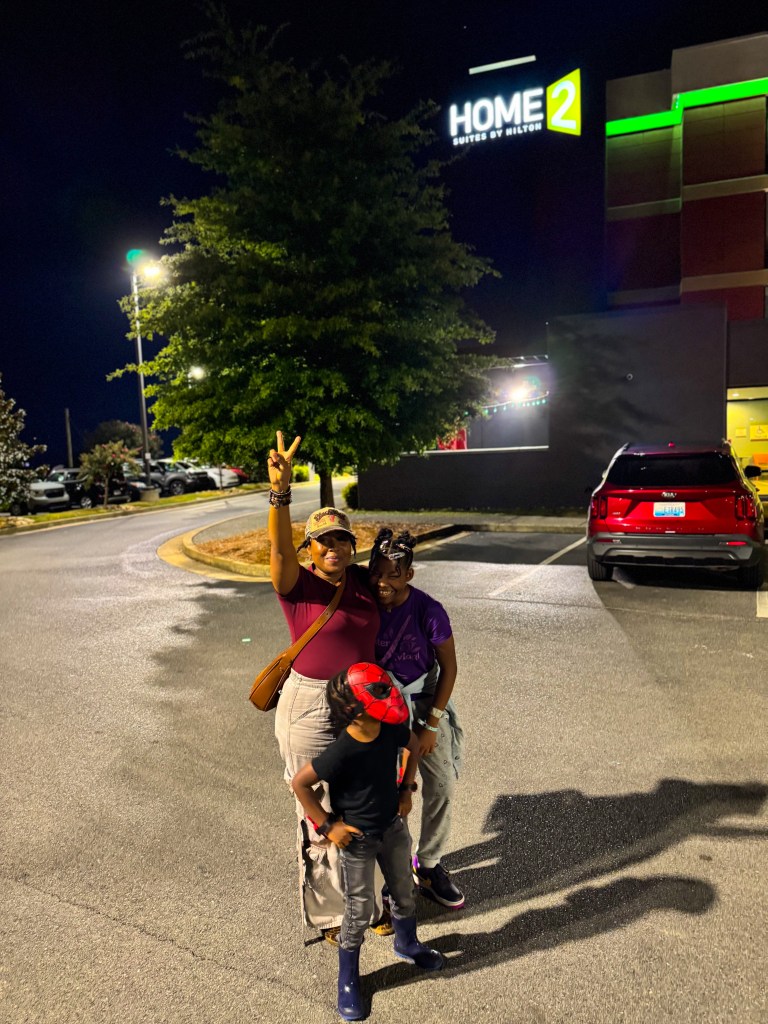
Ready to plan your Pigeon Forge family getaway?
Home2 Suites by Hilton Pigeon Forge makes it easy to stay close to Dollywood, The Island and so many of the area’s top attractions while still having the space and conveniences families actually need. Check current rates and availability for Home2 Suites Pigeon Forge here and start planning your stay.
Pin these for later…

-
Jellystone Park Pigeon Forge Review: A Fun Homeschool-Friendly Stay Near Dollywood
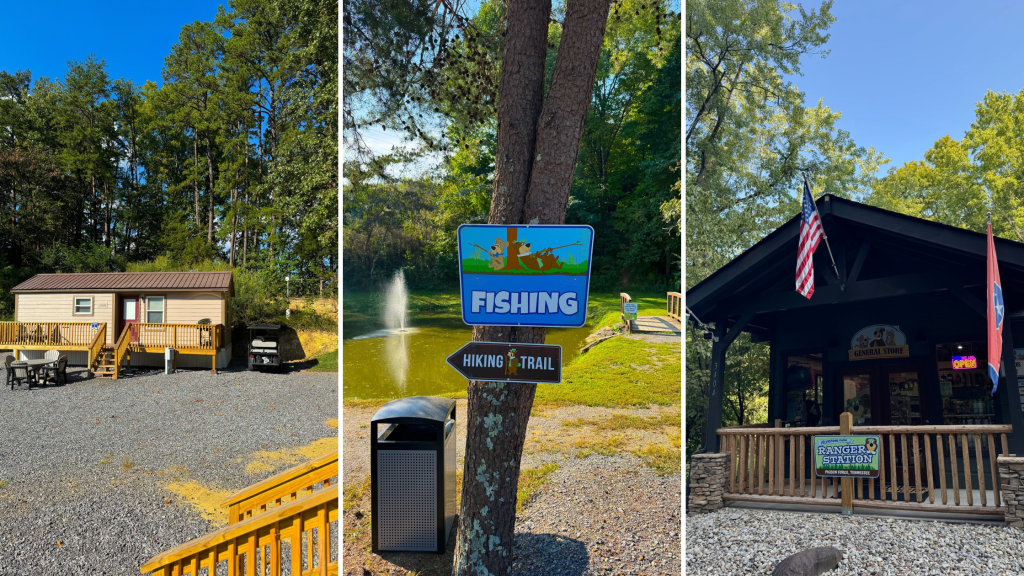
If you’re planning a family trip to Pigeon Forge, Tennessee and looking for somewhere that feels like part of the experience instead of just a place to sleep, Jellystone Park Pigeon Forge is worth putting on your list.
We stayed at Jellystone Park during our Pigeon Forge trip, and what stood out most to me was how easy it was to blend family travel, outdoor play, and hands-on learning.
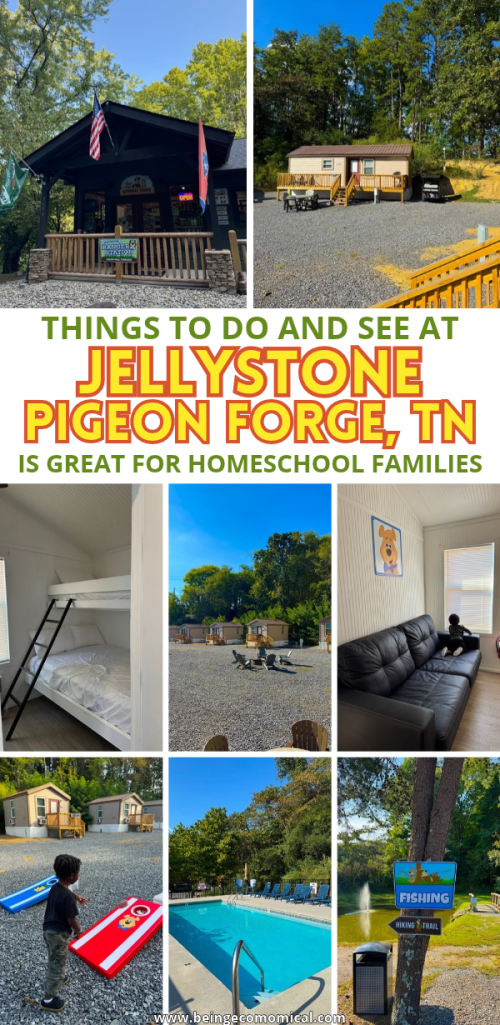
As a homeschool family, I’m always looking for ways to make our trips feel meaningful without turning every vacation into a classroom lesson. Here, the learning happened naturally.
The kids could fish, explore the campground, play outside, try hands-on activities, visit the recreation center, and simply experience a new environment together.
With Dollywood just about a mile away and the Great Smoky Mountains nearby, Jellystone Park also makes a convenient home base for families who want to explore more of Pigeon Forge.
This post is in partnership with Jellystone Park Pigeon Forge. As always, all opinions and experiences shared are my own.
Where Is Jellystone Park Pigeon Forge?
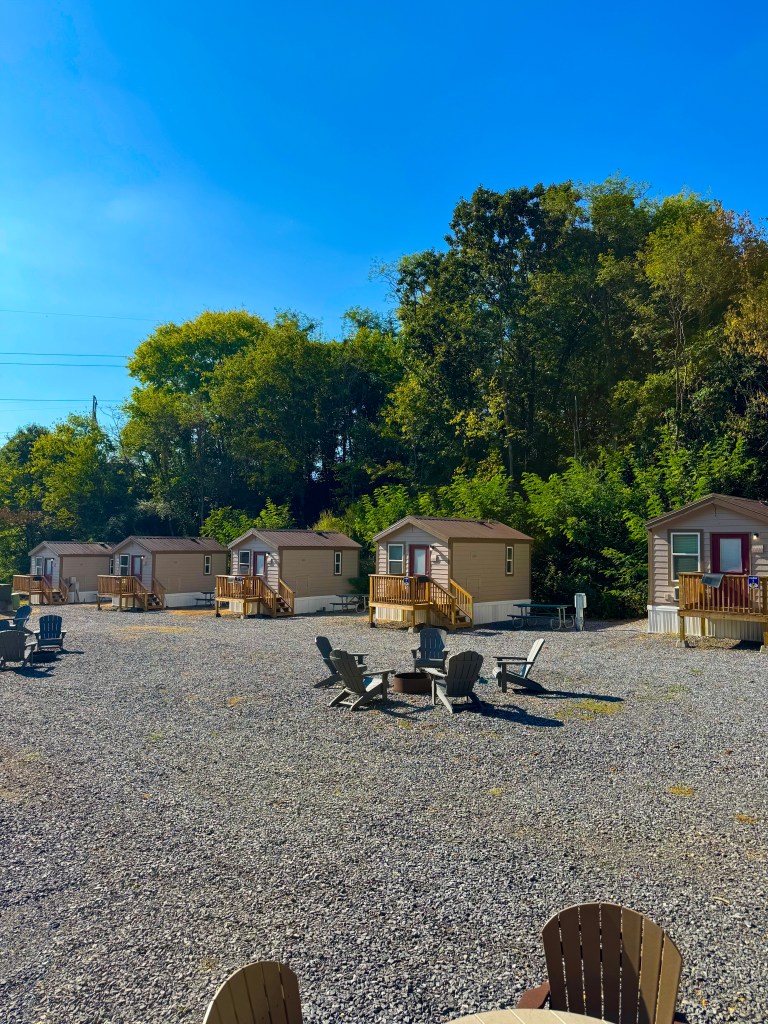
Jellystone Park Pigeon Forge is located at 3404 Whaley Drive in Pigeon Forge, Tennessee.
The campground is tucked into the Smoky Mountains while still keeping families close to many of the attractions Pigeon Forge is known for.
According to Jellystone Park, Dollywood is about one mile away, with Great Smoky Mountains National Park and other popular family attractions also within easy reach.
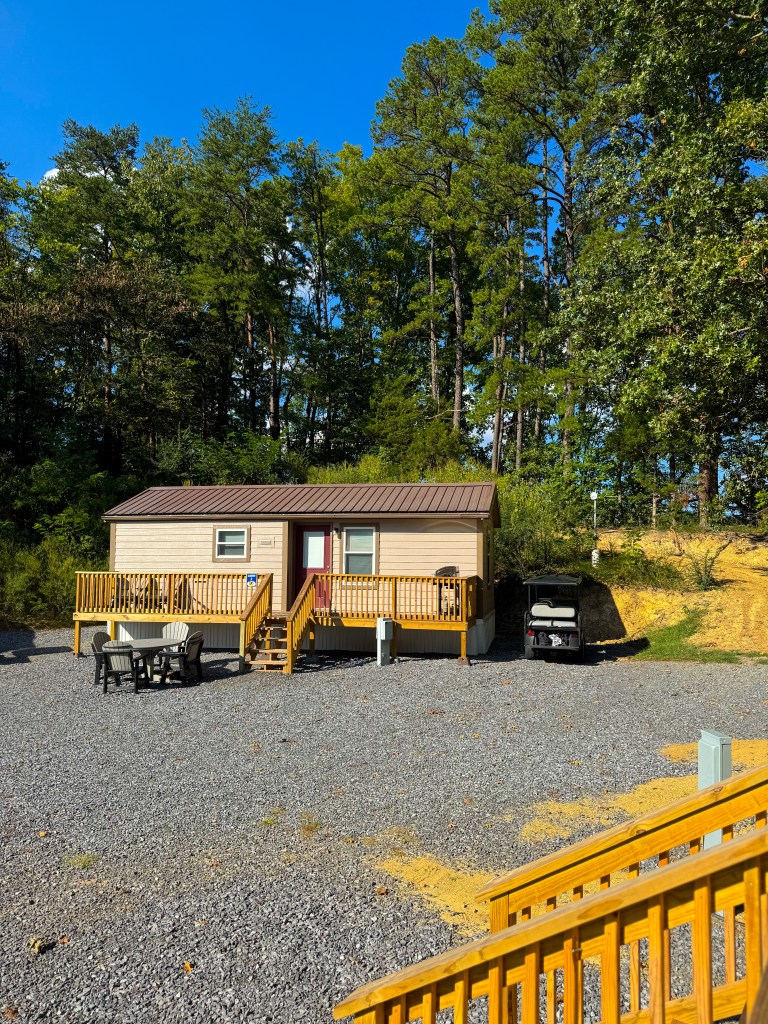
That location was a big plus for us because it gave us the best of both worlds. We could spend part of the day exploring Pigeon Forge and then come back to somewhere that felt quieter and more relaxed.
For families researching where to stay near Dollywood, family-friendly places to stay in Pigeon Forge, or Pigeon Forge cabins with activities for kids, this is one of those properties where the accommodations and the experience really overlap.
Our Cabin at Jellystone Park Pigeon Forge
We stayed in one of the cabins, which gave us much more of a home-away-from-home feeling than a traditional hotel room.
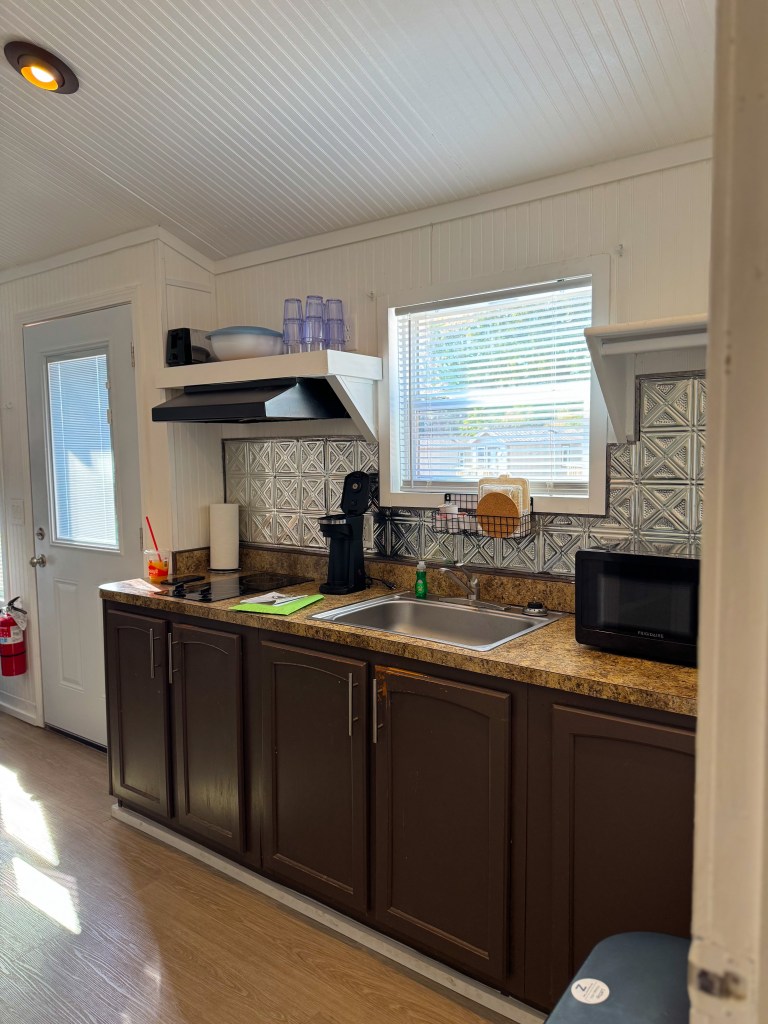
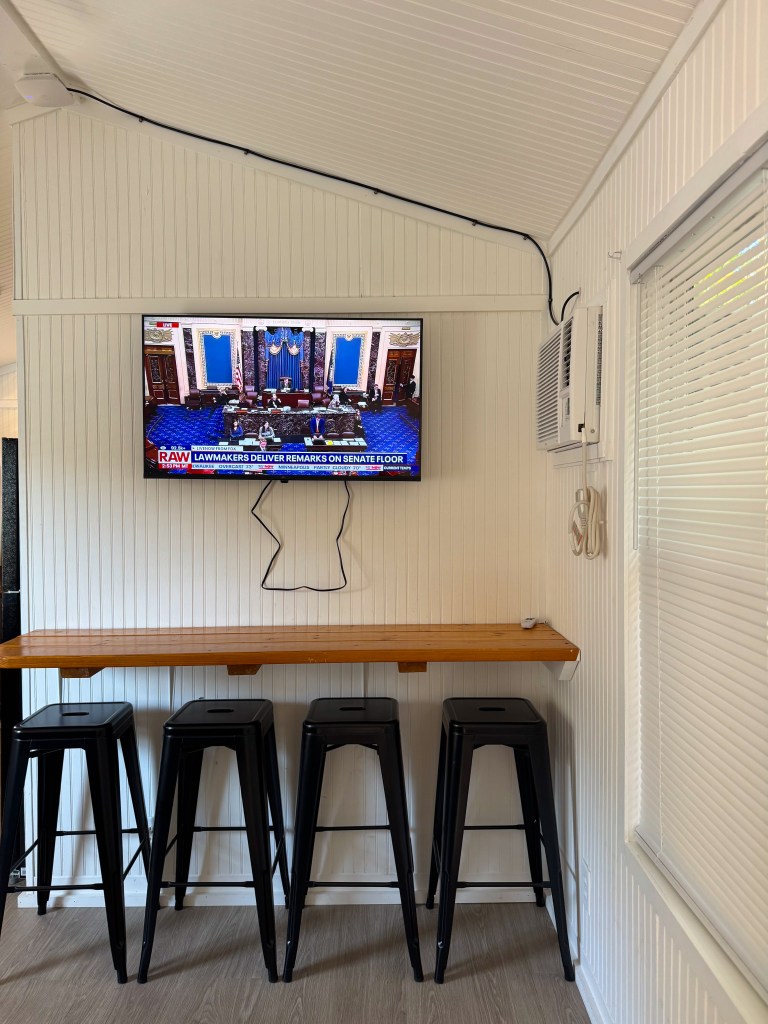
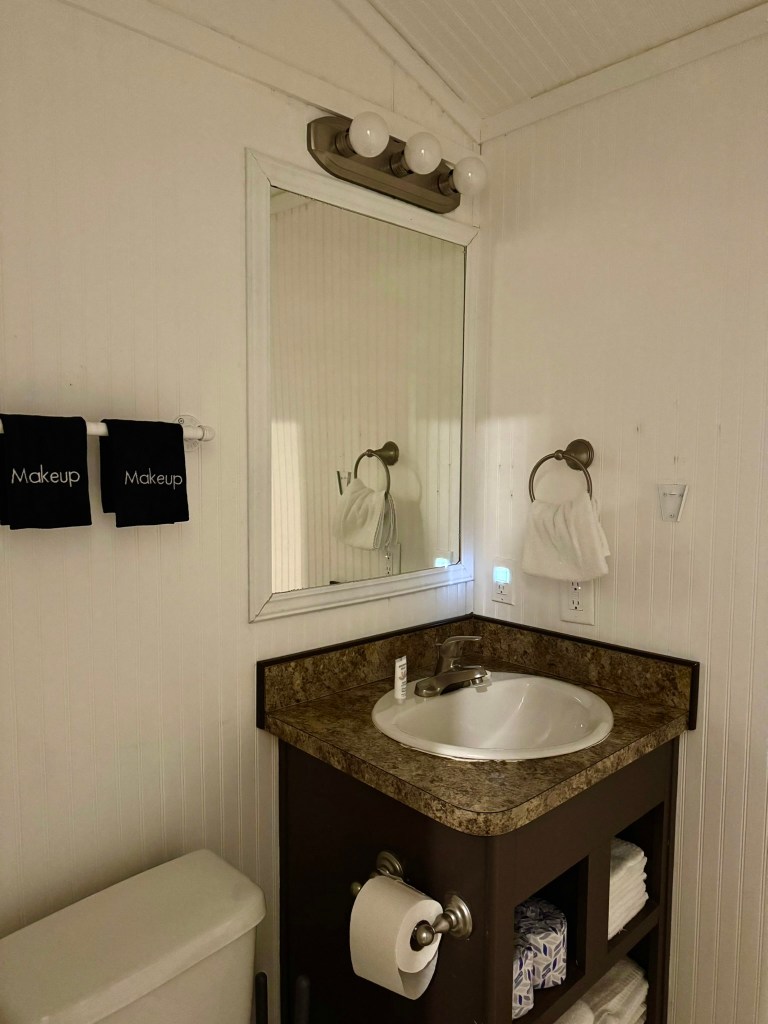
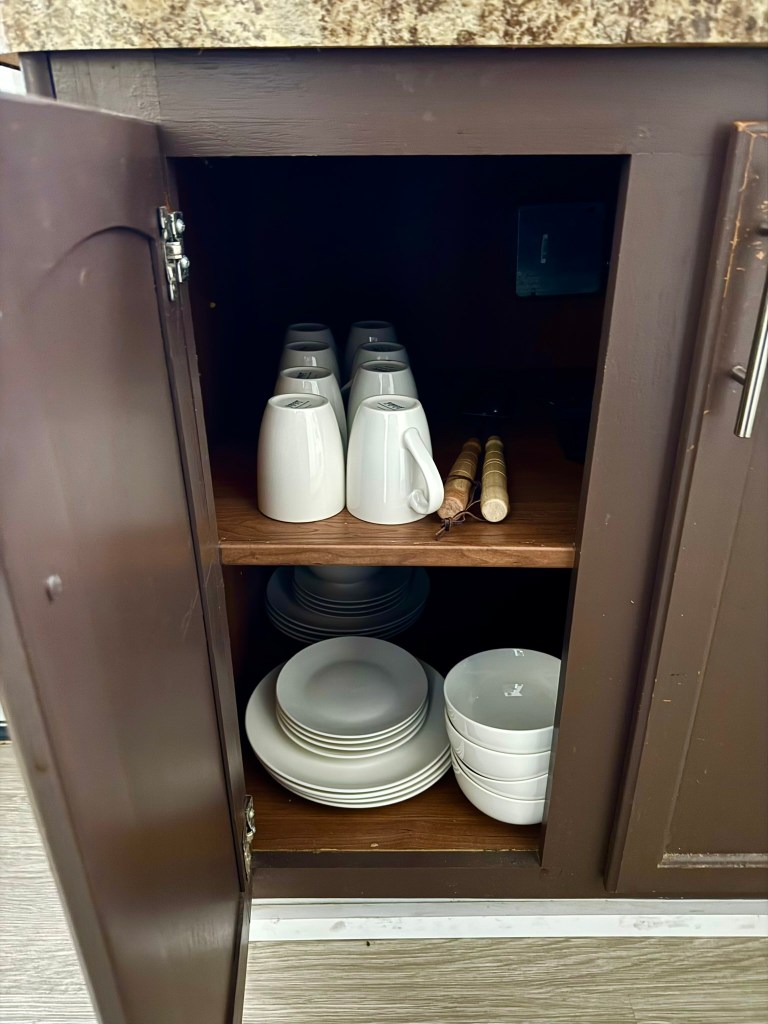
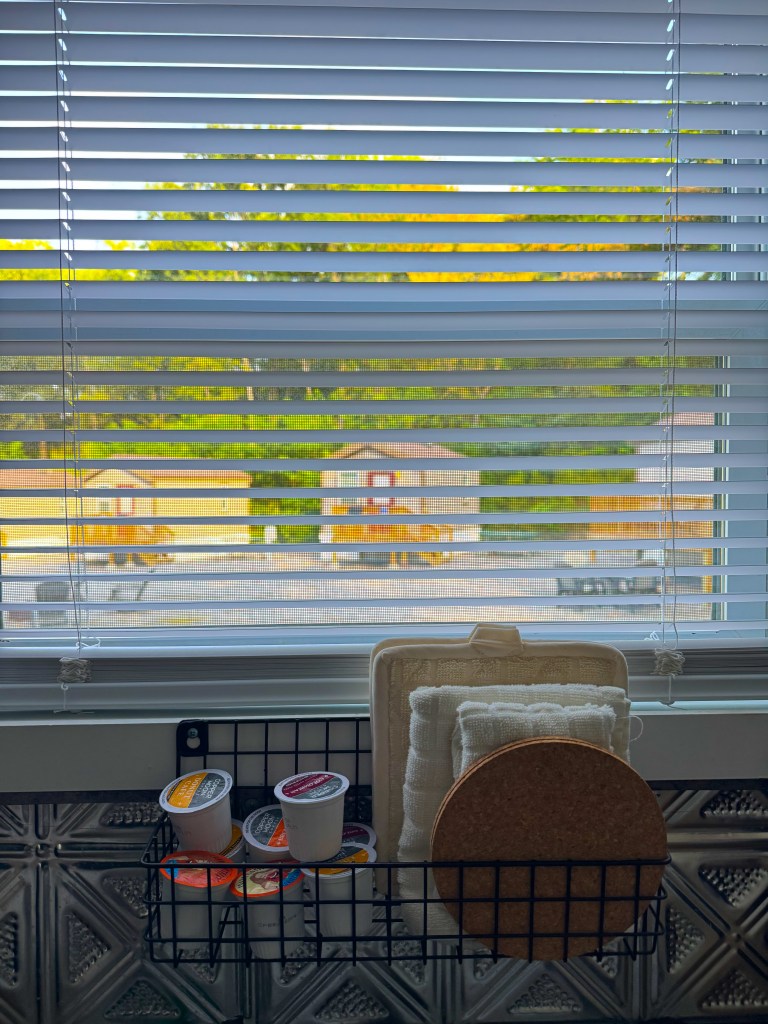
Our cabin included separate sleeping spaces, bunk beds for the kids, a kitchen area, bathroom, living space, televisions, and an outdoor deck with a grill.
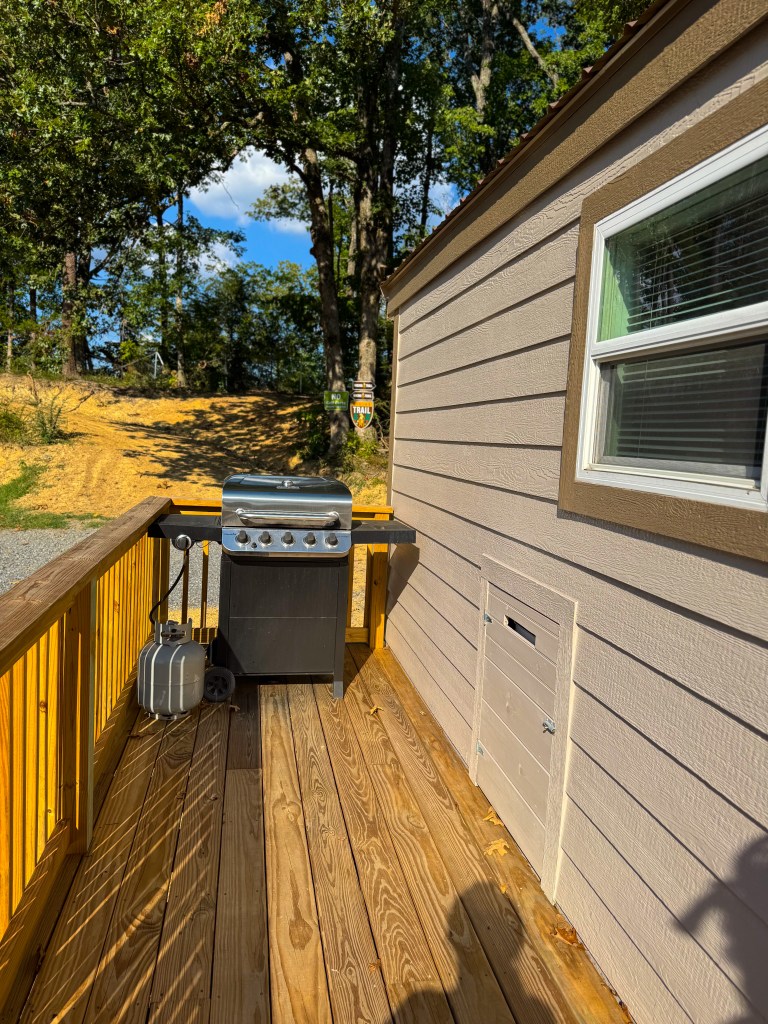
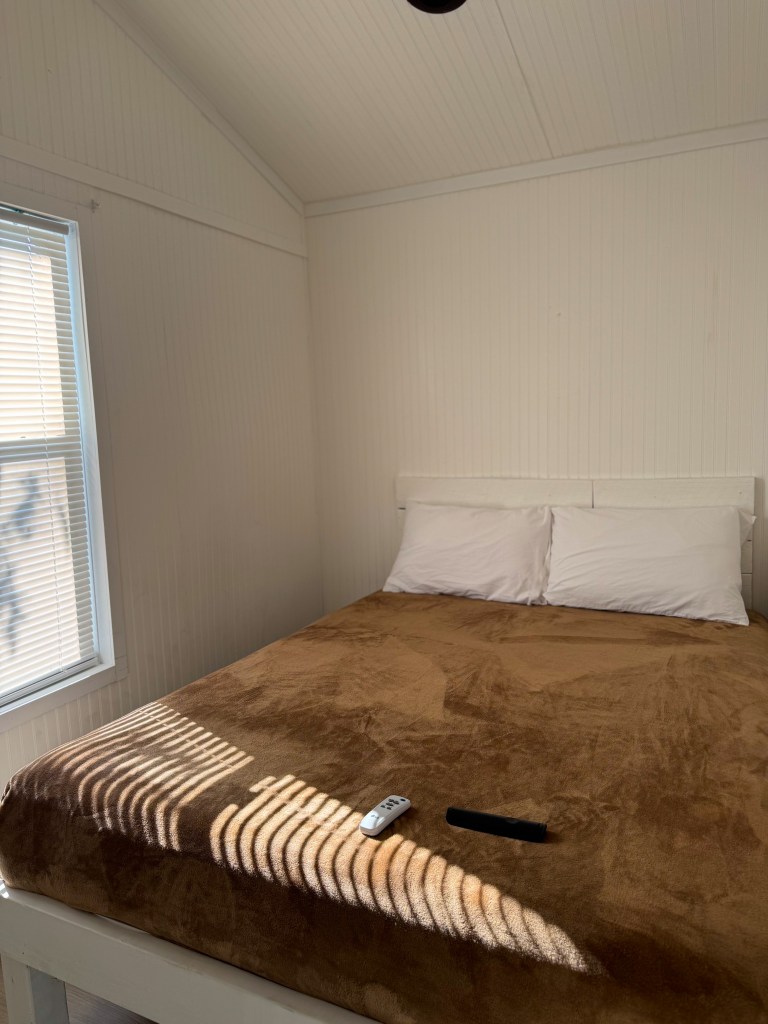
I especially appreciated having a kitchen because traveling with kids is always easier when you can keep snacks, drinks, and simple meals nearby.
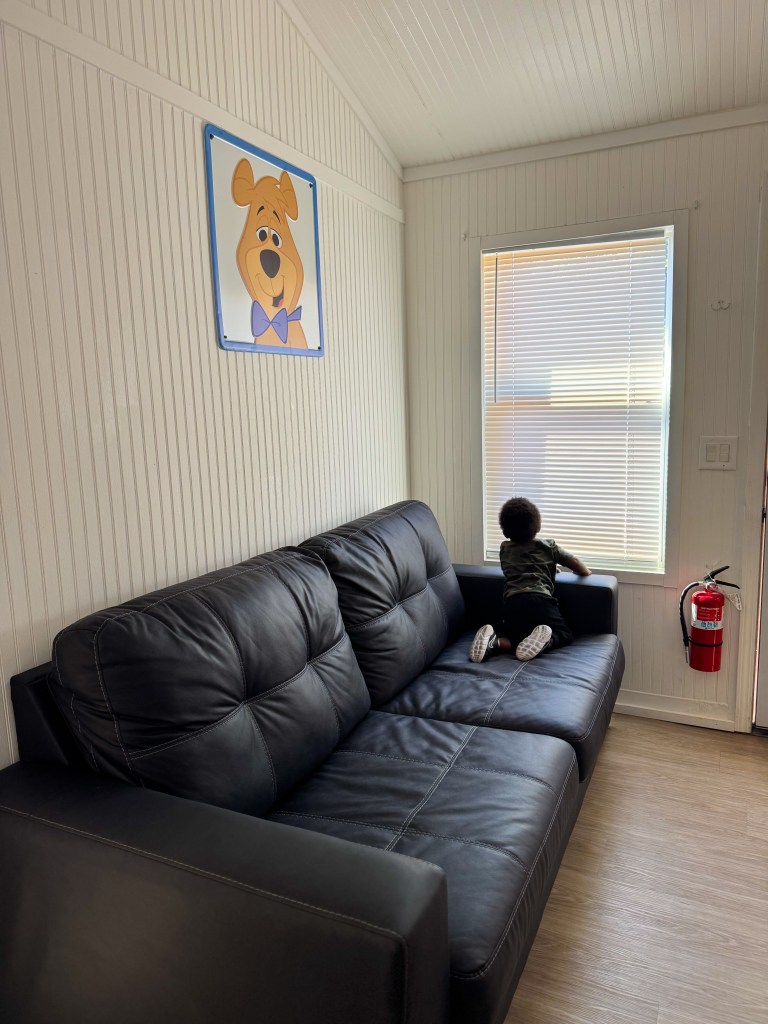
The bunk area was another nice touch for families. Instead of everyone being crowded into one standard hotel room, the kids had a space that felt like their own.
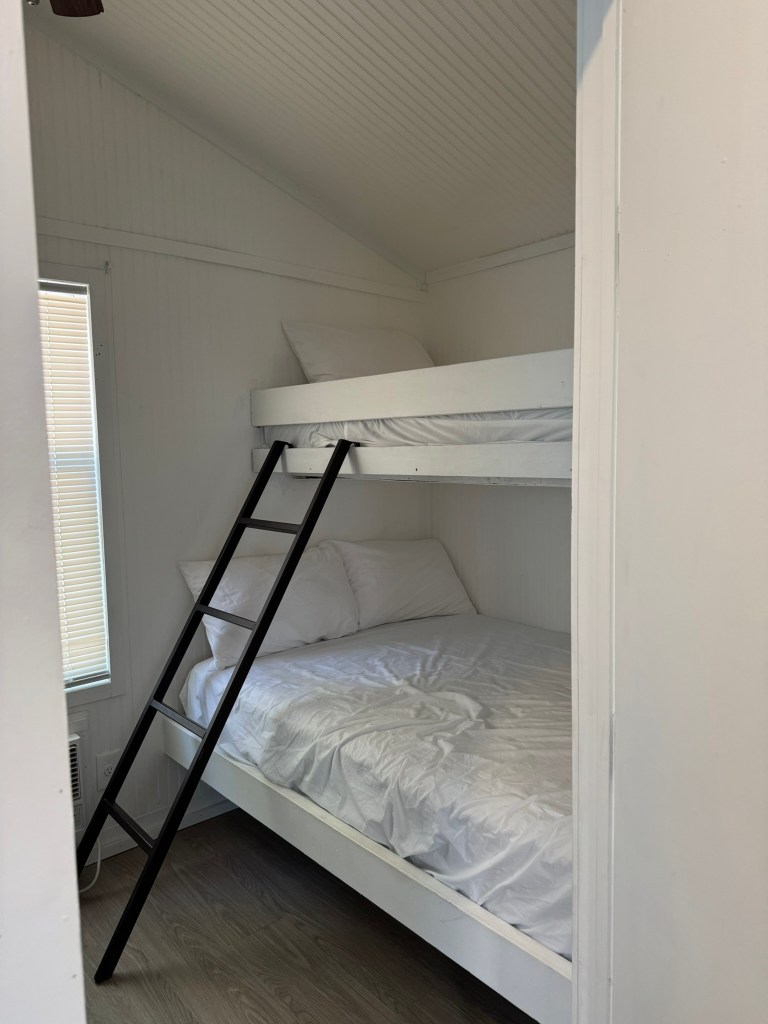
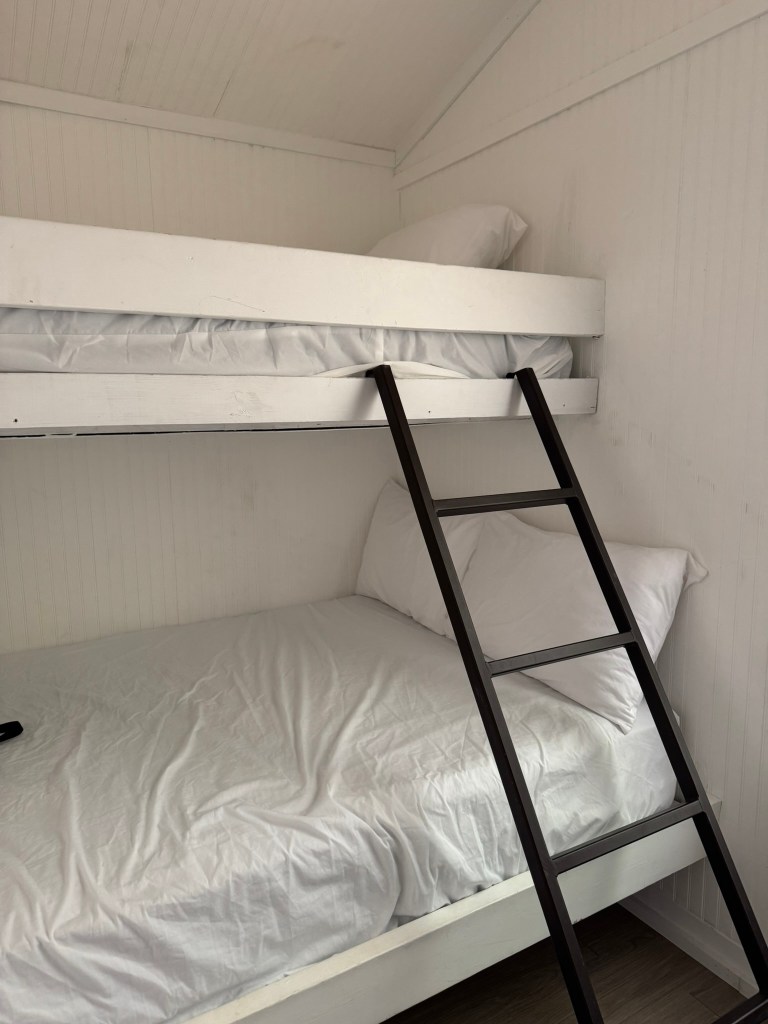
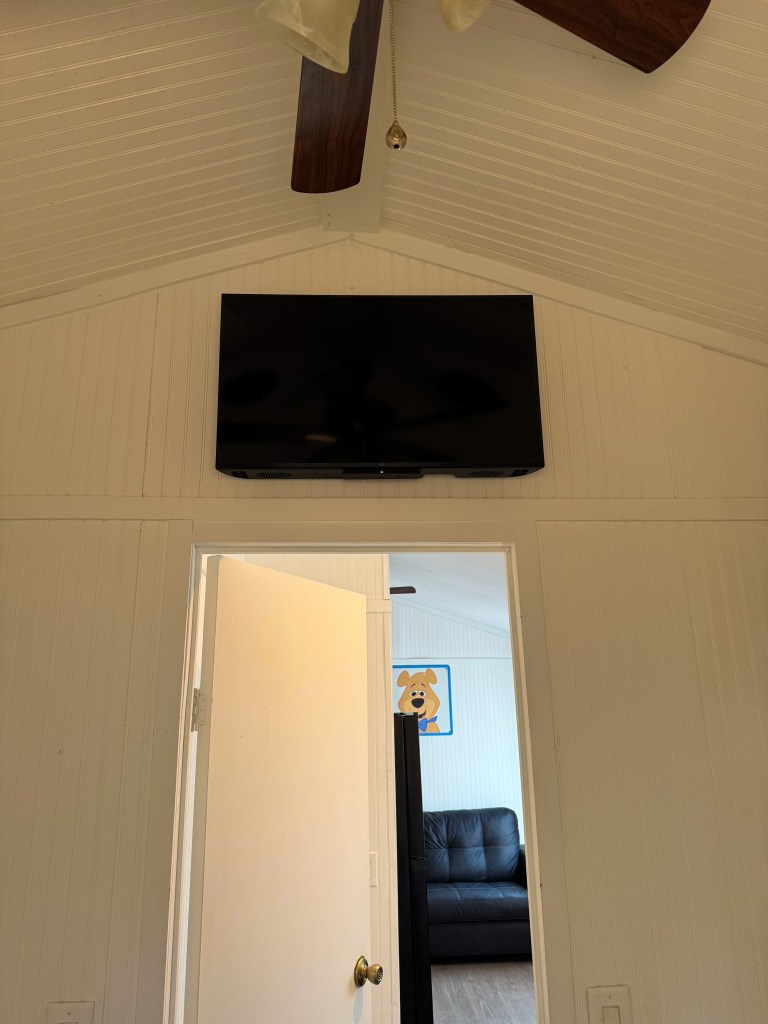
Jellystone Park currently offers cabins as well as RV sites, giving families a few different ways to stay depending on the kind of Pigeon Forge trip they are planning.
Planning a Pigeon Forge trip? Check current cabin availability and rates for Jellystone Park Pigeon Forge before your travel dates fill up.
Why Jellystone Park Pigeon Forge Works So Well for Homeschool Families
This is where our stay became especially fun for me as a homeschool mom.
One of the reasons we homeschool is because learning does not have to happen in one specific place. A family trip can become part of the education simply by giving kids opportunities to experience something new, move their bodies, ask questions, explore nature, and practice skills in real life.
Jellystone Park makes that incredibly easy.
The park even promotes field trips built around outdoor adventures, activities, character experiences, and learning opportunities for kids.
We did not arrive with worksheets or a formal lesson plan. We simply let the environment do some of the teaching.
Fishing can lead to conversations about fish, habitats, water, patience, and ecosystems. Gem mining introduces geology and gives kids an opportunity to physically examine rocks and minerals. Hiking encourages observation and conversations about plants, insects, weather, and the natural environment.
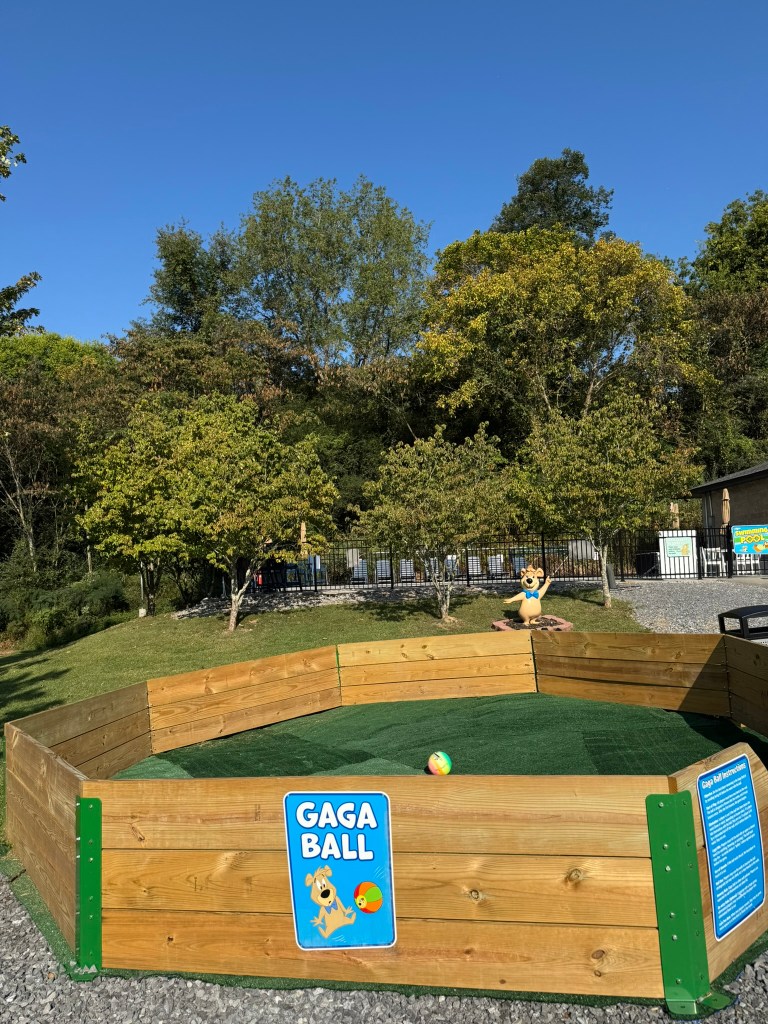
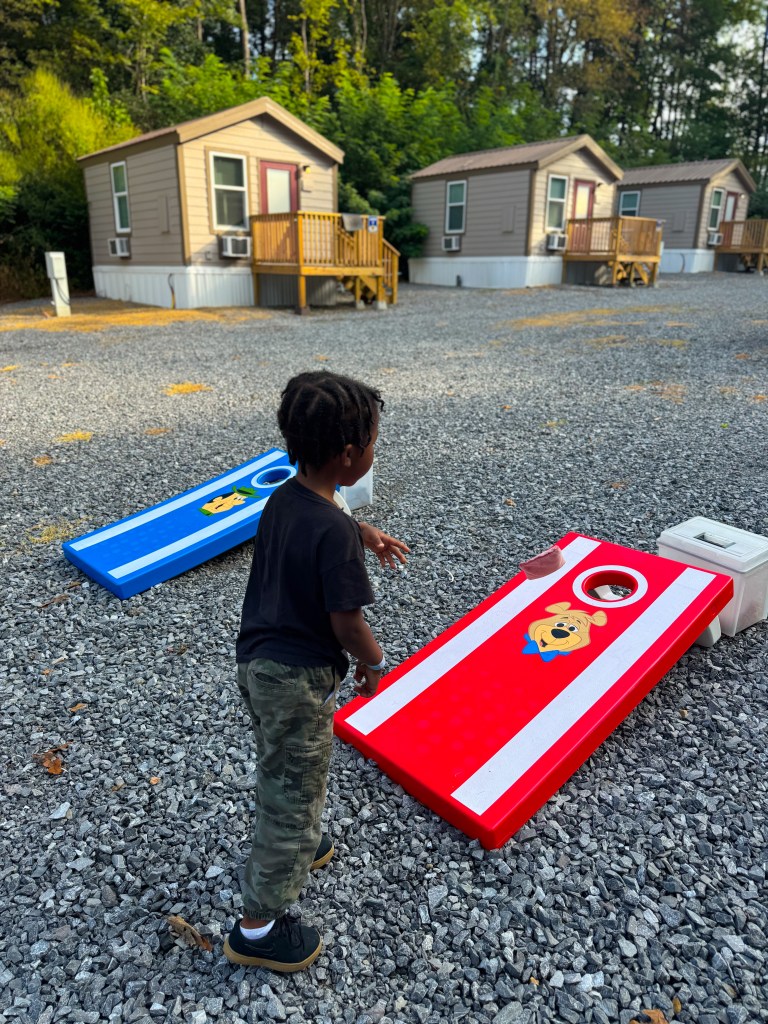
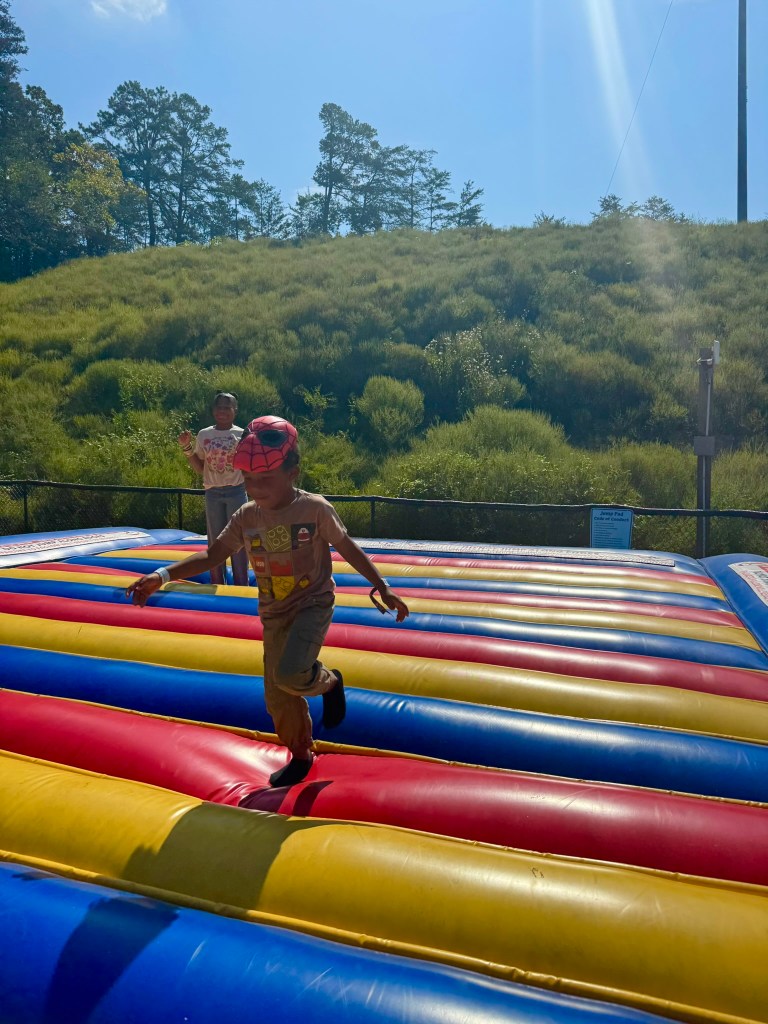
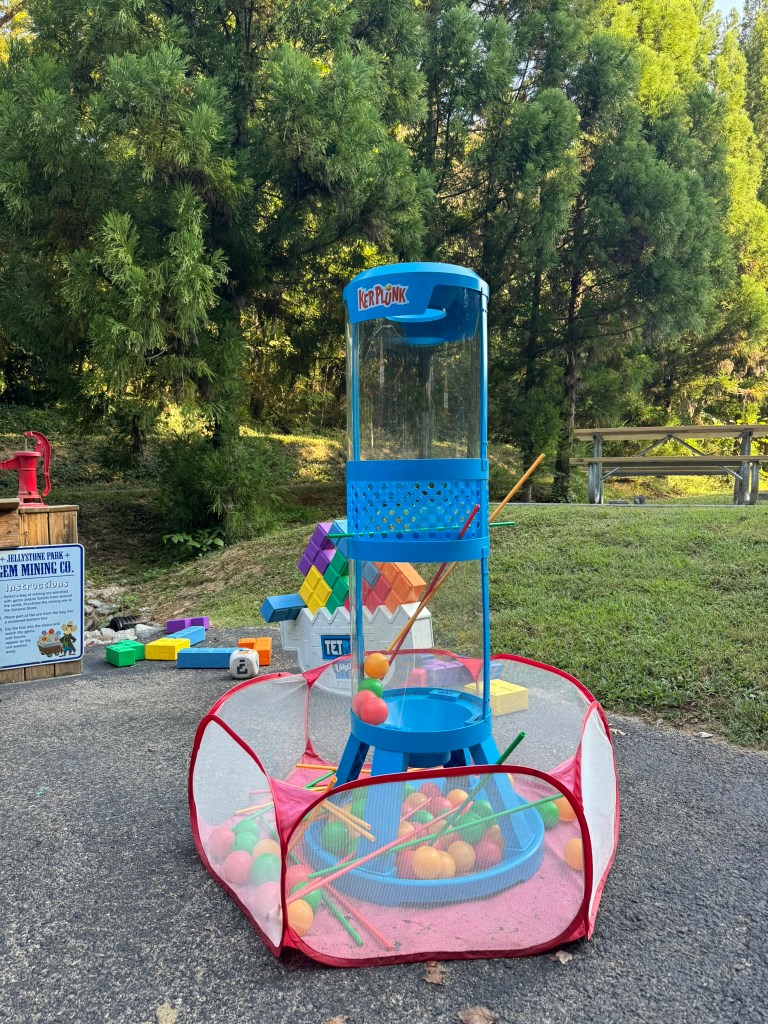
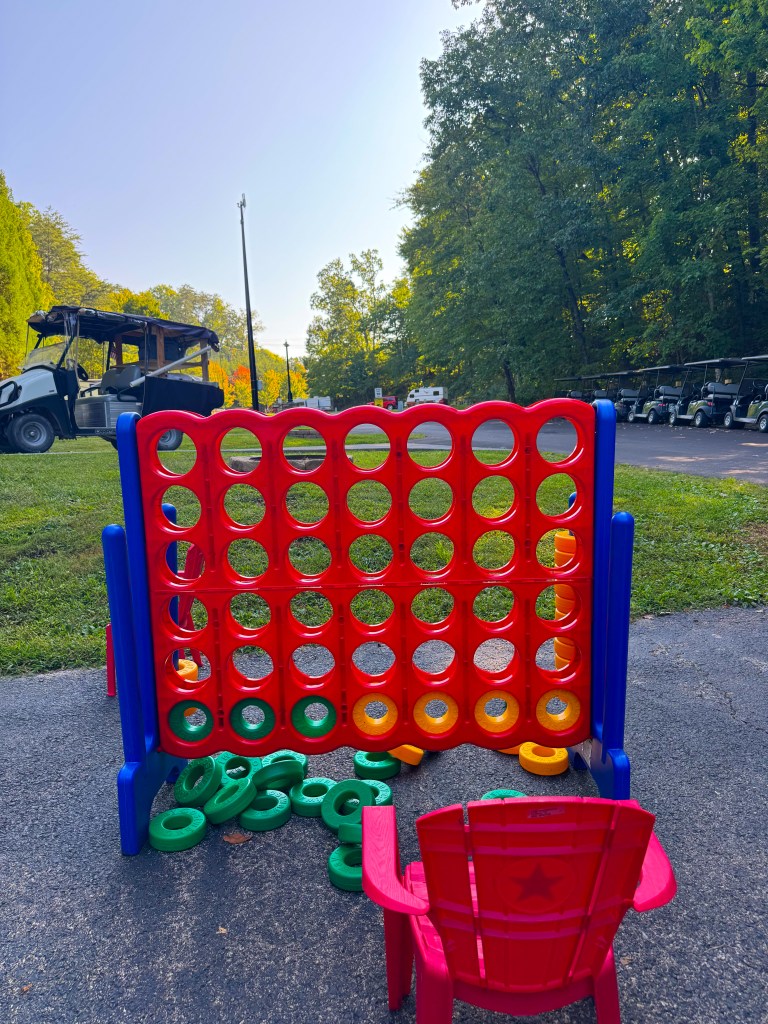
Even activities like Gaga Ball, the jump pad, outdoor games, and playground time count for something. Kids are moving their bodies, learning rules, practicing coordination, interacting with siblings and other children, and solving little problems as they play.
For younger homeschoolers especially, this kind of experiential learning can be just as valuable as something that happens at a desk.
Things to Do at Jellystone Park Pigeon Forge With Kids
The biggest thing I would tell another family before staying here is that Jellystone Park is not simply a campground with a few things added for children.
There is actually quite a bit to do.
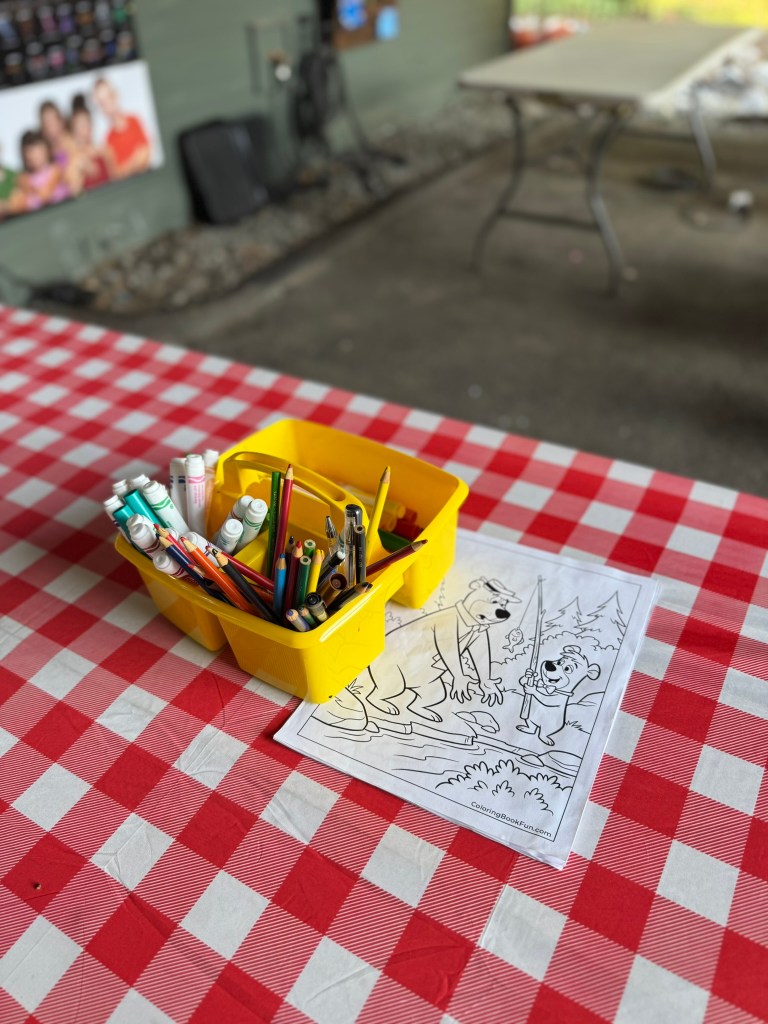
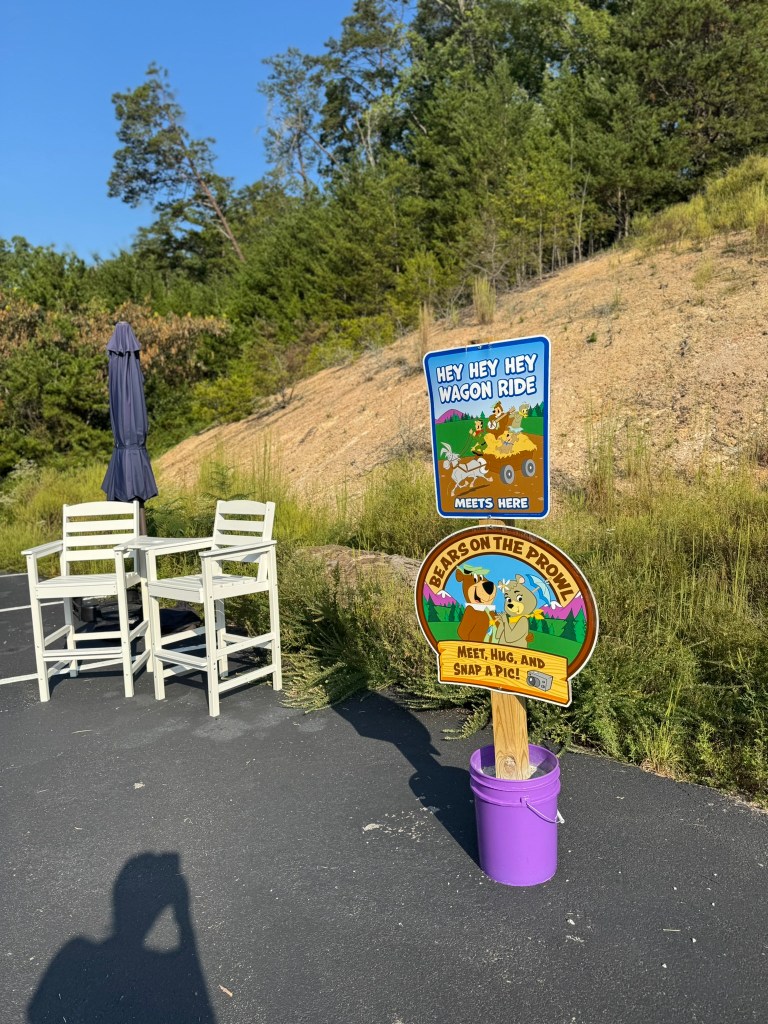
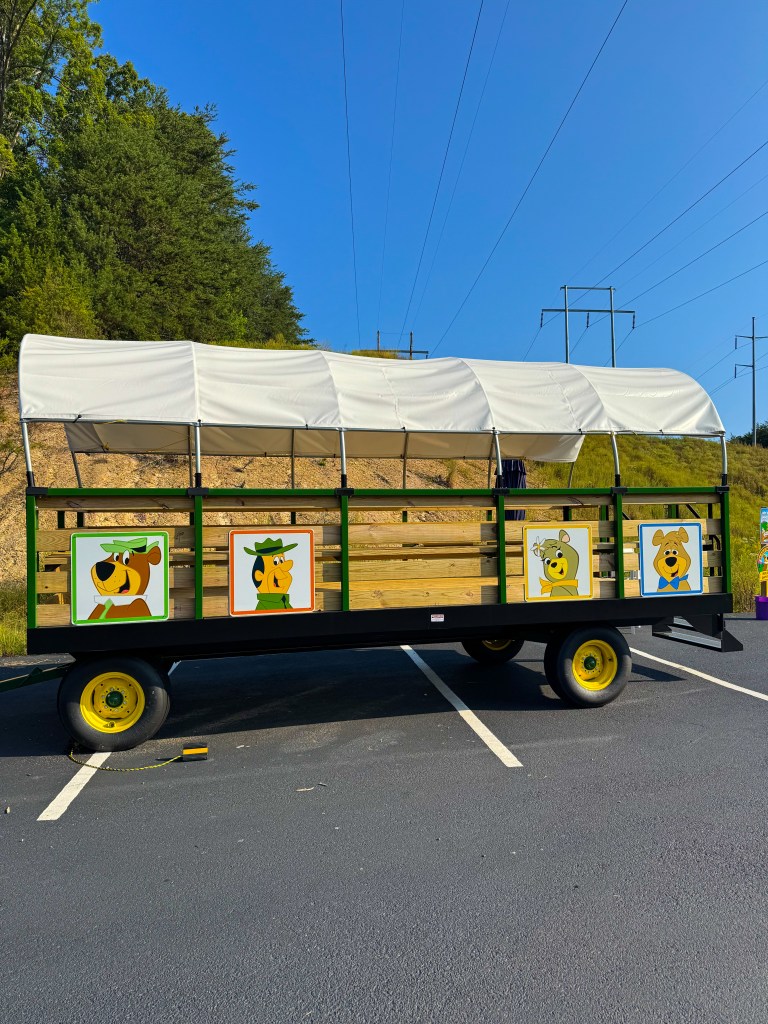
The property currently lists attractions including a swimming pool, jump pad, arts and crafts, fishing, gem mining, wagon rides, Gaga Ball, playground areas, hiking trails, movie experiences, and character interactions with Yogi Bear, Boo Boo, and Cindy Bear.
That matters when you’re traveling with kids because downtime doesn’t necessarily mean everyone has to go sit inside the cabin.
Some of our favorite areas included the jump pad, pool, fishing pond, Gaga Ball area, and recreation center.
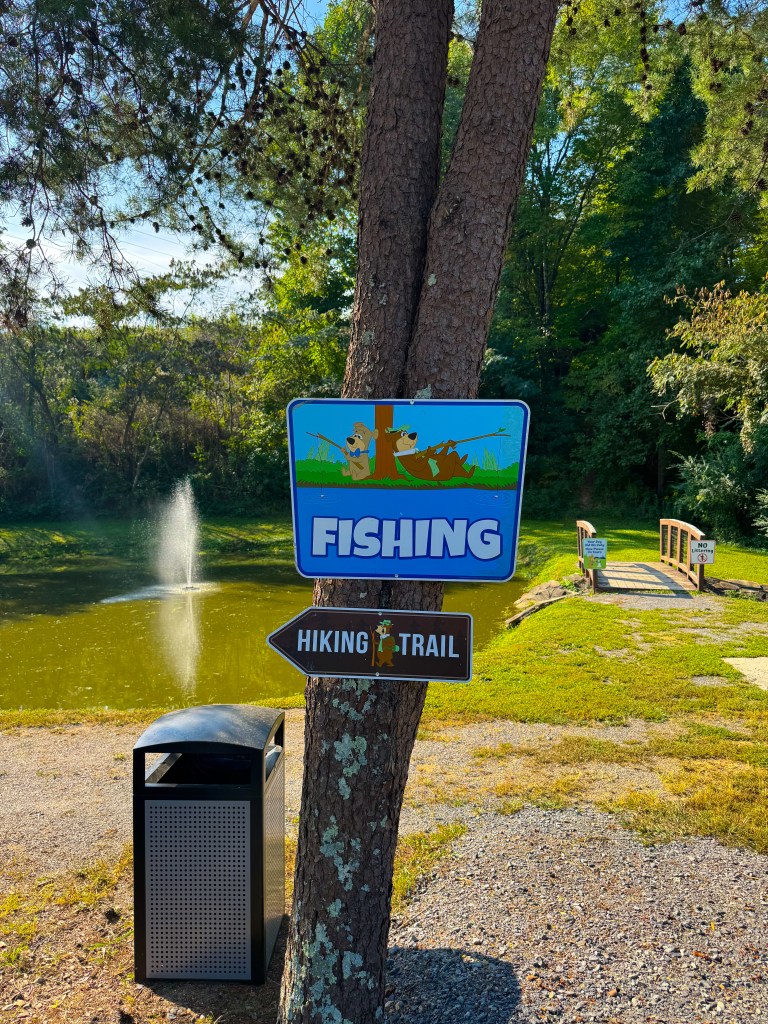
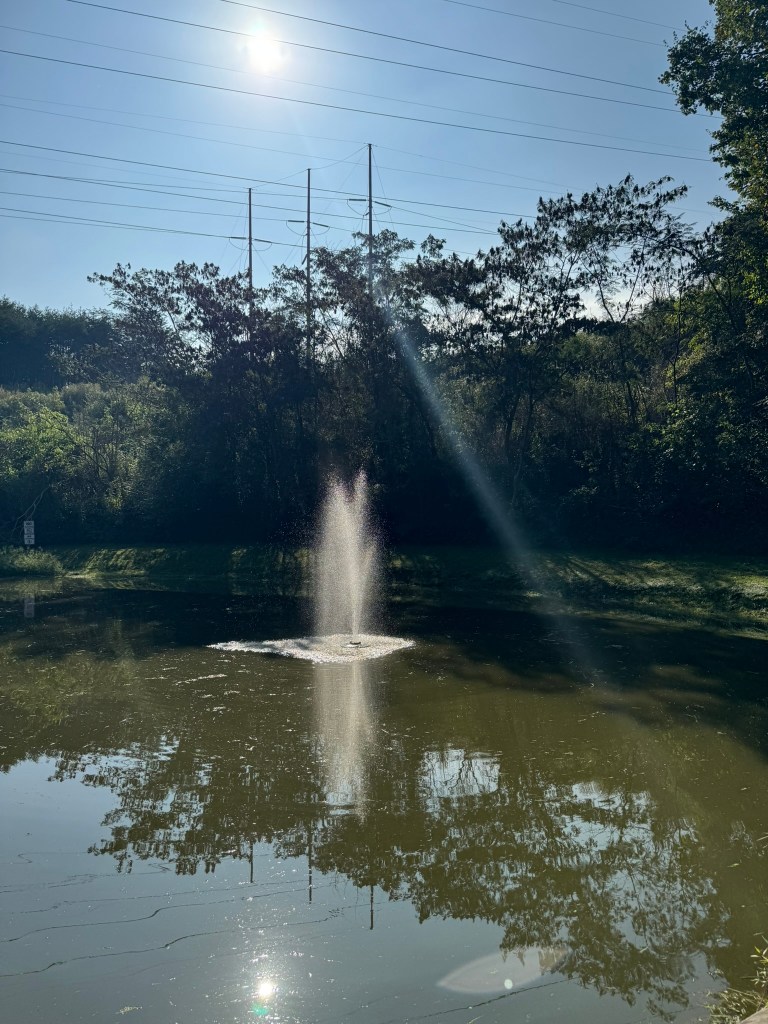
Fishing Pond
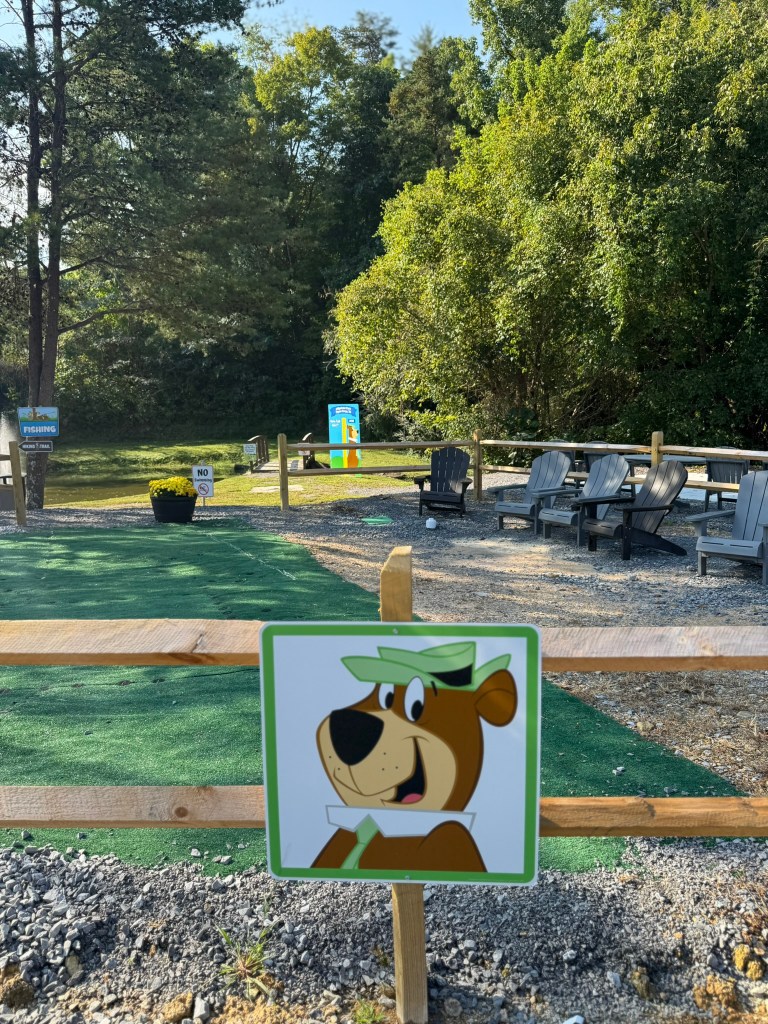
The fishing area was one of my favorite features from a homeschool perspective because it is such an easy opportunity to slow everything down.
Even if you’re not creating an official science lesson around it, kids are naturally observing the water, the environment around the pond, and what might be living there.
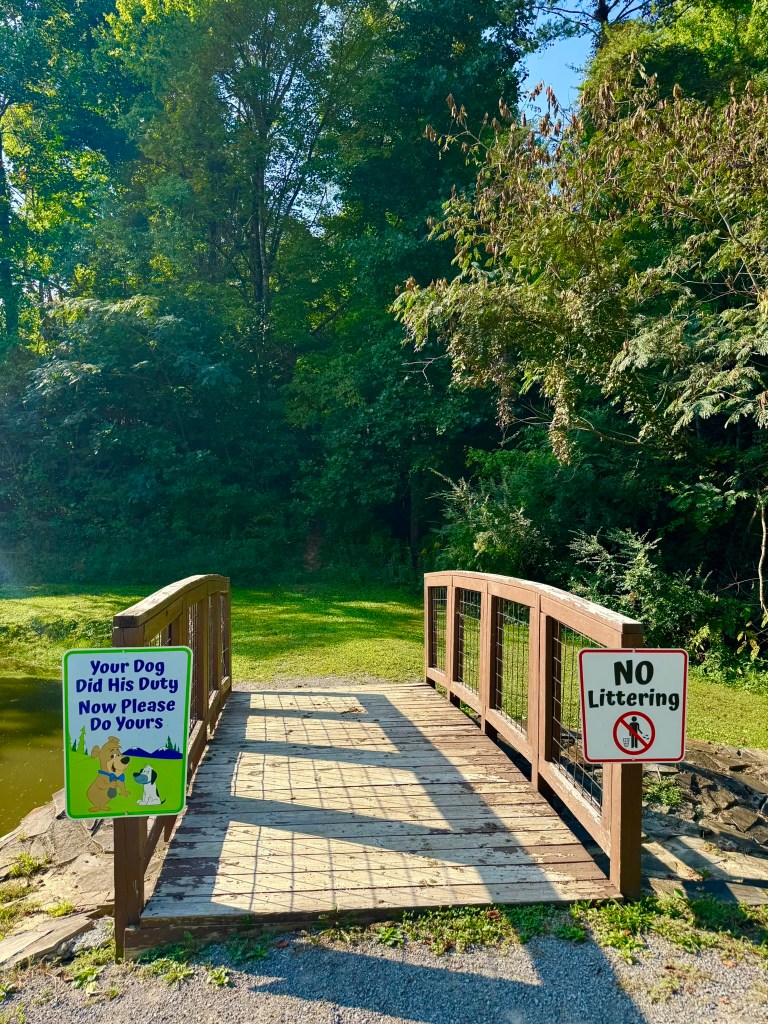
There is also a small bridge and wooded surroundings that make this part of the campground feel particularly peaceful.
Gem Mining
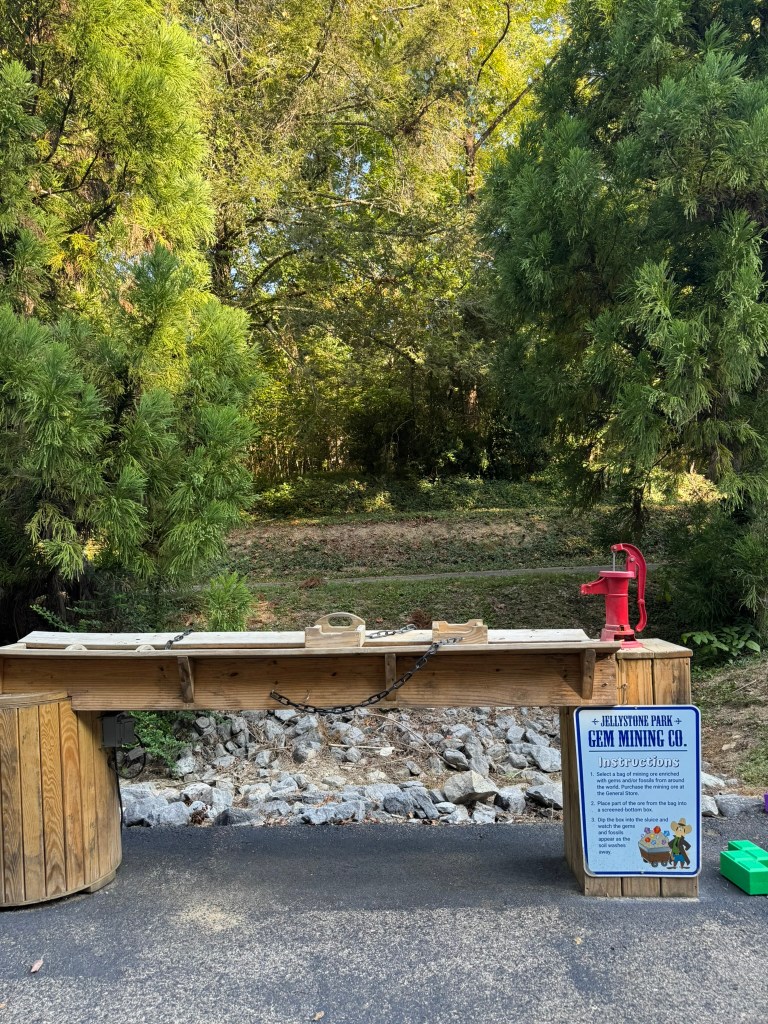
Gem mining is another activity that fits beautifully into homeschool travel.
Instead of simply reading about rocks and minerals, kids get a hands-on experience sorting through material and discovering different stones for themselves.
Jellystone describes gem mining as an activity where families can uncover gems and colorful crystals, making it a natural extension for families studying geology, earth science, or simply raising kids who love collecting rocks.
Jump Pad and Playground
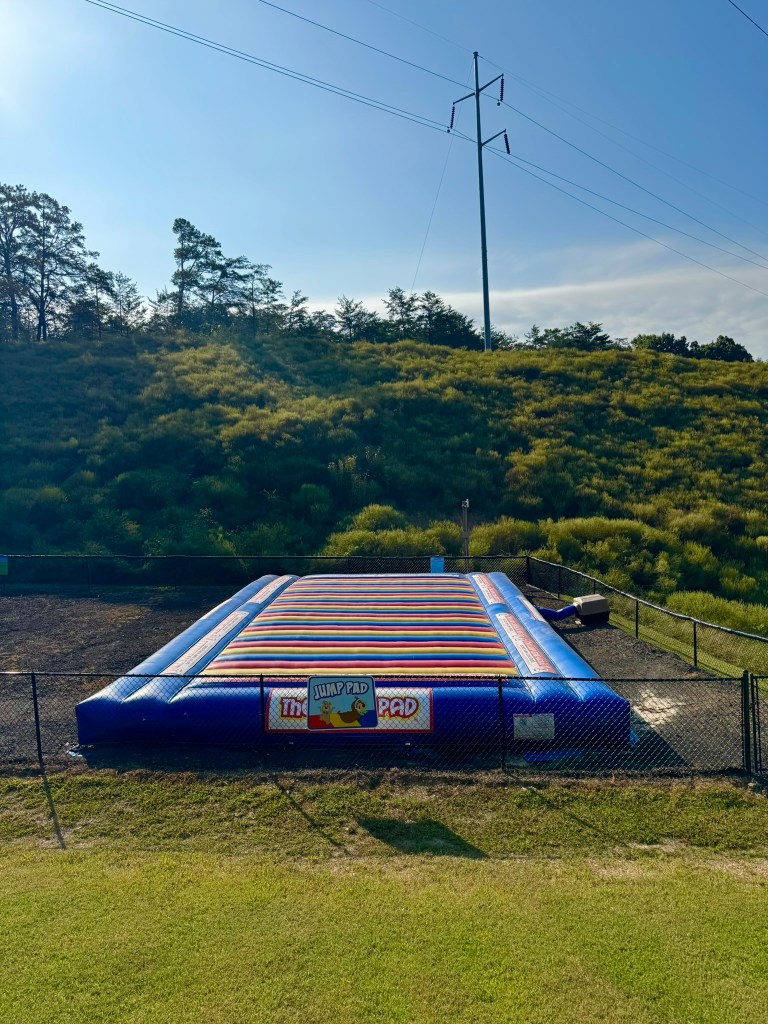
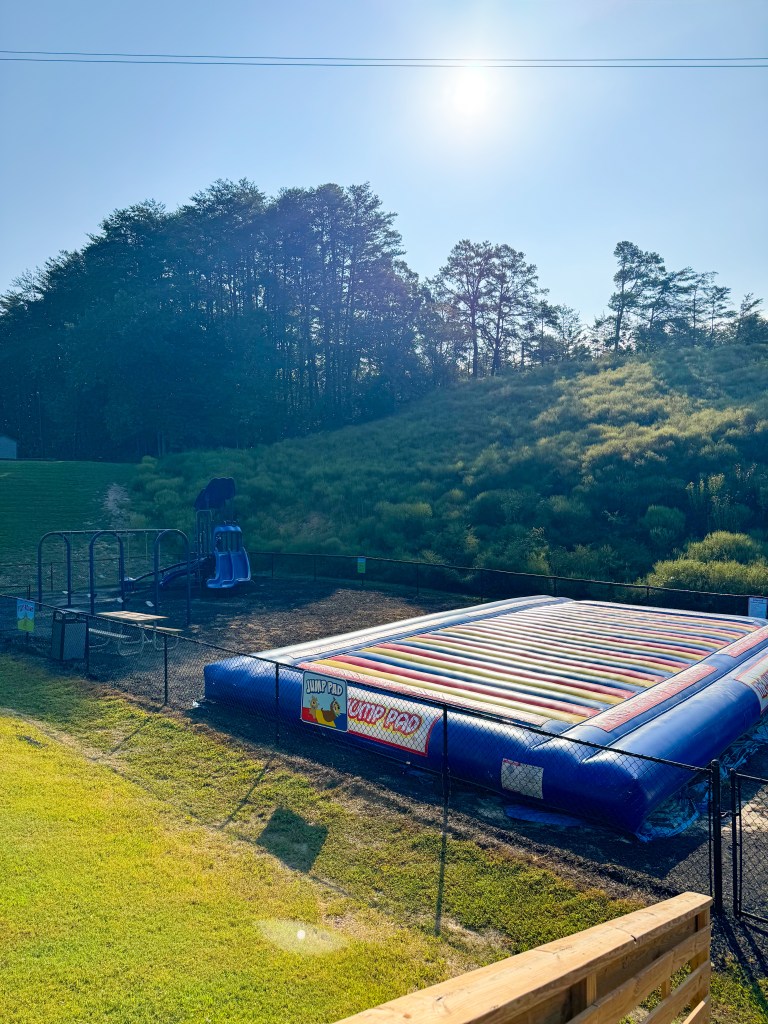
The giant jump pad was an immediate hit.
This is one of those activities that requires absolutely no convincing from the kids. They can burn off energy while parents get a little breathing room between sightseeing plans.
There is also a playground for climbing, sliding, and outdoor play.
And yes, I count this as part of homeschool life too. Physical activity, gross motor skills, coordination, and free play matter.
Gaga Ball and Outdoor Games
There is a Gaga Ball pit along with other outdoor games around the property.
These activities are easy to overlook when you’re thinking about educational travel, but kids are practicing strategy, following rules, taking turns, handling competition, and moving their bodies.
That is real learning too.
Swimming Pool
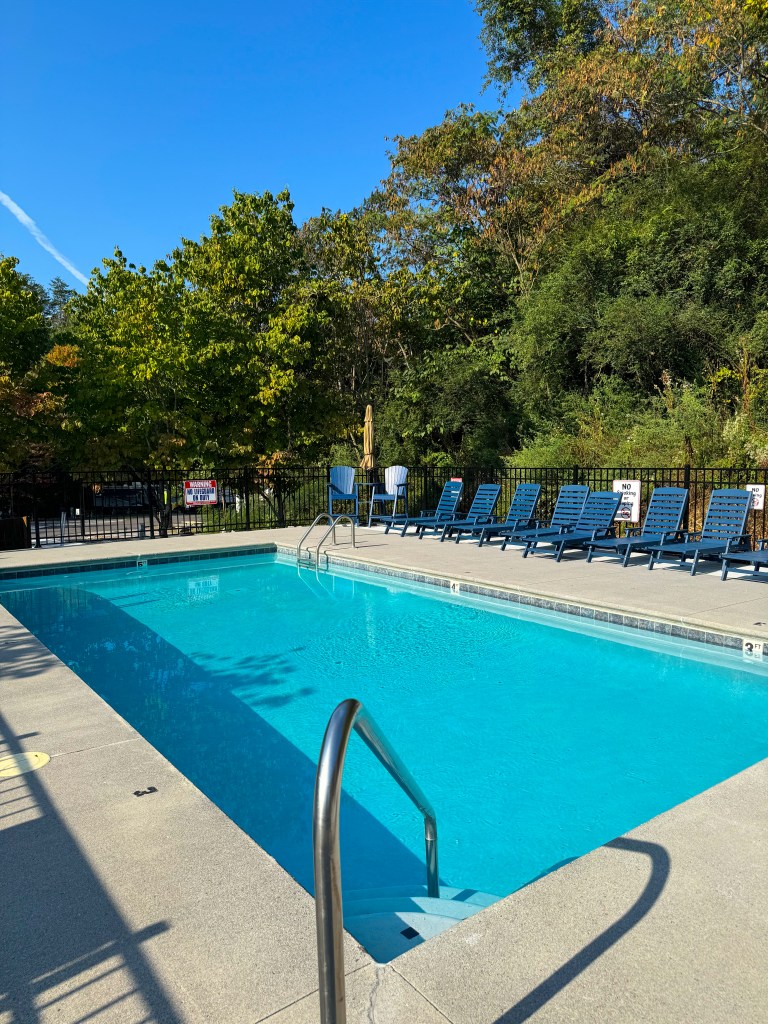
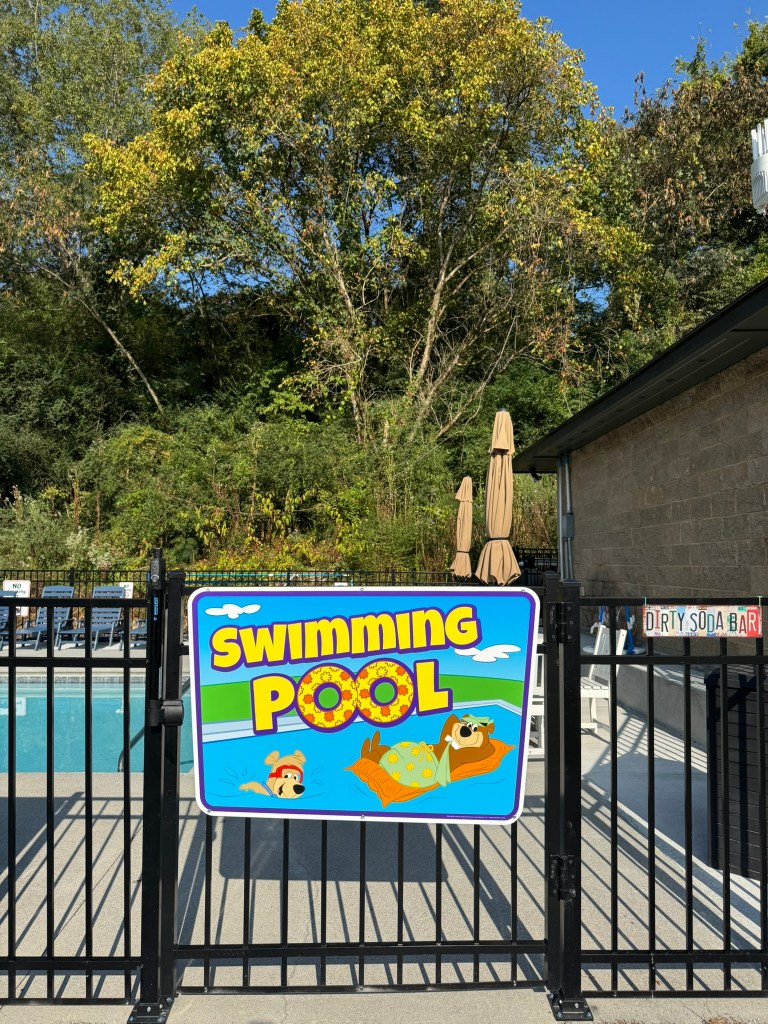
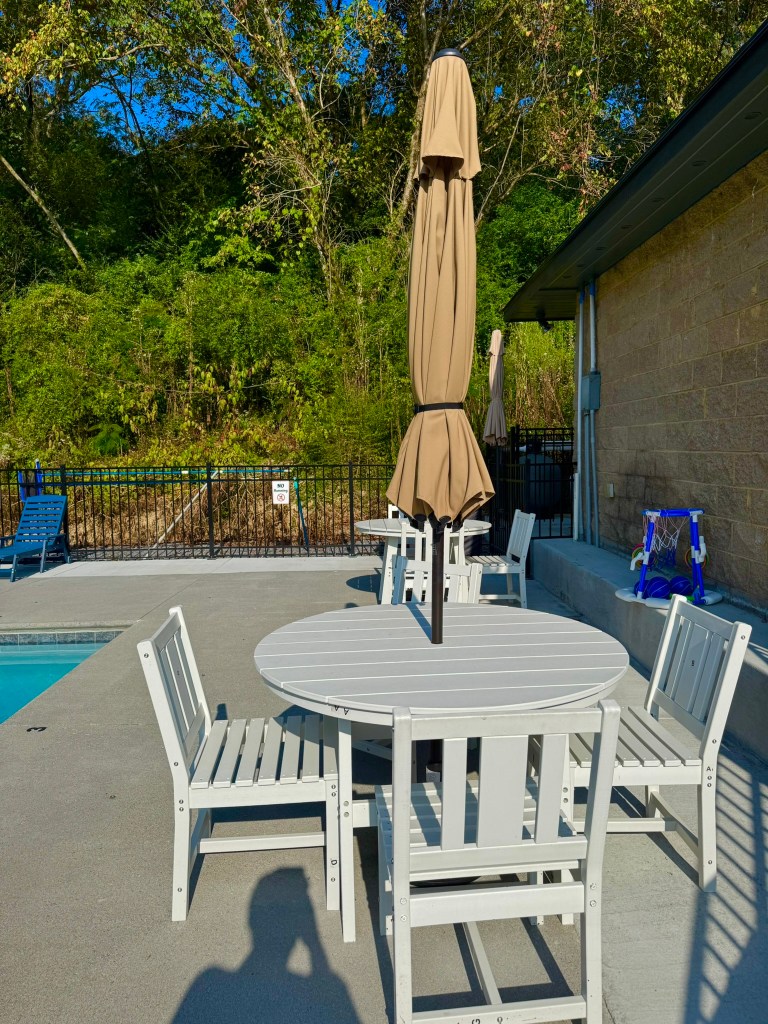
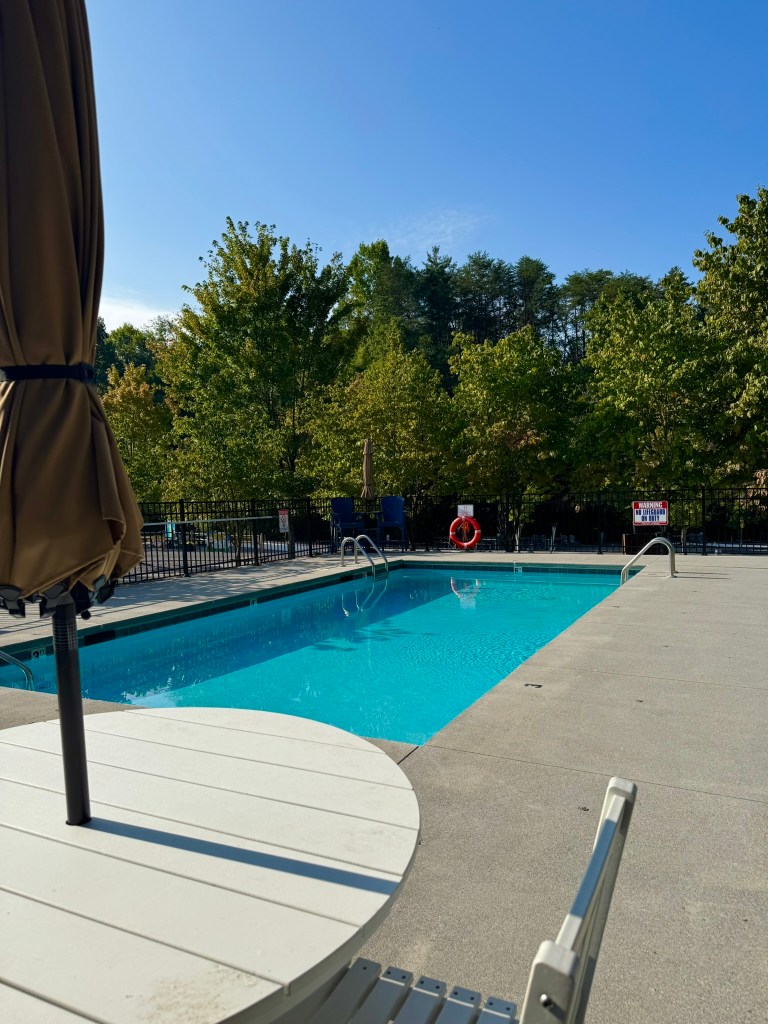
Jellystone Park Pigeon Forge also has an outdoor swimming pool with seating around the pool deck.
This was another feature that made the campground feel more like a resort-style family stay than simply somewhere to park an RV or sleep in a cabin.
After spending part of the day exploring Pigeon Forge, being able to come back and let the kids swim can be a lifesaver.
Daily Activities at Jellystone Park
Another feature worth mentioning is the activity schedule.
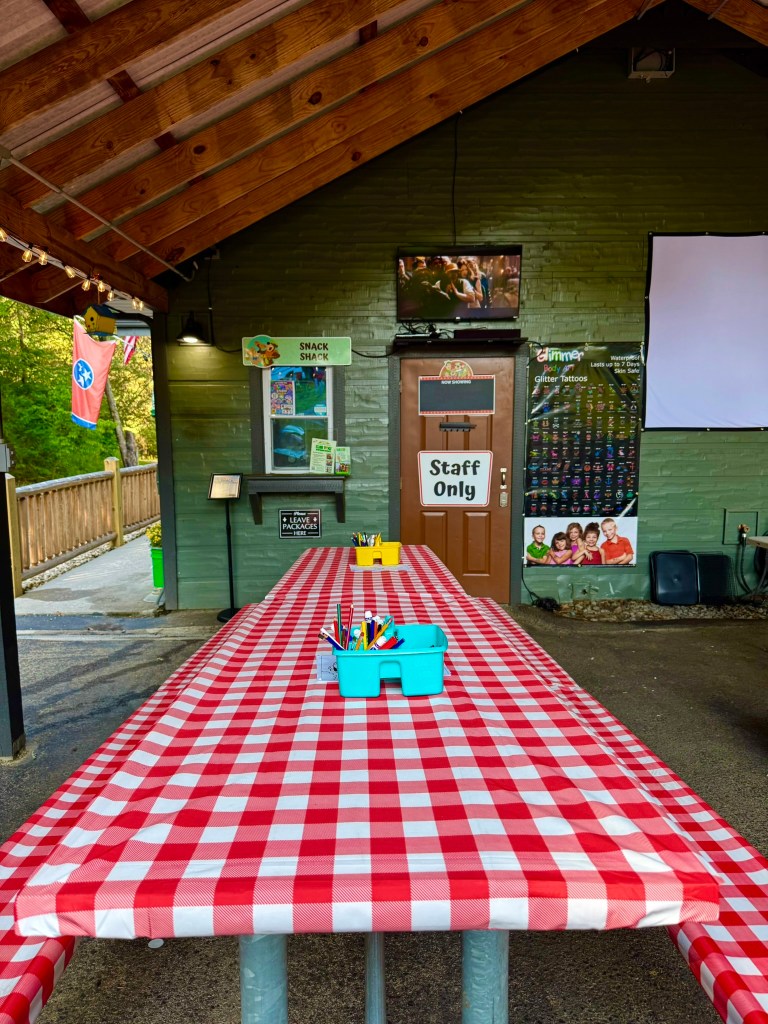
Jellystone offers rotating daily activities, which may include painting, ceramics, colorful sand art, wagon rides, foam parties, themed events, games, crafts, and character experiences. Activity offerings can vary by date, so I would always check the current schedule during your stay.
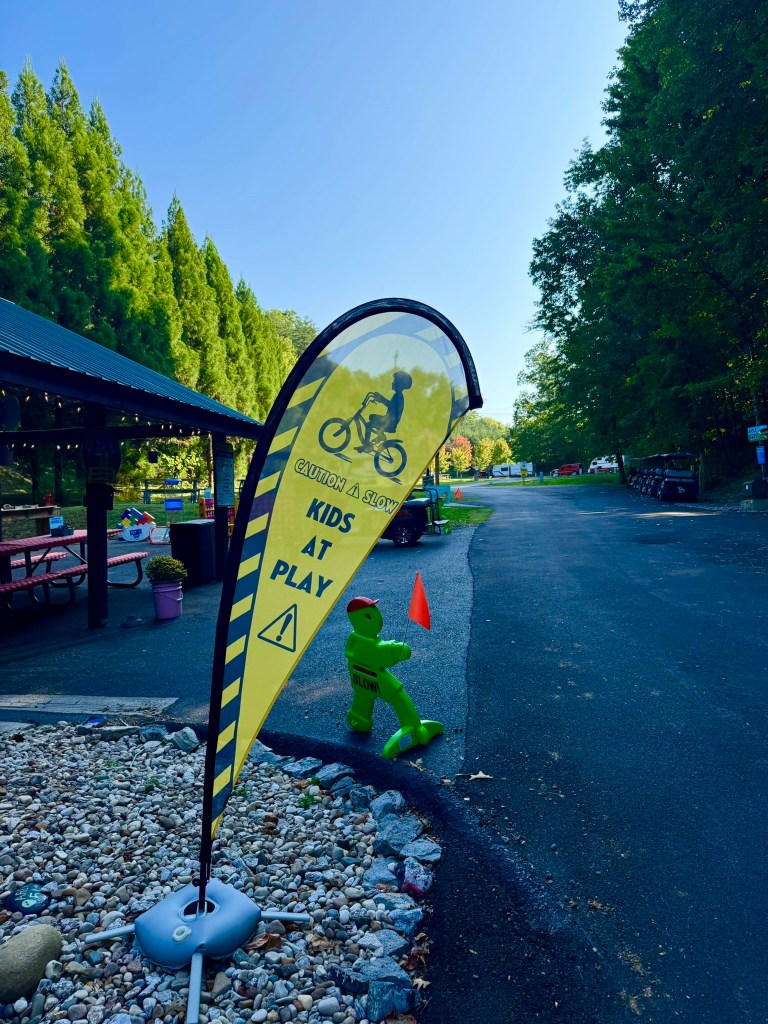
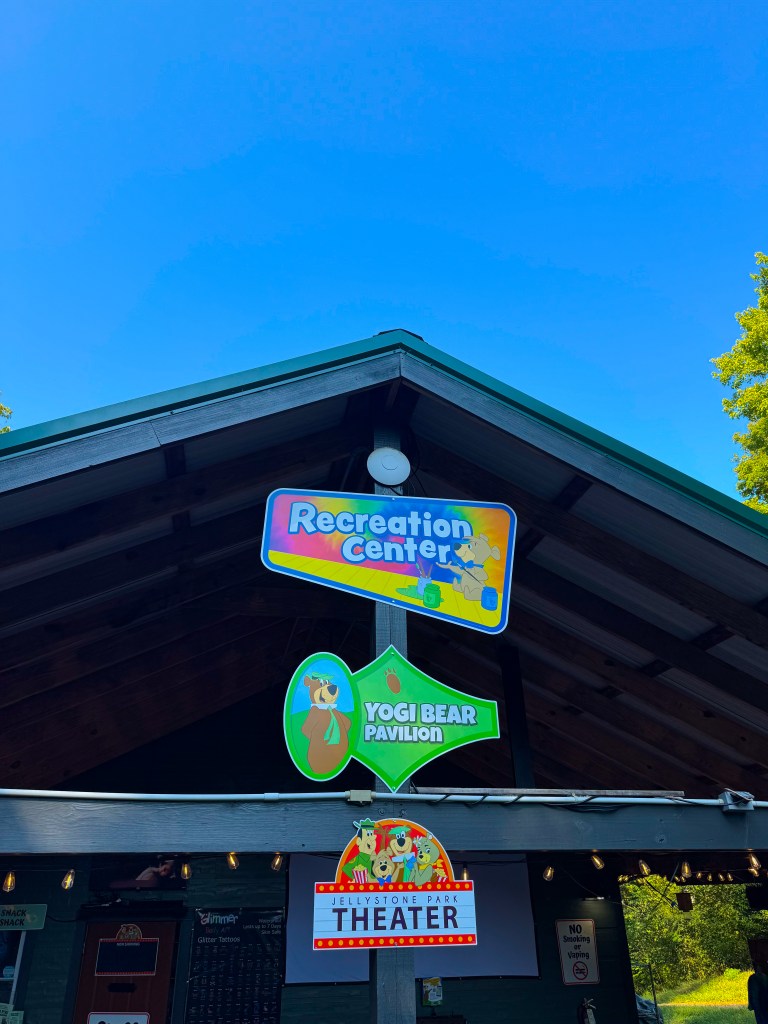
The recreation center was one of the areas we explored during our visit, and there were tables set up for activities like coloring along with other scheduled experiences.
For homeschool families, this is another reason I like staying somewhere like Jellystone.
You can spend the morning doing a more structured attraction or field-trip-style experience around Pigeon Forge, then come back and let the children participate in something creative or social without having to plan another outing.
Download the Jellystone Park App Before Your Stay
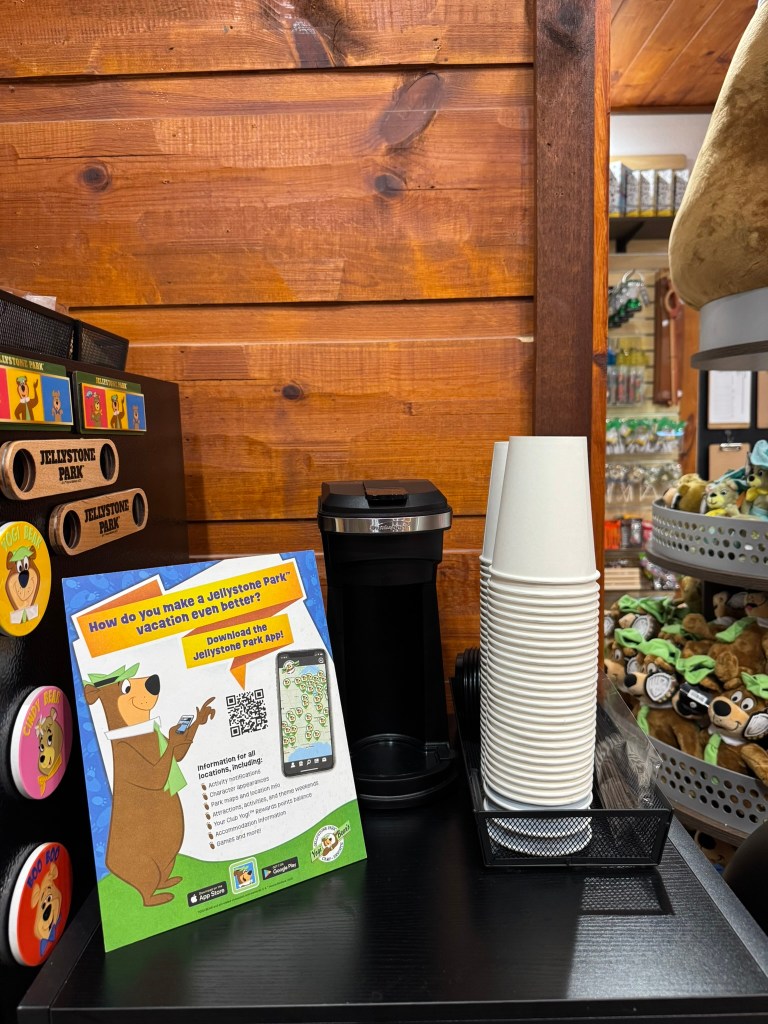
One practical tip: download the Jellystone Park app.
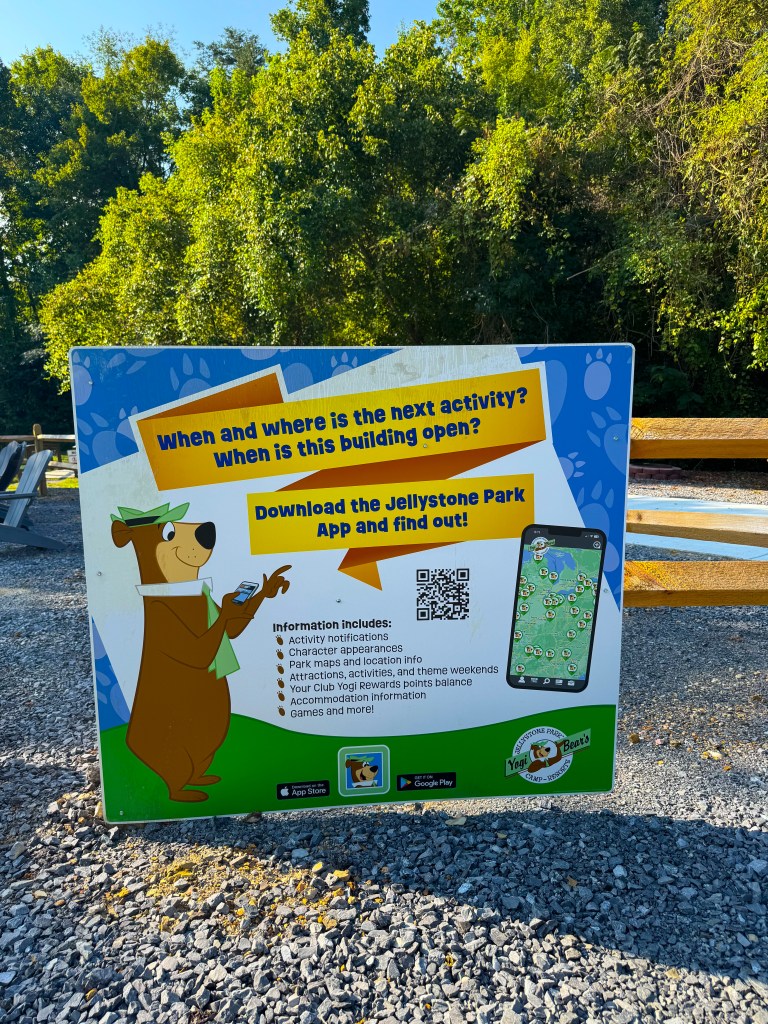
The campground uses the app to help guests keep track of things like activity schedules, park information, maps, character appearances, and other details during their stay.
When you’re traveling with children, having the schedule readily available makes it much easier to decide whether you’re heading to the pool, catching an activity, or simply relaxing around the cabin.
I would download it either before arriving or as soon as you check in.
The Ranger Station and General Store
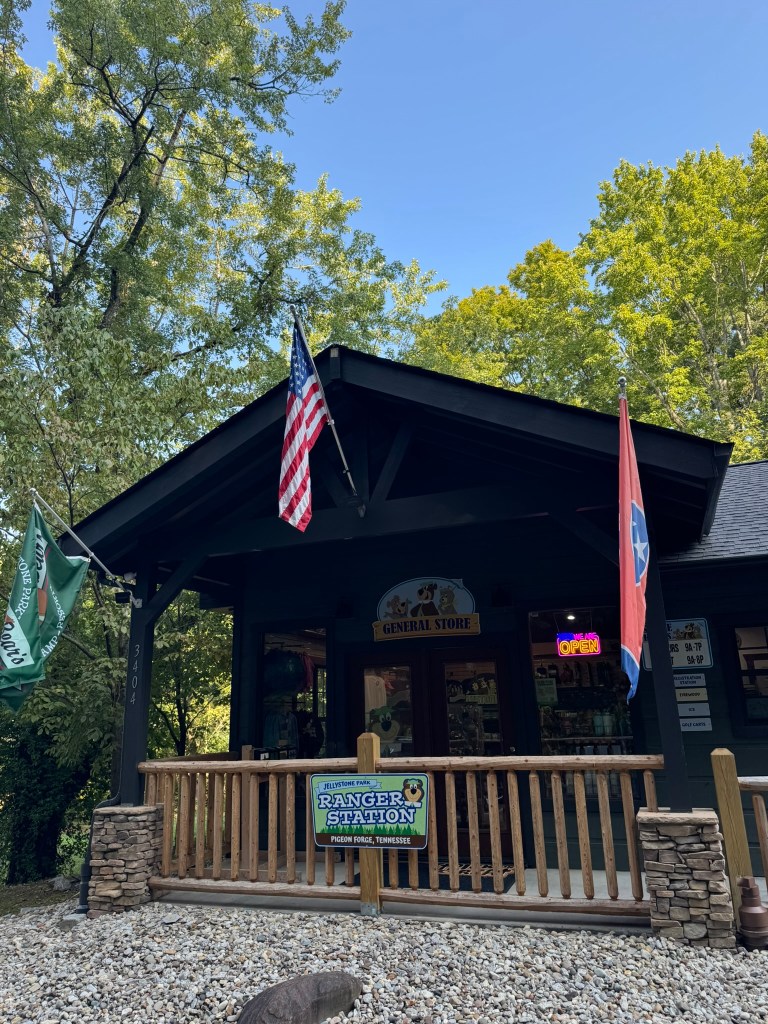
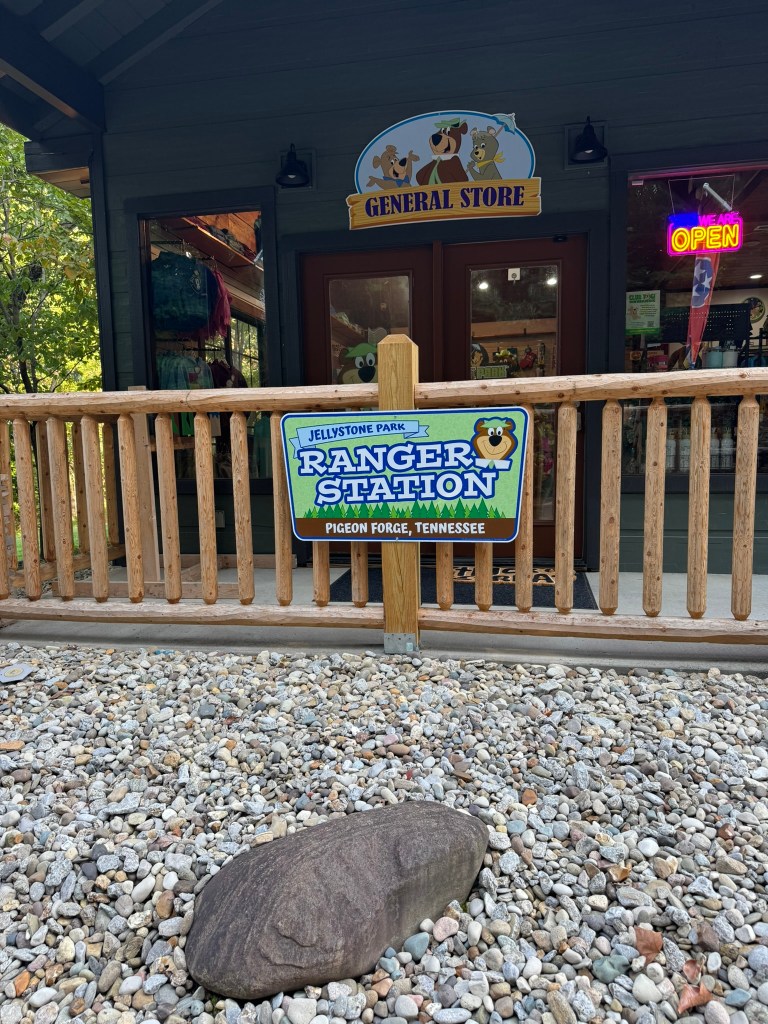
The Ranger Station is also worth stopping into during your stay.
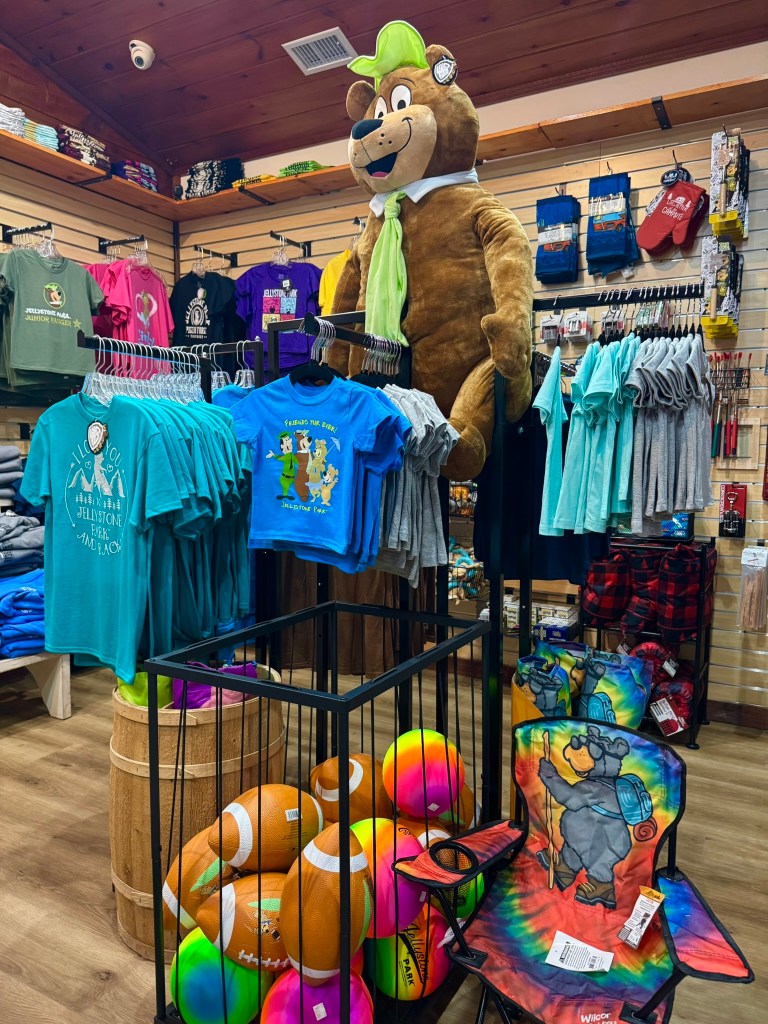
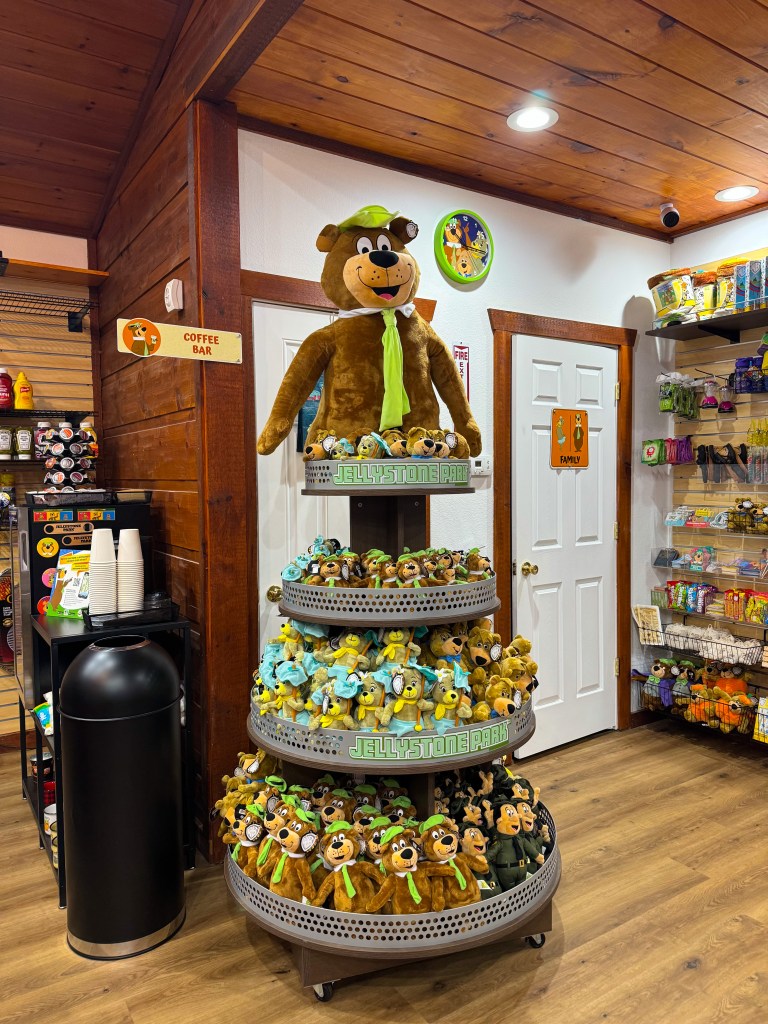
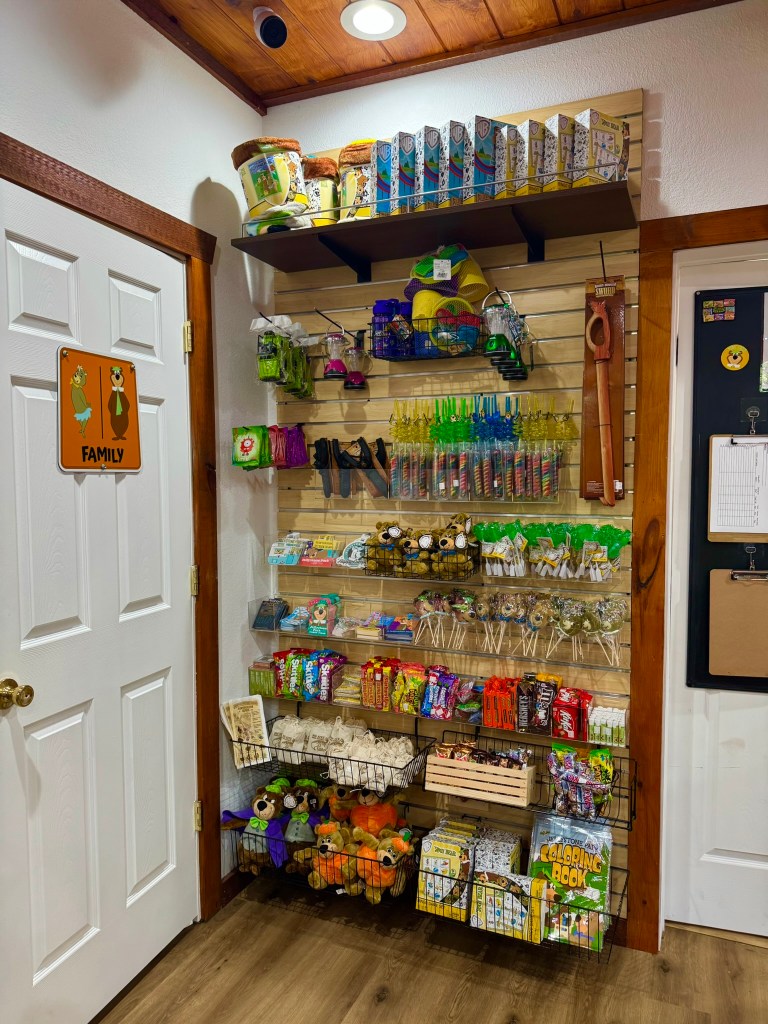
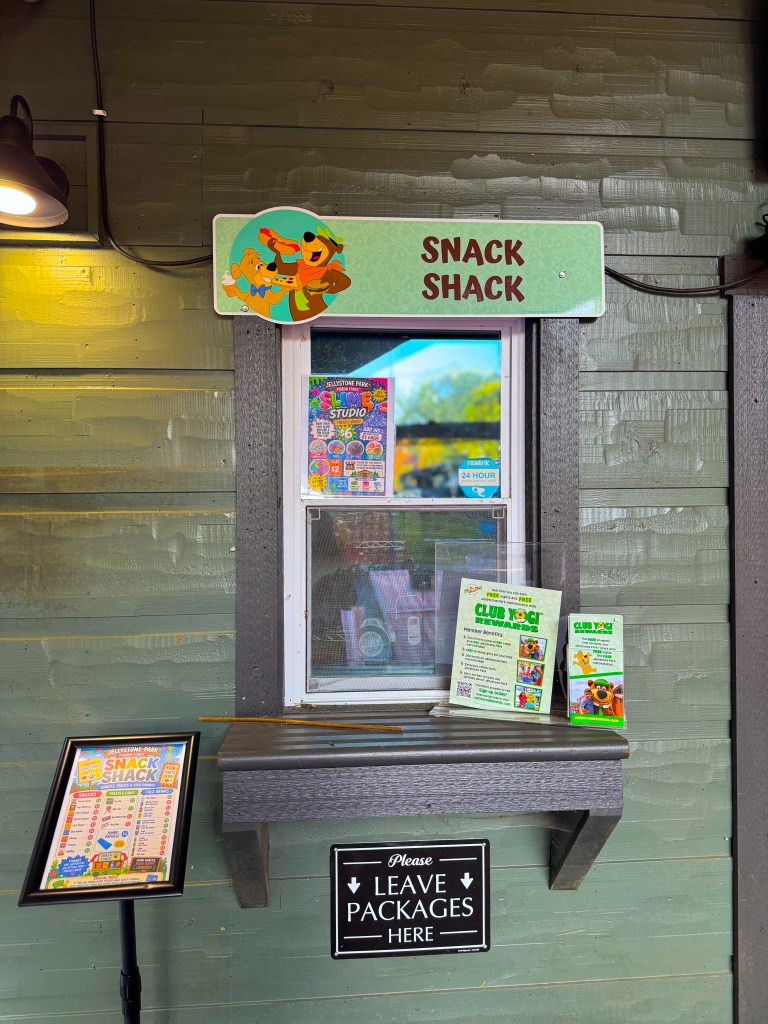
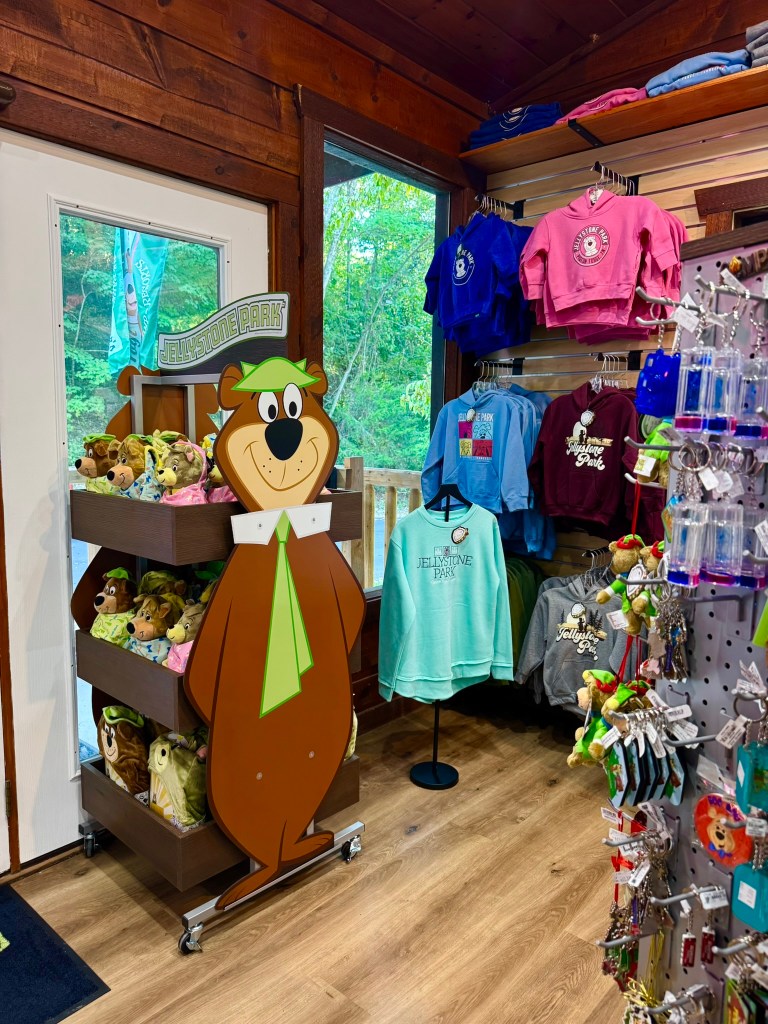
Inside, you’ll find the general store with Jellystone merchandise, Yogi Bear souvenirs, clothing, toys, camping items, snacks, drinks, and other basics.
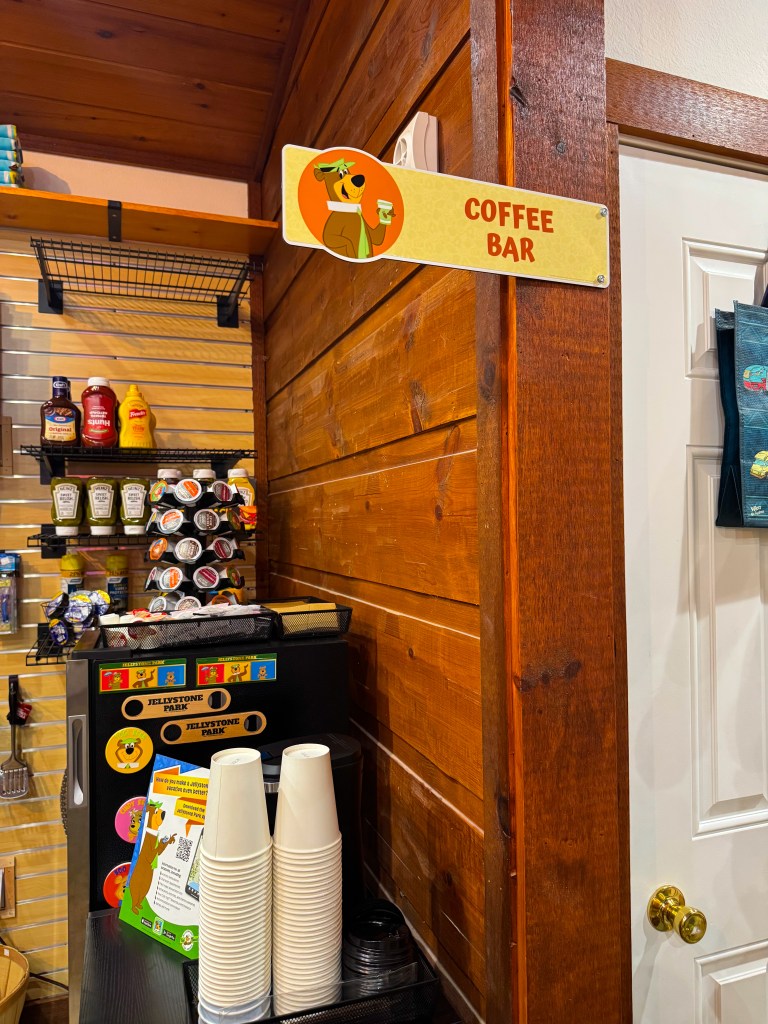
There is also a coffee area, which — listen — I noticed immediately.
Parents know.
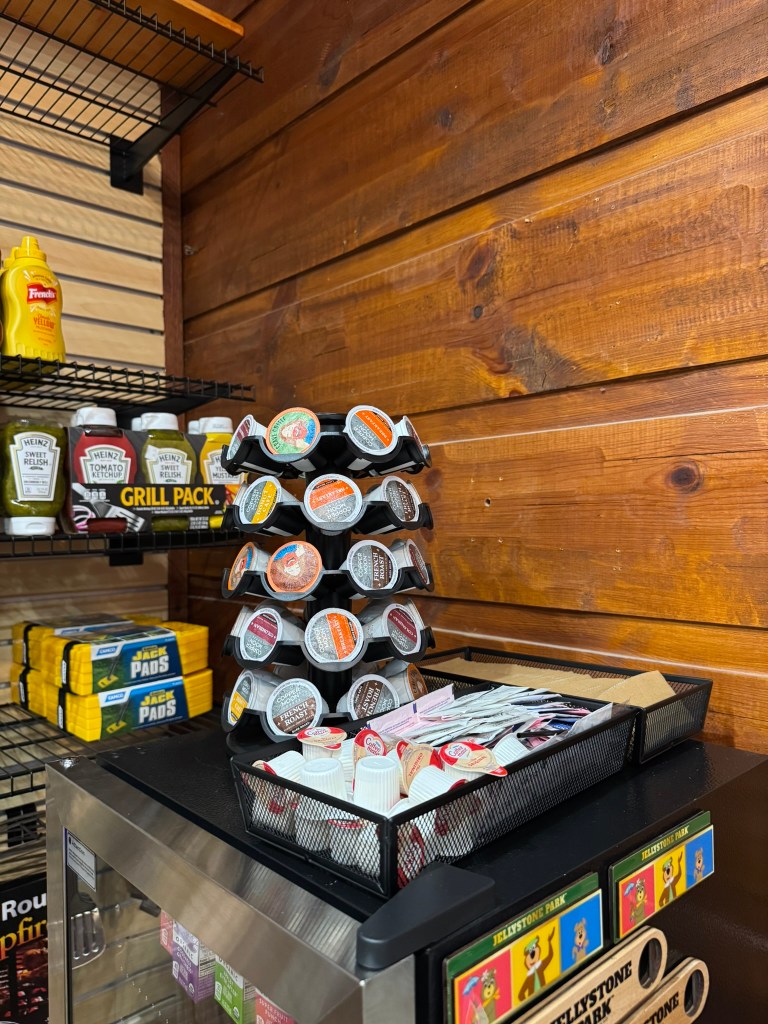
The store is particularly helpful if you’ve forgotten a little camping necessity or want to let the kids pick out something to remember the trip.
Character Experiences at Jellystone Park
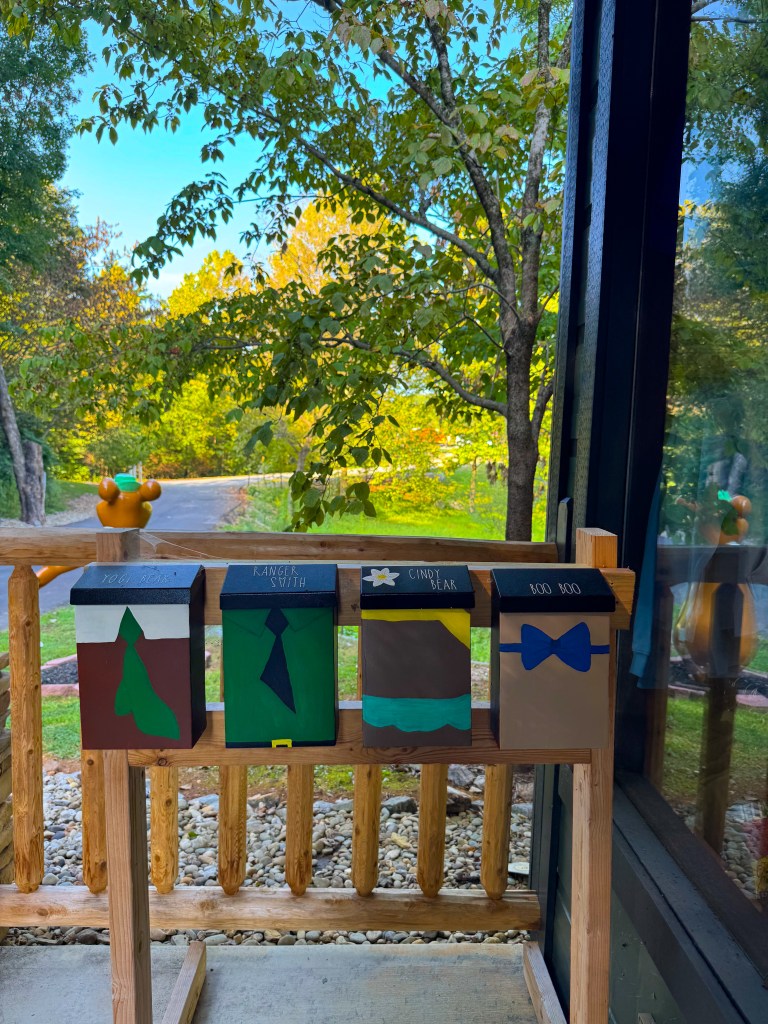
Yogi Bear, Boo Boo, and Cindy Bear are woven throughout the campground experience.
You’ll see character statues, signs, merchandise, themed areas, and opportunities for actual character interactions.
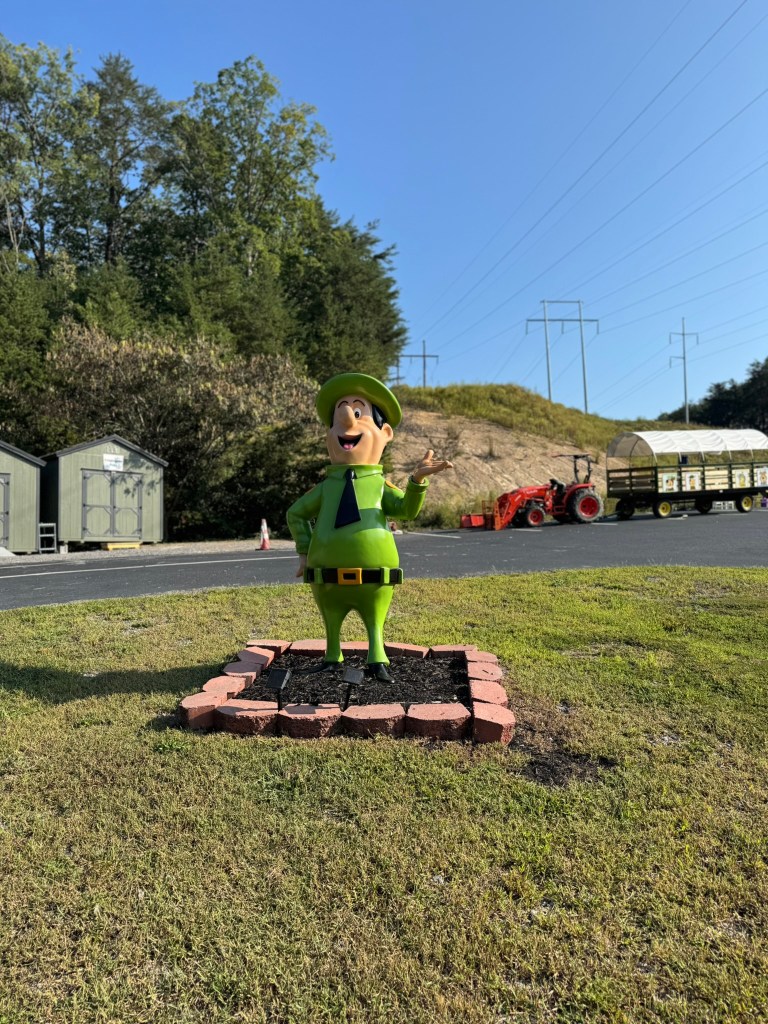
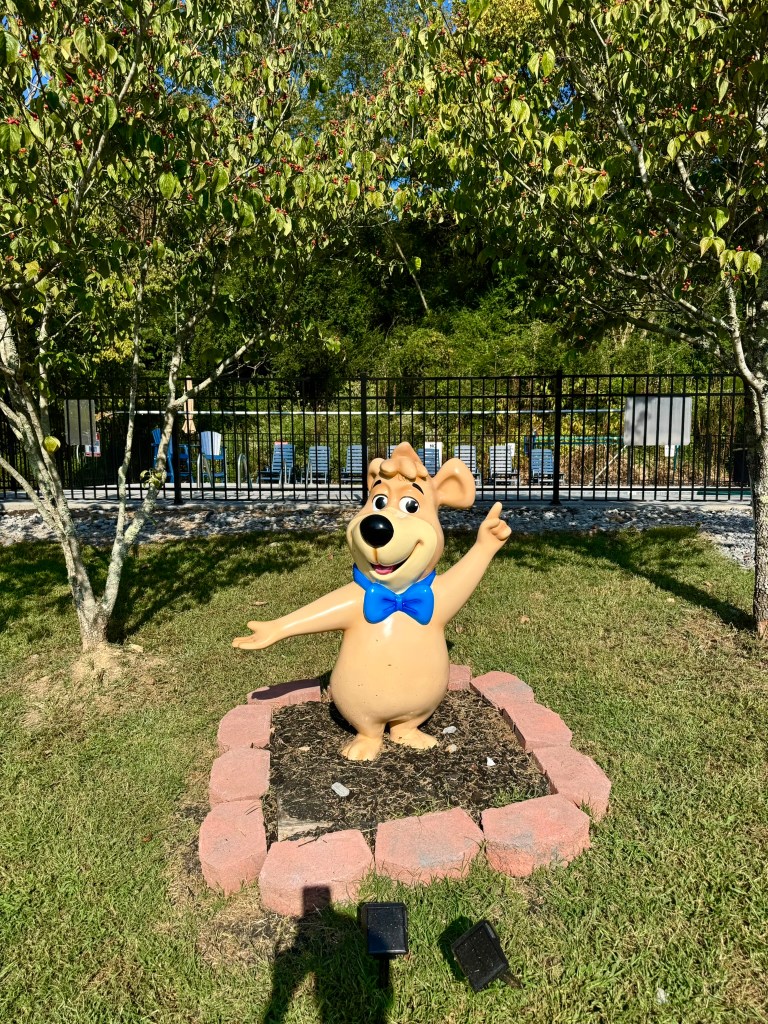
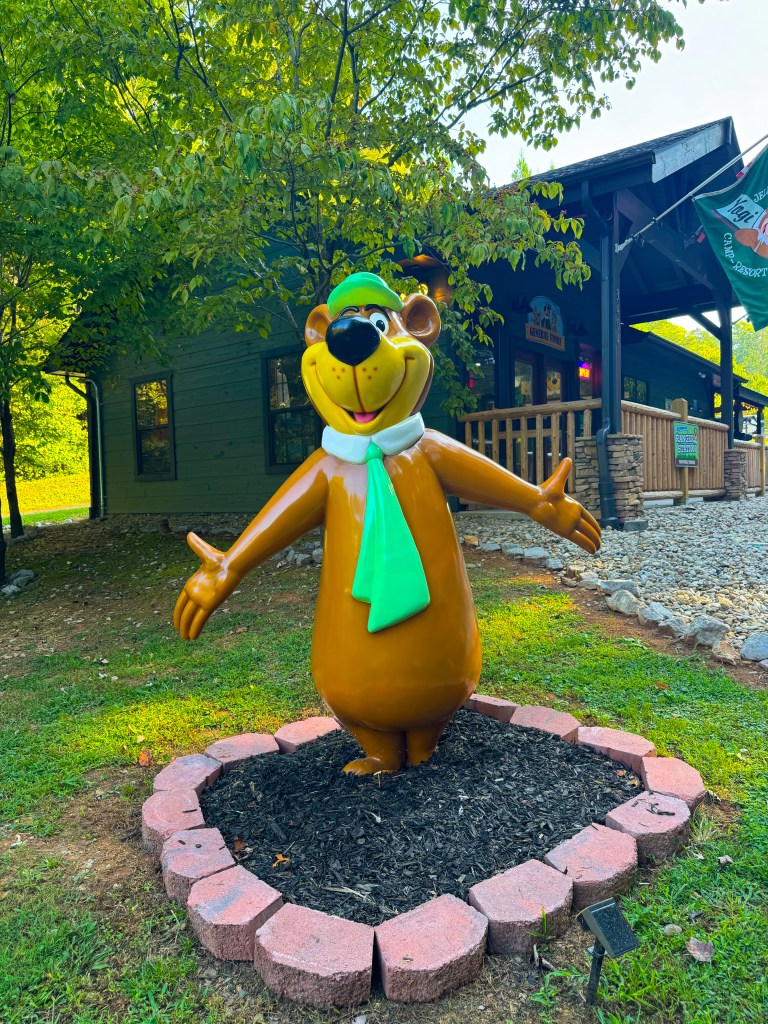
Jellystone says its characters frequently participate in activities such as wagon rides, dance parties, and other scheduled events.
For younger kids, that extra layer of theming makes the campground feel much more exciting than a standard cabin stay.
Jellystone Park as a Home Base for a Homeschool Trip to Pigeon Forge
This is probably my favorite way to think about the property.
You don’t necessarily have to choose between an educational trip and a fun family vacation.
Pigeon Forge makes it surprisingly easy to have both.
For example, Dollywood is located nearby and offers dedicated Homeschool Days during select dates. For 2026, Dollywood’s Homeschool Days ran from August 3 through September 13 and included special homeschool-family pricing, with advance reservations required.
That means a homeschool family could spend a day experiencing Dollywood, another day exploring the Smoky Mountains, and then return to Jellystone Park where fishing, gem mining, outdoor play, crafts, swimming, and other activities continue the experience.
That is my favorite version of homeschool travel.
You are not trying to make every moment educational.
You’re simply giving your children more of the world to learn from.
Other Things to Do Near Jellystone Park Pigeon Forge
The location also makes it easy to build a larger Pigeon Forge family itinerary.
Jellystone highlights nearby attractions including Dollywood, the Great Smoky Mountains National Park, The Island in Pigeon Forge, The Old Mill District, mountain coasters, and attractions in nearby Gatlinburg.
If you’re planning several days in the area, I would mix bigger attraction days with slower campground days.
That keeps everyone from getting exhausted while still giving you plenty to do.
And because we homeschool, I especially love that flexibility. We can travel a little differently, explore during less crowded periods when possible, and build education into the places we are already excited to visit.
Is Jellystone Park Pigeon Forge Good for Families?
Jellystone Park Pigeon Forge makes the most sense for families who want their accommodations to be part of the vacation.
If your ideal trip includes leaving your hotel early every morning and returning only to sleep, you may not use everything here.
But if you like having activities available without constantly getting back into the car, this setup is really convenient.
You have cabin accommodations, outdoor spaces, children’s activities, a pool, fishing, games, a general store, character experiences, and easy access to many of the attractions that bring families to Pigeon Forge in the first place.
And for homeschool families specifically, there are so many opportunities to turn ordinary vacation moments into experiential learning without making the trip feel like school.
Is Jellystone Park Pigeon Forge Worth It for Homeschool Families?
For our family, the biggest value was the combination of location and experience.
We could explore Pigeon Forge and still come back to somewhere that gave the kids plenty to do.
And from a homeschool perspective, I loved having a place where outdoor learning happened without requiring much planning from me.
Fishing.
Nature walks.
Gem mining.
Physical activity.
Crafts.
Social interaction.
Family time.
Those things may not look like traditional school, but they’re still part of raising curious kids who know how to interact with the world around them.
That is why Jellystone Park Pigeon Forge makes such an interesting option for homeschool families planning a Smoky Mountain getaway.
Plan Your Jellystone Park Pigeon Forge Stay
If you’re planning a family vacation, homeschool getaway, or trip to Dollywood, Jellystone Park Pigeon Forge gives you the chance to make the place you’re staying part of the experience.
Instead of ending the day when you leave the attractions, the kids can come back and swim, fish, play, explore, or join one of the campground activities.
For us, that combination of adventure, downtime, and natural learning is exactly what makes family travel worthwhile.
Check Jellystone Park Pigeon Forge availability
Frequently Asked Questions About Jellystone Park Pigeon Forge
How far is Jellystone Park Pigeon Forge from Dollywood?
Jellystone Park states that its Pigeon Forge camp-resort is about one mile from Dollywood.
Does Jellystone Park Pigeon Forge have cabins?
Yes. Jellystone Park Pigeon Forge offers family-friendly cabin accommodations in addition to RV sites.
Does Jellystone Park Pigeon Forge have a pool?
Yes. The campground has a swimming pool as one of its family amenities.
What can kids do at Jellystone Park Pigeon Forge?
Activities and attractions include swimming, a jump pad, fishing, gem mining, wagon rides, Gaga Ball, a playground, arts and crafts, hiking, movie experiences, themed activities, and character interactions. Offerings and scheduled activities can vary throughout the year.
Is Jellystone Park Pigeon Forge good for homeschool families?
It can be an especially good fit for homeschool families who enjoy experiential learning because the property combines outdoor activities, hands-on experiences, recreation, and access to other educational attractions throughout Pigeon Forge. Jellystone also specifically promotes field-trip experiences for groups.
Does Dollywood offer homeschool discounts?
Dollywood offers Homeschool Days during select dates. The 2026 program ran August 3 through September 13 and offered special homeschool-family pricing with advance reservations required.
Because dates and pricing can change annually, check Dollywood’s current homeschool information when planning your trip.
Pin these for later…

-
Skill Sharpeners Geography Kindergarten Review: A Simple Introduction to Map Skills
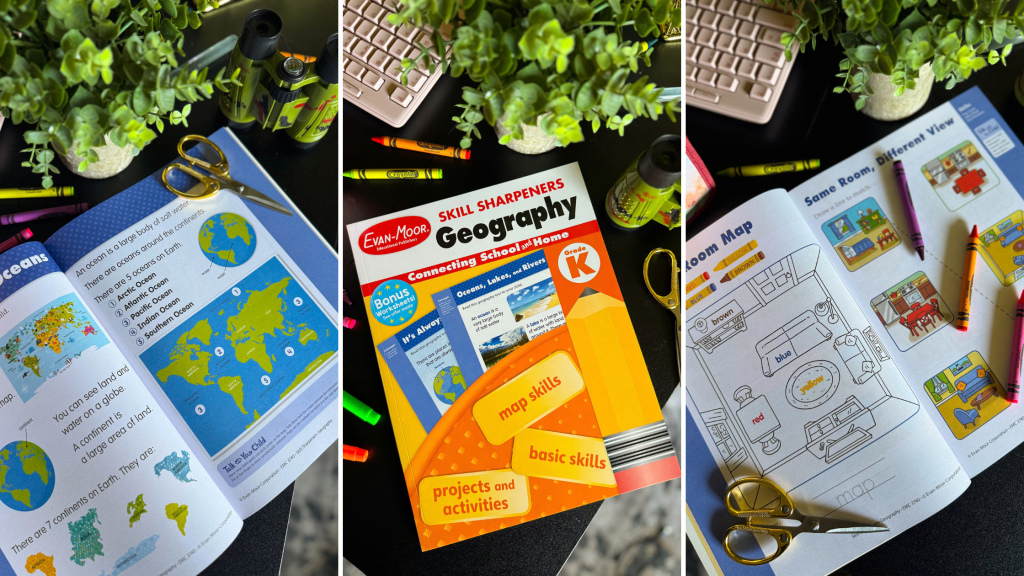
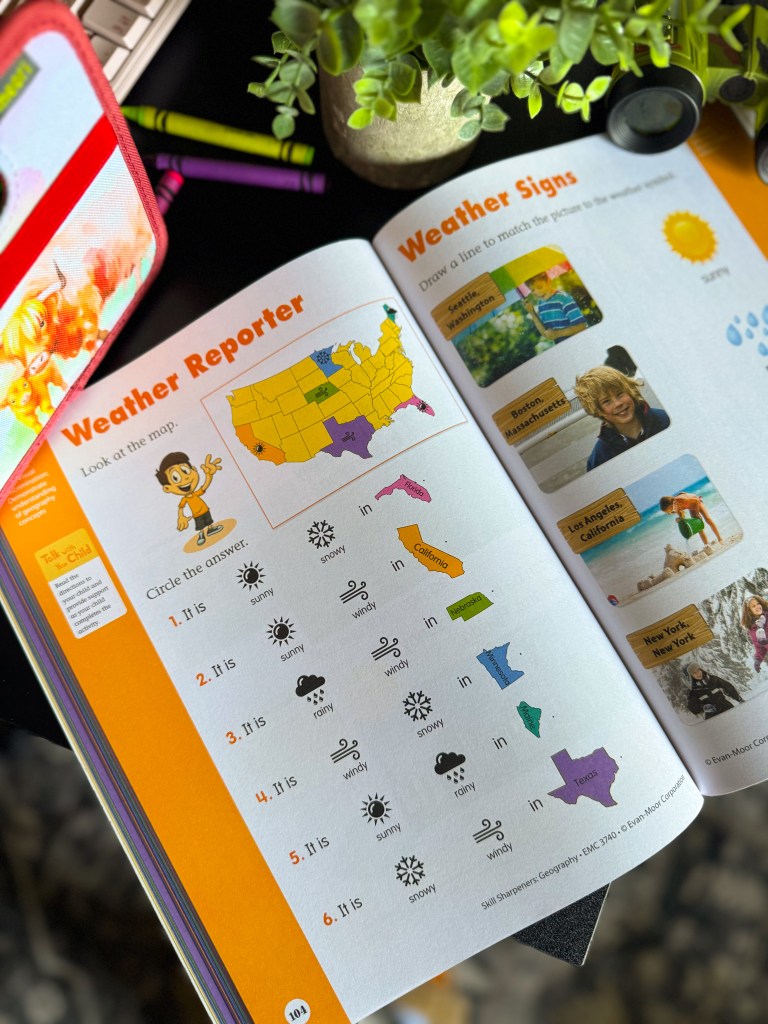
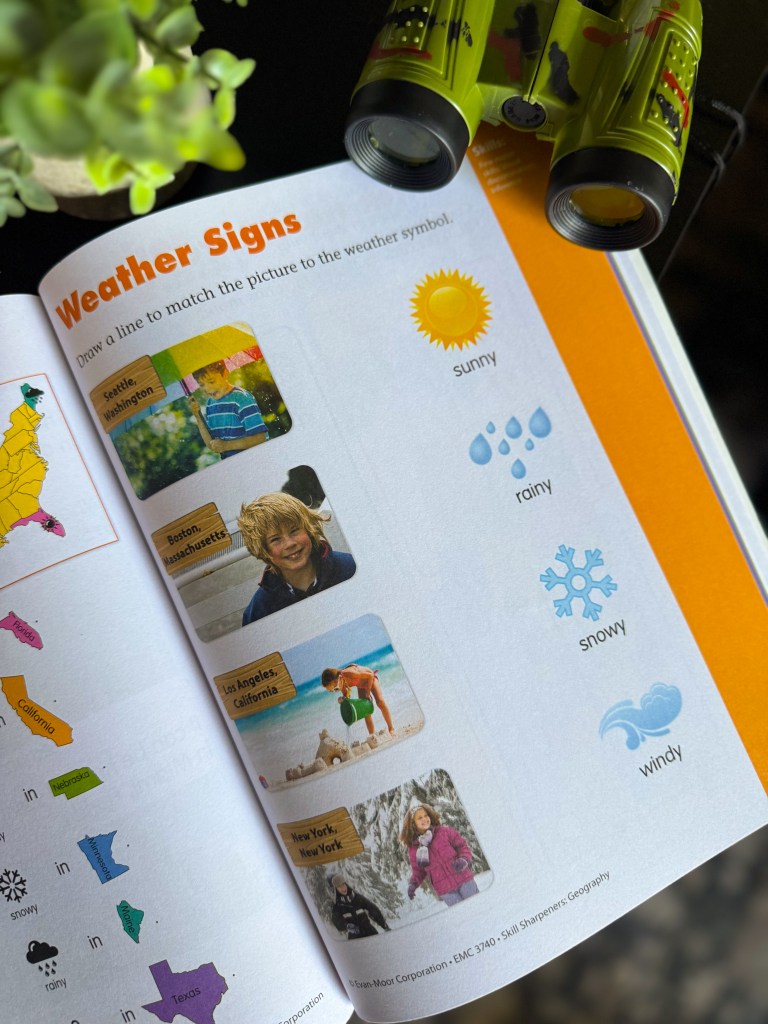
Finding a kindergarten geography curriculum that introduces real geography concepts without making them too complicated for a five-year-old can be challenging. Skill Sharpeners Geography Grade K takes a gentle, workbook-based approach to teaching children about maps, directions, continents, oceans, landforms, weather, and the world around them.
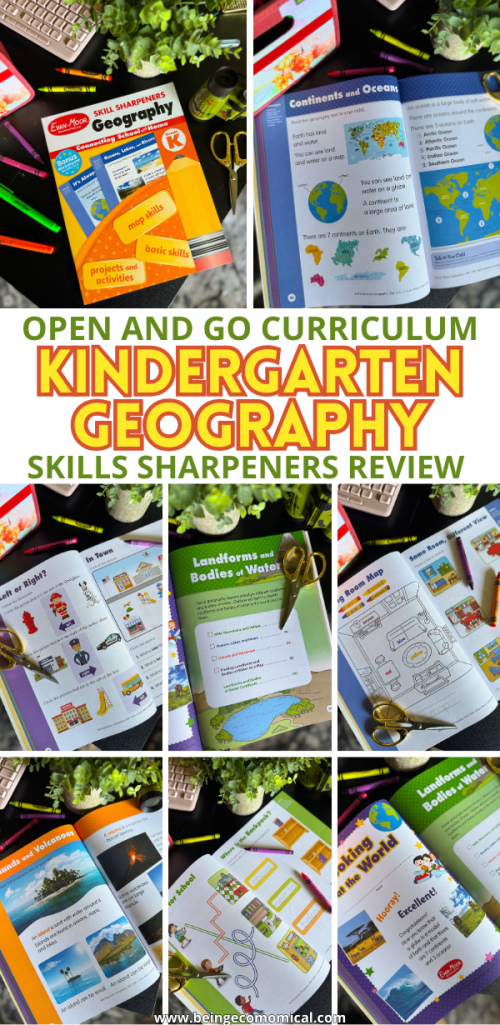
Designed for ages 5–6, Skill Sharpeners Geography Kindergarten is a 144-page consumable workbook with 90 lessons.
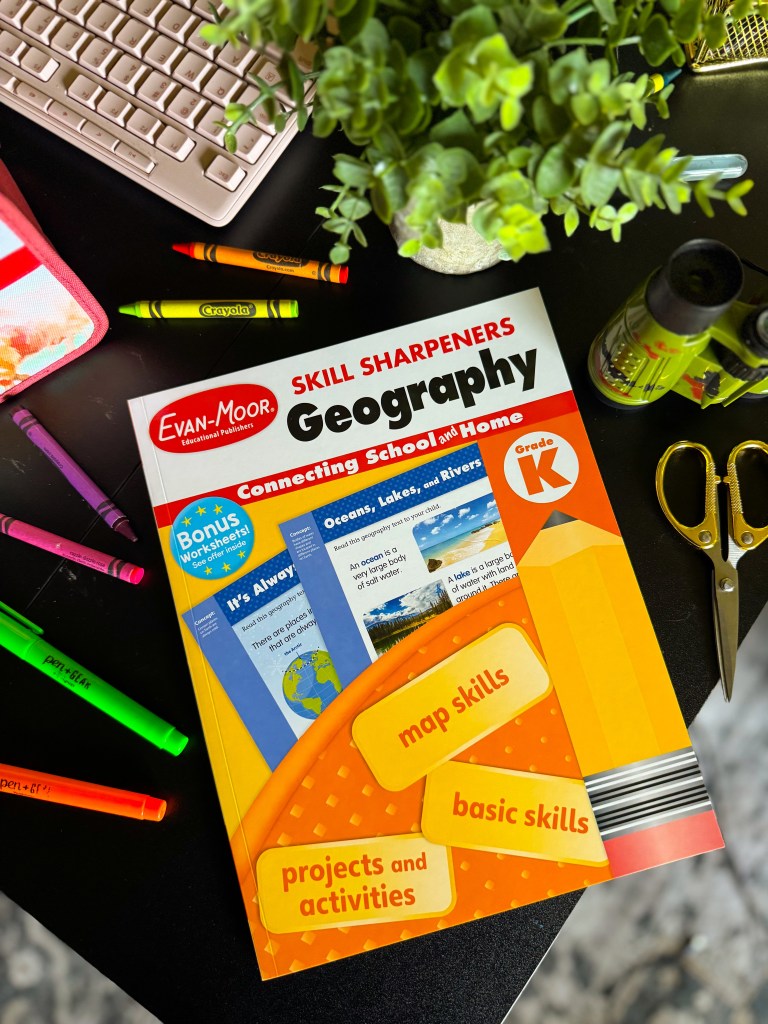
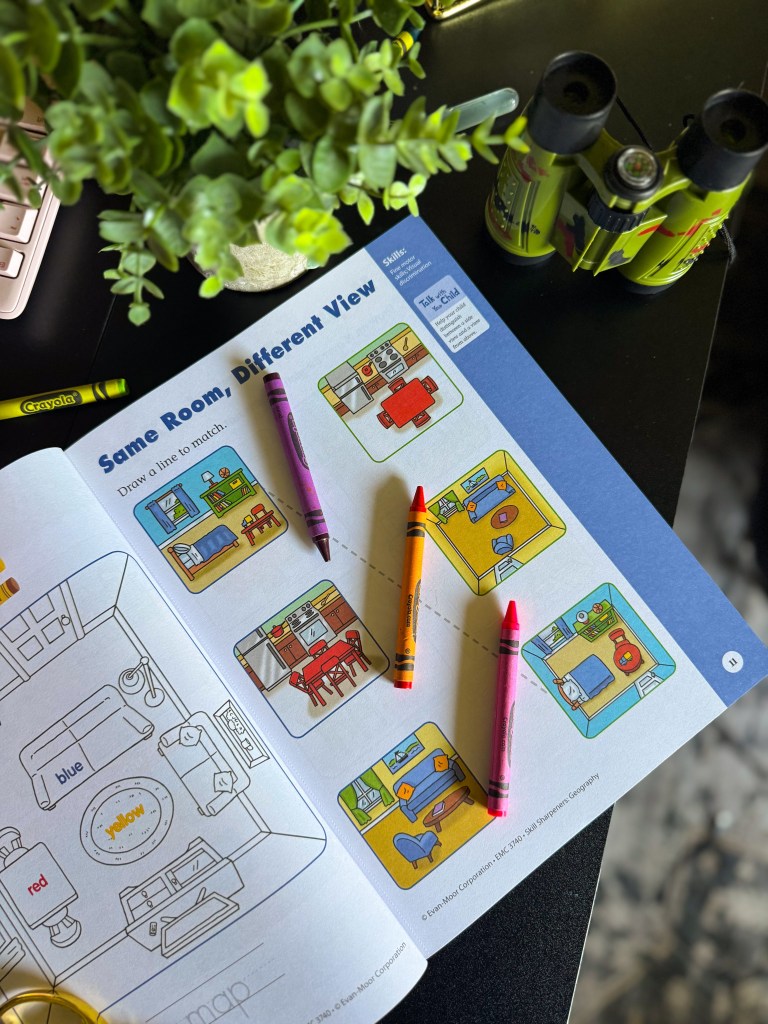
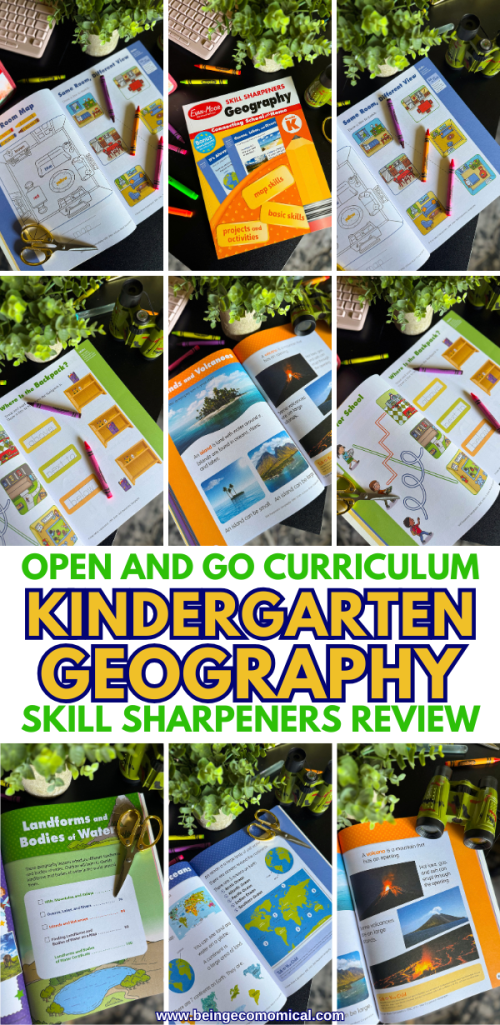
The lessons combine short nonfiction passages with colorful illustrations, photographs, vocabulary practice, early writing, map activities, and occasional hands-on projects.
Timberdoodle recommends completing approximately two to four pages each week, making it easy to add geography to a homeschool schedule without turning it into another lengthy daily subject.
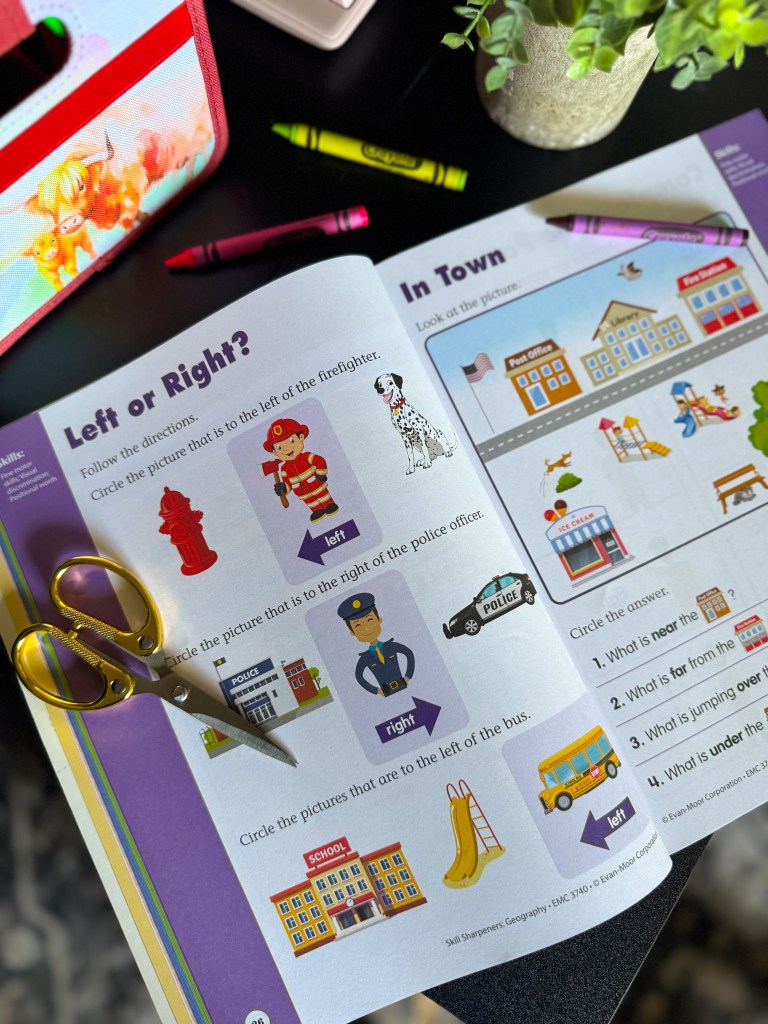
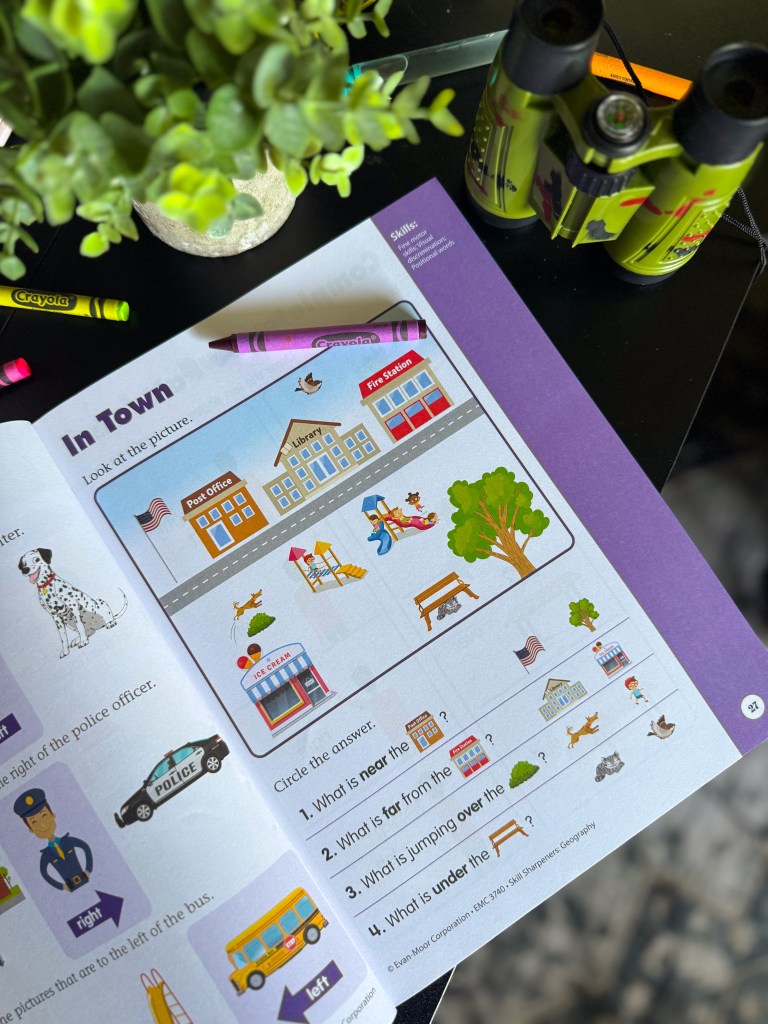
What Does Skill Sharpeners Geography Kindergarten Cover?
The workbook begins with geography concepts that are familiar and concrete for young children. Instead of immediately expecting kindergarteners to memorize countries or study complicated maps, children first learn what maps represent and how they can be used to show where things are.
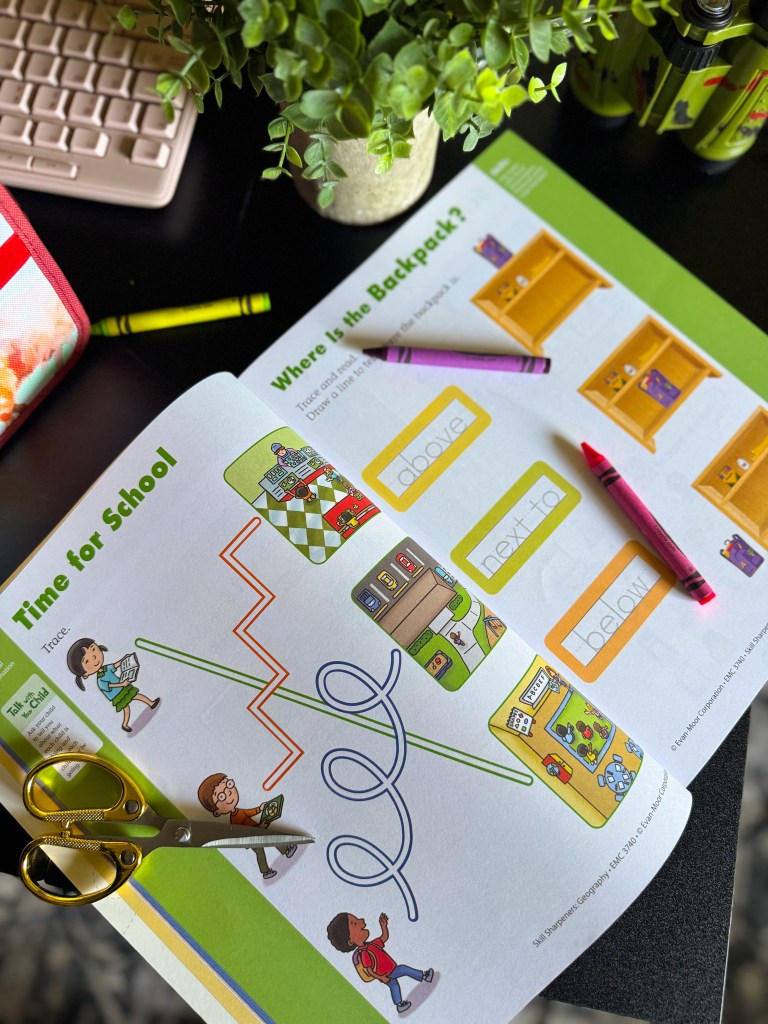
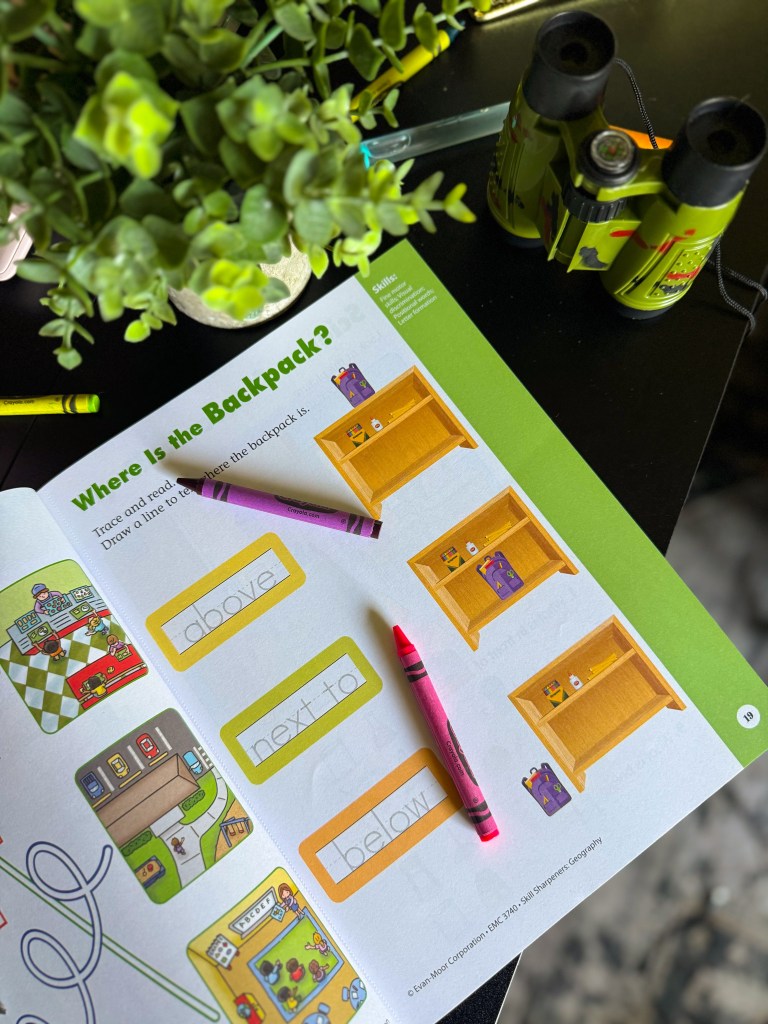
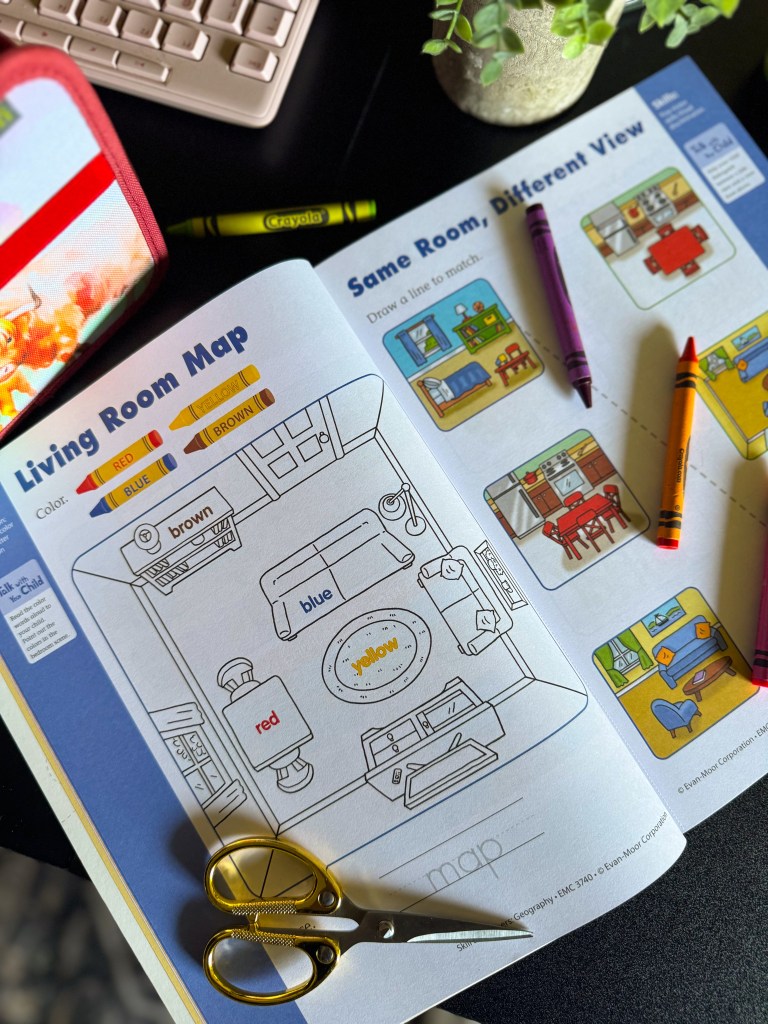
Early lessons include activities such as looking at a room from different perspectives, creating simple maps, identifying locations, following directions, and practicing positional words such as left, right, above, below, next to, behind, and in front of.
These activities provide a useful foundation for more traditional map skills later.
As children move through the book, the lessons expand into continents and oceans, landforms and bodies of water, habitats, weather, and geographic differences around the world.
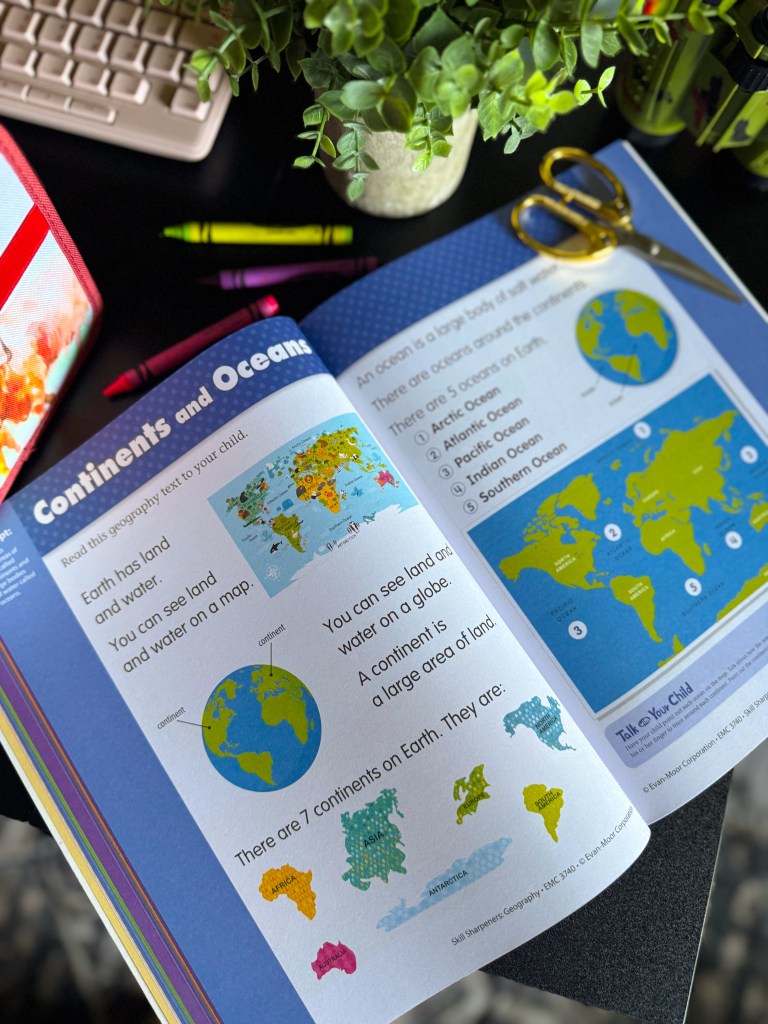
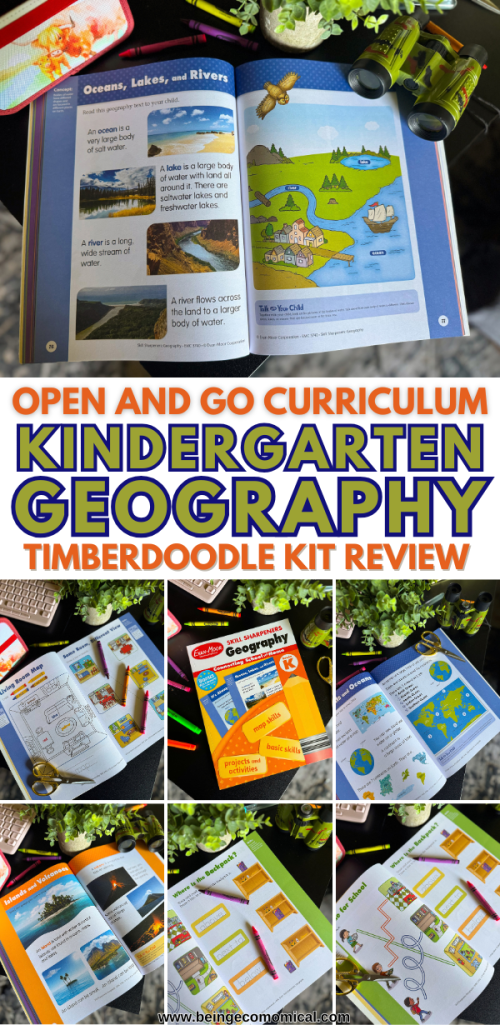
Children are introduced to mountains, hills, valleys, rivers, lakes, oceans, islands, and volcanoes while learning to recognize many of these features on simple maps.
A Kindergarten Geography Workbook That Uses Real-World Examples
One of my favorite things about Skill Sharpeners Geography is the balance between illustrations and real photographs.
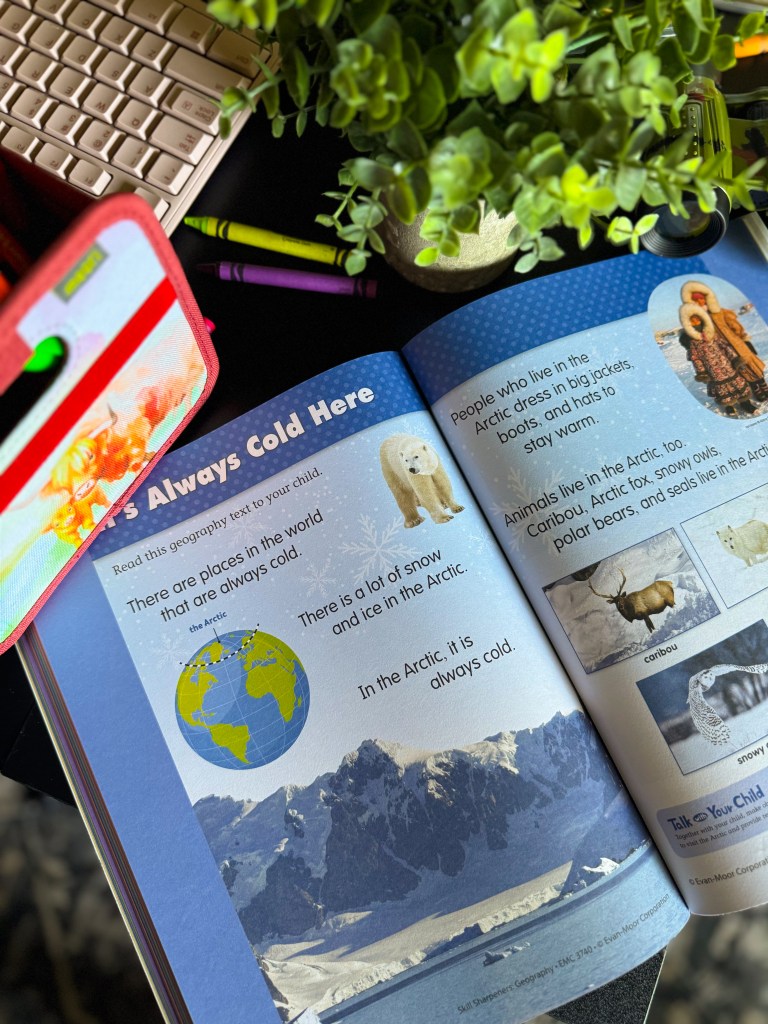
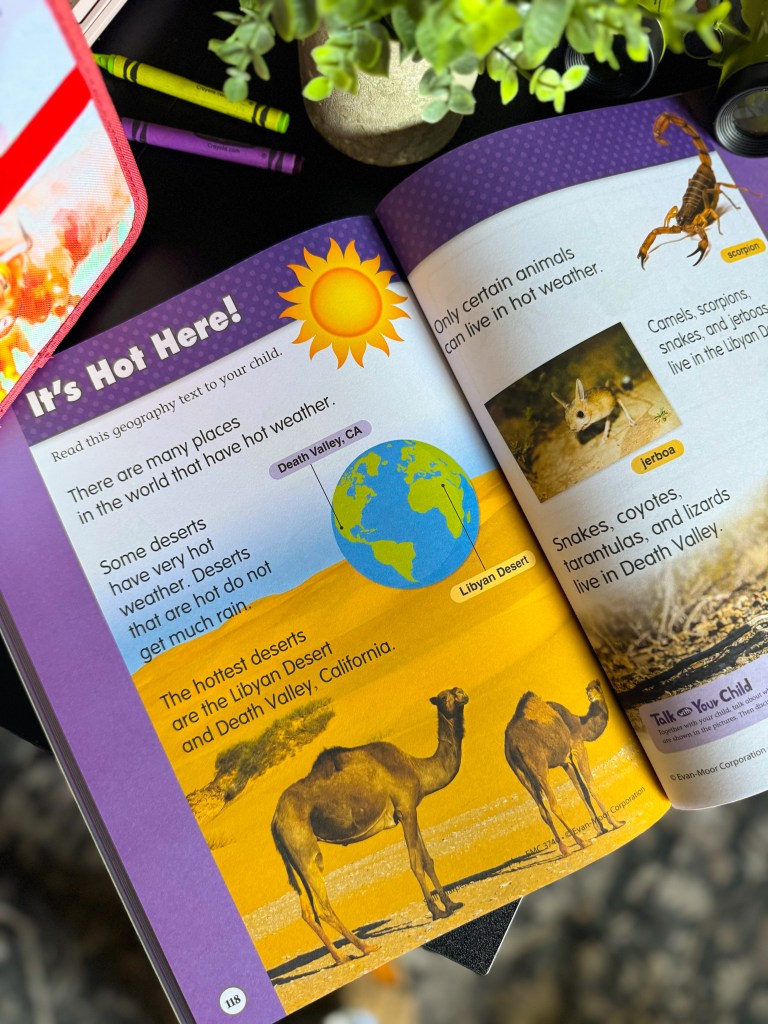
When the workbook teaches oceans, lakes, rivers, islands, volcanoes, deserts, or Arctic environments, children don’t only see cartoon representations. They also see photographs that help connect the vocabulary to actual places and landscapes.
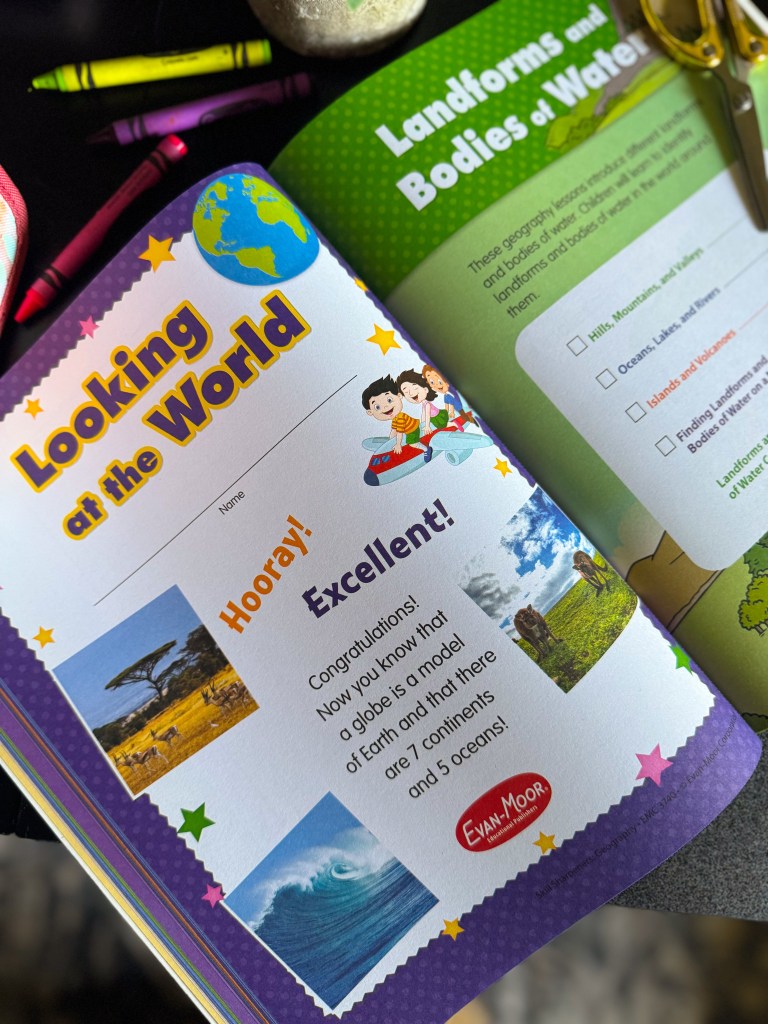
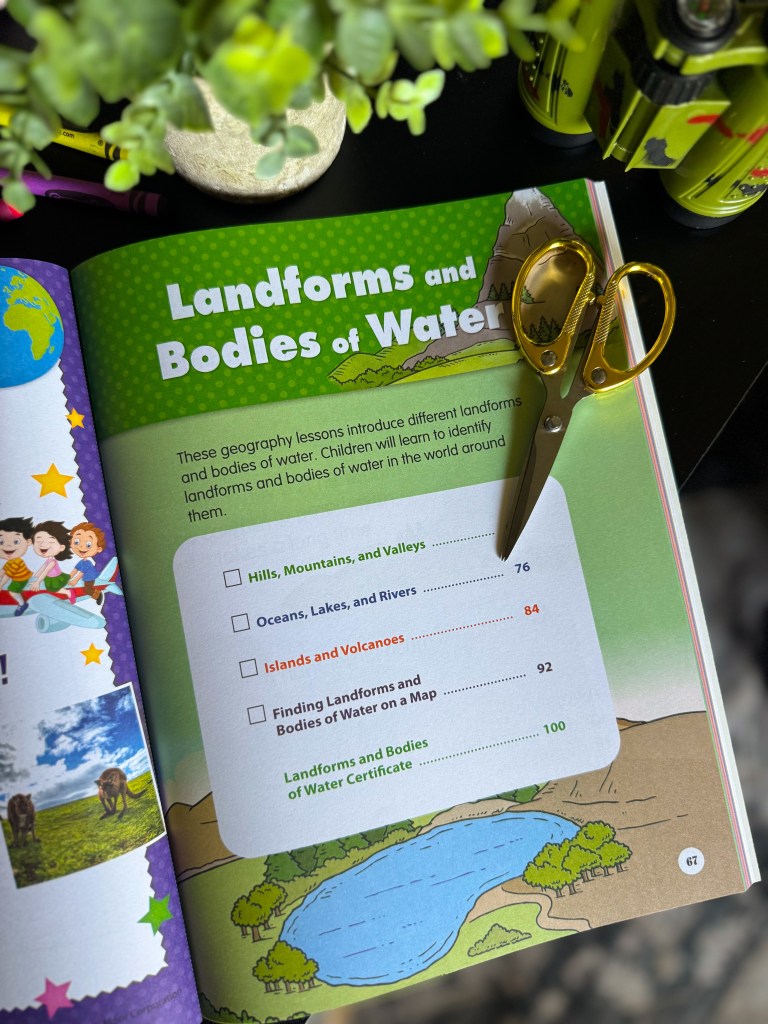
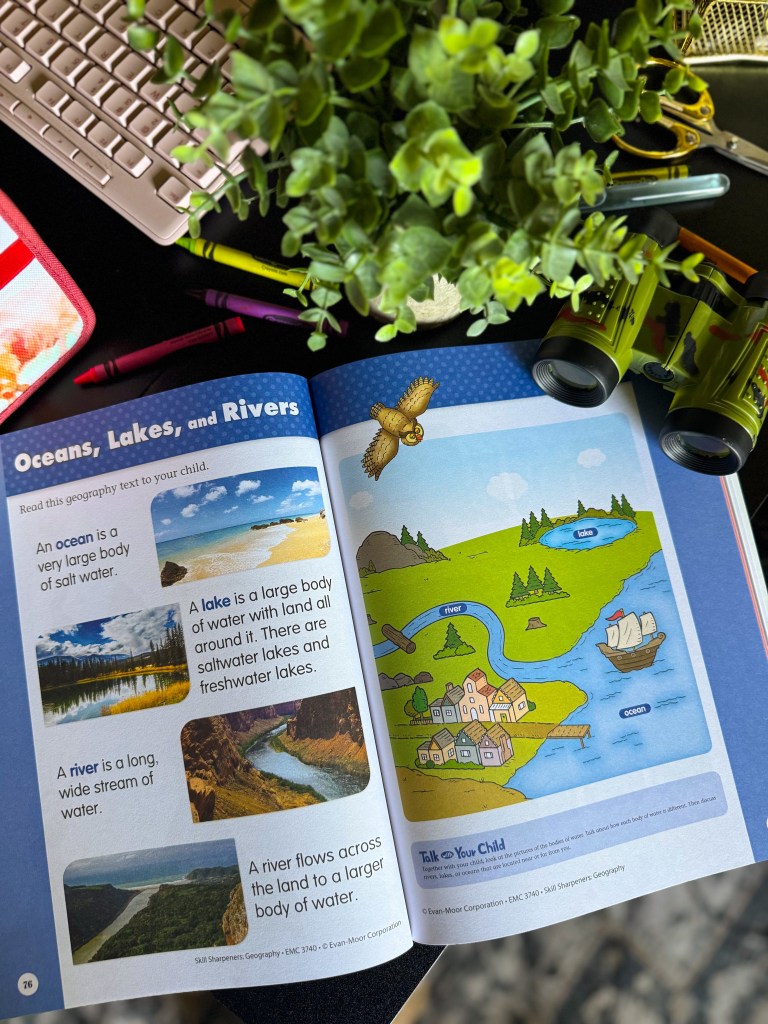
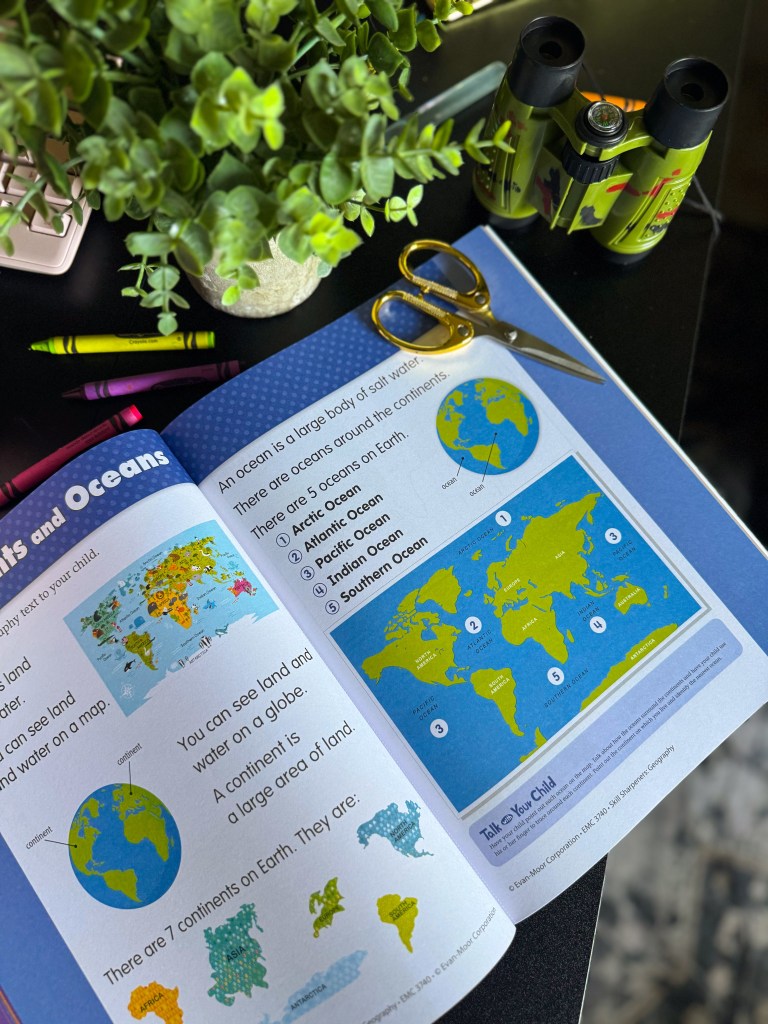
The continents and oceans lessons introduce the seven continents and five oceans in an age-appropriate way, while later lessons help children understand that different areas of the world have different climates, landscapes, people, and animals.
For example, the weather section compares colder Arctic environments with hot desert regions and introduces children to some of the animals and people associated with those environments. That makes the book feel more like an introduction to the world than a collection of disconnected worksheets.
Map Skills for Kindergarten
The map lessons may be one of the strongest parts of this workbook.
Children aren’t simply shown a world map and expected to remember labels. Instead, they gradually learn what a map does. Activities include room maps, neighborhood and town maps, map symbols, directions, positional vocabulary, and identifying geographic features on a map.
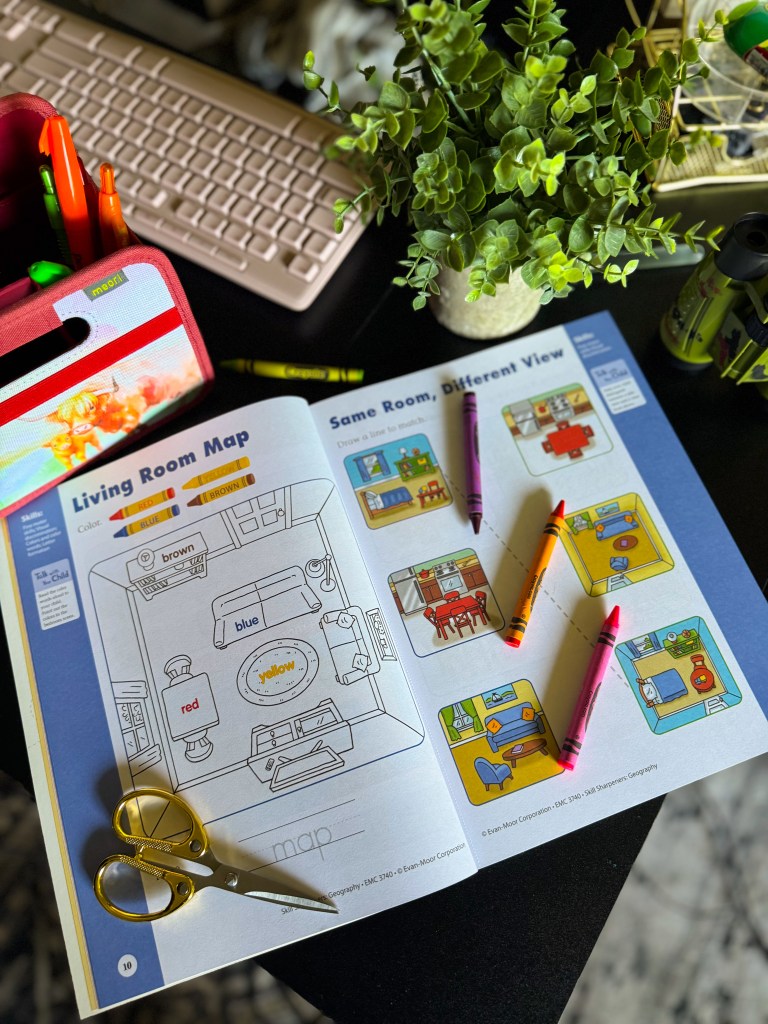
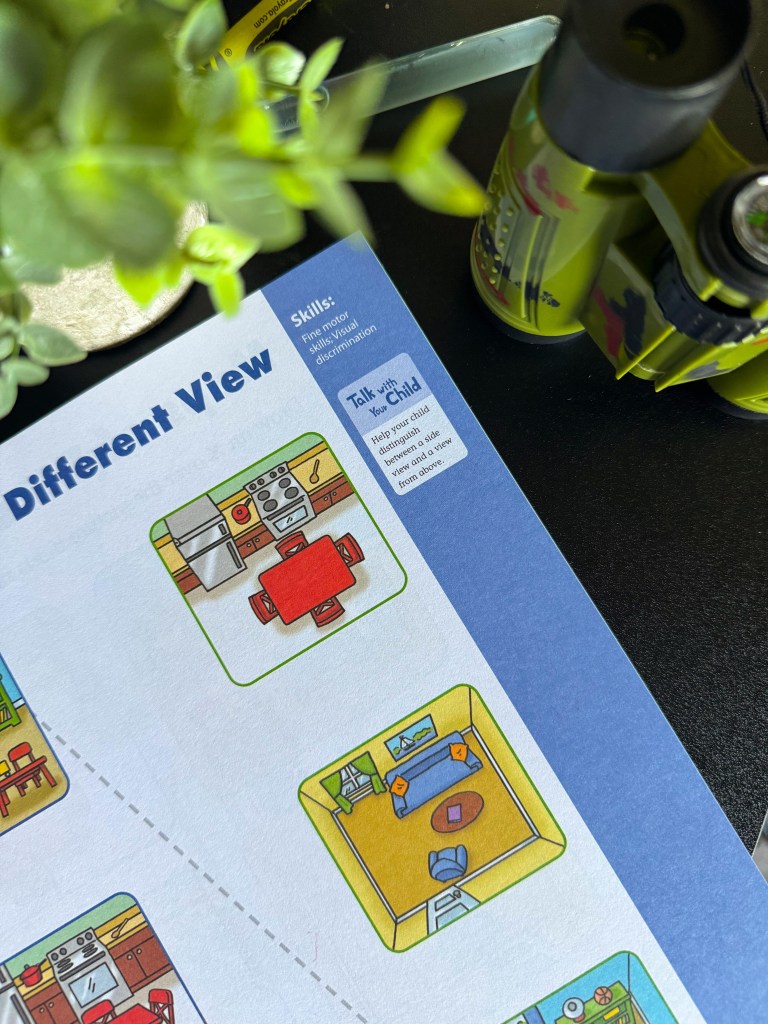
That progression makes sense for kindergarten because children begin with spaces they already understand before moving into larger geographic concepts.
The workbook also incorporates other early-learning skills throughout the geography lessons, including counting, comparing, patterns, vocabulary, writing, reading comprehension, and visual discrimination.
There Are Hands-On Geography Activities Too
Although this is primarily a workbook, not every lesson is simply read-and-answer.
There are optional cut-and-glue geography activities and projects throughout the book. One of the projects has children construct a volcano using pieces included in the workbook, giving them an opportunity to use scissors, glue, and fine-motor skills while reinforcing what they have learned.
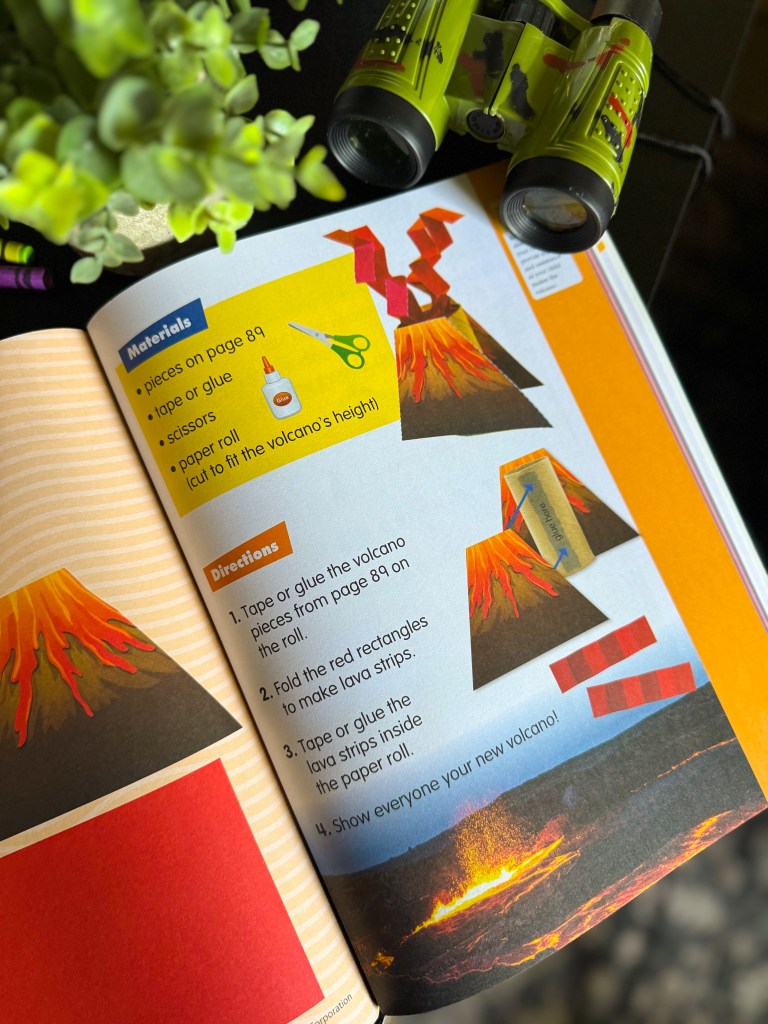
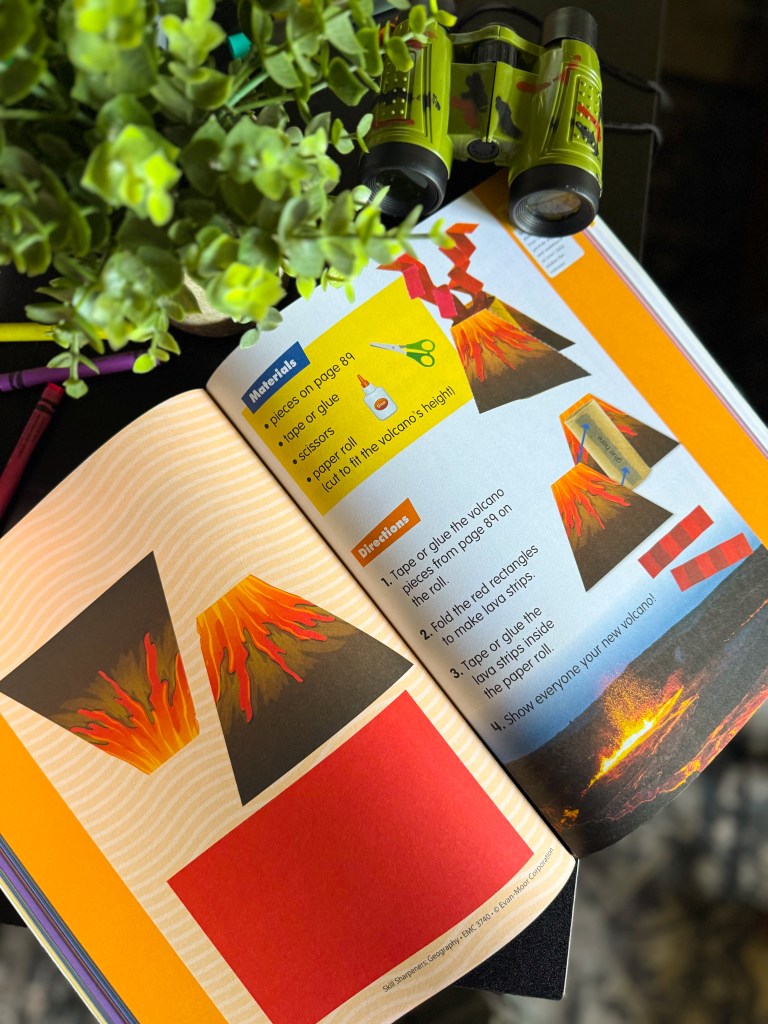
I like having these activities mixed in because they provide an occasional change from pencil-and-paper work without requiring parents to gather supplies for an elaborate geography project every week.
Is Skill Sharpeners Geography Open and Go?
For the most part, yes.
Most lessons require little more than the workbook and a pencil or crayons. A parent can read the short geography passage with the child, discuss the pictures, and complete the related activity without significant preparation.
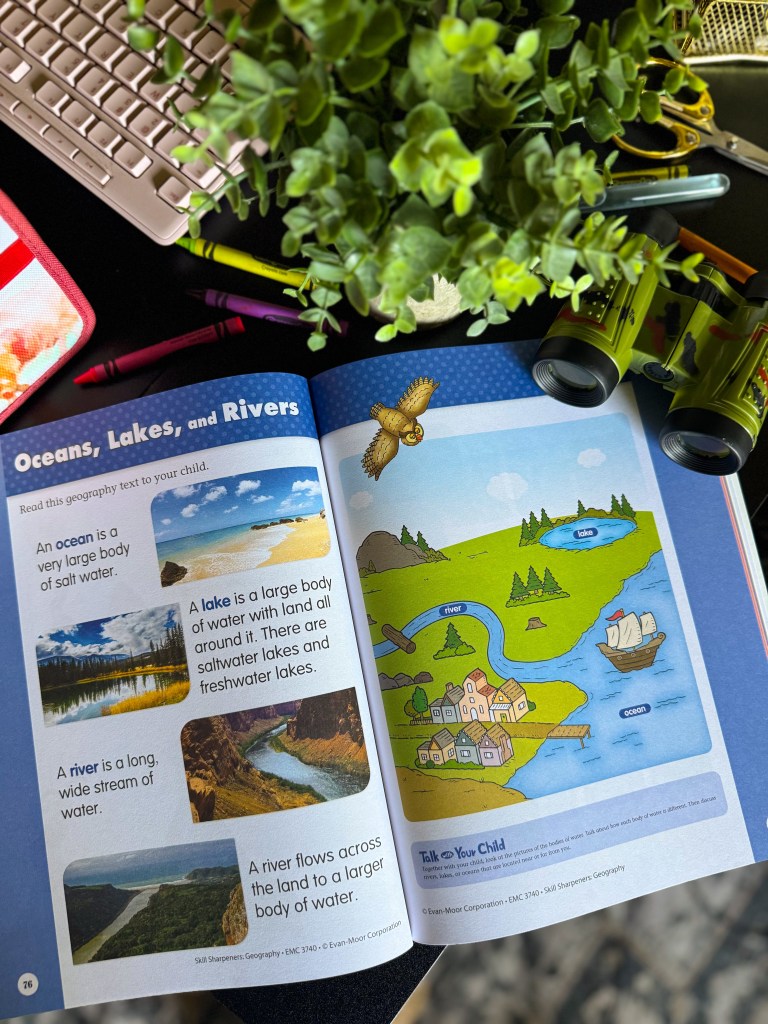
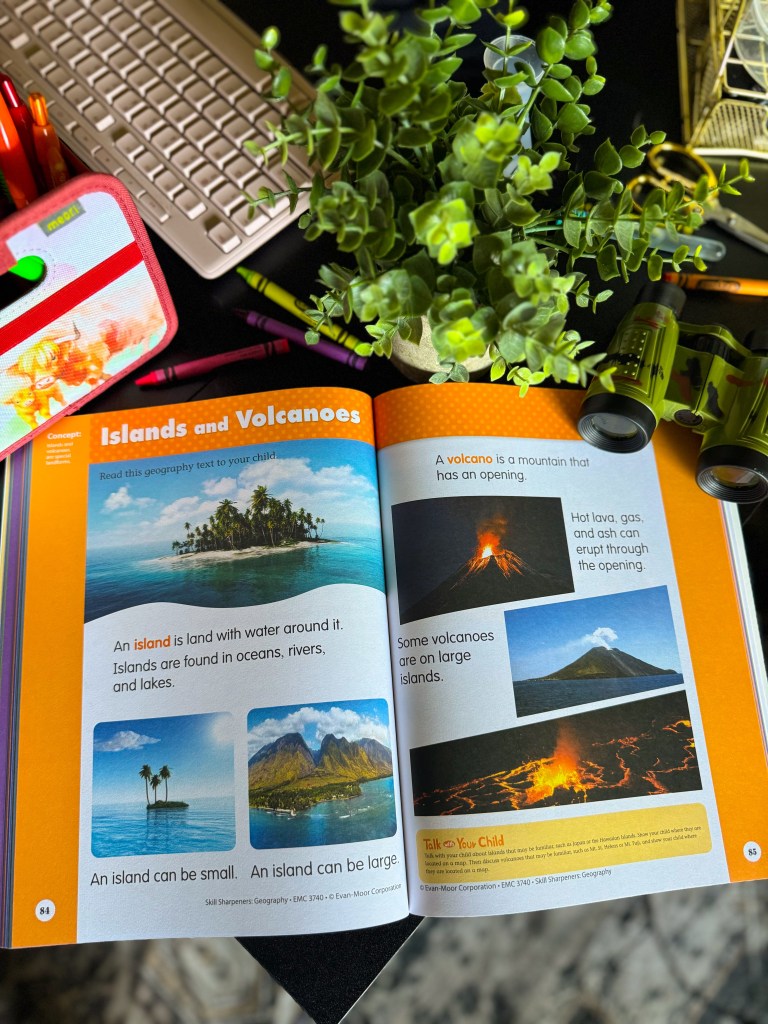
There is also a removable answer key in the back of the book, along with access to a free downloadable teaching guide that includes pacing suggestions, journal prompts, extension activities, and field-trip ideas.
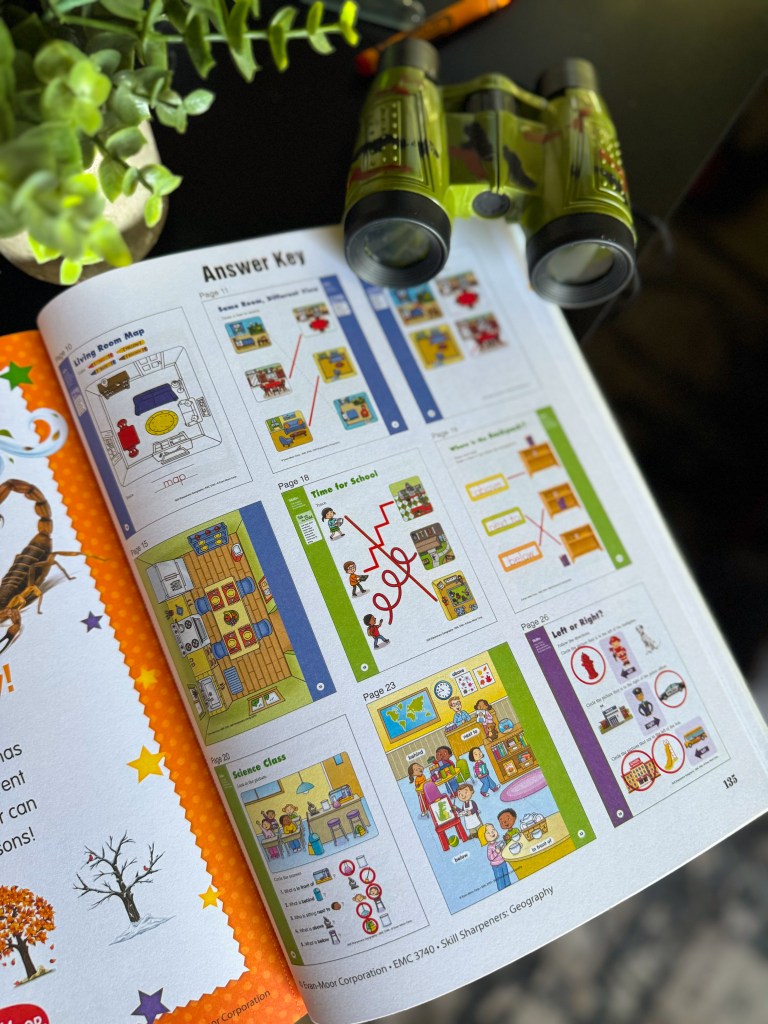
That flexibility is one of the biggest reasons I think this works well for homeschool families. You can simply use the workbook as written, or take an interesting topic—volcanoes, oceans, weather, maps—and turn it into a larger unit when your child wants to learn more.
Who Is Skill Sharpeners Geography Grade K Best For?
I would consider this workbook for families looking for a simple kindergarten homeschool geography curriculum rather than a heavily scripted program.
It works especially well if you want short lessons, colorful pages, real-world photographs, hands-on activities mixed with workbook practice, and enough structure to cover important geography concepts without adding a large amount of prep work.
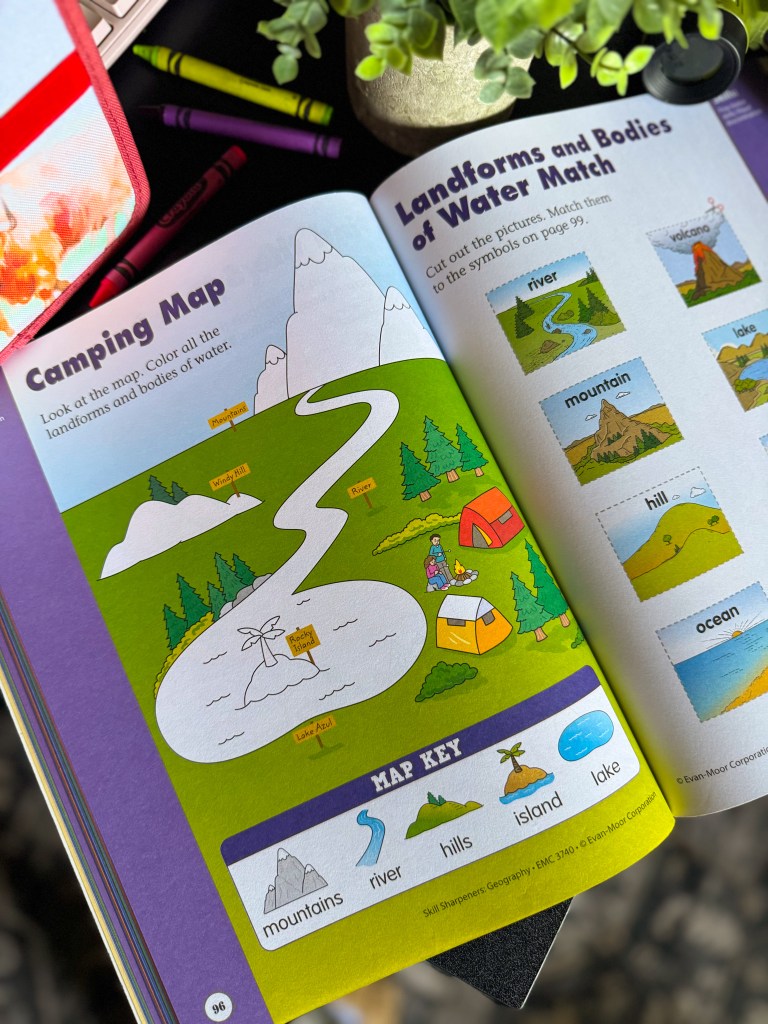
Because the recommended pace is only a few pages each week, it can also work well alongside a complete kindergarten curriculum rather than becoming another subject that takes a significant portion of the school day. Timberdoodle currently includes Skill Sharpeners Geography Grade K in its Kindergarten Curriculum Kit.
Final Thoughts on Skill Sharpeners Geography Kindergarten
Skill Sharpeners Geography Grade K provides a surprisingly broad introduction to geography for such a young age. Children move from understanding simple room maps and positional words to learning about continents, oceans, landforms, bodies of water, weather, climates, habitats, and different parts of the world.
Most importantly, those concepts are presented in small, colorful lessons that still feel appropriate for kindergarten.
If you’re looking for an easy-to-use kindergarten geography workbook that can be added to your homeschool routine without extensive planning, Skill Sharpeners Geography is worth considering.
Shop Skill Sharpeners Geography Grade K at Timberdoodle
Frequently Asked Questions
What age is Skill Sharpeners Geography Grade K for?
Timberdoodle recommends the workbook for children ages 5–6 and kindergarten level.How often should we use Skill Sharpeners Geography?
Timberdoodle suggests completing approximately two to four pages per week, although homeschool families can easily adjust the pace to fit their schedule.Does Skill Sharpeners Geography include an answer key?
Yes. The workbook includes a removable answer key and also provides access to a downloadable teaching guide with additional ideas for extending the lessons.Is Skill Sharpeners Geography secular?
Yes. Timberdoodle lists Skill Sharpeners Geography Grade K as non-faith-based.Pin these for later…
-
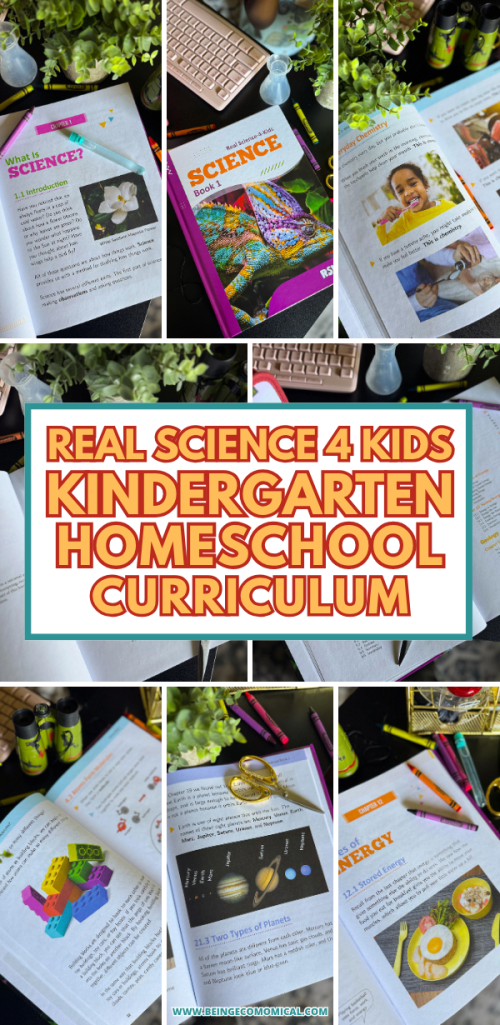
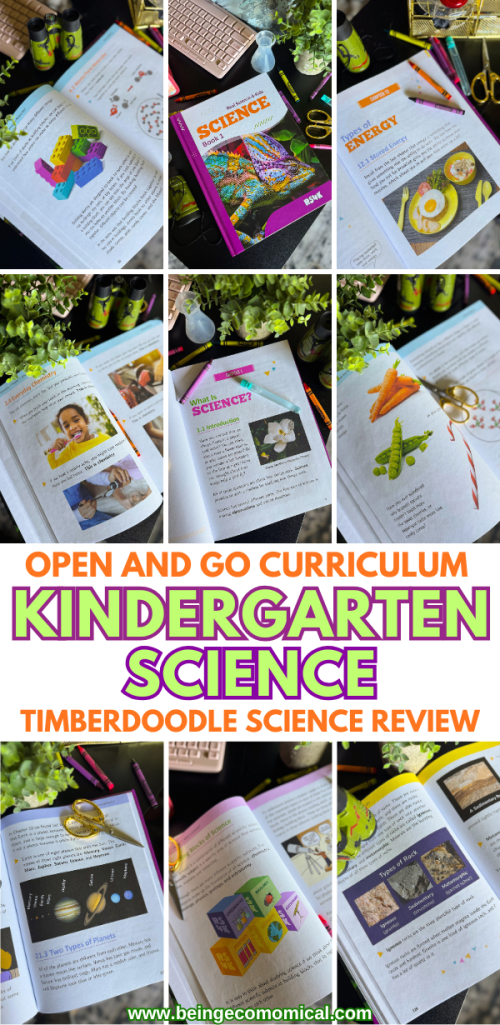
Real Science-4-Kids Book 1 Review: An Open-and-Go Homeschool Science Curriculum
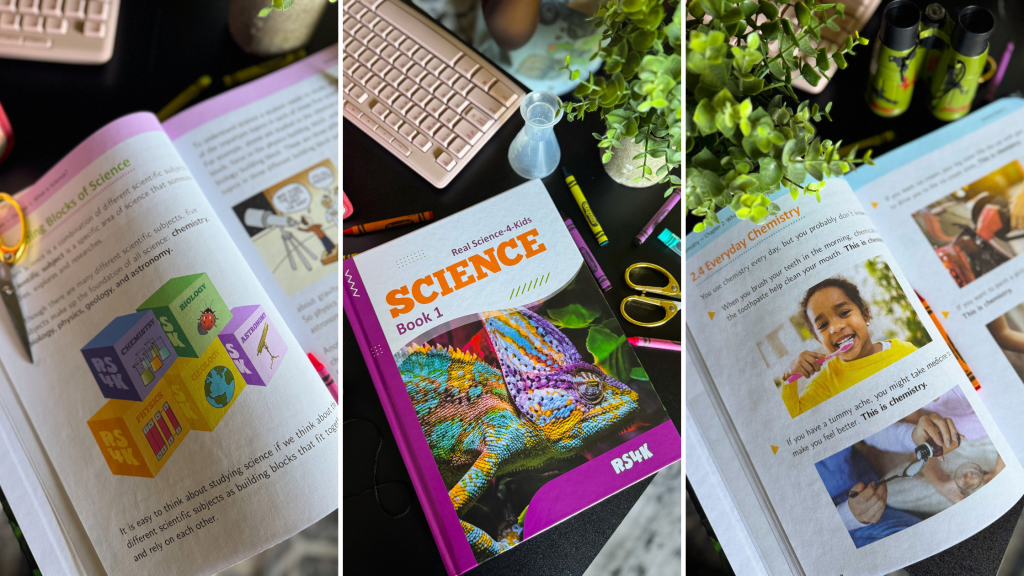
Finding a good homeschool science curriculum can be surprisingly difficult. I wanted a program that introduced real science concepts, included hands-on learning opportunities, and was visually engaging enough to hold a younger student’s attention.
At the same time, I did not want a curriculum that required me to spend additional hours finding experiments, printing unrelated worksheets, gathering resources from several websites, and creating my own lesson plans.
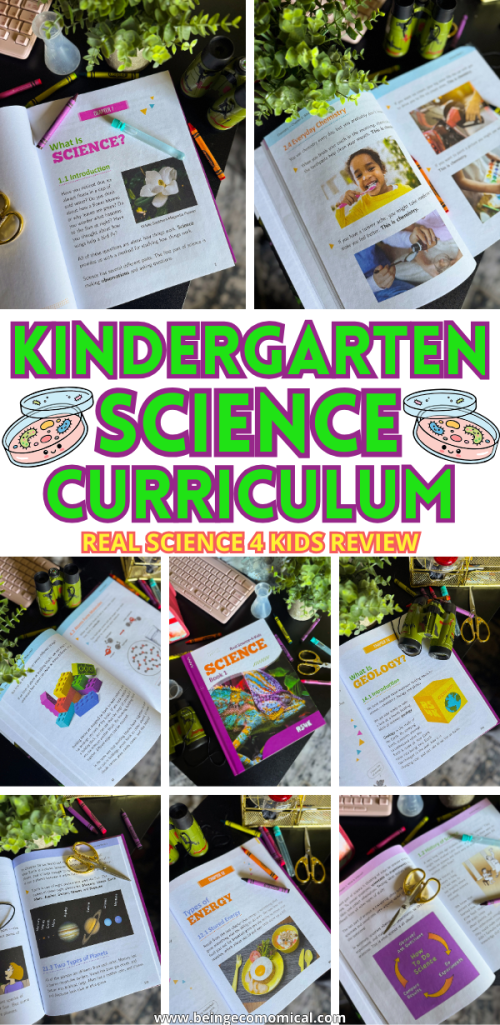
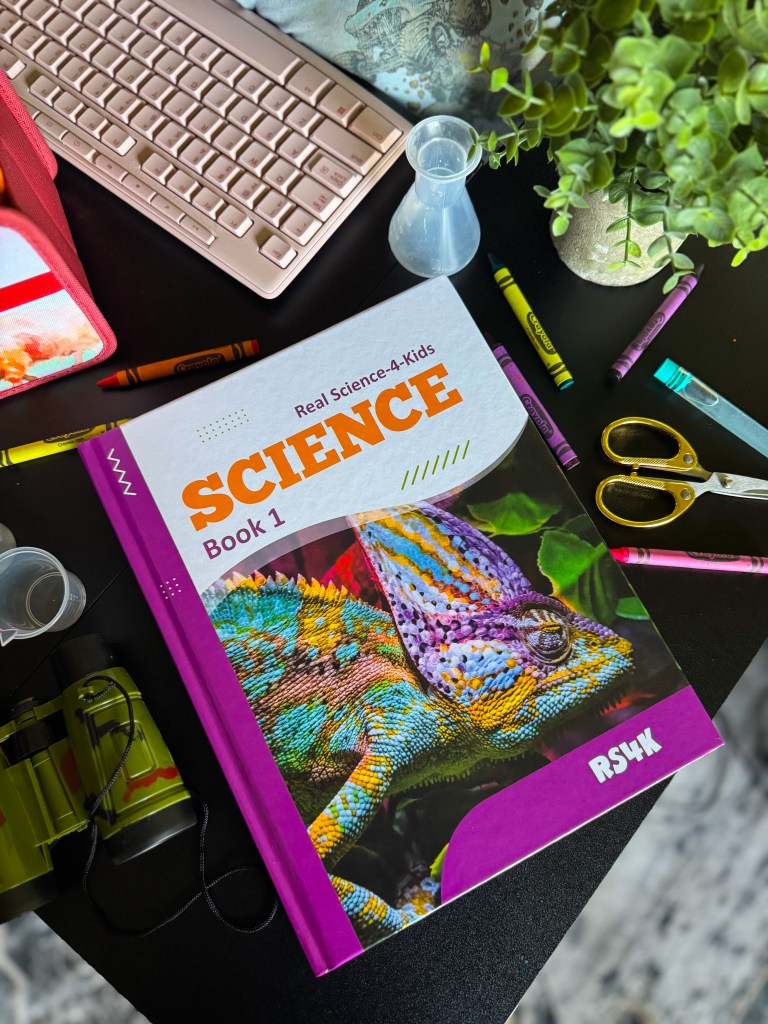
That is what initially interested me in Real Science-4-Kids Science Book 1 from Timberdoodle. The textbook itself provides a broad introduction to several areas of science, but the accompanying Digital Teaching Dashboard is what makes the program particularly useful for homeschool families looking for something structured and easy to implement.
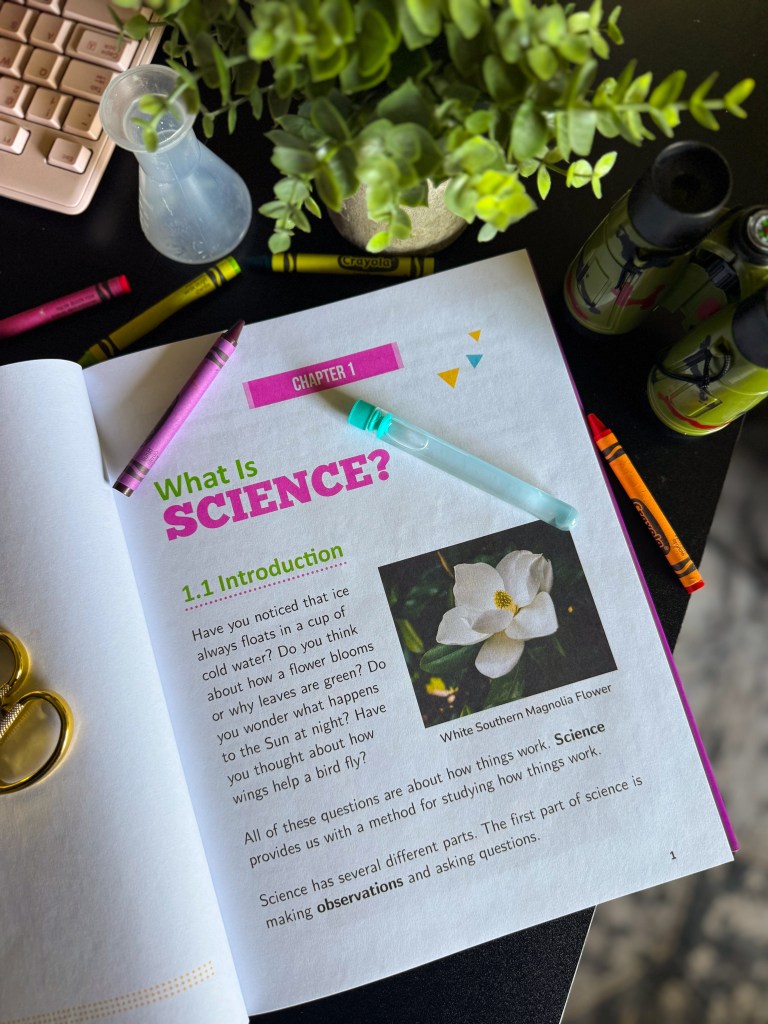
SEE REAL SCIENCE-4-KIDS BOOK 1 AT TIMBERDOODLE
What Is Real Science-4-Kids Book 1?
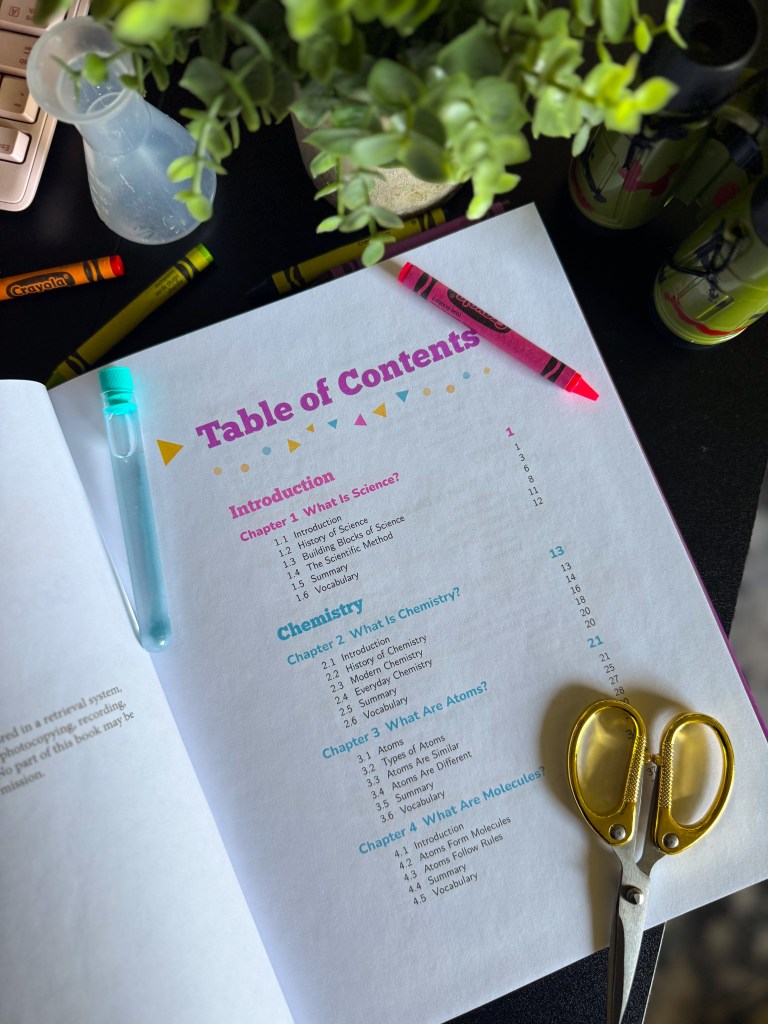
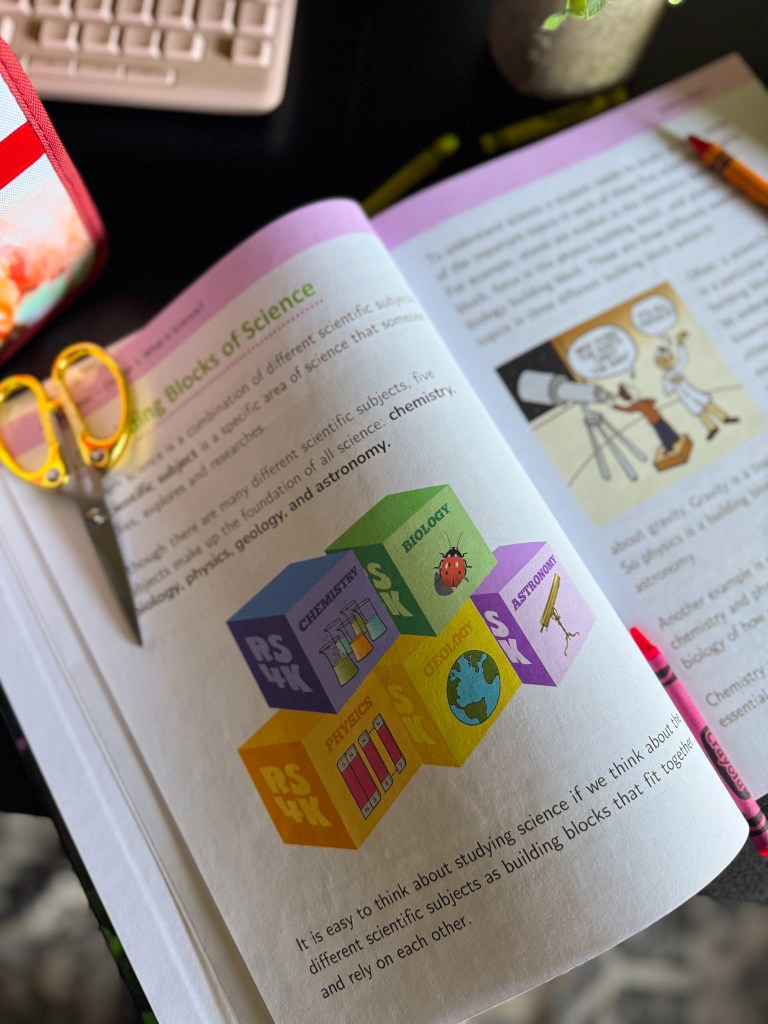
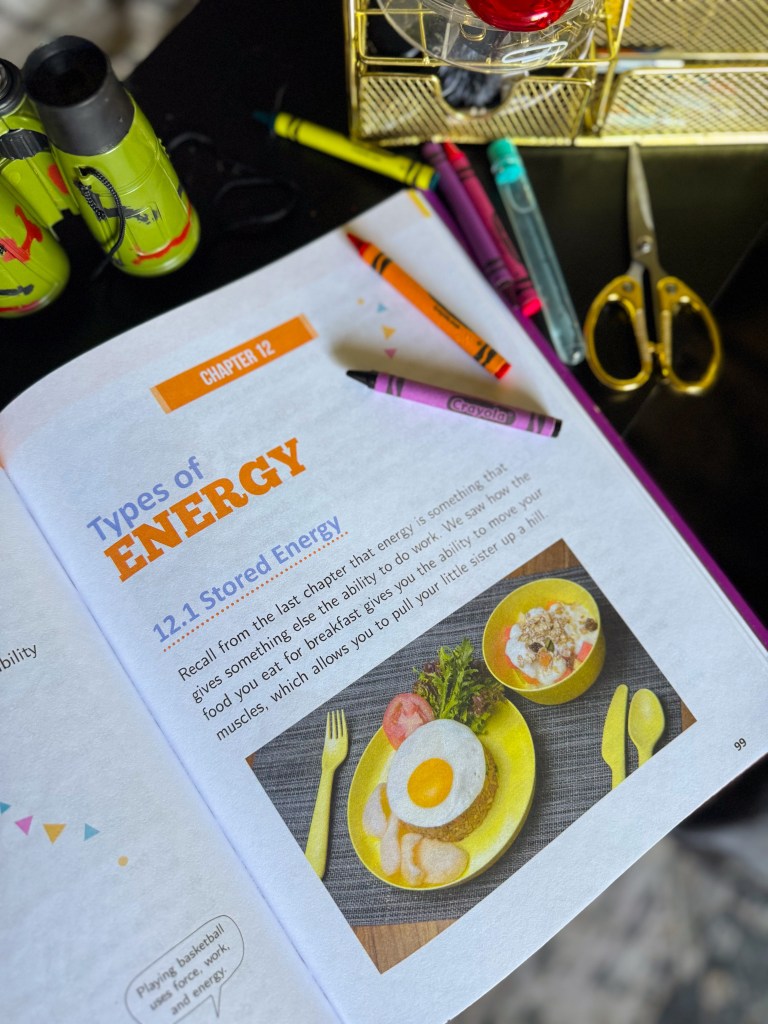
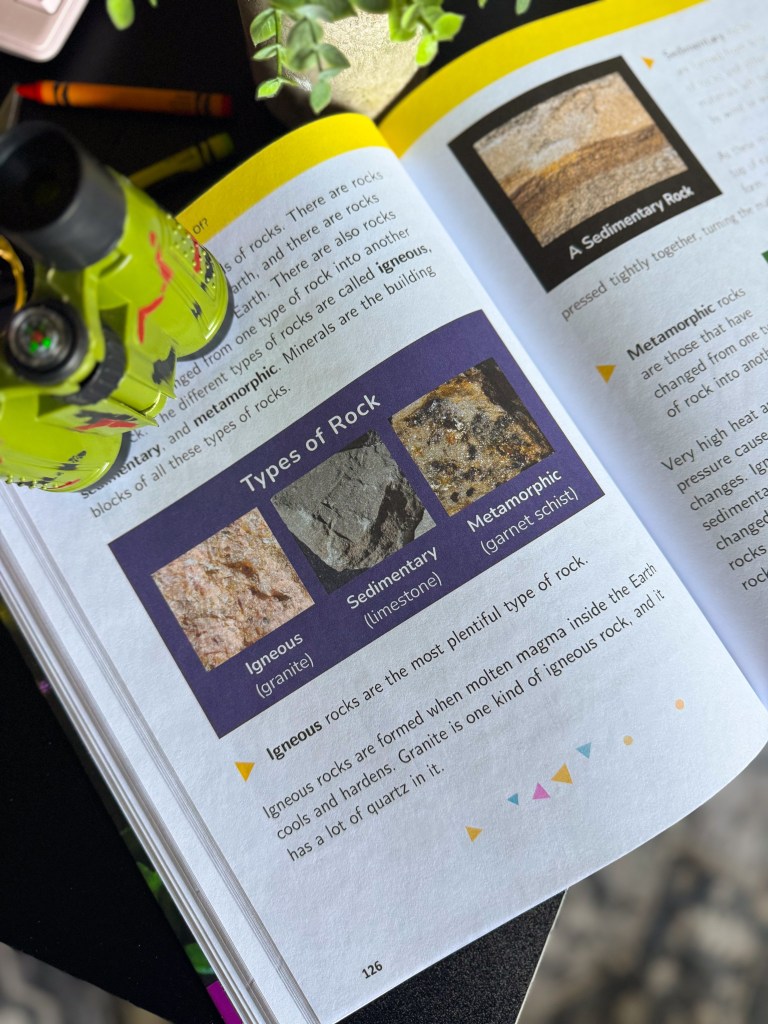
Real Science-4-Kids Science Book 1 is an elementary science curriculum that introduces children to five major branches of science: chemistry, biology, physics, geology, and astronomy.
The book contains 22 chapters, beginning with an introduction to science itself before moving into topics such as atoms, molecules, cells, force, energy, rocks, Earth’s layers, volcanoes, the Moon, the Sun, and planets.
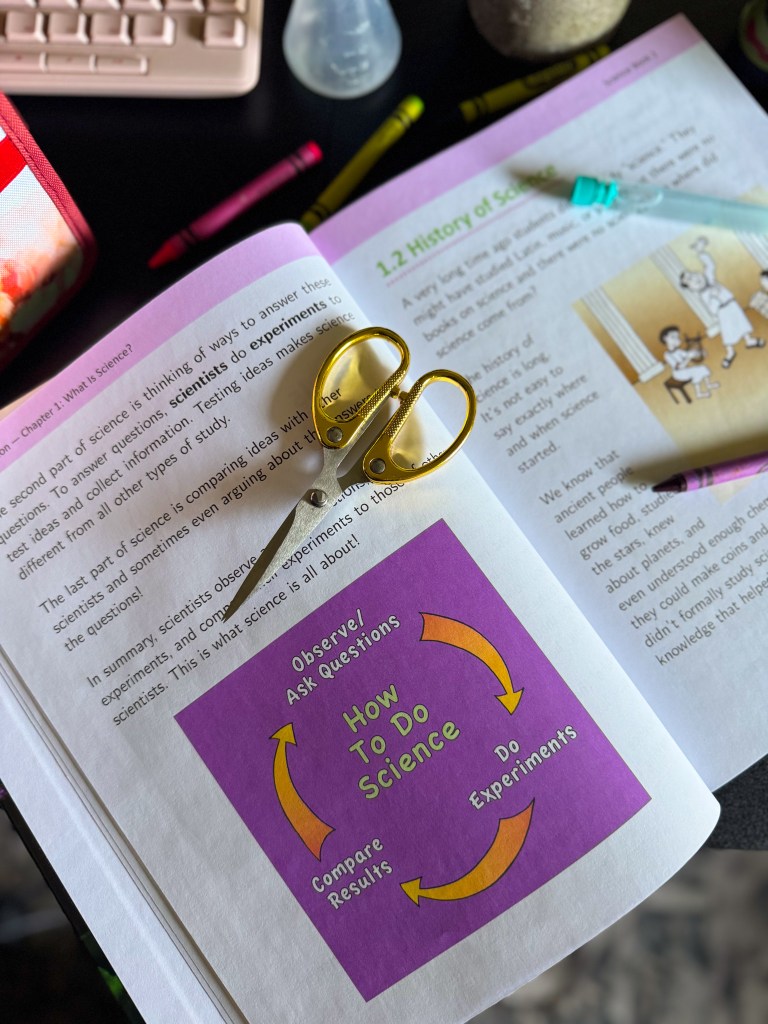
One of the things I appreciate about the curriculum is that these topics are presented as connected areas of science rather than completely separate units. Students first learn what science is and how scientists study the world before exploring the individual branches in more detail.
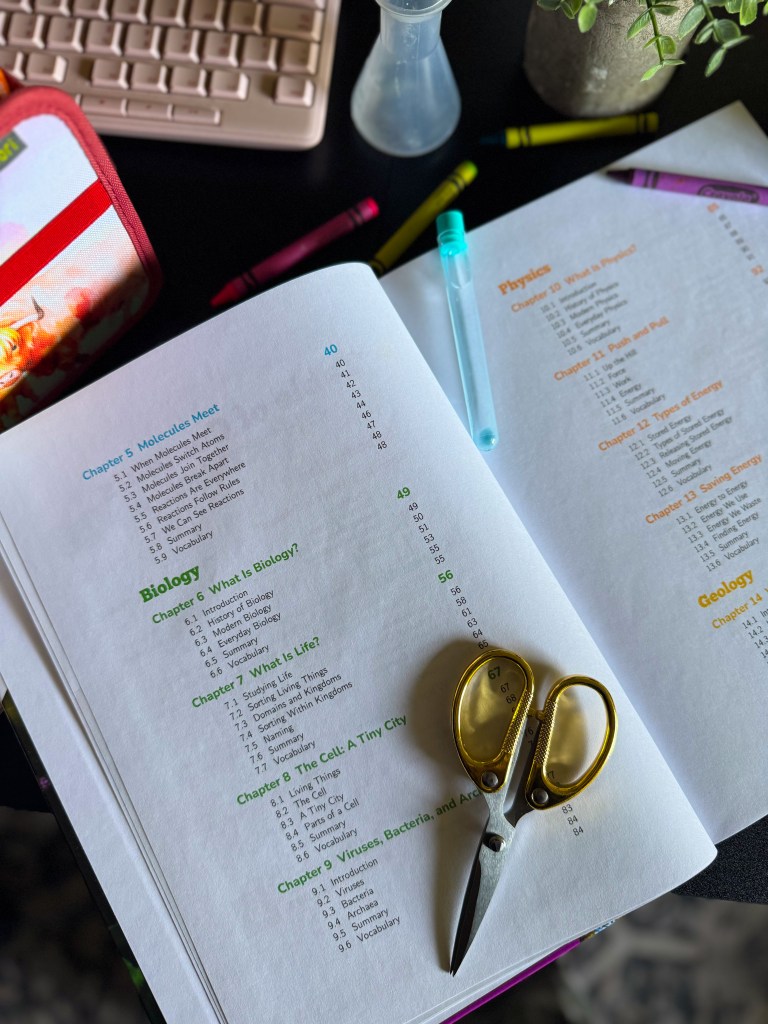
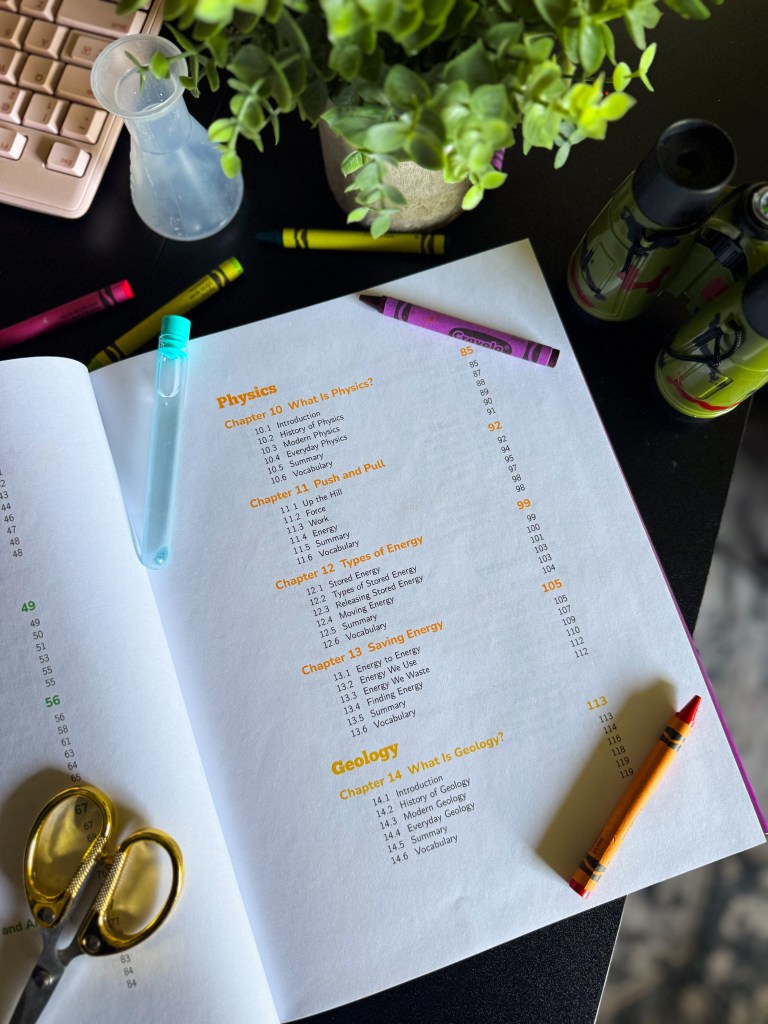
For younger elementary students who are beginning more formal science instruction, this creates a helpful foundation. Instead of memorizing disconnected facts, children begin learning how chemistry, biology, physics, geology, and astronomy are all different ways of studying the world around them.
Real Science Concepts Explained for Younger Learners
Science Book 1 does not avoid scientific vocabulary simply because the students are young.
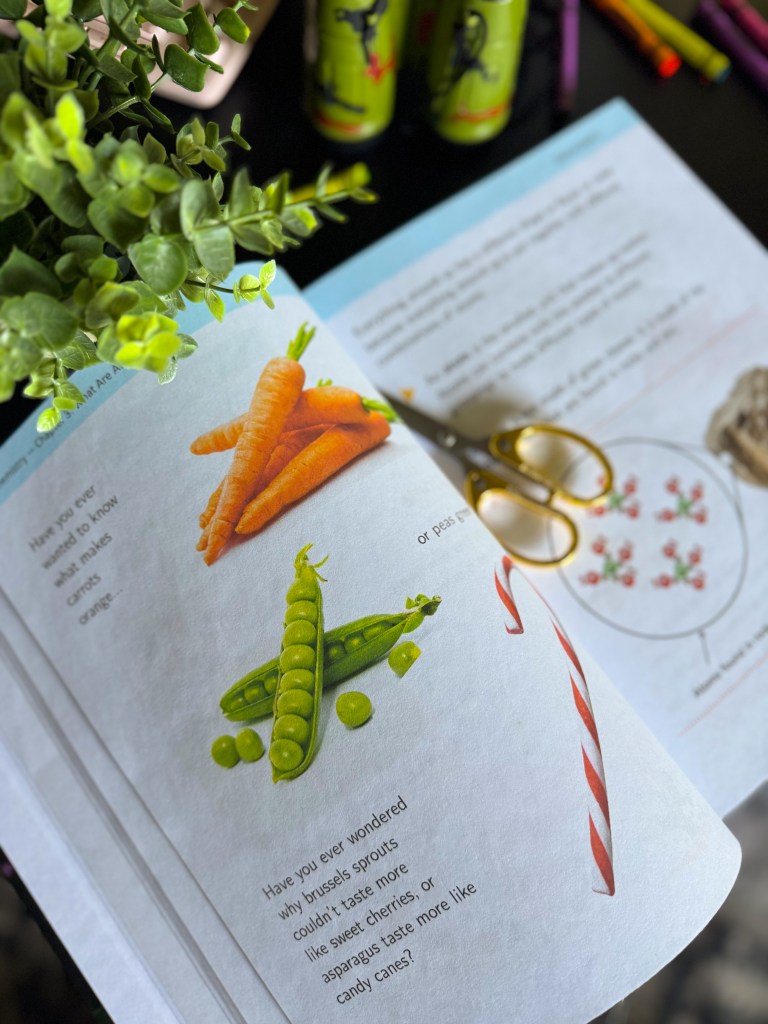
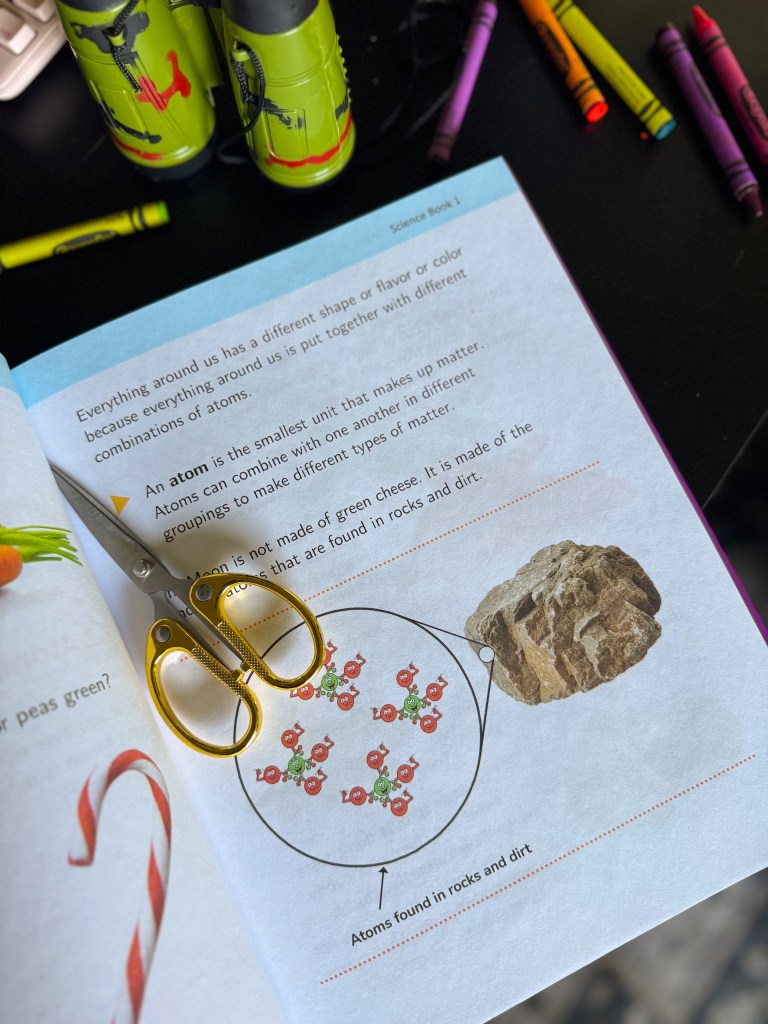
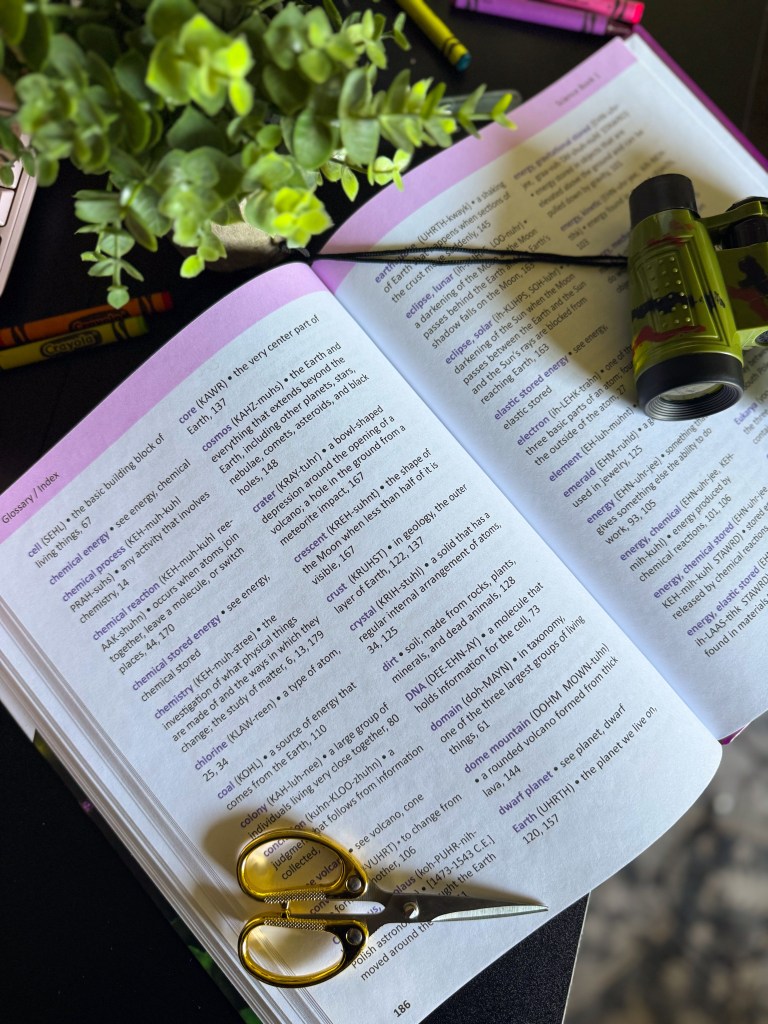
Children are introduced to terms and concepts such as atoms, molecules, chemistry, biology, energy, geology, and astronomy, but those concepts are presented with colorful photographs, illustrations, diagrams, and familiar examples.
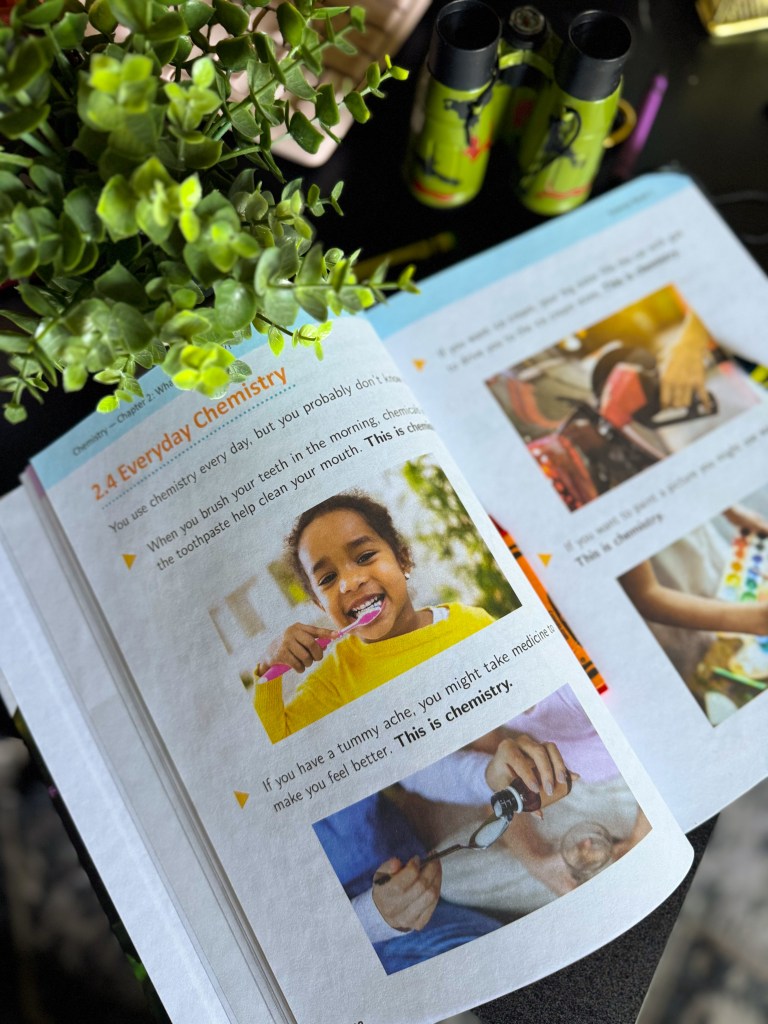
The chemistry section, for example, connects chemistry to things children encounter in everyday life.
The book shows how chemistry is involved in brushing our teeth, taking medicine, preparing food, and many other ordinary experiences. This helps students understand that science is not something that exists only in a laboratory.
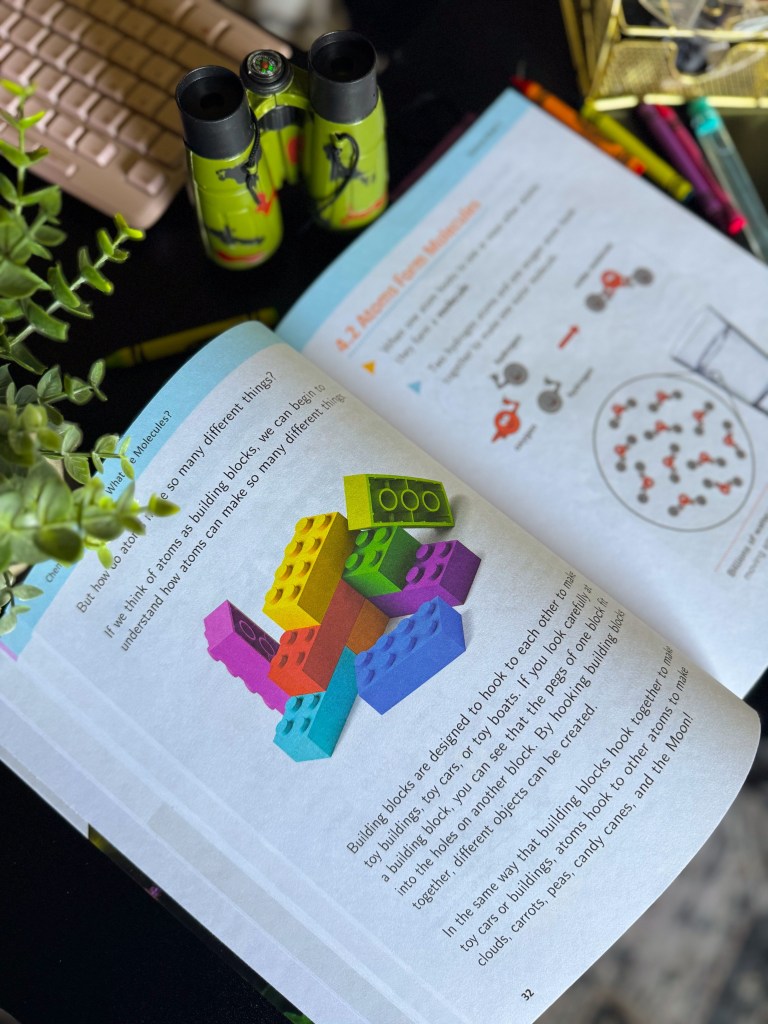
When the curriculum begins introducing atoms and molecules, it uses visual comparisons such as colorful building blocks to make an abstract idea easier to understand.
I appreciate this approach because the curriculum does not necessarily simplify science by removing important concepts. Instead, it works to explain those concepts at a level younger students can begin to understand.
This was one of the qualities I was looking for in an elementary homeschool science curriculum. I wanted my child to begin learning real science vocabulary while still having illustrations and explanations that made the material approachable.
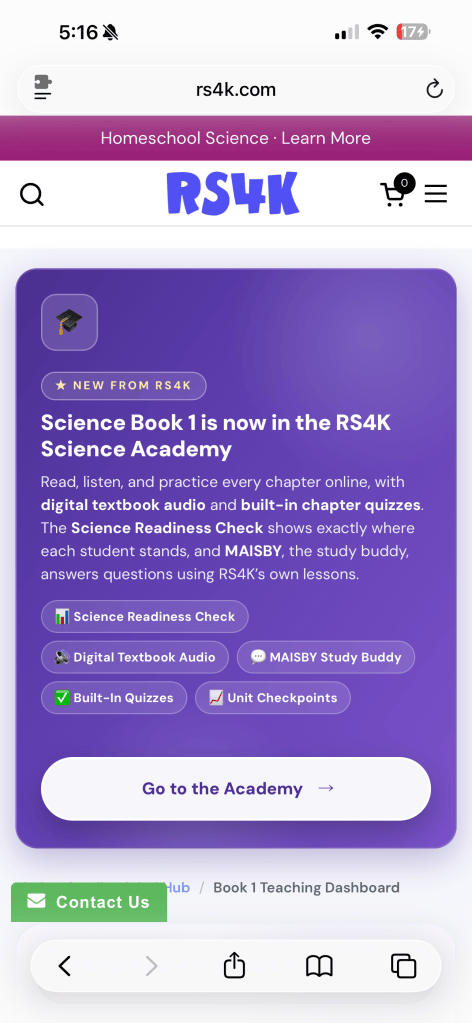
The Digital Teaching Dashboard Makes the Curriculum Easier to Use
Although I like the textbook itself, the Digital Teaching Dashboard is one of the strongest parts of this curriculum for me. A good science book is useful, but having the teaching resources organized alongside the book makes it much easier to turn those lessons into a complete homeschool science course.
The Digital Teaching Dashboard organizes supporting materials by chapter. Depending on the package purchased, families can access resources such as lesson plans, student notebook pages, experiment instructions, lab activities, quizzes, answer keys, grading resources, and audio support.
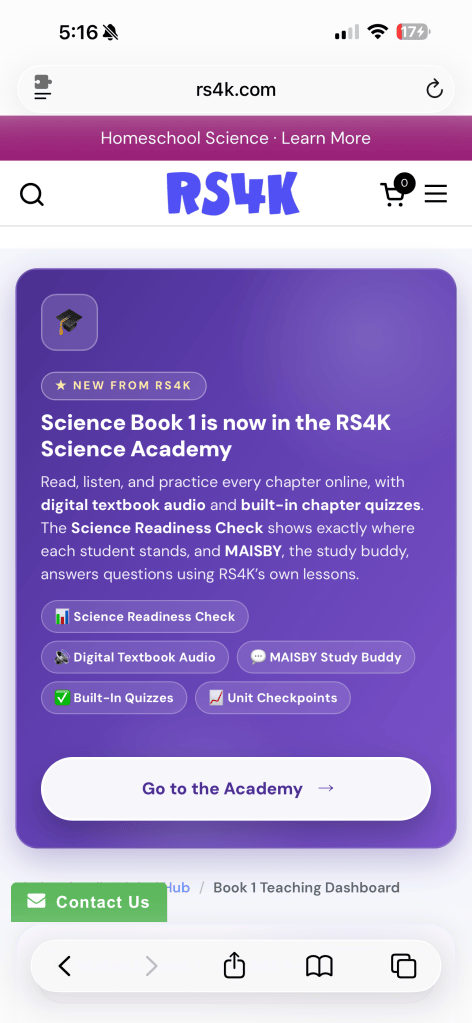
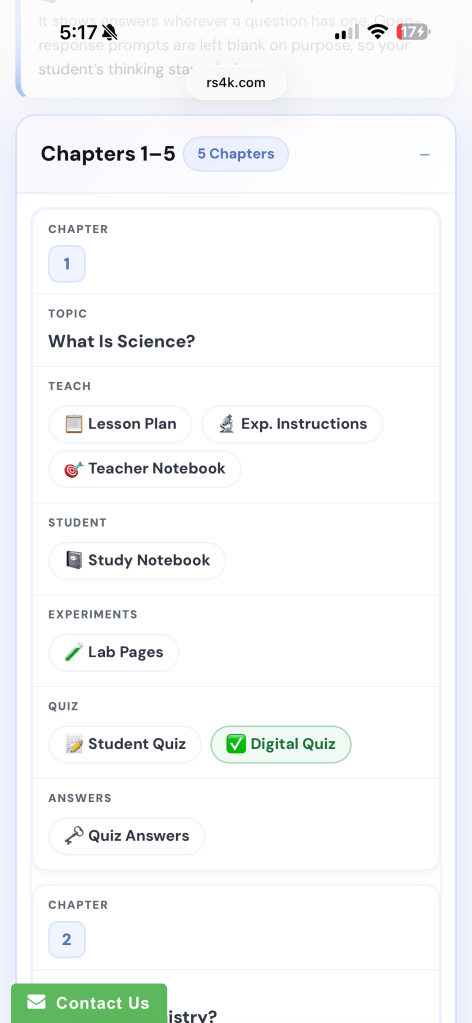
This is what I look for when I describe something as an open-and-go homeschool science curriculum. I do not want to finish reading a science lesson and then have to search for an experiment, create a worksheet, or decide how to assess what my child learned.
Having those pieces already organized allows me to spend more of our homeschool time actually teaching instead of constantly preparing to teach.
The dashboard also makes it easy to locate resources for the specific chapter we are studying.
Instead of keeping several unrelated files and printables organized on my own, I can see the teacher resources, student activities, experiments, quizzes, and answers associated with that chapter in one place.
Lesson Plans Provide Structure Without Removing Flexibility
The lesson plans are another feature that makes Science Book 1 easier to incorporate into a homeschool schedule.
The sample lesson plan for Chapter 1 divides the chapter across four days and includes the lesson focus, teacher instructions, suggested time, and necessary materials.
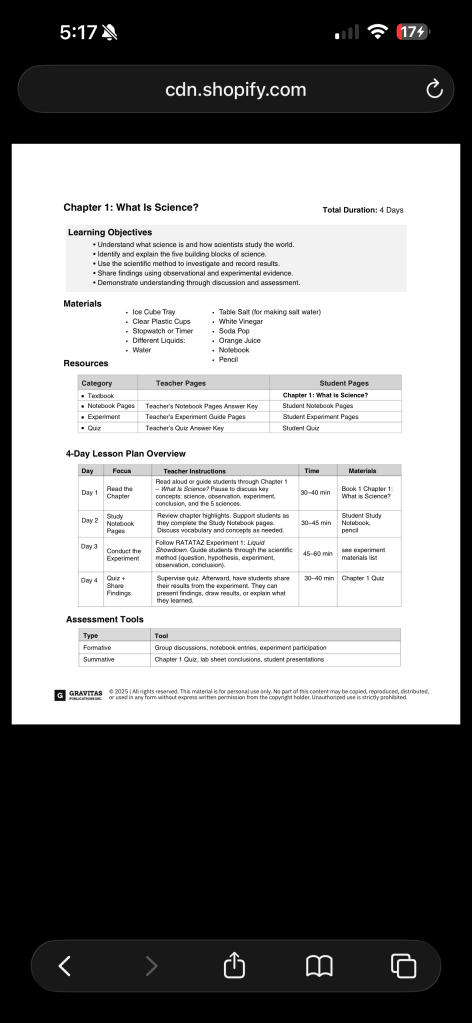
For homeschool parents, this removes much of the guesswork involved in deciding how much material to cover at one time. I can use the suggested pacing as written or adjust it depending on how quickly my child moves through the material.
That flexibility is important to me. I prefer curriculum that provides enough structure to keep us moving forward while still allowing me to slow down, combine lessons, repeat a concept, or spend additional time on something my child finds particularly interesting.
Hands-On Homeschool Science Without Creating the Experiments Yourself
Hands-on activities were another feature I wanted in a homeschool science curriculum.
Science is naturally easier to understand when children have opportunities to observe, experiment, and record what happens rather than only reading about a concept.
The Digital Teaching Dashboard includes experiment instructions and supporting student pages. The Chapter 1 experiment, for example, allows students to investigate how different liquids affect the rate at which ice melts.
The teacher materials provide the objective, supply list, steps, and guidance for completing the experiment.
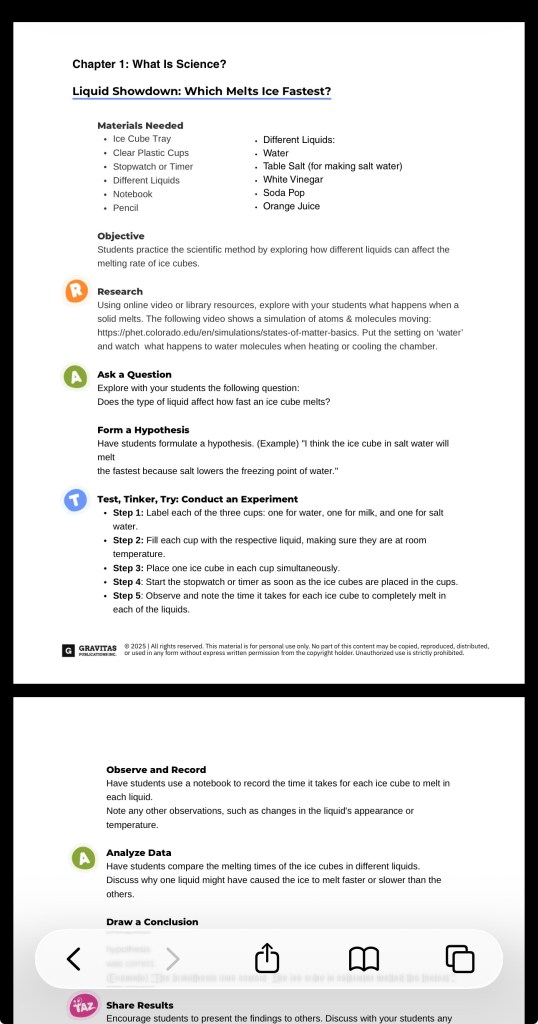
The student materials then provide a place to record a hypothesis, collect data, make observations, and draw a conclusion.
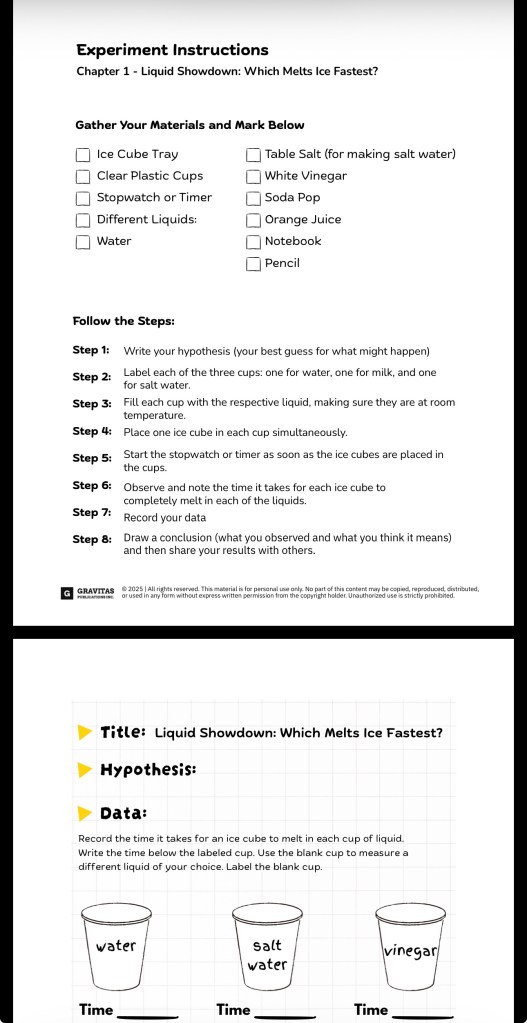
Screenshot This is one of the reasons the curriculum appeals to me as a parent. I still get to facilitate the experiment and help my child understand what we are observing, but I am not responsible for designing the activity from the beginning. The instructions, objective, and recording pages have already been prepared.
The experiments are also optional, which gives homeschool families additional flexibility. There may be weeks when we want to complete every part of an experiment and others when simply reading the lesson and discussing the concept makes more sense for our schedule.
Student Notebook Pages, Quizzes, and Answer Keys
Science Book 1 also includes additional resources for reinforcing the material. The Student Notebook provides activities such as drawing, fill-in-the-blank questions, discussion prompts, and interactive notebook work.
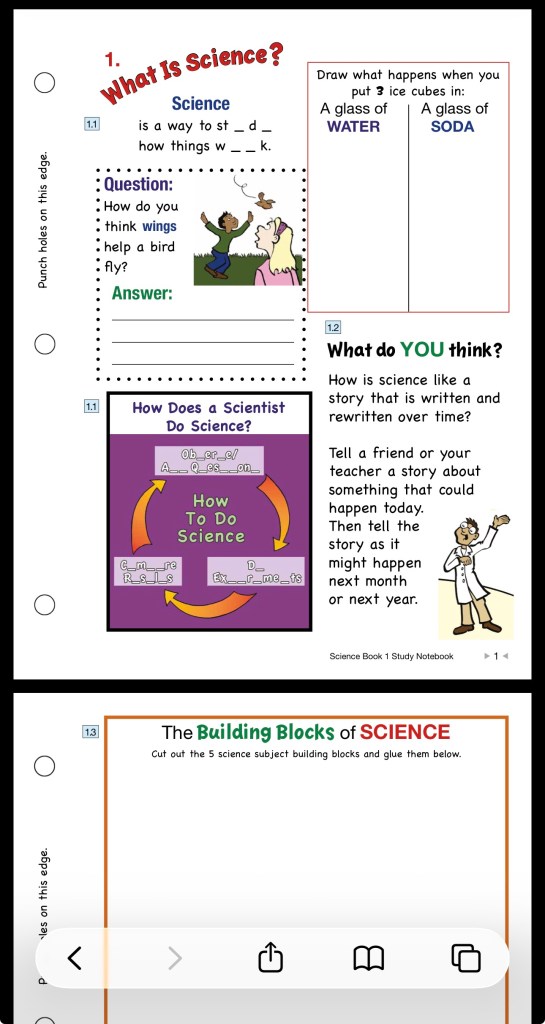
I particularly like that these activities provide more than one way for a child to demonstrate understanding. Younger students may sometimes explain or illustrate a concept more successfully than they can answer a long series of written questions.
Quizzes are also available for families who want a simple assessment at the end of a chapter.
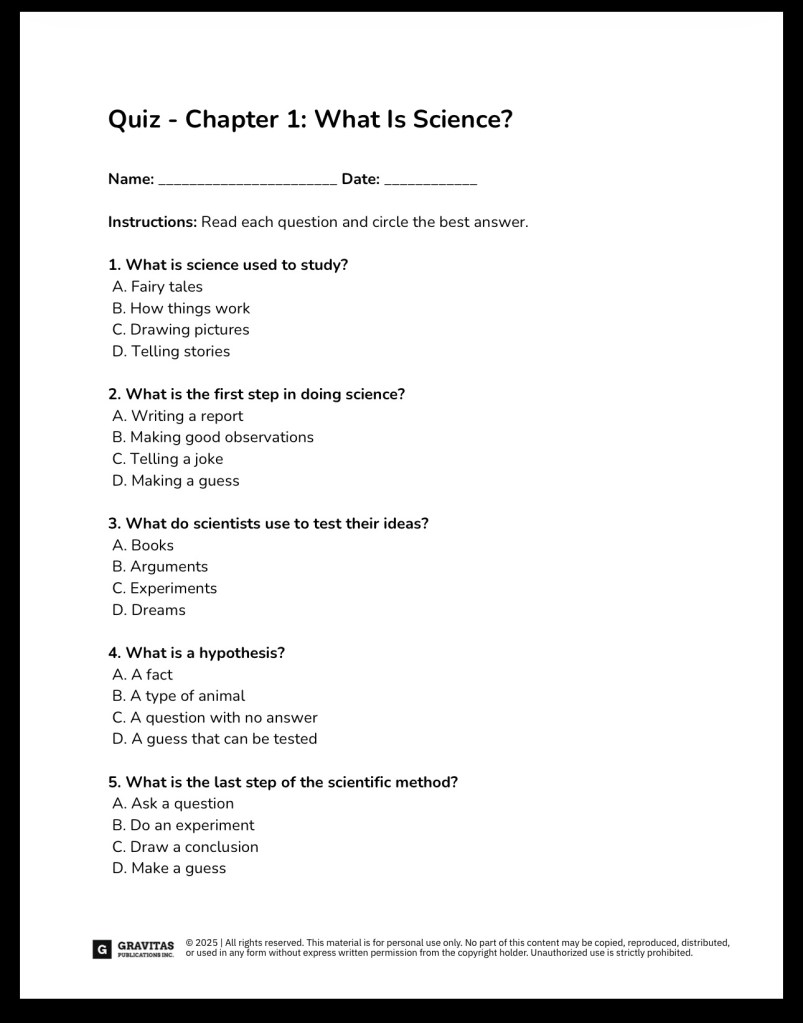
Answer keys are provided for the parent as well.
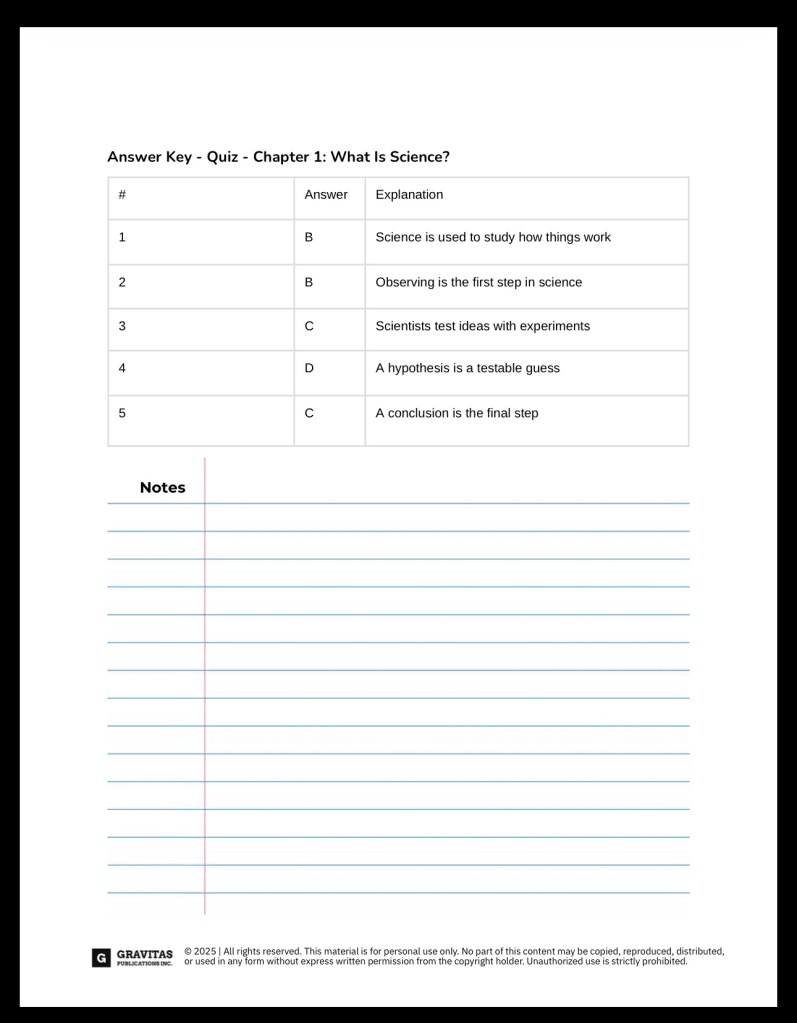
Having the answers included may sound like a small feature, but it contributes to the overall usability of the curriculum.
I want supporting materials to save preparation time rather than create another task that I need to complete before teaching the lesson.
Is Real Science-4-Kids Book 1 a Kindergarten Homeschool Science Curriculum?
Parents searching for a kindergarten homeschool science curriculum may come across Science Book 1 because of its colorful pages and introductory approach. However, it is important to look carefully at placement rather than choosing the curriculum based only on appearance.
Timberdoodle currently recommends Science Book 1 for approximately age six and first grade. For a kindergartener, I would look through the sample pages and consider the individual child’s readiness, attention span, reading level, and previous exposure to science.
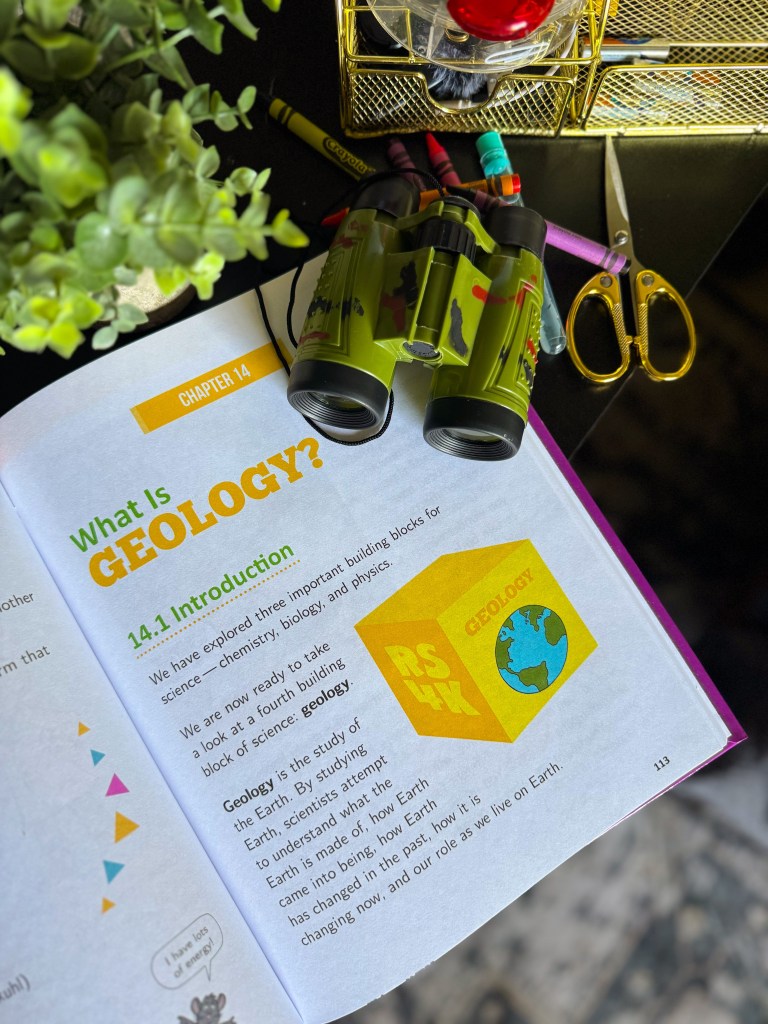
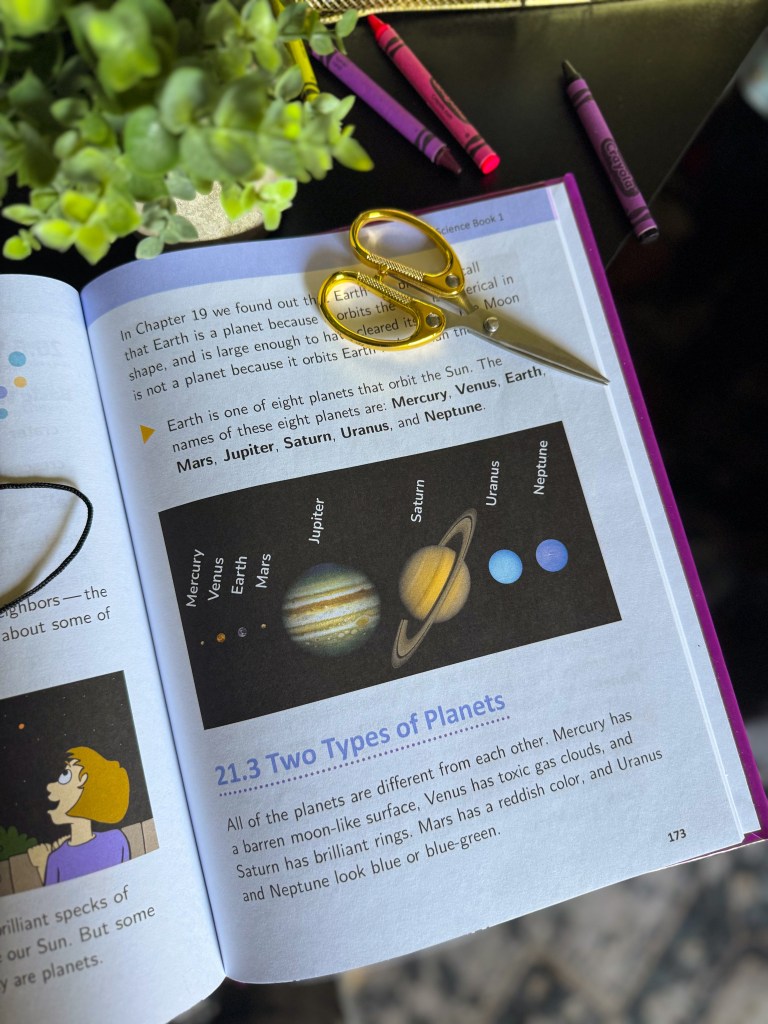
A parent could certainly read the material aloud and adapt many of the activities for a younger learner, but I would not automatically assume that Science Book 1 is the best placement for every kindergarten student.
Families specifically planning kindergarten homeschool science should compare the available early-elementary options and choose according to the child’s individual needs.
For parents researching what comes after very basic kindergarten science activities, however, Science Book 1 offers a useful look at how younger students can begin progressing into more structured science instruction.
Is Real Science-4-Kids Secular?
For families specifically looking for a secular homeschool science curriculum, Science Book 1 is a nonreligious option. This makes it worth considering for homeschool families that prefer science instruction without religious teaching incorporated into the lessons.
That was another useful detail for me because finding an elementary science curriculum that matches both your teaching preferences and your child’s learning level can significantly narrow the available choices.
Who May Enjoy Real Science-4-Kids Book 1?
I think Science Book 1 is especially worth considering for families who want a homeschool science curriculum that introduces real scientific vocabulary while remaining visually approachable for younger students.
It also provides exposure to several branches of science rather than requiring families to purchase an entirely separate program for chemistry, biology, physics, geology, and astronomy.
The additional teaching support is what makes the program particularly appealing to me.
The combination of lesson plans, experiments, student notebook pages, quizzes, answer keys, and digital resources means I am not responsible for turning a textbook into a complete curriculum on my own.
For a homeschool parent balancing several subjects and possibly several children, that kind of organization can make a significant difference in how consistently a curriculum is actually used.
My Real Science-4-Kids Book 1 Review
My first impression of Real Science-4-Kids Science Book 1 was that it was colorful, visually interesting, and willing to introduce younger children to genuine scientific concepts.
I like that students are learning about chemistry, biology, physics, geology, and astronomy rather than staying exclusively with the basic nature and seasonal topics often found in early science resources.
However, the feature that makes this curriculum stand out most to me is the support surrounding the textbook. I was looking for a homeschool science curriculum that did not require me to piece together the rest of the course myself.
Having lesson plans, material lists, experiments, student activities, quizzes, and answer keys already available makes the program much closer to the kind of open-and-go science curriculum I wanted.
I still have the flexibility to decide which activities we complete and how quickly we move through the lessons, but I am starting with an organized plan instead of a blank page. For me, that is one of the biggest advantages of Real Science-4-Kids Book 1.
SEE REAL SCIENCE-4-KIDS BOOK 1 AT TIMBERDOODLE
Frequently Asked Questions
Does Real Science-4-Kids Book 1 include experiments?
Hands-on experiments are available through the curriculum’s supporting resources. Experiment materials include instructions for the parent as well as pages that allow students to record hypotheses, observations, data, and conclusions.
The experiments can be incorporated according to the family’s schedule rather than requiring every activity to be completed.
What subjects are covered in Real Science-4-Kids Book 1?
Science Book 1 introduces students to chemistry, biology, physics, geology, and astronomy. Topics include atoms, molecules, cells, force, energy, rocks, Earth’s structure, volcanoes, the Moon, Sun, and planets.
Does Real Science-4-Kids include lesson plans?
Lesson-planning resources are available through the Digital Teaching Dashboard. These resources can include suggested pacing, teaching instructions, student notebook pages, experiments, quizzes, and answer keys.
What grade is Real Science-4-Kids Book 1 for?
Timberdoodle currently recommends Science Book 1 for approximately age six and first grade. Parents should also consider their child’s reading ability, science background, attention span, and the amount of parental support that will be provided.
Is Real Science-4-Kids secular?
Science Book 1 is presented as a nonreligious science curriculum, making it an option for families searching for secular elementary homeschool science resources.
Pin these for later…
-
Timberdoodle Uppercase Flashcard Set Review: A Fun Kindergarten Phonics Activity
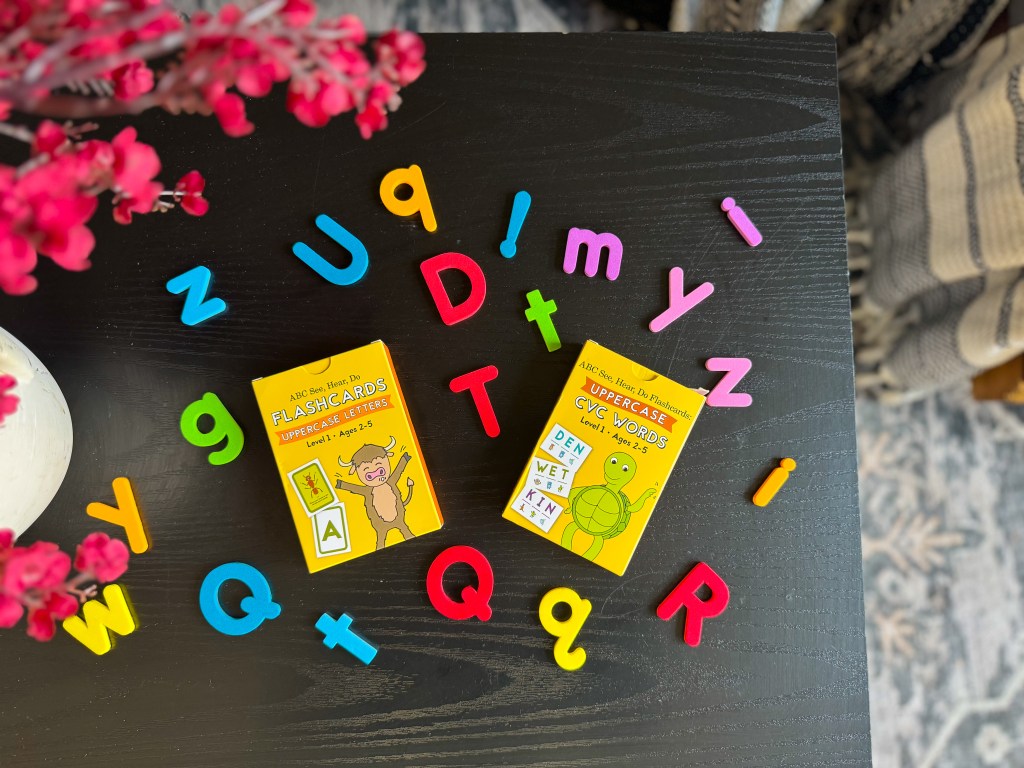
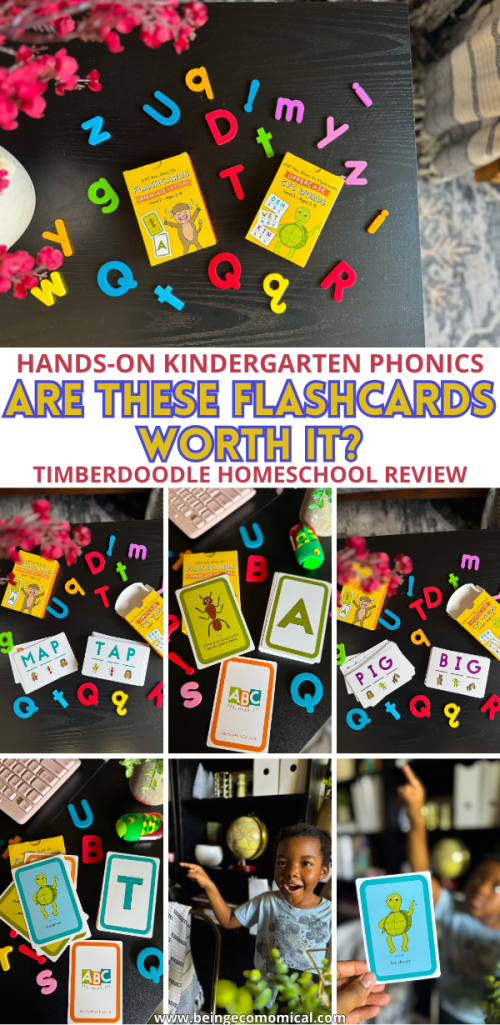
If you’re looking for a simple way to make kindergarten phonics practice feel a little less like schoolwork, the ABC See, Hear, Do Uppercase Flashcard Set from Timberdoodle is such a fun addition to our homeschool routine.
We’ve been using these cards for letter recognition, letter sounds, movement and beginning CVC words, and I especially love that they give little learners something to do instead of simply asking them to sit and memorize another stack of flashcards.

They’re colorful, easy to pull out for a quick lesson, and work especially well for kids who enjoy hands-on kindergarten learning activities.
SHOP THE UPPERCASE FLASHCARD SET AT TIMBERDOODLE
Related Posts:
- Stages Building Blocks Review: A Hands-On Learning Toy For Preschoolers
- World Map Puzzle For Kids: Timberdoodle Geography Puzzle For Kids
- Timberdoodle Kindergarten Curriculum Kit Unboxing
A Hands-On Kindergarten Phonics Activity
What immediately made these different from traditional alphabet flashcards for us was the movement component.
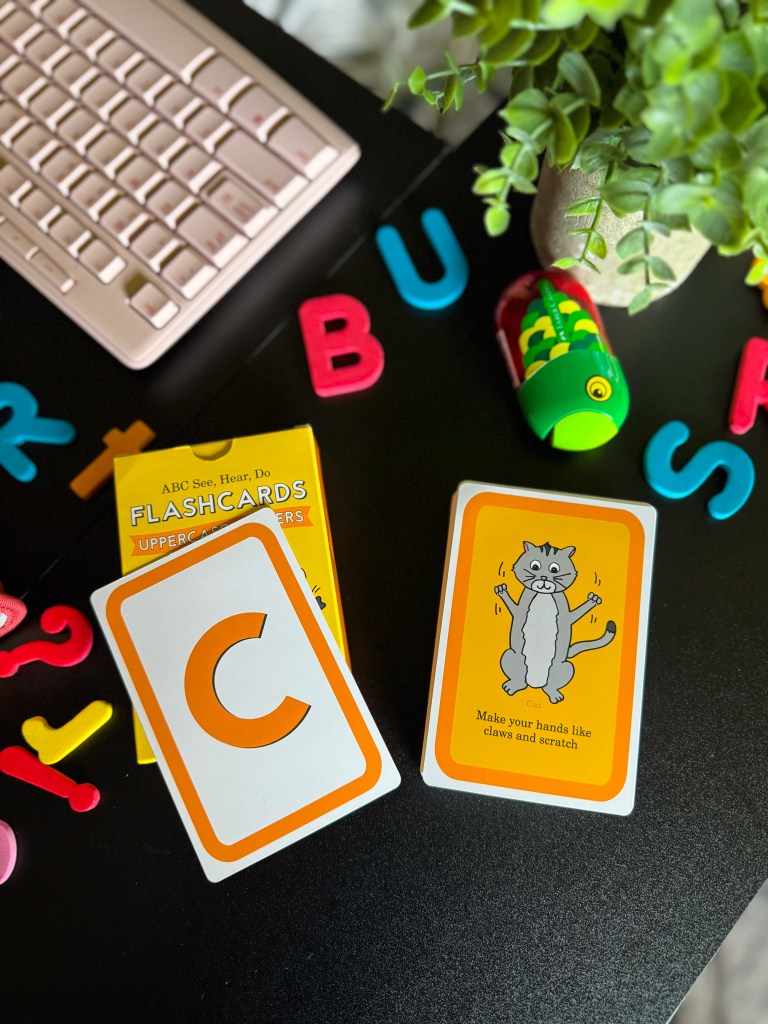
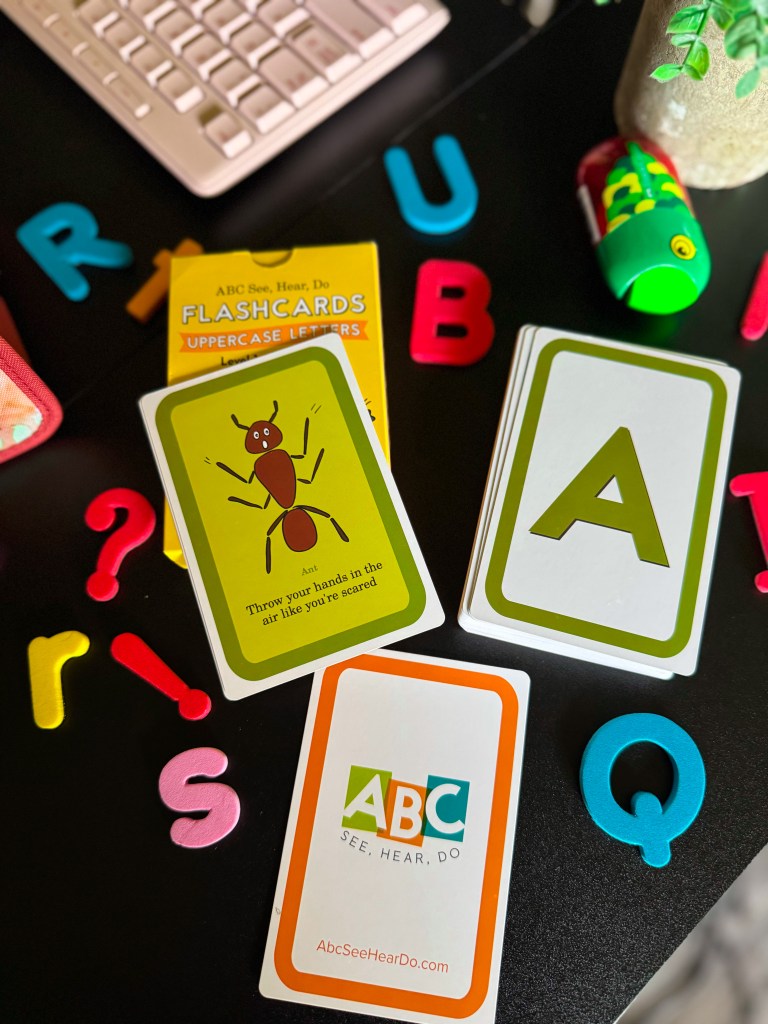
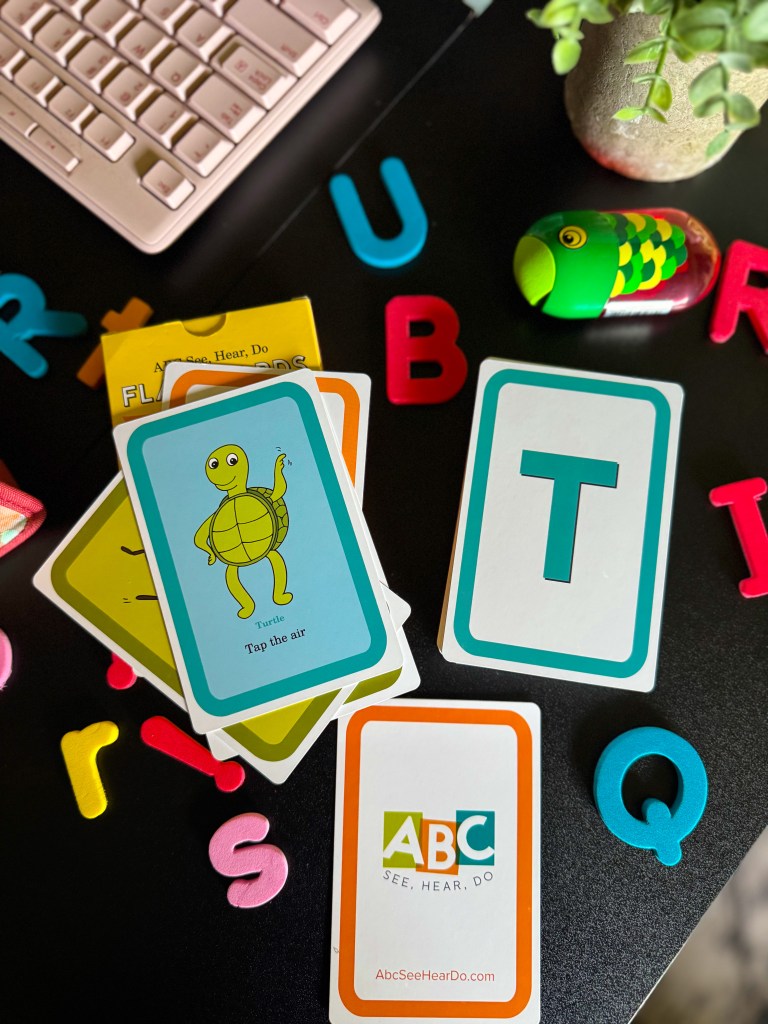
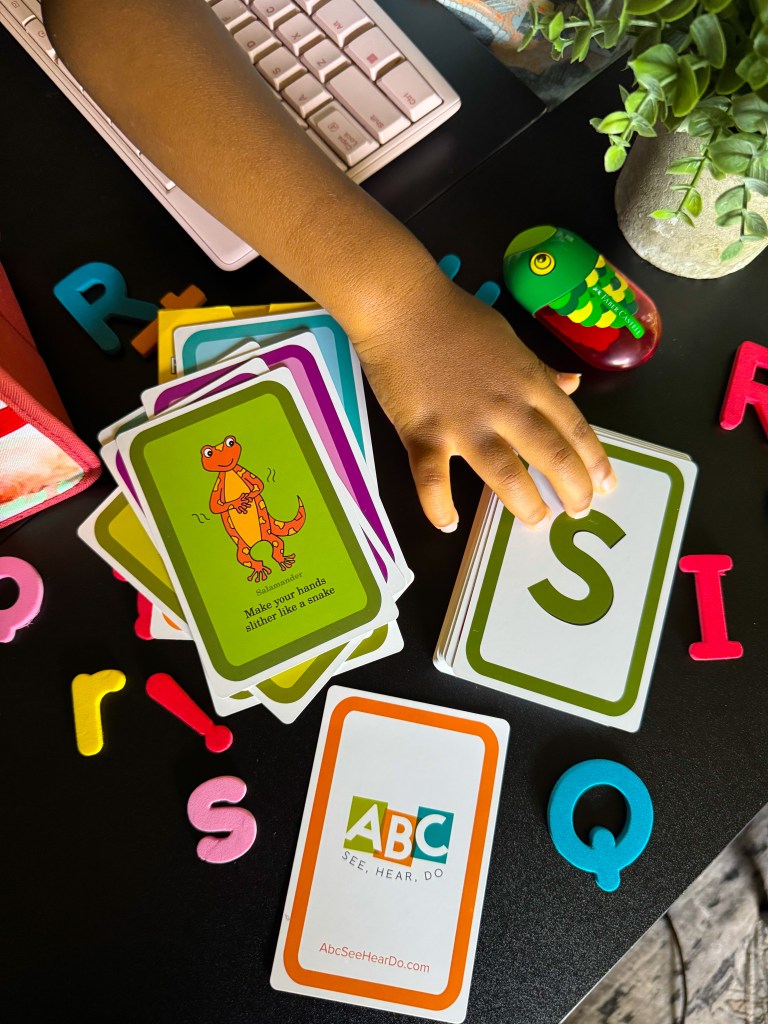
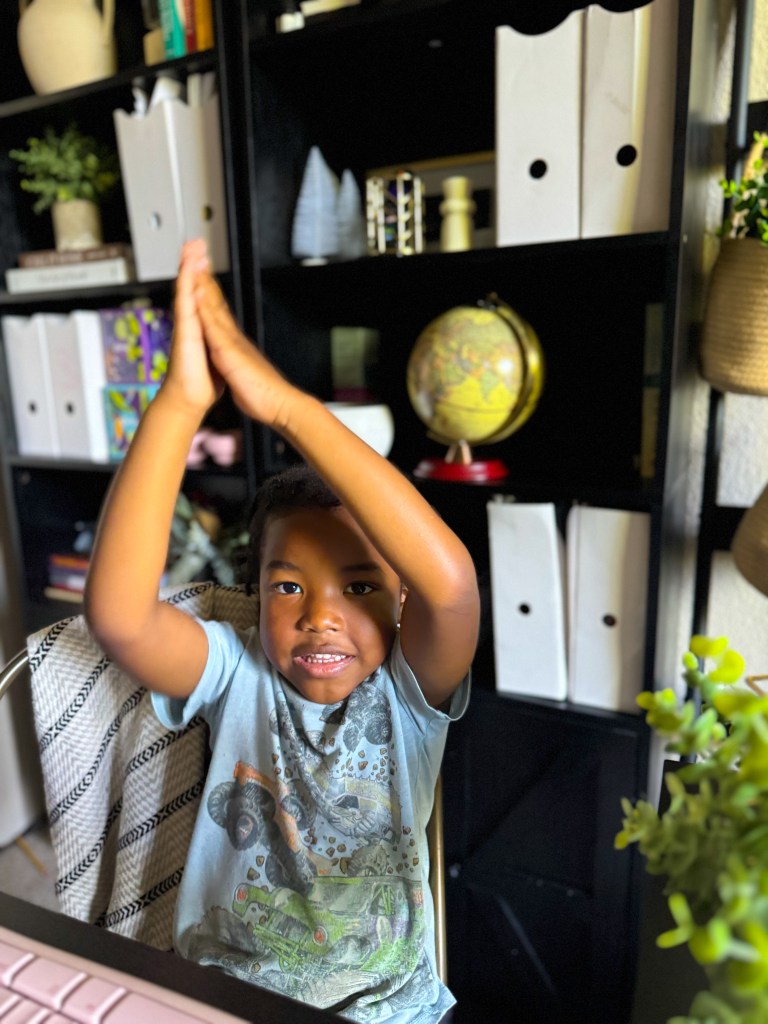
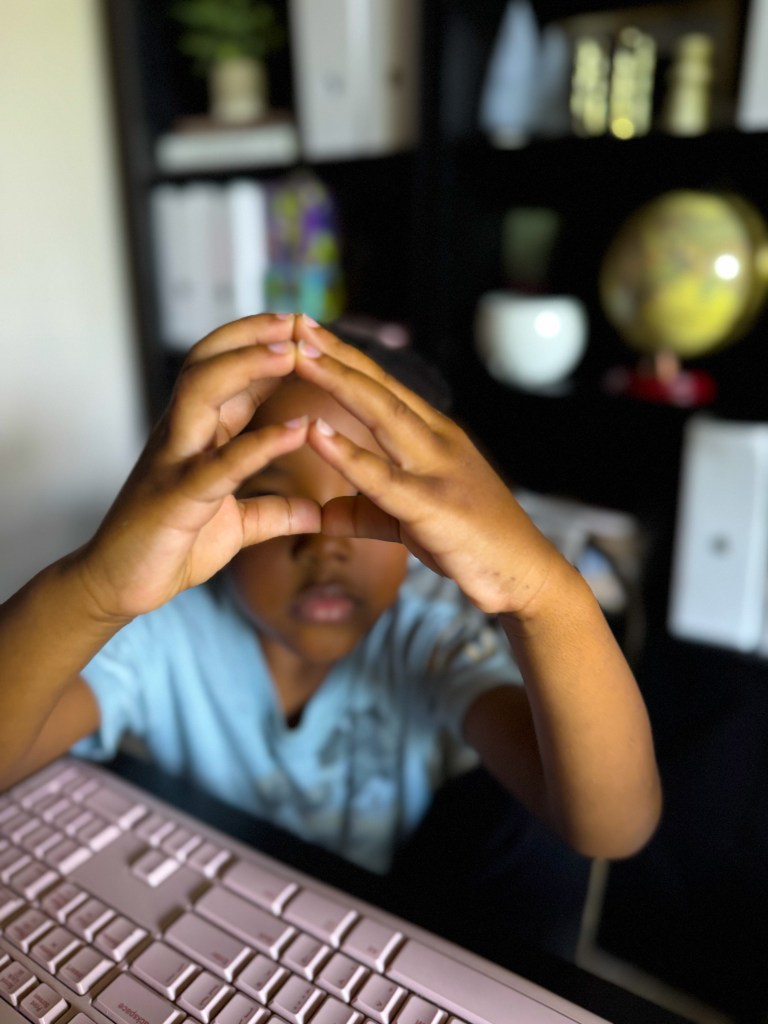
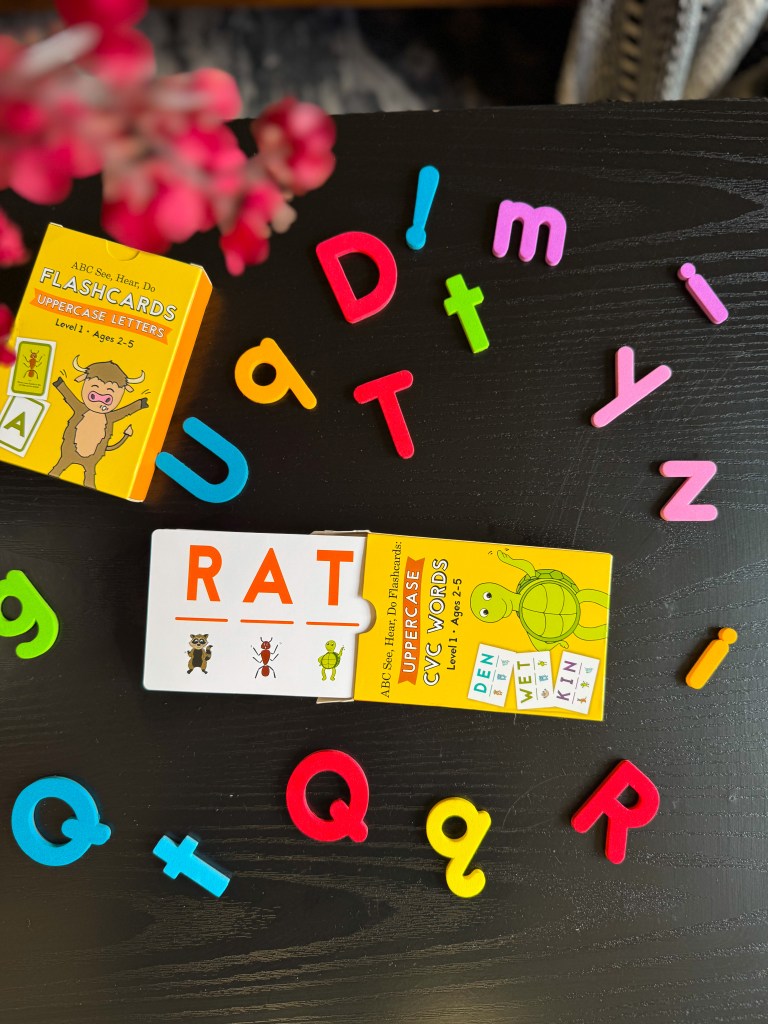
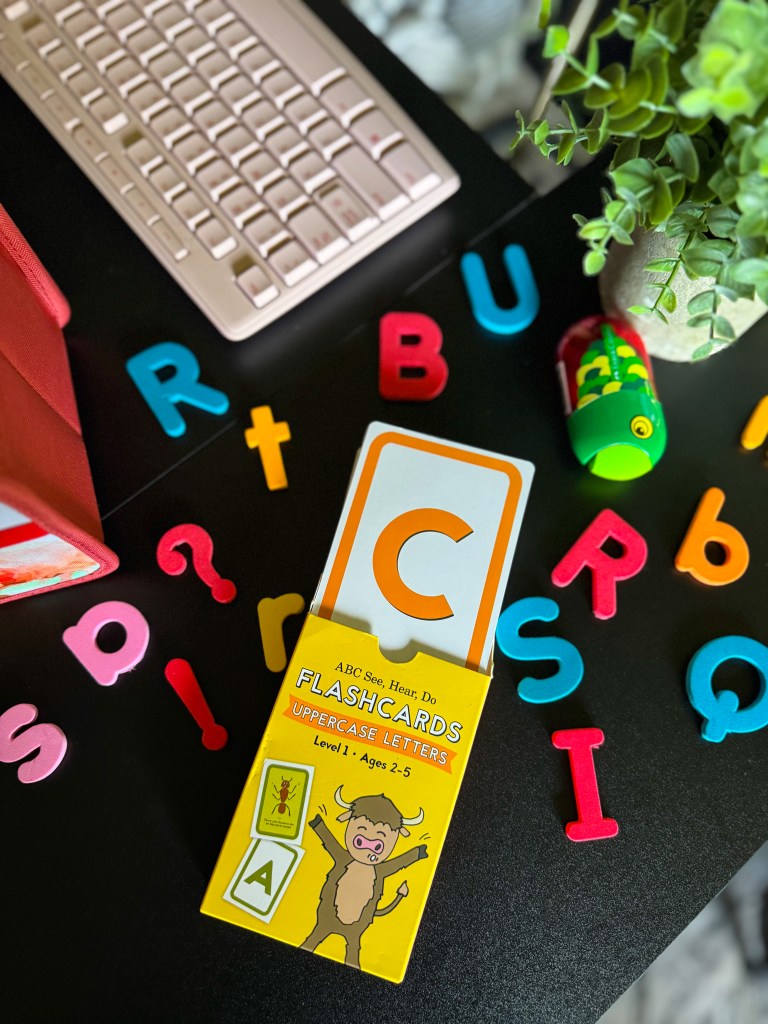
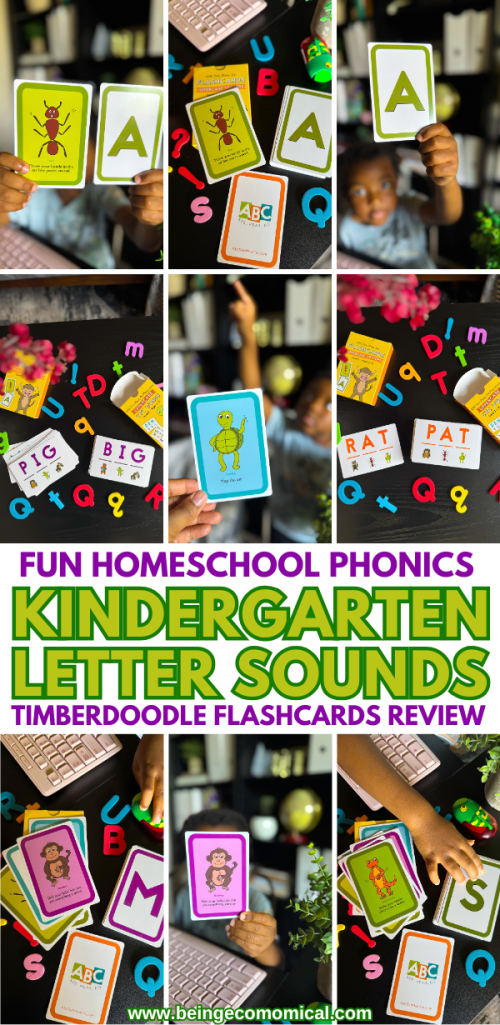
Each uppercase letter is paired with an animal and a simple action. Your child sees the letter, practices its sound, and then uses movement to help make the connection.
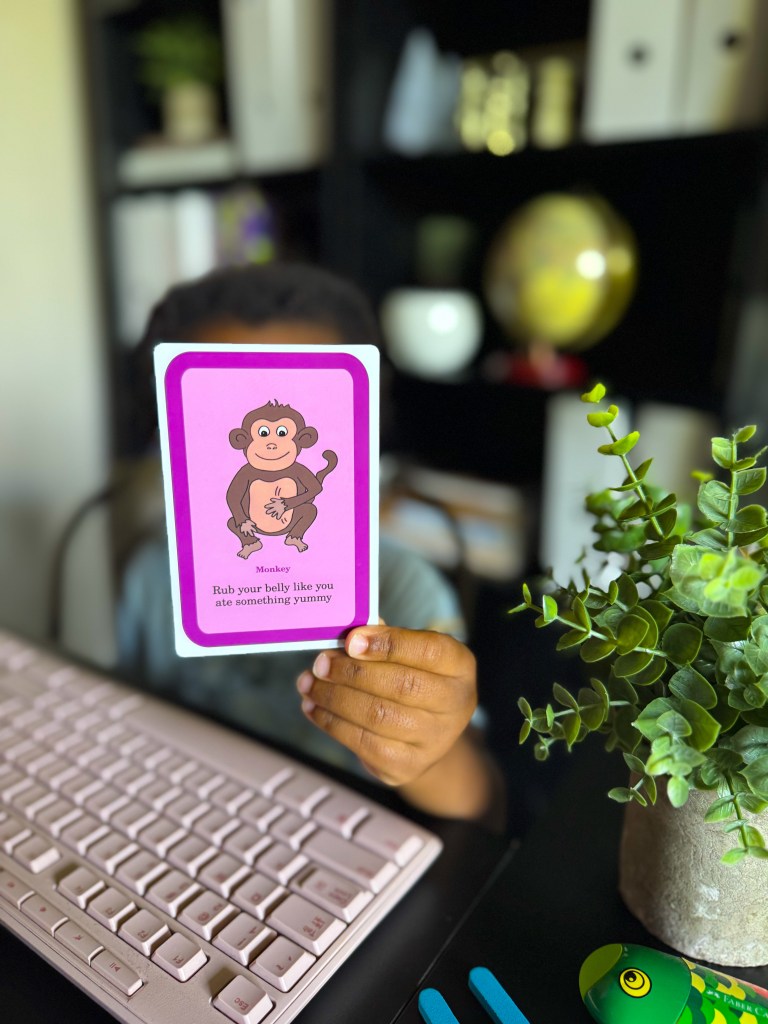
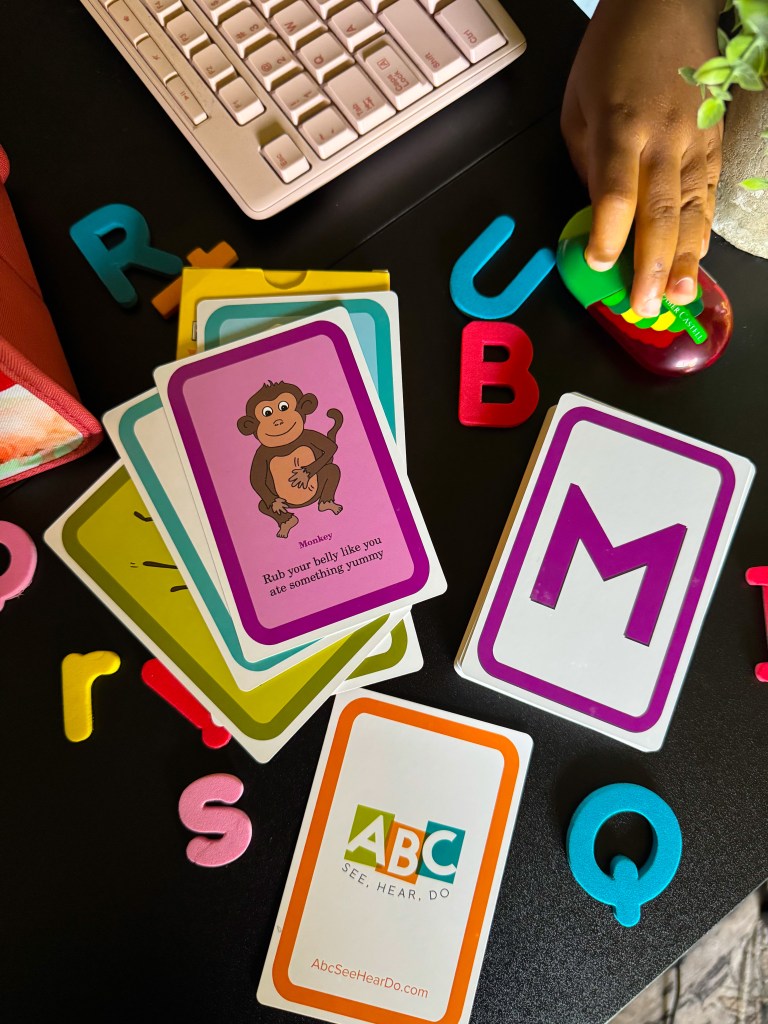
For example, while practicing the letter A, we paired it with the ant card and acted out the motion shown on the card. Other cards have kids tapping, rubbing, waving, pretending and moving in different ways.
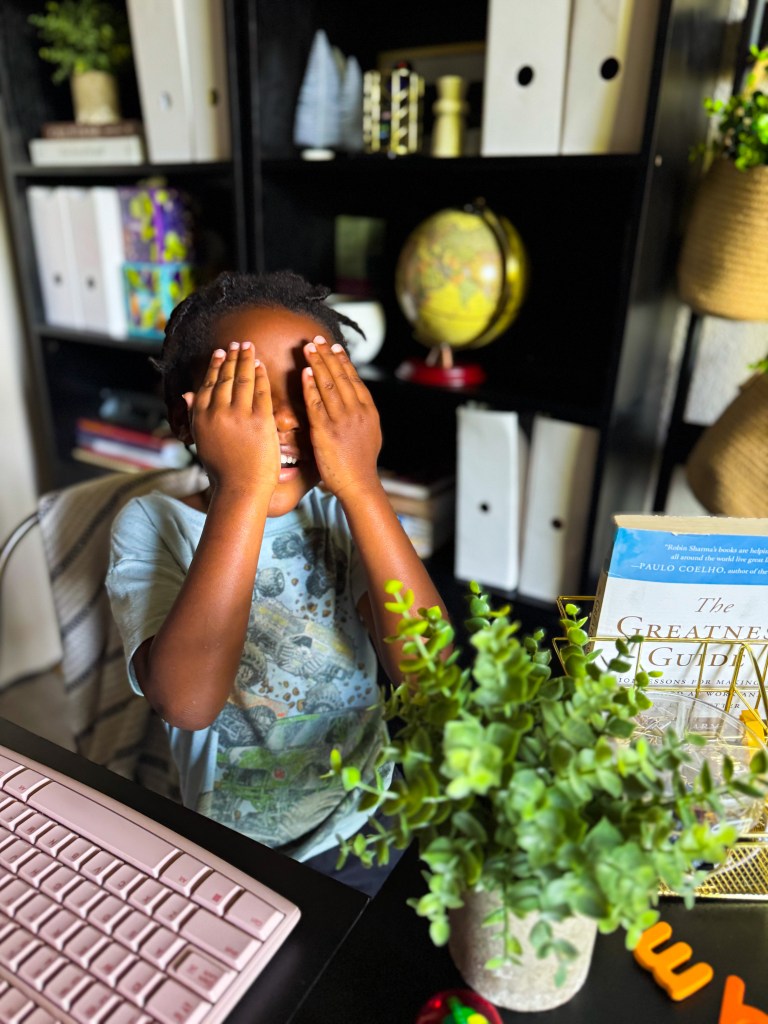
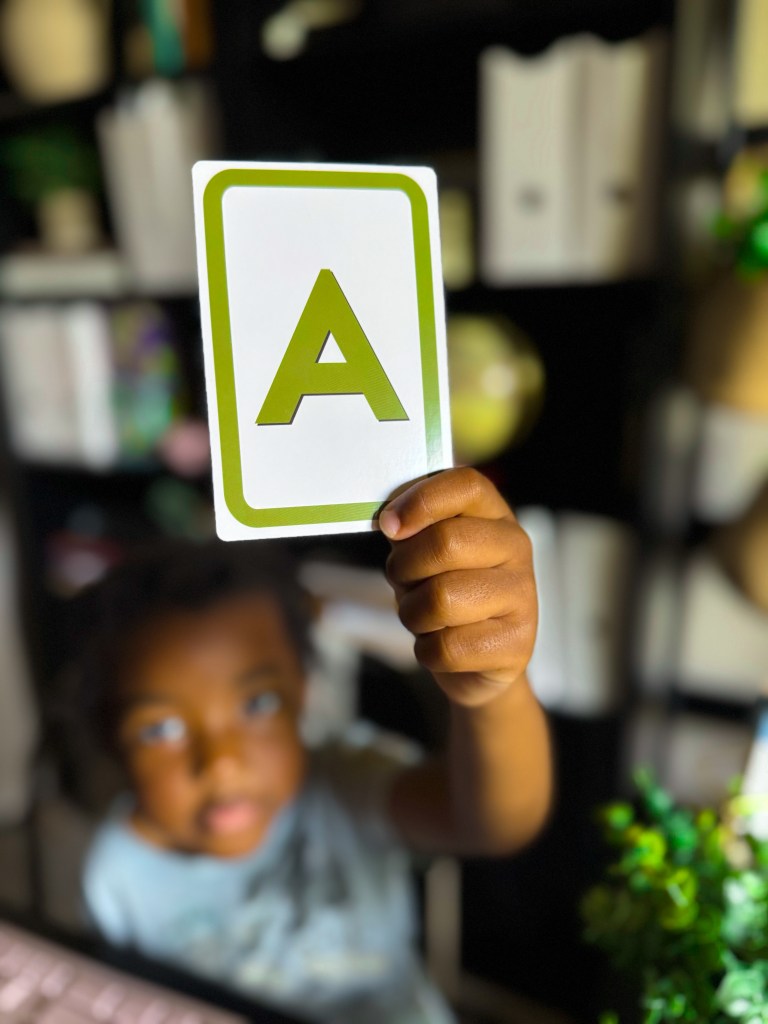
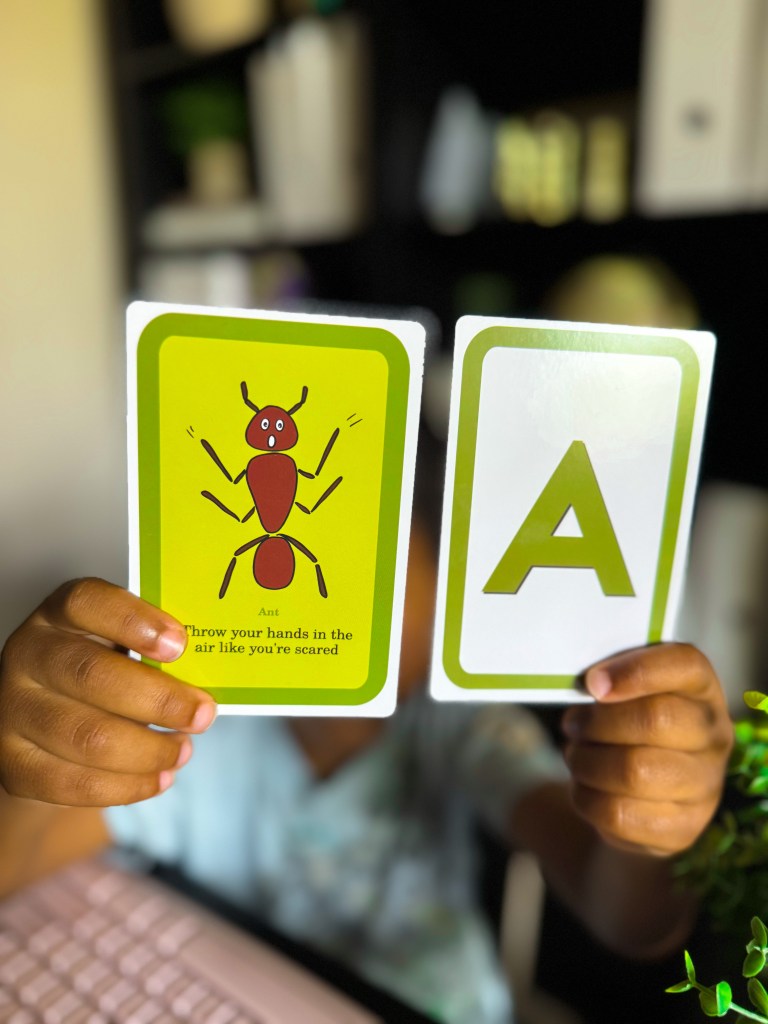
That makes this an especially fun option if you’re looking for kinesthetic learning activities for kindergarten or have a child who learns better when they’re able to move.
Instead of:
“A says ___.”
And moving on.
The letter becomes something they can see, hear, say and physically interact with.
That little difference made our phonics practice much more playful.

Practicing Uppercase Letters and Letter Sounds
The first way we’ve been using the set is simply for uppercase letter recognition and beginning phonics.
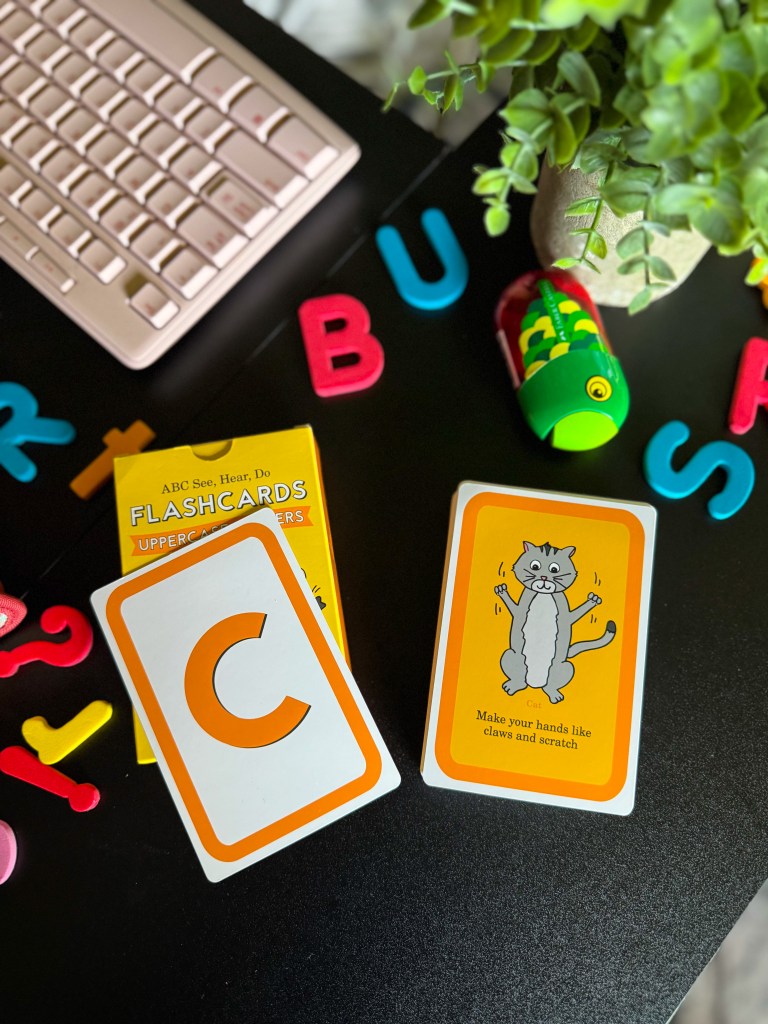
I can hold up a letter card and have my child identify the letter and practice its sound. Then we bring in the corresponding animal card and movement.
You can make this as quick or involved as you want.
Some days, this might only be a five-minute kindergarten homeschool activity. On another day, we can spread several cards across the table, match letters with their corresponding cards, practice the sounds and turn the entire thing into a game.
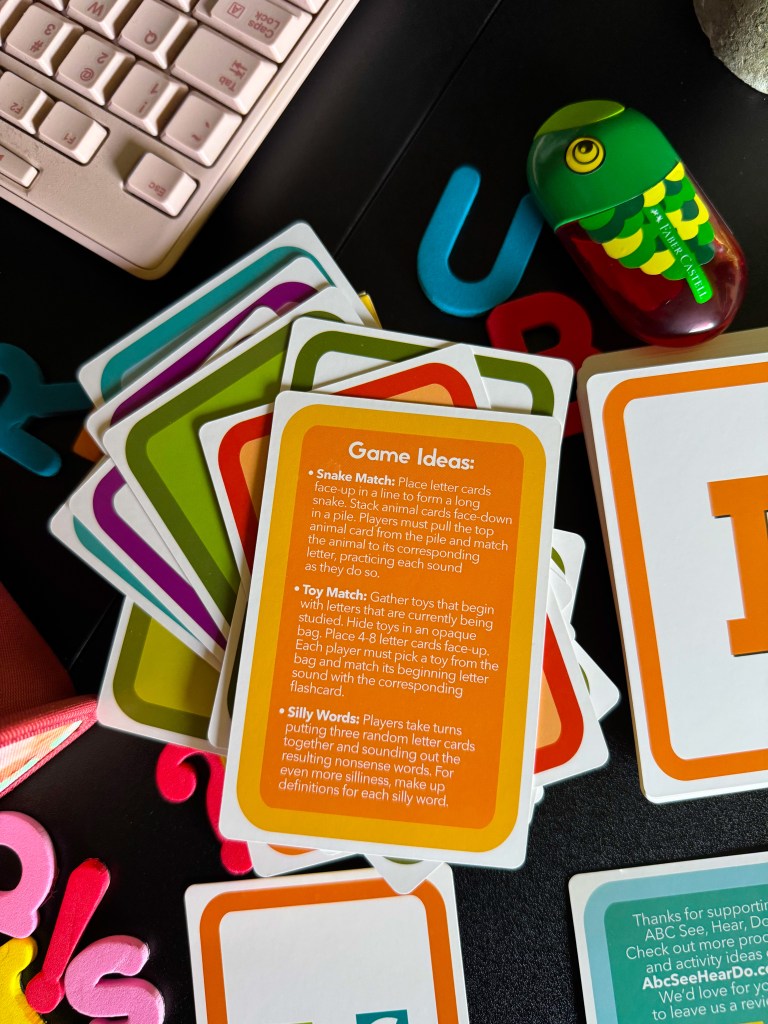
And that flexibility is something I really appreciate in homeschool resources.
Not every learning activity needs to become a 30-minute lesson.
Using the Flashcards for CVC Word Practice
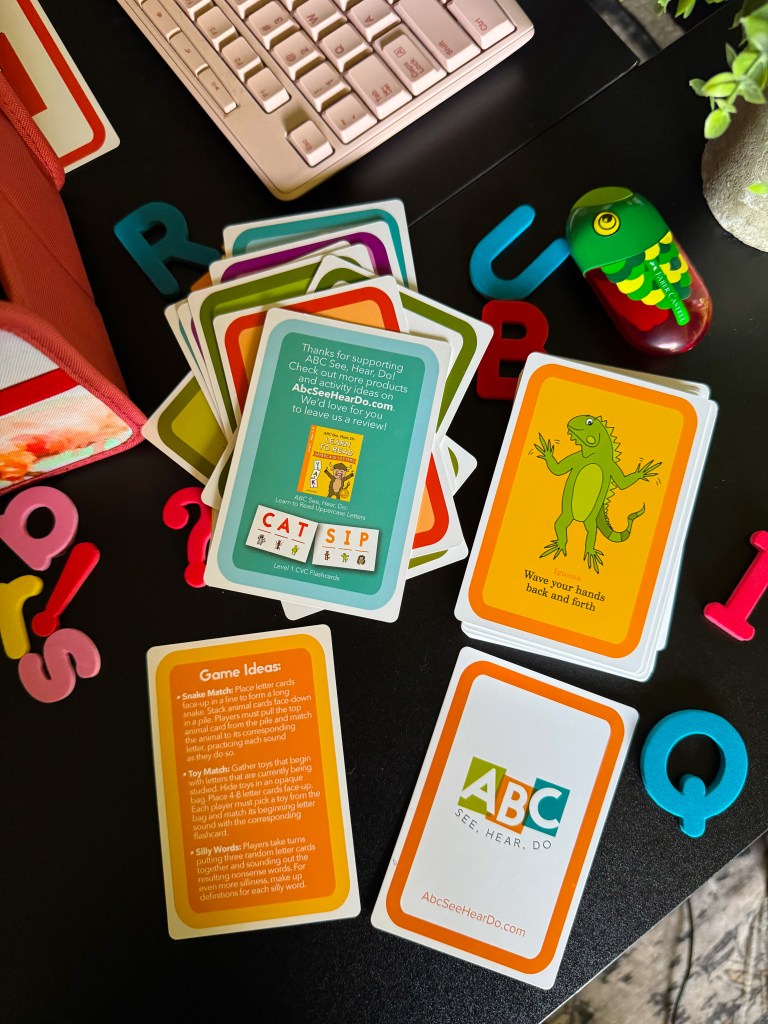
The set also moves beyond individual letters and into CVC words, which is where it becomes especially useful for beginning readers.

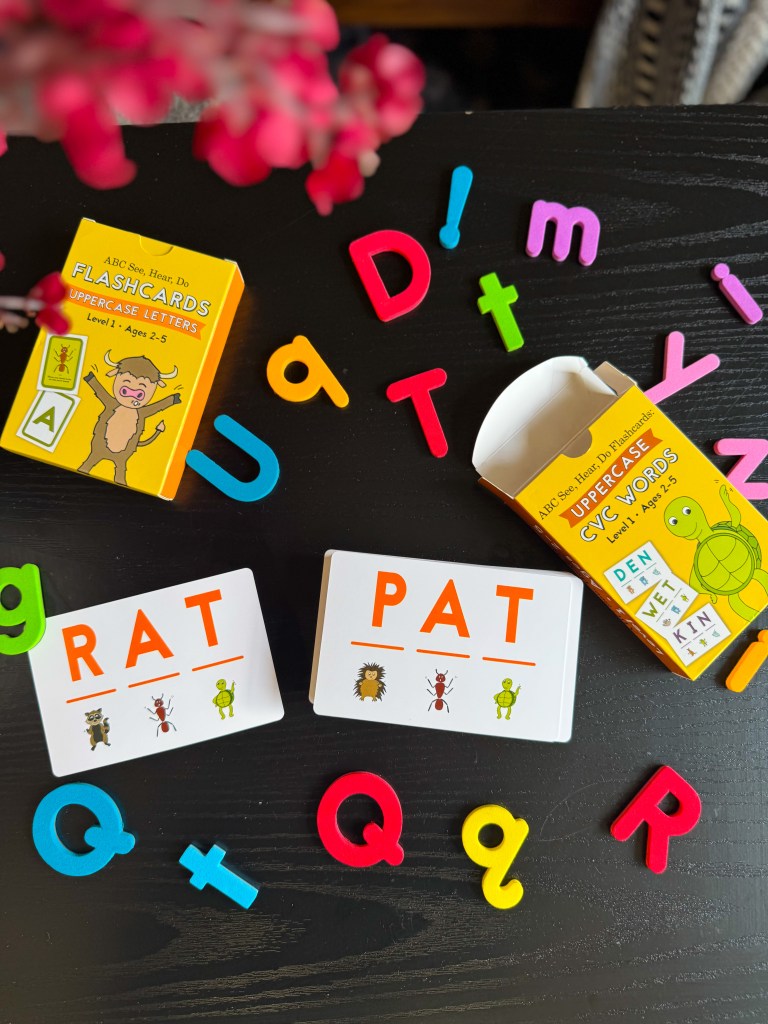
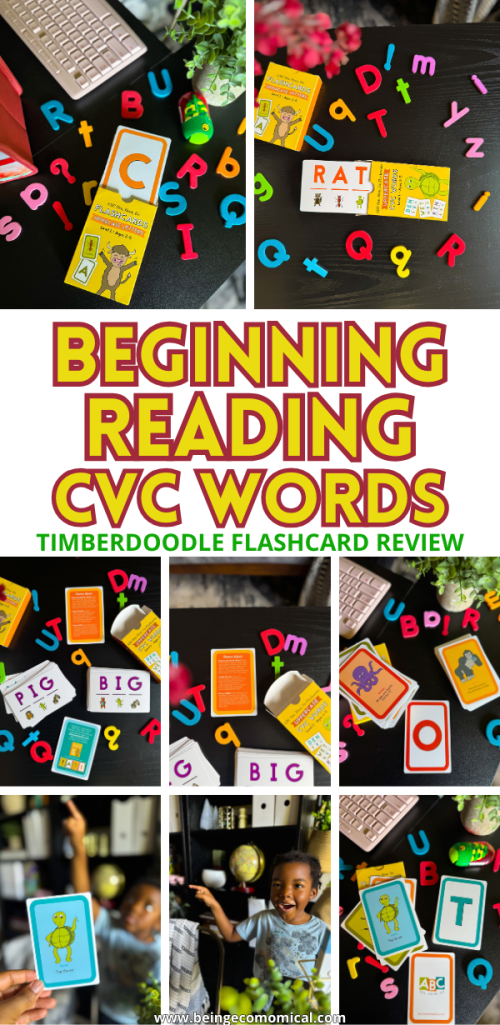
CVC words are simple consonant-vowel-consonant words such as:
PAT
MAP
TAP
TIP
RIP
BIGOnce your child is becoming comfortable with individual letter sounds, you can use the CVC cards to begin practicing how those sounds work together.
We point to the letters individually, practice each sound, and then blend them together to say the complete word.
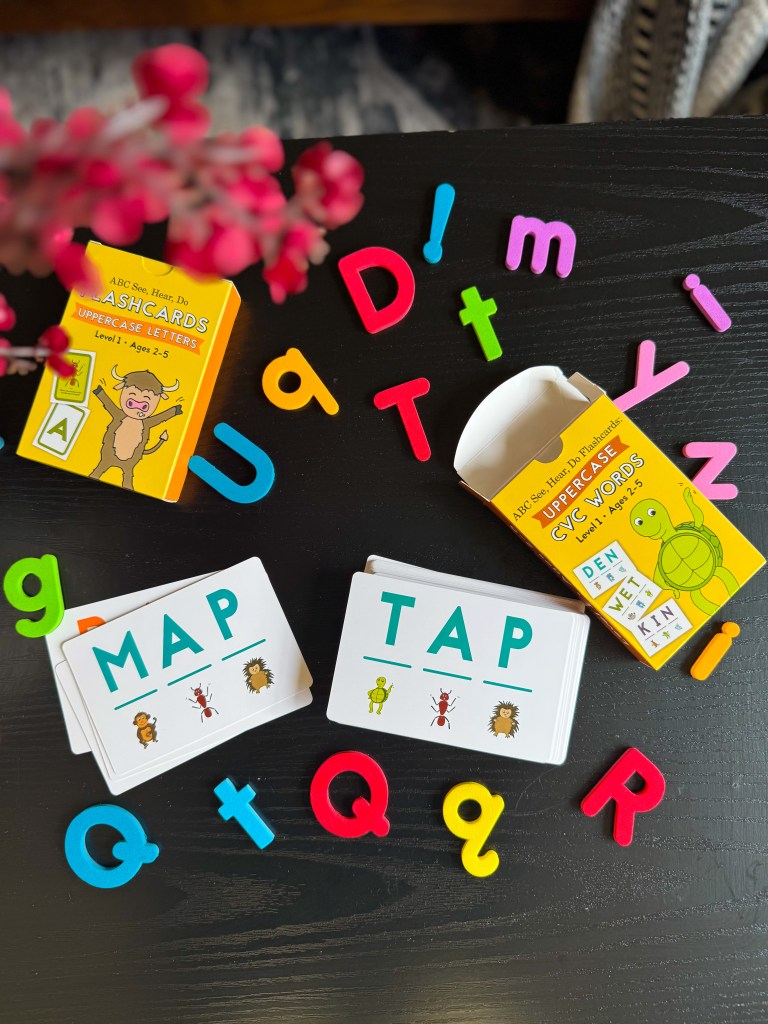
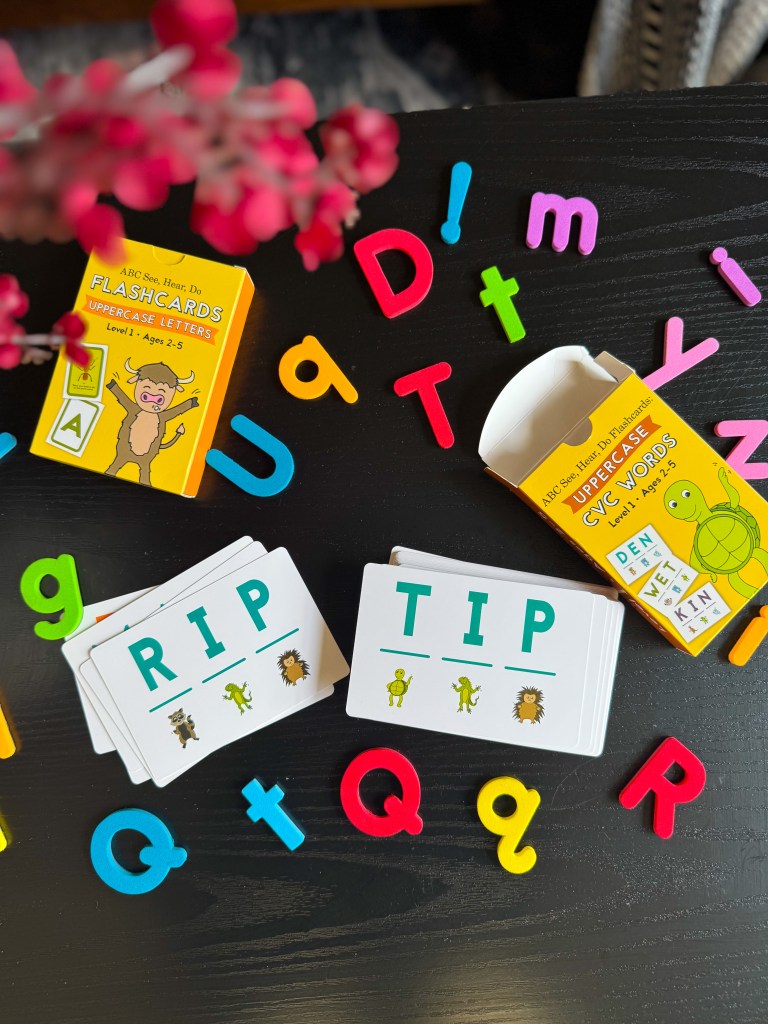
This gives you a natural progression from:
recognizing the letter → learning the sound → blending sounds → reading simple words.
For parents putting together a kindergarten homeschool curriculum, I like having resources that can continue being useful as a child progresses instead of only practicing one isolated skill.
You Can Turn the Flashcards Into Games
Another thing I appreciate is that you don’t have to sit across from your child and drill flashcards over and over.
There are game ideas included with the cards, and once you understand how the set works, there are plenty of ways to turn them into your own kindergarten phonics games too.
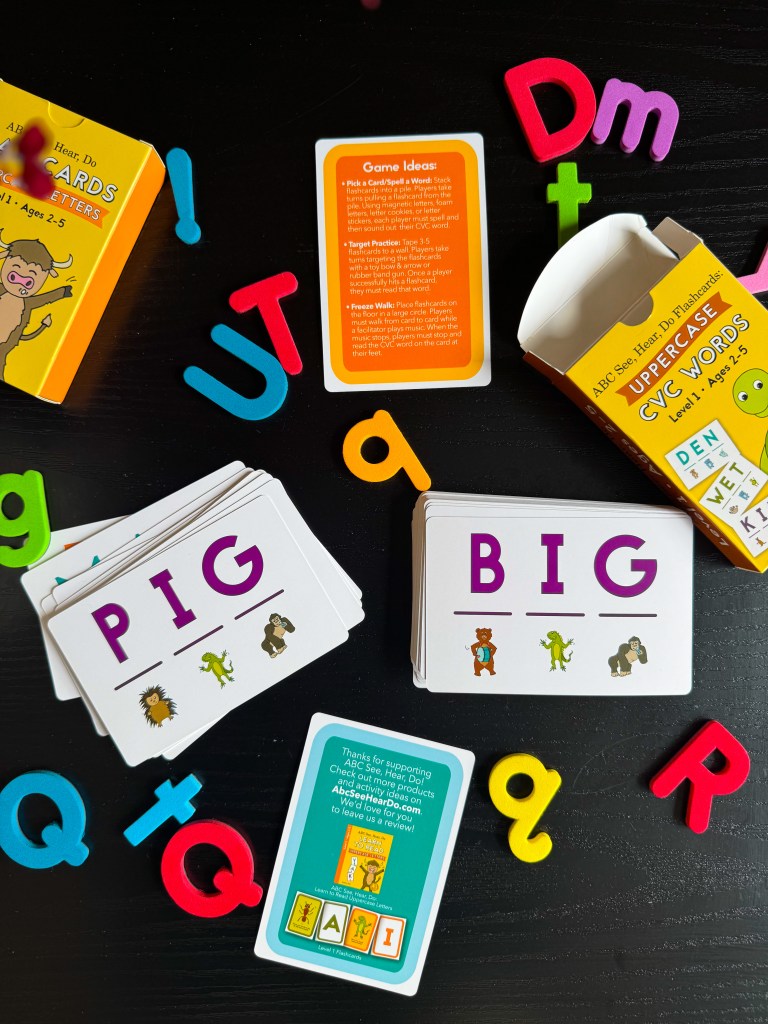
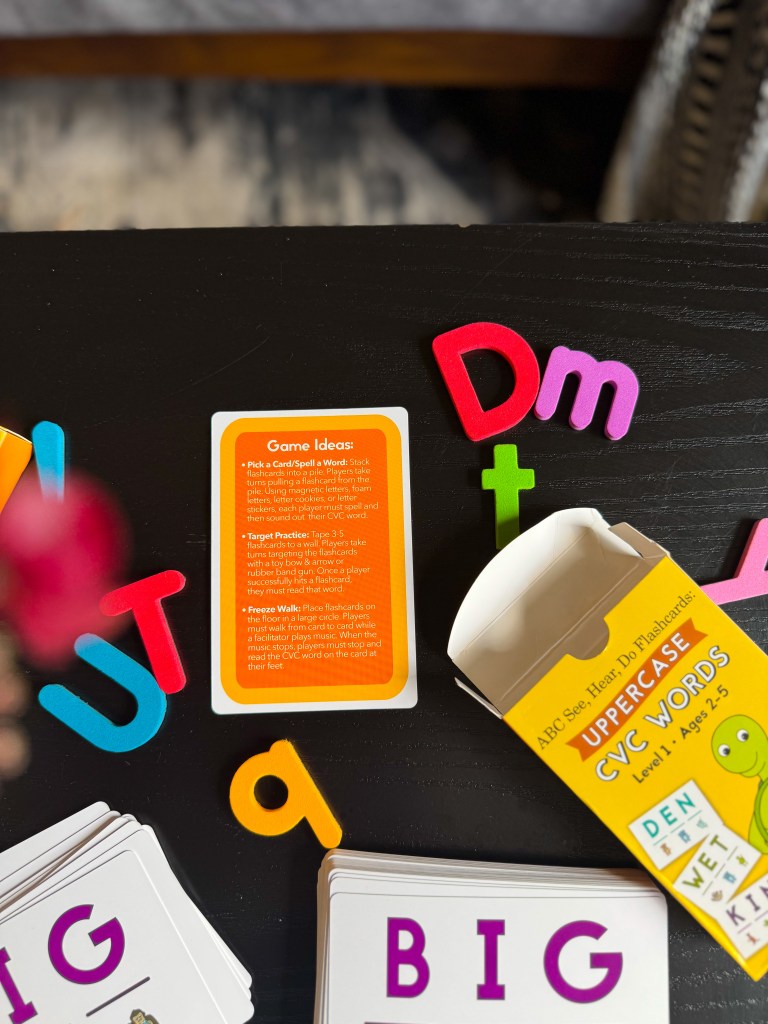
You could:
- spread letters around the room and have your child find the one you call out
- match letter cards with their corresponding animal cards
- practice the movements associated with different letter sounds
- hunt for objects around the house that begin with a particular sound
- use magnetic letters alongside the cards
- practice sounding out the CVC words
- pull out just a few cards at a time for quick phonics review
That versatility is probably one of my favorite things about them.
You’re getting flashcards, but you can easily use them as the starting point for several different hands-on kindergarten learning activities.
Are the ABC See, Hear, Do Flashcards Good for Active Learners?
This is where I think these really shine.
If you have a child who would rather be moving than sitting through a long phonics lesson, incorporating actions into letter-sound practice can make learning feel much more natural.
We were able to be silly, move our hands, make the sounds and interact with each card instead of simply trying to memorize information.
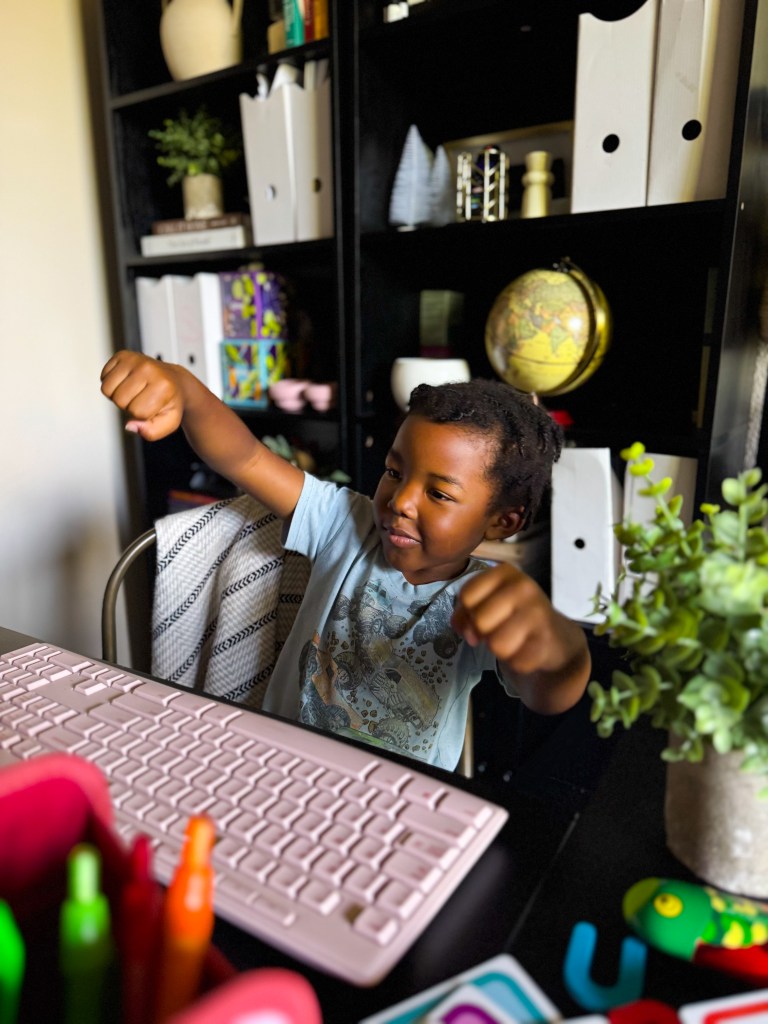
And for little learners, sometimes that’s exactly what you need.
I’d especially consider these if you’re looking for:
- kindergarten phonics activities
- fun ways to teach letter sounds
- CVC word activities
- hands-on homeschool activities
- kindergarten reading activities
- alphabet activities for active learners
- quick kindergarten learning games
Are the Timberdoodle Uppercase Flashcards Worth It?
For our homeschool, I think they’re a really useful little resource.
They’re easy to use, don’t require a bunch of prep, and give us several ways to practice uppercase letters, phonics, letter sounds and beginning reading skills without pulling out another worksheet.
I also like that I can grab them when I need a quick educational activity and be teaching within a couple of minutes.
If you’re homeschooling kindergarten, teaching a preschooler who is ready for phonics, or simply looking for a more interactive way to practice beginning reading skills at home, the ABC See, Hear, Do Uppercase Flashcard Set is definitely worth checking out.
SHOP THE ABC SEE, HEAR, DO UPPERCASE FLASHCARD SET AT TIMBERDOODLE
You can also find more of our kindergarten homeschool activities, curriculum reviews and hands-on learning ideas here on Being Ecomomical.
Pin these for later…
-
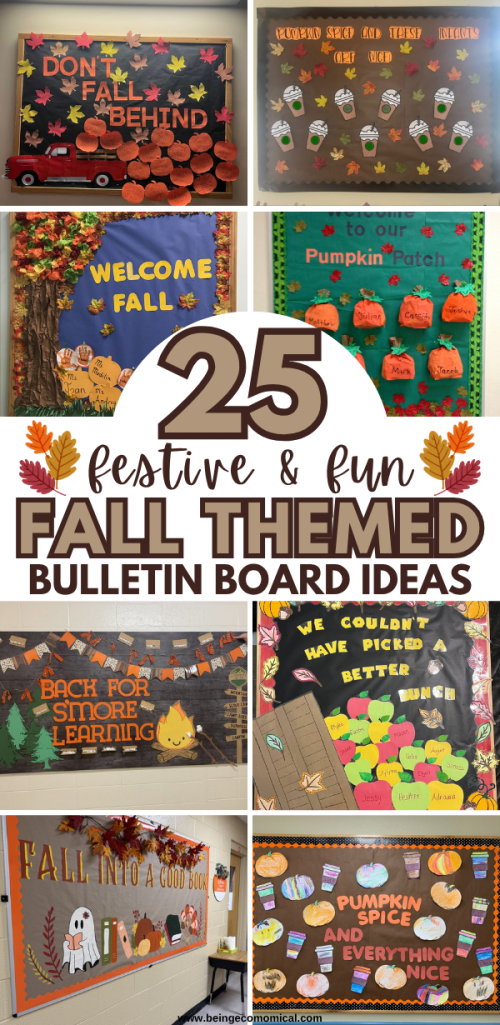
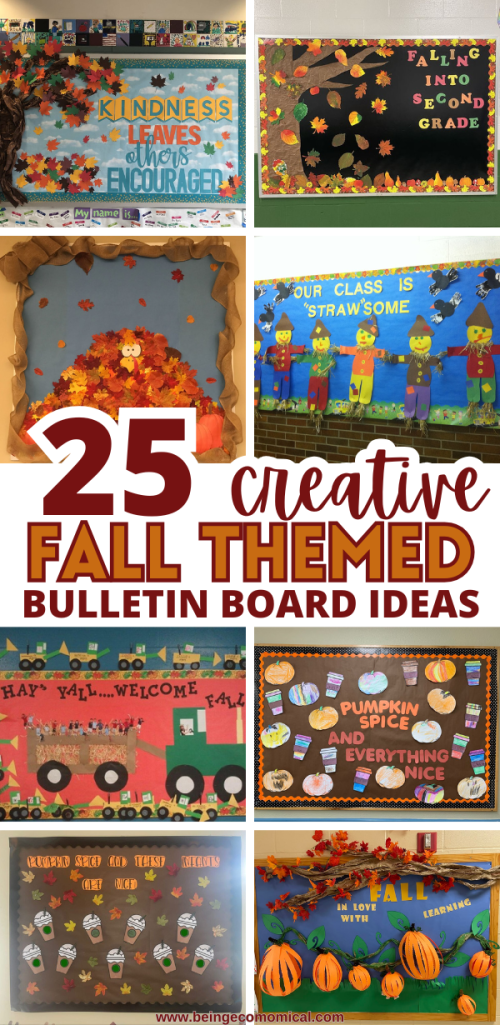
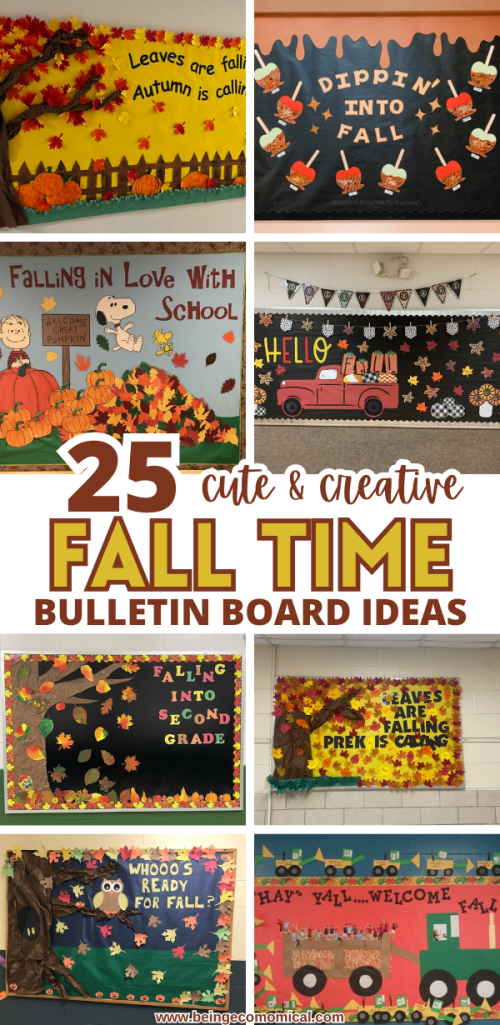
25 Fall Bulletin Board Ideas for a Cozy and Creative Classroom
There is just something about decorating a classroom for fall. Between the pumpkins, colorful leaves, scarecrows, apples, and cozy autumn colors, there are so many ways to make a classroom feel warm and welcoming for the season.
And a great fall bulletin board doesn’t have to be complicated. Some of the cutest ideas use simple construction paper, butcher paper, student artwork, and a fun fall saying to create a display that can stay up for weeks.
Whether you’re decorating a preschool classroom, an elementary school hallway, a classroom door, or a traditional bulletin board, these fall bulletin board ideas offer plenty of inspiration.
More Posts You’ll Love:
- 25 Classroom Organization Ideas
- 30+ Classroom Decor Ideas To Try This Year
- 30 Simple & Stylish Teacher Outfit Ideas
From pumpkin patches and caramel apples to fall trees and football themes, here are 25 ideas to recreate this autumn.
1. Welcome to Our Pumpkin Patch Bulletin Board
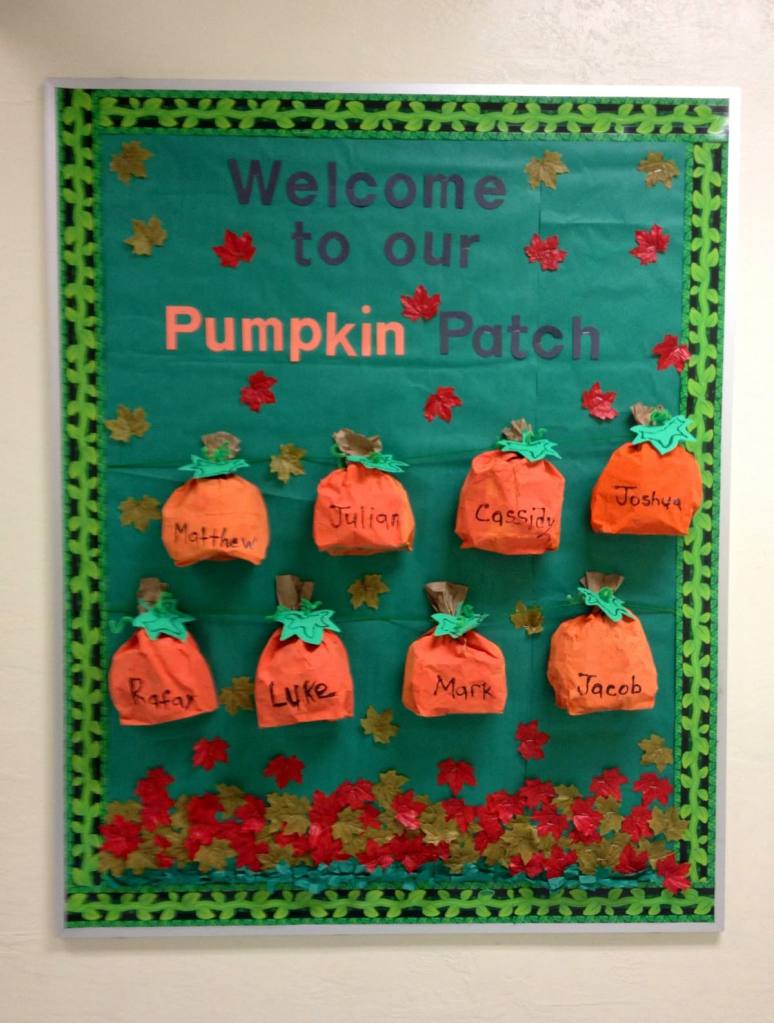
Turn your students into the cutest pumpkins in the patch with this simple fall bulletin board idea featuring individual paper pumpkins labeled with each child’s name.
The green background, scattered autumn leaves, and “Welcome to Our Pumpkin Patch” message make it especially sweet for preschool or elementary classrooms.
2. Pumpkin Spice and These Infants Are Nice Bulletin Board
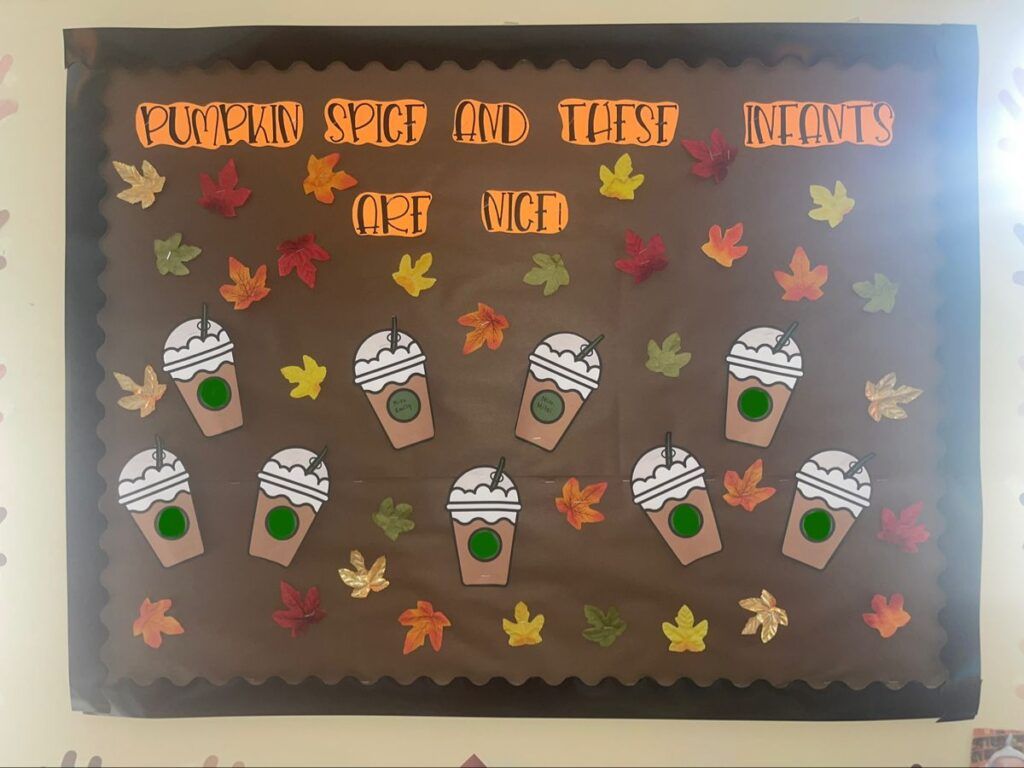
This playful pumpkin spice bulletin board uses paper coffee cups surrounded by colorful autumn leaves for a fun seasonal classroom display.
The “Pumpkin Spice and These Infants Are Nice” saying makes this one especially cute for an infant room, daycare, or early childhood classroom.
3. Pumpkin Spice and Everything Nice Bulletin Board
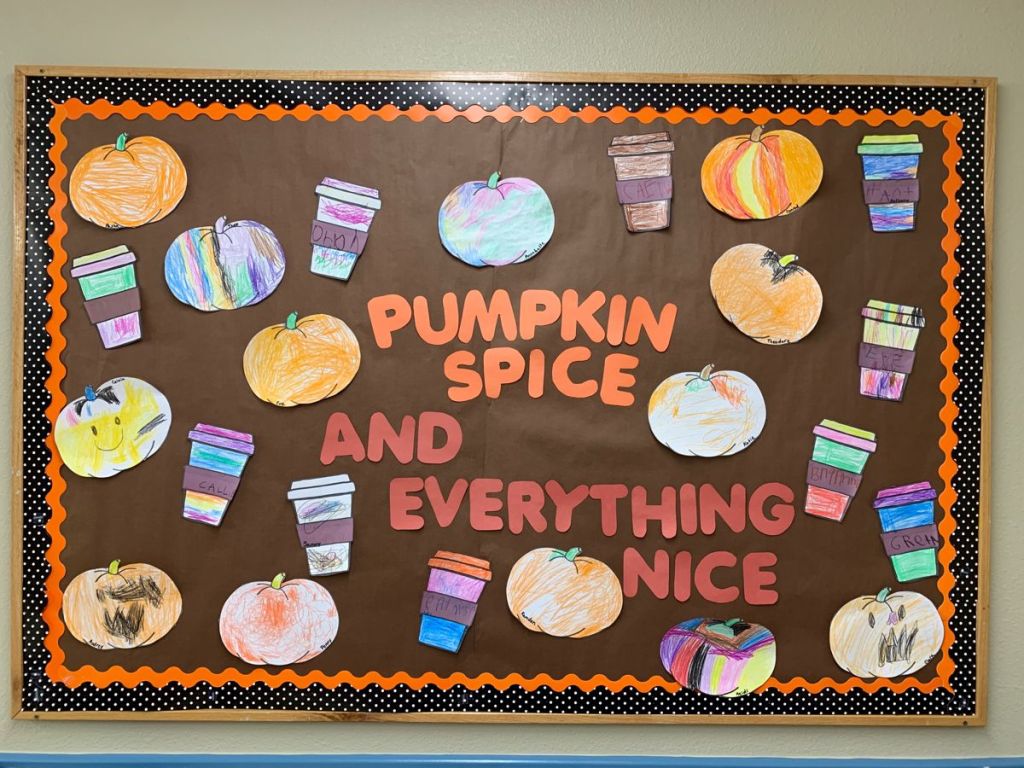
Let students help create the classroom decor with this “Pumpkin Spice and Everything Nice” bulletin board featuring student-colored pumpkins and coffee cups.
It is an easy way to combine a fall craft activity with a finished display that feels personal to the class.

4. Dippin’ Into Fall Caramel Apple Bulletin Board
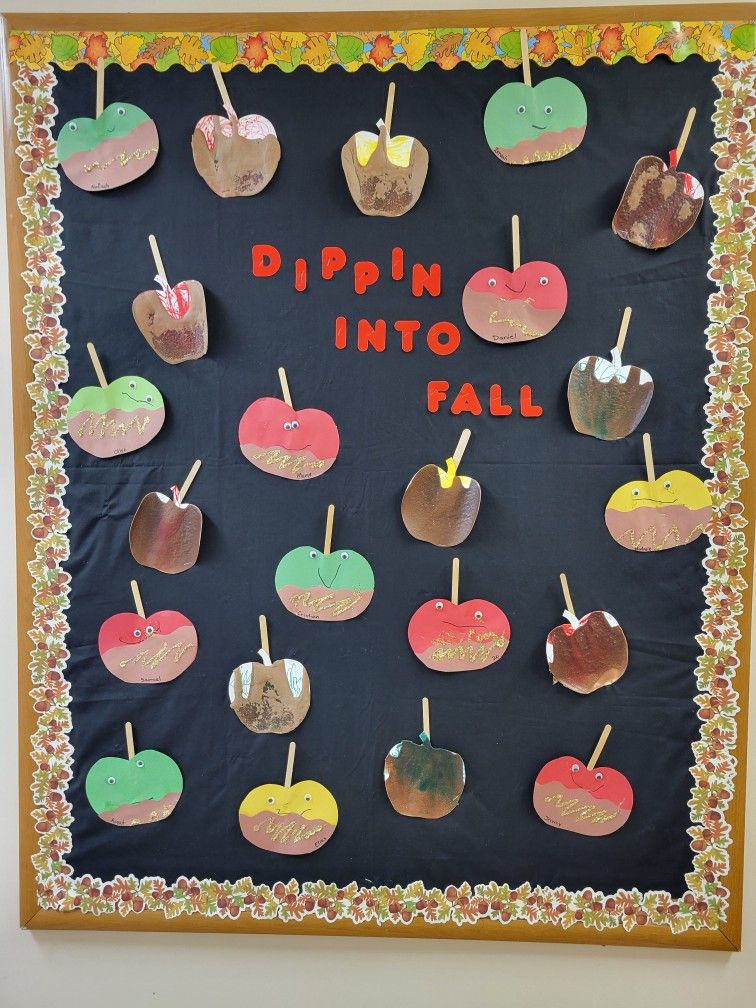
Caramel apples are a classic fall treat, making them an adorable theme for an autumn bulletin board.
Have students decorate their own paper apples before adding caramel-colored paint or paper to create a “Dippin’ Into Fall” classroom display.
5. Welcome to Our Patch Fall Bulletin Board
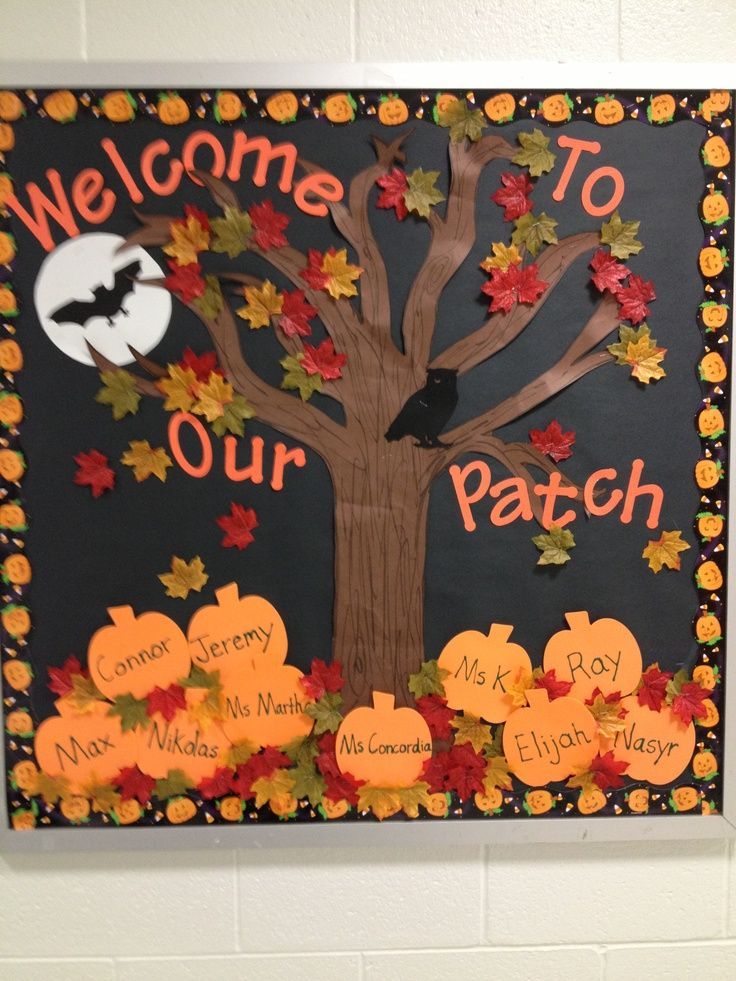
A large paper tree, colorful leaves, and personalized pumpkins create an easy “Welcome to Our Patch” fall classroom display.
Adding student or teacher names to each pumpkin makes this a wonderful option for the beginning of the school year.
6. Grade 3 Is Unbe-Leaf-Able Bulletin Board
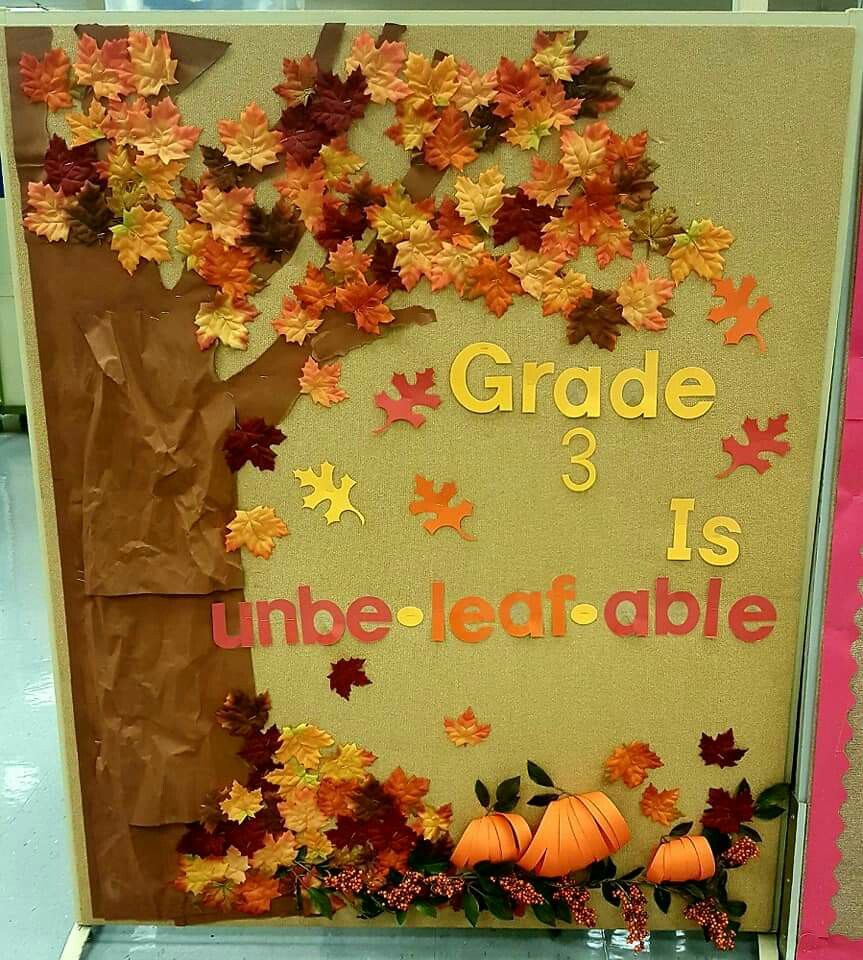
Celebrate your students with a fun fall pun like “Grade 3 Is Unbe-Leaf-Able.”
A large paper tree, layered autumn leaves, pumpkins, and warm fall colors turn a simple classroom wall into a festive seasonal display.
7. We Couldn’t Have Picked a Better Bunch
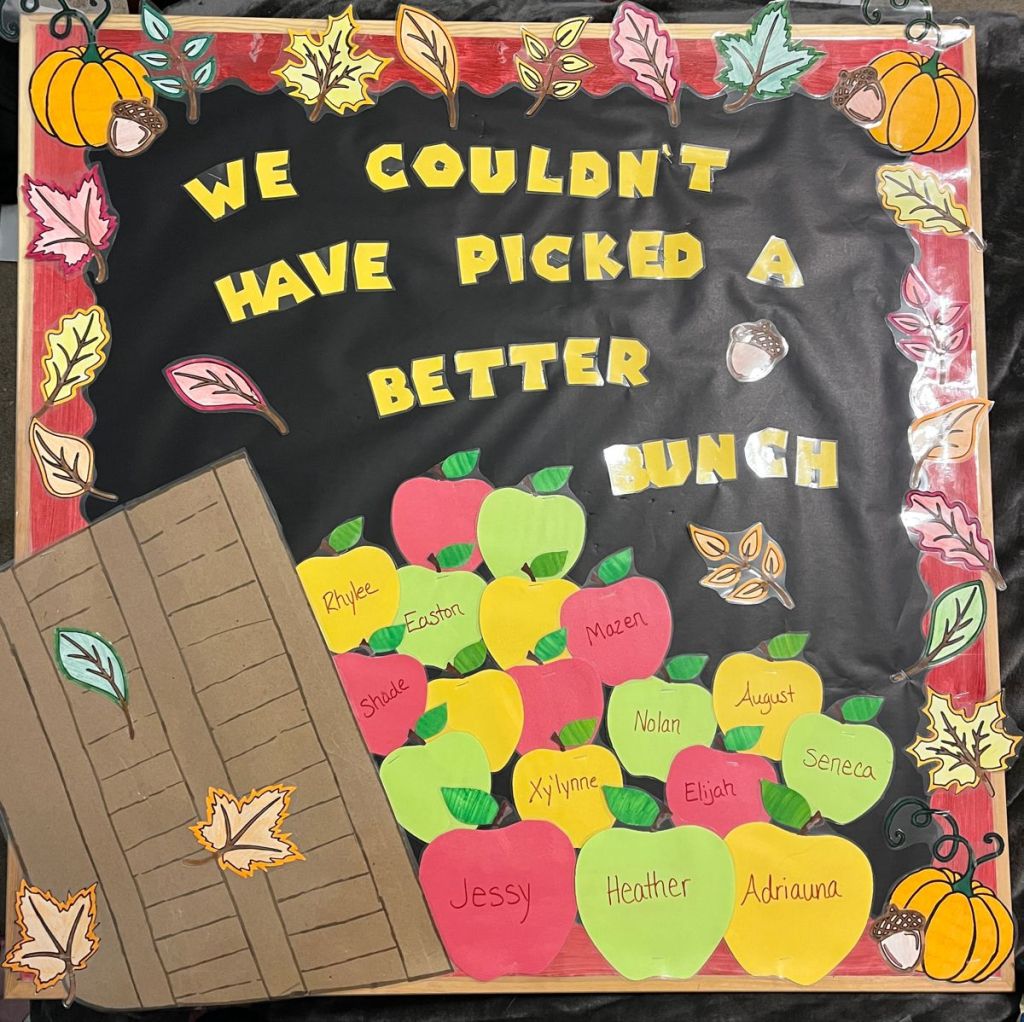
This adorable fall bulletin board uses colorful paper apples with student names to create a sweet back-to-school display.
The basket detail, fall leaf border, and pumpkin accents make it a fun choice for celebrating your class during the autumn season.
8. Don’t Fall Behind
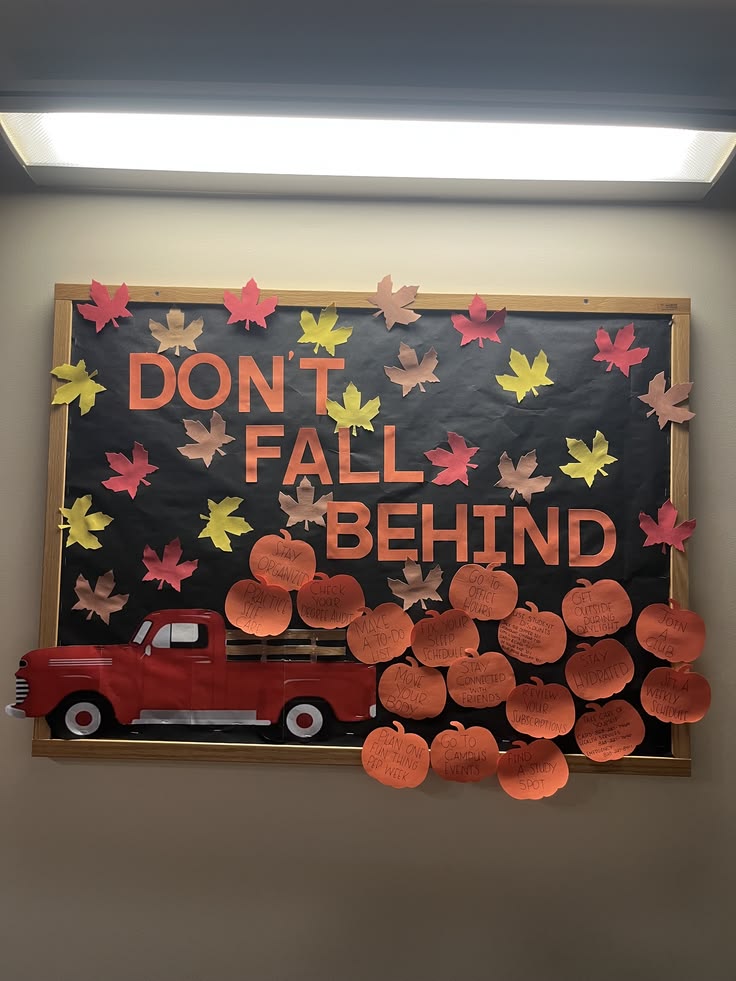
This clever fall bulletin board pairs a vintage red truck with pumpkins and falling leaves for a seasonal classroom display that stands out.
It is a great way to mix autumn decor with an encouraging message for students at the start of the school year.
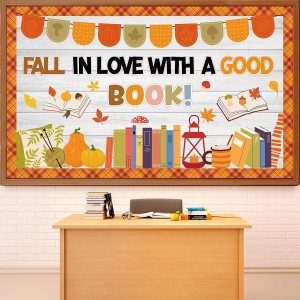
9. Fall Into a Good Book
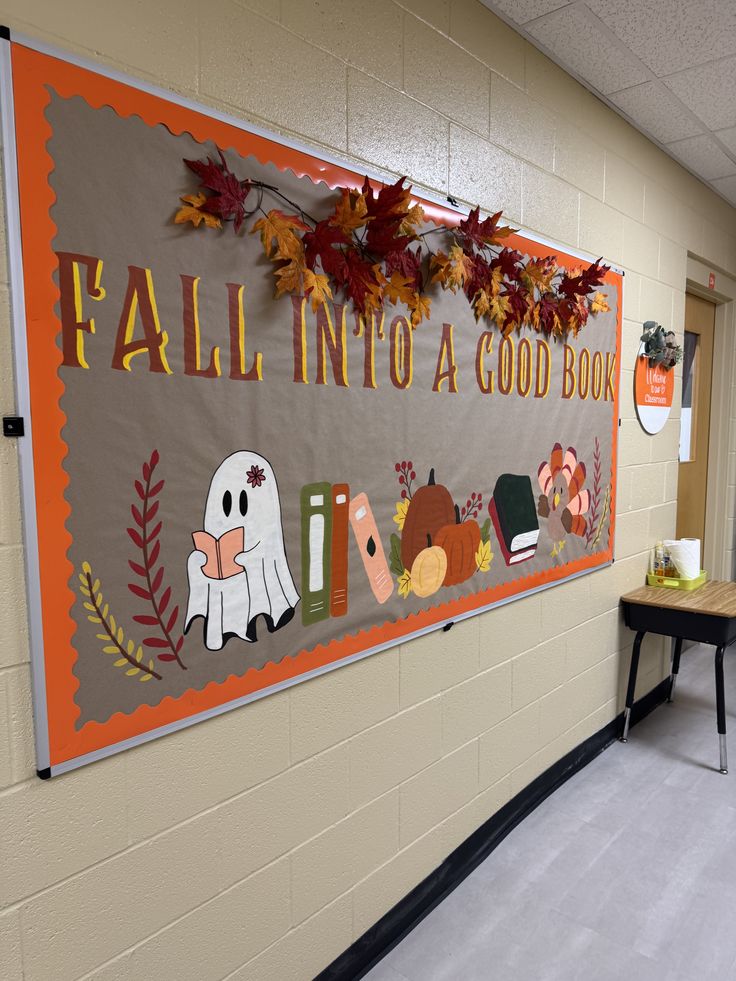
This cozy reading-themed fall bulletin board is perfect for a classroom or school library.
With books, pumpkins, leaves, and a cute ghost reading, it creates a festive display that encourages students to pick up a good book all season long.
10. Our Class Is Straw-Some Scarecrow Bulletin Board
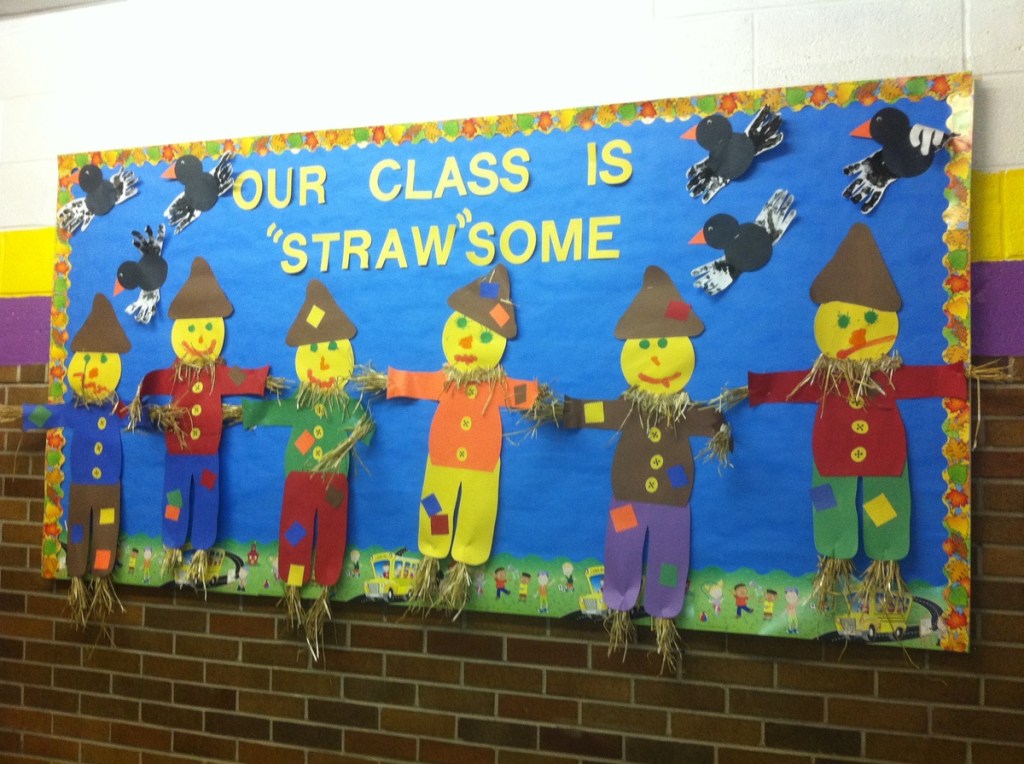
These colorful student-made scarecrows turn a simple bulletin board into an adorable autumn display.
The “Our Class Is Straw-Some” saying adds the perfect fall pun while giving students a chance to personalize their own scarecrow.
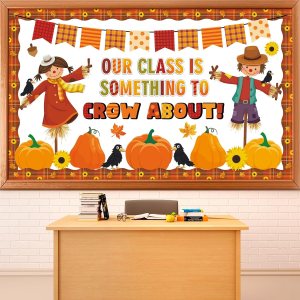
11. Hay Y’all, Welcome Fall Bulletin Board
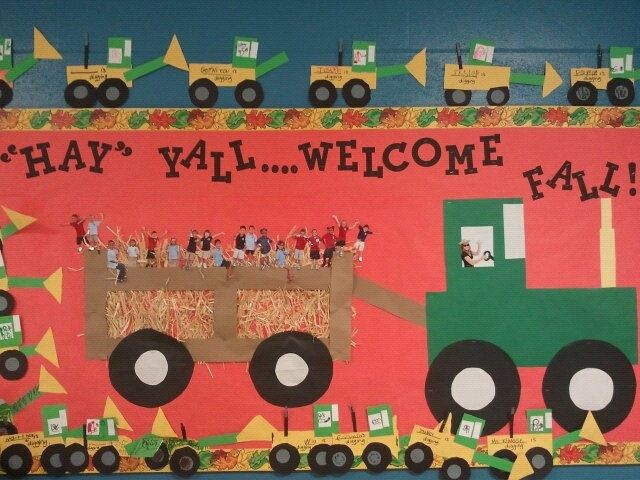
A hayride theme is such a fun alternative to the traditional pumpkin and leaf bulletin board.
Create a big tractor and hay wagon, then add student pictures and mini tractors around the border for a playful “Hay Y’all… Welcome Fall!” classroom display.
12. Give Thanks Fall Tree Bulletin Board
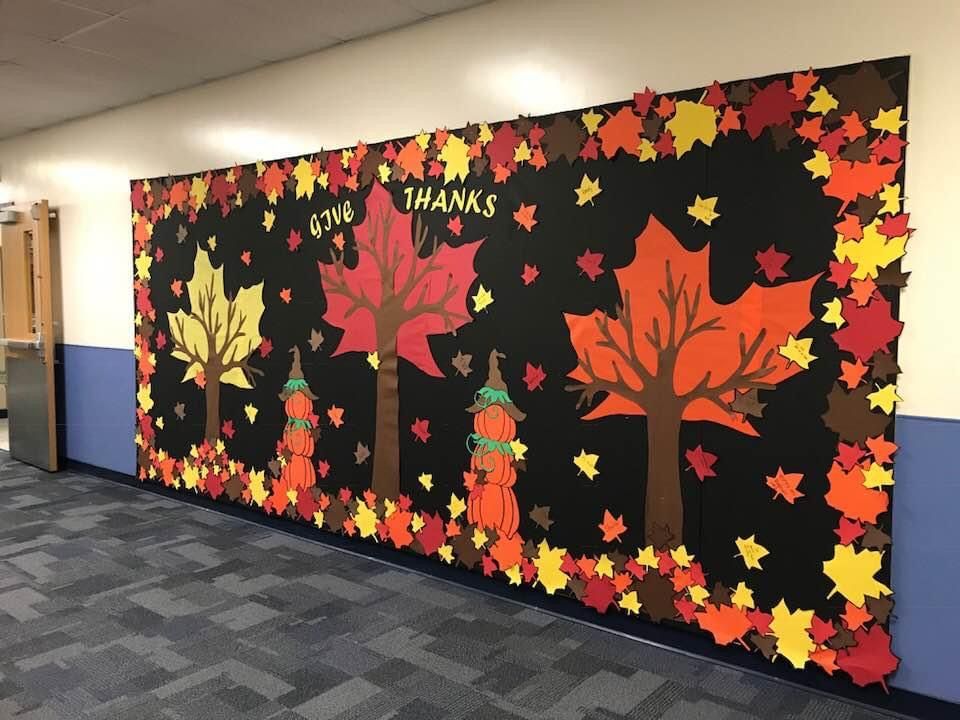
For a fall bulletin board that can transition beautifully into November, try a “Give Thanks” theme.
Large paper trees, stacked pumpkins, and plenty of red, orange, yellow, and brown leaves create a dramatic display perfect for a classroom or school hallway.
13. Whooo’s Ready for Fall Owl Bulletin Board
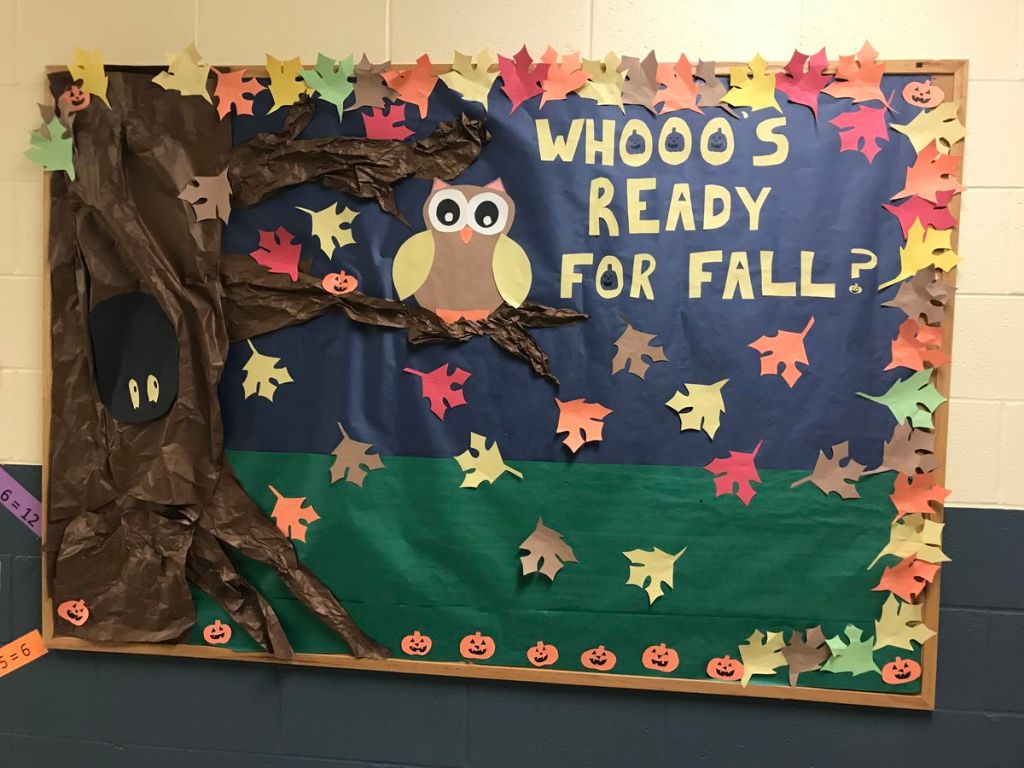
Owls and autumn go perfectly together in this “Whooo’s Ready for Fall?” bulletin board idea.
A crinkled paper tree, simple paper owl, falling leaves, and tiny pumpkins create a cute display without requiring tons of supplies.
14. Leaves Are Falling, Pre-K Is Calling Bulletin Board
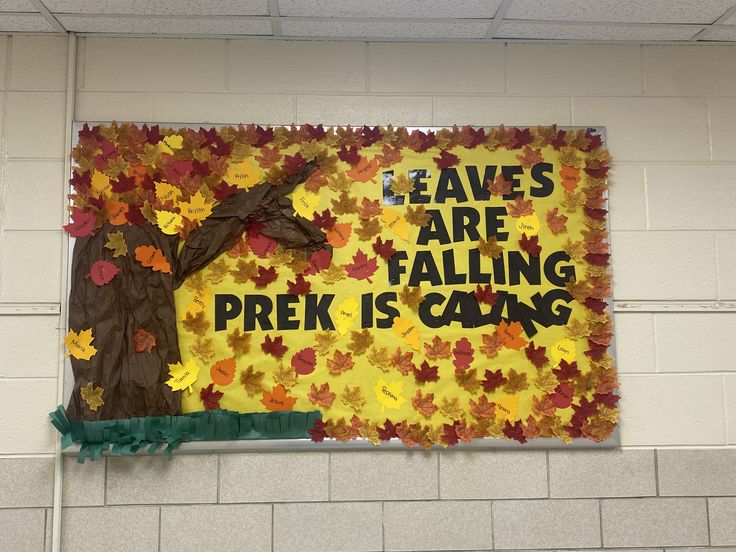
This “Leaves Are Falling, Pre-K Is Calling” bulletin board was practically made for a preschool or pre-K classroom.
Fill the board with colorful leaves labeled with student names and add a dimensional fall tree to make the display feel extra full and festive.
15. Falling Into Second Grade Bulletin Board
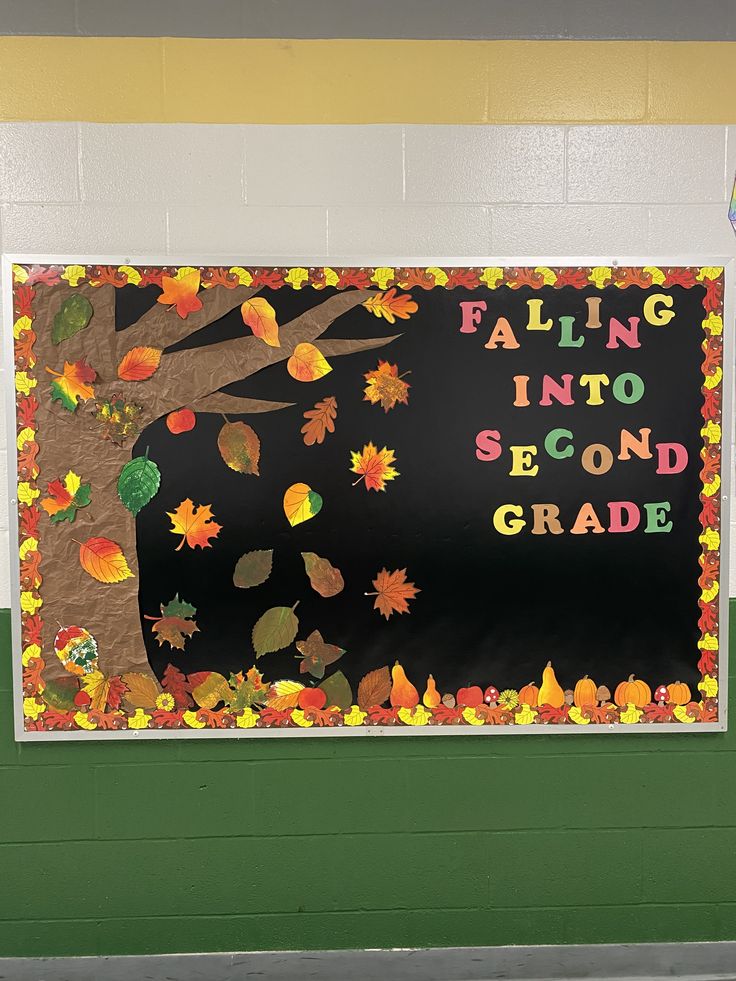
Welcome students into a new school year with a “Falling Into Second Grade” bulletin board filled with warm autumn colors.
A large brown paper tree and scattered leaves give you plenty of room to add student names, work samples, or other seasonal details later.
16. Fall In Love With Learning
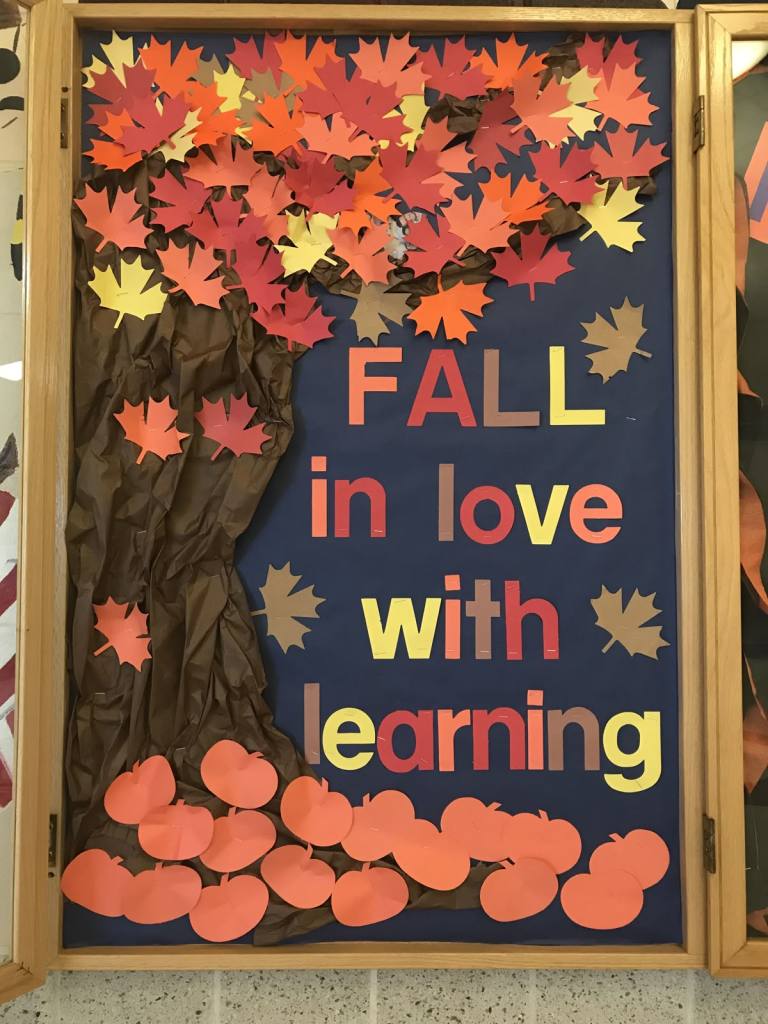
This pumpkin-filled board puts a classroom spin on one of the cutest fall sayings: “Fall in Love With Learning.”
Oversized dimensional pumpkins and twisting green vines make the display especially eye-catching while still keeping the design kid-friendly.
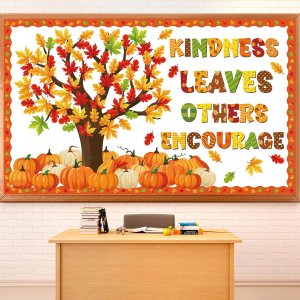
17. Kindness Leaves Others Encouraged
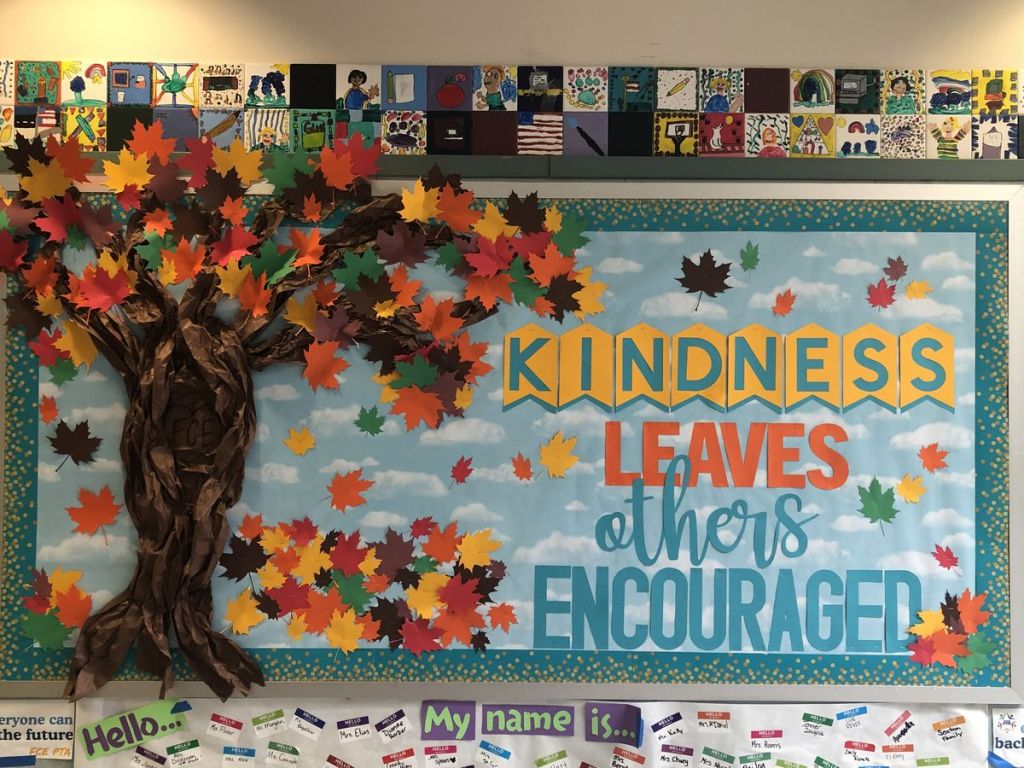
Mix social-emotional learning with seasonal classroom decor using a “Kindness Leaves Others Encouraged” bulletin board.
A dimensional fall tree and scattered leaves create a pretty backdrop while the message encourages students to think about how they treat others.
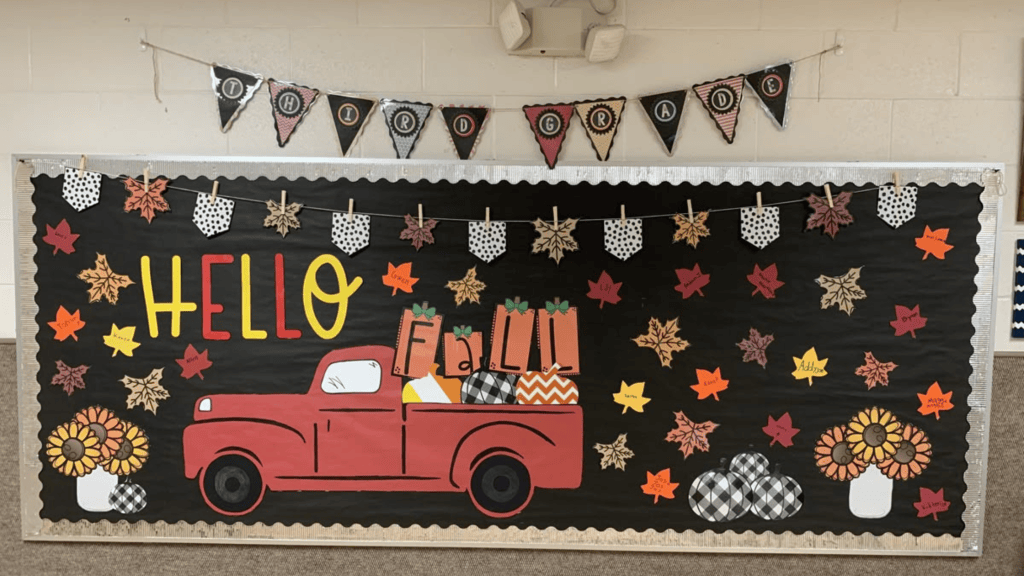
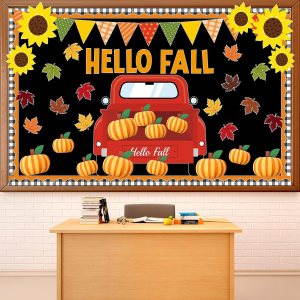
18. Hello Fall Red Truck Bulletin Board
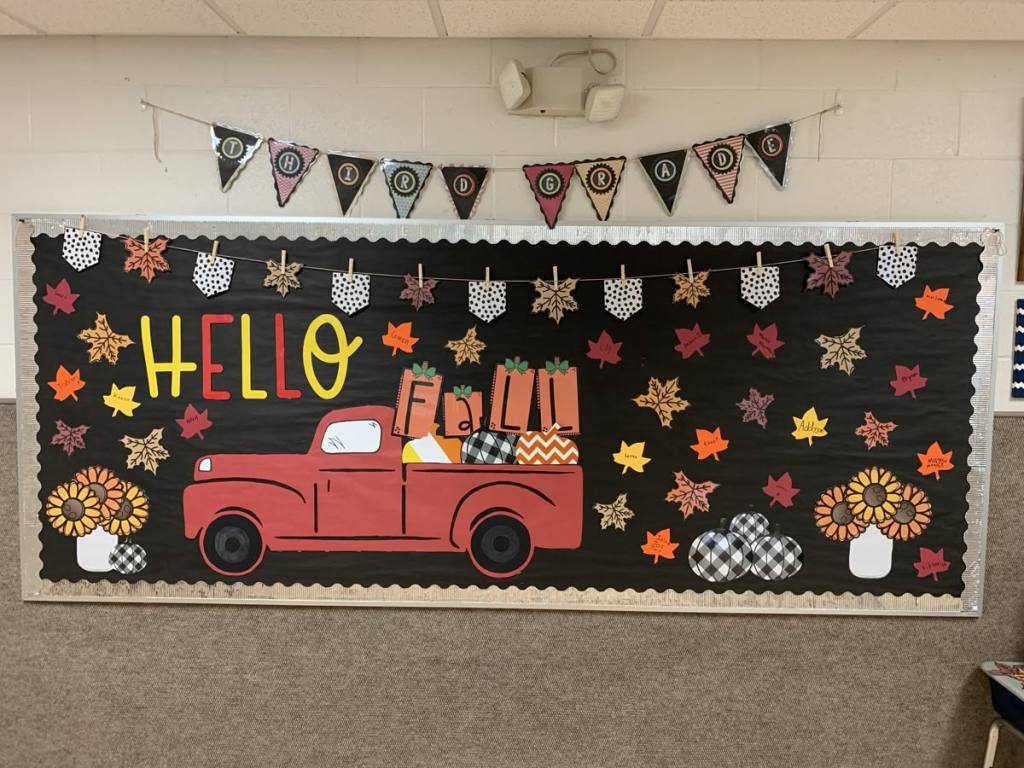
A vintage-style red truck loaded with patterned pumpkins gives this “Hello Fall” bulletin board tons of personality.
Add paper leaves, sunflowers, pumpkins, and a small fall banner for a classroom display that feels cheerful and cozy.
19. Falling in Love With School Bulletin Board
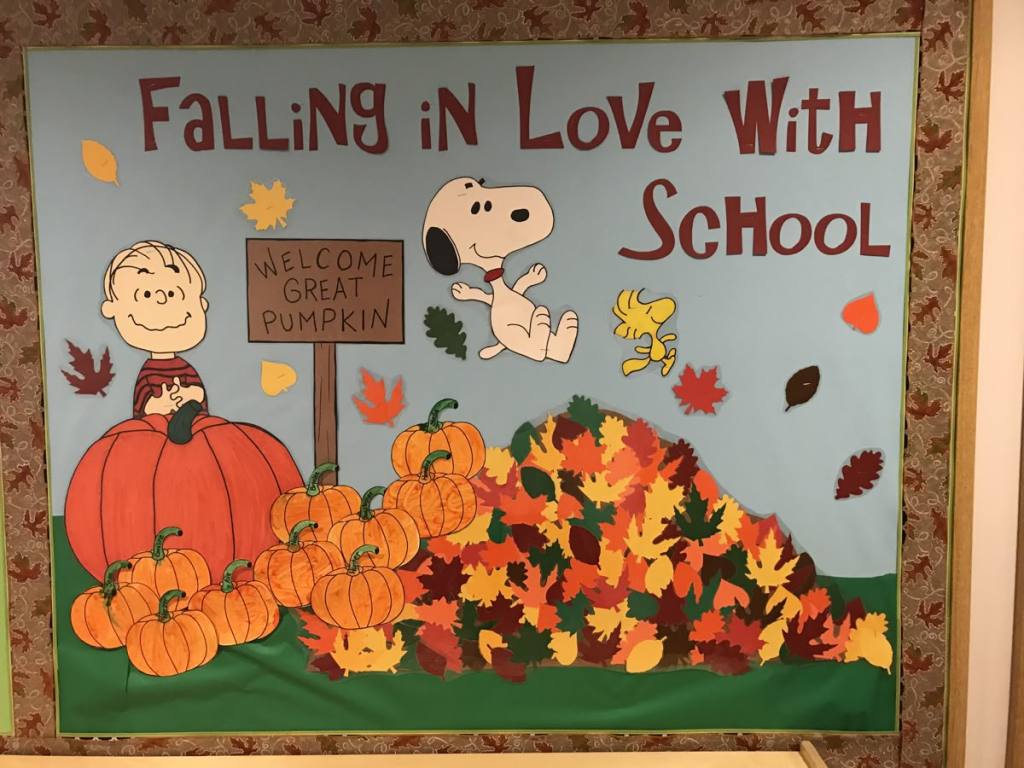
Combine pumpkins, autumn leaves, and familiar characters for a playful “Falling in Love With School” bulletin board.
The pumpkin patch and giant pile of leaves fill the board beautifully while creating a fun back-to-school-meets-fall theme.
20. Dippin’ Into Fall Apple Craft Bulletin Board
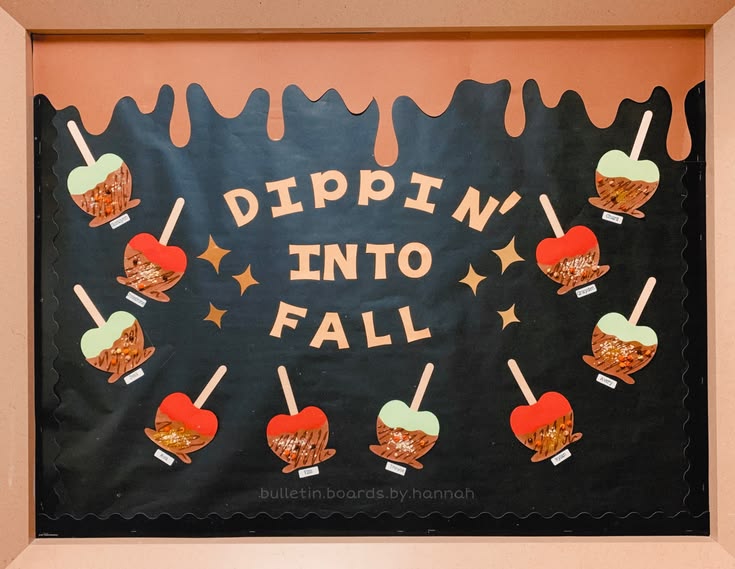
This version of the “Dippin’ Into Fall” idea uses individual caramel apple crafts displayed against a simple black background.
Letting students decorate their own apples makes this an easy classroom activity and bulletin board project all in one.
21. Leaves Are Falling, Autumn Is Calling Bulletin Board
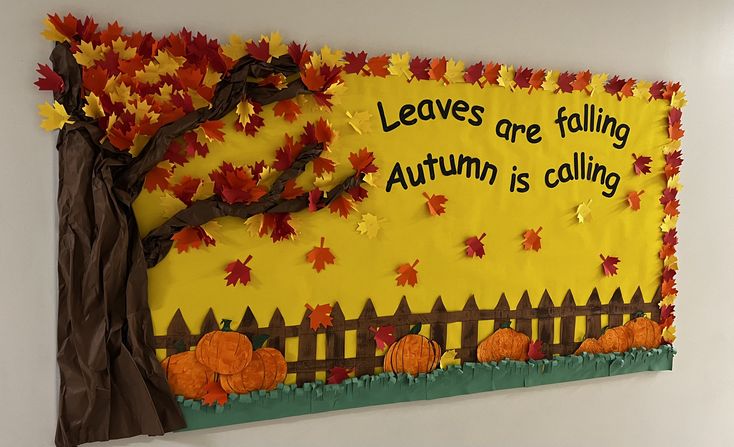
A bright yellow background makes the red and orange leaves pop on this “Leaves Are Falling, Autumn Is Calling” bulletin board.
The large paper tree, pumpkin patch, and brown fence create a full autumn landscape that would work beautifully in an elementary classroom or hallway.
22. Fall in Love With Learning Pumpkin Bulletin Board
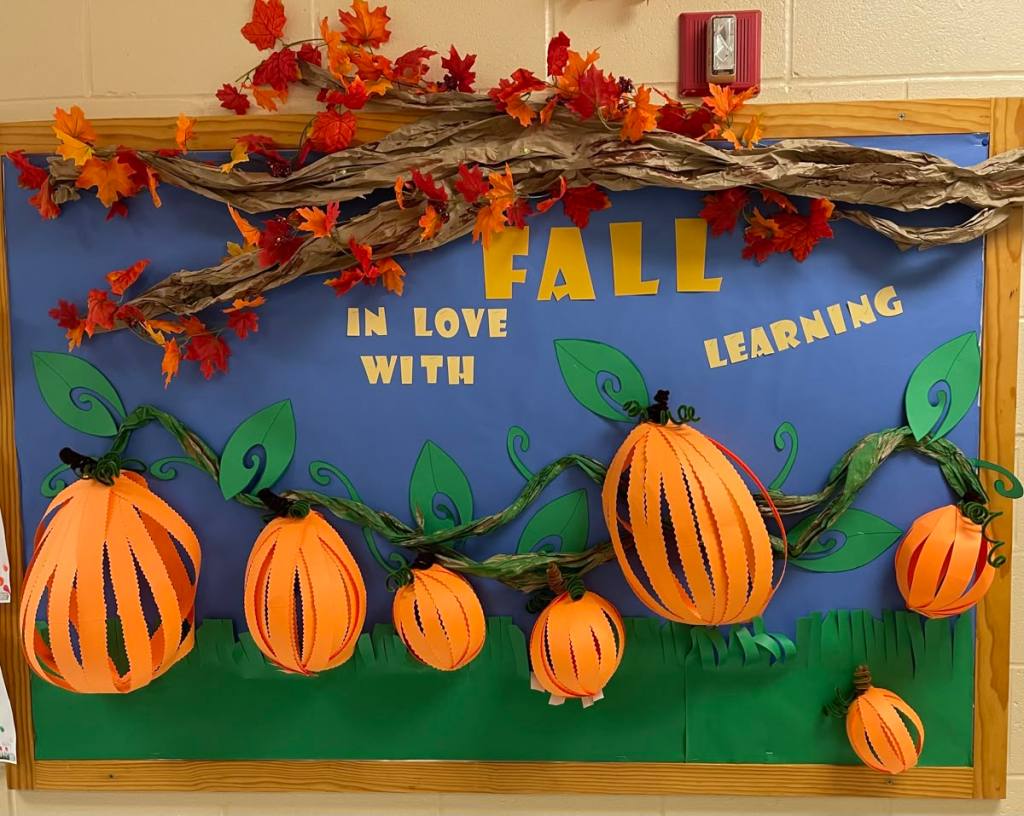
This colorful “Fall in Love With Learning” bulletin board combines oversized paper pumpkins, twisting green vines, and autumn leaves for a bright seasonal classroom display.
The dimensional pumpkins make the board especially eye-catching while the learning-themed message keeps it perfect for school.
23. Cozy Fall Harvest Tree Bulletin Board
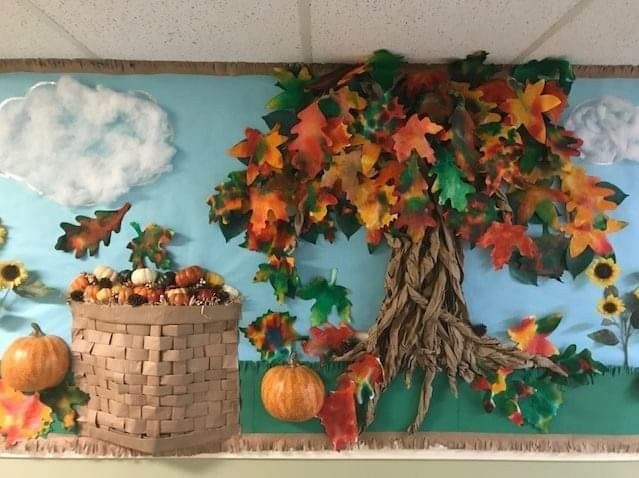
This cozy fall bulletin board combines a textured autumn tree, colorful leaves, pumpkins, and a woven-style harvest basket for a warm seasonal classroom display.
The soft blue sky, fluffy clouds, and sunflower accents give the board a cheerful harvest feel that works beautifully throughout the fall months.
24. Happy Fall Y’all Autumn Tree Bulletin Board
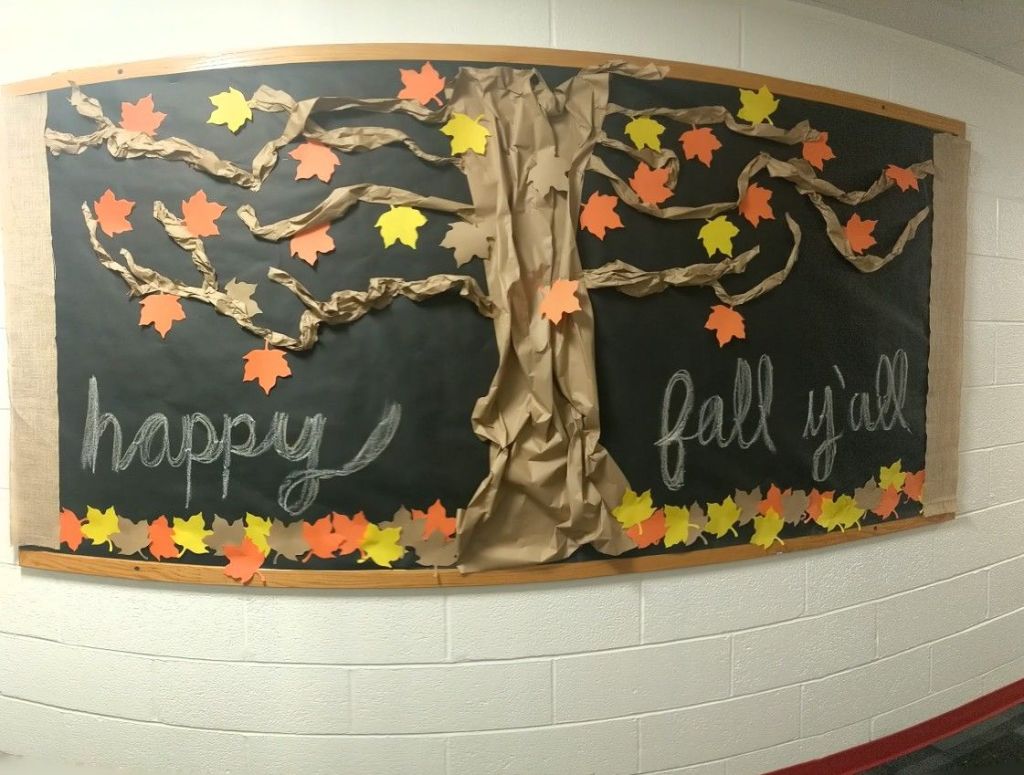
This simple fall bulletin board uses a crinkled paper tree and scattered autumn leaves against a dark background for a cozy seasonal look.
The handwritten “Happy Fall Y’all” message keeps the design relaxed and welcoming while still making a big visual impact.
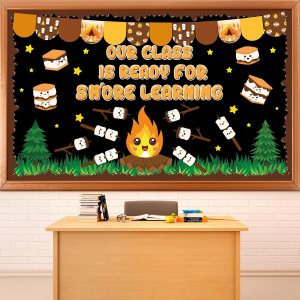
25. Back for S’more Learning Fall Bulletin Board
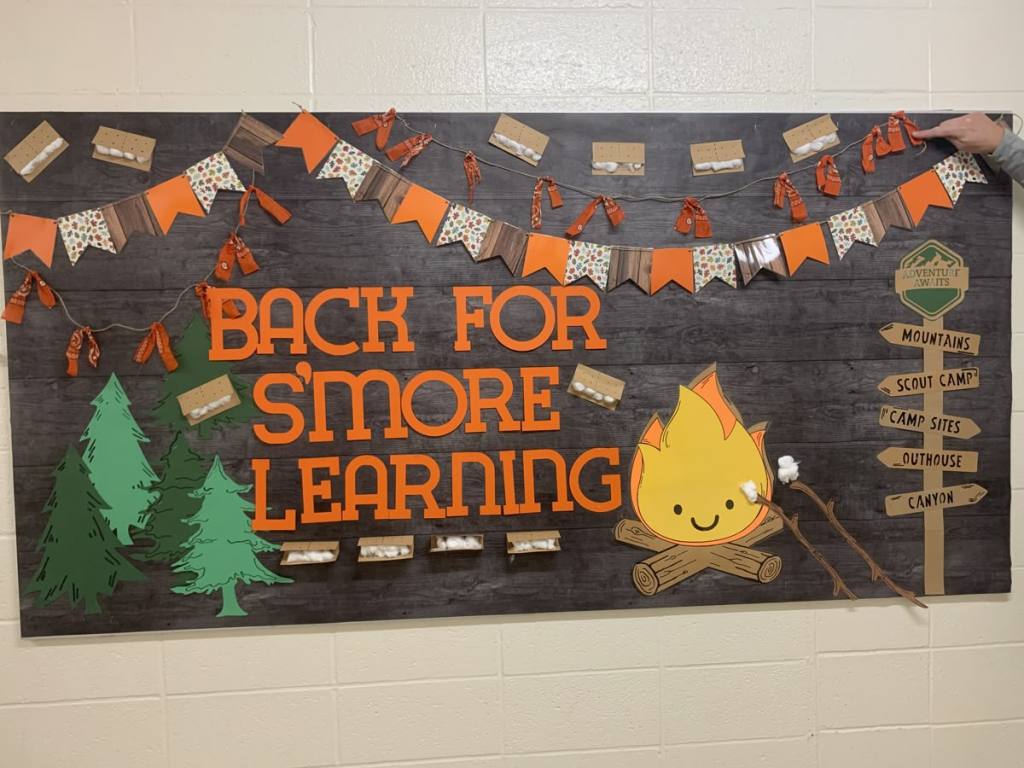
This cozy camping-themed fall bulletin board uses pine trees, a smiling campfire, s’mores, and rustic banner details to create a fun seasonal classroom display.
The “Back for S’more Learning” message makes it especially cute for back-to-school while still fitting perfectly with fall decor.
Easy Ways to Recreate These Fall Bulletin Board Ideas
One of the best things about fall classroom decorating is that you can recreate many of these ideas with supplies you probably already have. Construction paper, bulletin board paper, brown kraft paper, tissue paper, borders, paper leaves, markers, and student artwork can go a long way.
You also don’t have to recreate every detail exactly. Choose the part of an idea you love most—whether that is the saying, the tree, the pumpkins, or the student craft—and adapt it to the space and supplies you have available.
Many of these displays can also become interactive. Add student names to leaves and pumpkins, use student artwork as part of the design, create a kindness board students contribute to throughout the season, or use your bulletin board to showcase fall writing and classroom projects.
More Fall Classroom Inspiration
Fall bulletin boards are such an easy way to make a classroom feel festive without completely redecorating the room. And because pumpkins, apples, leaves, scarecrows, football, and autumn trees can work throughout September, October, and November, many of these displays can stay up for most of the season.
Save your favorite ideas now, choose one that fits your classroom, and put your own spin on it. Sometimes all it takes is a clever fall saying and a few sheets of construction paper to completely transform a classroom wall.
Pin these for later…
-
Early Bird Game Review: A Fast-Paced Strategy Game for Kids
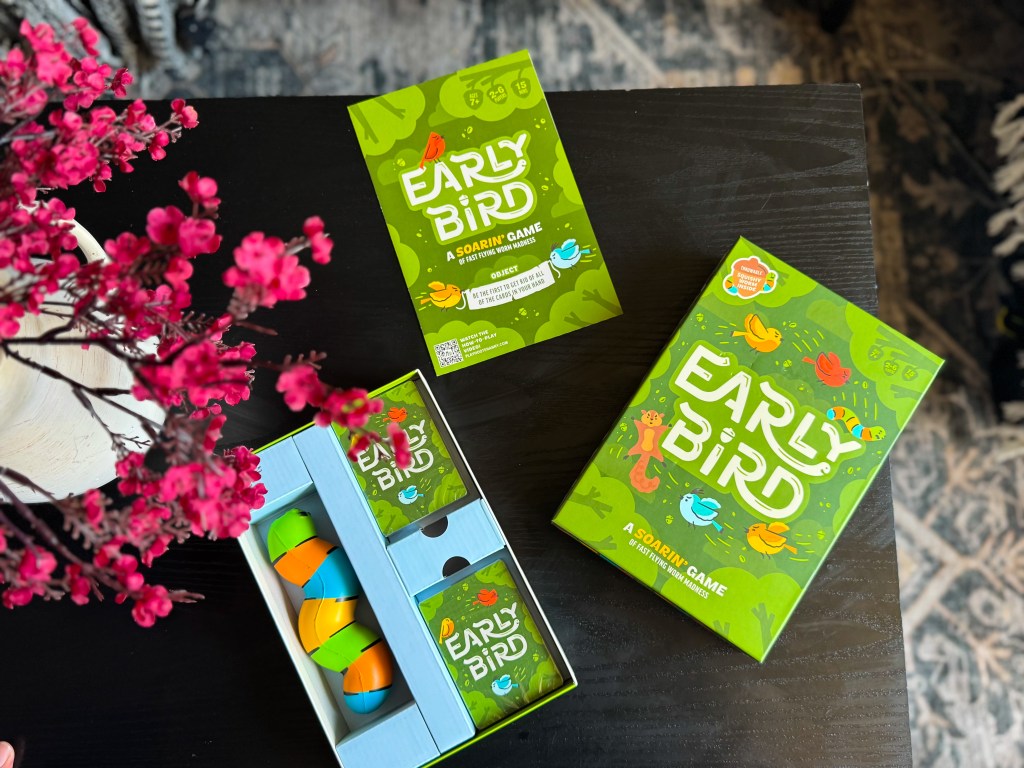
If there is one thing I appreciate about Timberdoodle, it’s that learning doesn’t always have to look like a worksheet or textbook.
Sometimes some of the best learning happens around the table with a good game.
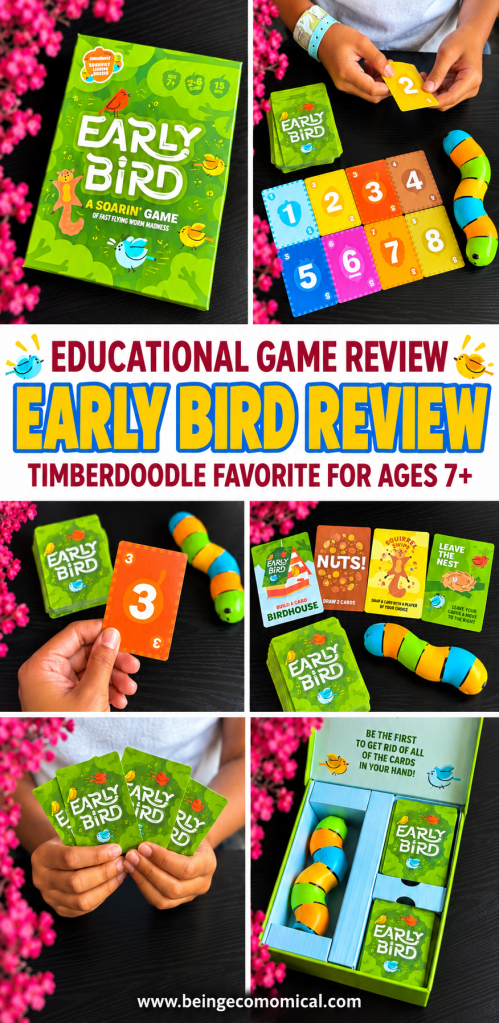
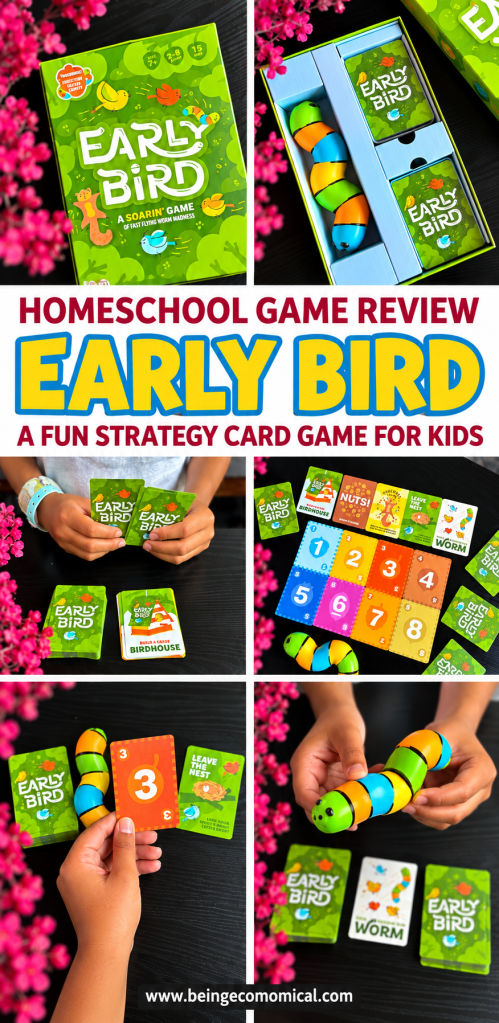
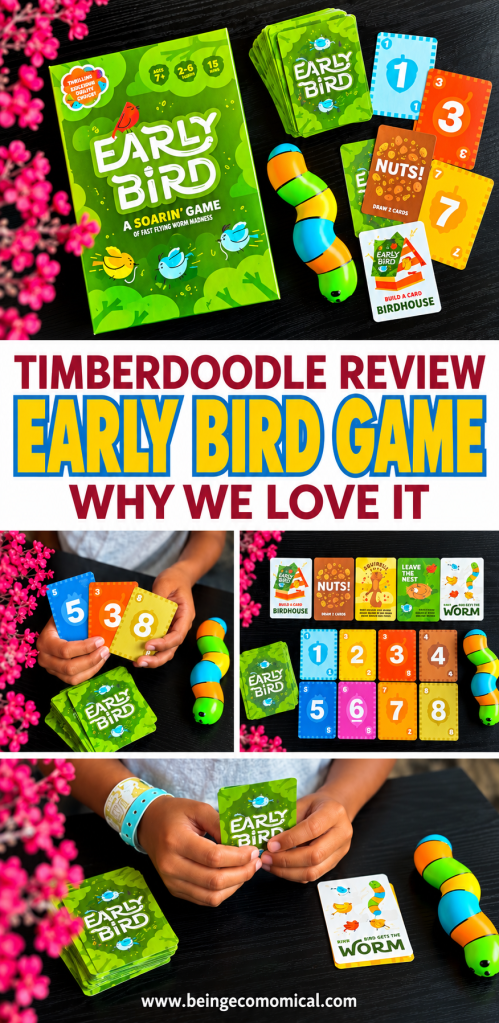
Early Bird is a fast-paced card game from Hootenanny Games that mixes numbers, strategy, quick thinking, movement, and a little bit of chaos — in a good way.
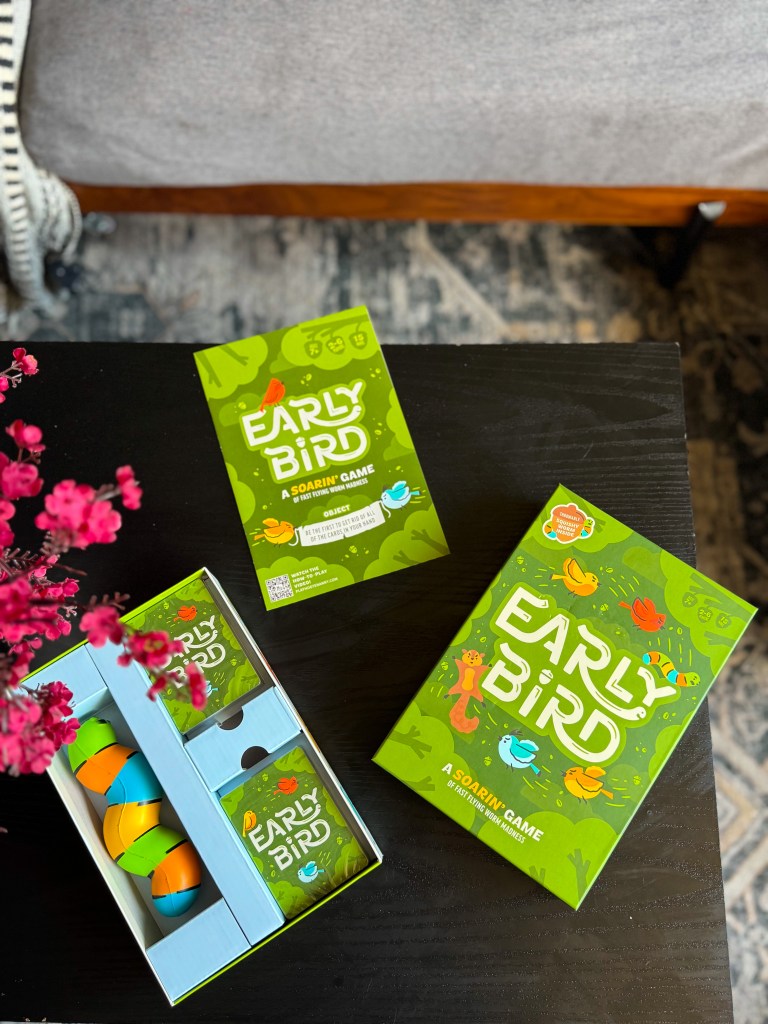
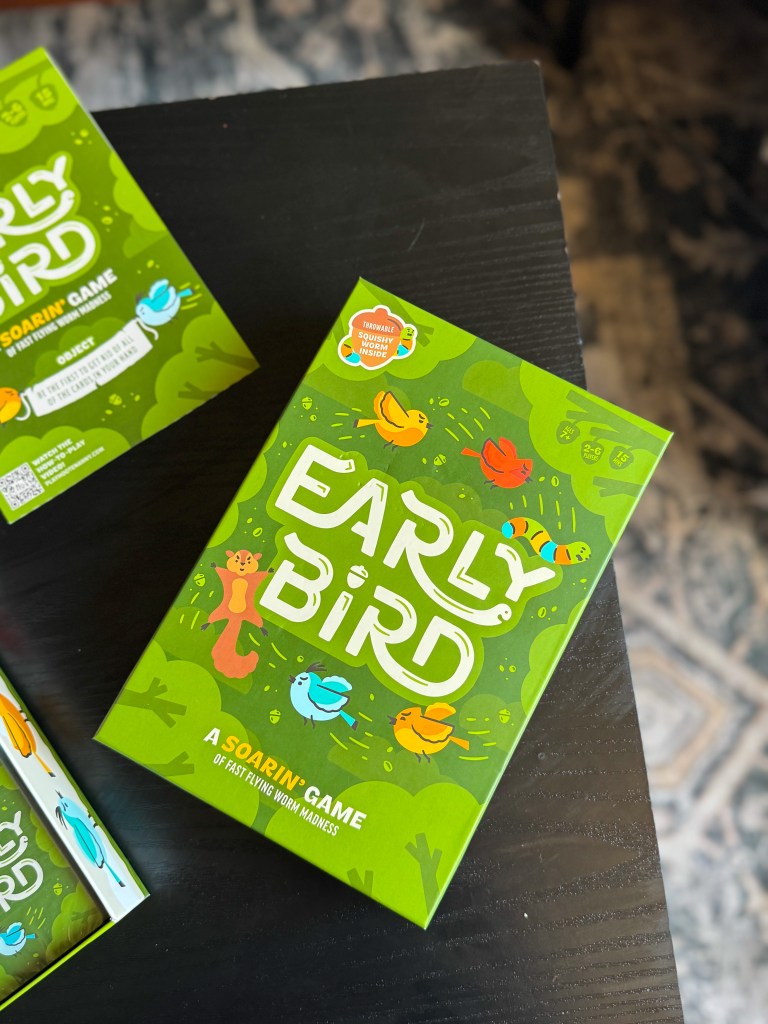
If your kids enjoy games that move quickly and don’t require an hour-long commitment, this is an easy one to pull out during your homeschool day or for family game night.
What Is the Early Bird Game?
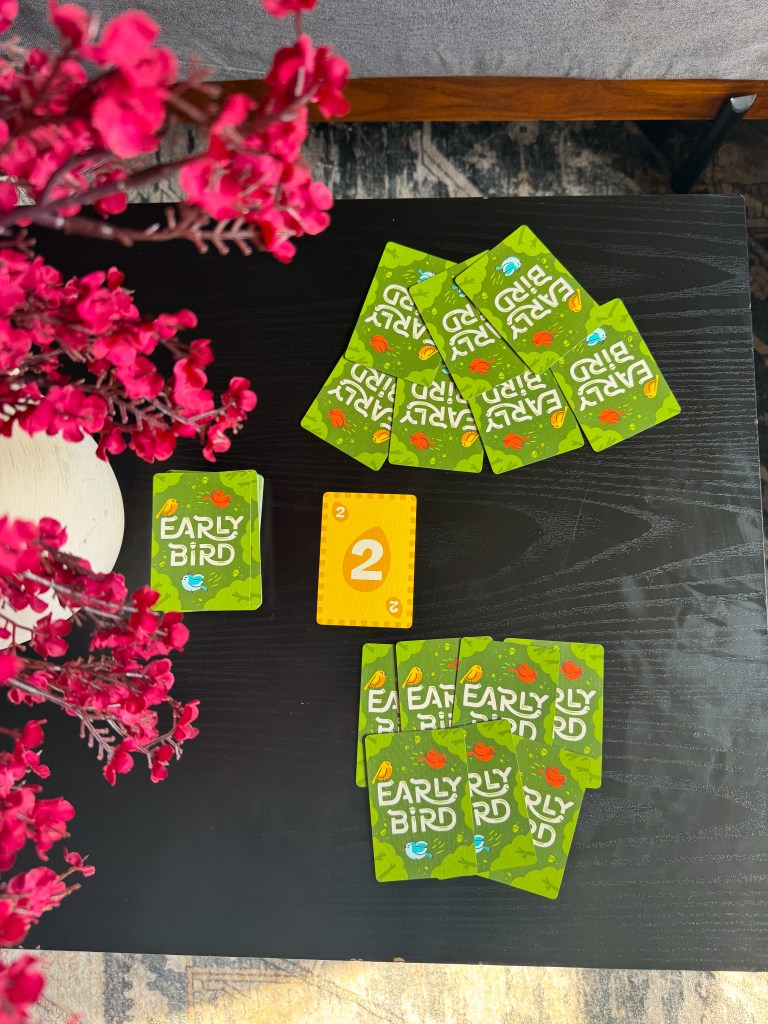
The goal of Early Bird is pretty simple: be the first player to get rid of all of your cards.
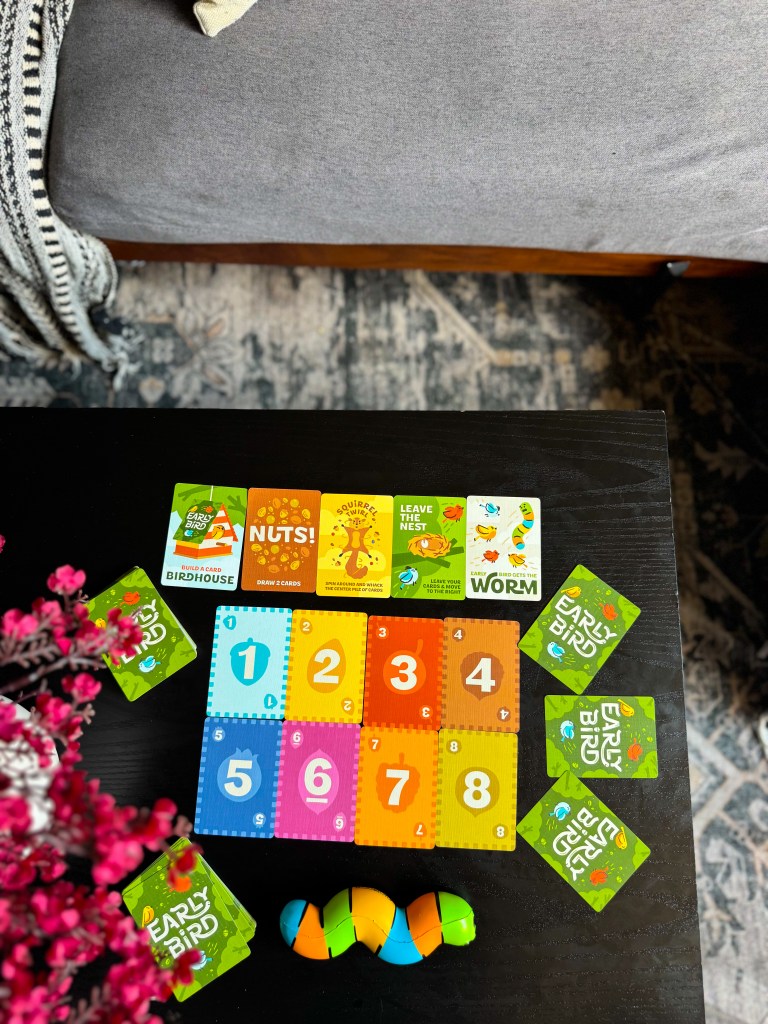
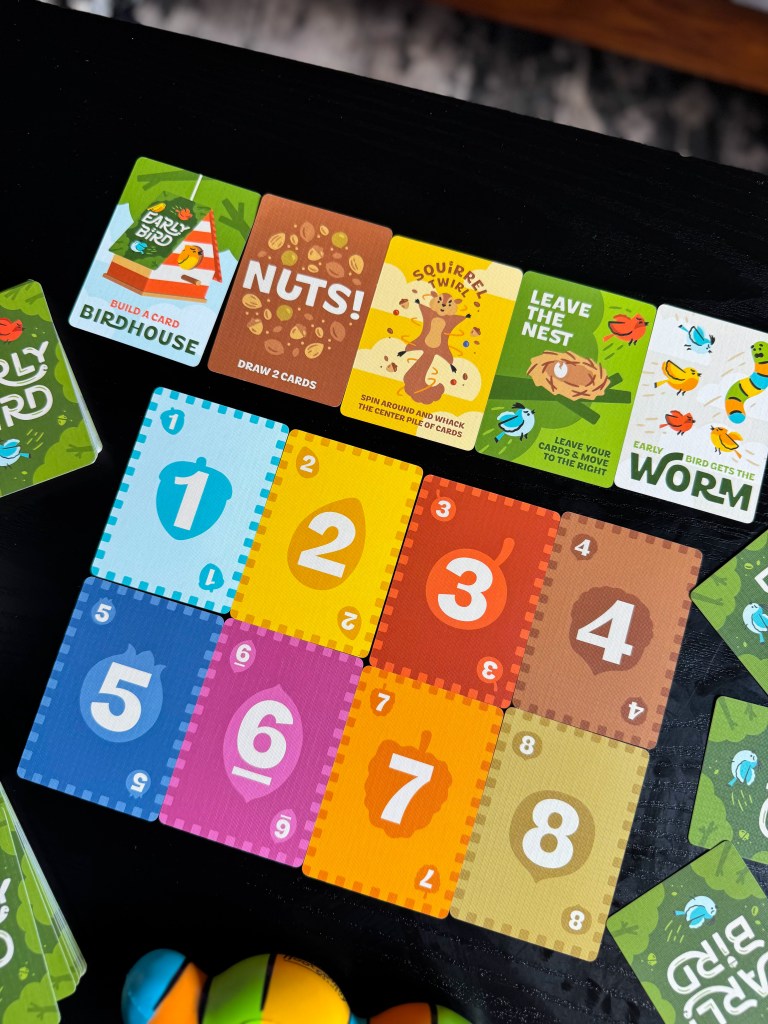
Players work with numbered bird-food cards, but it isn’t as simple as laying down cards until someone wins.
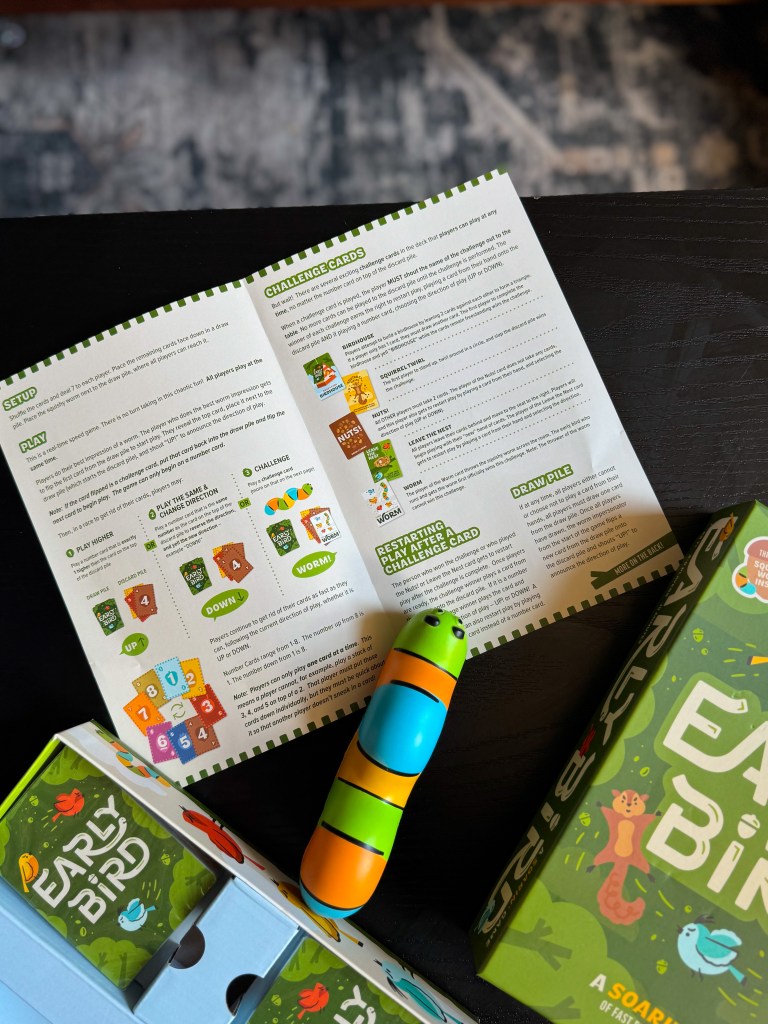
Special cards involving squirrels, worms, and birdhouses can completely change what is happening in the game, so kids have to pay attention and adjust quickly.
There’s even a colorful squishy worm that becomes part of the action, which immediately makes this feel less like a traditional sit-still card game.
Early Bird is made for 2–6 players ages 7 and older, and a game takes approximately 15 minutes.
Related Posts:
- The Color Scheme Educational Game Review
- Map of the World Geography Puzzle
- Our Kindergarten Timberdoodle Unboxing
What Kids Are Learning While They Play
This is where games like Early Bird earn a spot in our homeschool.
Even though the kids are playing, they are naturally practicing skills like:
- number recognition and sequencing
- strategic thinking
- quick decision-making
- following directions
- adapting when circumstances change
- attention and focus
- good sportsmanship
Timberdoodle specifically highlights number recognition, turn-taking, strategic thinking, and adapting to changing situations as some of the skills children practice while playing.
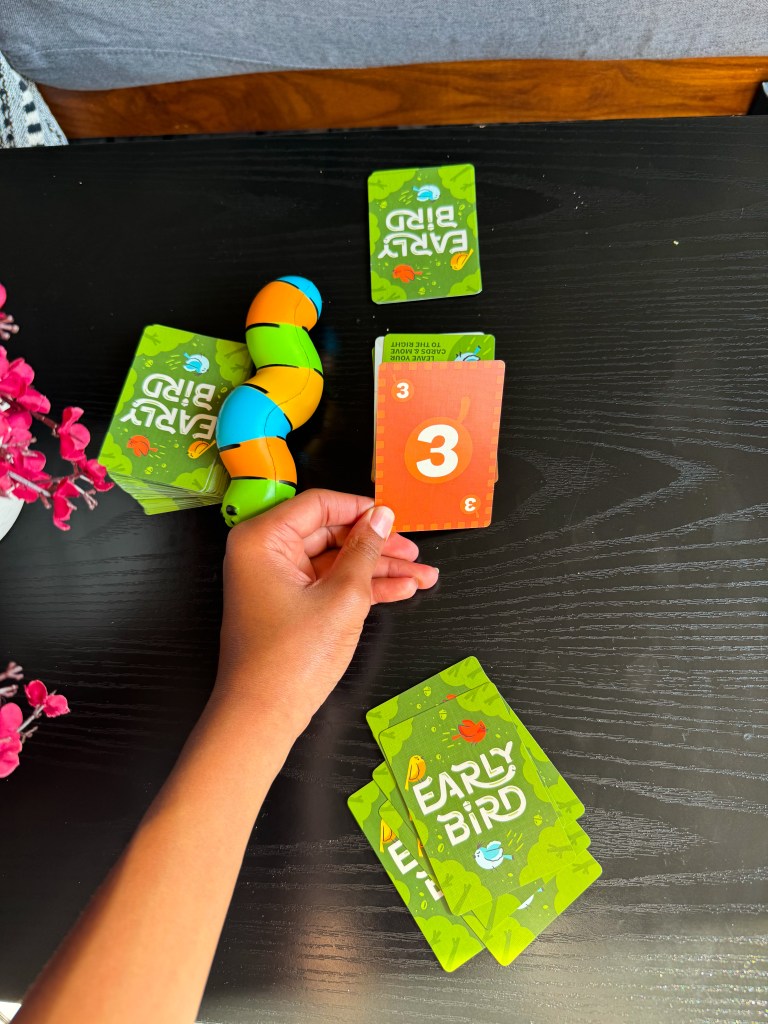
And because things can change quickly, kids can’t automatically assume that being ahead means they are going to win. They have to keep thinking all the way through the game.
Why I Like Games Like Early Bird for Homeschool
One of my favorite ways to break up a homeschool day is with something that still works the brain without feeling like another lesson.
Early Bird fits perfectly into that category.
It is short enough to pull out between subjects, after lunch, on a lighter homeschool day, or whenever everyone needs a break from pencils and paper.
I also really like that there is some movement involved.
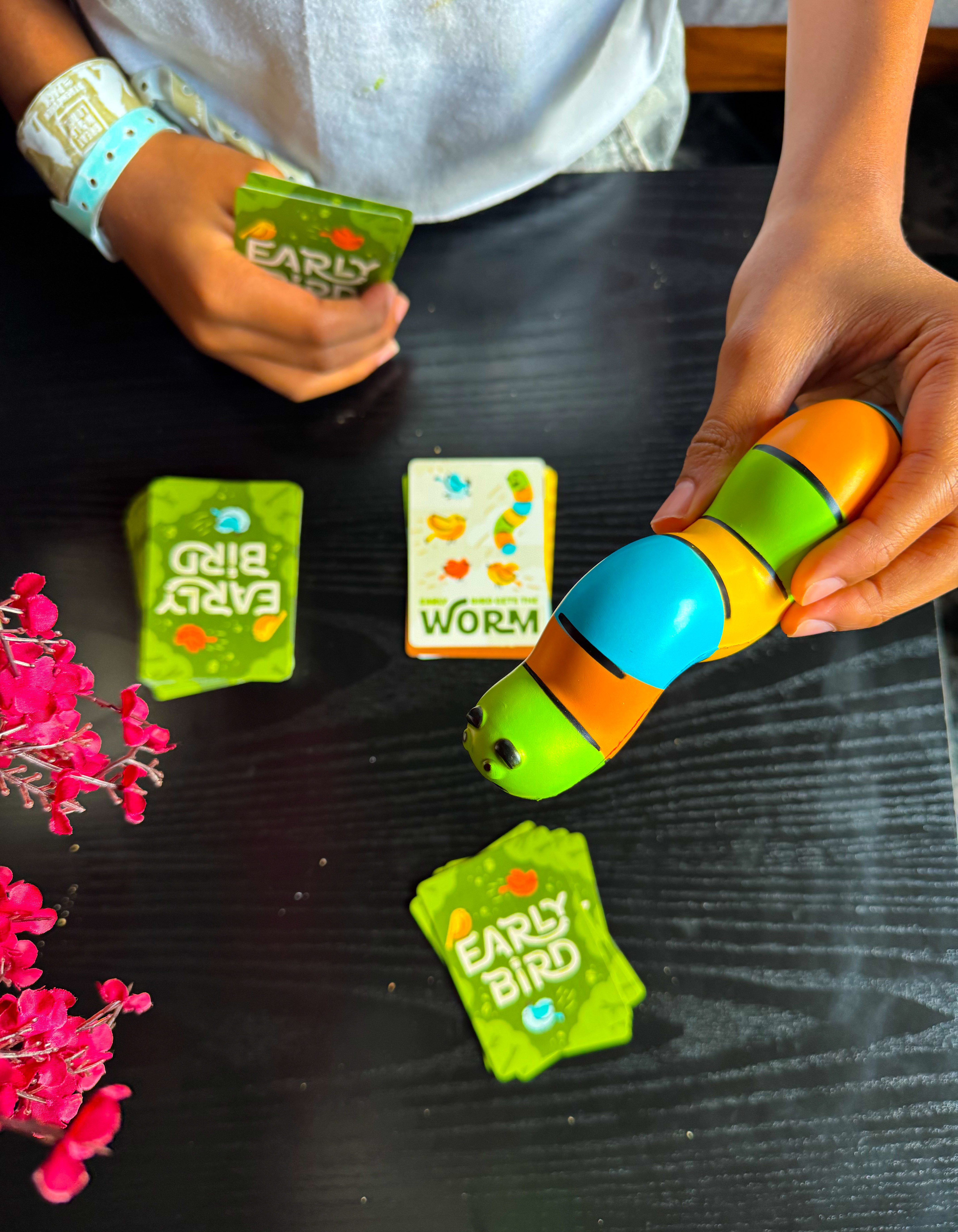
For kids who have been sitting through lessons, having a game tell them to move, react, grab something, or switch gears can be exactly what they need before settling back into schoolwork.
And at only around 15 minutes per game, this isn’t something Mom has to mentally prepare herself to play.
Is Early Bird Worth Adding to Your Homeschool?
I think Early Bird is especially worth considering if you have kids who enjoy fast-paced games, friendly competition, and games with an unpredictable element.
It isn’t meant to teach one entire school subject. Instead, it works nicely as one of those sneaky educational extras that builds thinking skills while giving your family time to play together.
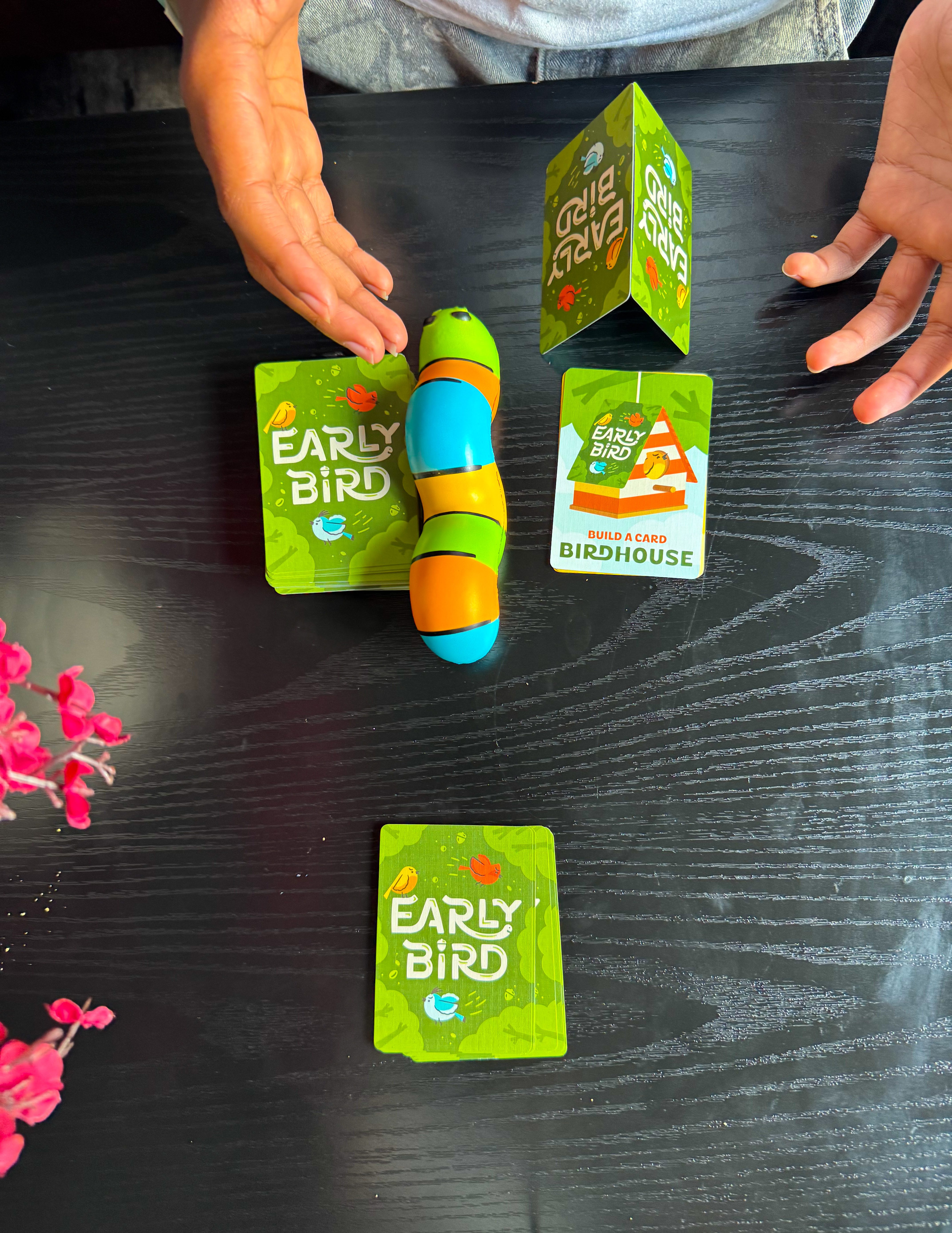
Timberdoodle recommends Early Bird for ages 7 and up and includes it in its 2026 Second-Grade Curriculum Kit.
For homeschool families looking for another screen-free activity to keep on the game shelf, Early Bird is a fun one to have around.
You can find Early Bird here at Timberdoodle.
Pin for later…
-
Stages Building Blocks Review: A Hands-On Learning Toy for Preschoolers
This post may contain affiliate links. If you make a purchase through one of my links, I may earn a small commission at no additional cost to you.
If there is one thing I have learned while homeschooling little ones, it is that some of the best learning happens when they do not realize they are doing a lesson at all.
That is exactly what happened when we pulled out the Stages Building Blocks from Timberdoodle.
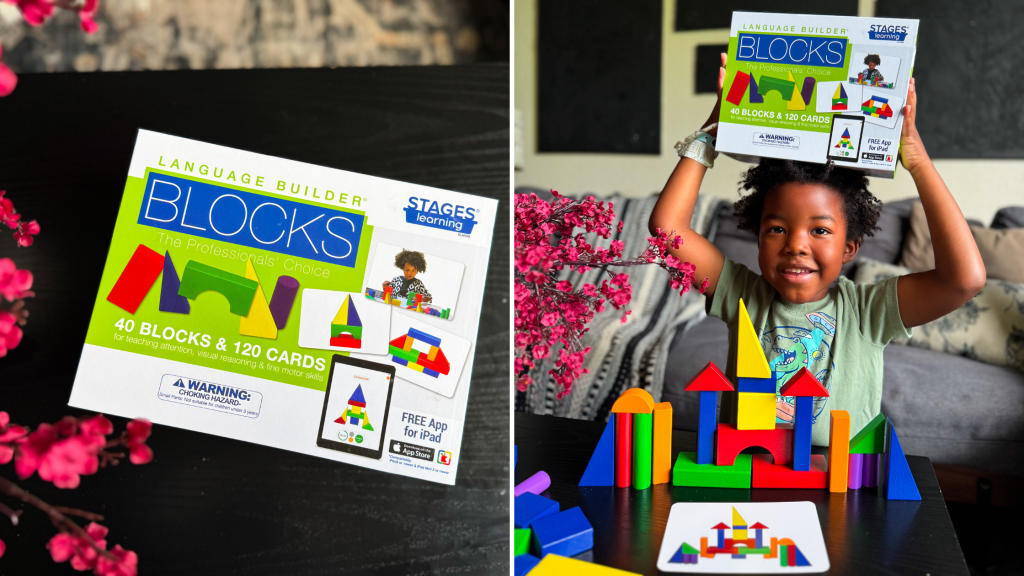
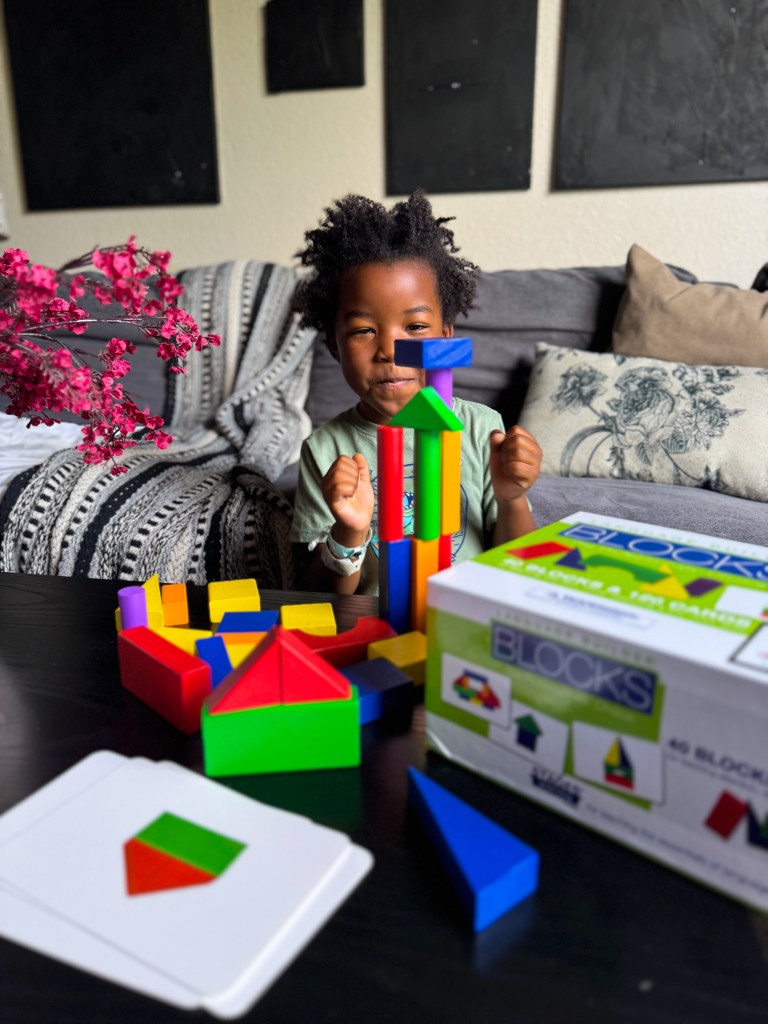
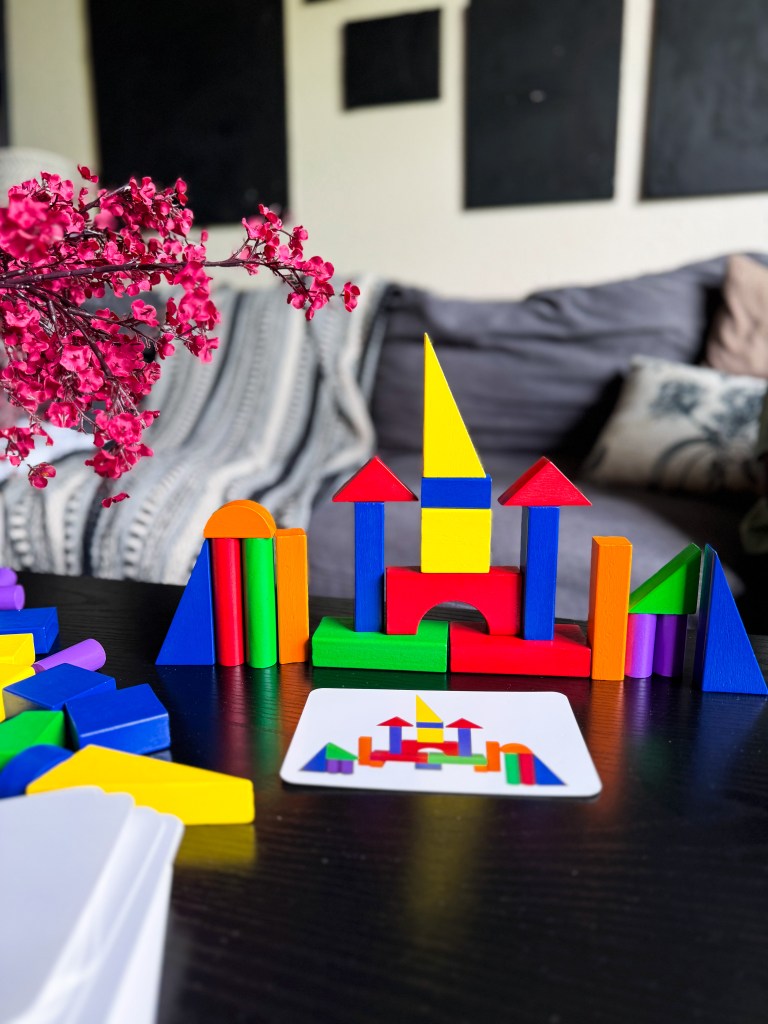
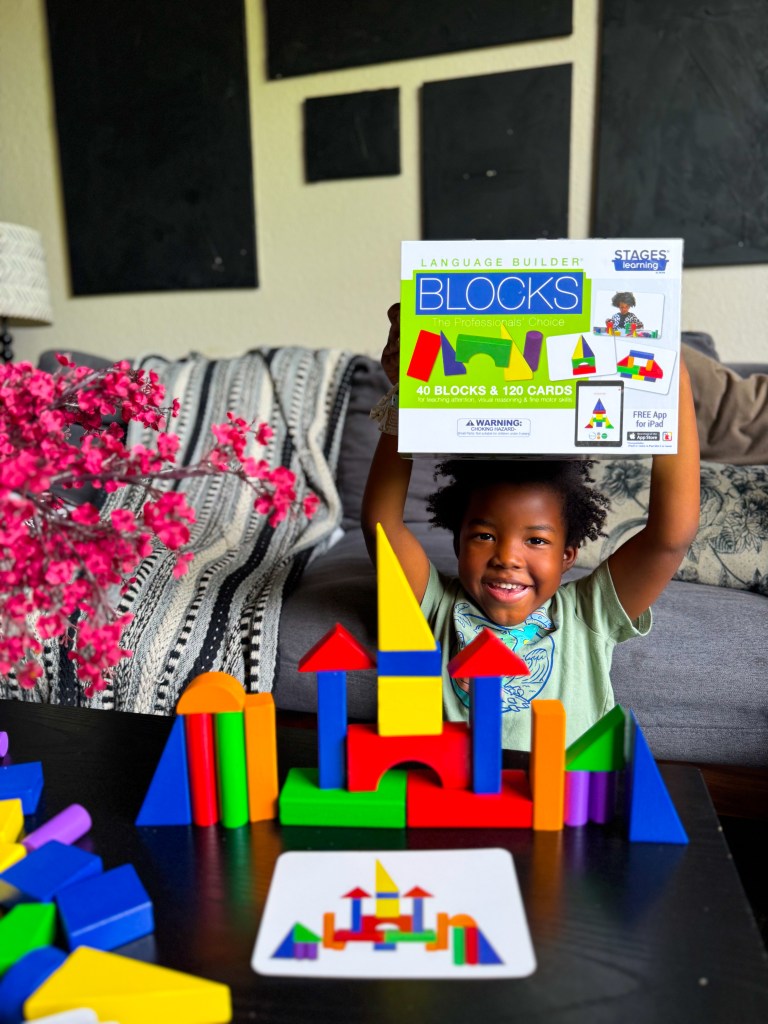
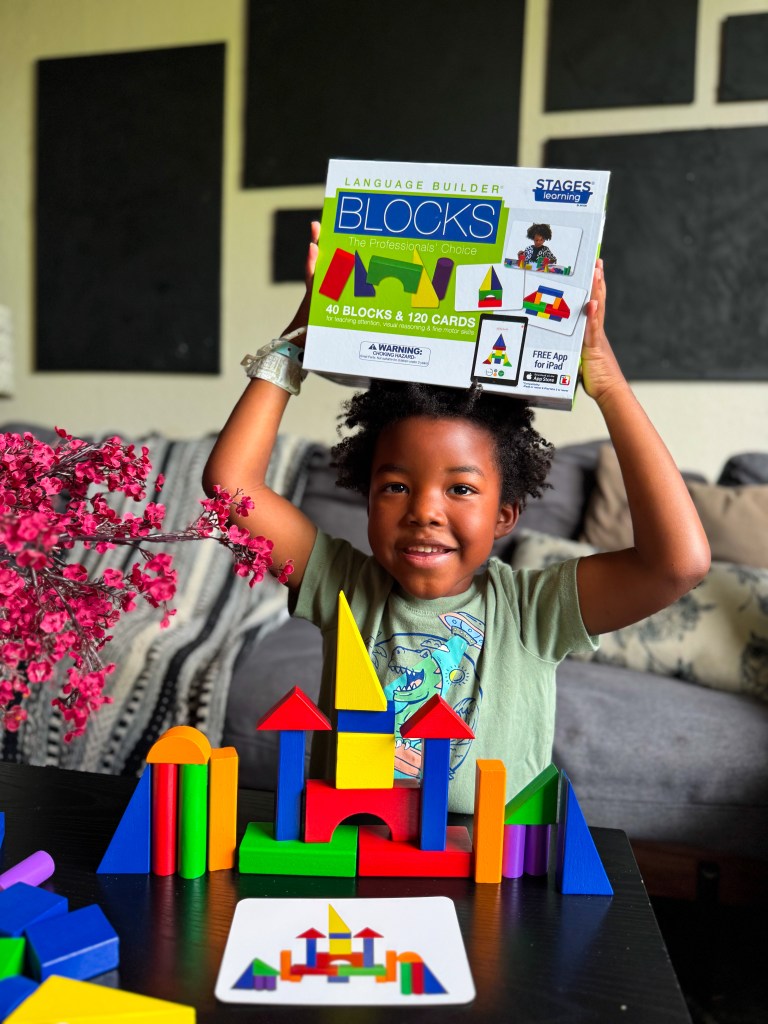
Also known as Stages Language Builder Blocks, this colorful wooden block set looks like a traditional building toy at first. But once you add the included activity cards, it becomes a hands-on preschool learning activity that encourages fine motor development, visual-spatial reasoning, problem-solving, concentration, early STEM skills and plenty of creative play.
And perhaps most importantly?
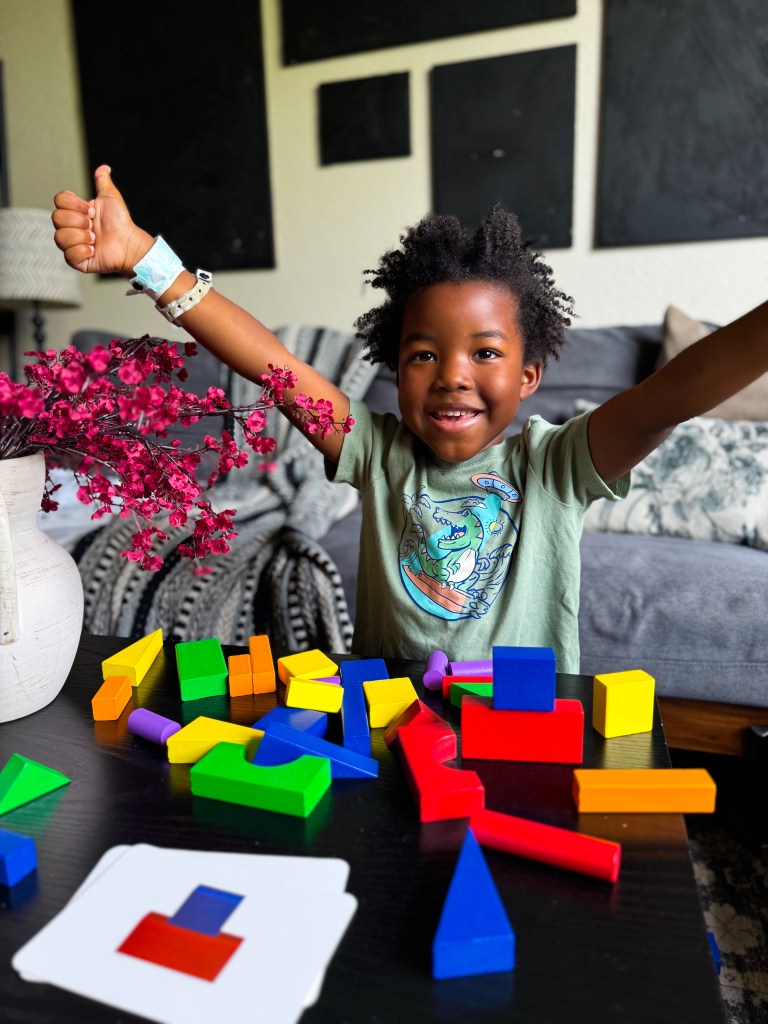
My little one actually wanted to keep playing with it.
If you have been looking for building blocks for kids, STEM toys for preschoolers, hands-on homeschool activities or educational toys for 3 year olds and up, here is our full Stages Building Blocks review and how we have been using them at home.
SHOP STAGES BUILDING BLOCKS AT TIMBERDOODLE
What Are Stages Building Blocks?
Stages Building Blocks are a colorful wooden building block set designed for children ages 3 and older.
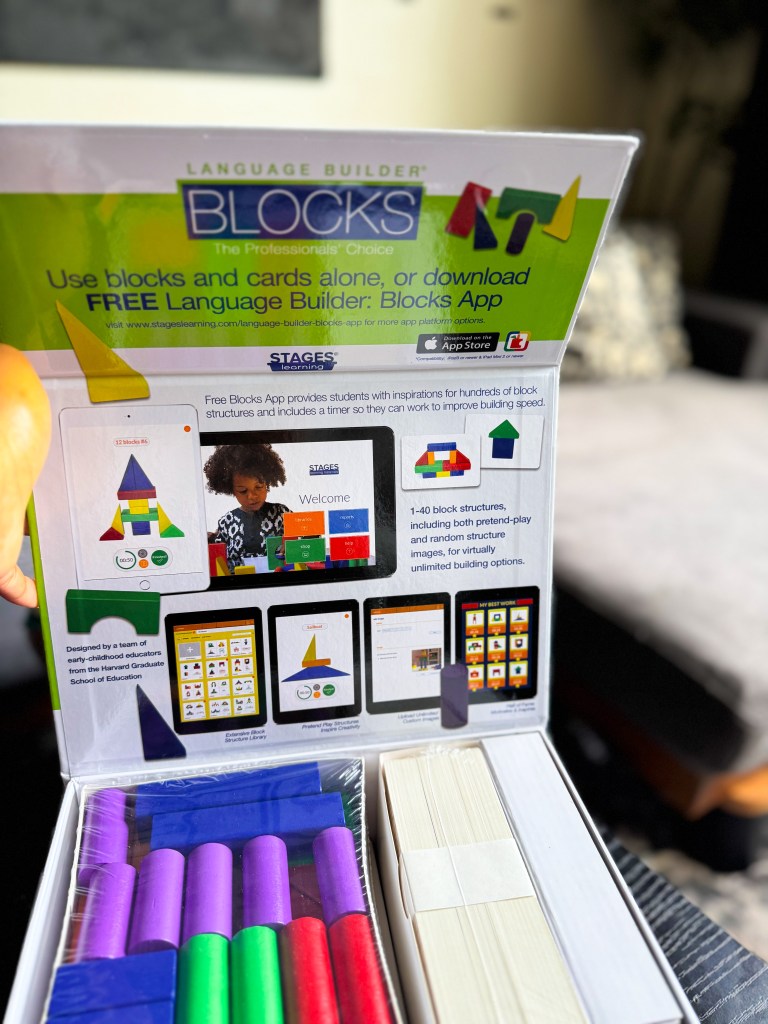
The set includes 40 wooden blocks and 120 activity cards that children can use to recreate different structures.
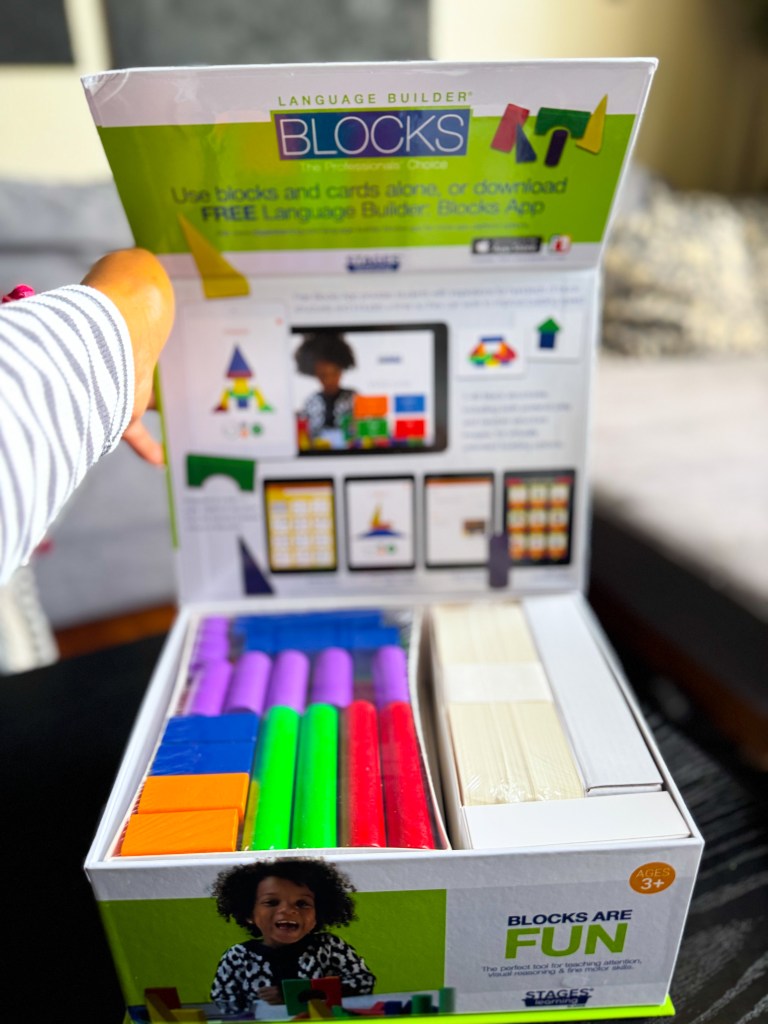
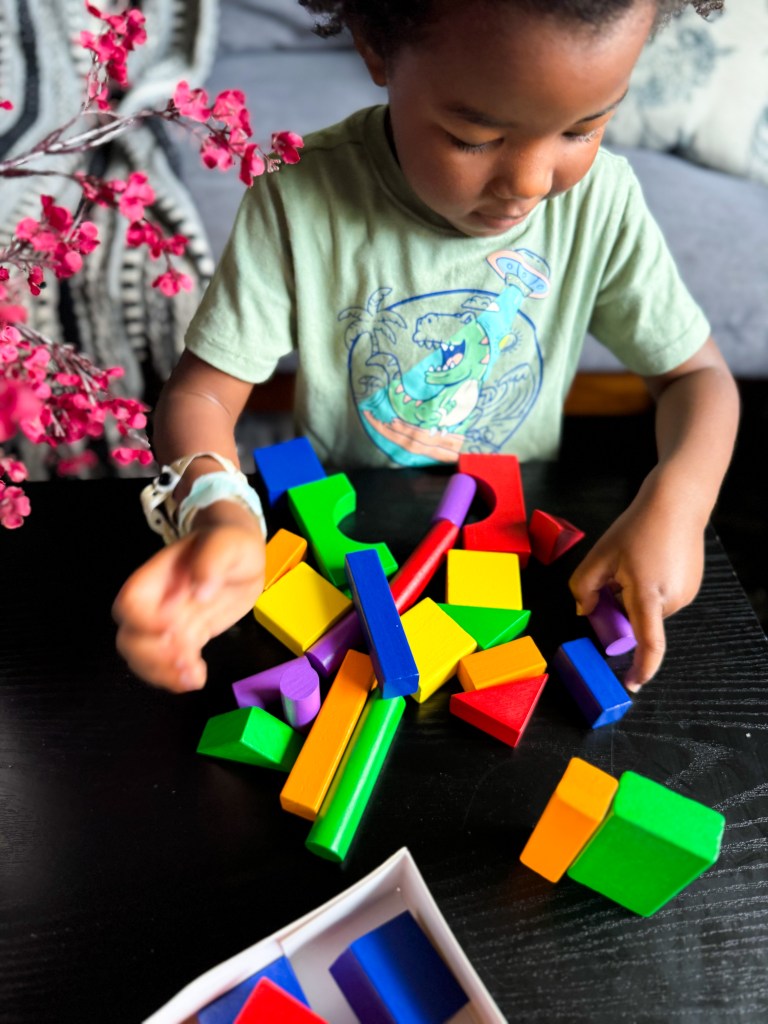
The cards start with relatively simple designs and progress into more challenging builds, allowing children to continue using the set as their skills develop.
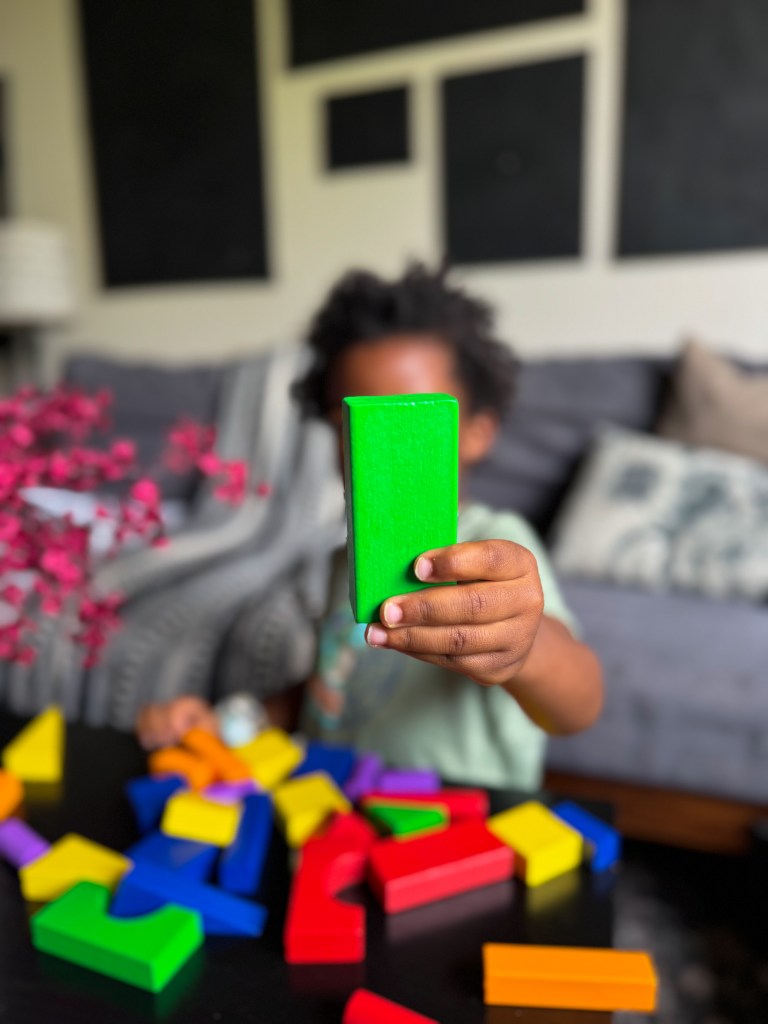
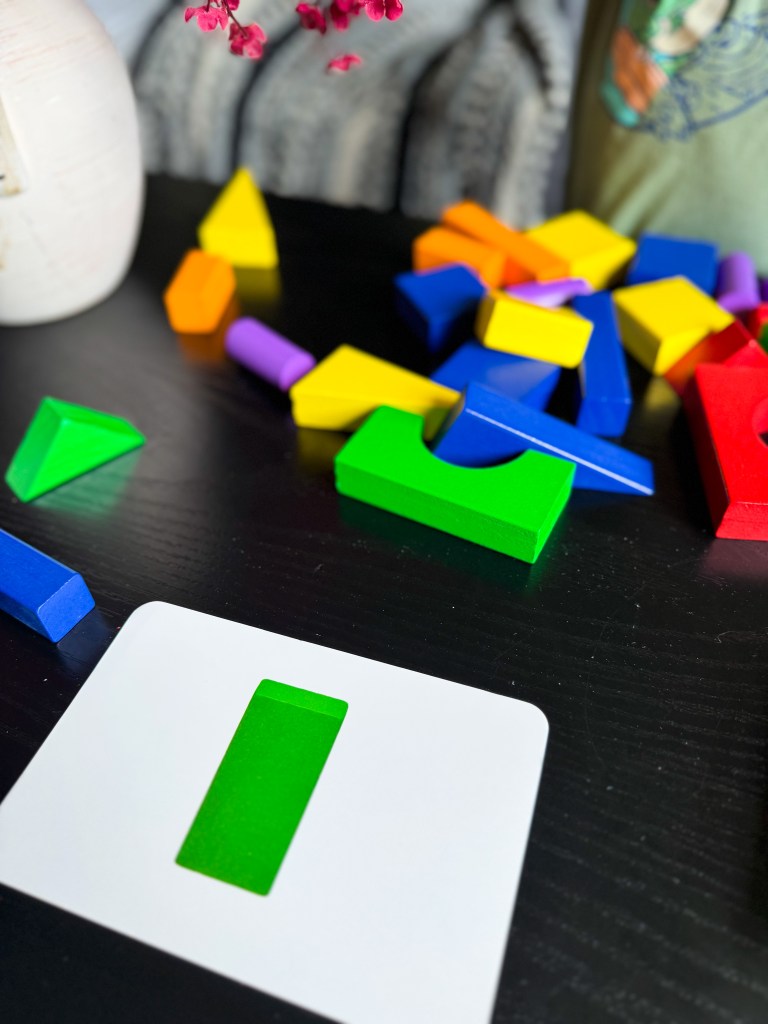
What makes these different from an ordinary set of wooden building blocks is that children can use them in two completely different ways.
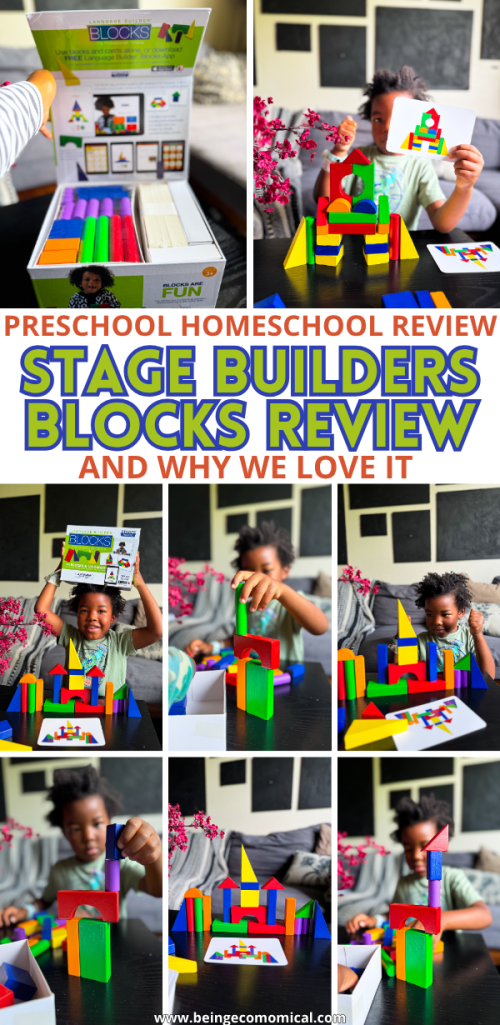
They can build freely and create whatever they imagine, or they can choose a picture card and try to recreate the structure shown.
That makes Stages Blocks both an open-ended toy and a visual-spatial learning activity.
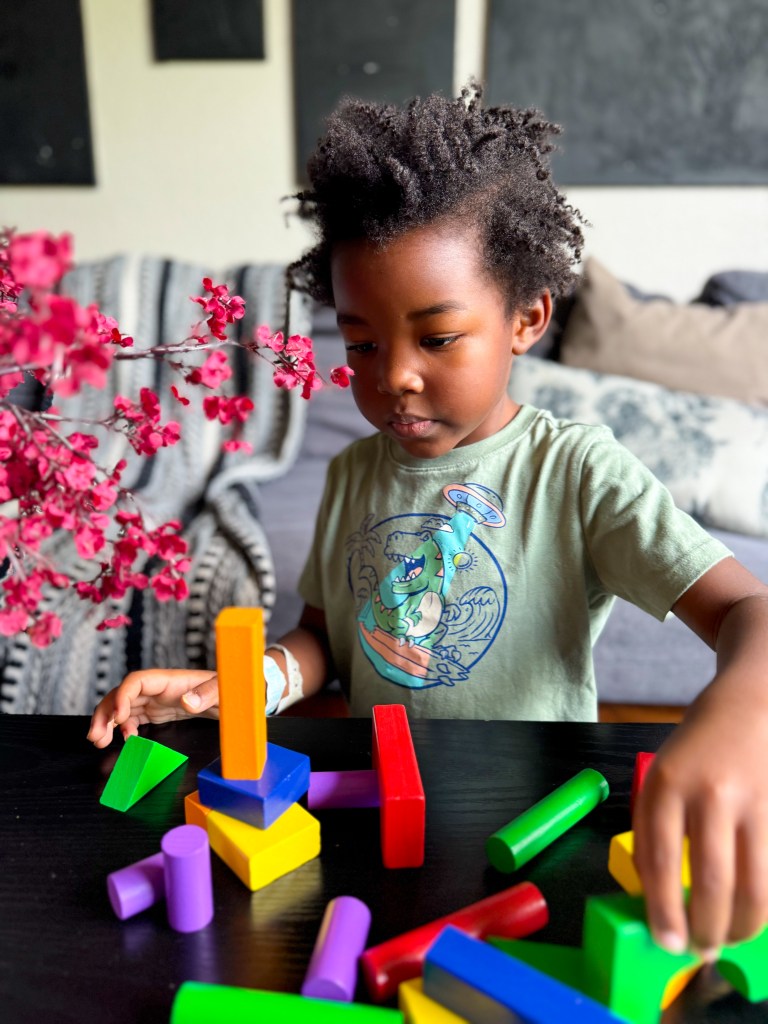
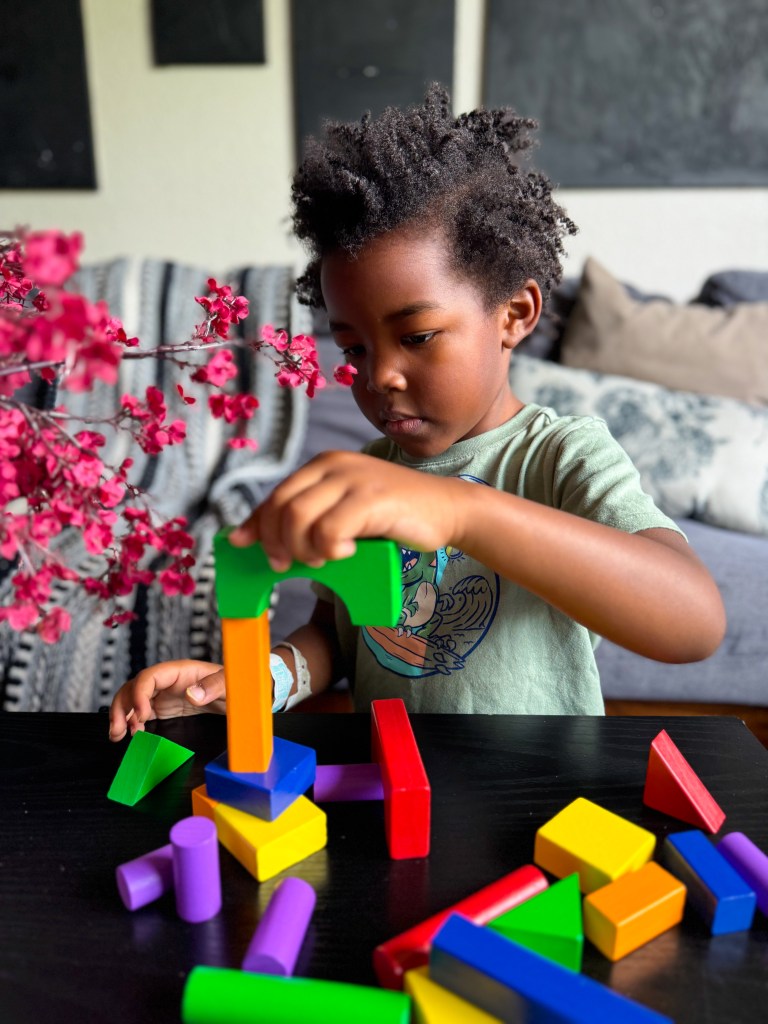
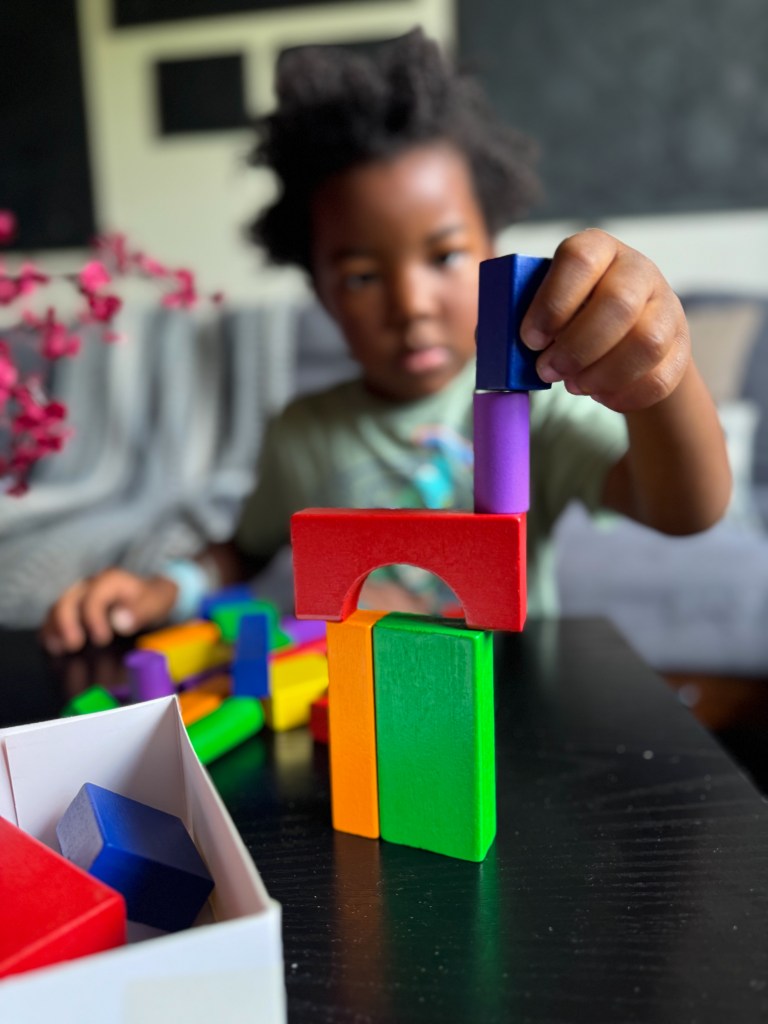
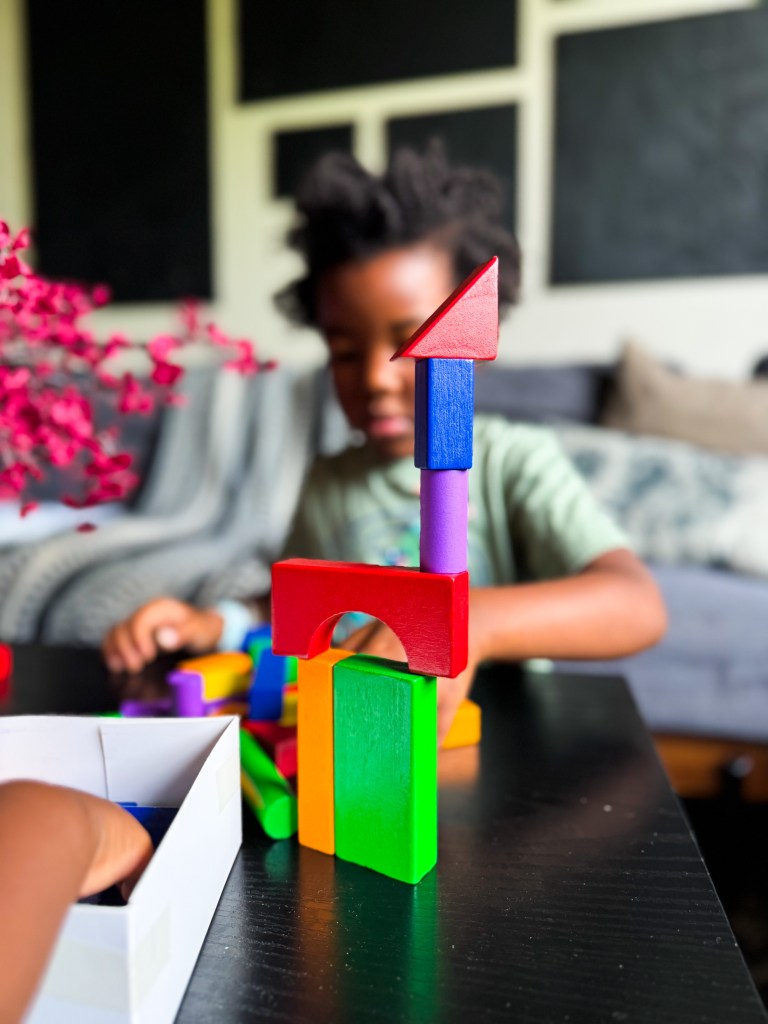
What Comes With Stages Language Builder Blocks?
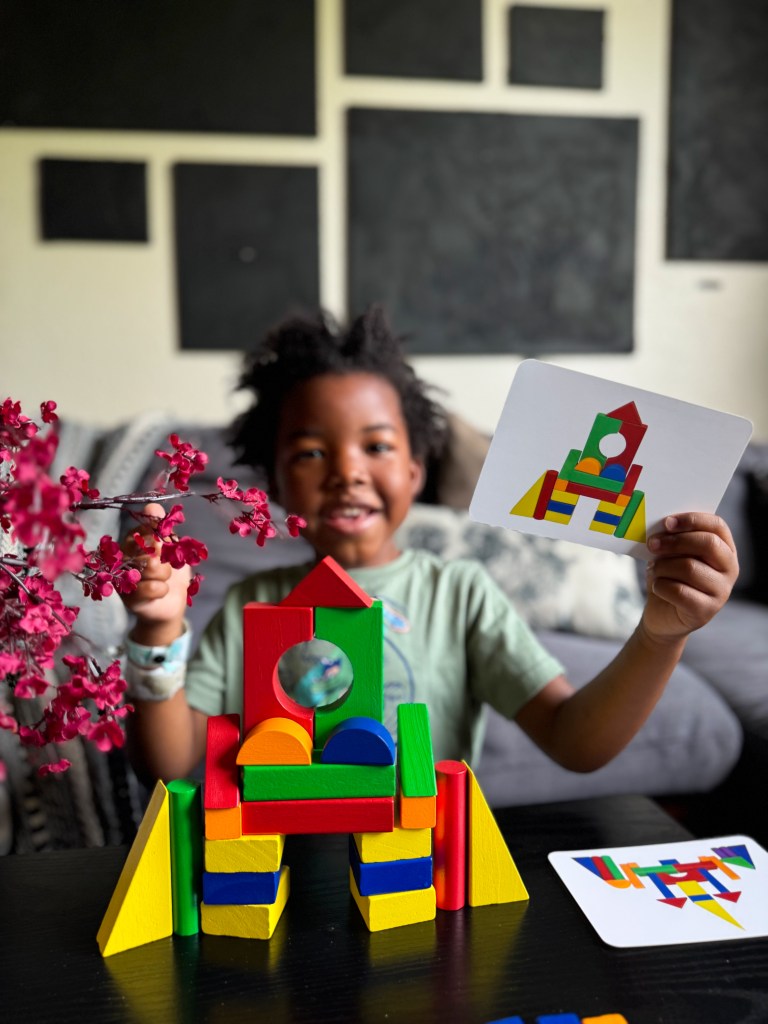
Inside the set, you will find 40 colorful wooden blocks in a variety of shapes and sizes along with 120 picture cards.
There are 100 structure cards and 20 pretend-play cards, giving kids lots of different ways to use the blocks.
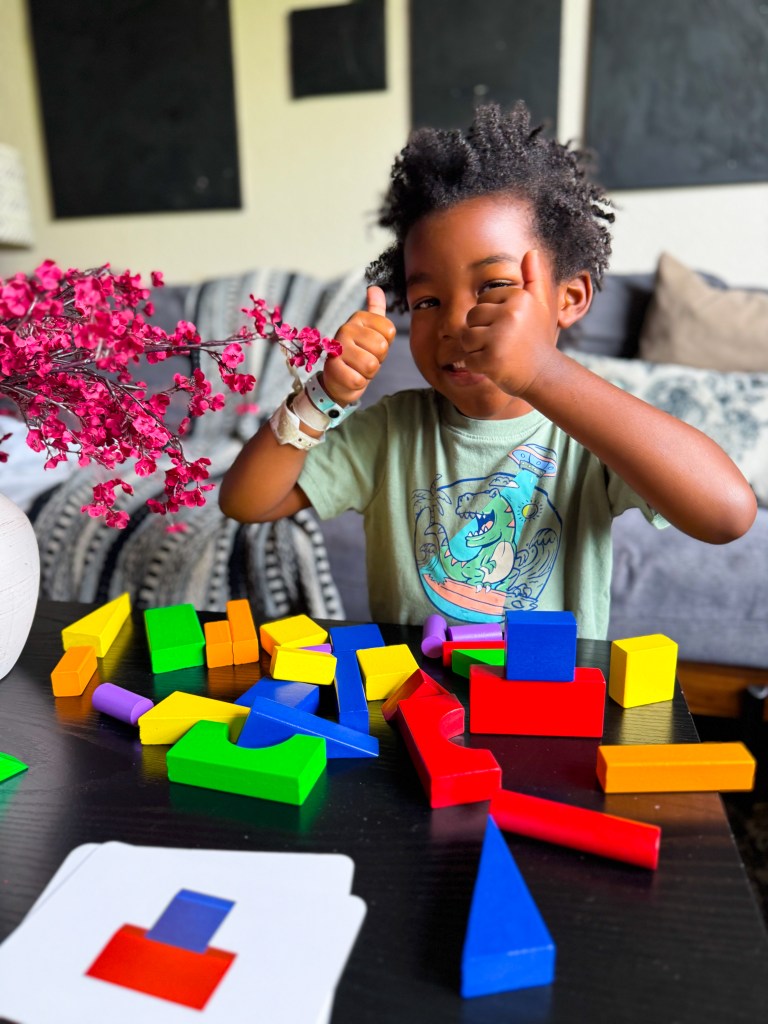
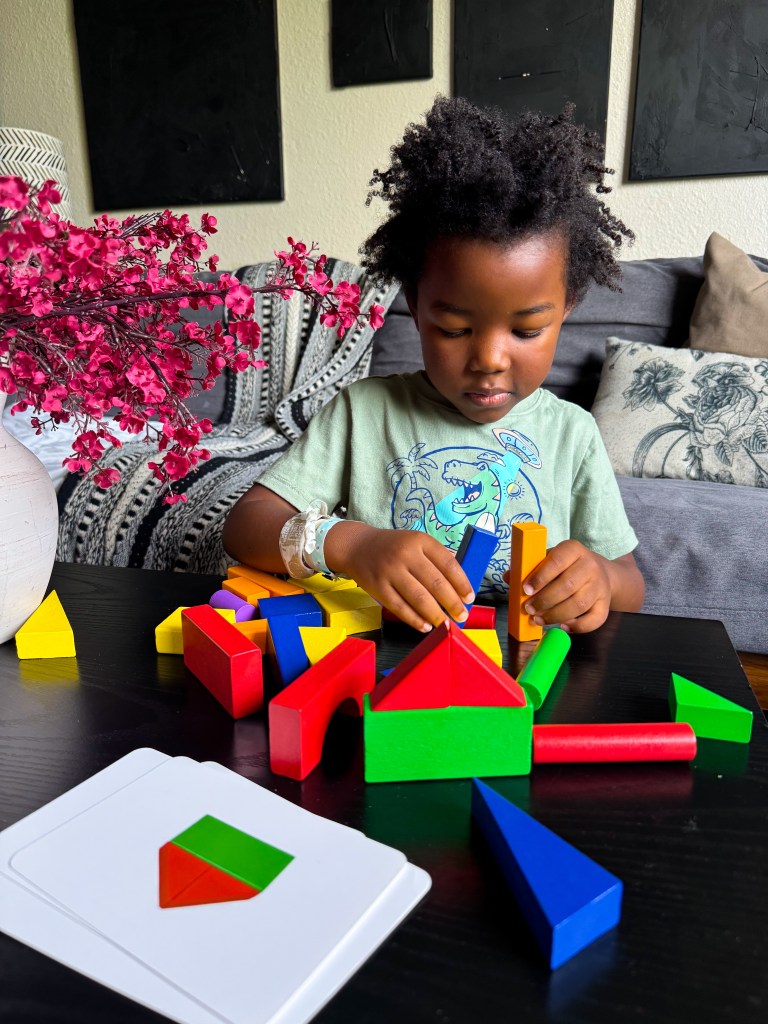
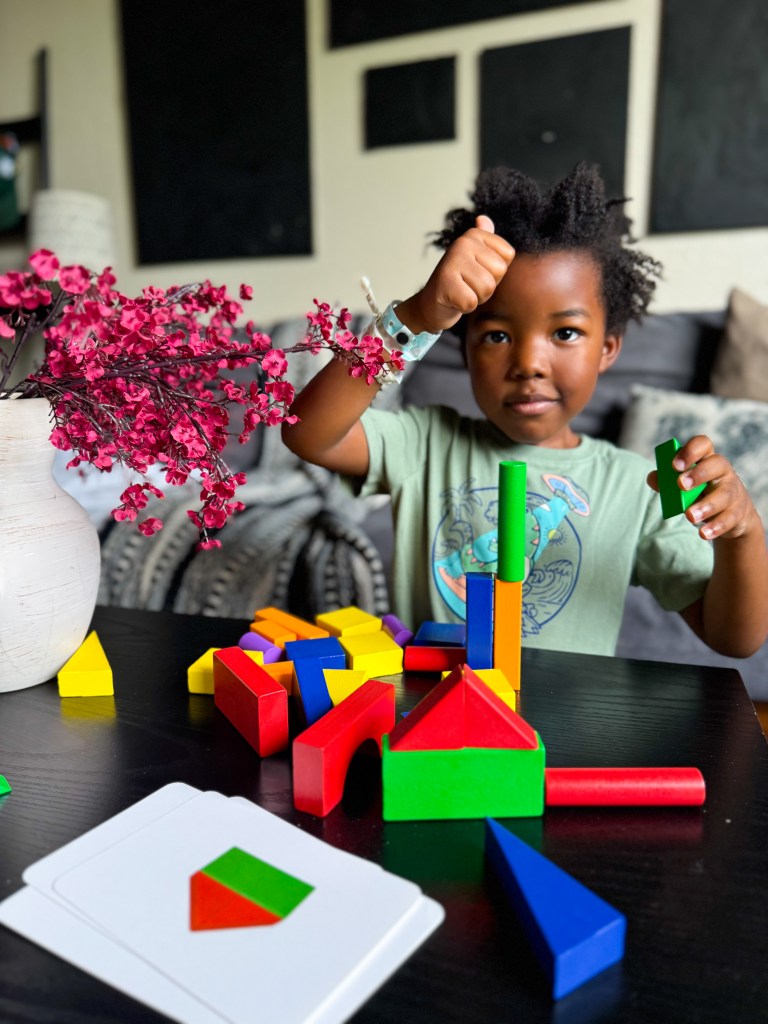
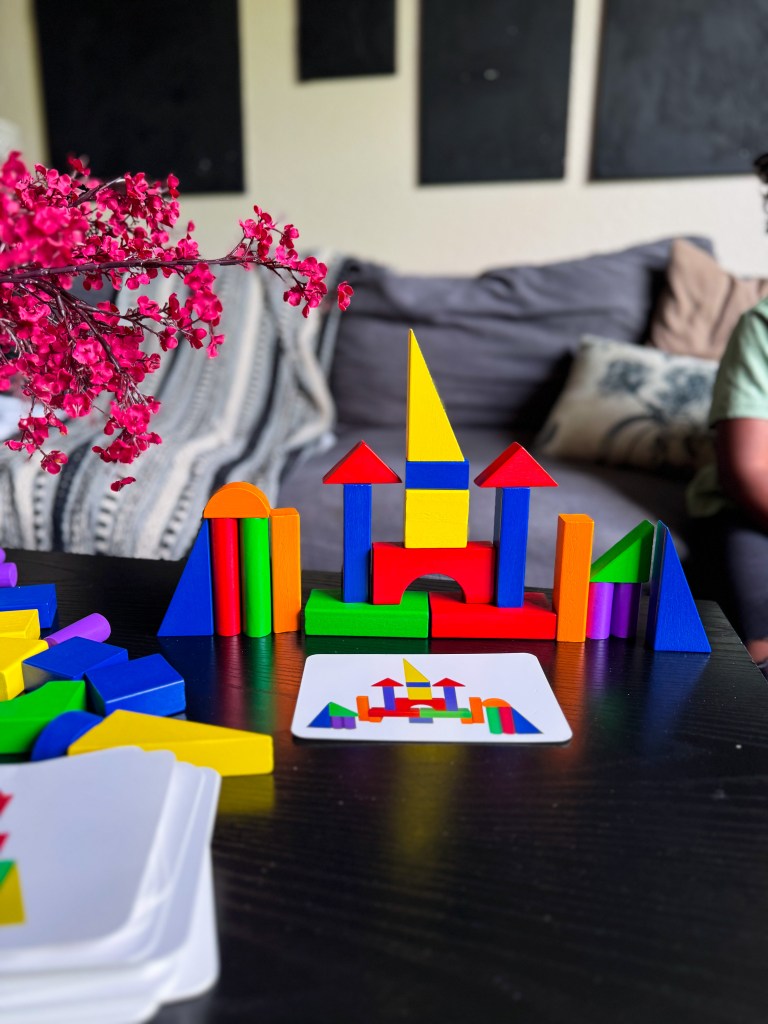
The different block shapes include rectangles, cylinders, triangles, arches and other pieces that can be combined to create everything from simple structures to elaborate castles.
The set also includes access to the Stages Block Builder app for additional building inspiration.
For me, the cards are what really make this set stand out.
A basic wooden block set already encourages creativity, but adding visual building challenges gives kids another layer of learning.
SHOP STAGES BUILDING BLOCKS HERE
How We Used the Stages Building Blocks
When I first introduced the blocks, I did not immediately pull out the cards.
I simply placed the colorful blocks on the table and let him explore them.
He stacked them, moved them around, experimented with different shapes and started making his own little structures.
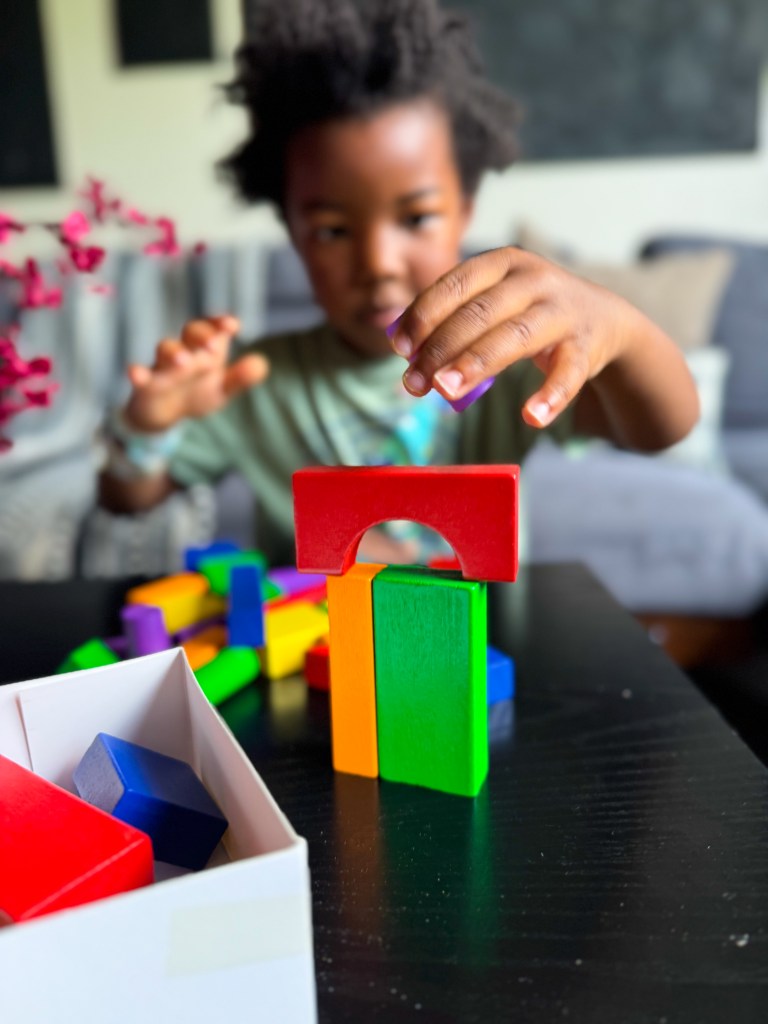
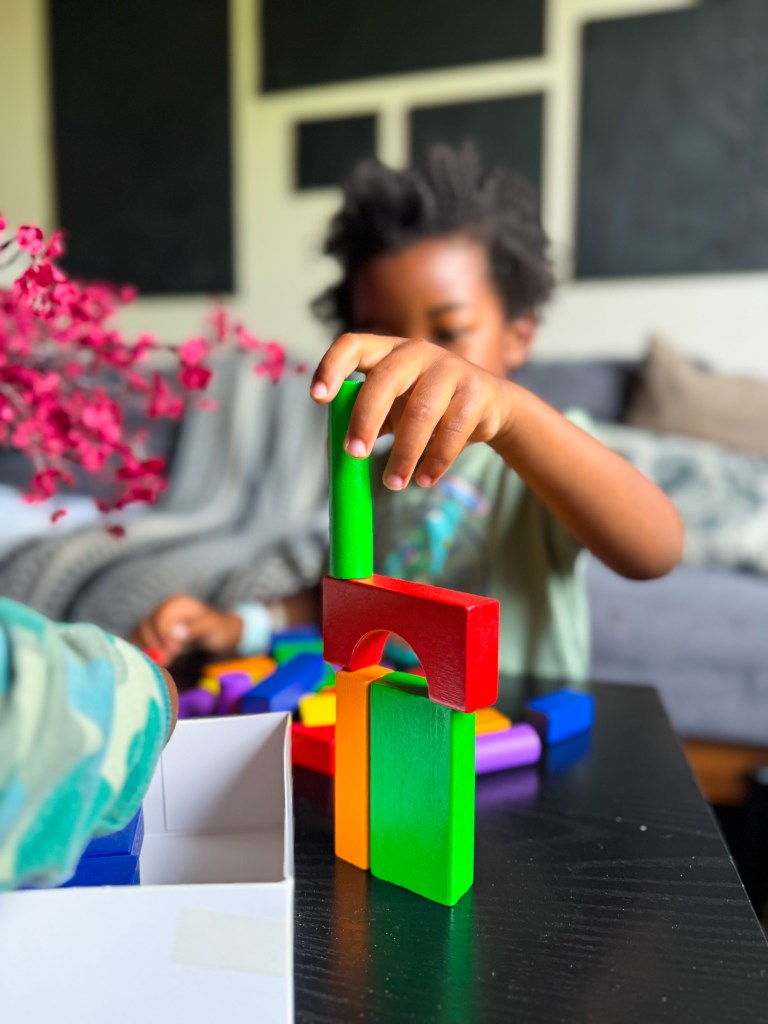
I like introducing new preschool learning toys this way because it gives kids a chance to figure things out without immediately turning the activity into something they have to complete correctly.
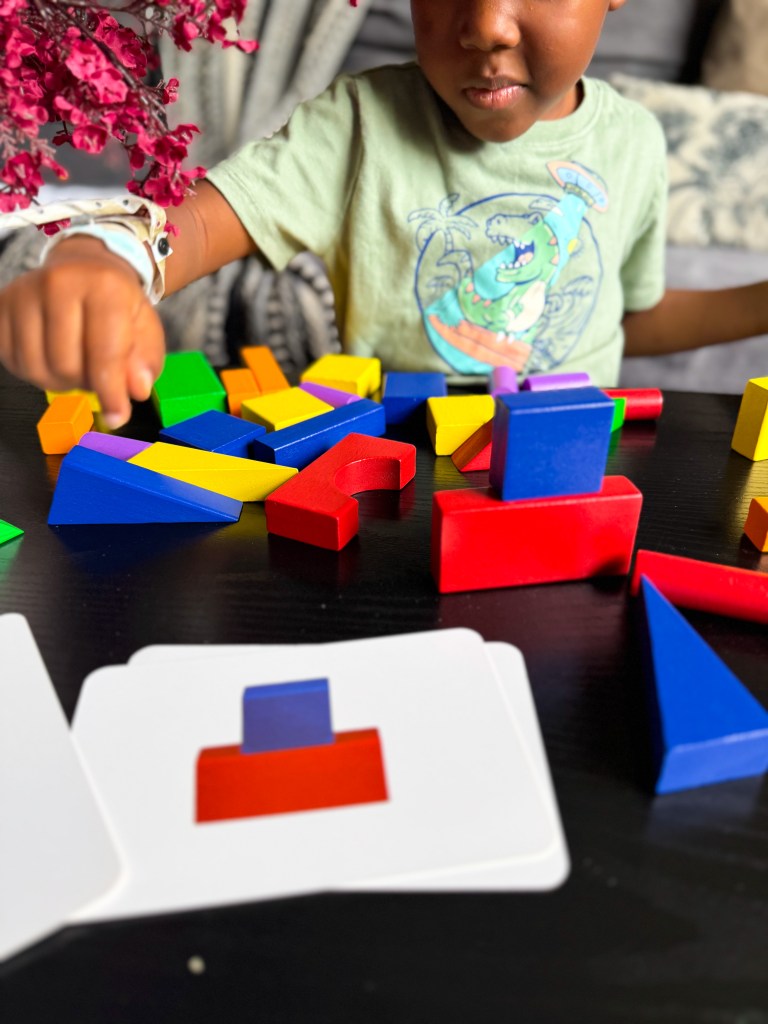
After he had some time for open-ended block play, we brought out the activity cards.
That completely changed the experience.
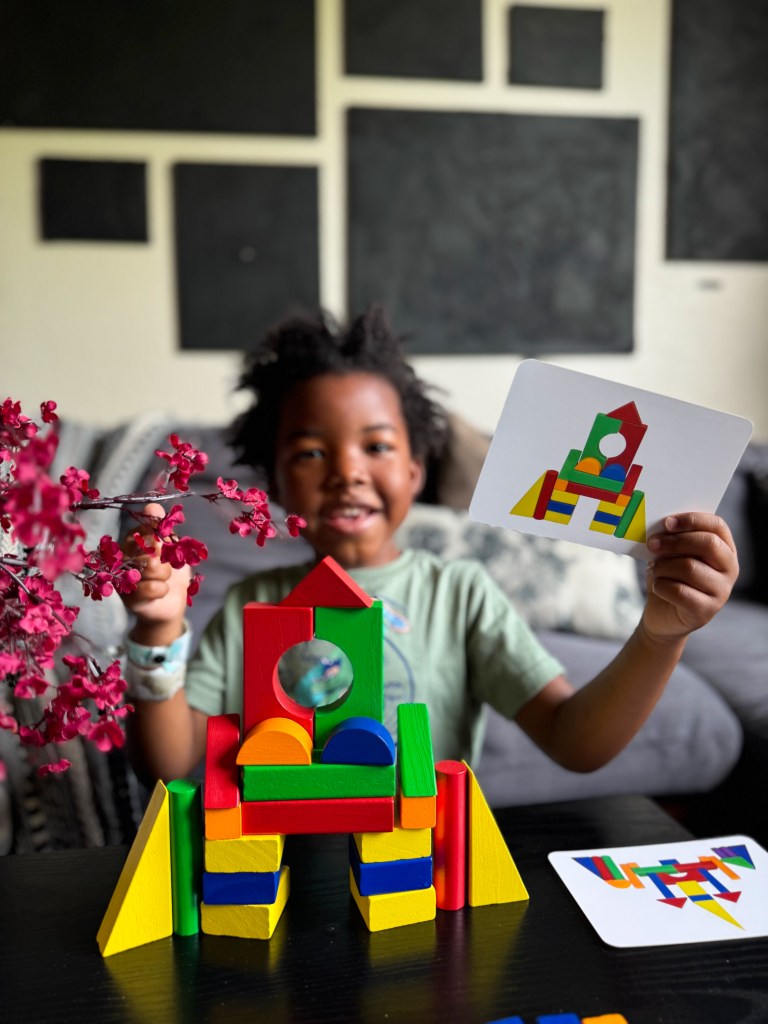
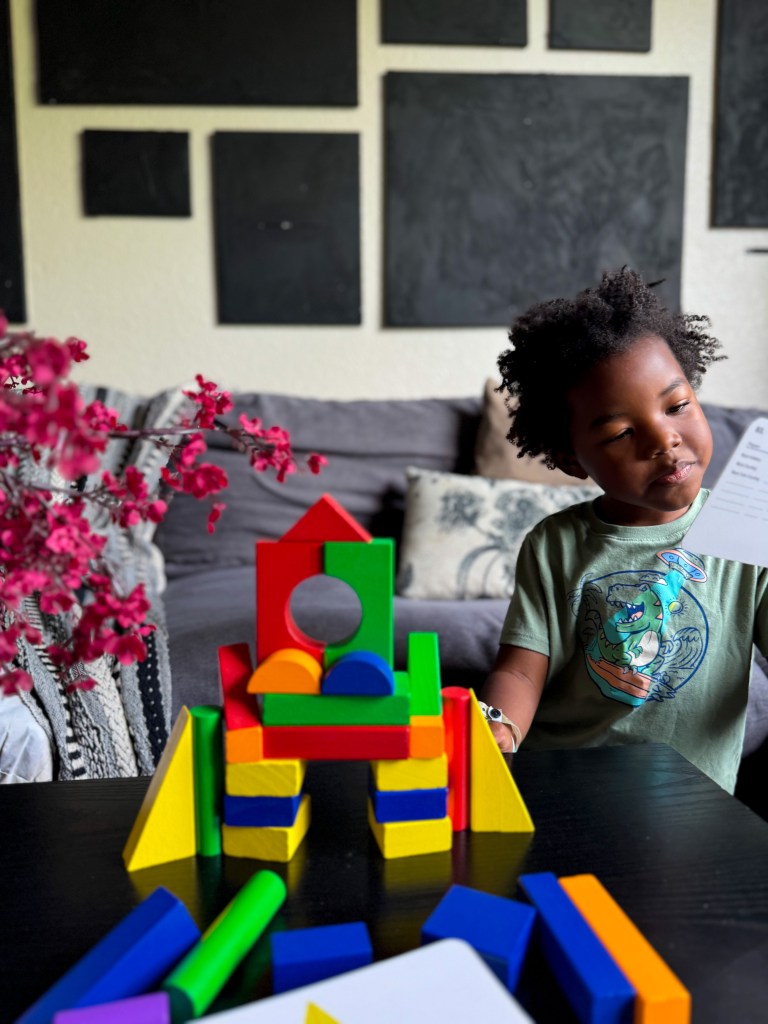
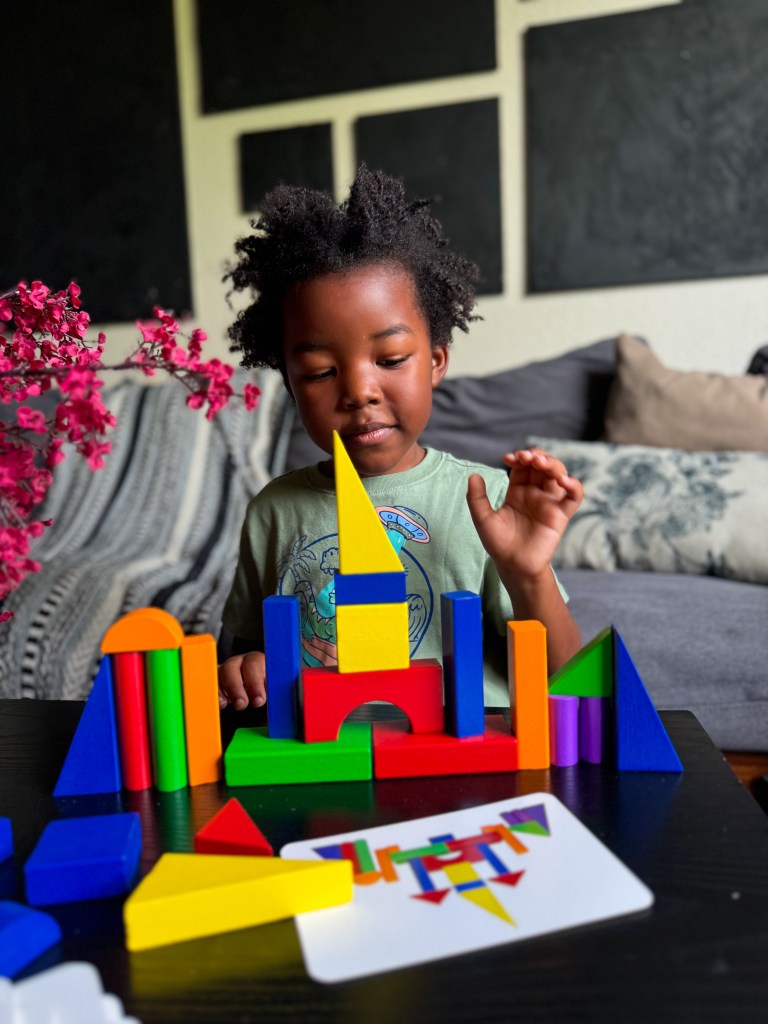
Instead of simply deciding what he wanted to build, he now had to study a picture and determine exactly how to recreate it.
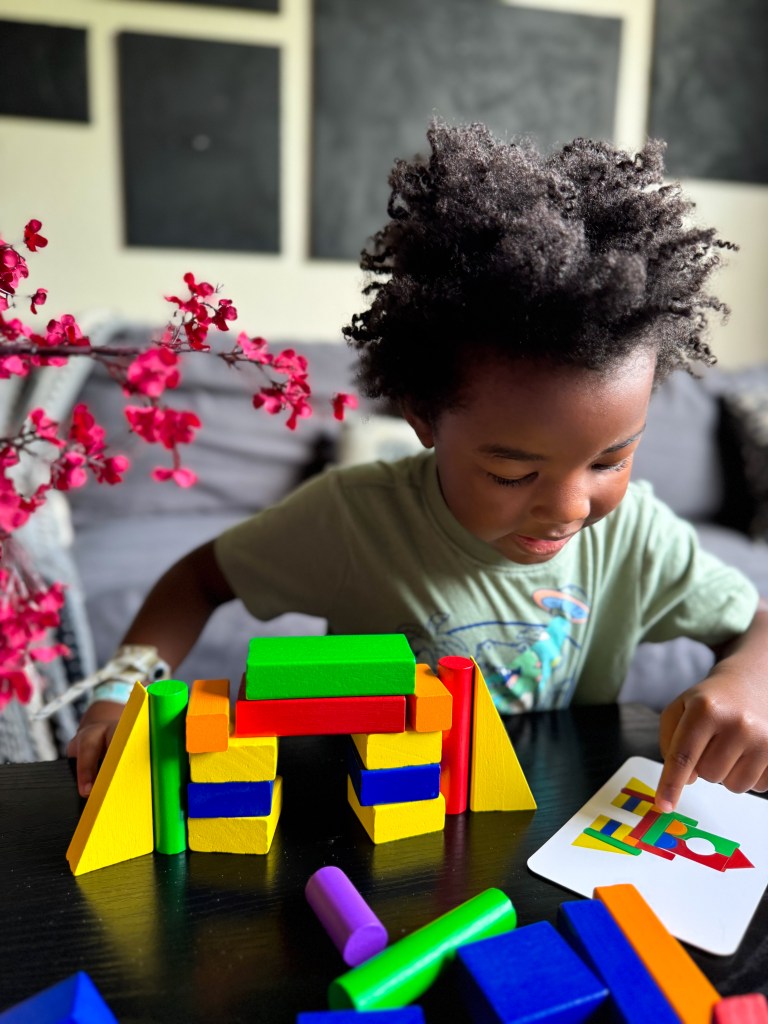
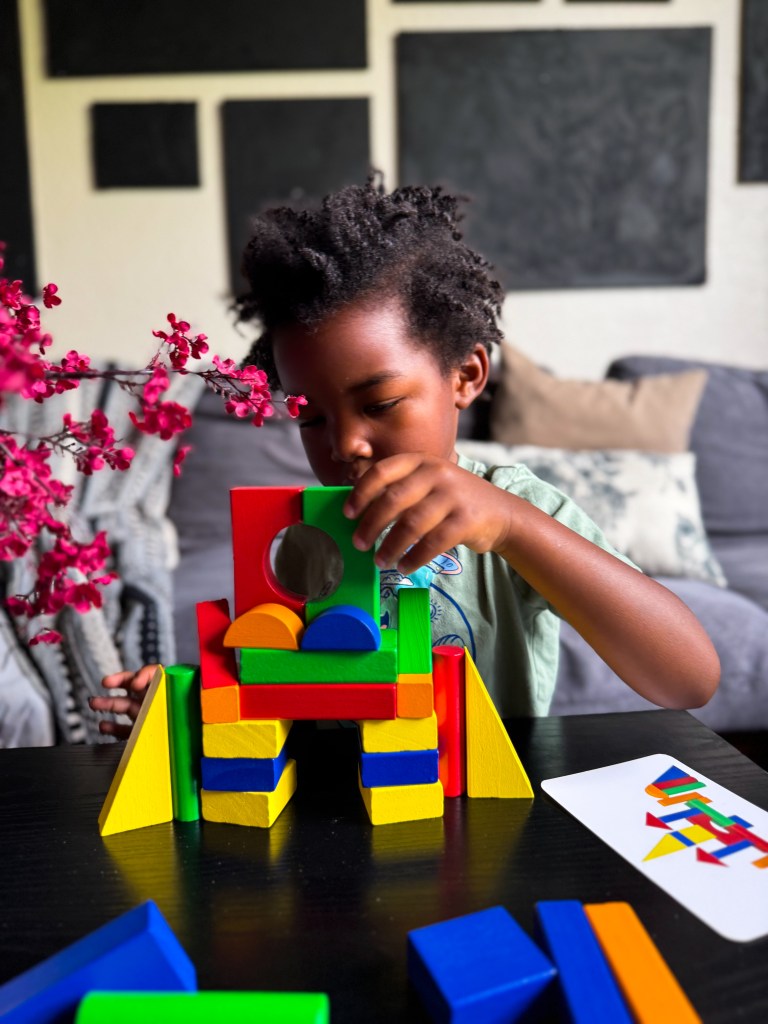
He had to search through the blocks for the correct shape, identify the right color, determine which direction each piece should face and carefully place each block without knocking down everything he had already built.
What looks like a simple block activity actually requires quite a bit of thinking.
And that is where I could really see the learning happening.
The Challenge Cards Are What Make These Blocks Different
We already have blocks at home.
Most families with preschoolers probably do.
So the biggest question for me was whether the Stages Language Builder Blocks actually offered something different.
For us, the answer is yes.
The activity cards turn ordinary block play into a visual problem-solving activity.
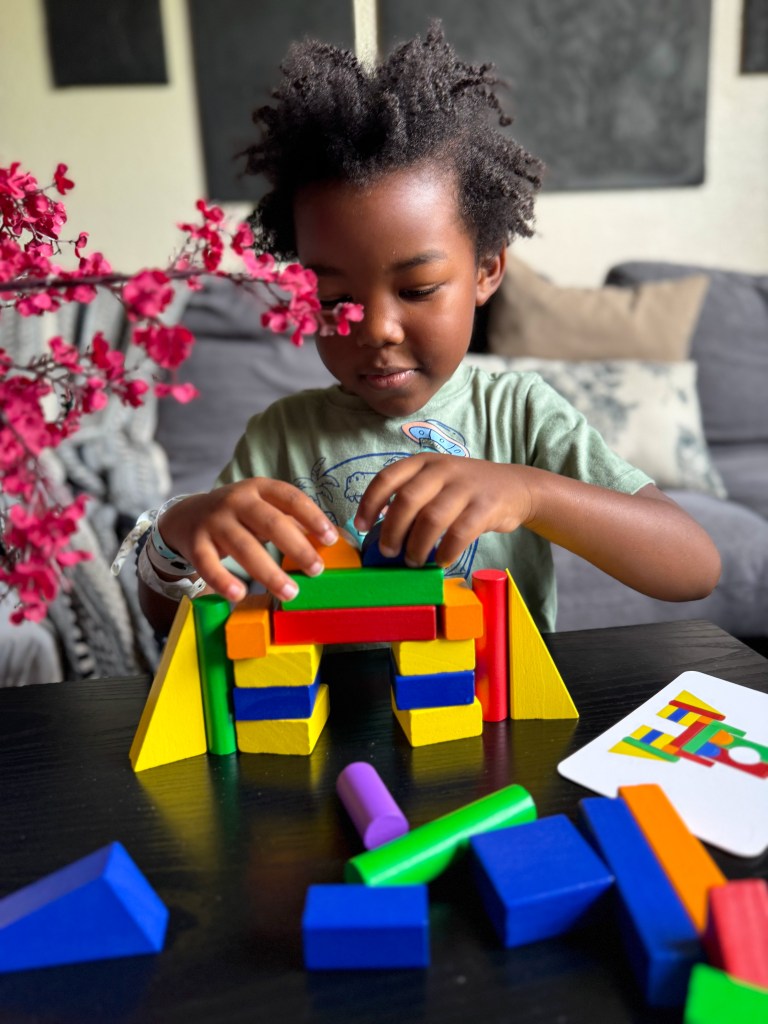
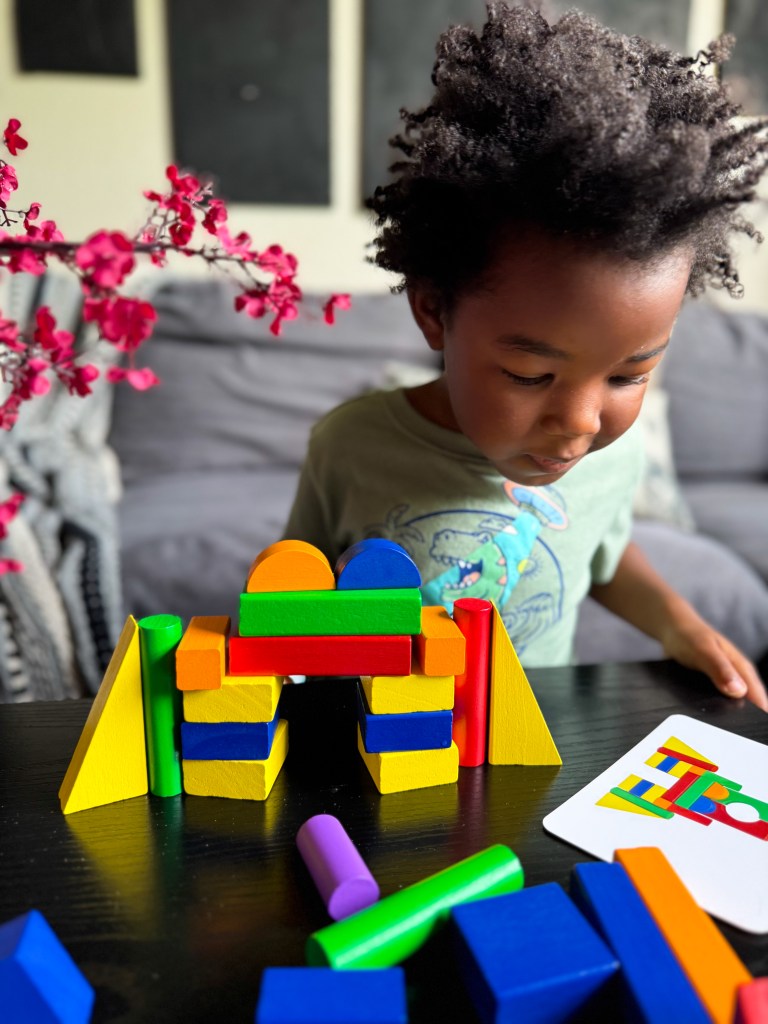
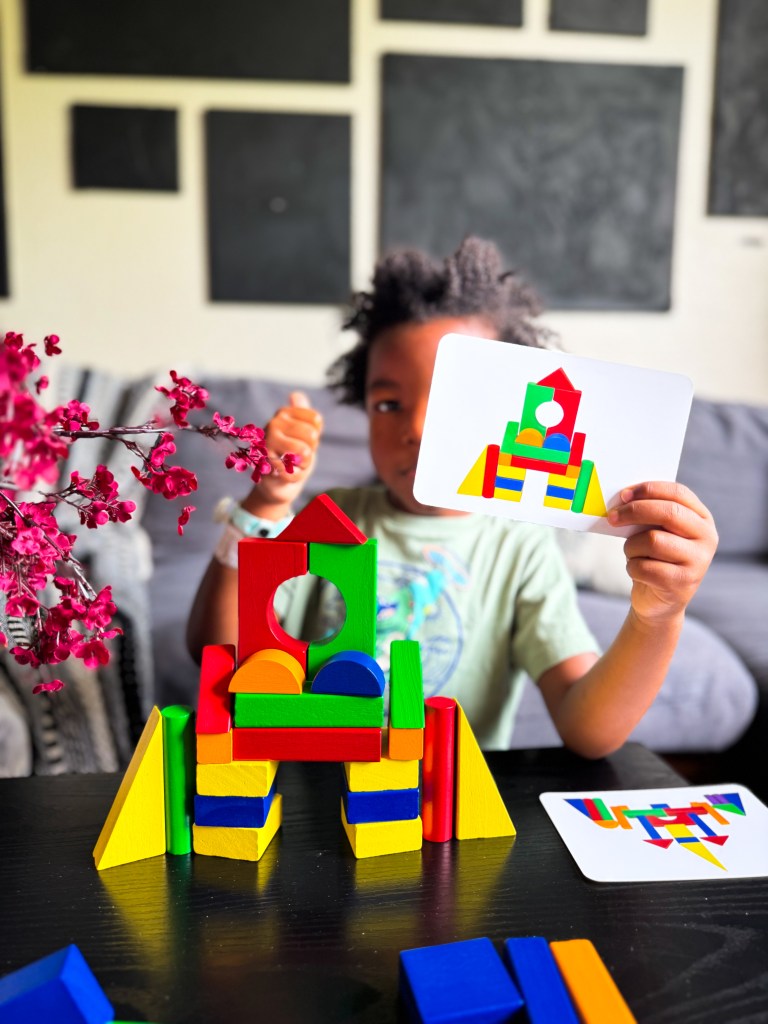
A child has to look at the structure on the card and begin asking questions.
Which blocks do I need?
Which colors should I find?
Is this piece standing vertically or lying horizontally?
What goes on the bottom?
Which piece goes next?
Why does my structure look different from the picture?
How can I fix it?
Those questions require children to observe, plan, experiment and make corrections.
And then, when they finish the activity card, the same blocks can go right back to being used for free play.
That combination is what I like most about this set.
Building Blocks for Fine Motor Skills
Building blocks are a simple way to incorporate fine motor activities for preschoolers into everyday play.
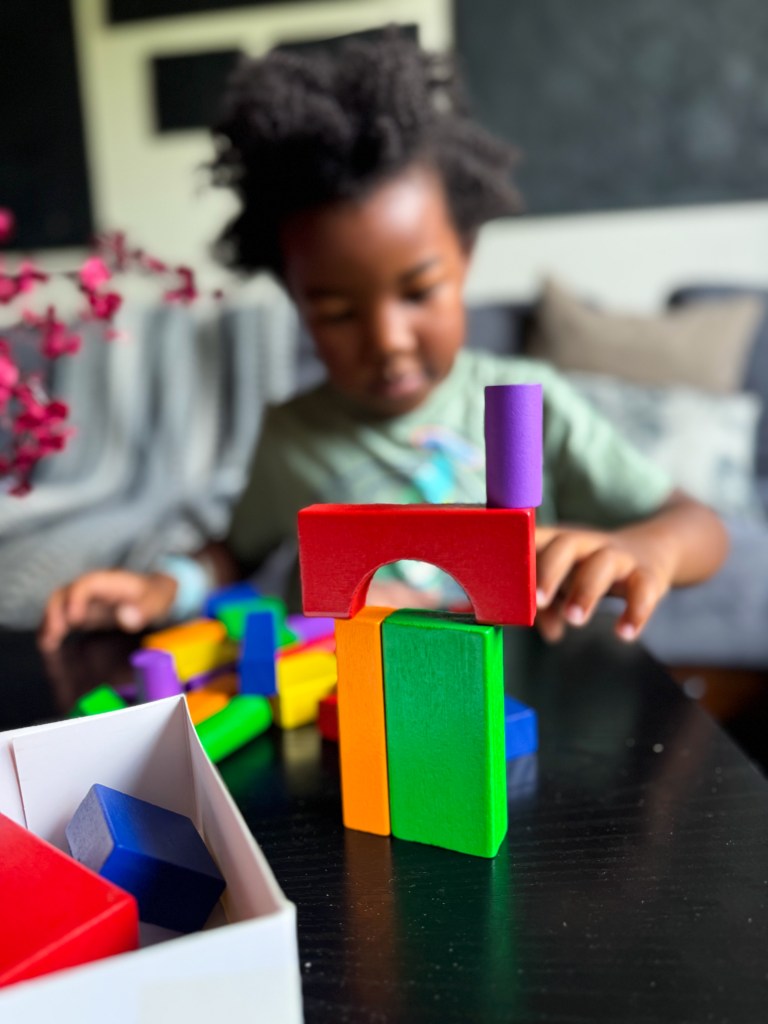
Children have to grasp each piece, rotate it, position it and carefully balance it.
They are using their fingers and hands constantly while building.
The smaller pieces require even more control.
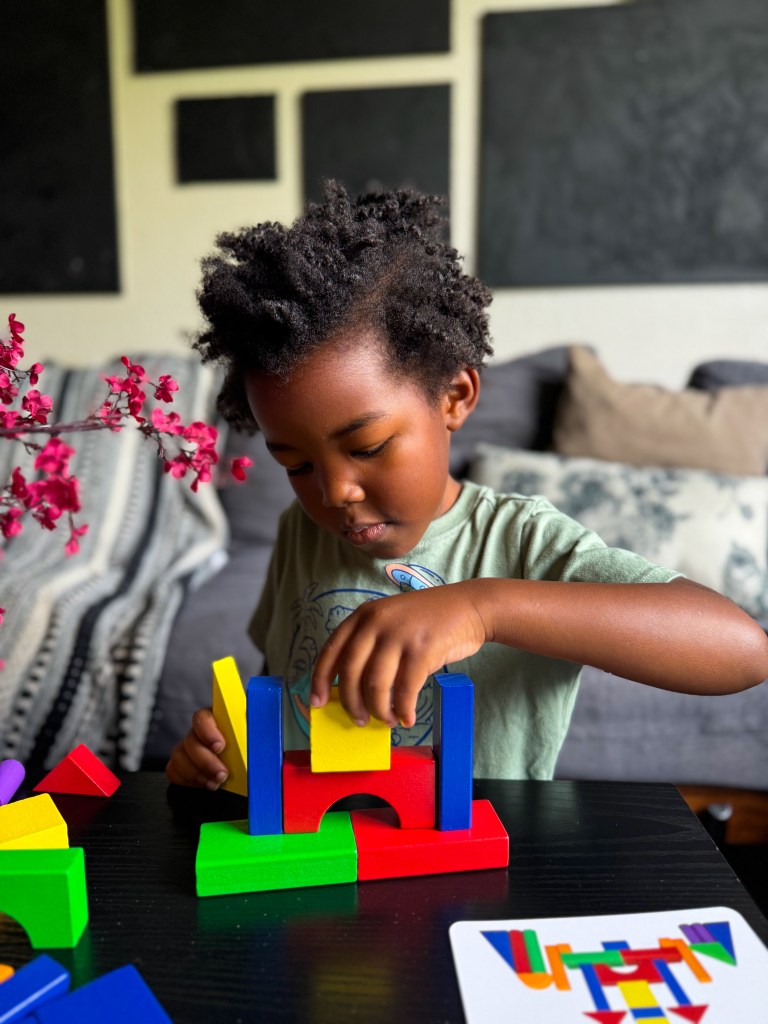
Fine motor development is important during the preschool years because those same hand muscles will eventually be used for skills such as drawing, using scissors and writing.
Instead of another worksheet or pencil activity, kids can practice those skills while building something they are excited about.
Visual-Spatial Learning for Preschoolers
One of the biggest learning benefits I noticed was the amount of visual-spatial thinking involved.
Children have to take a two-dimensional picture on a card and recreate it using three-dimensional blocks.
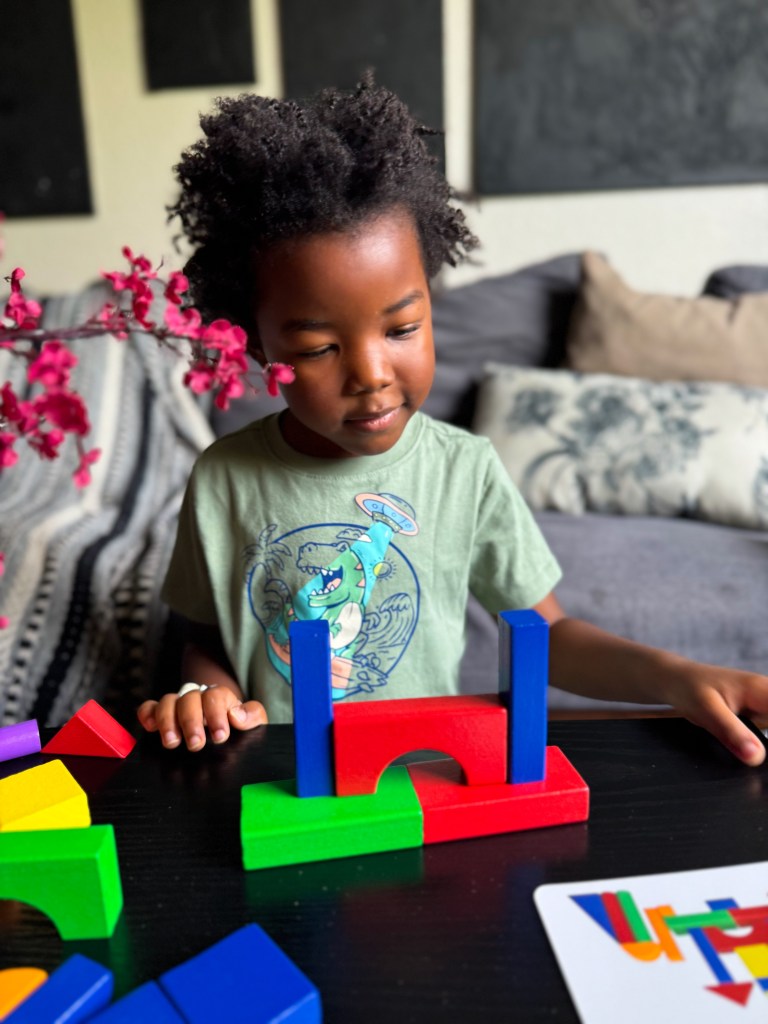
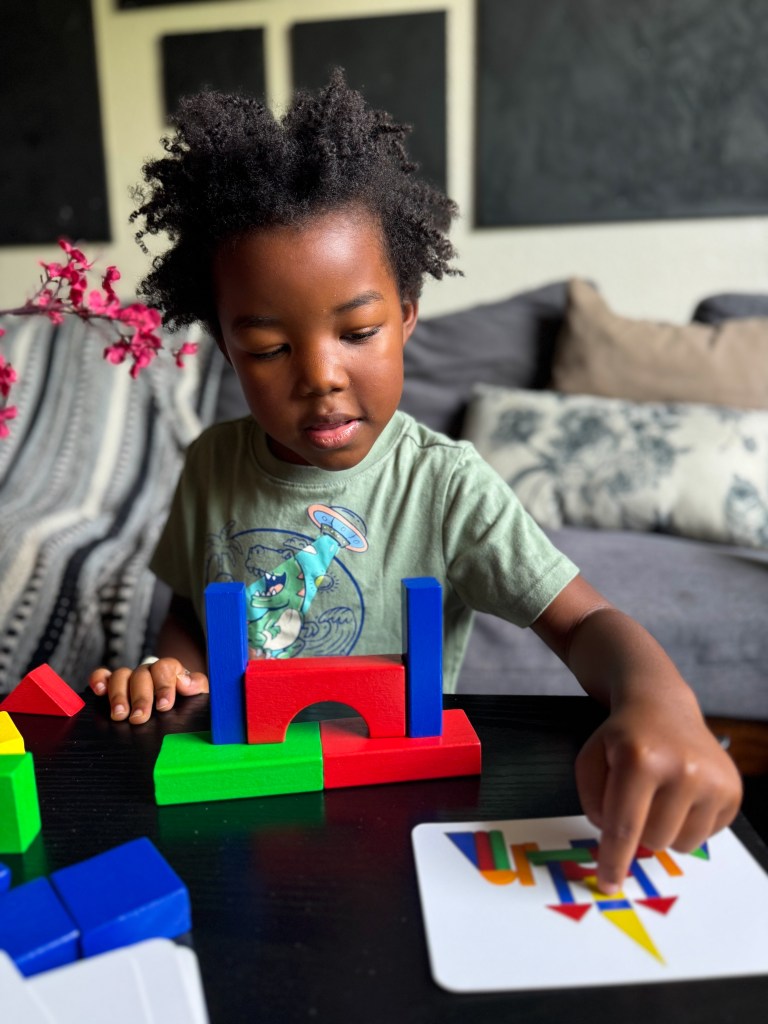
That requires them to pay attention to position, size, direction, color and shape.
It is a great example of a visual-spatial activity for preschoolers that does not feel like a traditional lesson.
As the structures become more complicated, children also have to think about how different pieces relate to one another.
That makes the activity useful for kids who enjoy puzzles, building toys and hands-on problem solving.
Problem-Solving Through Block Play
Building blocks naturally create opportunities for problem-solving.
Sometimes a piece is facing the wrong direction.
Sometimes the structure becomes unstable.
Sometimes a child chooses the wrong block.
And sometimes everything falls down.
Instead of automatically fixing it for them, those little moments give children a chance to determine what went wrong and try something different.
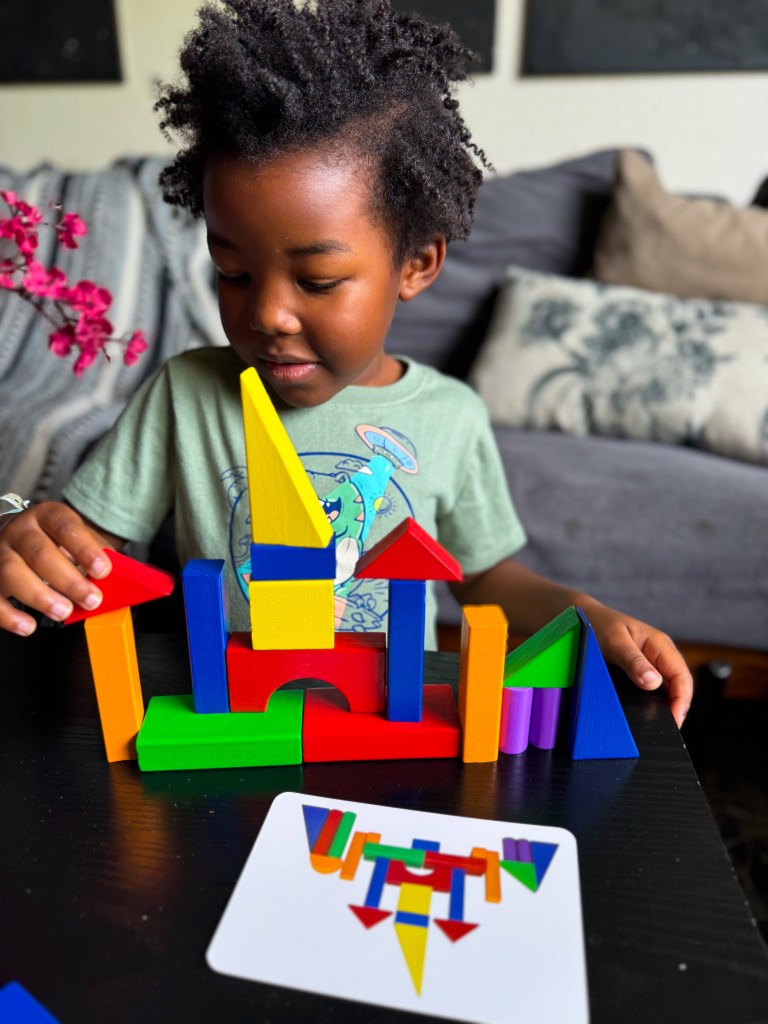
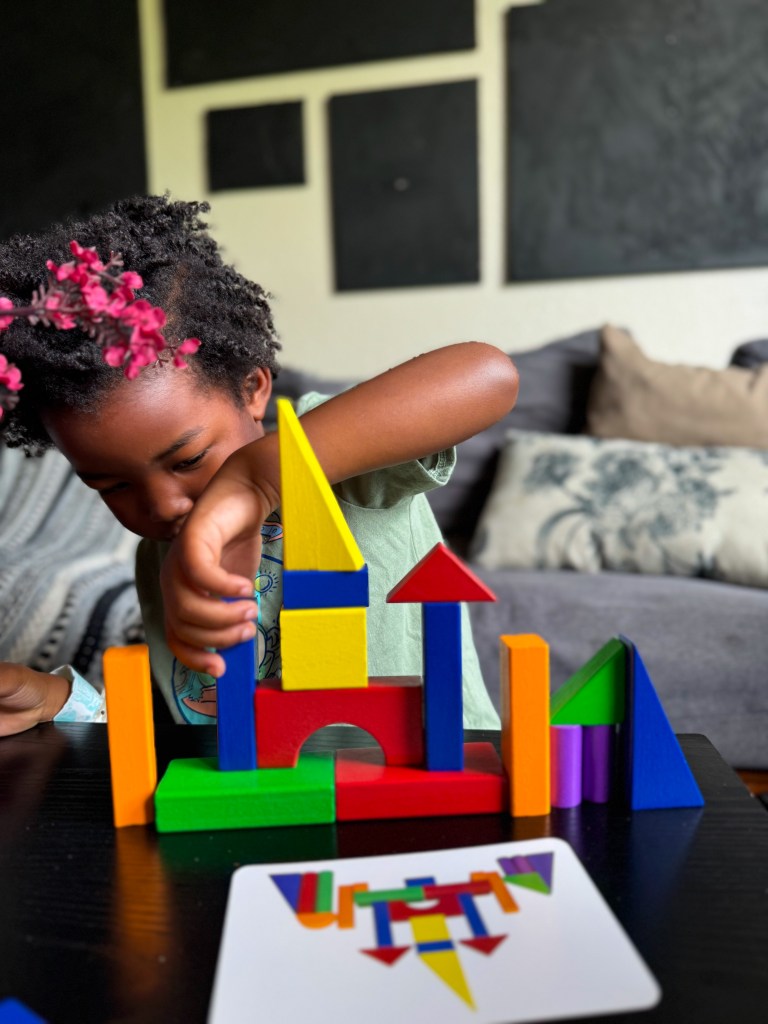
That trial-and-error process is one of the reasons I love hands-on learning activities for preschoolers.
Kids are not just being told the answer.
They are figuring something out.
STEM Learning Through Play
If you are looking for simple STEM activities for preschoolers, building toys are one of the easiest places to start.
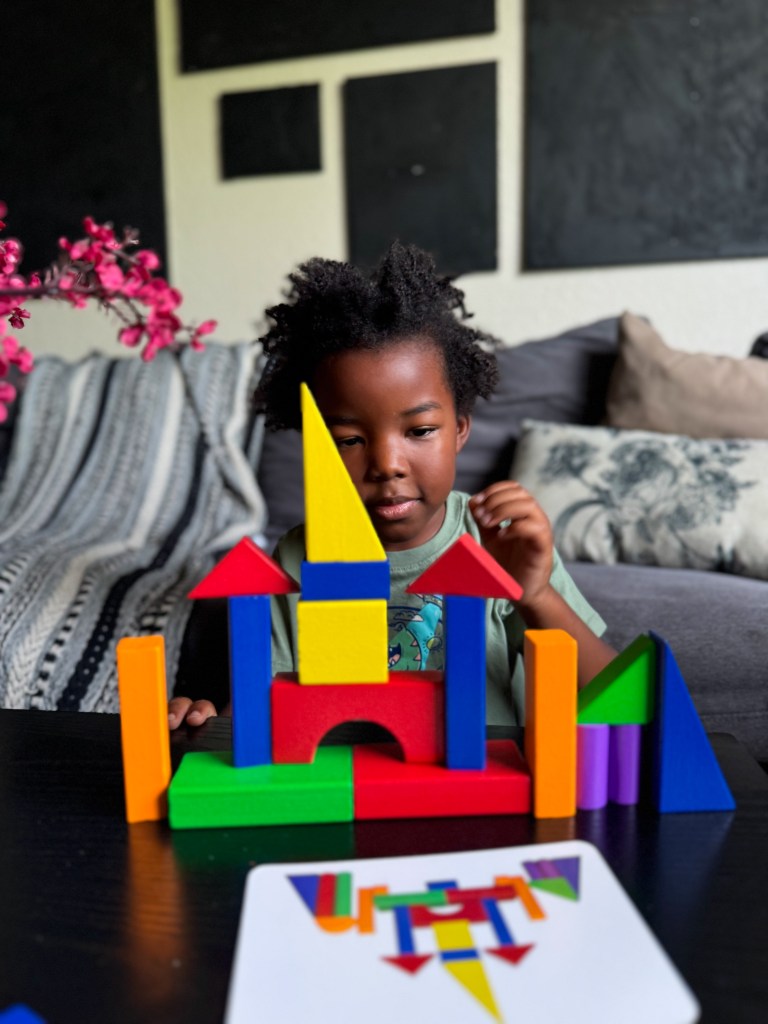
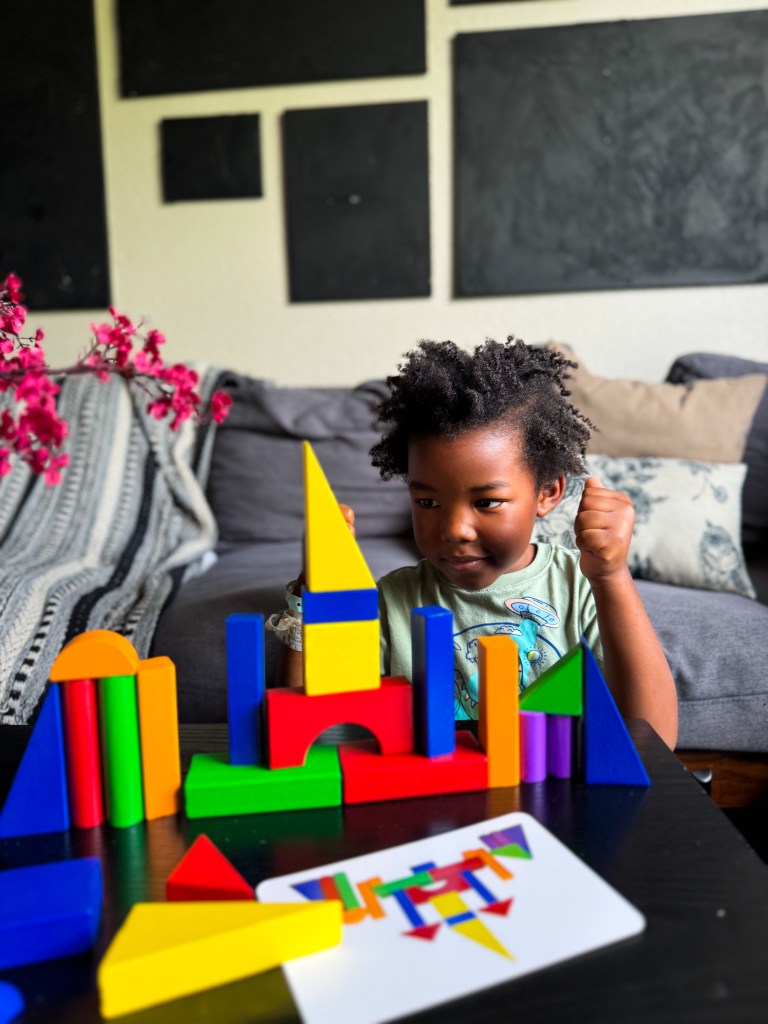
Children experiment with balance, shapes, symmetry, stability, size and basic engineering concepts every time they build.
They may not know that they are exploring engineering.
They just know they want their tower to stay standing.
That is exactly the kind of learning through play I love during the early years.
Building Concentration and Attention
Another thing I noticed while using the Stages Blocks was how much concentration some of the structures required.
With the easier cards, he could quickly identify a few pieces and build the structure.
But once we started trying more complicated designs, he had to slow down.
He would look at the card, look at the blocks, choose a piece, place it and then check the picture again.
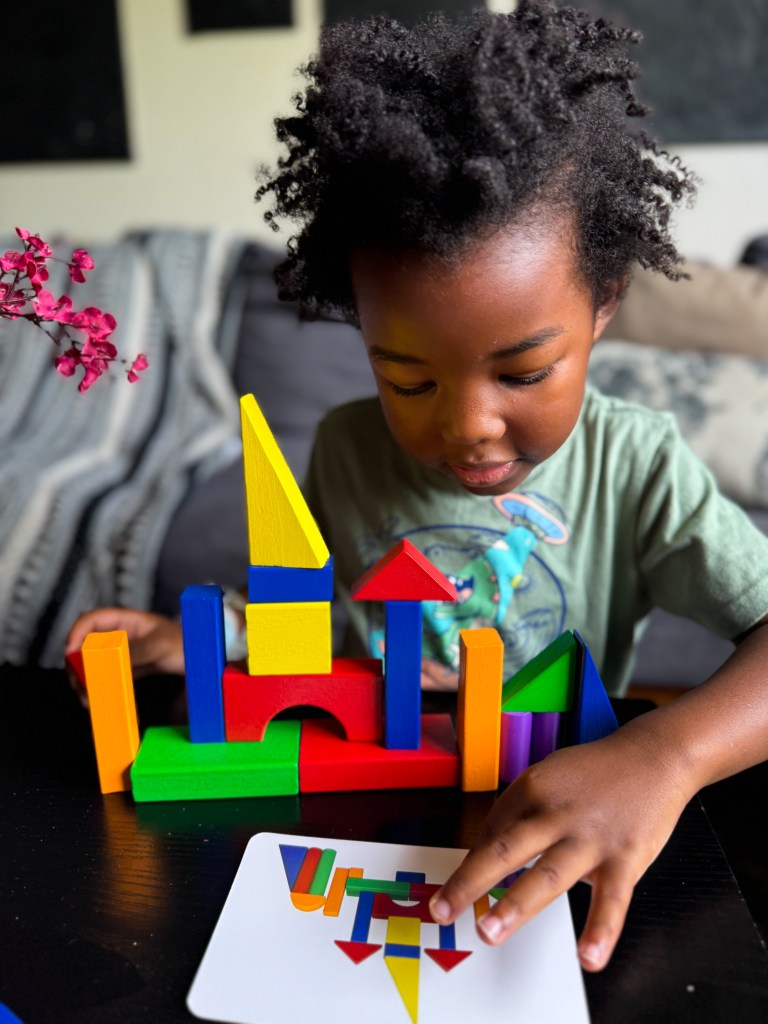
That back-and-forth process requires children to stay engaged with the activity.
For preschoolers who enjoy hands-on activities more than worksheets, a building challenge like this can be a great way to practice attention and persistence.
An Educational Toy That Does Not Feel Like School
One of my favorite things about Stages Building Blocks is how naturally they fit into our homeschool preschool routine.
There is no complicated setup.
I do not have to print anything.
I do not have to laminate anything.
I do not have to prepare an elaborate lesson.
I can simply put the blocks and a few activity cards on the table.
They can be used during morning time, quiet time, independent play, a preschool learning center, fine motor practice, STEM time, rainy-day activities or anytime you need an easy screen-free activity.
And because the blocks can also be used completely independently from the cards, children can move between structured learning and creative play.
That makes them an easy resource to keep accessible throughout the week.
Are Stages Building Blocks Good for 3 Year Olds?
Stages Building Blocks are recommended for ages 3 and older.
For younger preschoolers, I would not worry about immediately completing the more complicated cards.
Start simple.
Let them stack blocks.
Talk about the colors.
Identify shapes.
Build a small tower together.
Try copying a structure with only a few pieces.
Then gradually introduce more complicated cards as their confidence grows.
That makes the set useful for learning activities for 3 year olds, while still giving older preschoolers and kindergarteners more challenging structures to work toward.
It is definitely something children can grow into.
Stages Building Blocks for Homeschool Preschool
I think this set fits especially well into a homeschool preschool curriculum because it can cover several learning areas without requiring a formal lesson.
You can use the blocks to practice color recognition, shape recognition, fine motor skills, spatial reasoning, visual discrimination, problem-solving, early engineering and creative thinking.
You could even add simple math questions while your child plays.
How many red blocks did you use?
Which tower is taller?
Can you find two rectangles?
What shape is on top?
How many blocks do you need to finish the structure?
Suddenly one activity can become math, STEM and fine motor practice without making your preschooler sit through three separate lessons.
Are Stages Building Blocks Worth It?
Stages Building Blocks are definitely more of an investment than picking up a basic container of wooden blocks.
If all you want is a simple set of blocks for open-ended play, there are less expensive options.
What makes this particular set valuable is the combination of 40 wooden blocks, 120 progressive activity cards and open-ended play.
It is not a toy with only one purpose.
Children can use the cards for structured learning and then use the same pieces to create their own castles, houses, towers, bridges and whatever else they imagine.
For families who value hands-on homeschool resources, Montessori-inspired toys, STEM toys, reusable educational toys and screen-free learning activities, I think that versatility matters.
If your child already enjoys building, the challenge cards give them an entirely new way to use something they naturally enjoy.
CHECK THE CURRENT PRICE OF STAGES BUILDING BLOCKS
Our Stages Building Blocks Review
The real test around here is always whether something continues to get played with after I stop taking pictures.
And this one passed.
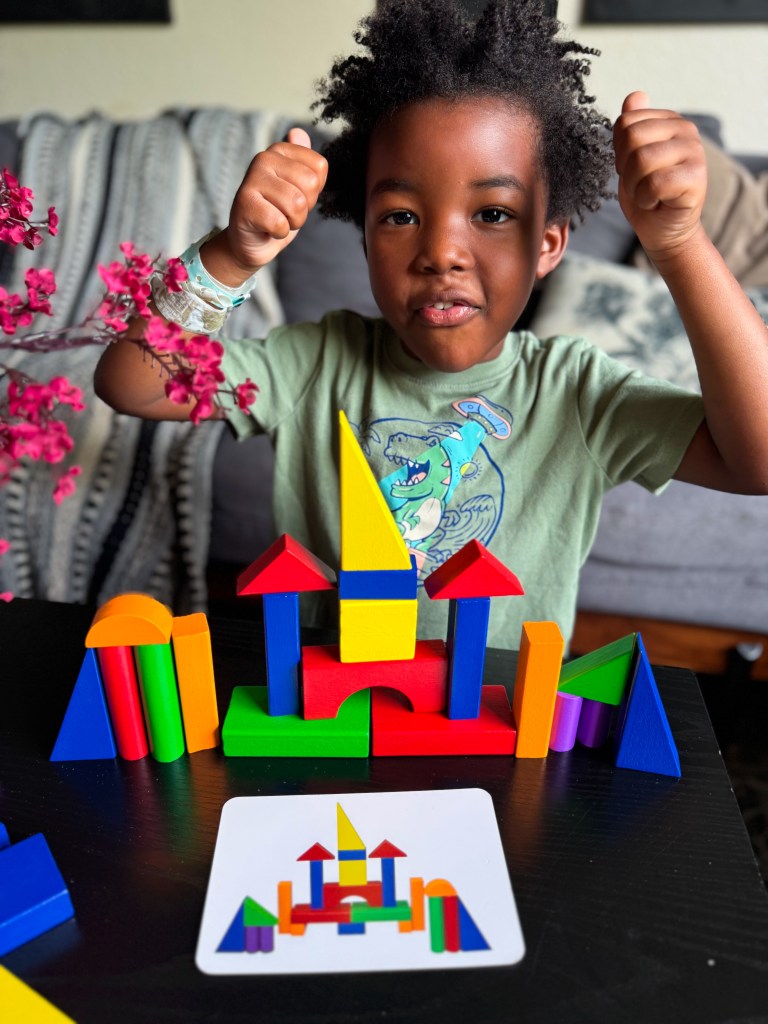
What started as simply stacking colorful blocks quickly became trying to recreate the activity cards, celebrating finished structures and creating entirely new designs.
What I enjoyed most was watching the shift from simply grabbing random blocks to actually studying the picture before deciding which piece he needed.
That is exactly the kind of hands-on learning I want more of during the preschool years.
Looking.
Thinking.
Trying.
Realizing something is not working.
Making a change.
Trying again.
And eventually standing back proudly because they figured it out themselves.
For us, that is what makes the Stages Building Blocks from Timberdoodle more than another set of wooden blocks.
They combine creative block play with fine motor practice, visual-spatial learning, STEM skills and problem-solving in a way that still feels like play.
And that is a win in my book.
[SHOP STAGES BUILDING BLOCKS AT TIMBERDOODLE]
More Preschool Learning Ideas
If you are looking for more hands-on preschool and homeschool ideas, you may also enjoy my Learning Activities for 3 Year Olds, Learning Activities for 4 Year Olds, How to Homeschool Preschool, and my Timberdoodle Kindergarten Curriculum Kit Review.
Frequently Asked Questions About Stages Building Blocks
What age are Stages Building Blocks for?
Stages Building Blocks are recommended for children ages 3 and older. Younger preschoolers can begin with simple stacking and easy building challenges before progressing to more complicated activity cards.
How many blocks come with Stages Building Blocks?
The set includes 40 colorful wooden building blocks in several different shapes and sizes.
How many activity cards are included?
Stages Language Builder Blocks include 120 activity cards, giving children plenty of structures to recreate.
Are building blocks educational?
Yes. Building blocks can help children practice fine motor coordination, spatial reasoning, problem-solving, planning, shape recognition, concentration and early STEM skills.
Can children play with Stages Blocks without the cards?
Yes. The wooden blocks can also be used for open-ended building and imaginative play. Children do not have to follow the activity cards every time they use the set.
Are Stages Building Blocks good for homeschool?
Yes. They work especially well for homeschool preschool and kindergarten because the blocks can be used for fine motor practice, STEM learning, visual-spatial activities, problem-solving, color recognition, shape recognition and independent play.
Are Stages Building Blocks Montessori?
Stages Blocks are not a traditional Montessori material, but families who enjoy Montessori-inspired learning may appreciate the hands-on design, wooden materials, independent problem-solving and opportunities for self-directed play.
Do Stages Building Blocks help with fine motor skills?
Yes. Picking up, positioning, rotating, stacking and balancing the wooden pieces gives children plenty of opportunities to practice hand-eye coordination and fine motor control.
-
World Map Puzzle for Kids: Timberdoodle Geography Puzzle Review
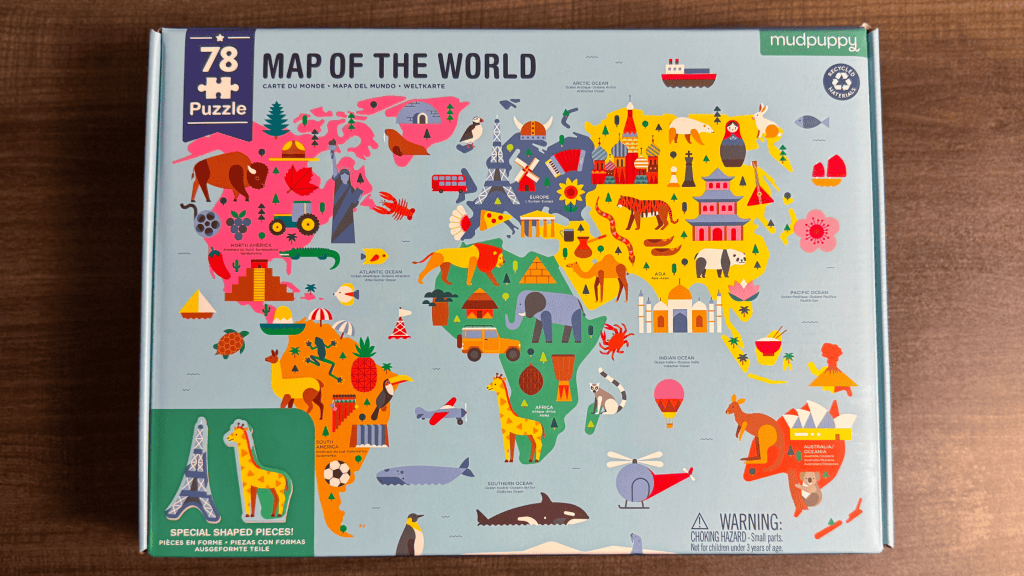
If you’re looking for a world map puzzle for kids that makes geography, feel more like play, the Map of the World Geography Puzzle from Timberdoodle has been such a fun addition to our kindergarten homeschool.
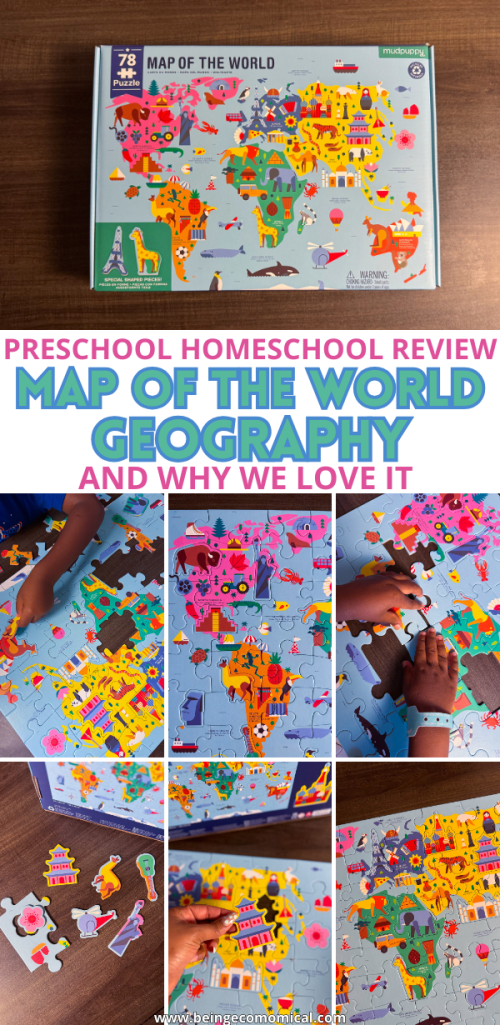
Ours came as part of our Timberdoodle Kindergarten Homeschool Curriculum Kit, and this is exactly the type of learning resource I love for younger kids: colorful, hands-on and easy to use without adding another complicated lesson to our homeschool day.
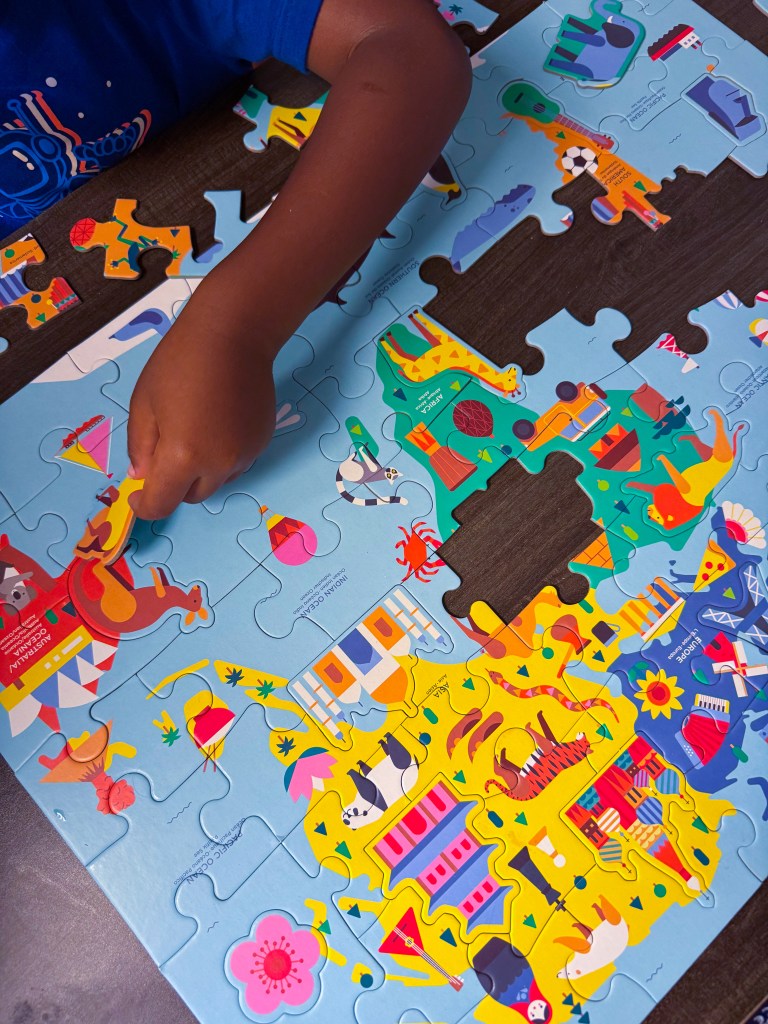
My kindergartener gets to put the world together piece by piece while being introduced to continents, oceans, animals, famous landmarks and different parts of the world.
And most importantly? It feels like doing a puzzle — not geography class.
SHOP THE MAP OF THE WORLD GEOGRAPHY PUZZLE
What Is the Map of the World Geography Puzzle?
The Map of the World Geography Puzzle is a large, colorful geography puzzle for kids featuring the continents along with oceans, animals, landmarks and illustrations associated with different parts of the world.
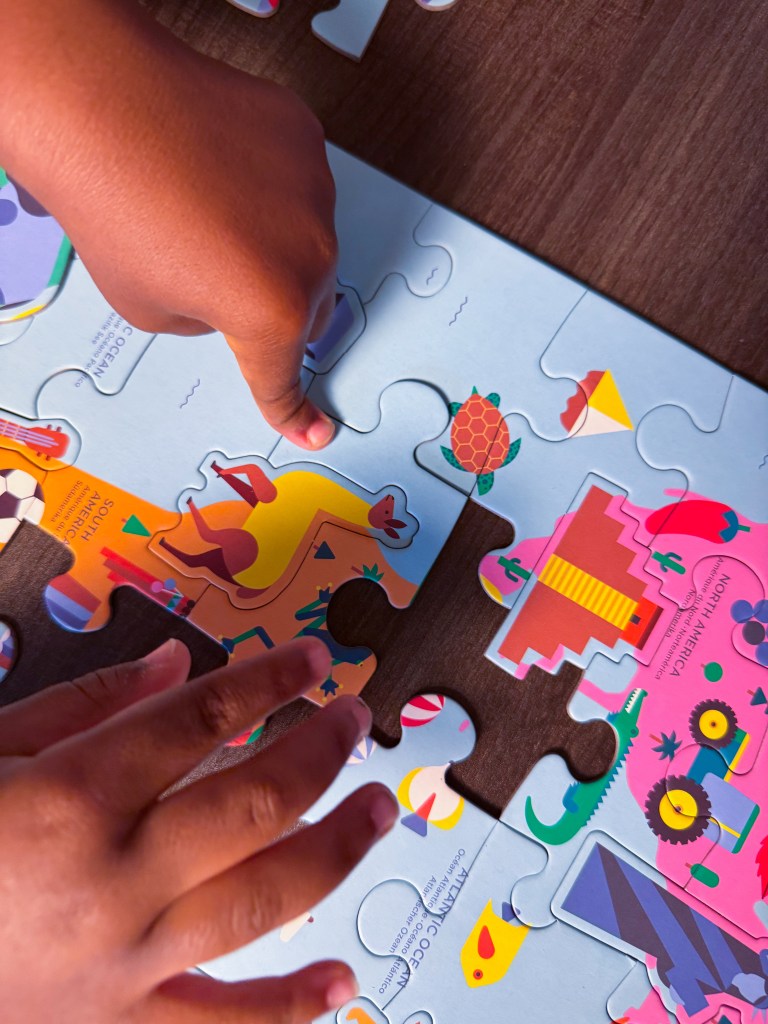
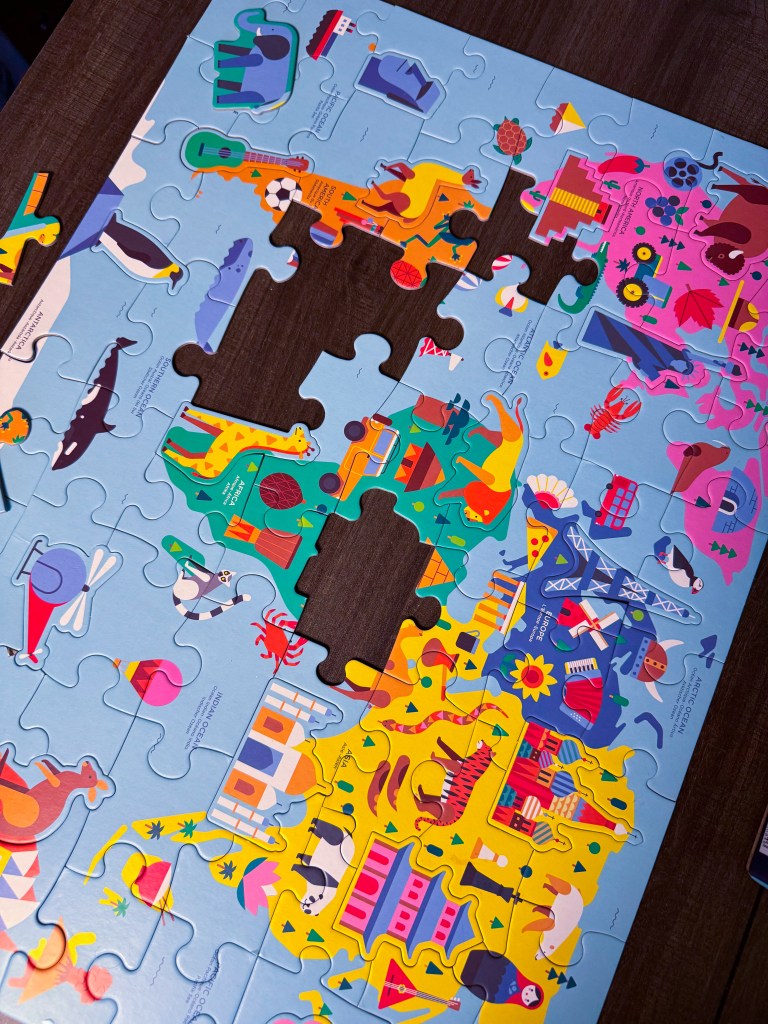
The continents are especially bright and easy to distinguish, which I really liked for kindergarten.
There are also special shaped pieces throughout the map featuring things like animals and recognizable world landmarks.
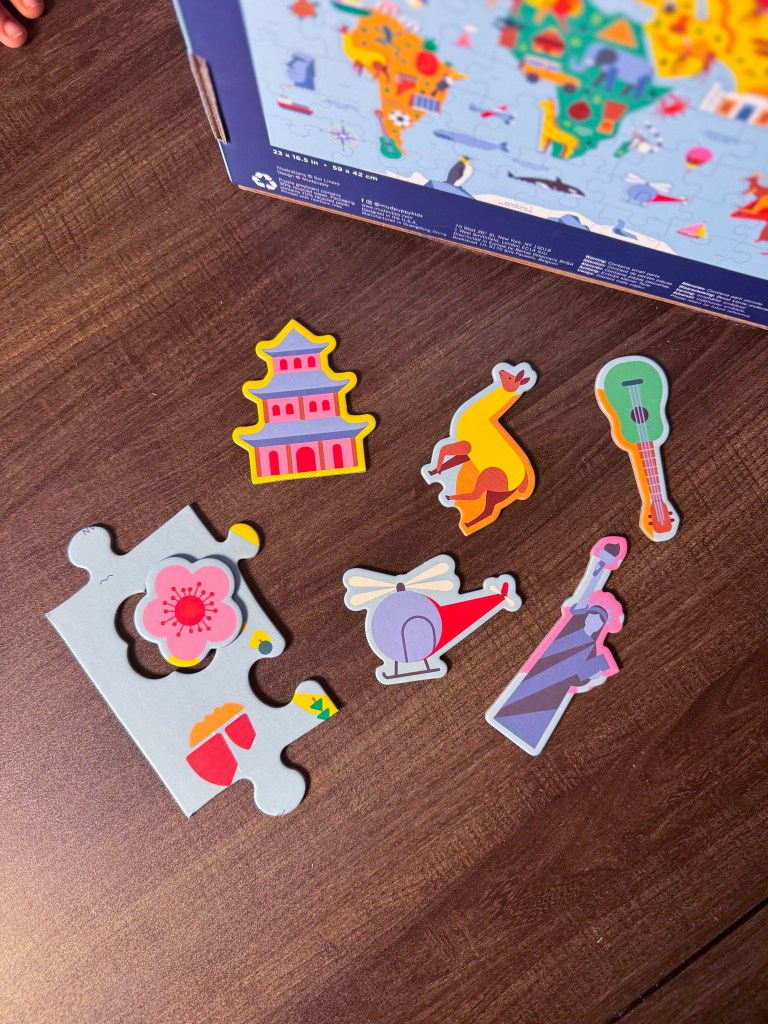
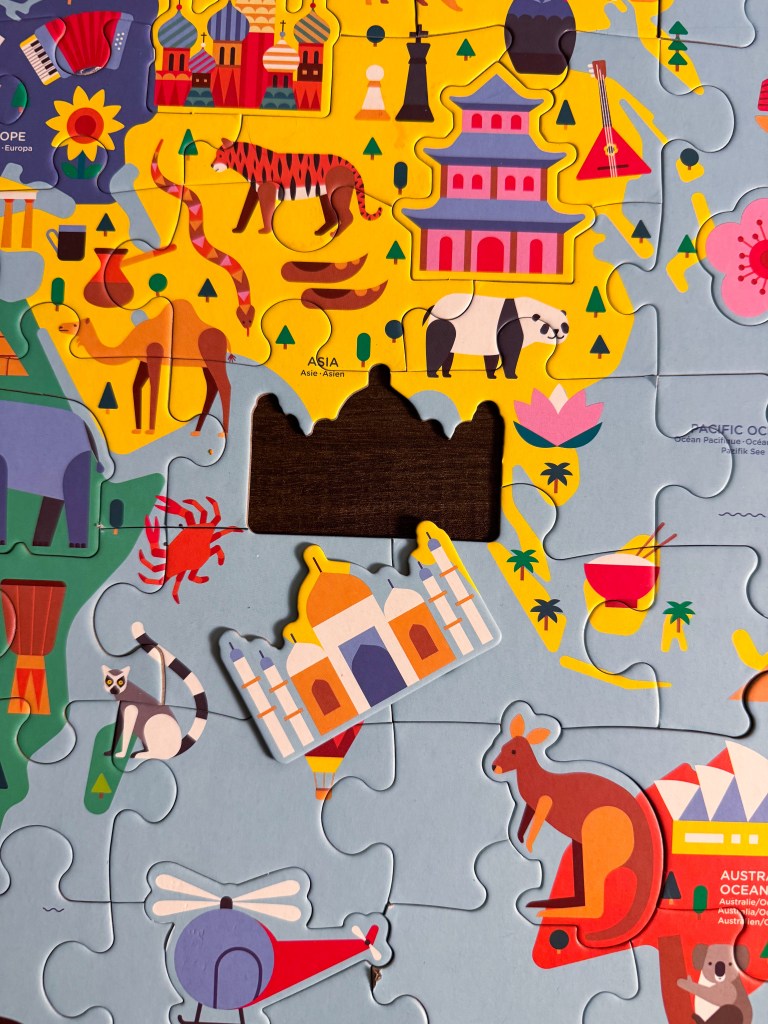
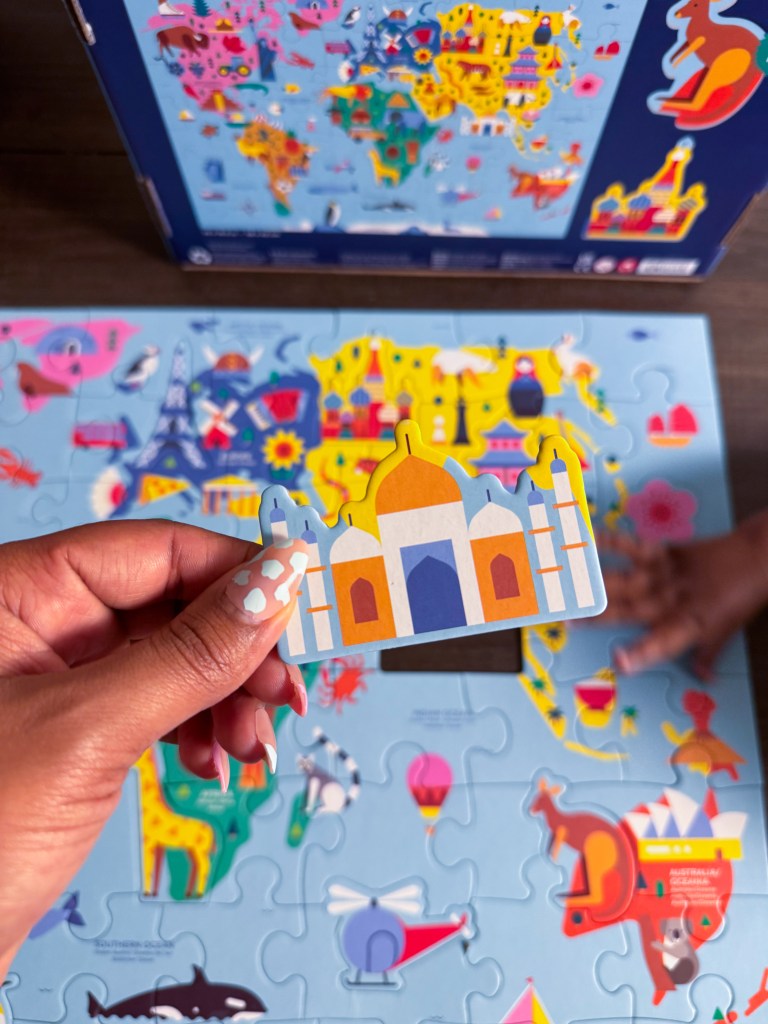
Instead of only putting together traditional jigsaw pieces, kids can physically remove a landmark or animal and figure out where it belongs on the map.
That little detail makes the puzzle much more interesting as a hands-on geography activity.
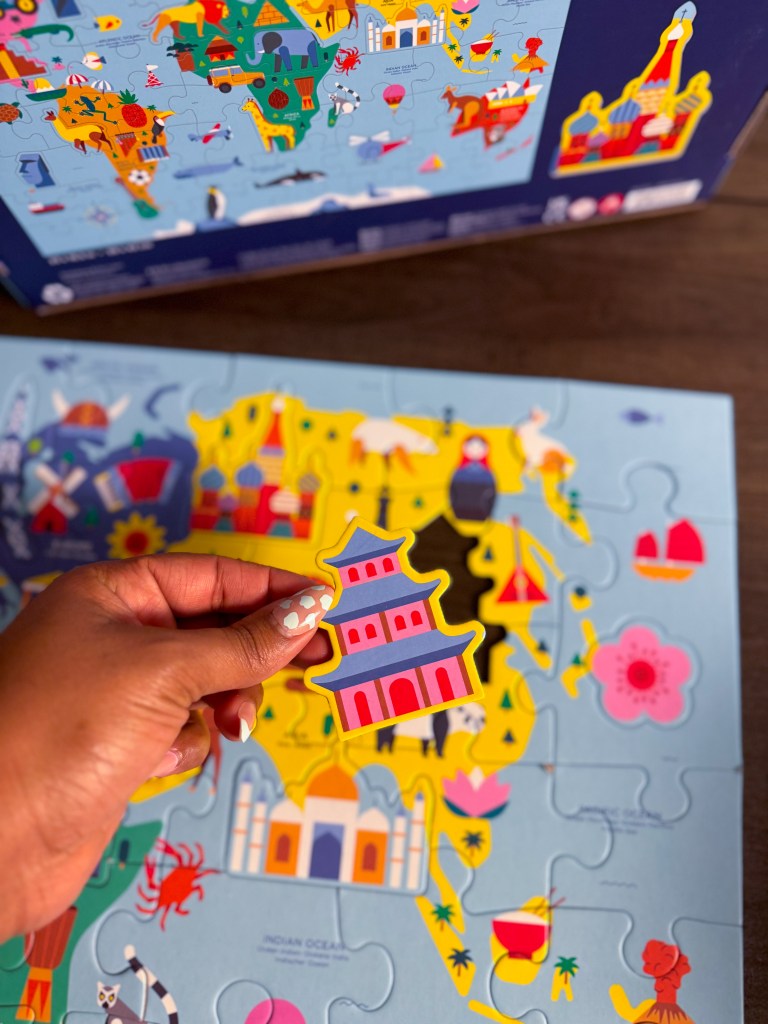
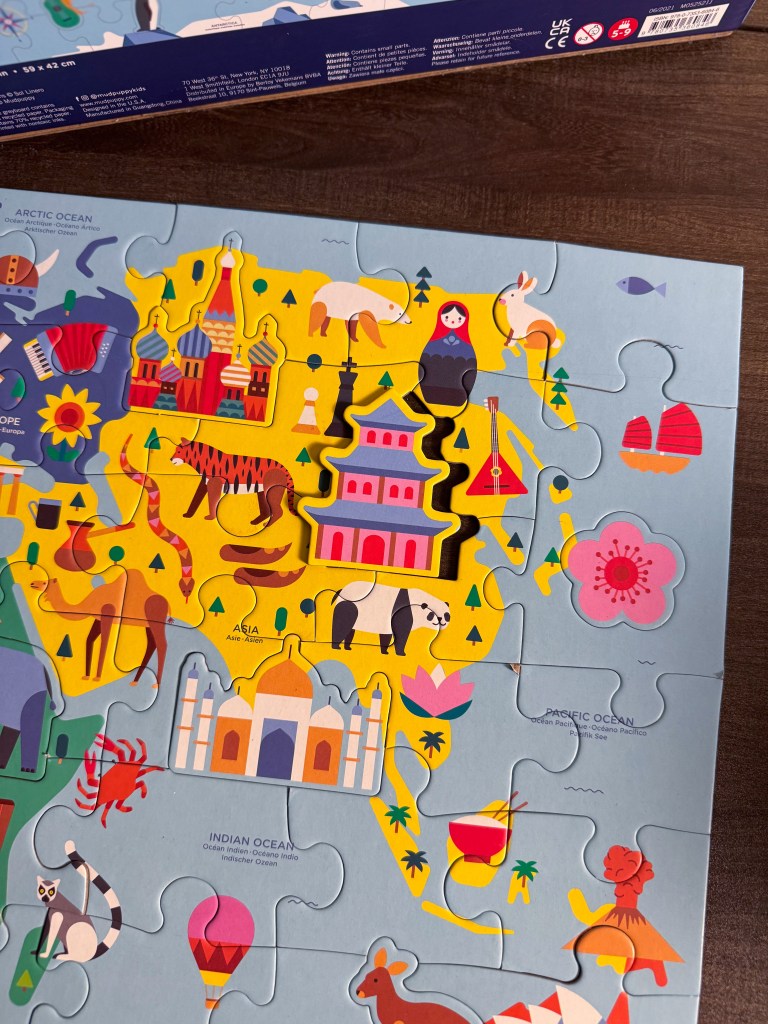
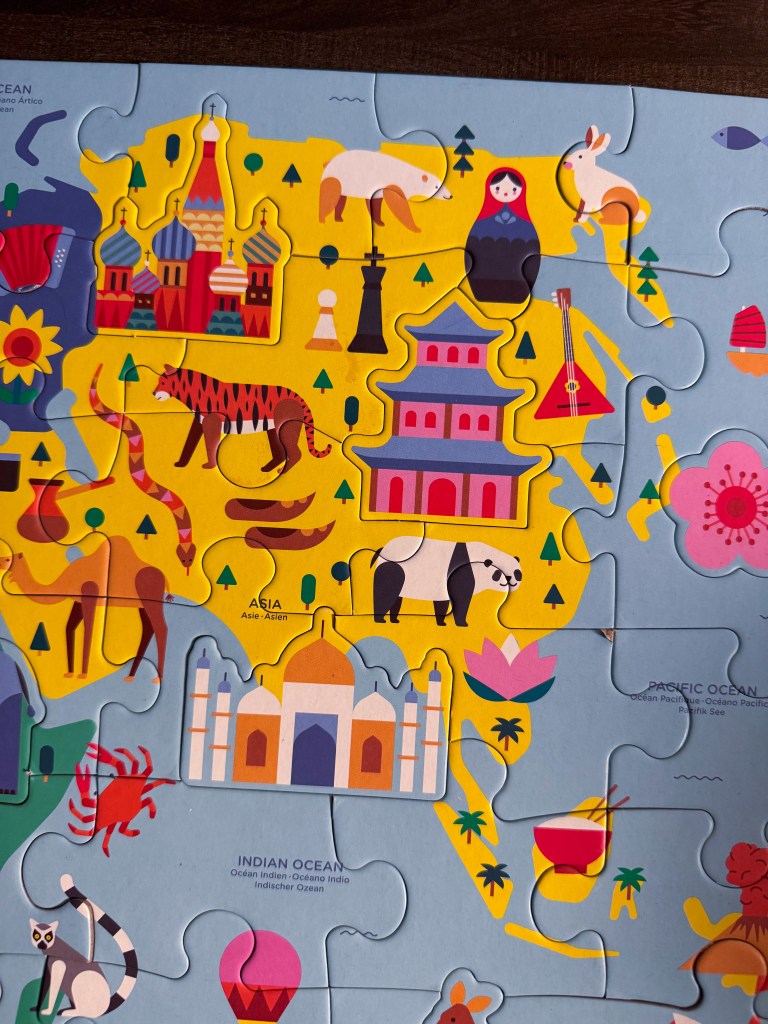
What We Liked About This World Map Puzzle
The first thing that stood out to me was how visually interesting it is.
There is SO much to look at.
Africa has animals like the elephant and giraffe. Australia/Oceania has a kangaroo and koala. Asia includes pandas, a tiger, the Taj Mahal and other recognizable landmarks. Europe features the Eiffel Tower and other illustrations.
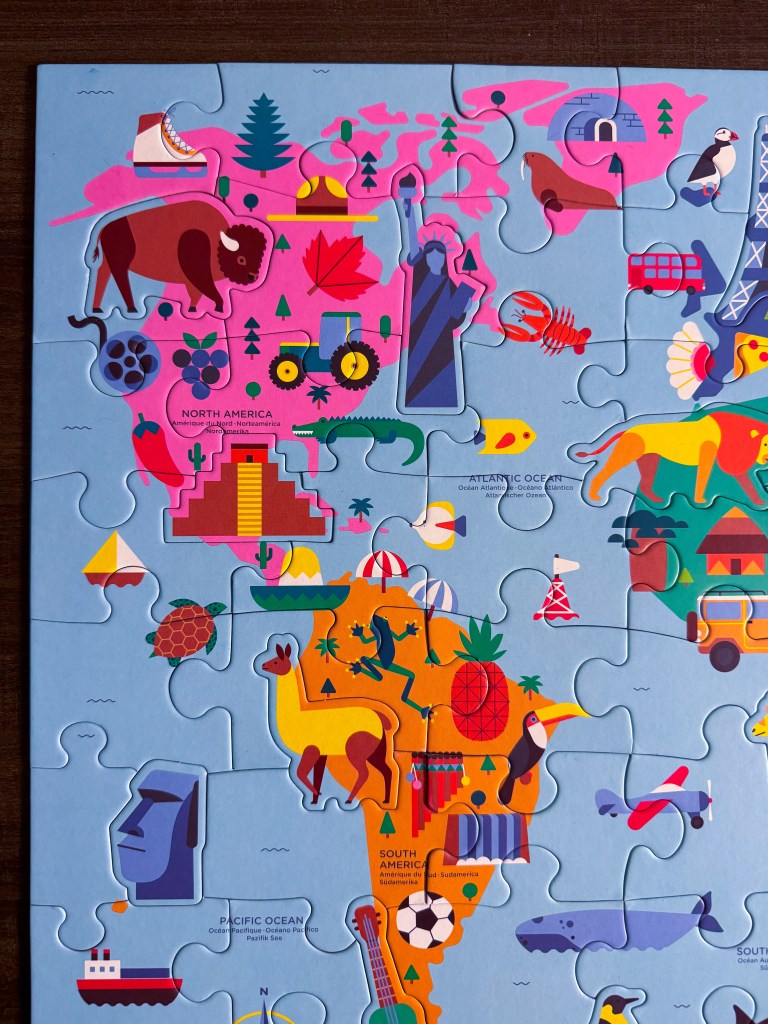
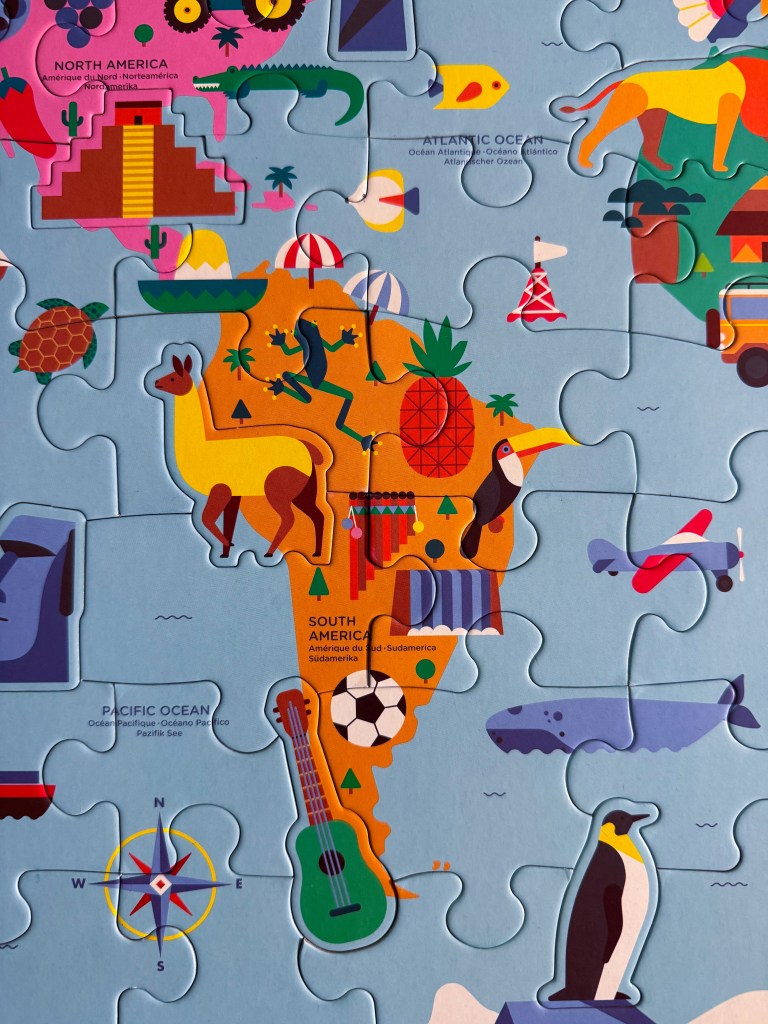
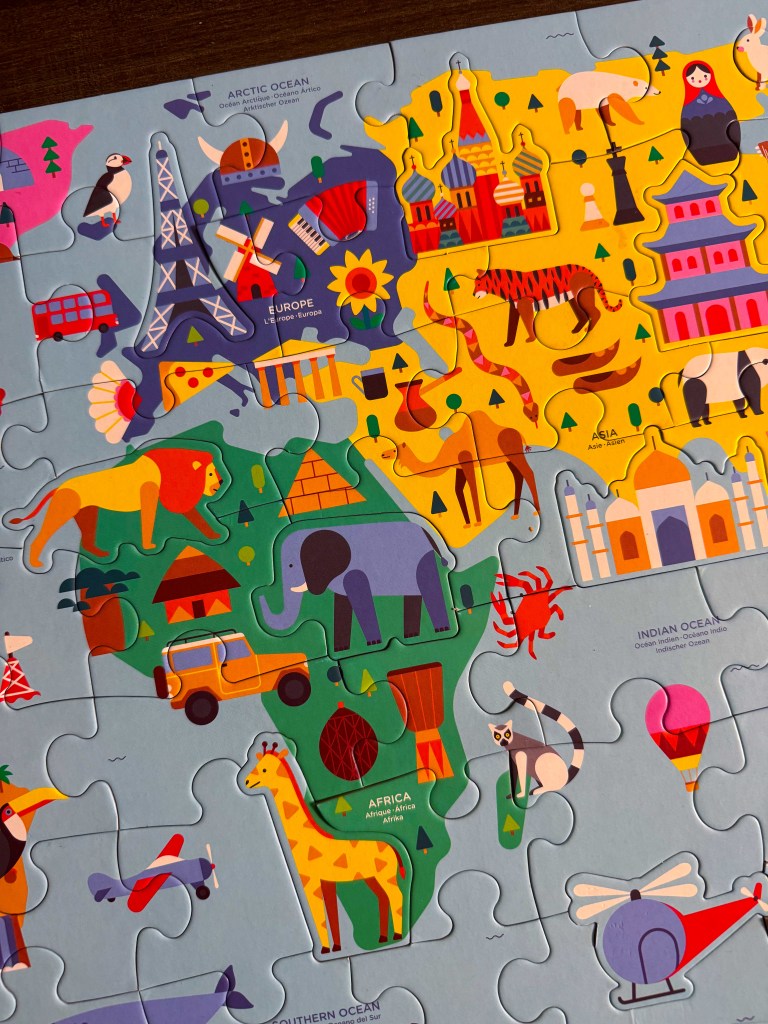
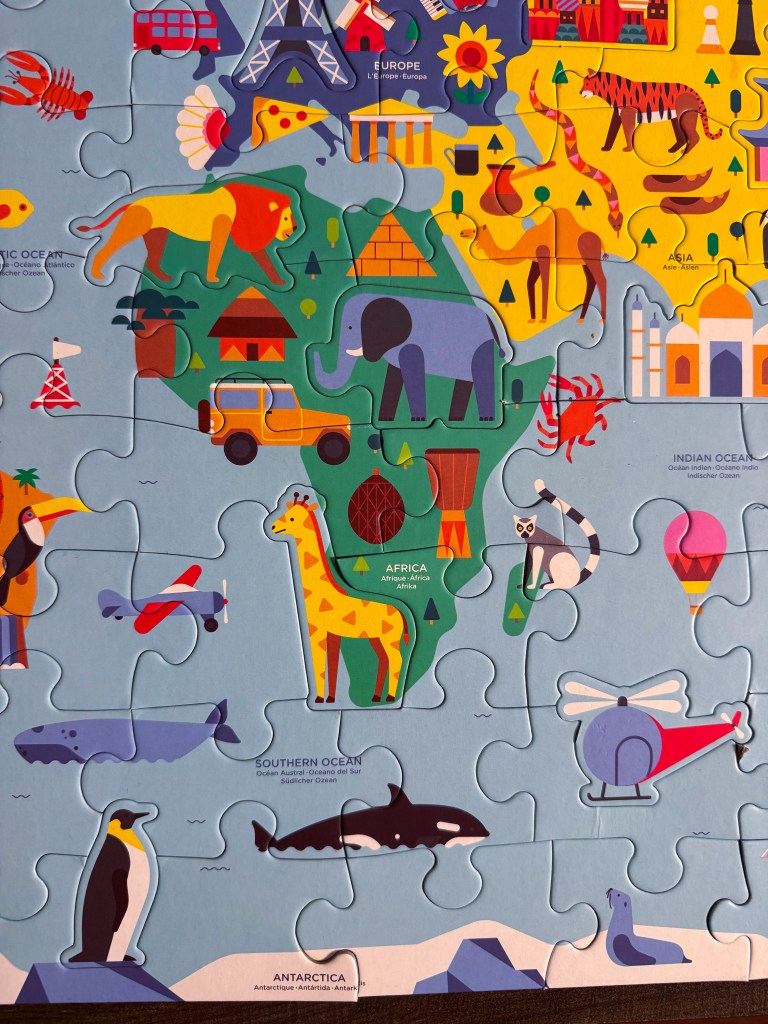
For a young child who may not be particularly excited by the words “Today we’re learning geography,” there are a million little things on the map to get their attention.
While we worked on it, geography conversations happened naturally.
Where does the kangaroo go?
Can you find Africa?
Where does the Taj Mahal belong?
Which continent are we on?
Where is Antarctica?
That’s one of my favorite things about hands-on learning for kindergarten. I don’t necessarily have to turn everything into a formal lesson for learning to happen.
A Fun Way to Teach Geography for Kindergarten
At this age, I’m not trying to have my kindergartener memorize every country and capital on Earth.
I want to build the foundation first.
This puzzle gives us an easy way to introduce things like:
- The seven continents
- Oceans
- Basic map skills
- Animals around the world
- Famous landmarks
- Different cultures and places
- Where different parts of the world are located
The more we use it, the more familiar those places become.
A child may remember that the panda goes on the big yellow continent before remembering the word Asia — and that’s okay.
Eventually those visual connections start getting names.
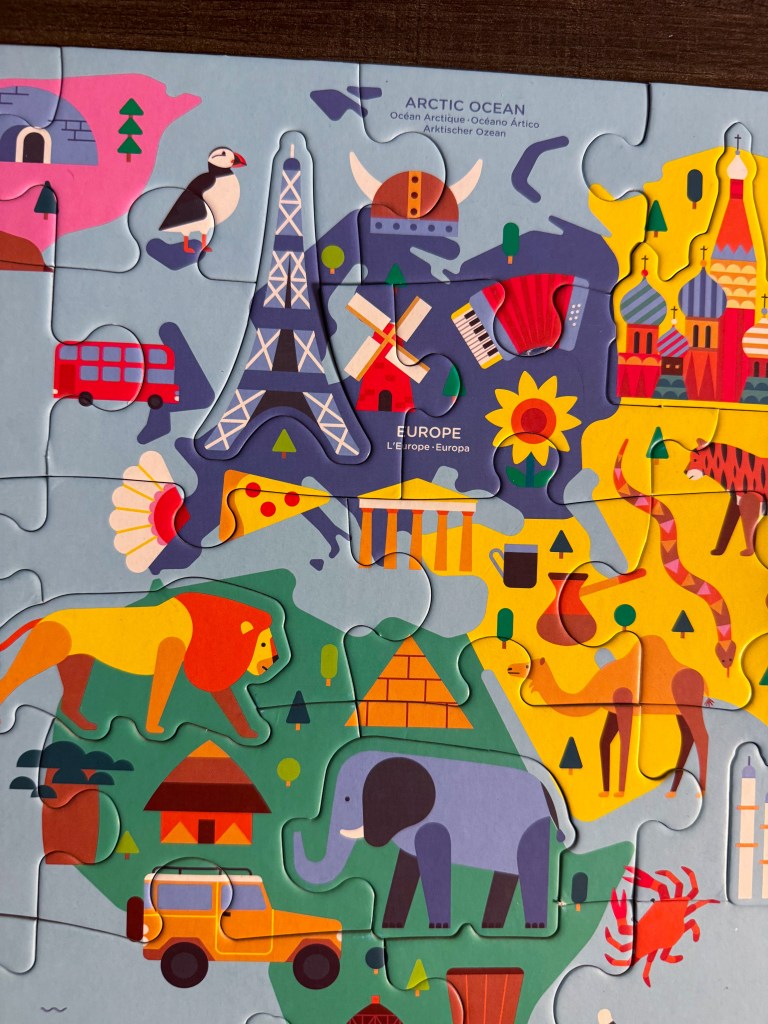
That’s what makes this such a good kindergarten geography activity.
More Than Just a Geography Puzzle
There is also plenty of learning happening that has nothing to do with memorizing a map.
Putting together a larger puzzle requires kids to look at shapes, compare pieces, turn them around, notice colors and keep trying when something doesn’t fit.
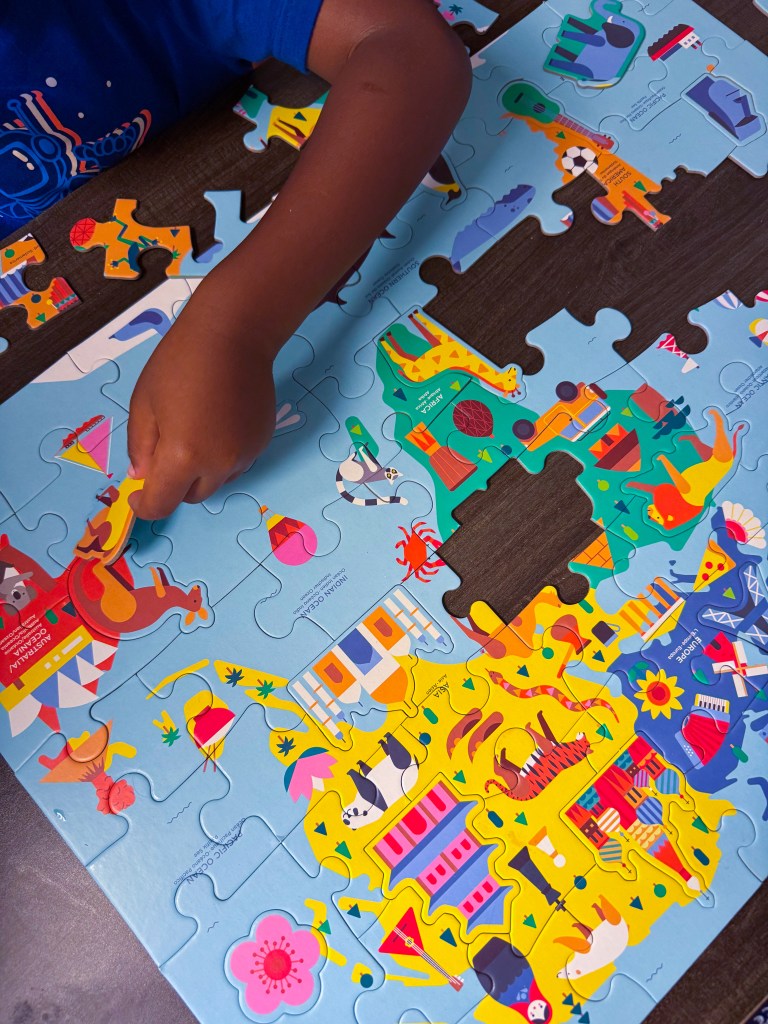
So while we’re using it for homeschool geography, we’re also getting practice with:
Problem-solving. Figuring out where pieces belong.
Visual discrimination. Looking closely at shapes, colors and pictures.
Spatial reasoning. Understanding how pieces fit together to create a larger picture.
Fine motor skills. Picking up, turning and placing puzzle pieces.
Concentration. Staying with a bigger activity long enough to complete it.
I love homeschool materials that can do more than one thing without me having to create five separate activities.
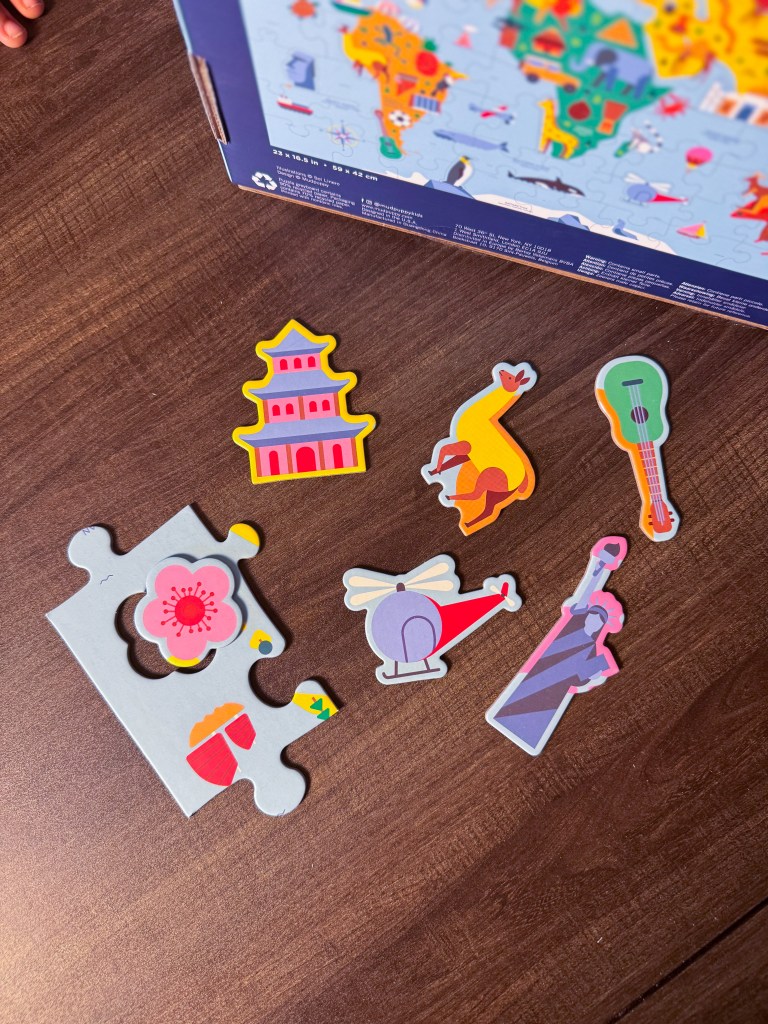
How We Use It in Our Kindergarten Homeschool
You absolutely do not need a lesson plan for this.
Most of the time, we can simply put the puzzle on the table and start.
But once it is complete, there are so many easy geography activities for kindergarten you can do with the finished map.
Ask your child to find each continent.
Look for the oceans.
Choose an animal and figure out where it lives.
Find a famous landmark.
Talk about where you live.
Point out somewhere your family has traveled.
Choose a place you’d love to visit one day.
You could even pair the puzzle with children’s books about different countries, animals or cultures.
Pick a place you’re reading about and then find it — or its general region — on the map.
Suddenly one educational puzzle for kids can become something you return to throughout the school year.
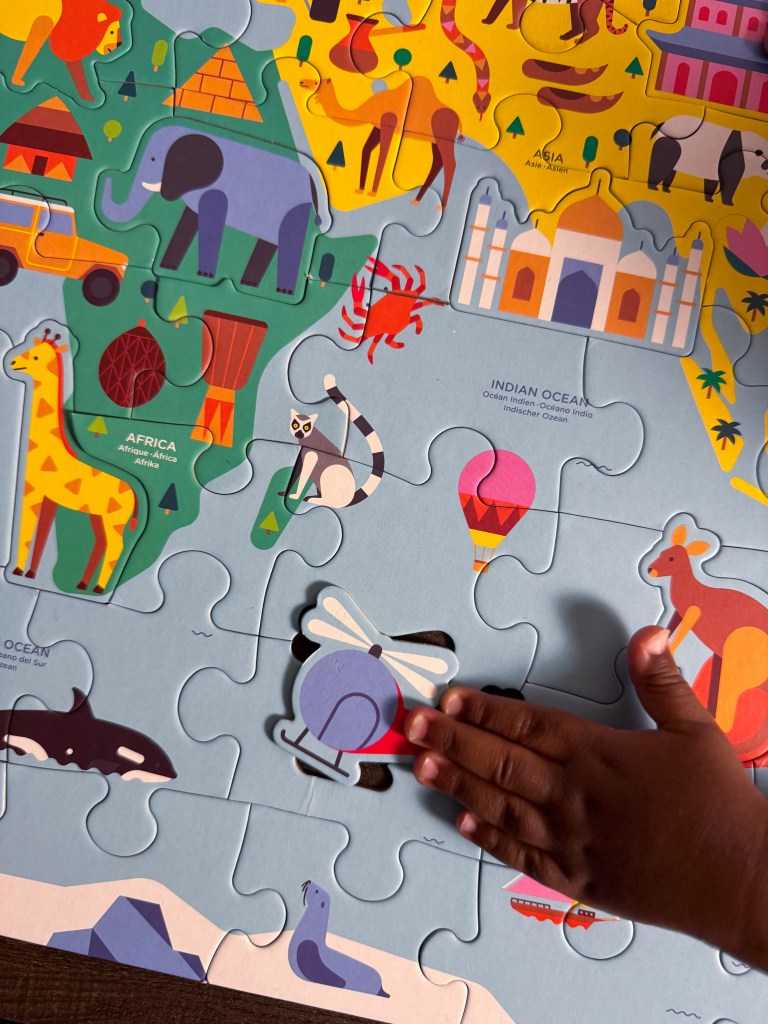
Is It Too Difficult for Kindergarten?
This isn’t one of those tiny toddler puzzles with six pieces, so younger kids may need some help when they first use it.
I actually like that.
There’s enough challenge here that it doesn’t feel like something my kindergartener will immediately outgrow.
One thing that makes it easier is the color coding. Kids can start noticing that certain colors belong to specific continents and use those visual clues when deciding where pieces go.
We can work on it together now and allow it to become a more independent activity as the puzzle becomes familiar.
Is the Timberdoodle Map of the World Puzzle Worth It?
For us, yes.
I especially like it as part of our Timberdoodle Kindergarten Curriculum Kit because it brings another hands-on element into our homeschool.
There’s no worksheet to print.
There’s nothing for me to prep.
I don’t need to watch a tutorial before we use it.
We pull it out, build the world and talk about what we’re seeing.
If you’re looking for a world map puzzle for kids, kindergarten geography resource, homeschool geography activity or an educational puzzle that can be used again and again, this is one I would consider.
CHECK THE MAP OF THE WORLD GEOGRAPHY PUZZLE AT TIMBERDOODLE
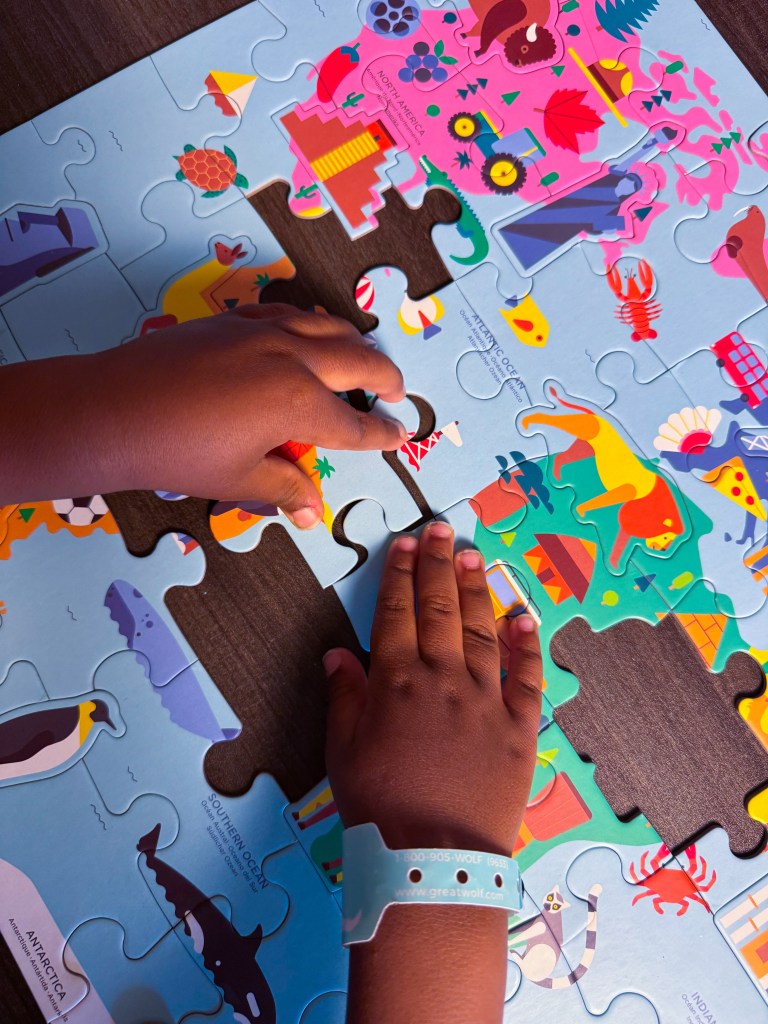
Who Would I Recommend It For?
I think this would be especially good for families looking for:
- Kindergarten geography activities
- Homeschool geography resources
- World map activities for kids
- Educational puzzles for 5-year-olds
- Hands-on kindergarten activities
- Continents and oceans activities
- Geography learning toys
- Screen-free educational activities
You definitely don’t have to use the Timberdoodle curriculum to enjoy it either.
It could work just as easily in a traditional classroom, homeschool room or simply as an educational activity to keep at home.
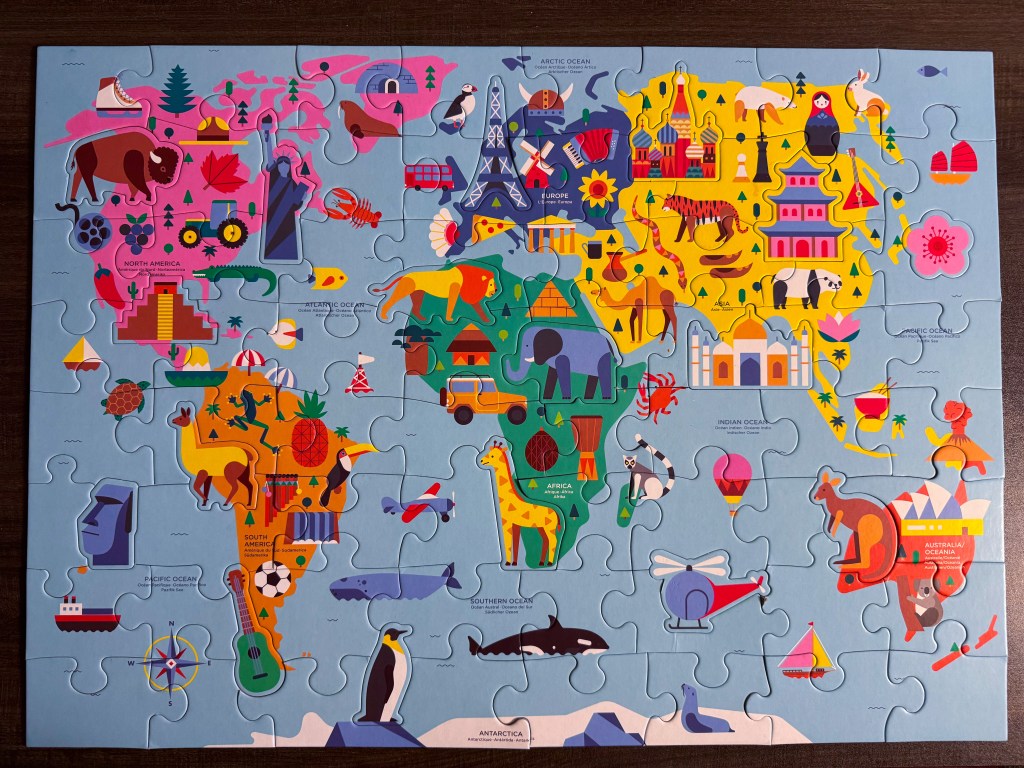
Final Thoughts
One of my favorite things about homeschooling kindergarten is being able to teach big ideas in really simple ways.
Geography doesn’t have to begin with memorizing a map.
Sometimes it can start with a child holding a puzzle piece, looking at a picture of a kangaroo and figuring out that it belongs all the way over in Australia.
The Map of the World Geography Puzzle gives us an easy, colorful and genuinely fun way to start making those connections.
And for kindergarten?
That’s plenty.
SHOP THE MAP OF THE WORLD GEOGRAPHY PUZZLE
More Kindergarten Homeschool Ideas
If you’re planning your own kindergarten or preschool homeschool, you may also enjoy:
Timberdoodle Kindergarten Homeschool Kit Review
-
How to Homeschool Preschool: A Simple Guide for Parents
If you’re wondering how to homeschool preschool, here’s the first thing I want you to know: you do not have to recreate a traditional classroom inside your house.
Your preschooler doesn’t need to sit at a desk for hours. You don’t need an elaborate homeschool room, a color-coded lesson planner, or a different worksheet for every subject.
Preschool at home can actually be pretty simple.
At this age, so much learning happens through reading, talking, playing, moving, creating, counting, exploring, and doing everyday life with you.
As a former classroom teacher and now a homeschool mom, I’ve learned that one of the biggest advantages of homeschooling preschool is being able to meet your child where they are.
Some preschoolers love sitting down with a workbook. Others would much rather count dinosaurs, build something, paint, run outside, or practice letters for five minutes before they’re ready to move on.
Both can learn.
So if you’re ready to start homeschooling preschool but aren’t quite sure what you’re actually supposed to do all day, here’s how I would keep it simple.
What Is Homeschool Preschool?
Homeschool preschool is simply providing your child’s early learning experiences at home rather than enrolling them in a traditional preschool program.
And “school” at this age can look very different from what we typically imagine.
It can be:
- Reading books together
- Counting snacks
- Practicing letter sounds
- Doing puzzles
- Coloring and painting
- Playing with blocks
- Sorting objects by color or size
- Going to the library
- Helping make lunch
- Playing outside
- Practicing scissors
- Singing songs
- Doing simple science experiments
- Talking about the things you see during a walk
You can absolutely use a preschool homeschool curriculum, but you don’t have to turn every moment into a formal lesson.
Preschool is a wonderful time to introduce learning while still leaving plenty of room for play.
What Age Should You Start Homeschool Preschool?
Most families think of preschool as roughly ages 3 to 4, with Pre-K typically happening the year before kindergarten.
But I wouldn’t get too caught up in the exact age.
A newly three-year-old and an almost-five-year-old can have completely different abilities, attention spans, interests, and needs.
Start with what your child can currently do and build from there.
If you have a younger preschooler, you may also want to read my Learning Activities for 2 Year Olds and Learning Activities for 3 Year Olds posts.
And if your child is closer to kindergarten, I have an entire list of Learning Activities for 4 Year Olds that gives you plenty of easy ideas to work into your homeschool routine.
What Should I Teach My Preschooler at Home?
This is usually the biggest question.
And you don’t need 12 preschool subjects.
I would focus on a handful of foundational areas.
Early Literacy
For preschool, early literacy can include:
- Recognizing letters
- Learning letter sounds
- Recognizing their own name
- Practicing writing their name
- Listening to stories
- Retelling simple parts of a story
- Learning rhyming words
- Building vocabulary
- Talking about characters and pictures in books
One of the easiest things you can do is simply read aloud every day.
And don’t underestimate all the learning that happens when your preschooler wants to read the same book 47 times.
Repetition is doing a lot of work behind the scenes.
Early Math
Preschool math can be very hands-on.
Work on things like:
- Counting
- Number recognition
- One-to-one correspondence
- Shapes
- Colors
- Sorting
- Patterns
- Comparing more and less
- Big and small
- Simple measurement
- Basic positional words like above, below, beside and behind
You don’t always need a worksheet.
Count blueberries at snack time. Sort LEGO pieces. Make patterns with blocks. Count stairs. Find circles around the house.
That’s math too.
Fine Motor Skills
Fine motor development is a huge part of preschool learning because children are still building the hand strength and coordination they’ll eventually use for writing.
Try:
- Play dough
- Puzzles
- Stickers
- Lacing activities
- Tongs
- Beads
- Painting
- Cutting with child-safe scissors
- Building blocks
- Drawing
- Tracing
- Using crayons and markers
If your preschooler isn’t interested in writing pages of letters yet, that doesn’t mean you can’t prepare those little hands for writing in other ways.
Science and Exploration
Preschool science does not need to be complicated.
Let them investigate the world.
You can explore:
- Weather
- Seasons
- Animals
- Plants
- Bugs
- The human body
- Magnets
- Sink-or-float activities
- Baking
- Nature
- Simple experiments
Ask questions.
“What do you think is going to happen?”
“Why do you think that happened?”
“What do you notice?”
Sometimes the conversation is the lesson.
Art and Creativity
Make room for:
- Painting
- Drawing
- Coloring
- Crafts
- Music
- Dancing
- Building
- Pretend play
- Open-ended art
You do not need every craft to turn into something Pinterest-worthy.
Sometimes a piece of construction paper, glue, markers and a pile of random craft supplies is enough.
Life Skills
This is one area I think we sometimes forget to count as “school.”
Preschoolers are also learning how to:
- Get dressed
- Clean up
- Put toys away
- Wash their hands
- Help prepare simple foods
- Carry their plate to the sink
- Follow two-step directions
- Take turns
- Wait
- Ask for help
- Take care of their belongings
- Help around the house
Those are valuable skills too.
Do You Need a Preschool Homeschool Curriculum?
No.
But you might want one.
There is a difference.
A good preschool curriculum can make homeschooling easier because you’re not waking up every morning thinking, Okay…what am I teaching today?
That’s one reason I like having an actual curriculum available even though we still do plenty of informal learning throughout the day.
A curriculum can give you:
- A sequence of skills
- Activities already planned
- Books and materials
- Hands-on learning ideas
- A general idea of what to work on next
You can still skip activities, slow down, repeat something, or take an entire day off.
Curriculum should be a tool, not something running your house.
The Preschool/Kindergarten Curriculum We Use
We’ve also been using the Timberdoodle Kindergarten Curriculum Kit, which I love because it includes so many hands-on materials instead of relying solely on worksheets.
There are games, thinking activities, books, manipulatives and other resources that allow me to work learning into our day in different ways.
You can read my full Timberdoodle Kindergarten Curriculum Kit review and unboxing here.
Even if your child isn’t doing a full kindergarten workload yet, having quality materials available can give you plenty to pull from based on what they’re ready for.
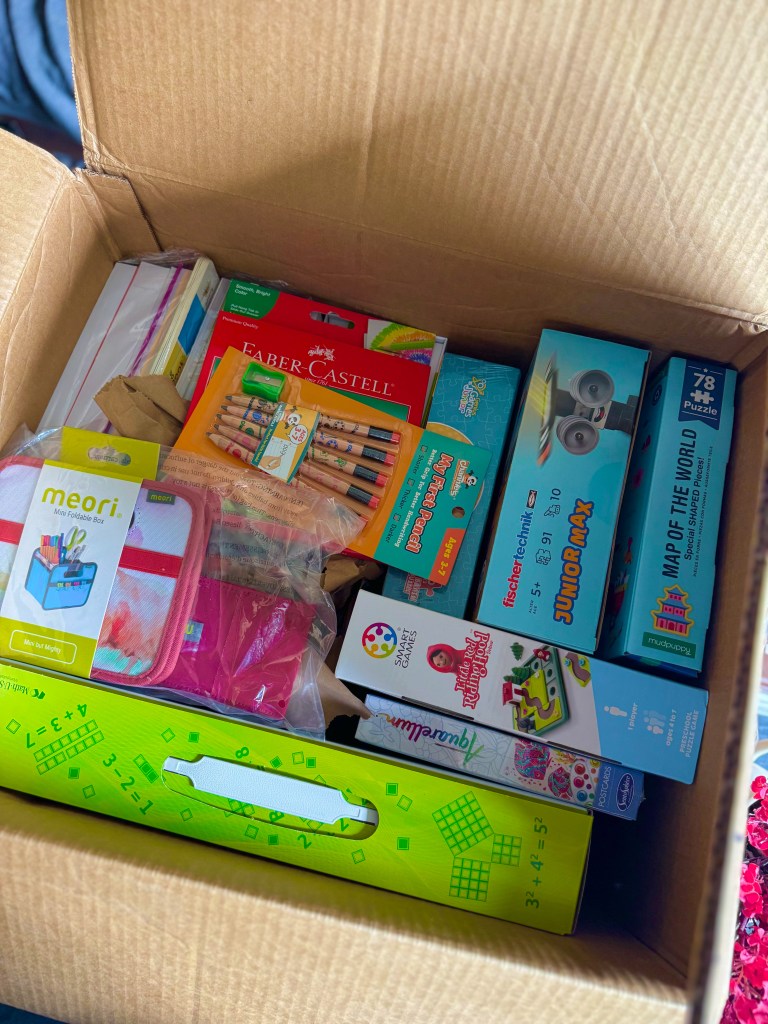
What Does a Homeschool Preschool Schedule Look Like?
Here’s where I want parents to release themselves from the idea that preschool needs to run from 8:00 a.m. until 3:00 p.m.
It doesn’t.
In our house, I prefer short bursts of intentional learning throughout the day rather than expecting a young child to sit through long lessons.
Your entire preschool day might contain only a few short periods of structured learning.
For example:
Simple Homeschool Preschool Routine
Morning
Breakfast
Get dressed and morning routine
Read aloud
10-15 minutes of literacy
Short math activity or game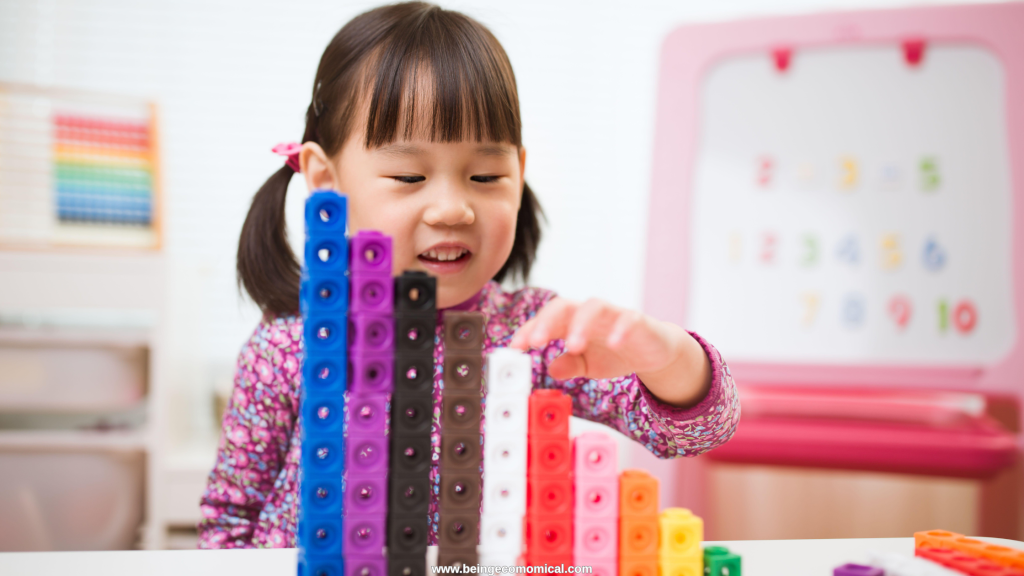
Late Morning
Snack
Hands-on activity, craft or sensory play
Free play
Outside timeAfternoon
Lunch
Quiet time or nap
Books, puzzles or educational toys
Art, music or another relaxed activityAnd you’re done.
Really.
You can even spread the structured activities throughout the day rather than completing them all together.
A preschooler who happily works for 10 minutes and comes back later for another activity is still learning.
You don’t win an award for making them sit for 45.
How Long Should Preschool Homeschool Take?
This will depend on the child.
I wouldn’t judge your homeschool preschool day by how many hours your child spends sitting at a table.
Instead, think about how much learning is happening throughout the entire day.
A short phonics activity + a counting game + two books + helping you cook + building a giant block tower + playing outside can make for a very full preschool learning day.
Some days your child may want to keep going.
Some days they’ll be completely uninterested.
Welcome to preschool.
Consistency over time matters more to me than forcing a perfect school day every single day.
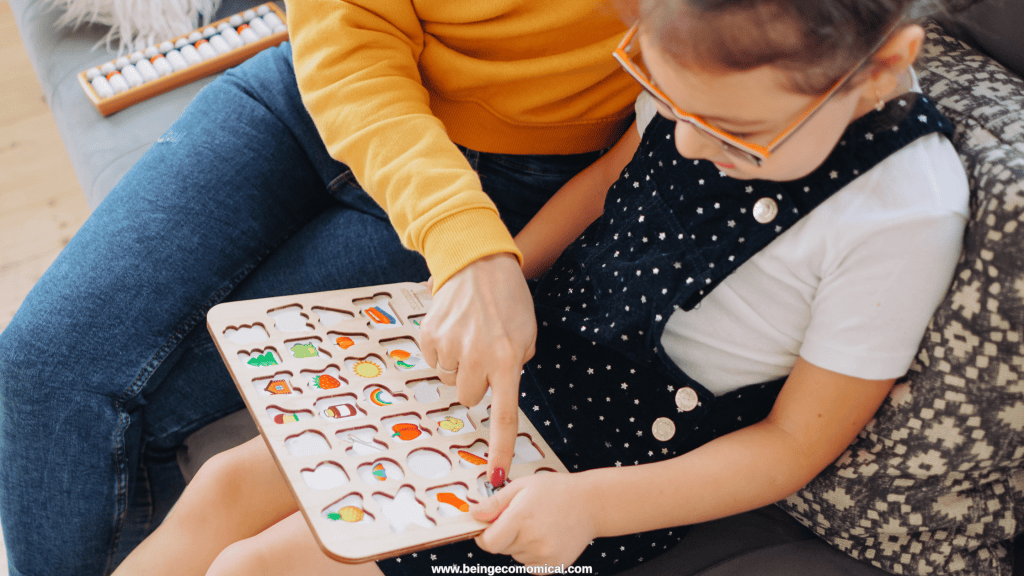
What If My Preschooler Doesn’t Want to Sit and Learn?
First: I wouldn’t automatically assume they’re not interested in learning.
They may just not be interested in learning that way.
This is where homeschooling becomes really useful because you can change the method.
If sitting down to practice numbers isn’t working, try:
- Jumping onto numbered pieces of paper
- Counting cars
- Building towers with a certain number of blocks
- Finding numbers around the house
- Counting while going up stairs
If writing letters isn’t happening today, try:
- Magnetic letters
- Letter puzzles
- Finger tracing
- Drawing letters in sand
- Making letters from play dough
- Finding letters in a favorite book
And if you get five focused minutes?
Use the five minutes.
You can come back later.
Young children don’t have to learn like older children.
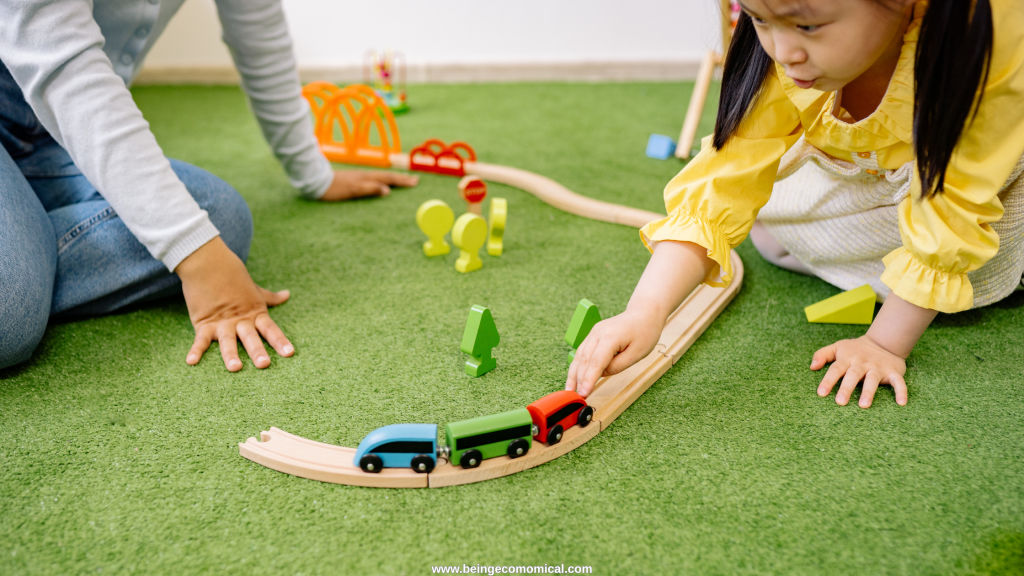
Use Your Preschooler’s Interests
This is one of my favorite homeschool tricks.
If your child currently loves dinosaurs, suddenly dinosaurs can teach almost everything.
Sort dinosaurs.
Read dinosaur books.
Draw dinosaurs.
Talk about herbivores and carnivores.
Make dinosaur footprints.
Measure dinosaurs.
Practice the letter D.
If it’s cars, superheroes, princesses, animals, space, bugs or construction trucks, use that.
You already have their attention.
Now sneak some learning into it.
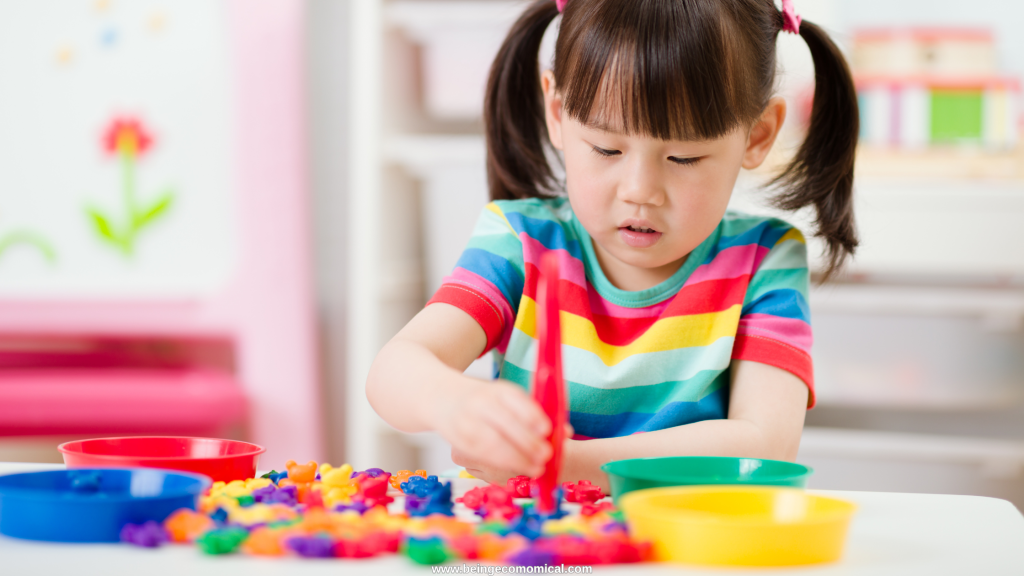
Don’t Forget Play
Play is not what preschoolers do after they’re finished learning.
A lot of learning happens during play.
While building with blocks, children are experimenting with balance, size, shapes and spatial relationships.
During pretend play, they’re practicing language, storytelling, cooperation and problem-solving.
While completing puzzles, they’re working on visual discrimination and persistence.
Even something that looks incredibly ordinary to us can involve a lot of thinking for a preschooler.
You can provide intentional learning opportunities without feeling like you need to direct every minute of their day.
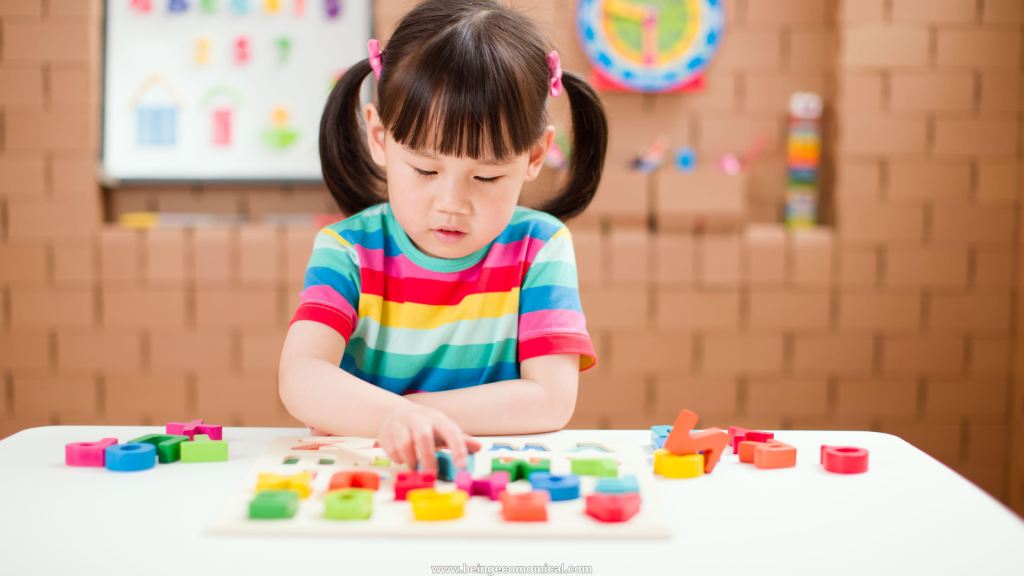
A Simple Weekly Preschool Homeschool Plan
If planning each day feels overwhelming, plan the week instead.
You could choose:
Monday: Letters + counting + art
Tuesday: Reading + shapes + sensory play
Wednesday: Letters + simple science + outdoor learning
Thursday: Numbers + fine motor activity + art
Friday: Review + library, baking, nature walk or field tripAnd of course, keep reading throughout the week.
You can make this as structured or relaxed as your family needs.
What Supplies Do You Need to Homeschool Preschool?
You don’t need to buy an entire classroom.
I’d start with:
- Crayons
- Washable markers
- Pencils
- Construction paper
- Child-safe scissors
- Glue sticks
- Play dough
- Counting manipulatives
- Blocks
- Puzzles
- Magnetic letters
- A few preschool workbooks
- Picture books
- Simple art supplies
Then add materials as you discover what your child actually enjoys.
Because there is nothing like buying a beautiful $40 preschool activity only to learn your child is far more interested in the cardboard box it arrived in.
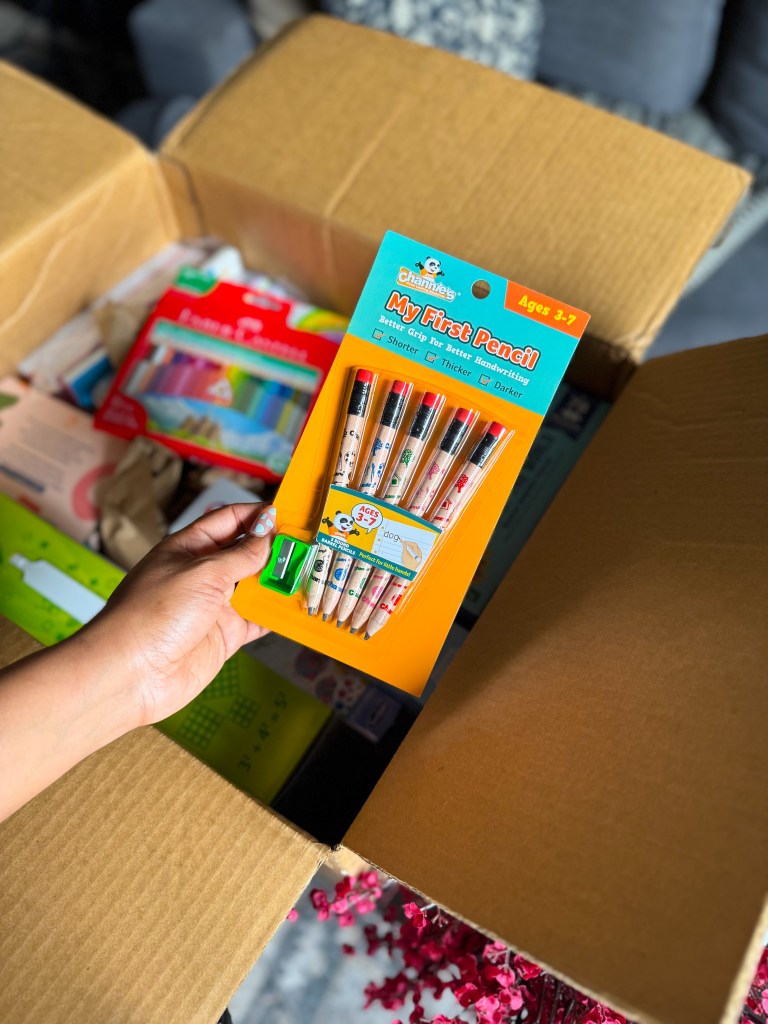
Take Learning Outside the House
Homeschool preschool doesn’t have to happen exclusively at home either.
Take advantage of:
- Libraries
- Children’s museums
- Zoos
- Aquariums
- Parks
- Nature centers
- Farms
- Community events
- Homeschool groups
- Playdates
- Grocery shopping
- Family trips
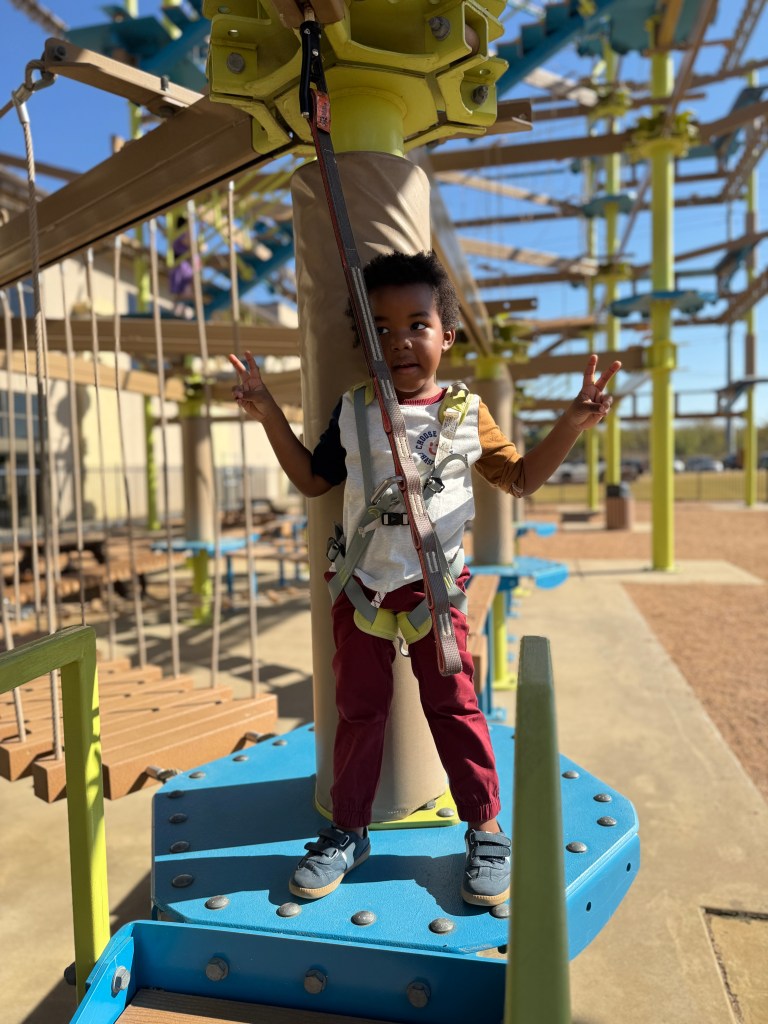
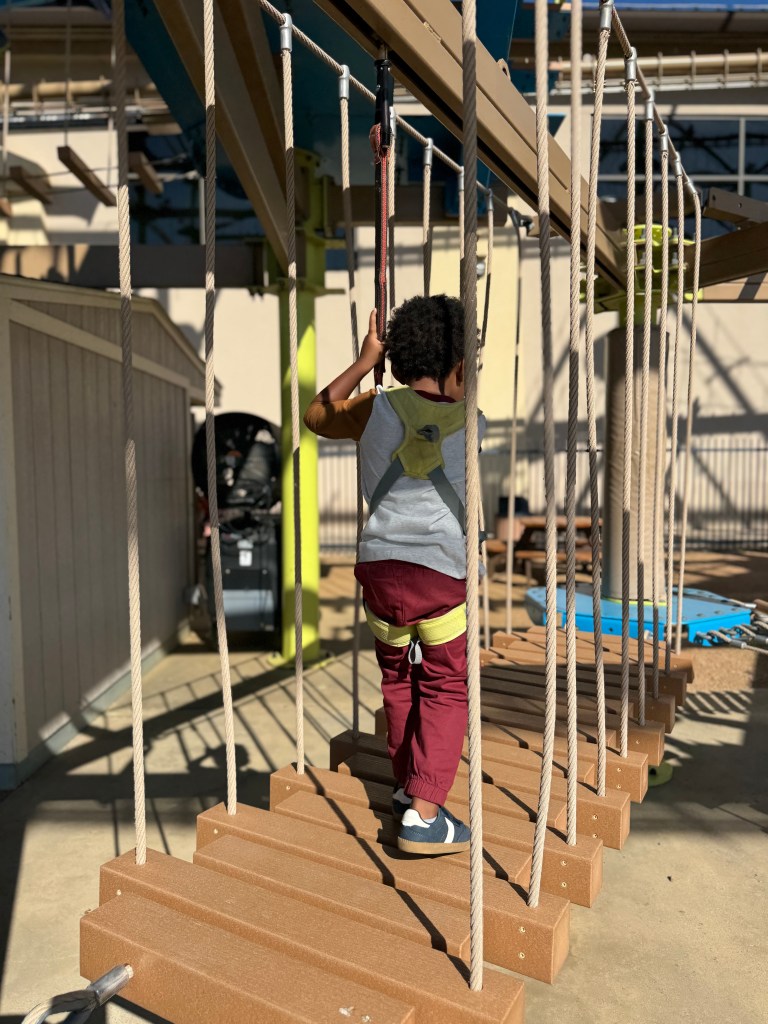
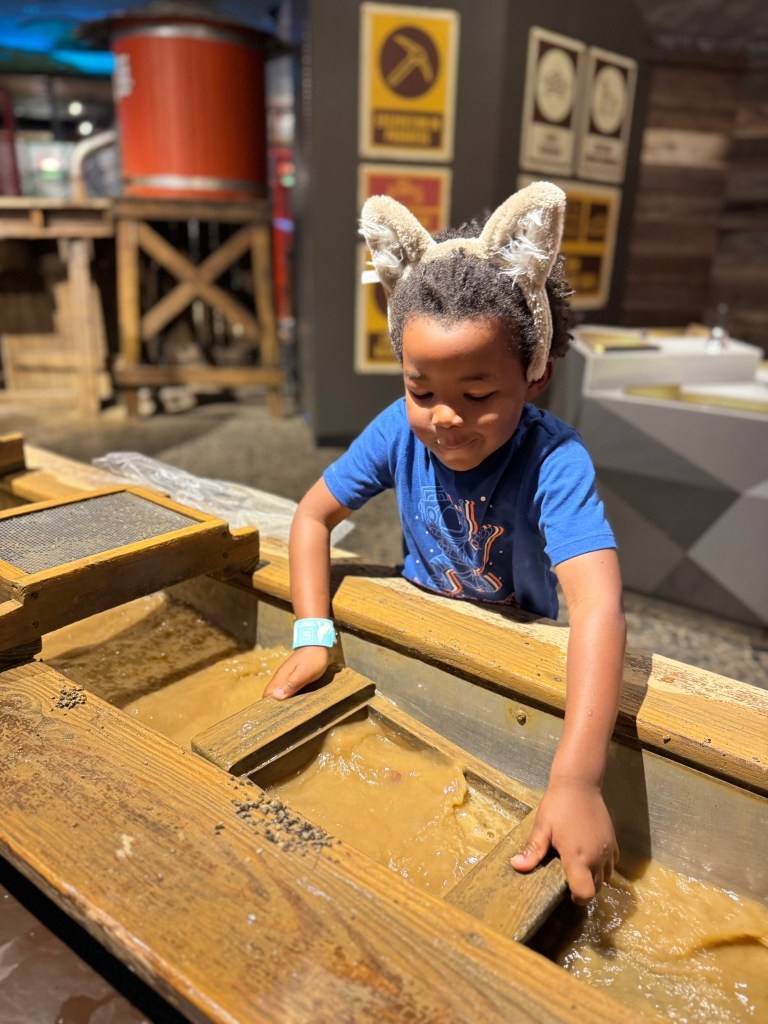
One of the things I love about homeschooling is realizing how much learning happens when we’re simply out experiencing the world.
A zoo trip can turn into animal science.
Grocery shopping involves counting, colors, categories, money and conversation.
Cooking involves measurement and following directions.
You don’t have to label every experience educational for it to count.
What About Socialization?
Your preschooler does not have to attend a traditional preschool classroom to interact with other children and adults.
Look for opportunities through:
- Library story times
- Homeschool groups
- Sports
- Church or community groups
- Playdates
- Classes
- Parks
- Children’s museums
- Family activities
- Neighborhood friends
Homeschooling doesn’t mean staying home.
Quite the opposite around here.
How Do I Know If I’m Doing Enough?
This is probably one of the hardest parts of homeschooling, especially at the beginning.
There will always be another activity you could do.
Another printable.
Another workbook.
Another curriculum.
Another mom on Pinterest whose four-year-old appears to be performing long division beside a perfectly organized sensory bin.
You don’t need to do everything.
Ask yourself:
Is my child making progress?
Are we reading?
Are we talking?
Are they playing?
Are they being exposed to letters and numbers?
Are their fine motor skills developing?
Are they becoming more independent?
Are they curious?
Are we giving them opportunities to explore?
That’s a much better picture of preschool than checking off 27 worksheets before lunch.
Homeschool Preschool Doesn’t Have to Be Complicated
If you’re trying to figure out how to homeschool preschool, start small.
Read together.
Practice letters and numbers.
Give them opportunities to create.
Let them move.
Go outside.
Play games.
Work on everyday life skills.
Add a curriculum if having a roadmap makes your life easier.
And most importantly, give yourself permission to adjust as you learn your child.
You don’t have to make your home look like school to give your preschooler a wonderful education.
In fact, one of the best parts about homeschooling is that you don’t have to.
More Preschool Learning Ideas
If you need ideas for what to actually do with your preschooler next, I’ve already put together tons of age-specific learning activities:
Learning Activities for 2 Year Olds – simple early learning ideas for toddlers who are ready to explore.
Learning Activities for 3 Year Olds – hands-on preschool activities for letters, numbers, fine motor skills, sensory play and more.
Learning Activities for 4 Year Olds – preschool and Pre-K activities for children getting closer to kindergarten.
And if you’re looking for a more complete homeschool option, don’t miss my Timberdoodle Kindergarten Curriculum Kit review to see exactly what came in our kit and how we’re using it at home.
Pin these for later…
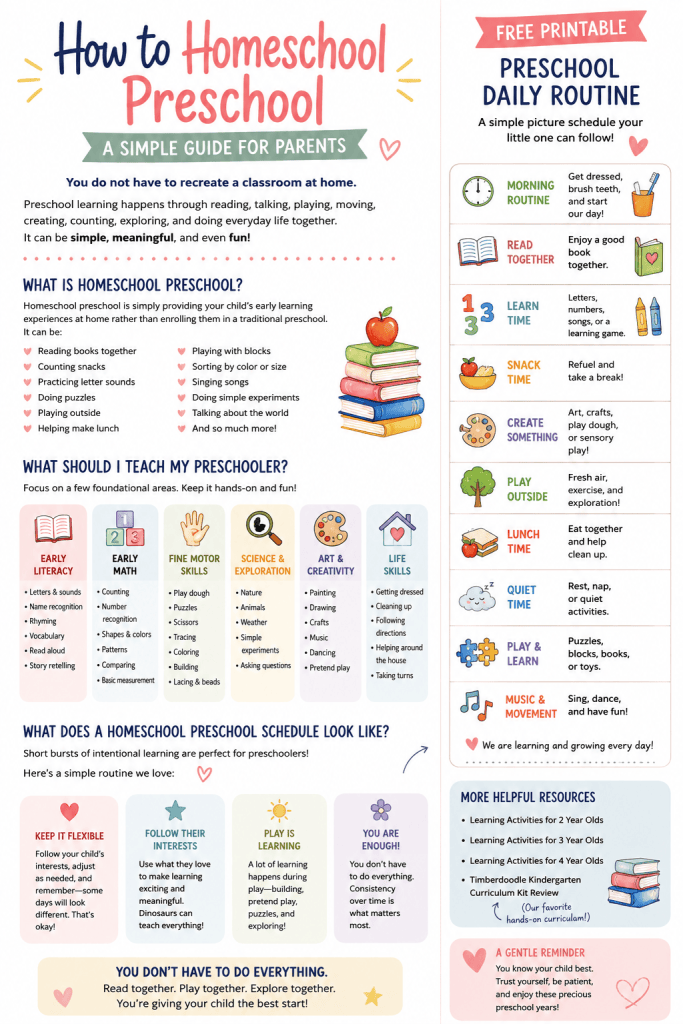
-
Subscribe
Subscribed
Have a WordPress.com account? Log in now.

