-
25 Fun Learning Activities for 4 Year Olds at Home
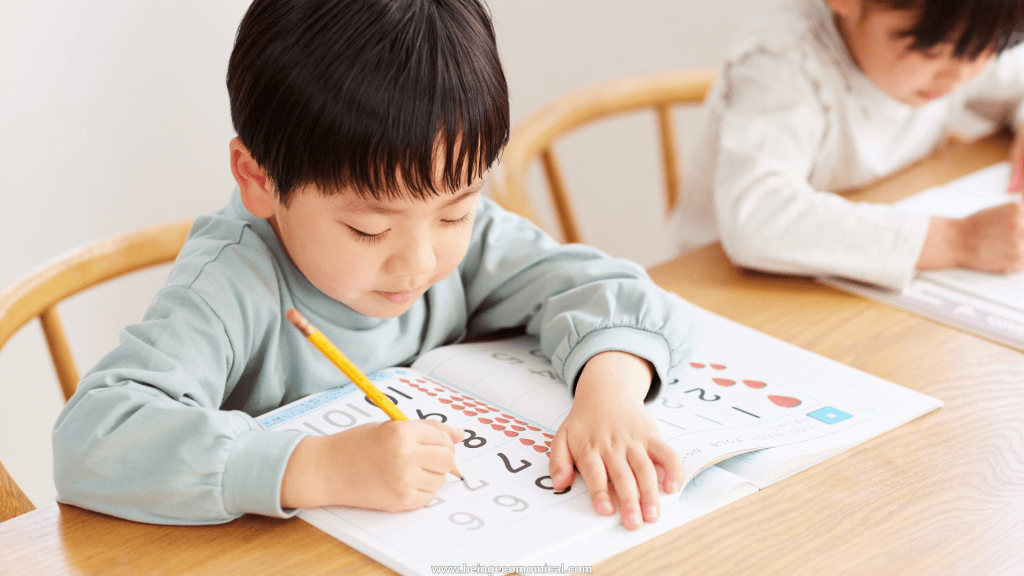
Looking for learning activities for 4-year-olds that are actually fun enough to hold their attention?
Four has been such an interesting age in our house. My four-year-old can sit down and work on letters, numbers, and even writing his name, but that does not necessarily mean he wants to.
Most days, he would much rather be moving, building, pretending, playing a game, or doing just about anything that doesn’t look like traditional schoolwork.
And honestly? That is okay.
As a former teacher and now a homeschooling mom, one thing I have learned is that young children don’t have to sit at a table for hours for learning to count.
So instead of trying to turn our entire day into preschool, I look for little opportunities to sneak learning into things he already enjoys.
These educational activities for 4 year olds work on early reading, math, fine motor skills, problem-solving, creativity, language, and even independence — without making your preschooler feel like they’re doing school all day.
What Should a 4 Year Old Be Learning?
At four, I am much more interested in building a strong foundation than trying to rush into kindergarten-level academics.
Some of the skills we naturally work on include:
- Recognizing letters and beginning letter sounds
- Recognizing numbers and counting objects
- Writing or recognizing their name
- Sorting and identifying patterns
- Building vocabulary
- Following simple directions
- Cutting, drawing, coloring, and strengthening fine motor skills
- Problem-solving
- Taking turns
- Completing simple tasks independently
- Using imagination and creativity
Most importantly, I want learning to still feel exciting.
You don’t need to work on all of these things every day. A quick activity in the morning, reading together later, helping make lunch, and building something with blocks can add up to a surprisingly full day of preschool learning.
1. Go on a Letter Scavenger Hunt
A letter scavenger hunt is one of the easiest learning activities for 4 year olds at home because your child gets to move.
Write letters on sticky notes and place them around the room. Have your child find each one and tell you which letter they found.
You can make it easier by focusing only on the letters in their name or more challenging by asking for the sound each letter makes.
Skills practiced: letter recognition, phonics, movement, visual discrimination
2. Build Their Name
Instead of sitting down and repeatedly writing their name, let your preschooler build it.
Write each letter of their name on a separate piece of paper, magnetic letter, craft stick, or block. Mix the letters up and let them put their name back in order.

Once they become comfortable with their first name, you can try a last name or other familiar words.
Skills practiced: name recognition, letter recognition, sequencing
3. Count Toys Instead of Worksheets
Four-year-olds can practice early math with the toys they already love.
Grab toy cars, blocks, dinosaurs, dolls, LEGOs, or anything else you have around the house and ask your child to count out a certain number.
“Can you give me five cars?”
“Can you build a tower with eight blocks?”
Now you’re working on counting and one-to-one correspondence without pulling out a worksheet.
Skills practiced: counting, number sense, following directions
4. Make Play Dough Letters and Numbers
Play dough is one of my favorite preschool supplies because it works on so many skills at once.
Have your child roll the dough into long pieces and use them to form letters, numbers, shapes, or even their name.
You can also simply let them create whatever they want and talk about what they made.
Skills practiced: fine motor skills, letter formation, numbers, creativity
5. Try a Color Sorting Game
Place a handful of colorful objects on the floor and ask your child to sort them.
You can use blocks, pom-poms, toy cars, cereal pieces, buttons, magnetic tiles, or anything else that comes in several colors.
Once color sorting is easy, sort by size, shape, type, or another characteristic.
Skills practiced: classification, colors, early math, reasoning
6. Make Patterns With Toys
Patterns are another easy early math skill to work into play.
Start something simple like:
red block, blue block, red block, blue block…
Then ask your child what comes next.
Eventually, try more complicated patterns like red-red-blue or car-dinosaur-car-dinosaur.
Skills practiced: patterns, prediction, logical thinking
7. Have a Preschooler-Friendly Cooking Lesson
One of the best classrooms in our house is the kitchen.
Let your four-year-old help pour ingredients, scoop flour, count spoonfuls, wash produce, stir batter, or arrange ingredients.
Talk about measurements, colors, textures, smells, and what happens as food cooks.
You don’t have to announce that you’re teaching math and science. Just cook together.
Skills practiced: math, science, vocabulary, fine motor skills, life skills
8. Use Scissors for Cutting Practice
Give your child child-safe scissors and scraps of paper to cut.
You can draw straight lines, zigzags, curves, and simple shapes for them to follow, or simply let them snip paper freely at first.

Cutting builds the small hand muscles children eventually use for writing.
Skills practiced: fine motor skills, hand-eye coordination, pre-writing skills
9. Make a Sticker Picture
Give your child stickers and a blank sheet of paper and let them create a picture or scene.
Peeling small stickers is excellent fine motor practice.
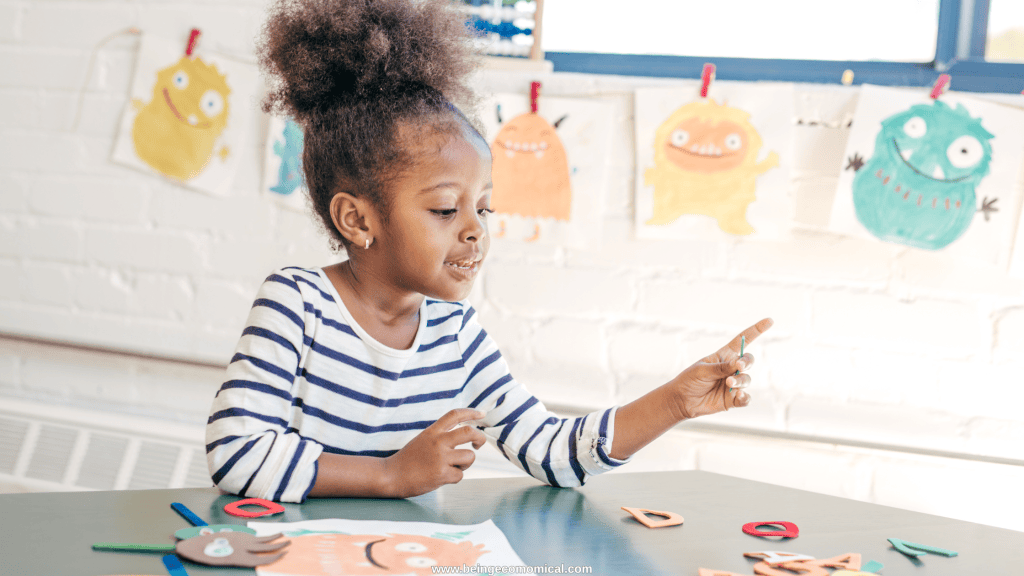
You can also add learning by asking your child to place three blue stickers on the page, make a pattern, sort stickers by type, or tell you a story about their picture.
Skills practiced: fine motor skills, counting, creativity, storytelling
10. Play “What Starts With…?”
Choose a letter sound and look around the house for things that begin with it.
For example:
“What can we find that starts with B?”
Book. Ball. Banana. Blanket.
At four, I keep this playful. If he doesn’t know an answer, I simply give him one instead of turning it into a test.
Skills practiced: beginning sounds, vocabulary, phonological awareness
11. Create an Indoor Obstacle Course
If your four-year-old is anything like mine, sometimes movement is exactly what learning needs.
Use pillows, painter’s tape, baskets, chairs, or other safe household items to create a simple obstacle course.
Then work learning into the directions:
“Jump four times.”
“Crawl under the chair.”
“Find the letter A before you move to the next station.”
“Put three balls in the basket.”
Skills practiced: gross motor skills, counting, listening, following directions
12. Practice Numbers With Sidewalk Chalk
Take learning outside with sidewalk chalk.
Write numbers on the ground and call one out for your child to jump on. Draw shapes and have them identify each one. Make a simple number line and hop from number to number.
You can do the same thing with letters.
Skills practiced: numbers, letters, gross motor skills
13. Let Them Build With Blocks
Building is learning.
Blocks, LEGOs, magnetic tiles, and other construction toys give preschoolers opportunities to plan, experiment, solve problems, compare sizes, create patterns, and understand how objects fit together.

Ask open-ended questions such as:
“What are you building?”
“What could make that tower stronger?”
“Which block do you think should go next?”
Then let them figure it out.
Skills practiced: STEM, spatial reasoning, problem-solving, creativity
14. Make a Simple Sensory Bin
You do not need a Pinterest-perfect sensory bin.
Fill a container with something your child can safely scoop and pour, then add cups, spoons, tongs, toys, letters, or other objects.
You can hide magnetic letters or numbers inside and have your child search for them.
Always choose materials appropriate for your child and supervise sensory play.
Skills practiced: sensory exploration, fine motor skills, letters, numbers
15. Play Grocery Store
Pretend play can cover an incredible amount of learning.
Set up a little grocery store with food from your pantry or play food. Let your preschooler shop, count items, sort food, make a list, or pretend to pay.
You can even write simple labels or prices together.
Skills practiced: counting, literacy, social skills, imaginative play
16. Read a Picture Book and Let Them Tell the Story
Instead of always reading every word yourself, occasionally look through a familiar picture book and ask your child to tell you what is happening.
There are no wrong answers.
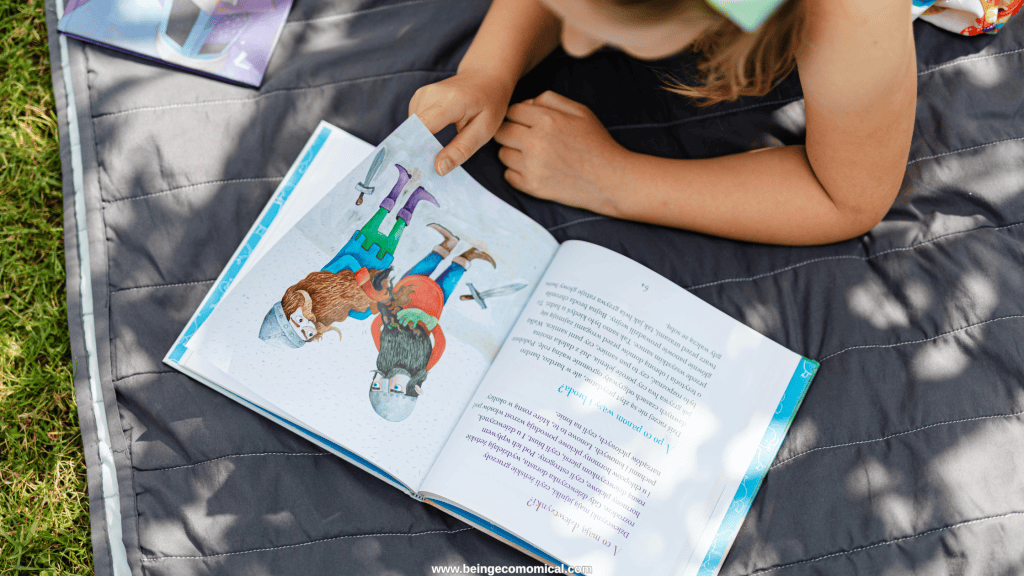
Talk about the characters, objects, colors, feelings, and what your child thinks will happen next.
Books with busy, detailed illustrations are especially good for this because there is so much to find and discuss.
Skills practiced: vocabulary, comprehension, storytelling, observation
17. Make a Shape Hunt
Ask your child to find shapes throughout your home.
Can they find:
- A circle?
- A square?
- A rectangle?
- A triangle?
Once they find one, talk about the object.
A clock might be a circle. A door may be a rectangle. A cracker might be a square.
Skills practiced: shapes, observation, early geometry
18. Give Them Real-Life Jobs
Some of our best preschool learning doesn’t look educational at all.
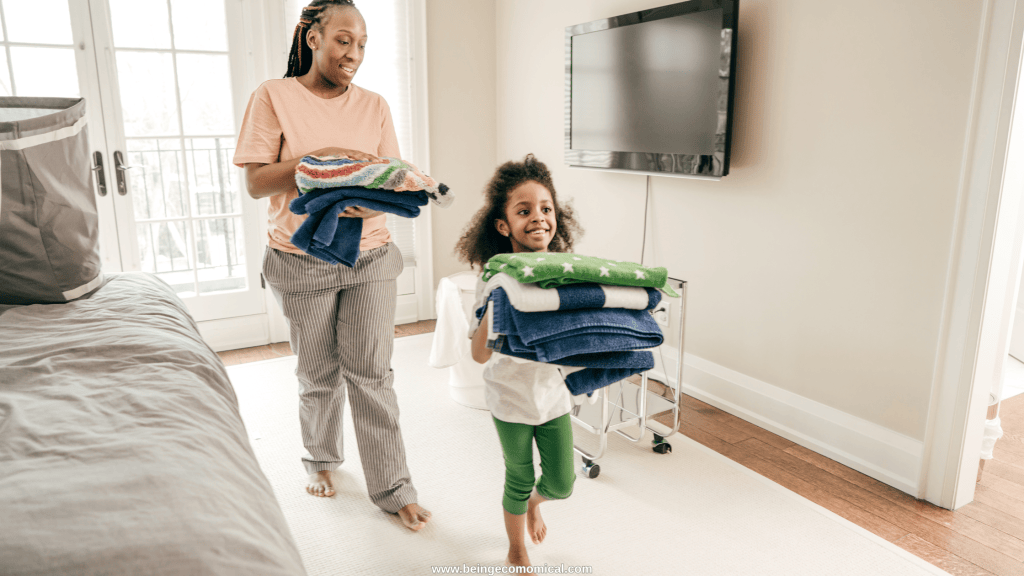
A four-year-old can help:
- Match socks
- Sort laundry
- Put utensils away
- Wipe the table
- Water plants
- Feed a pet
- Put toys into categories
- Help make their bed
These simple jobs teach sequencing, sorting, responsibility, independence, and problem-solving.
Skills practiced: practical life skills, sorting, independence, responsibility
19. Draw a Person
Give your preschooler a blank piece of paper and ask them to draw themselves or someone in the family.
Instead of correcting the drawing, talk about it.
“Tell me about your picture.”
“What is this part?”
“What should we add next?”
You might be surprised by the details they notice.
Skills practiced: fine motor skills, body awareness, creativity, language
20. Try a Sink-or-Float Experiment
Fill a bowl or container with water and gather several safe household objects.
Before putting each item into the water, ask:
“Do you think this will sink or float?”
Then test it.
You don’t need a complicated science lesson. Simply making a prediction and checking the result introduces the basic idea of experimenting.
Skills practiced: science, prediction, observation, vocabulary
21. Match Uppercase and Lowercase Letters
Write uppercase letters on one set of cards and their lowercase matches on another.
Start with only three or four pairs at a time.
Let your child match A with a, B with b, and so on.
You can gradually add more as they get comfortable.
Skills practiced: alphabet recognition, matching, visual discrimination
22. Practice Counting With Snacks
Snack time counts as school now. You’re welcome.
Give your child crackers, berries, grapes, cereal pieces, or another favorite snack.
Ask them to count ten pieces, divide snacks into two groups, make a simple pattern, or tell you which pile has more.
And then they get to eat the lesson.
Skills practiced: counting, comparing quantities, sorting, patterns
23. Use a Dry-Erase Board for Low-Pressure Writing
Some children are much more willing to practice writing when it doesn’t feel permanent.
A small dry-erase board lets your four-year-old practice letters, shapes, numbers, and their name and immediately erase everything to start over.
There is something about that little eraser that makes writing considerably more exciting.
Skills practiced: handwriting, letter formation, number formation
24. Play “I Spy”
“I Spy” requires absolutely no setup and works almost anywhere.
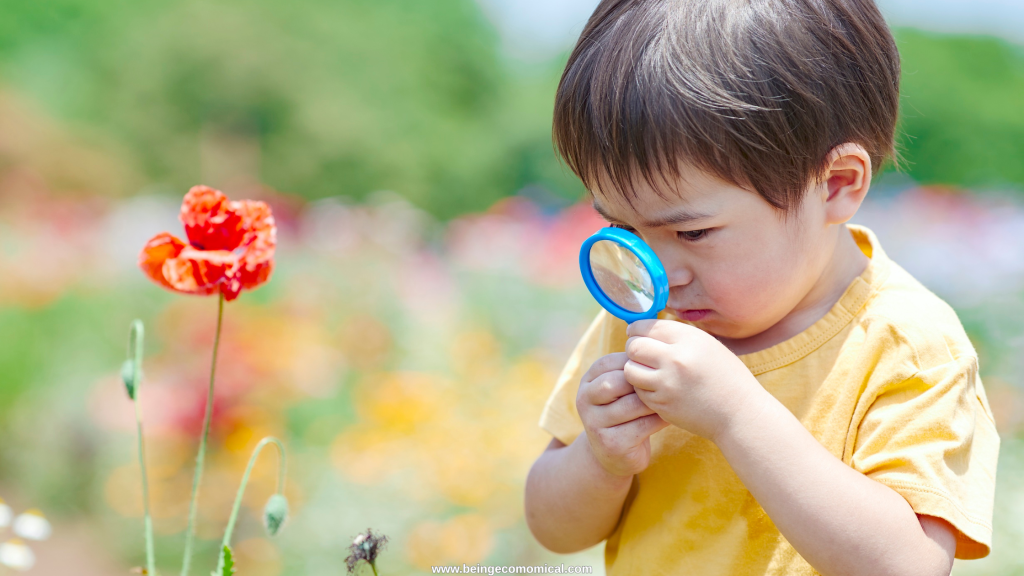
Try:
“I spy something red.”
“I spy something that starts with B.”
“I spy something shaped like a circle.”
“I spy three things that are blue.”
This is an easy activity for the car, grocery store, doctor’s office, restaurant, or home.
Skills practiced: vocabulary, colors, sounds, shapes, observation
25. Let Them Choose the Activity
This one might be the most important.
Sometimes I give my four-year-old two or three choices and let him decide what he wants to do.
“Do you want to build letters with play dough, do our scavenger hunt, or paint?”
He is still learning, but he gets some control over how he learns.
And at four, that can make a huge difference.
How Long Should a 4 Year Old Do Learning Activities?
You do not need to recreate a six-hour school day at home.
For us, preschool learning works much better in short bursts throughout the day.
We might spend a few minutes working on letters, move on to free play, read later, practice counting while we’re doing something else, and work fine motor skills into an art project.
If your child is engaged, keep going.
If they’re clearly finished, it’s okay to move on.
The goal isn’t to see how long you can make a four-year-old sit still. The goal is to give them frequent opportunities to explore, practice, ask questions, and learn.

Learning Through Play Still Counts
One thing I wish more parents heard is that preschool learning does not have to look like a child sitting quietly over a stack of worksheets.
Building a tower requires problem-solving.
Pretending to run a restaurant uses language and math.
Drawing strengthens the hands they’ll use for writing.
Helping you cook introduces measurement.
Looking through books builds vocabulary.
Playing a board game teaches counting and taking turns.
There is learning hidden everywhere once you start looking for it.
And especially at four, I would rather protect my child’s curiosity and gradually build those academic skills than spend our day fighting over worksheets.
Our Favorite Preschool Learning Resources
If you want a little more structure than individual activities, having a few good preschool resources around can make learning at home much easier.
We use a mixture of books, hands-on activities, games, art supplies, building toys, and curriculum resources depending on what we’re working on.
I especially like having hands-on options available because my preschooler isn’t always interested in sitting down for traditional learning — but give him something he can build, touch, move, or figure out, and I have a much better chance of keeping him engaged.
Have a Younger Child Too?
If you also have a toddler at home, I put together a separate list of learning activities for 2-year-olds with easier ideas designed for that stage.
As I continue this series, I’ll also be sharing more learning ideas by age so you can find activities that actually fit the stage your child is in.
Pin these for later…
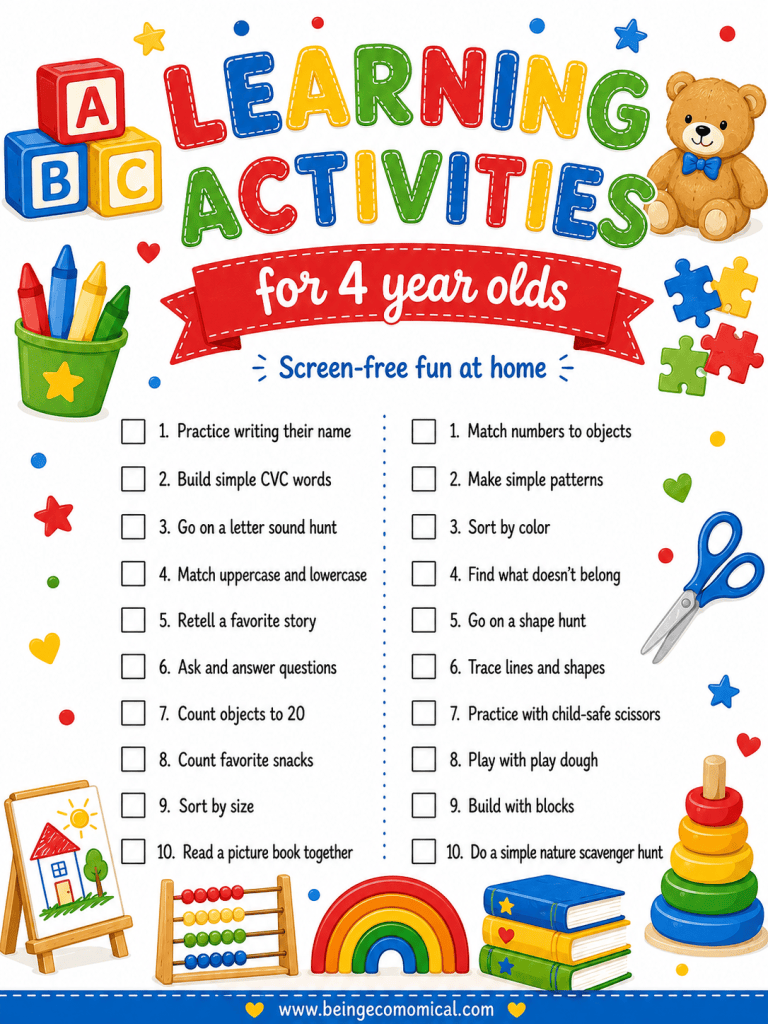
Frequently Asked Questions About Learning Activities for 4 Year Olds
What are good learning activities for a 4 year old?
Good learning activities for four-year-olds include letter hunts, counting games, puzzles, building activities, pretend play, play dough, simple science experiments, reading, drawing, sorting, pattern activities, and age-appropriate household jobs.
The best activities combine learning with something your child already enjoys.
What should I teach my 4 year old at home?
You can introduce letter recognition, letter sounds, counting, numbers, shapes, colors, patterns, name recognition, early writing, vocabulary, fine motor skills, problem-solving, and independence.
There is no need to master everything at once.
How do I teach my 4 year old who doesn’t want to learn?
First, consider changing what “learning” looks like.
If sitting with a workbook turns into a battle, try movement games, scavenger hunts, building, cooking, pretend play, art, or hands-on activities instead.
A child can learn letters while running across the backyard and learn math while building with blocks. Sometimes changing the activity is more effective than trying to convince a four-year-old to enjoy the original one.
Should a 4 year old be able to write their name?
Many preschoolers begin recognizing and attempting to write the letters in their names around this stage, but children develop at different rates.
You can practice name recognition through magnetic letters, tracing, play dough, puzzles, signs, and other playful activities in addition to pencil-and-paper writing.
Are worksheets good for 4 year olds?
Worksheets can be one tool, especially if your child genuinely enjoys them, but they do not need to make up the majority of preschool learning.
Four-year-olds can practice many of the same early academic skills through play, conversation, books, movement, art, building, games, and everyday routines.
Keep Preschool Learning Simple
If you’re trying to figure out how much your four-year-old should be learning every day, remember that you don’t have to do everything.
Pick an activity.
Read a book.
Count something.
Go outside.
Let them build.
Let them ask 847 questions.
And tomorrow, do a little more.
Those small moments really do add up.
Next: Read my Learning Activities for 2 Year Olds and Timberdoodle Kindergarten Curriculum Kit Review for even more ideas for learning at home.
-
30 Fun Learning Activities for 3 Year Olds at Home
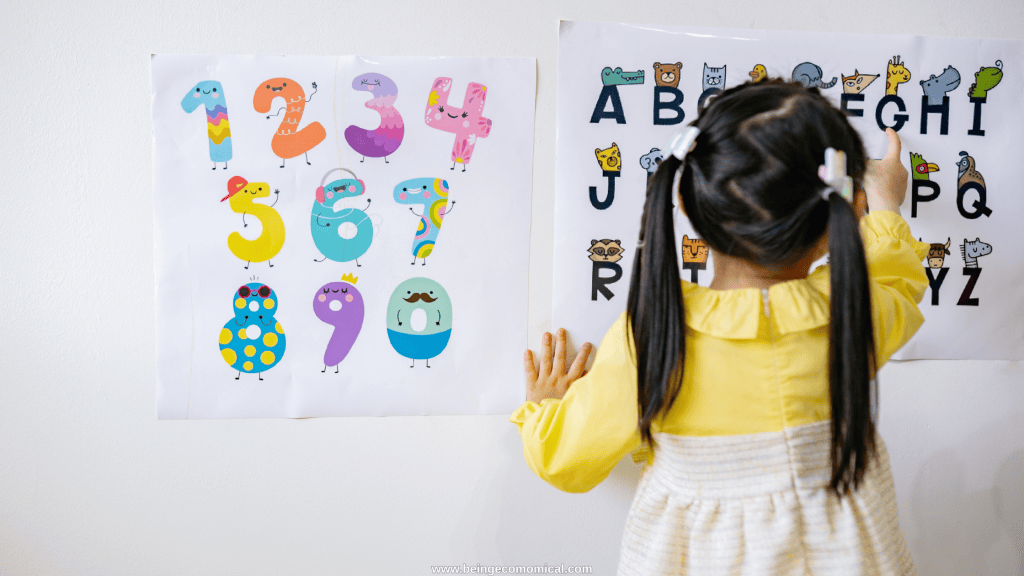
If you’re looking for learning activities for 3 year olds, you definitely don’t need to turn your house into a preschool classroom.
At three, kids are entering such a fun stage because they can do a little more independently, follow more detailed directions, have longer conversations and begin working on some of those early preschool skills.
But they’re still three.
That means there should be plenty of playing, moving, building, creating and exploring mixed in with any structured learning you do.
As a former teacher and homeschooling mom, one thing I’ve learned is that learning with young children does not have to look like sitting at a table doing worksheets all day.
In fact, some of the best learning activities for 3 year olds look a whole lot like playing.
Building a block tower can involve counting and problem-solving. Play dough can strengthen the muscles they’ll eventually use for writing. Talking about a favorite book builds vocabulary and comprehension.
So whether you’re homeschooling preschool, preparing your child for preschool, or simply looking for educational activities to do at home, these easy activities can help your three-year-old practice important early learning skills while still having fun.
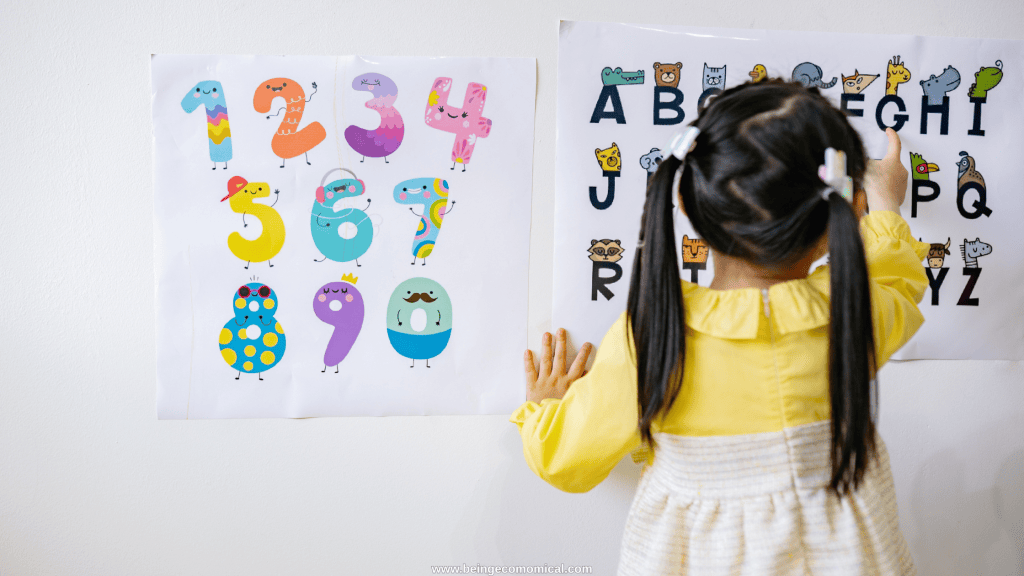
What Should a 3 Year Old Be Learning?
Before getting into the activities, it helps to remember that your three-year-old doesn’t need to master a huge academic checklist.
At this age, I focus much more on exposure, practice and building confidence.
Some skills you may begin working on with a three-year-old include:
- Recognizing colors
- Identifying basic shapes
- Counting objects
- Recognizing some numbers
- Recognizing some letters
- Recognizing the letters in their name
- Beginning to recognize their written name
- Listening for beginning sounds
- Building vocabulary
- Listening to and talking about stories
- Following one- and two-step directions
- Sorting and matching
- Completing simple patterns
- Developing fine motor skills
- Practicing pre-writing strokes
- Strengthening gross motor skills
- Solving simple problems
- Practicing independence
- Using imagination through pretend play
Your child doesn’t need to know all of these things by a specific day.
Three-year-olds develop at different rates, and repetition matters.
Instead of trying to check off every skill, introduce them naturally throughout your child’s day.
If your child is a little younger, I also put together 30 learning activities for 2 year olds with simple play-based ideas for todlers.
1. Practice Name Recognition
A child’s name is one of my favorite places to begin with early literacy because it already means something to them.
Write your child’s name in large letters on a piece of paper.
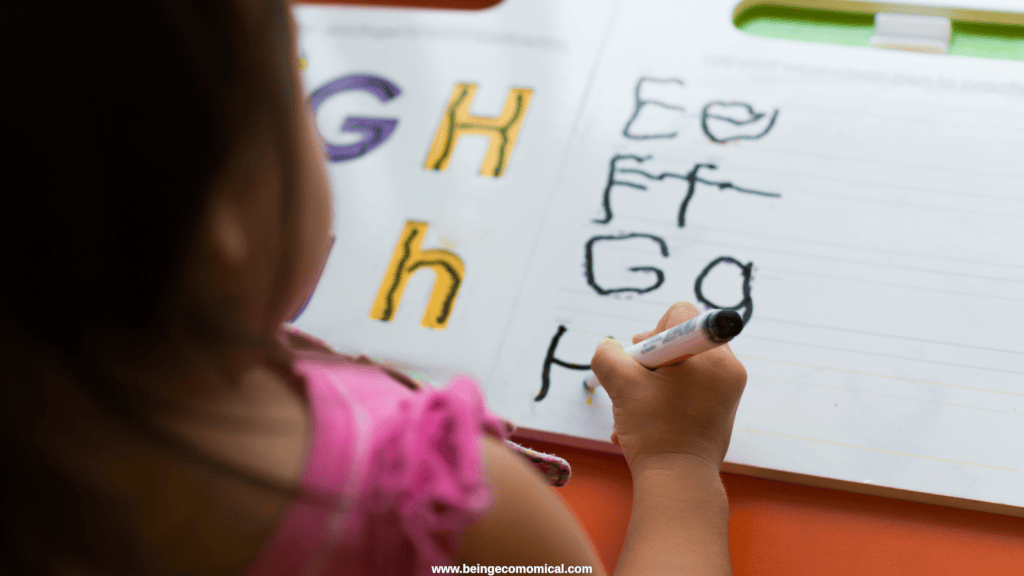
Point to each letter and say its name.
You can also write your child’s name on:
- Artwork
- A bedroom sign
- A reusable name card
- Their learning supplies
Over time, ask them to find their name among two or three other names.
You don’t have to expect them to spell or write it perfectly yet. Simply recognizing, “That’s my name!” is an important beginning skill.
2. Build Their Name With Letter Magnets
Once your three-year-old is familiar with their name, give them the letters they need to build it.
Magnetic letters work great for this.
Write their name on a piece of paper and let them match each magnetic letter to the correct letter.
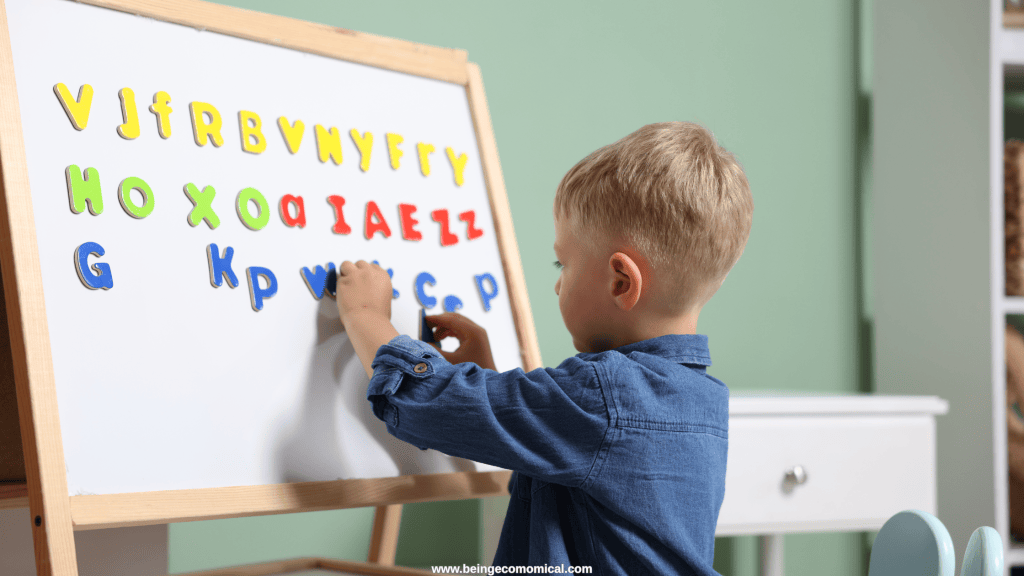
Eventually, see if they can build their name using the letters without the model underneath.
This works on letter recognition, matching and early spelling skills.
3. Go on a Letter Hunt
Choose one letter and look for it around your home.
You might find letters on:
- Food boxes
- Book covers
- Signs
- Clothing
- Toys
- Magazines
- Refrigerator magnets
I especially like using letters from a child’s name first because they’re usually more interested in finding something familiar.
You don’t need to introduce several letters at once.
One letter can become the letter you casually notice throughout the day or even throughout the week.
4. Match Uppercase and Lowercase Letters
If your child already recognizes a few letters, start introducing the idea that letters can look different.
Write a few uppercase and lowercase pairs on index cards.
For example:
A — a
B — b
C — c
Start with only a few pairs.
Have your child match the uppercase letter with its lowercase partner.
There is no need to work through the entire alphabet at once.
5. Listen for Beginning Sounds
Choose simple words your child already knows.
For example:
“Ball starts with b-b-b.”
“Baby starts with b-b-b.”
“Book starts with b-b-b.”
Then look around and see if you can find something else that begins with the same sound.
At three, this should still feel playful.
You’re simply helping your child begin noticing that words are made up of different sounds.
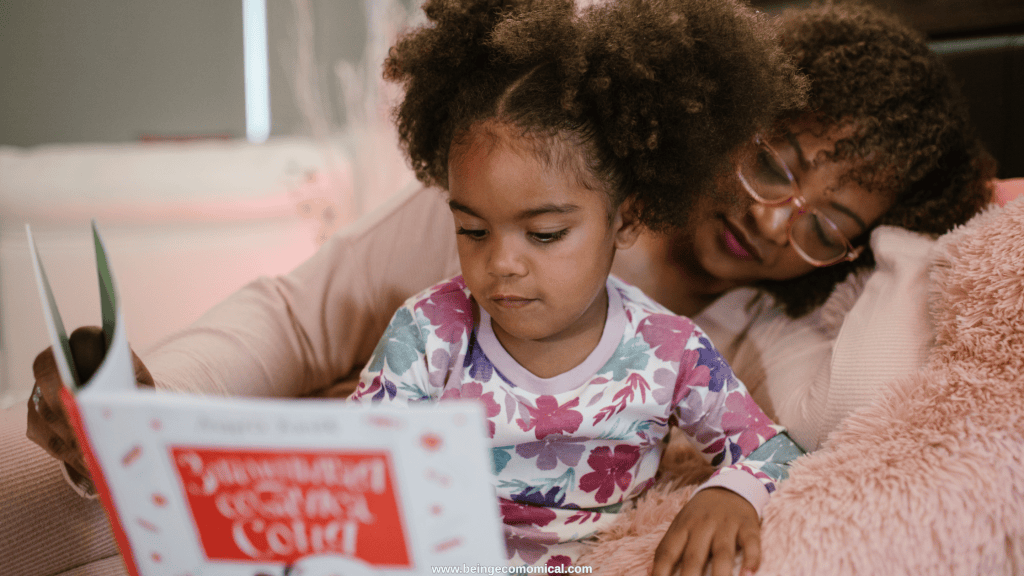
6. Read and Ask Questions
Reading aloud is already one of the best learning activities you can do with a three-year-old.
You can build even more language and comprehension skills by talking about what you’re reading.
Ask simple questions such as:
- What do you see?
- What color is that?
- What is the character doing?
- How do you think they feel?
- Where is the dog?
- What do you think will happen next?
Don’t feel like you have to quiz your child on every page.
Just weave questions into the conversation naturally.
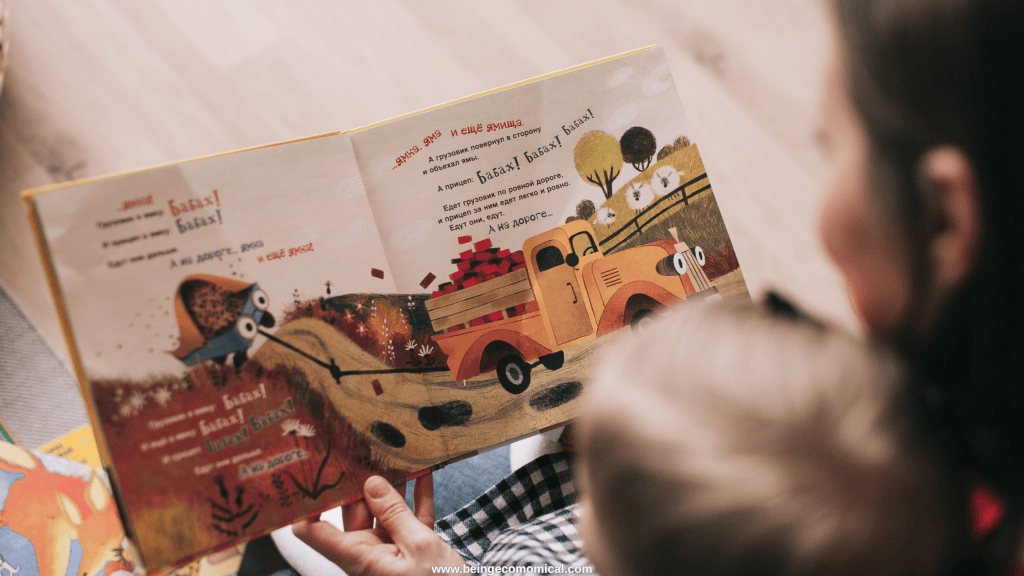
7. Let Them Retell a Favorite Story
Three-year-olds often want to hear the same book approximately 782 times anyway, so use that repetition to your advantage.
After reading a familiar story, flip through the pictures and ask:
“What happened here?”
Then:
“What happened next?”
Your child’s version doesn’t need to be perfect.
Story retelling helps with memory, sequencing, vocabulary and comprehension.
8. Put a Simple Story in Order
You can also practice sequencing without a book.
Talk through something your child already understands.
For example:
“First we put toothpaste on the toothbrush. Then we brush our teeth. Then we rinse.”
Or print or draw three simple pictures showing an activity and have your child put them in order.
Understanding what comes first, next and last is an important preschool skill.
9. Count Objects to 10
At three, you can begin moving beyond simply reciting numbers and practice actually counting objects.
Grab a small group of toys.
Touch each toy as you count:
“One, two, three, four…”
This teaches one-to-one correspondence—the understanding that each object represents one number as you count.
Start with smaller groups and work your way toward ten.

10. Count Their Favorite Snacks
Snack time absolutely counts as preschool.
Give your child a few crackers, grapes, blueberries or another favorite snack.
Ask:
“How many do you have?”
Count them together before eating.
Then change the amount.
“You ate one. How many are left?”
We’re not trying to teach formal subtraction at three. We’re simply helping them notice quantity in everyday life.
11. Match Numbers to Groups of Objects
Once your child starts recognizing a few written numbers, make a simple matching activity.
Write numbers 1 through 5 on separate pieces of paper.
Then make small groups of objects.
For example:
1 block
2 toy cars
3 crayons
Have your child match the written number with the correct quantity.
Start small and add more numbers as they become comfortable.
12. Make Simple Patterns
Use blocks, toy cars, snacks, stickers or anything else you have around the house.
Create an easy AB pattern:
Red, blue, red, blue…
Then ask:
“What comes next?”
Once your child understands that pattern, experiment with others.
For example:
Clap, stomp, clap, stomp.
Or:
Car, block, car, block.
Recognizing patterns builds early mathematical thinking and prediction skills.
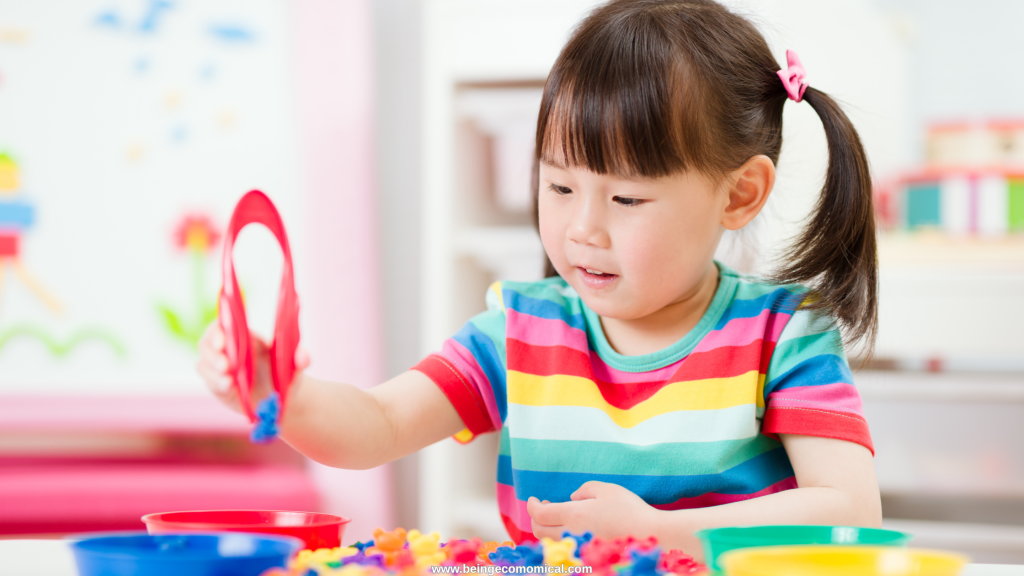
13. Sort by Color
Grab a collection of blocks, toy cars, large pom-poms or other colorful objects.
Ask your child to separate them by color.
Make a red group.
A blue group.
A yellow group.
Sorting teaches children to notice similarities and differences while building early classification skills.
14. Sort Objects Two Different Ways
This is where we can level the activity up from the toddler version.
First, sort toys by color.
Then mix everything back together and ask:
“Can we sort them a different way?”
Maybe this time you sort by:
- Size
- Shape
- Type of toy
- Animal versus vehicle
- Big versus small
This helps kids understand that the same objects can be classified in different ways.
15. Find What Doesn’t Belong
Place three or four objects in front of your child.
For example:
- Spoon
- Fork
- Plate
- Toy car
Ask:
“Which one doesn’t belong?”
Then talk about why.
This is such a simple activity, but it builds reasoning, categorization and language skills.
And sometimes your child will come up with an answer you weren’t expecting—which can be even more interesting.
16. Practice Basic Shapes
Practice identifying basic shapes such as:
- Circle
- Square
- Triangle
- Rectangle
You don’t necessarily need flashcards.
Look for shapes in real life.
A plate is a circle.
A door is a rectangle.
A cracker might be a square.
A slice of pizza resembles a triangle.
Connecting shapes to everyday objects can make them easier to remember.
17. Go on a Shape Hunt
Once your child knows a few shapes, turn it into a scavenger hunt.
Say:
“Let’s find circles!”
Walk through the house looking for things that are circular.
Then try another shape.
You can also play this while shopping, riding in the car or walking around your neighborhood.
18. Practice Pre-Writing Lines
Before expecting perfect letters, practice the strokes children eventually use to make them.
Draw large:
- Straight lines
- Horizontal lines
- Curved lines
- Zigzags
- Circles
- Crosses
Have your child trace over them with a crayon or washable marker.
You can even put the paper inside a reusable sleeve and use a dry-erase marker so they can practice again.

19. Trace the Letters in Their Name
Once your child is comfortable tracing basic lines and curves, introduce the letters in their name.
Write their name in large letters.
Let them trace over the letters.
At first, you can use dotted letters or a light-colored marker for them to follow.
Don’t worry about perfect handwriting.
We’re building familiarity and control.
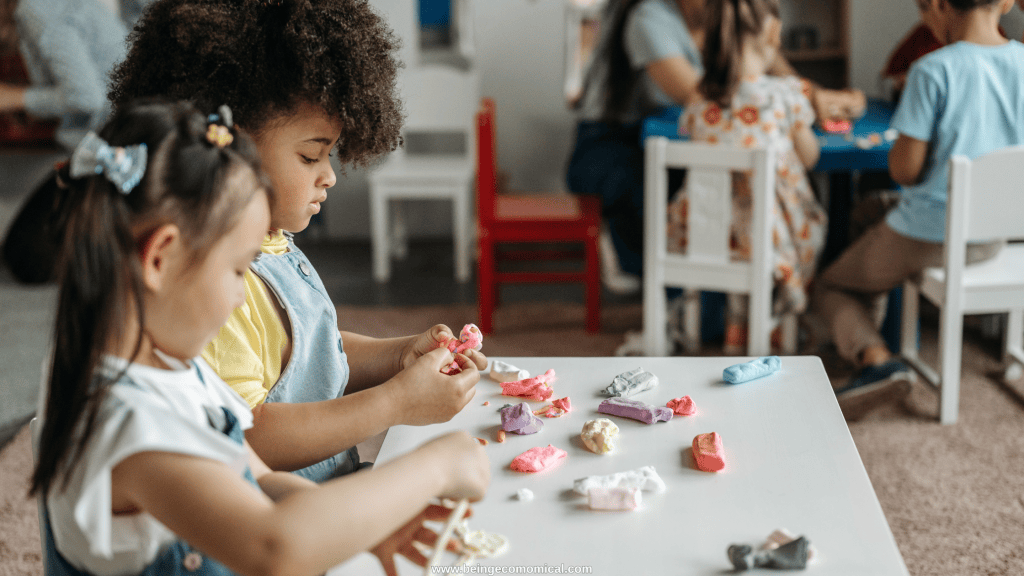
20. Play With Play Dough
Play dough is one of those preschool supplies that does a lot more than keep kids busy.
Rolling, pinching, squeezing and flattening dough strengthens the small muscles in their hands and fingers.
Those muscles are eventually used for:
- Writing
- Cutting
- Buttoning
- Zipping
- Drawing
You can also use play dough to form letters, numbers and shapes.
21. Practice Cutting With Child-Safe Scissors
With close supervision and age-appropriate scissors, three can be a great age to begin practicing cutting.
Start by letting your child simply snip paper.
Once they get comfortable opening and closing the scissors, draw thick straight lines for them to try to follow.
Eventually, introduce curved lines.
Cutting strengthens hand muscles and also requires both sides of the body to work together.
22. Peel and Place Stickers
Stickers are surprisingly good fine motor practice.
Peeling stickers from a sheet requires your child to pinch and manipulate something small.
Give your child paper and let them create freely.
Or draw several circles and ask them to place one sticker inside each circle.
You can also use stickers to practice counting.
“Can you put five stickers on this page?”
23. Tear and Glue Paper
Give your child colorful paper and let them tear it into smaller pieces.
Then use a glue stick to attach the pieces to another sheet.
You can make:
- A rainbow
- A letter
- A shape
- A picture
- A completely unidentifiable masterpiece
Tearing paper strengthens little hands, while placing and gluing pieces works on coordination.
24. Complete Simple Puzzles
Age-appropriate puzzles are great for three-year-olds because they encourage:
- Problem-solving
- Spatial awareness
- Fine motor skills
- Visual discrimination
- Persistence
When your child struggles with a piece, try not to immediately place it for them.
You can say:
“Try turning it.”
Or:
“Do you see another space where it might fit?”
Give them a chance to work through the problem.
25. Play a Simple Memory Game
Place three familiar objects on the table.
Let your child look at them.
Ask them to close their eyes while you remove one.
Then ask:
“What’s missing?”
Once that becomes easy, add another object.
This simple game works on memory, concentration and observation.
26. Practice Following Two-Step Directions
By age three, you can begin practicing slightly longer directions during play.
For example:
“Pick up the red block and put it in the basket.”
Or:
“Bring me the book and then sit on the couch.”
Start with simple directions involving things your child already understands.
Following directions helps build listening skills, working memory and independence.
27. Make a Preschool Scavenger Hunt
Create a short scavenger hunt around the house.
Ask your child to find:
- Something red
- Something soft
- A circle
- Three blocks
- Something that starts with B
- Something small
- Their favorite book
This one activity can cover colors, shapes, counting, vocabulary, letter sounds and following directions.
And because they’re moving around, it doesn’t necessarily feel like “school.”
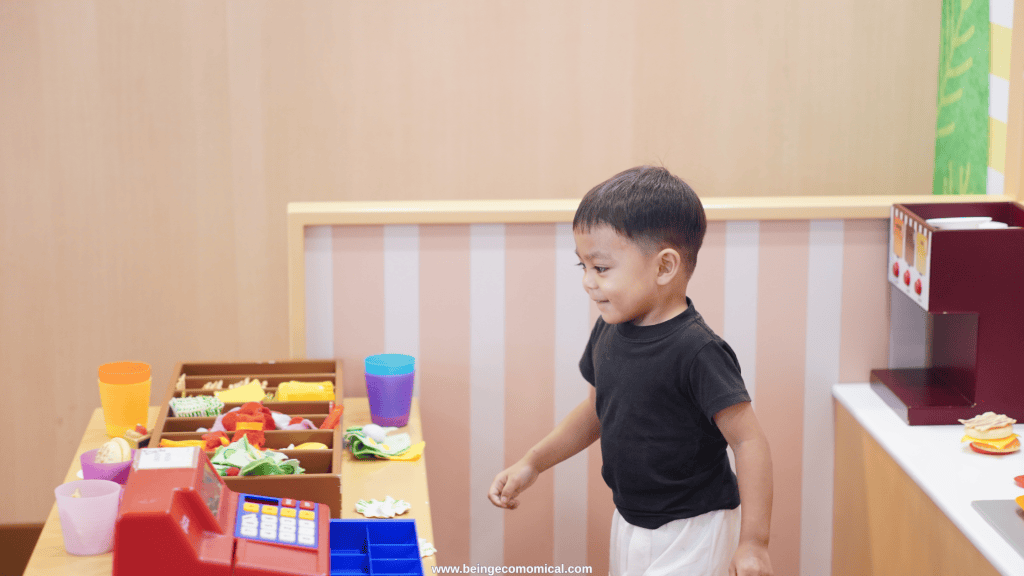
28. Play Pretend Store
Set up some play food or safe groceries and turn your kitchen or playroom into a store.
Your child can be the shopper while you work the register—or switch roles.
Try giving them requests:
“I need two apples.”
“Can I buy one banana?”
“Can you find something green?”
Pretend play supports language, imagination, social skills and early math.
29. Help in the Kitchen
Real life provides some of the best preschool learning opportunities.
With appropriate supervision, your three-year-old may be able to help:
- Pour pre-measured ingredients
- Stir
- Sprinkle toppings
- Count ingredients
- Wash produce
- Tear lettuce
- Carry lightweight items
- Help set the table
Talk through the steps as you’re cooking.
“First we’re pouring the flour. Next we’re adding the milk.”
Now you’re working on sequencing, vocabulary, counting and practical life skills at the same time.
30. Make an Indoor or Outdoor Obstacle Course
Three-year-olds still need lots of movement.
Create a simple obstacle course using safe household items or outdoor equipment.
Your child might:
- Crawl under something
- Step over something
- Walk along a line
- Jump onto a pillow
- Toss a ball into a basket
- Run to a certain spot
- Balance on one foot
Add directions such as:
“Jump two times, then crawl to the pillow.”
Now you’re combining gross motor development with counting, listening and following directions.
How Long Should Learning Activities Be for a 3 Year Old?
Short.
You do not need to require a three-year-old to sit through a 30- or 45-minute lesson.
Some activities may keep their attention for five minutes.
Something they really enjoy might hold their attention much longer.
I focus much less on the clock and much more on the child.
If they’re engaged, keep going.
If they have completely checked out, it’s okay to move on and come back to the skill another day.
At three, learning should still include plenty of movement, imagination, exploration and free play.
Do I Need a Preschool Curriculum for My 3 Year Old?
Not necessarily.
Some families love having a preschool curriculum because it provides structure and takes some of the guesswork out of deciding what to teach.
Other families prefer a relaxed, play-based preschool year.
And plenty of families fall somewhere in between.
We homeschool, and one of the things I love about learning at home is being able to use structured resources when they’re helpful while still recognizing all of the learning that happens during normal life.
At three, I would worry much less about recreating a traditional classroom and much more about helping your child enjoy learning.
If you’re starting to look ahead at more structured learning, I also shared our experience with the Timberdoodle Kindergarten Curriculum Kit.
It’s a helpful look at what an all-in-one homeschool curriculum can include and may give you ideas for resources you want to introduce as your child gets older.
How Can I Teach My 3 Year Old at Home?
You can keep your preschool routine incredibly simple.
For example:
Read: Read one or two books together.
Learn: Do one short activity involving letters, numbers, shapes, colors or another preschool skill.
Create: Draw, paint, use play dough, cut, glue or make something.
Move: Go outside, dance, take a walk or do a gross motor activity.
Play: Give your child plenty of time for independent and imaginative play.
You can spread those things throughout your day instead of trying to fit everything into one long preschool session.
And some days?
Reading books, cooking together and going outside may be enough.
Have a younger toddler at home too? You can also check out these easy learning activities for 2 year olds.
What Are the Best Educational Activities for 3 Year Olds?
The best learning activities are usually the ones your child actually wants to participate in.
At three, I especially love activities that work on several areas of development at the same time.
Play dough can strengthen fine motor skills while introducing letters.
Cooking can include counting, sequencing and vocabulary.
Reading can develop language, comprehension, memory and imagination.
A scavenger hunt can involve colors, shapes, letters, listening and movement.
That’s why I wouldn’t get too caught up in whether something looks “educational” enough.
If your three-year-old is exploring, talking, building, moving, creating, pretending, asking questions and figuring things out, they are learning.
Keep Learning Simple at Three
There are so many learning activities for 3-year-olds that you could try, but you don’t need to do all of them.
Pick a few that work well for your child and repeat them.
Repetition may feel boring to us, but young children are strengthening skills every time they do something again.
And if an adorable activity you spent 30 minutes preparing keeps your child’s attention for approximately 47 seconds?
Welcome to preschool.
Sometimes the cardboard box is going to win.
Keep books accessible. Keep crayons and paper nearby. Count things throughout the day. Talk to your child. Let them help you. Build things. Make things. Get outside. Play.
There is already so much learning happening there.
Pin these for later:
Frequently Asked Questions About Learning Activities for 3 Year Olds
What should a 3 year old be learning at home?
At three years old, children can begin working on basic preschool skills like colors, shapes, counting, letter recognition, name recognition, early letter sounds, fine motor skills, following directions and simple patterns.
You do not need to teach all of these skills through formal lessons. Reading, playing, cooking, sorting toys, talking and exploring together can all become learning opportunities.
What educational activities are best for a 3 year old?
Some of the best educational activities for 3 year olds include reading together, counting objects, sorting colors and shapes, playing with puzzles, using play dough, practicing with child-safe scissors, doing simple scavenger hunts and playing pretend.
Activities that combine learning with movement and play are especially helpful at this age.
How long should a 3 year old do learning activities?
Learning activities for a three-year-old can be short.
You may only spend five to fifteen minutes on a structured activity before moving on to something else. If your child is interested and wants to continue, you can always keep going.
The goal is not to make your three-year-old sit for a certain amount of time. Short, positive learning experiences throughout the day can work beautifully.
Should a 3 year old know the alphabet?
A three-year-old does not need to know the entire alphabet.
Many children begin recognizing some letters between ages three and four, especially letters they see frequently, like the letters in their own name.
You can introduce letters gradually through books, songs, magnetic letters, letter hunts and everyday play.
Should a 3 year old be able to count to 10?
Some three-year-olds can recite the numbers to 10, while others are still learning.
More important than simply memorizing the number sequence is beginning to understand that numbers represent quantities.
Practice counting actual objects like blocks, snacks, toy cars or steps so your child can begin connecting number words to real amounts.
Should a 3 year old be able to write their name?
Most three-year-olds are still developing the fine motor control needed for handwriting, so they do not need to be able to write their name independently.
You can begin with name recognition, tracing large letters, drawing lines and shapes, using play dough and other fine motor activities.
Those early skills help prepare their hands for writing later.
What are good fine motor activities for 3 year olds?
Good fine motor activities for three-year-olds include play dough, stickers, puzzles, tearing paper, gluing, drawing, stringing large beads, building with blocks and practicing with child-safe scissors.
Fine motor activities help strengthen the hands and fingers children eventually use for writing, dressing and other everyday tasks.
How can I teach my 3 year old without worksheets?
There are plenty of ways to teach a three-year-old without worksheets.
You can count toys, hunt for letters, sort household objects, read books, cook together, make patterns, build with blocks, play pretend, go on scavenger hunts and practice shapes using objects around the house.
At this age, hands-on learning often feels much more natural than sitting down with paperwork.
Do 3 year olds need preschool curriculum?
A formal preschool curriculum is optional at age three.
Some parents enjoy having a curriculum because it provides ideas and structure. Others prefer to follow their child’s interests and use books, play and everyday experiences.
You can also combine the two approaches by using a simple curriculum for guidance while keeping most of your preschool day relaxed and play-based.
How do I keep my 3 year old interested in learning?
Start with things your child already enjoys.
If they love cars, count cars, sort them by color and make patterns with them. If they love animals, use toy animals for matching, vocabulary and pretend play.
Keep activities short, include plenty of movement and don’t be afraid to stop when your child loses interest.
Learning at three should feel like something they get to do—not something they have to endure.
-
Learning Activities for 2 Year Olds: 25+ Easy Ways to Learn Through Play
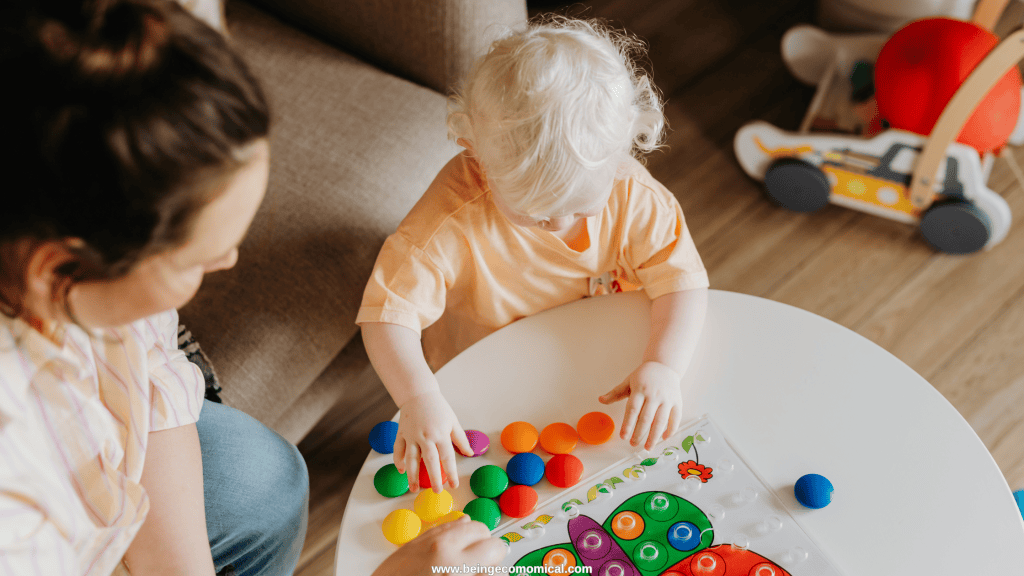
If you have a two-year-old, you already know that getting them to sit down for a formal “lesson” is probably not happening.
And honestly, it doesn’t need to.
At two years old, play is learning.
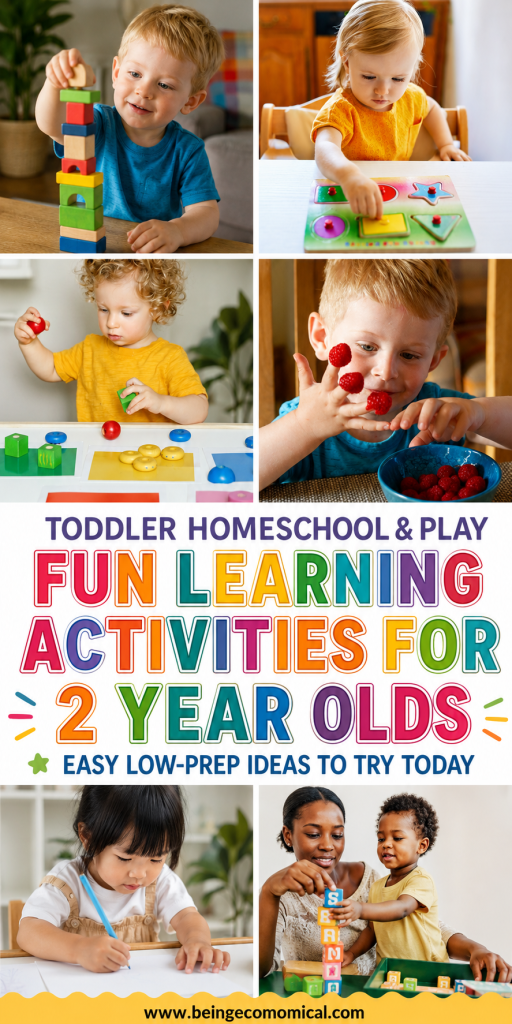
Pouring water from one cup to another, pointing out the dog in a picture book, sorting toys by color, stacking blocks, helping you put laundry into a basket — all of these simple activities are helping your toddler build important skills.
So if you’re looking for learning activities for 2 year olds, you don’t need an elaborate toddler curriculum or a house full of educational toys. There are plenty of easy activities you can do at home using toys and supplies you probably already have.
Below are some of my favorite educational activities for 2 year olds that work on early language, colors, numbers, fine motor skills, gross motor skills, problem-solving and more.
What Should a 2 Year Old Be Learning?
Before jumping into the activities, it helps to remember that learning at this age looks very different from traditional school.
Two-year-olds are learning through touching, moving, talking, repeating, pretending and exploring.
At around this age, toddlers may begin sorting objects by shapes and colors, using simple phrases, following simple directions, engaging in pretend play and becoming increasingly independent.
They are also developing physical skills through activities like running, climbing, kicking and throwing.
That means something as simple as saying, “Can you bring me the red block?” can work on listening skills, vocabulary and color recognition at the same time.
You don’t need to recreate preschool in your living room.
A few intentional moments throughout the day are plenty.
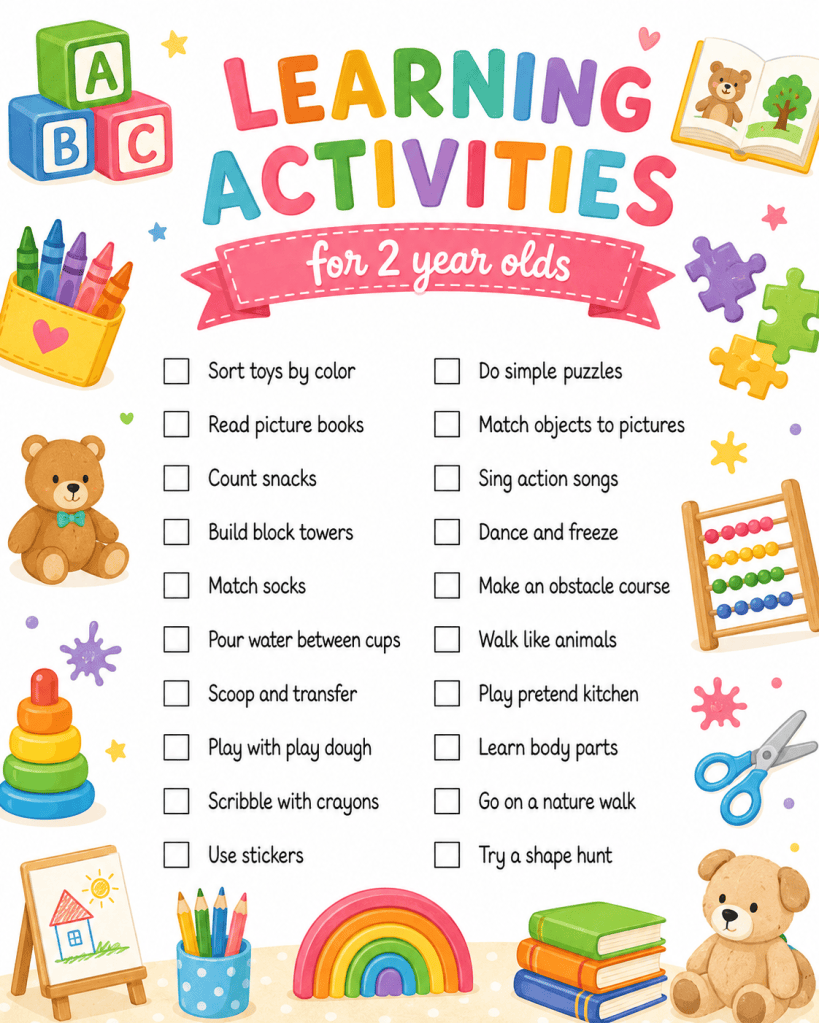
1. Sort Toys by Color
Grab a few containers, bowls or baskets and ask your toddler to sort toys by color.
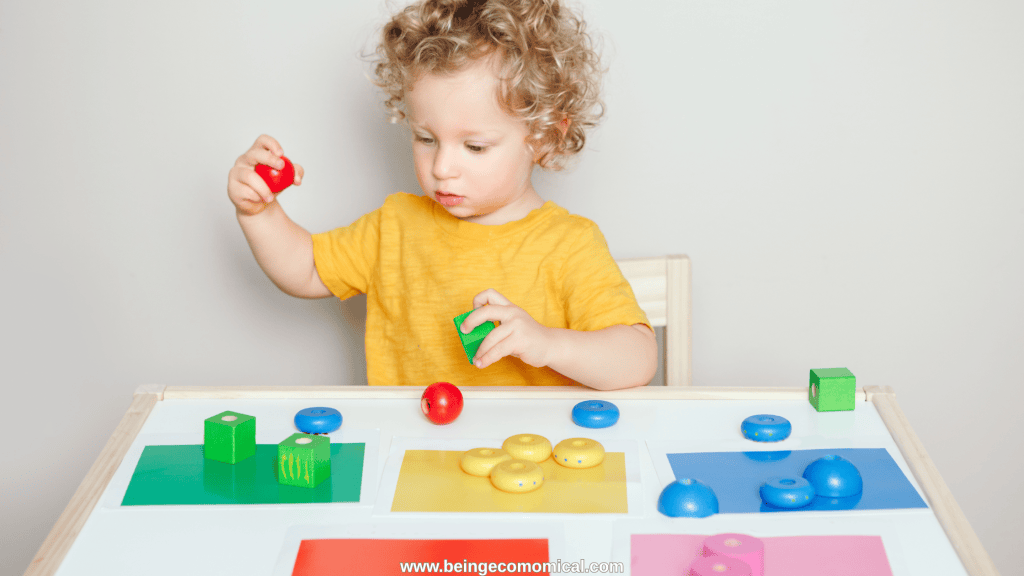
You could use:
- Blocks
- Toy cars
- Pom-poms
- Large plastic animals
- Building bricks
- Balls
Start with just two colors.
For example:
“Let’s put all the red blocks here and all the blue blocks here.”
As your child gets better at sorting, add more colors.
Skills practiced: color recognition, matching, sorting, vocabulary and early problem-solving.
2. Have a Toddler Color Hunt
This is one of the easiest learning activities for two year olds because you don’t need to prepare anything.
Choose a color and walk around the house looking for objects that match it.
“Can you find something yellow?”
Your toddler might point to a banana, toy, blanket or shirt.
You can also do this outside, at the grocery store or while riding in the car.
Once your toddler understands the game, let them choose the color.
Skills practiced: color recognition, observation, vocabulary and listening.
3. Read Picture Books and Point Things Out
Reading with a two-year-old doesn’t always mean quietly reading every sentence from beginning to end.
Sometimes we spend more time talking about the pictures than actually reading the book — and that’s perfectly fine.

Point to familiar objects and ask:
“Where’s the cat?”
“What is the baby holding?”
“Can you find the apple?”
“What color is the truck?”
You can also point to simple words and letters as you read.
The goal isn’t to quiz your toddler. You’re simply introducing language naturally while enjoying the book together.
Skills practiced: vocabulary, listening, language development, early literacy and attention.
Related Post: Wimmelbook My First 100 Words Review
4. Name Everyday Objects
You don’t necessarily need a special activity for language development.
Just narrate everyday life.
“This is your blue cup.”
“I’m cutting the banana.”
“Let’s put your shoes on.”
“That’s a big truck!”
Toddlers learn an incredible amount simply from hearing us describe the world around them.
Try adding descriptive words such as:
- Big
- Small
- Hot
- Cold
- Soft
- Loud
- Fast
- Slow
- Up
- Down
Skills practiced: vocabulary, communication and comprehension.
5. Play With Animal Sounds
Animal sounds are usually a toddler favorite.
Use toy animals, flashcards or a picture book and ask:
“What does the cow say?”
“What sound does the lion make?”
Then switch it around.
“Which animal says moo?”
You can eventually add where animals live, what they eat and how they move.
Skills practiced: memory, vocabulary, listening and animal recognition.
6. Count Everything
You don’t need worksheets to introduce numbers to a two-year-old.
Count objects during everyday activities.
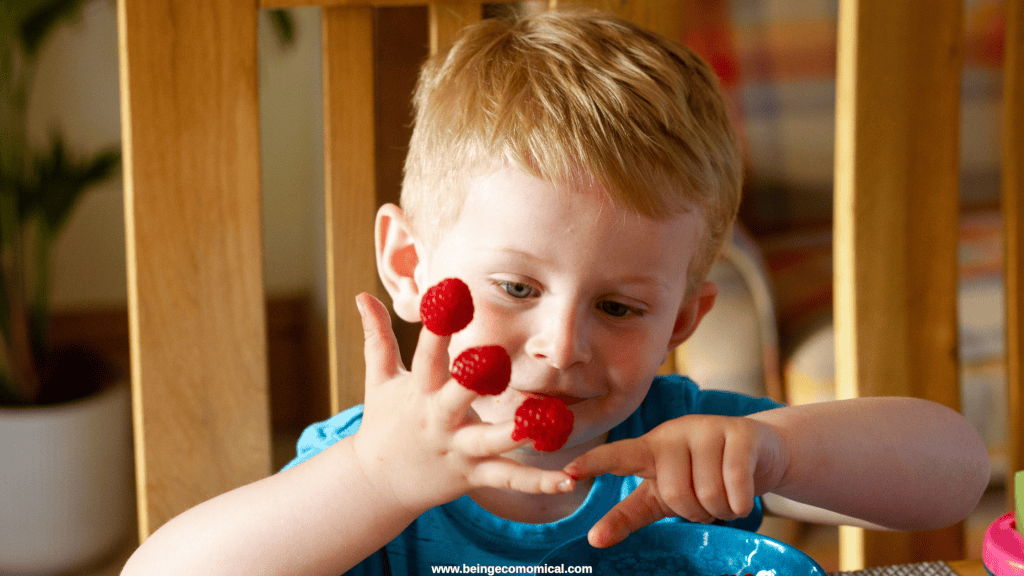
Count:
- Crackers on their plate
- Blocks in a tower
- Steps as you walk upstairs
- Toy cars
- Grapes
- Fingers
- Bath toys
- Shoes
At this age, I care much more about exposing toddlers to number words and counting than whether they can correctly count ten objects independently.
Keep repeating it.
“One, two, three blocks!”
Eventually, they’ll start joining in.
Skills practiced: counting, number recognition and early math.
7. Build Block Towers
Give your toddler blocks and let them build.
You can count the blocks as the tower gets taller or talk about colors while you’re building.
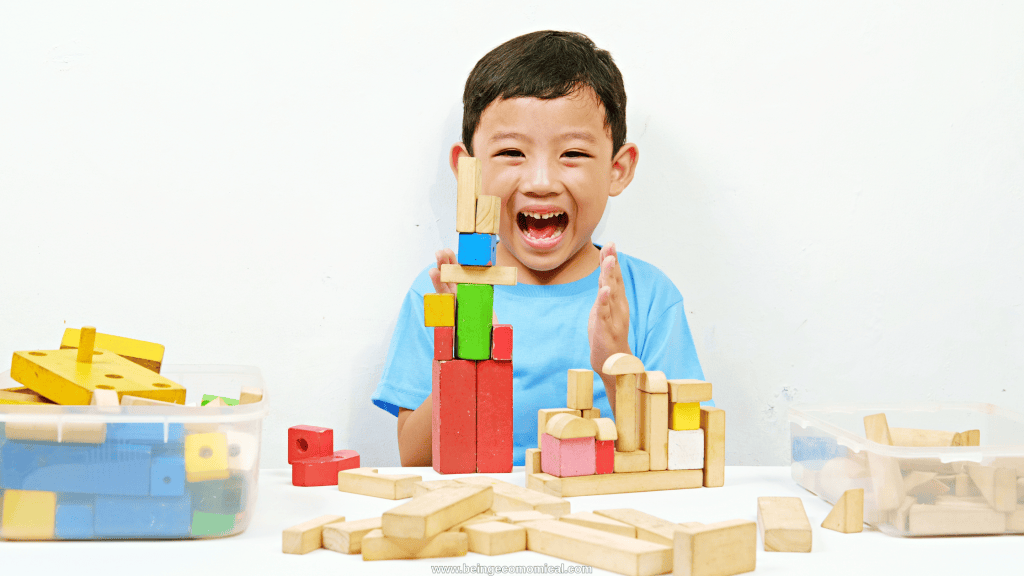
Try:
“Can you put the yellow block on top?”
“Let’s build a BIG tower.”
“Uh-oh! It fell DOWN!”
Then, of course, let them knock the whole thing over because that’s probably their favorite part anyway.
Skills practiced: fine motor skills, spatial awareness, problem-solving, colors and early math.
8. Match Socks
Laundry can officially become preschool.
Put several pairs of socks in front of your toddler and ask them to find the ones that match.
Start with pairs that look noticeably different from each other.
Once they understand the activity, add more.
And yes, they can help put them into the laundry basket afterward too.
Skills practiced: matching, visual discrimination, problem-solving and practical life skills.
9. Pour Water Between Cups
Toddlers can spend an astonishing amount of time pouring water.
Put a small amount of water into a container and provide a few toddler-safe cups.
Let your child scoop, pour and transfer the water.
This works beautifully in the bathtub, outside or with a shallow sensory bin.
Always supervise young children closely around water.
Skills practiced: hand-eye coordination, fine motor skills, concentration and cause-and-effect.
10. Scoop and Transfer
You can do the same type of activity without water.
Give your toddler a large spoon or scoop and have them transfer toddler-safe items from one container to another.
Use appropriately sized materials that don’t pose a choking hazard.
The activity is simple, but it takes a surprising amount of coordination.
Skills practiced: hand-eye coordination, fine motor control and concentration.
11. Make Play Dough Shapes
Play dough is fantastic for little hands.
Let your toddler squeeze it, roll it, flatten it and pull it apart.
You can also make simple shapes together.
“Let’s make a circle.”
“Can you make a ball?”
“Let’s make a long snake!”
You don’t have to turn it into a structured activity every time. Simply manipulating the dough is valuable.
Skills practiced: hand strength, fine motor development, creativity and shape recognition.
12. Scribble With Crayons
Give your toddler chunky crayons and plenty of paper.
At two, we’re not worried about creating recognizable drawings.
Scribbling helps toddlers practice controlling their hands and using writing tools — skills they’ll eventually need for drawing letters and writing their names.
Talk about the colors they choose while they draw.
“You picked purple!”
Skills practiced: pre-writing skills, hand control, creativity and color recognition.
13. Use Stickers
Peeling stickers from a sheet is serious toddler work.
Give your toddler a sheet of large stickers and paper and let them peel and stick.
You can make the activity slightly more educational by drawing colored circles and asking them to place matching stickers inside them.
But free sticker play works just fine too.
Skills practiced: fine motor skills, hand-eye coordination, concentration and creativity.
14. Do Simple Puzzles
Start with chunky wooden puzzles or simple inset puzzles with familiar pictures.
Animals, vehicles, foods and shapes are all great choices.
Instead of immediately putting the piece in for your toddler, give them a moment to figure it out.
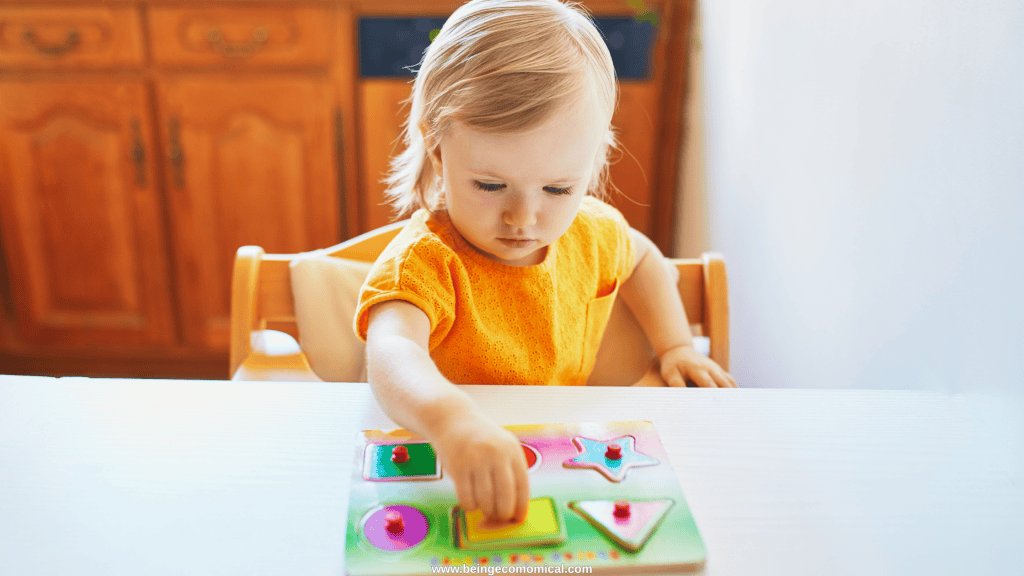
Try saying:
“Hmm. Where do you think this one goes?”
That little bit of frustration followed by figuring it out is part of the learning process.
Skills practiced: problem-solving, spatial awareness, patience and fine motor skills.
15. Match Objects to Pictures
Place a few familiar toys next to pictures of those same objects.
For example, place a toy car, toy cow and ball beside pictures of a car, cow and ball.
Ask your toddler to place each object on its matching picture.
You can easily make your own cards by printing photos or even using pictures from magazines.
Skills practiced: matching, object recognition, vocabulary and visual discrimination.
16. Sing Action Songs
Songs that include movement are perfect for toddlers.
Try songs that encourage your child to:
- Clap
- Stomp
- Jump
- Spin
- Touch body parts
- Freeze
- Follow directions
Songs such as Head, Shoulders, Knees and Toes can also help children learn body-part vocabulary.
Skills practiced: listening, memory, coordination, language and gross motor skills.
17. Have a Dance-and-Freeze Party
Turn on music and dance together.
Randomly pause the music and yell:
“FREEZE!”
Then start again.
Once your toddler understands the game, they will probably think freezing in ridiculous positions is hilarious.
That’s the lesson.
Learning does not have to look serious to be valuable.
Skills practiced: listening, impulse control, coordination and gross motor development.
18. Make an Indoor Obstacle Course
Use pillows, couch cushions, painter’s tape or other safe household items to create a simple obstacle course.
Your toddler can:
- Step over a pillow
- Crawl under a chair
- Walk along a taped line
- Jump onto a cushion
- Crawl through a tunnel
Keep everything low and toddler-safe.
Skills practiced: balance, coordination, following directions and gross motor development.
19. Walk Like Animals
Ask your toddler to move around the room like different animals.
“Hop like a bunny!”
“Stomp like an elephant!”
“Waddle like a duck!”
“Crawl like a bear!”
Add animal sounds for even more fun.
Skills practiced: imagination, vocabulary, coordination and gross motor skills.
20. Play Follow the Leader
Take turns being the leader.
Clap.
Stomp.
Touch your head.
Spin around.
Jump.
Wave.
Then encourage your toddler to copy you.
Later, let your toddler lead while you copy them.
Skills practiced: imitation, listening, body awareness and social-emotional development.
21. Play Pretend Kitchen
Pretend play doesn’t require an expensive play kitchen.
Give your toddler toddler-safe bowls, wooden spoons, measuring cups and a small pot.
Let them pretend to make soup, bake a cake or cook dinner.
Ask questions about what they’re making.
“What’s in your soup?”
“Can Mommy have some?”
Their answers may make absolutely no sense, which makes it even better.
Skills practiced: imagination, language, social skills and everyday-life understanding.
22. Let Them Help With Real Chores
Two-year-olds LOVE being involved in whatever you’re doing.
Take advantage of it.
Let them:
- Put clothes into the hamper
- Carry napkins to the table
- Put toys into a basket
- Wipe the table
- Match socks
- Put plastic dishes away
- Throw something into the trash
- Help pour ingredients while cooking
It may take three times longer, but they’re learning.
Skills practiced: independence, following directions, coordination and practical life skills.
23. Sort Big and Small Objects
Choose several safe objects in noticeably different sizes.
Ask:
“Which one is BIG?”
“Which one is SMALL?”
Then create a big pile and a small pile.
You can also compare objects throughout the day.
“Mommy has a big shoe. You have a small shoe.”
Skills practiced: early math concepts, comparison and vocabulary.
24. Learn Body Parts
Ask your toddler to point to different parts of their body.
“Where’s your nose?”
“Show me your knees.”
“Where are your ears?”
Then let them find the same body part on you, a doll or a stuffed animal.
Make it silly.
“Where’s Mommy’s nose?”
If they poke you directly in the nostril, you technically asked for it.
Skills practiced: vocabulary, body awareness and listening.
25. Go on a Nature Walk
A walk outside can become an entire toddler lesson.
Look for:
- Birds
- Bugs
- Flowers
- Trees
- Rocks
- Leaves
- Clouds
- Cars
- Dogs
Talk about what you see.
“That’s a green leaf.”
“Look at the tiny ant.”
“Do you hear the bird?”
Let your toddler stop and investigate things instead of worrying about getting somewhere quickly.
Skills practiced: observation, vocabulary, science concepts and gross motor development.
26. Make a Simple Shape Hunt
Once your toddler begins recognizing shapes, start finding them around the house.
“The clock is a circle.”
“The window is a rectangle.”
“This block is a square.”
You don’t have to introduce every shape at once. Start with circles, squares and triangles and build from there.
Skills practiced: shape recognition, observation and early math.
27. Play With Toy Cars and Make Roads
Put painter’s tape on the floor to create simple roads for toy cars.
Add a few turns, intersections and parking spaces.
As your toddler drives, introduce directional words naturally:
“Go forward!”
“Turn!”
“The car is under the chair.”
“Park beside the blue car.”
Skills practiced: positional vocabulary, imagination, coordination and problem-solving.
28. Play Hide and Find
Hide a familiar toy somewhere easy and ask your toddler to find it.
Give clues if necessary.
“Look under the table.”
“Maybe it’s behind the pillow.”
Eventually, allow your toddler to hide something for you.
Skills practiced: problem-solving, memory, spatial vocabulary and listening.
29. Look Through Family Photos
Toddlers usually love seeing people they recognize.
Scroll through family photos or use a photo album and talk about who’s in each picture.
“Who is that?”
“There’s Grandma!”
“Look! You’re at the zoo.”
You can talk about places, family members, animals and memories while building language skills at the same time.
Skills practiced: vocabulary, memory, family recognition and communication.
30. Let Your Two-Year-Old Lead
One of the easiest toddler learning activities is simply following whatever your child is currently interested in.
If they love trucks, count trucks.
If they love dinosaurs, learn dinosaur names.
If they love animals, read animal books.
If they want to point at the same cat in the same book 47 times, talk about the cat 47 times.
Toddlers are naturally curious.
Following their interests often keeps them engaged much longer than trying to force an activity we chose for them.
How Long Should Learning Activities Be for a 2 Year Old?
Short.
Seriously.
You do not need to schedule an hour-long learning block for your two-year-old.
Some activities might keep their attention for 15 minutes.
Another might last three.
And another might unexpectedly entertain them for half an hour.
I prefer offering short learning opportunities throughout the day instead of expecting a toddler to sit through a traditional lesson.
You might read together after breakfast, count toys while cleaning up, do play dough before lunch and talk about colors while you’re outside later.
It all counts.
What Skills Can You Teach a 2 Year Old at Home?
There are plenty of early concepts you can begin introducing around age two, including:
- Colors
- Shapes
- Counting
- Numbers
- Letters
- Animal names and sounds
- Body parts
- Opposites
- Big and small
- Matching
- Sorting
- Following simple directions
- Vocabulary
- Fine motor skills
- Gross motor skills
- Pretend play
- Independence
Your two-year-old does not need to master all of these right now.
Think exposure, repetition and play.
Do 2 Year Olds Need Worksheets?
Not necessarily.
There is plenty of time for worksheets later.
At two years old, I would much rather let a child manipulate blocks, scribble with crayons, match objects, pour water, look through books and run around outside.
Hands-on play gives toddlers the opportunity to actually experience many of the concepts we’re trying to teach.
You can certainly introduce simple printable activities if your toddler enjoys them, but they aren’t required for learning at this age.
You Don’t Have to Entertain Your Toddler All Day
This one is important.
A list of learning activities for two-year-olds can quickly make parents feel like we’re supposed to become full-time cruise directors for our toddlers.
We’re not.
You don’t need Pinterest-worthy sensory bins waiting every morning.
You don’t need a perfectly organized toddler classroom.
You don’t need to turn every second of the day into a lesson.
Give your toddler safe opportunities to explore, talk to them, read together, involve them in everyday life and occasionally pull out a simple activity.
Then let them play.
Independent play is valuable too.
Final Thoughts on Learning Activities for 2 Year Olds
The best learning activities for 2-year-olds are usually the simplest ones.
Read books.
Count snacks.
Sort toys.
Dance.
Build towers.
Go outside.
Talk about everything.
Let them help you.
Let them pretend.
Let them explore.
Your toddler doesn’t need to realize they’re doing an “educational activity.”
To them, they’re just playing with you.
And that’s exactly how it should feel.
RELATED TODDLER & PRESCHOOL ACTIVITIES
As I share more of what we’re doing at home, I’ll be adding even more toddler and preschool learning ideas, including activities for teaching colors, letters, numbers, fine motor skills and early preschool concepts.
So if you’re currently in the toddler years too, save this one — we’re just getting started.
Check out my post on My Big Wimmelbook: My First 100 Words and our Kindergarten unboxing with Timberdoodle.
Pin this for later:
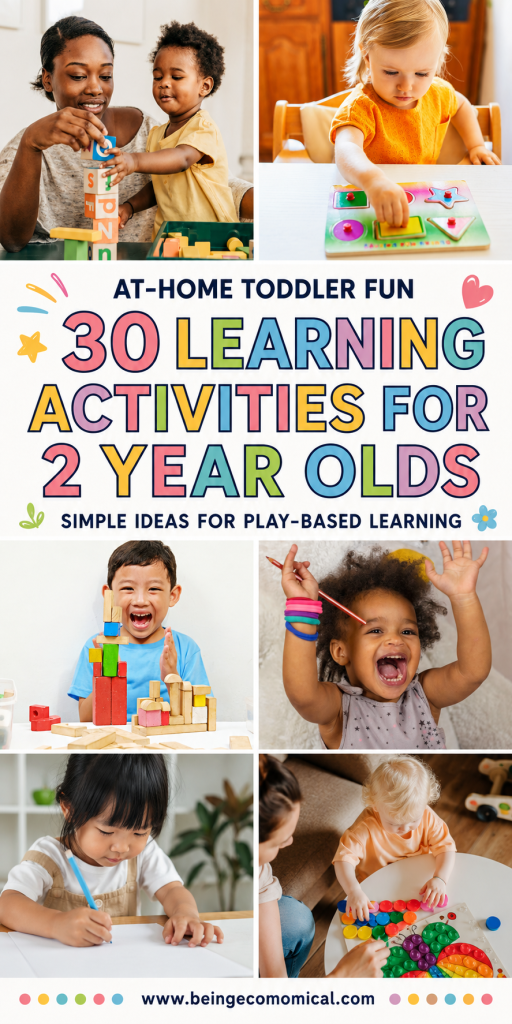
Frequently Asked Questions About Learning Activities for 2 Year Olds
What should a 2 year old be learning?
At two years old, learning is mostly about exposure, repetition and play. You can begin introducing colors, shapes, counting, simple letters, animal names and sounds, body parts, matching, sorting and basic vocabulary while also working on fine motor, gross motor and communication skills.
What activities are good for a 2 year old?
Some of the best activities for two-year-olds are simple ones like reading picture books, building with blocks, coloring, sorting toys, doing puzzles, playing with play dough, dancing, helping with household chores and exploring outside. Activities that allow toddlers to move, touch, talk and experiment are especially helpful at this age.
How do I teach my 2 year old at home?
You can teach your two-year-old at home by working learning into your normal routine. Count snacks, name colors while getting dressed, point out letters in books, talk about what you see outside and let your toddler help with simple household tasks. You don’t need a formal homeschool schedule or long lessons at this age.
How long should learning activities be for a 2 year old?
Learning activities for two-year-olds can be very short. Some toddlers may stay interested for 10 or 15 minutes, while another activity may only hold their attention for a few minutes. Instead of focusing on a specific amount of time, follow your child’s interest and offer several short opportunities to learn throughout the day.
What educational activities can I do with my 2 year old?
You can try color sorting, counting toys, simple puzzles, matching games, water pouring, play dough, sticker activities, shape hunts, pretend play, animal sounds, action songs and nature walks. Many everyday activities can become educational simply by talking about what your toddler is seeing and doing.
Should a 2 year old know colors?
Some two-year-olds may begin identifying or matching basic colors, while others are still learning them. There is no need to pressure your toddler to memorize every color. Instead, casually name colors throughout the day and use games such as color sorting and color hunts to give them plenty of exposure.
Should a 2 year old know numbers?
A two-year-old may begin recognizing number words or joining in while you count, but they do not need to be able to count perfectly. Counting everyday objects like crackers, toys, steps and fingers is an easy way to introduce early number concepts naturally.
Should a 2 year old know the alphabet?
Two-year-olds do not need to know the entire alphabet. Some toddlers may recognize a few letters, especially letters they see often, such as the first letter of their name. Reading together, singing the alphabet song and casually pointing out letters are simple ways to build early letter awareness without turning it into a formal lesson.
Do 2 year olds need worksheets?
No. Worksheets are not necessary for most two-year-olds. Hands-on activities like stacking, sorting, scribbling, matching, pouring, pretending and exploring allow toddlers to practice many of the same early skills in a way that is more appropriate for how they naturally learn.
How do I keep my 2 year old busy at home?
Rotate between independent play, books, movement, simple learning activities and opportunities to help you with everyday tasks. You don’t have to entertain your toddler every minute of the day. A basket of blocks, crayons and paper, a simple puzzle, a dance party or even helping sort laundry can keep a two-year-old engaged while supporting development.
-
My Big Wimmelbook: My First 100 Words Review for Kindergarten Homeschool
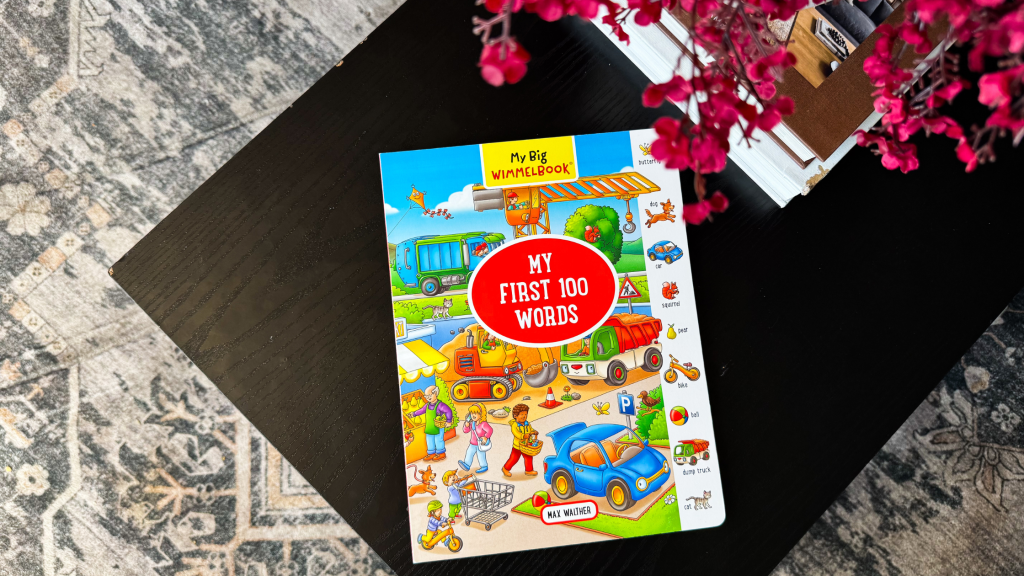
If you’re looking for a simple, screen-free way to build vocabulary during kindergarten homeschool, My Big Wimmelbook: My First 100 Words is an easy one to add to your routine.
We received this book as part of our Timberdoodle Kindergarten Curriculum Kit, and I immediately liked how visual and interactive it is.
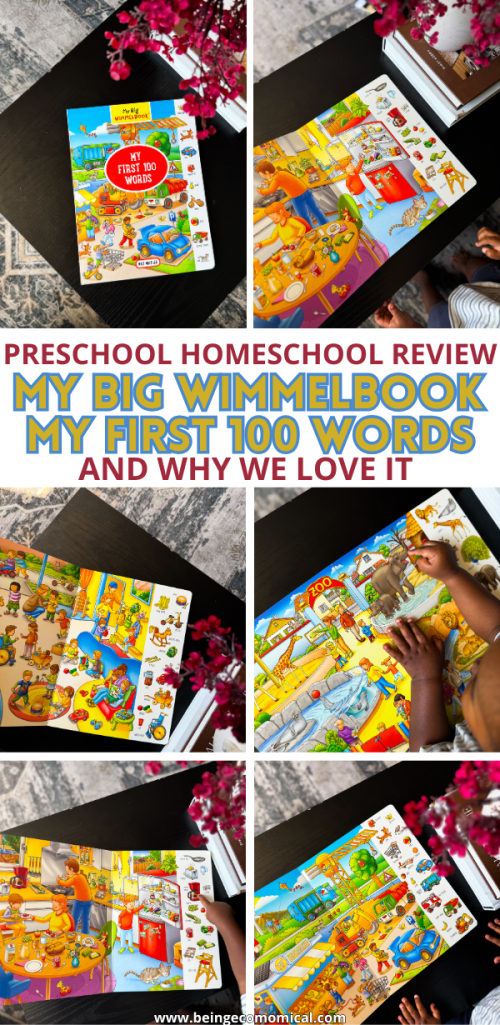
Instead of feeling like traditional schoolwork, each page gives kids a colorful scene filled with familiar objects, people, animals, and everyday items to identify.
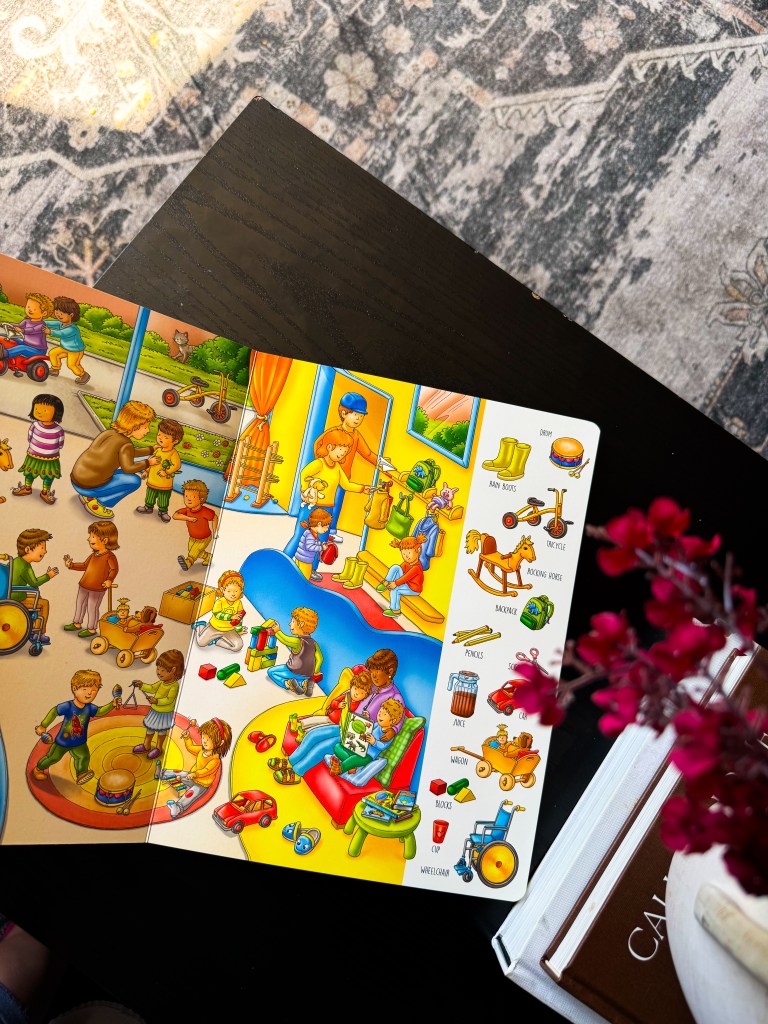
A Fun Kindergarten Vocabulary Activity
One thing I love about this book is that kids can use it in several different ways.
They can look at the individual pictures and words along the side of each page, point to the matching objects within the larger scene, name what they see, or simply talk through everything happening in the picture.
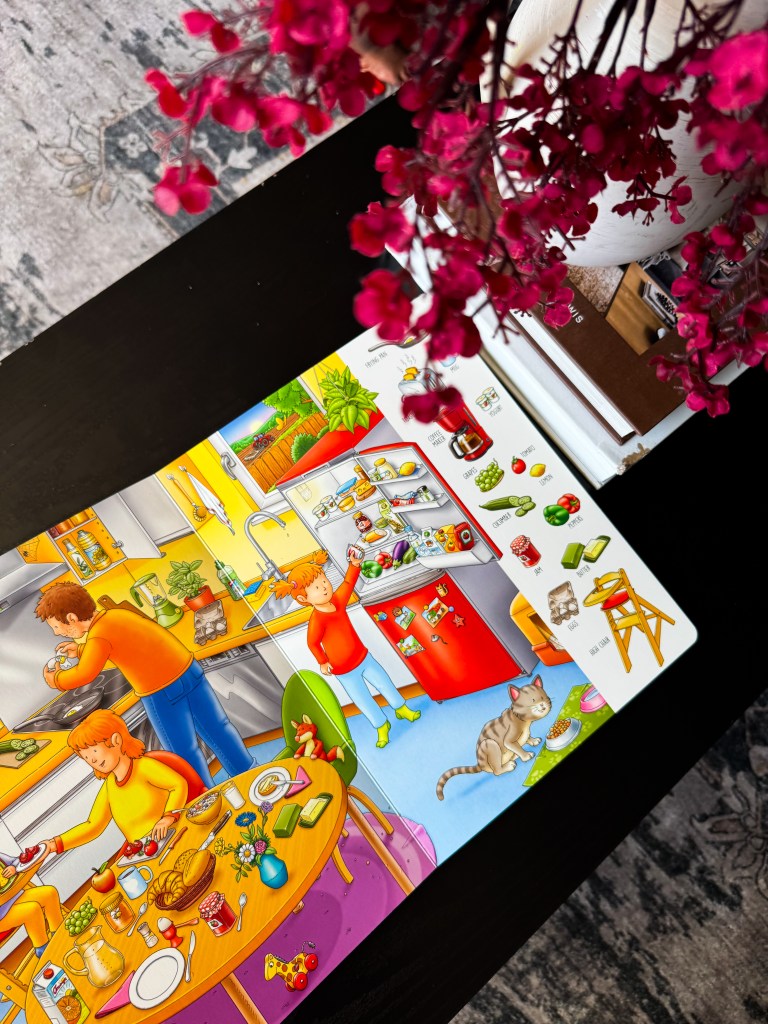
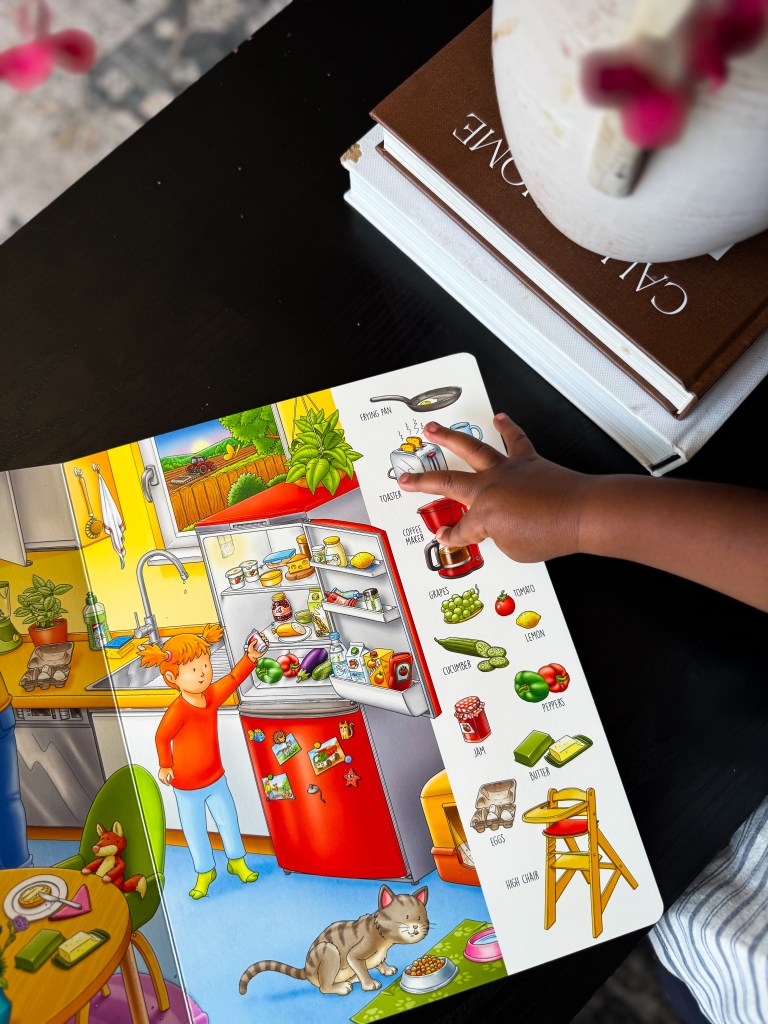
That makes it useful for:
- kindergarten vocabulary practice
- early literacy skills
- word recognition
- object identification
- visual learning
- observation skills
- storytelling and conversation
- screen-free kindergarten learning
For younger children, it also works well as a preschool vocabulary book or first words book.
What Age Is My Big Wimmelbook: My First 100 Words Best For?
One thing I really like about My Big Wimmelbook: My First 100 Words is that it works for more than one age group. Both my preschooler and my two-year-old enjoy using it, but they interact with the book in completely different ways.
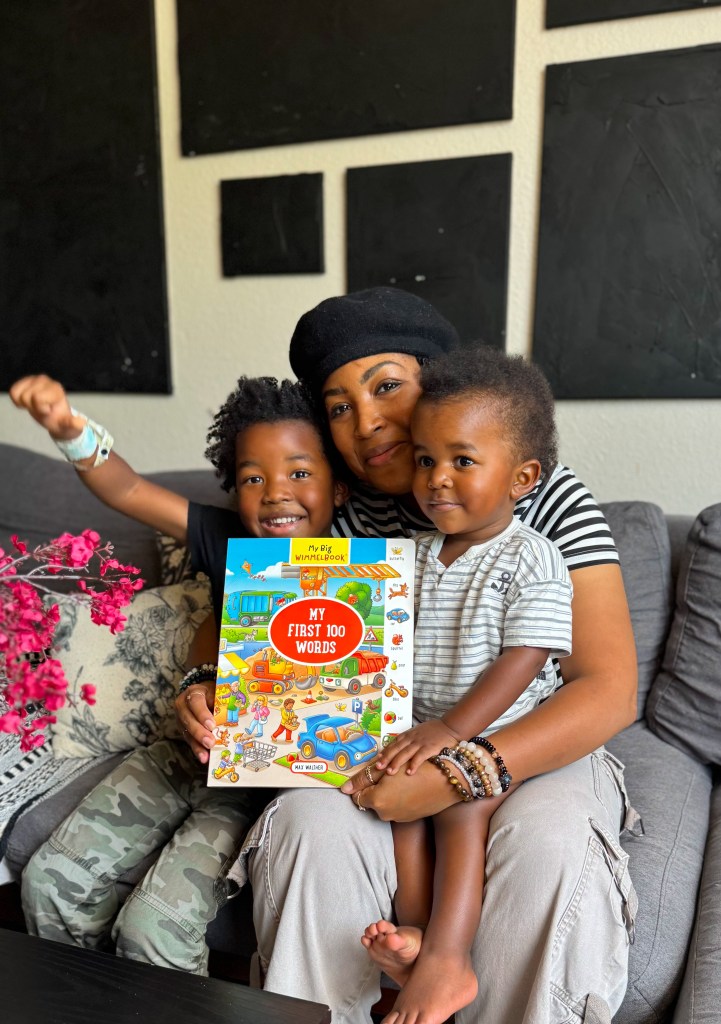
With my preschooler, I can use the pictures and words for simple early language arts practice.
We can look at the written words together, recognize letters, name objects, describe what we see, and talk about what is happening throughout each scene.
That naturally works on vocabulary development, letter recognition, oral language, observation skills, and early reading readiness without making it feel like a formal lesson.
My two-year-old uses it much more simply — and is perfectly happy doing so!
He loves pointing out everything he recognizes. He’ll find the cat because we have a cat at home, the grapes because they’re one of his favorite snacks, or the elephant and lion because he remembers seeing them at the zoo.
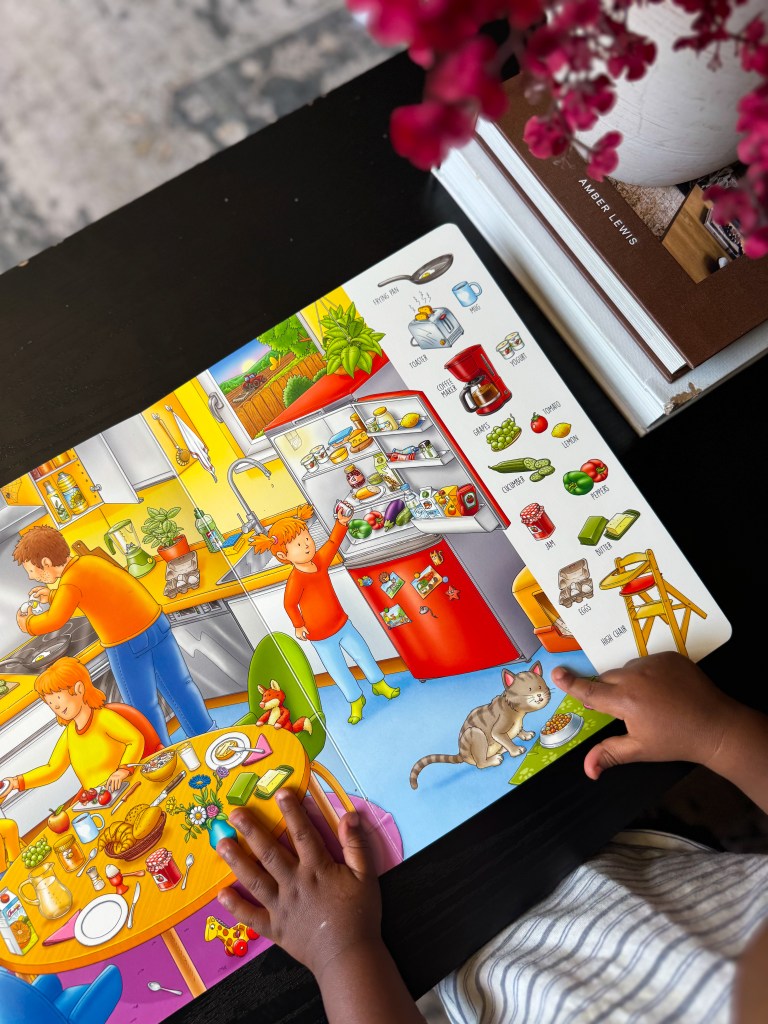
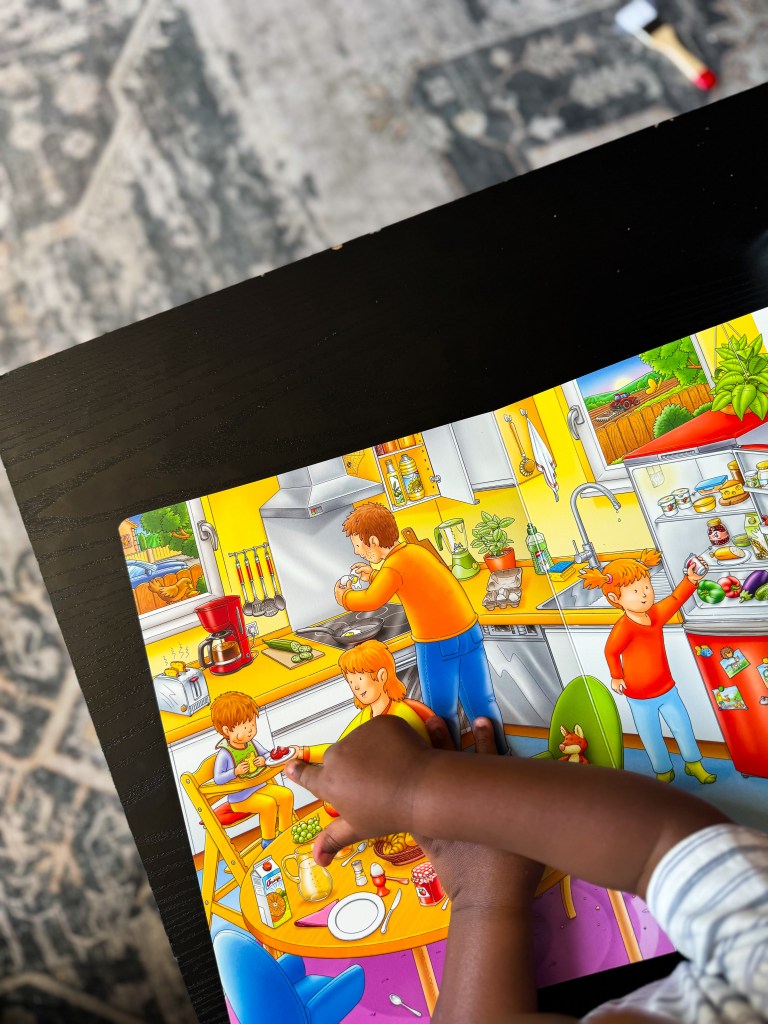
That type of play is doing more than keeping him entertained. He’s practicing:
- receptive and expressive language
- vocabulary development
- object recognition
- memory and recall
- making real-world connections
- visual discrimination
- attention and observation
- early communication skills
I especially love that the same book can grow with them. A toddler can simply point and name familiar objects, while a preschooler or kindergartener can use those same pages for vocabulary, storytelling, letter recognition, conversation, and early literacy activities.
For families homeschooling multiple little ones, that makes My First 100 Words an easy resource to pull out and use with different ages at the same time.
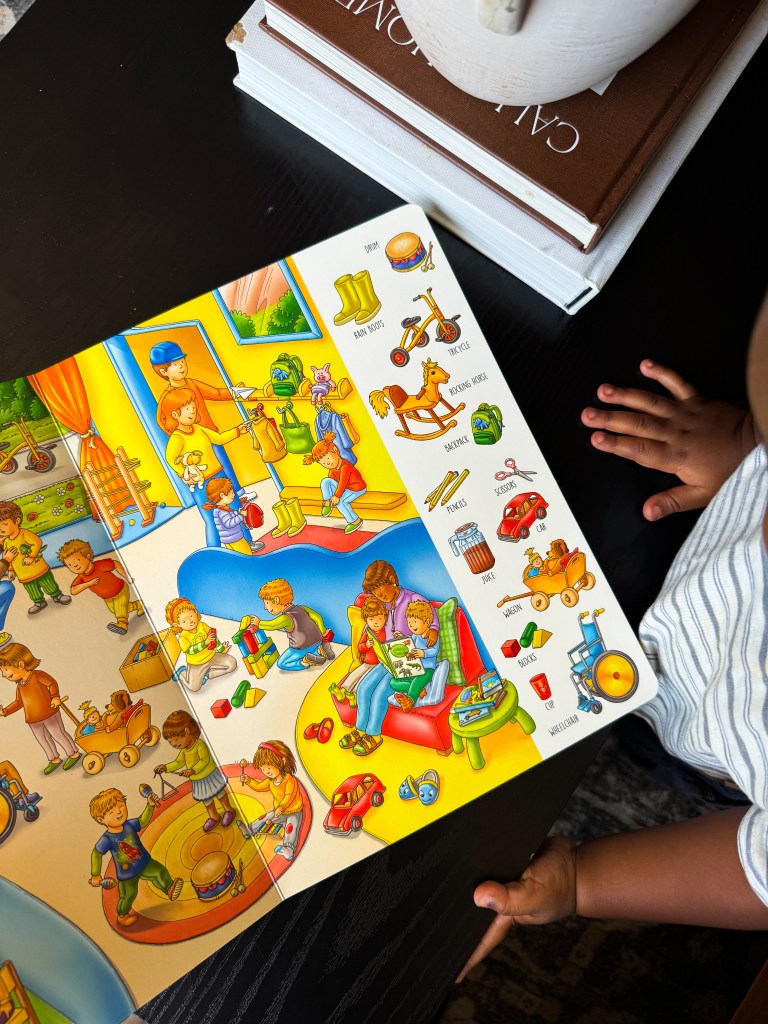
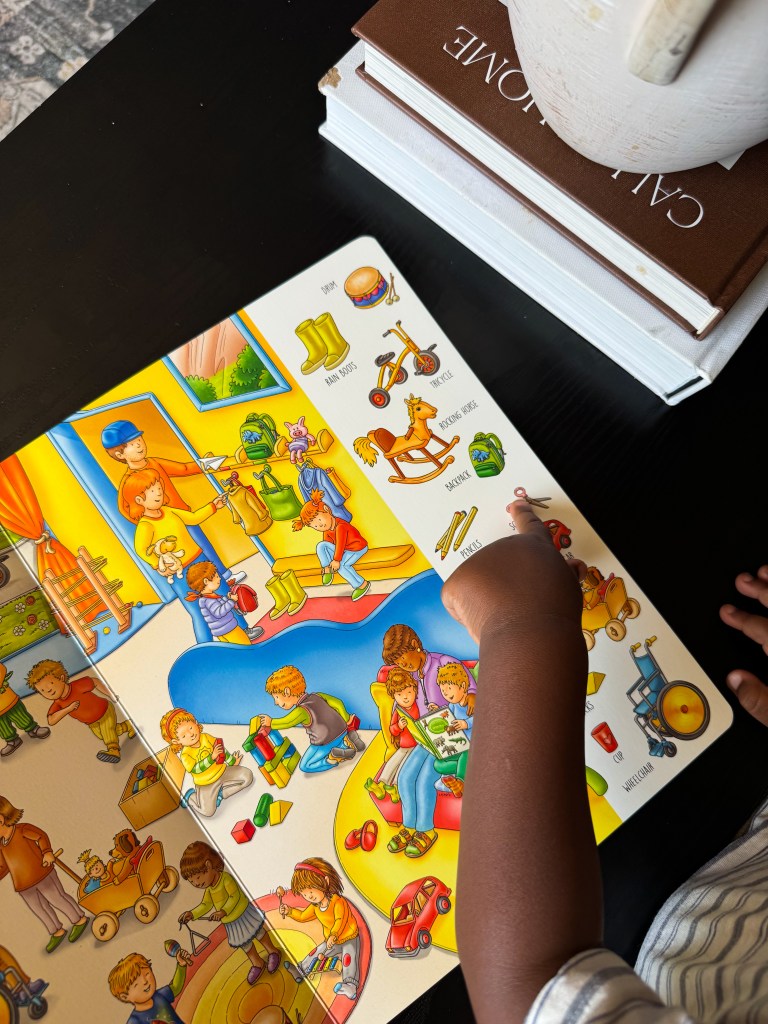
Great for Hands-On Kindergarten Homeschool
My little one was immediately interested in pointing out objects and searching through the illustrations, which is exactly what I want from kindergarten homeschool resources at this age.
It feels more like exploring a picture together than completing a lesson, but they’re still practicing language and early literacy skills along the way.
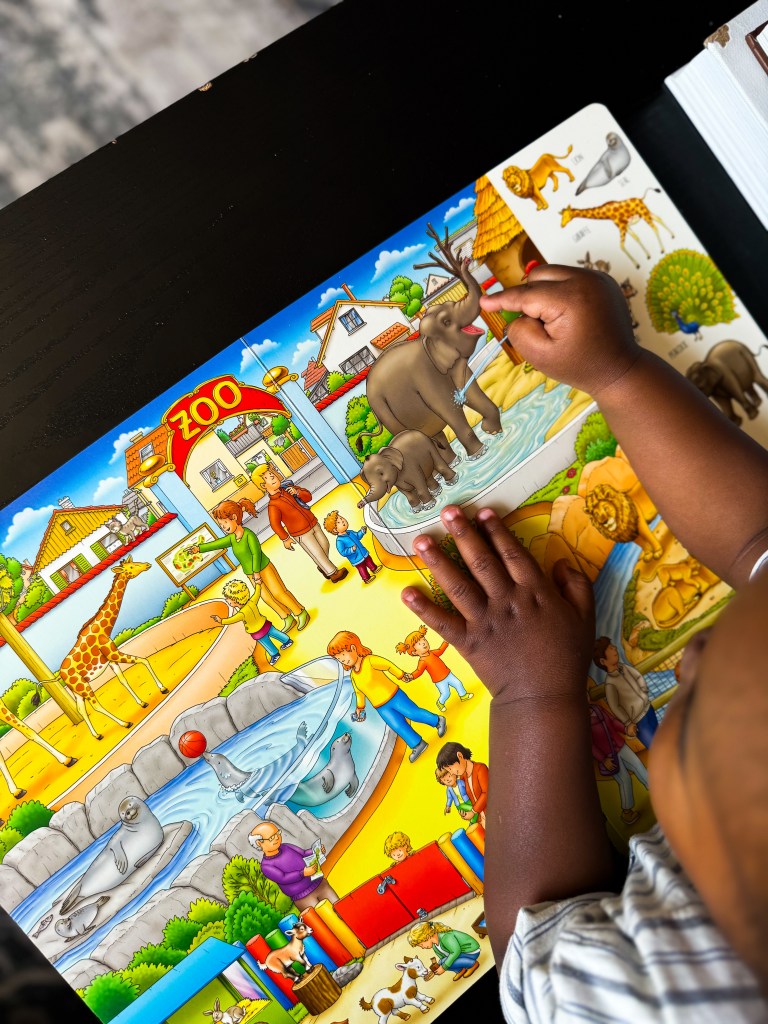
I especially like resources like this for young learners because you don’t have to turn everything into a worksheet. You can sit together for a few minutes, find the pictures, name the objects, ask questions, and move on.
Is My Big Wimmelbook: My First 100 Words Worth It?
For us, yes.
If you’re building a kindergarten homeschool curriculum, looking for kindergarten language arts activities, or simply need more screen-free learning activities for kids, this is a sweet addition to have on the shelf.
It would also be a great fit for preschoolers, visual learners, and children who enjoy seek-and-find books.
Grab My Big Wimmelbook: My First 100 Words
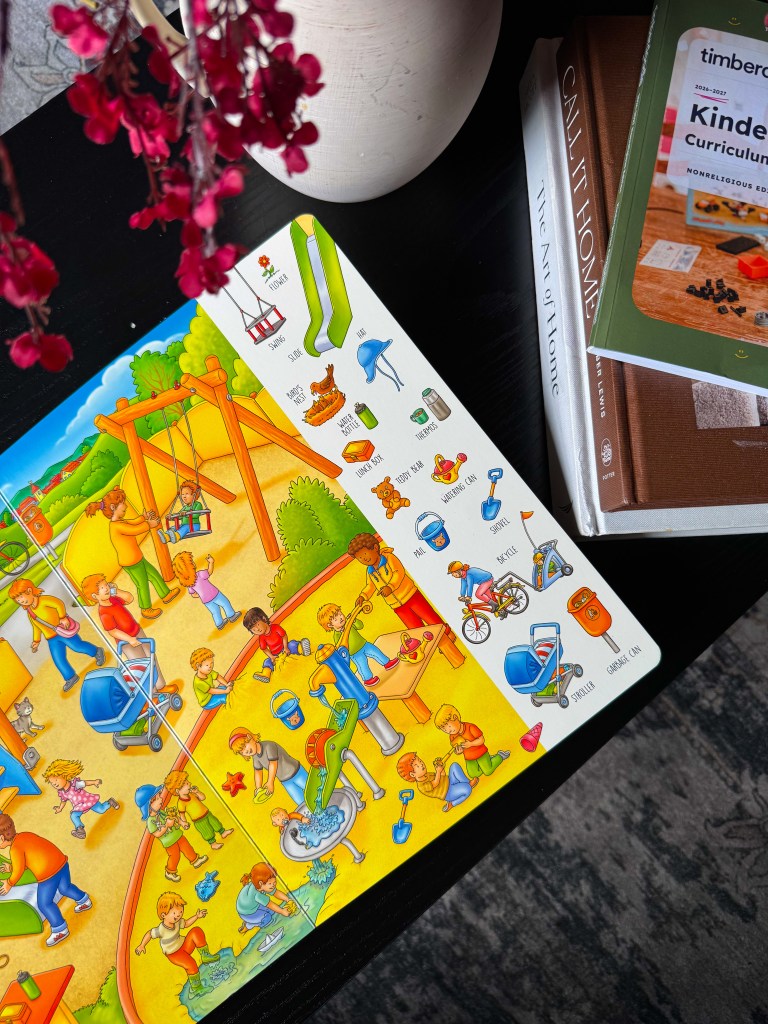
If you’re putting together your kindergarten homeschool year, you can grab My Big Wimmelbook: My First 100 Words here and add it to your early learning collection.
And if you’re considering Timberdoodle, be sure to read my full Timberdoodle Kindergarten Curriculum Kit review to see what else came inside our box.
This is one of those simple resources that doesn’t require much preparation from me — I can pull it out, sit down with my child, and turn it into a quick vocabulary and early literacy activity whenever we need one.
-
Is the Wolf Pass Worth It at Great Wolf Lodge Grapevine? Our Honest Family Review
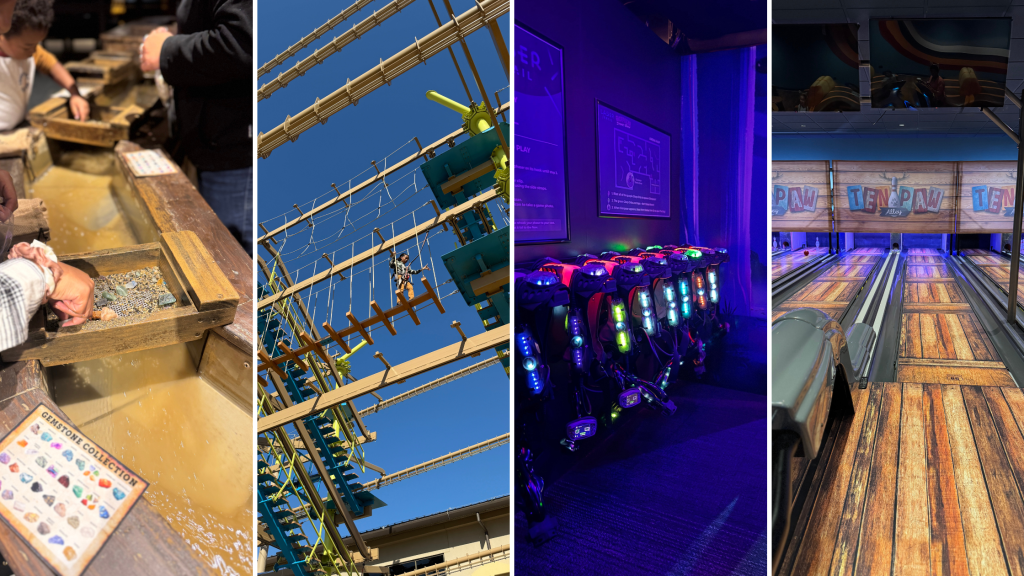
One of the biggest questions families ask before visiting Great Wolf Lodge Grapevine is whether the Wolf Pass is actually worth the extra cost.
After using it during our family’s stay, I can honestly say this: If your kids plan to enjoy more thana couple of attractions outside of the water park, the Wolf Pass is one of the easiest ways to get more out of your vacation.
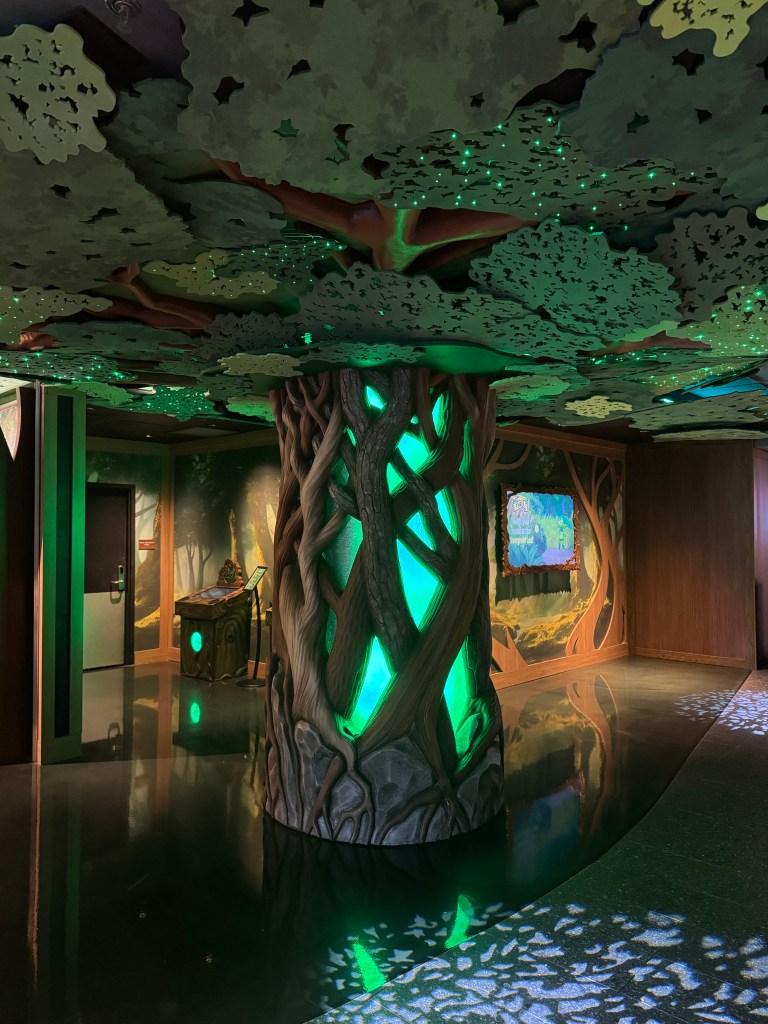
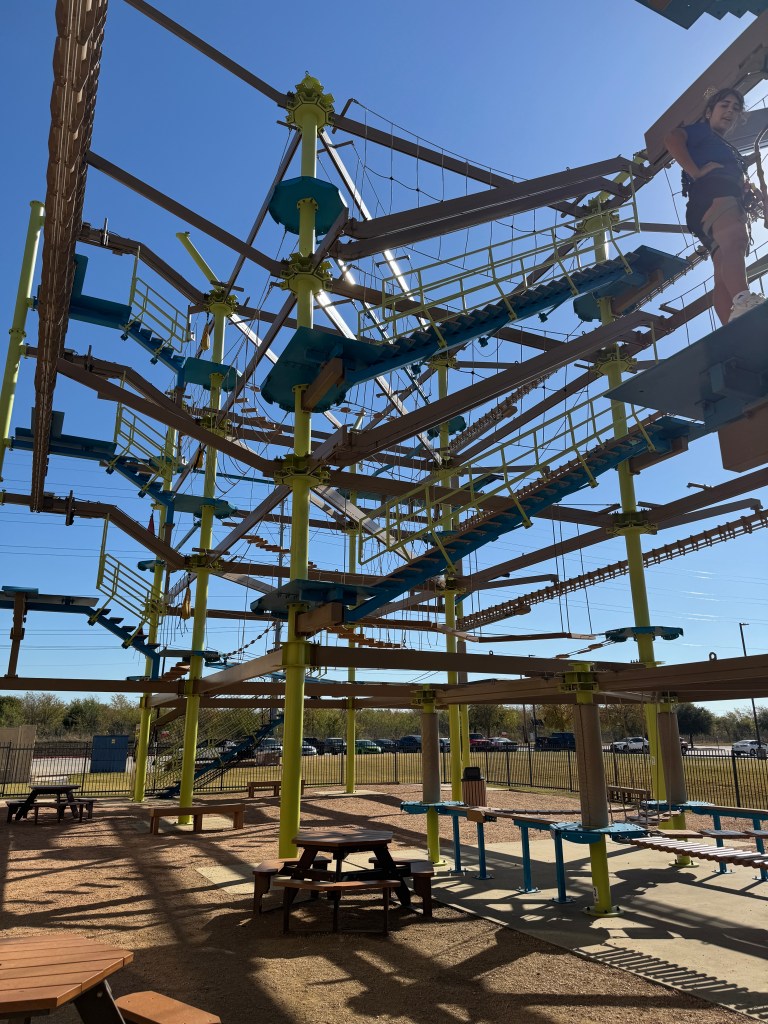
As a family of six with kids ranging from toddlers to older children, we loved having attractions already included so we could spend less time making decisions and more time making memories.
Here’s what our experience looked like.
What Is the Wolf Pass?
The Wolf Pass is an attraction package that bundles many of Great Wolf Lodge’s most popular activities into one purchase.
Instead of paying for attractions individually throughout your stay, the Wolf Pass allows families to enjoy multiple experiences while saving money compared to purchasing them separately.
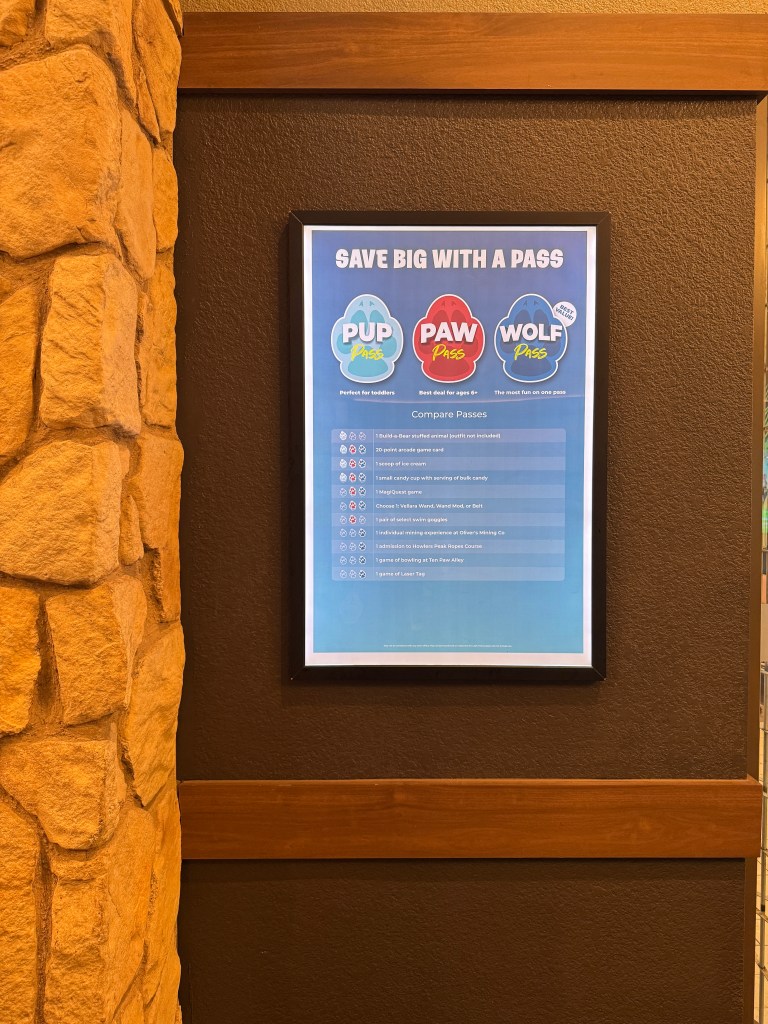
Depending on the current package, attractions may include experiences like:
- MagiQuest
- Oliver’s Mining Co.
- Laser Tag
- Mini Golf
- Ropes Course
- Arcade credits
- Additional treats and surprises
If you’re planning to experience several attractions during your visit, it’s definitely worth considering.
If you’re still deciding whether the resort itself is worth the trip, you can also read my honest Great Wolf Lodge Grapevine review where I break down our overall experience.
Is the Wolf Pass Worth It?
For our family, yes.
What surprised me most wasn’t just the savings. It was the convenience. Instead of constantly asking ourselves, “Do we want to spend extra money on this activity?” we were able to simply enjoy the experience.
With four kids, those little decisions add up throughout the day. The Wolf Pass let us spend less time thinking about purchases and more time watching our kids have fun.
MagiQuest
If your kids love adventure, this is one attraction you won’t want to skip.
MagiQuest turns the entire lodge into an interactive adventure where kids use magic wands to complete quests, solve challenges, and unlock surprises throughout the resort.
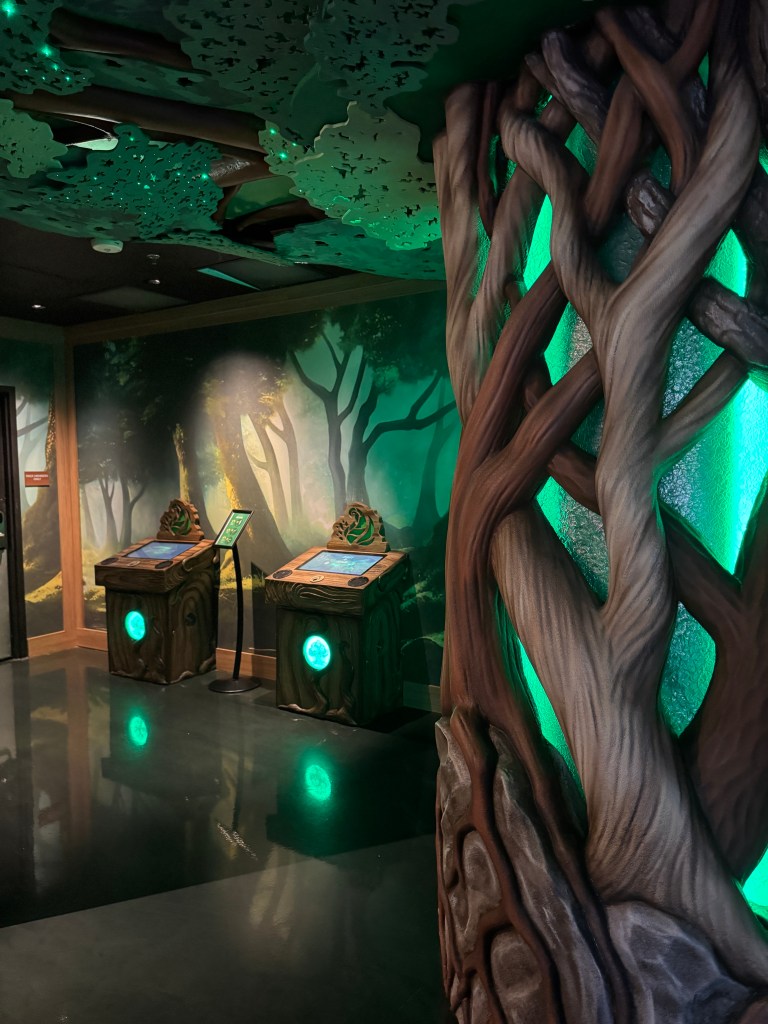
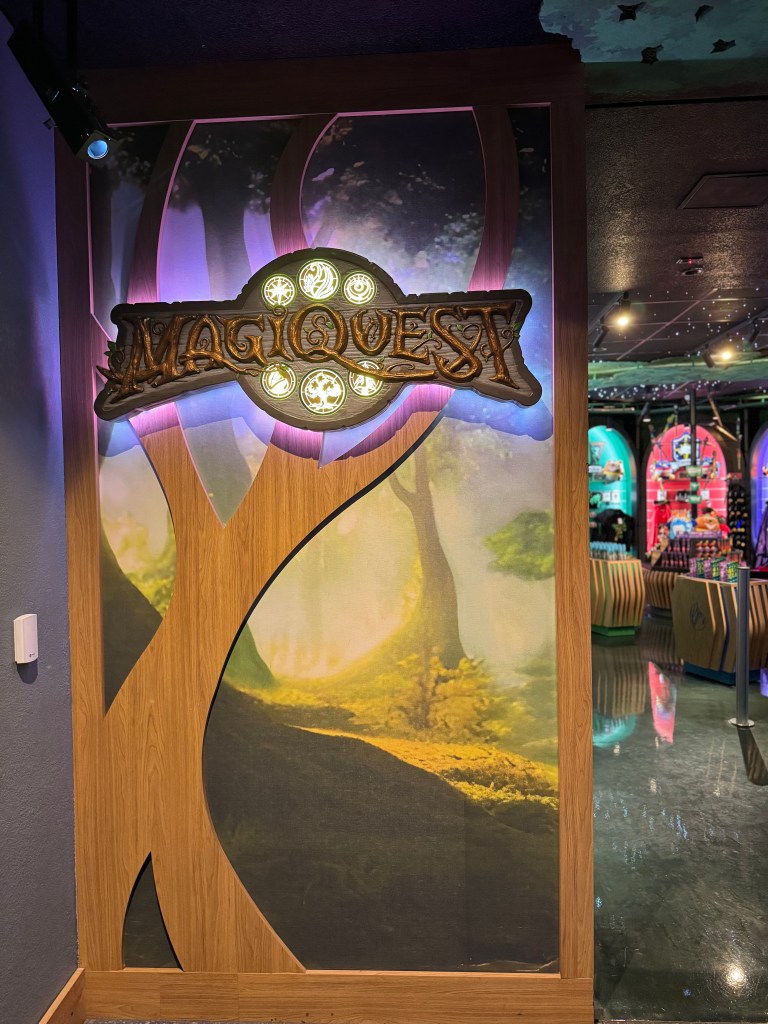
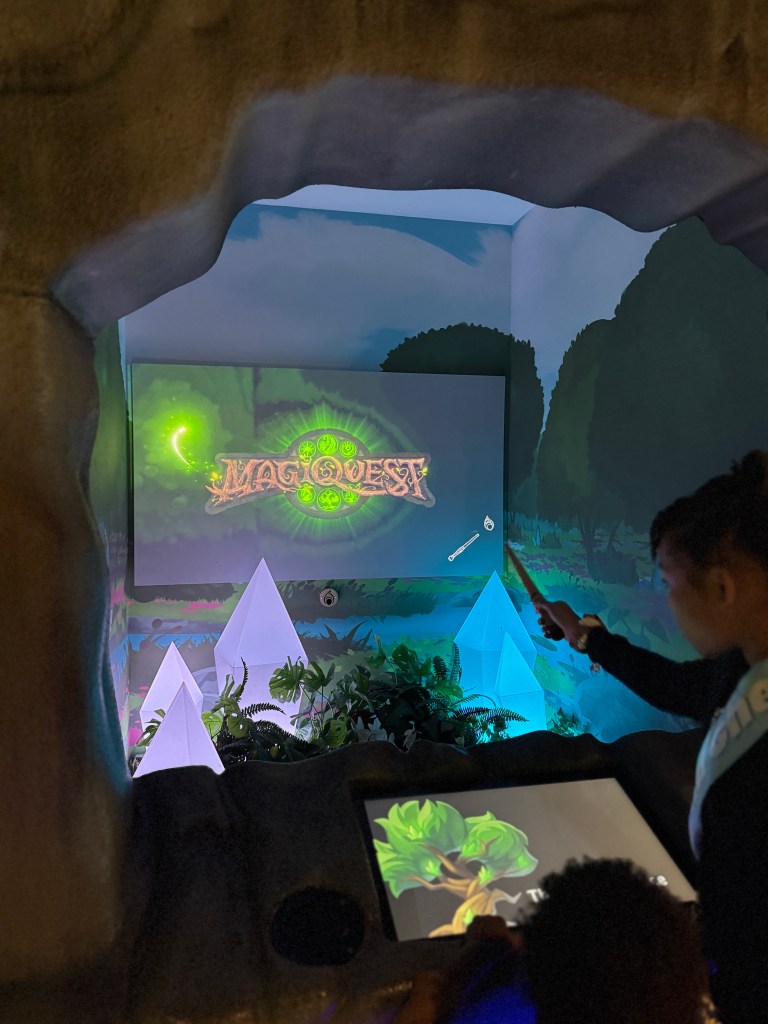
Watching my kids race from one adventure to the next while searching for hidden treasures was easily one of my favorite parts of the trip.
It also gave us a nice break from the water park while still feeling like part of the adventure.
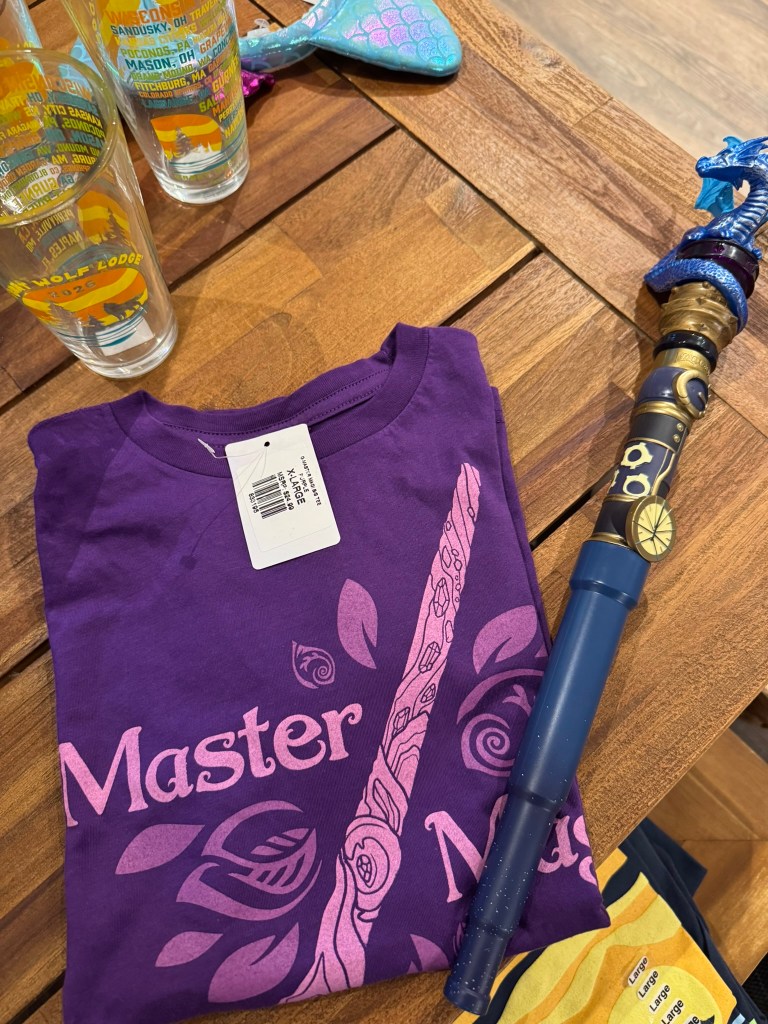
Perfect for: Kids who love imagination, exploration, and interactive games. My daughter even completed the entire game on our first stay and became a Master Magi. We even upgraded her wand on our next stay as a bonus.

Oliver’s Mining Co.
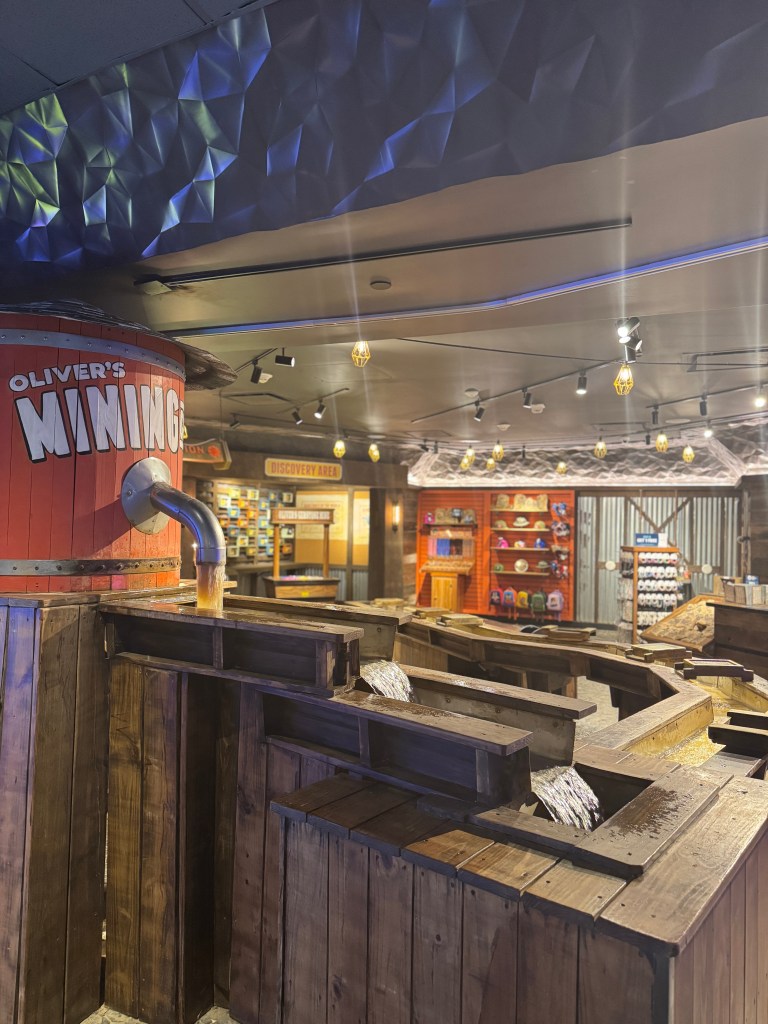
Mining for gems was another activity our family really enjoyed.
There’s something timeless about searching through the mining sluice to discover colorful gemstones and treasures.
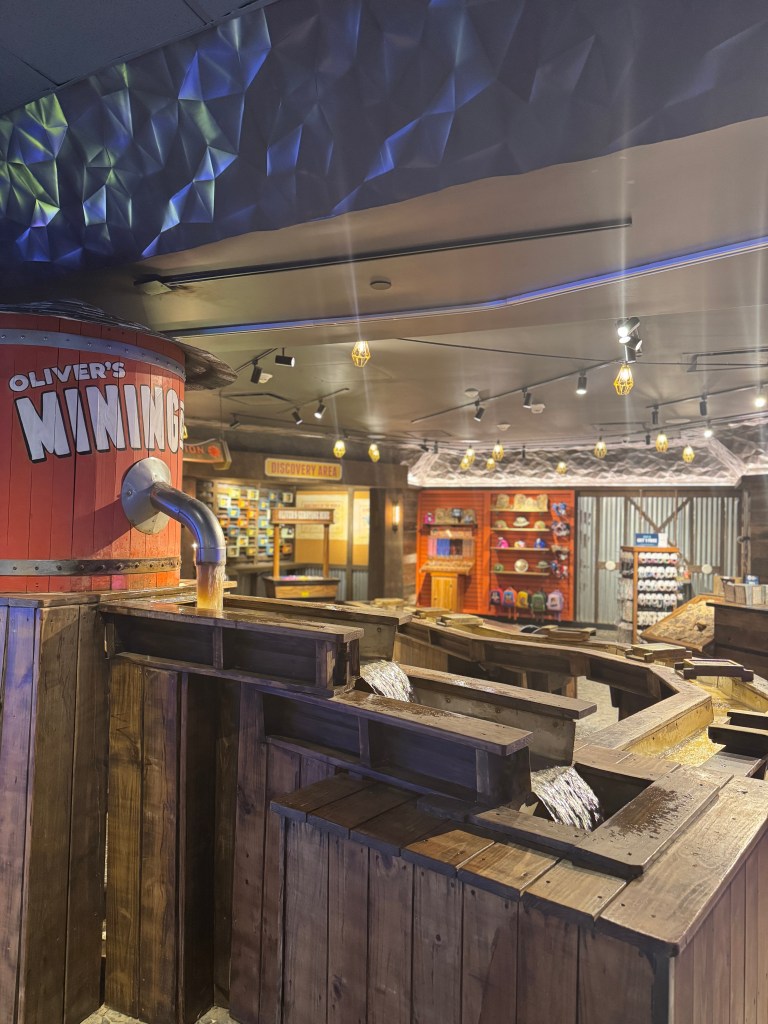
It gives kids a chance to slow down, explore, and take home a fun souvenir from their visit.
It was especially fun watching each child compare their discoveries and decide which gems were their favorites.
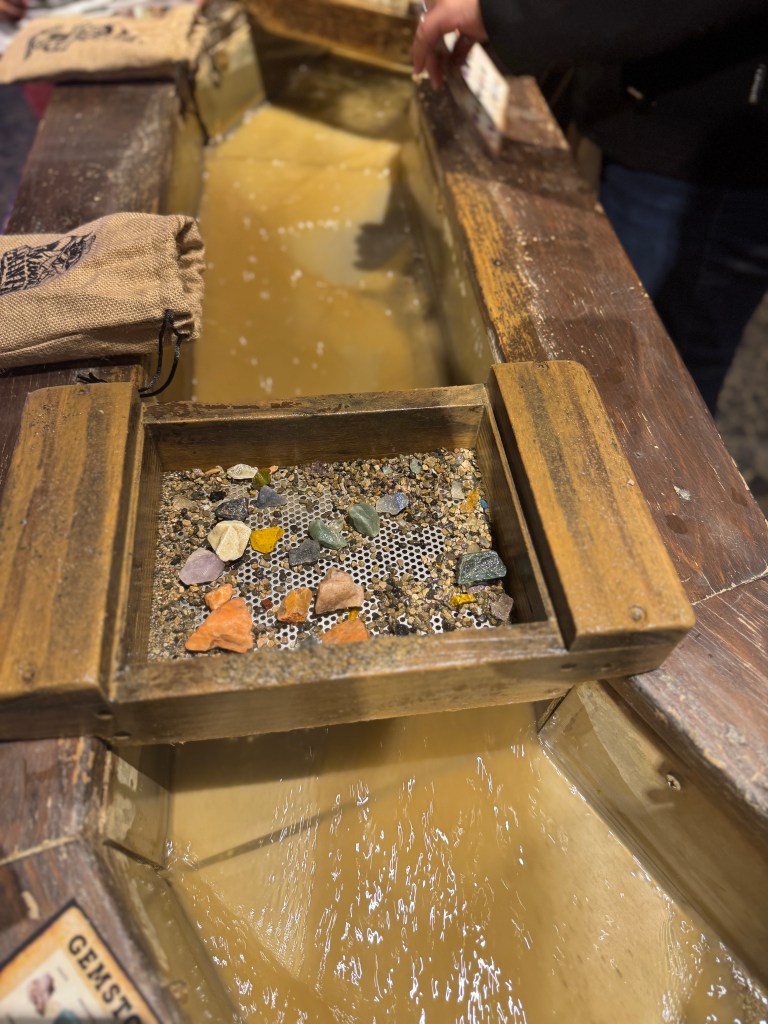
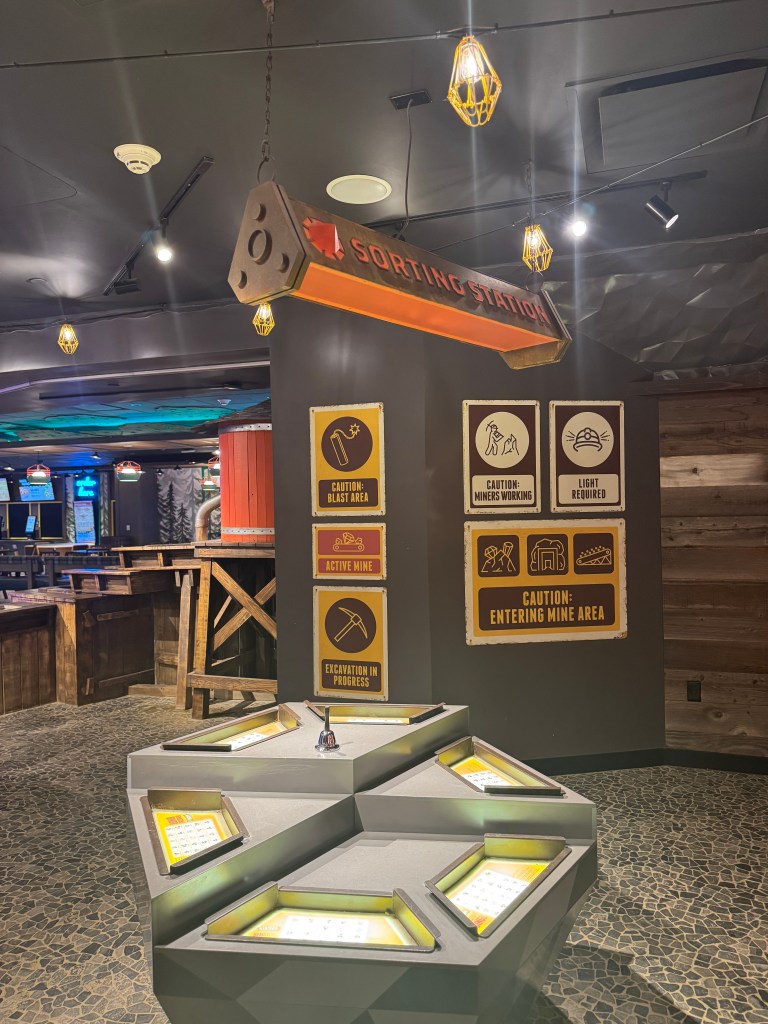
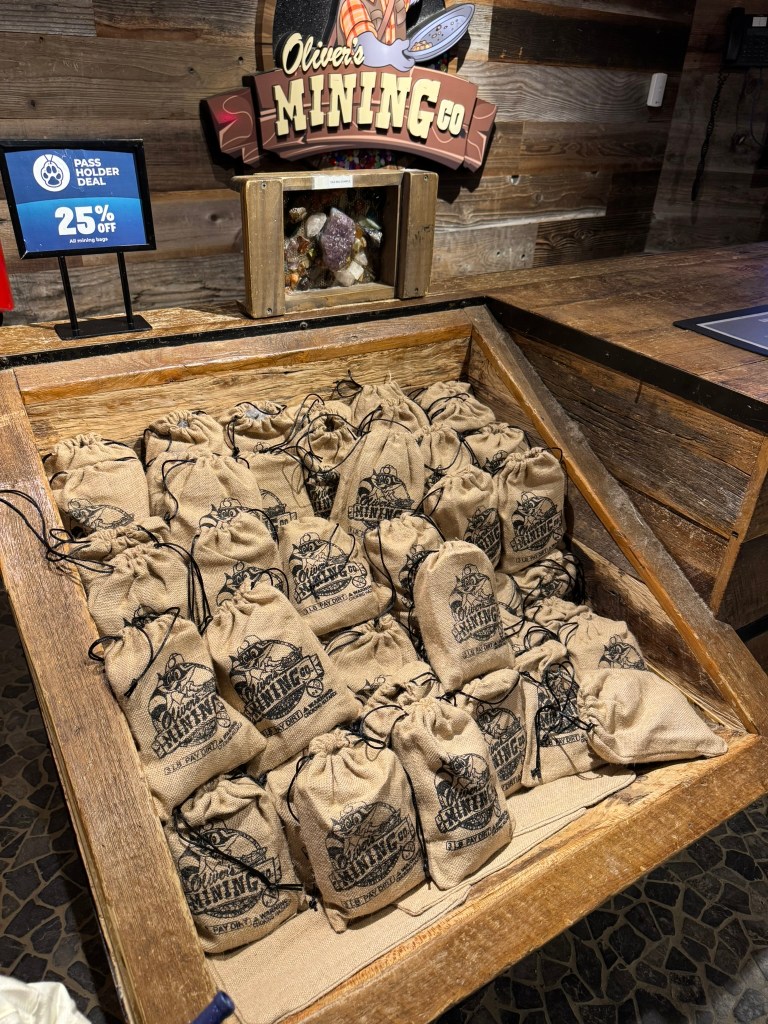
Perfect for: Younger children, collectors, and kids who love hands-on activities.
Laser Tag
Laser tag was an instant hit.
After spending time in the water park, it was fun switching gears and letting the kids compete in a completely different kind of adventure.



The excitement starts the moment the doors open, and before long everyone is running, laughing, and trying to outscore each other.
It’s the kind of activity that gets the whole family moving.
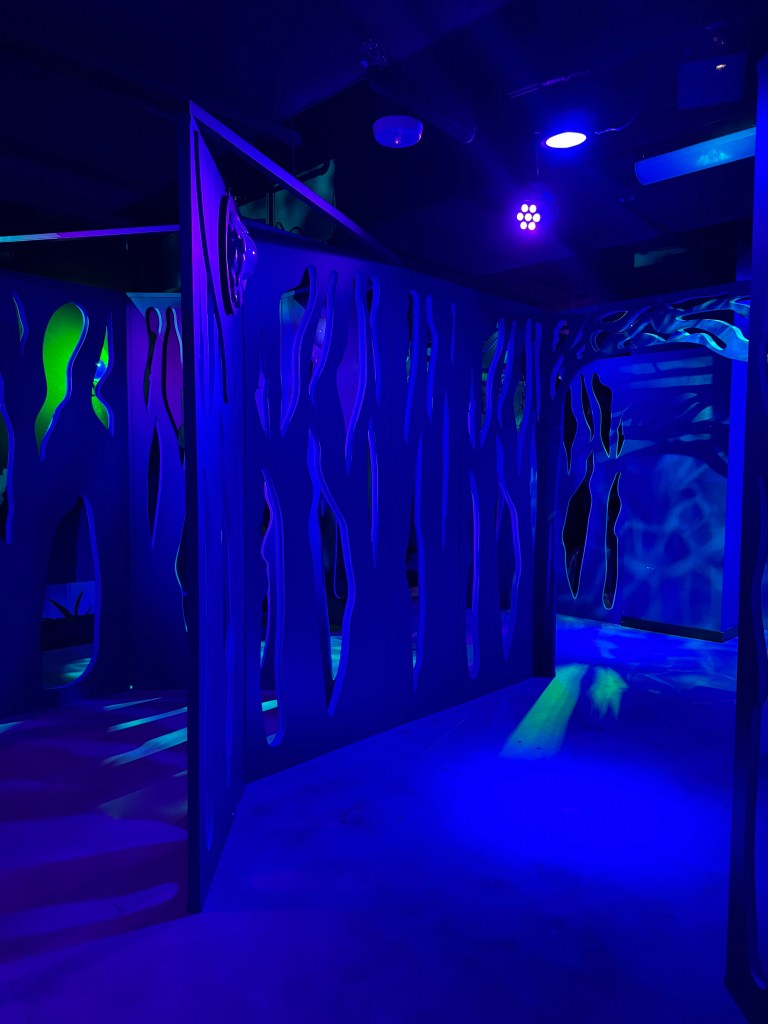

Perfect for: Older kids, teens, parents, and families who enjoy a little friendly competition.
Howlers Peak Ropes Course
One attraction that surprised me the most was the Howlers Peak Ropes Course.
At first glance, it looks like something only older kids would enjoy, but that wasn’t our experience at all.
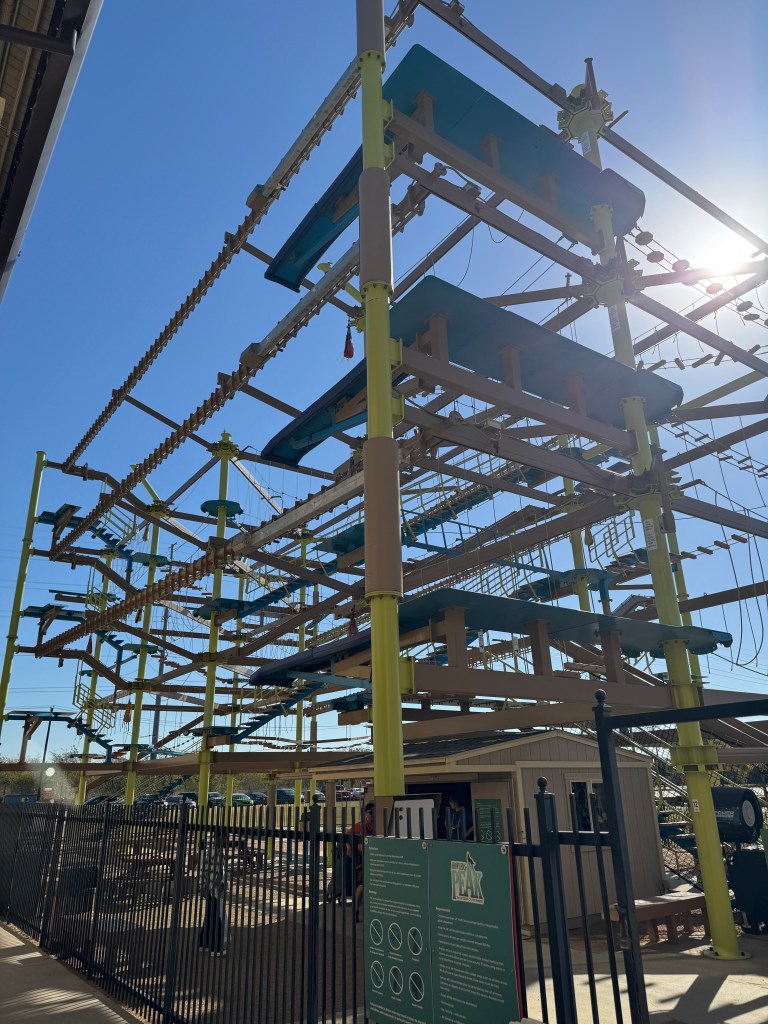
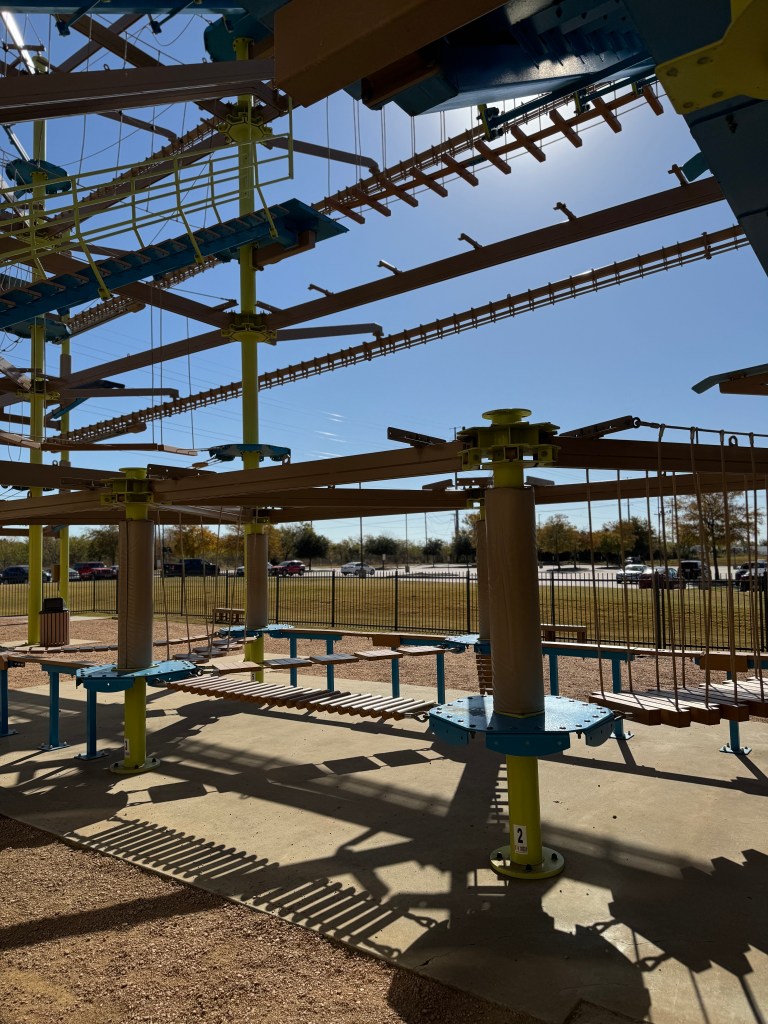
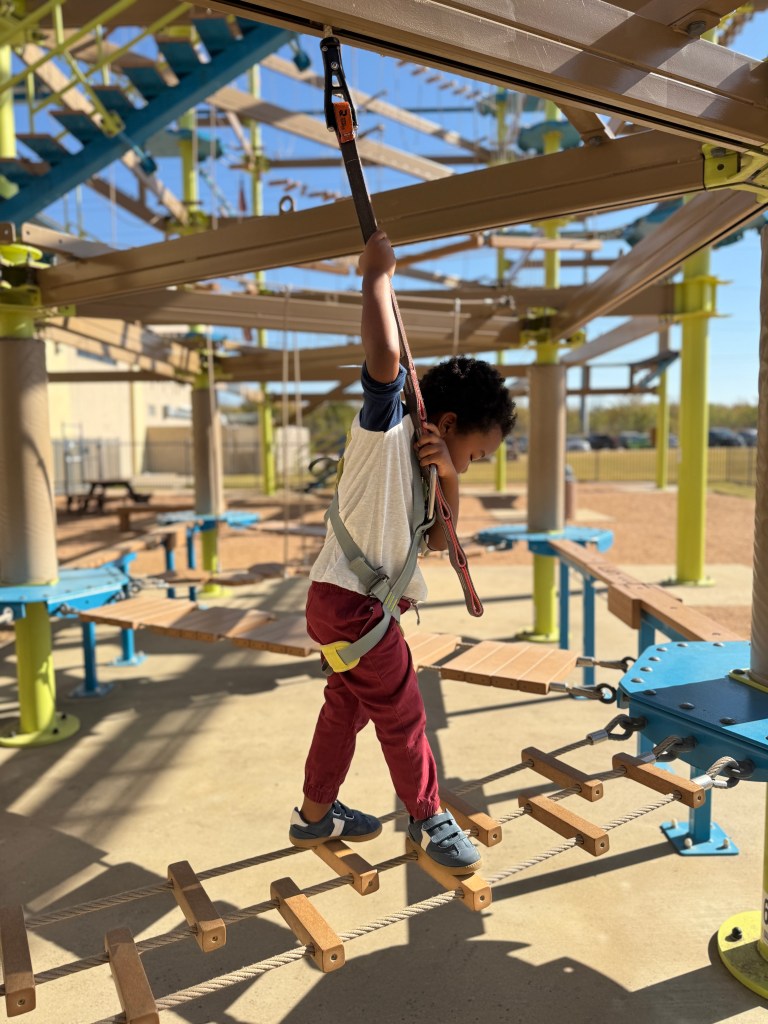
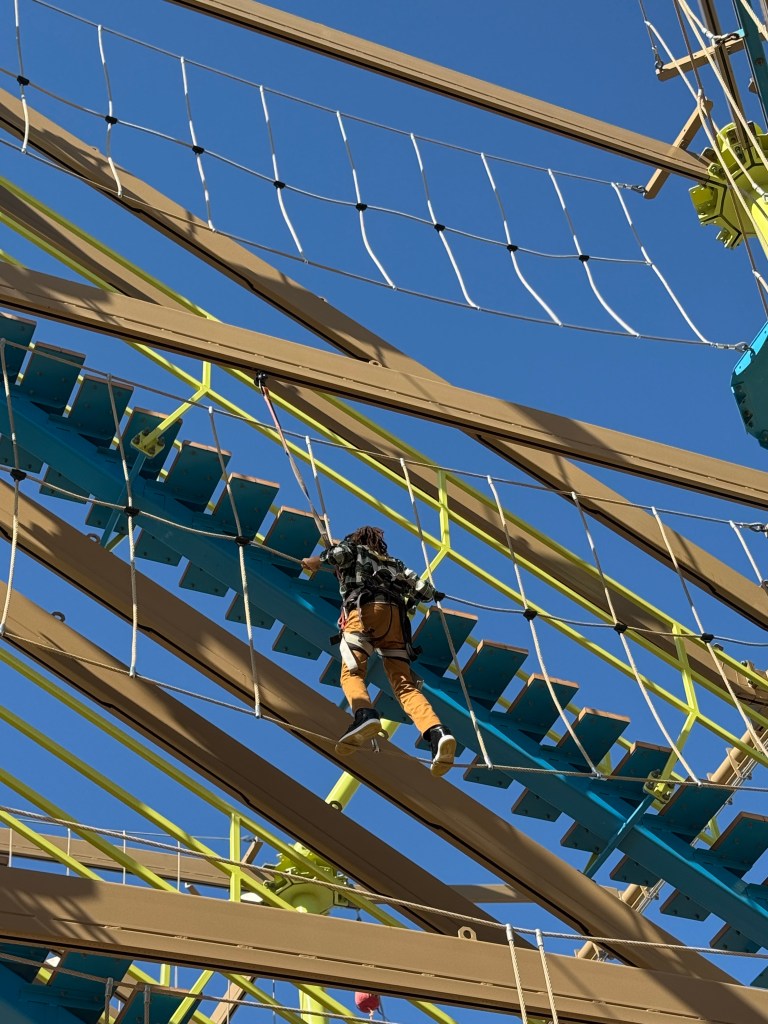
My older kids loved the challenge of balancing across rope bridges, climbing through obstacles, and making their way around the course.
What made it even more special was seeing our four-year-old join in on the fun, too. It quickly became one of those activities where everyone was cheering each other on from below.
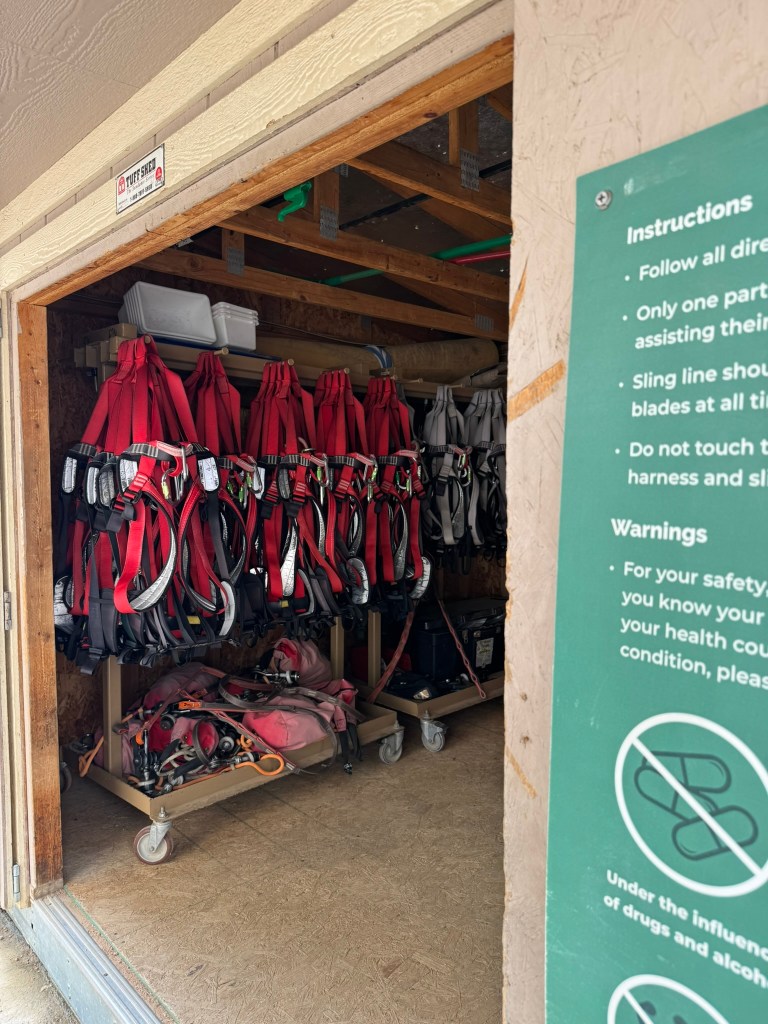
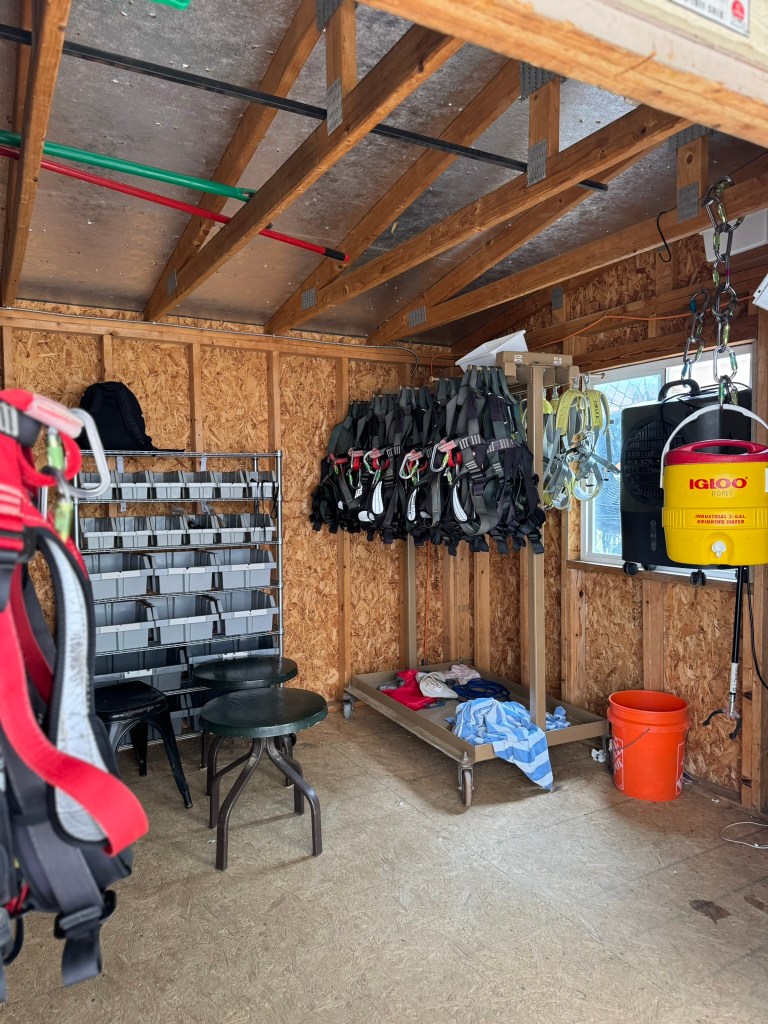
As a parent, safety was one of the first things I noticed.
Before stepping onto the course, every participant is fitted with a secure climbing harness that stays attached to the overhead safety system throughout the experience.
The staff takes time to make sure harnesses are properly fitted before anyone begins, and there are specific height requirements and safety guidelines in place for younger participants.
That gave me the confidence to enjoy watching my kids challenge themselves instead ofworrying every step of the way.
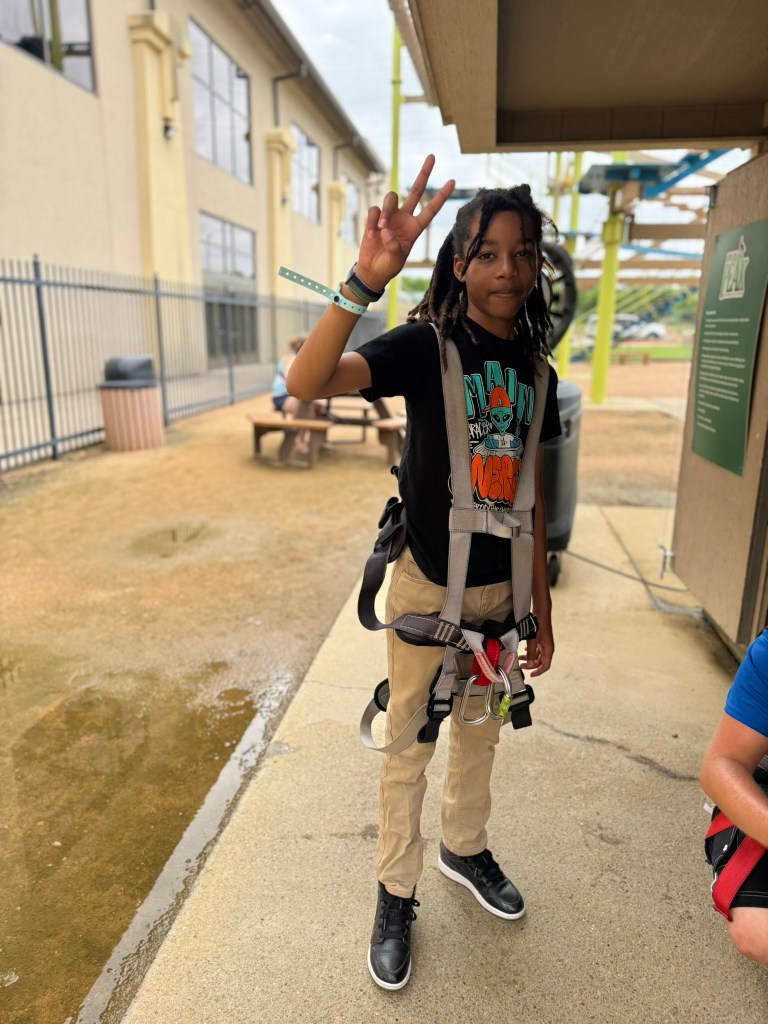
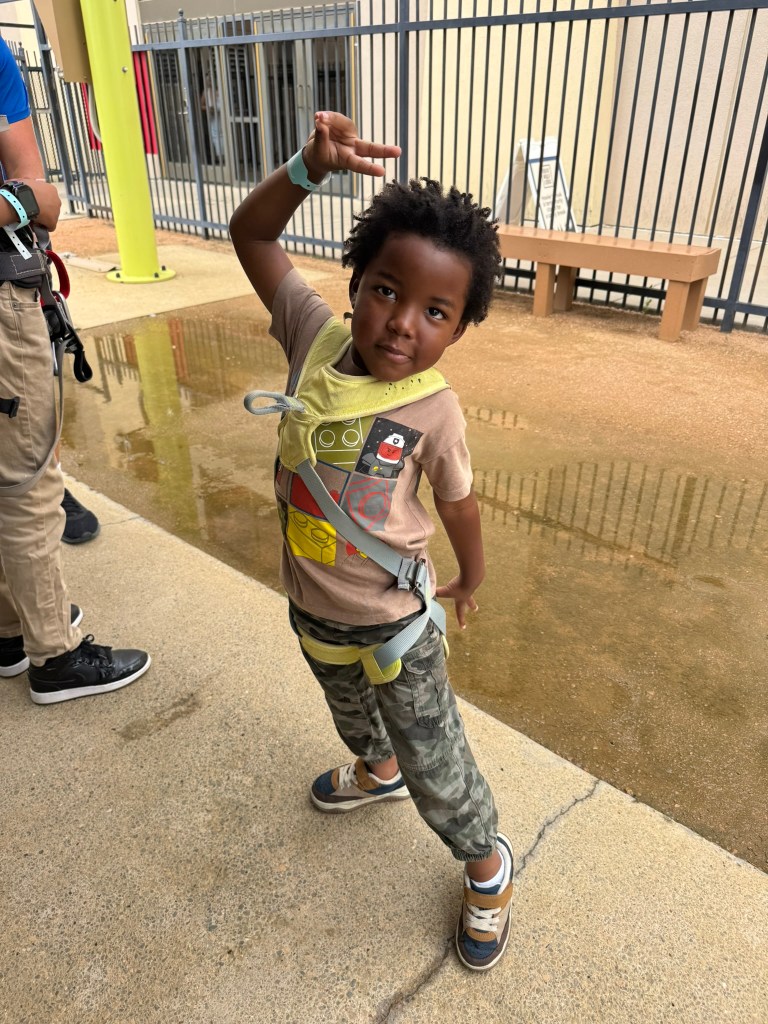
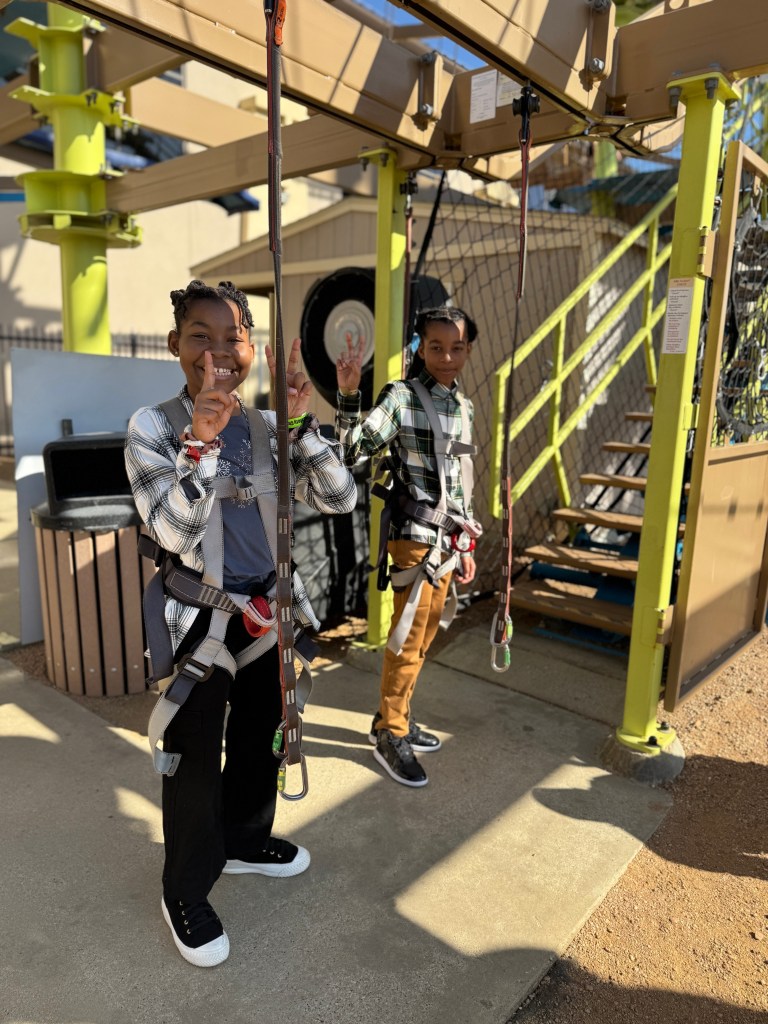
I also loved that the course offers different elements to navigate, so kids can build confidence with every obstacle they complete. You could literally see their excitement grow as they made it farther around the course.
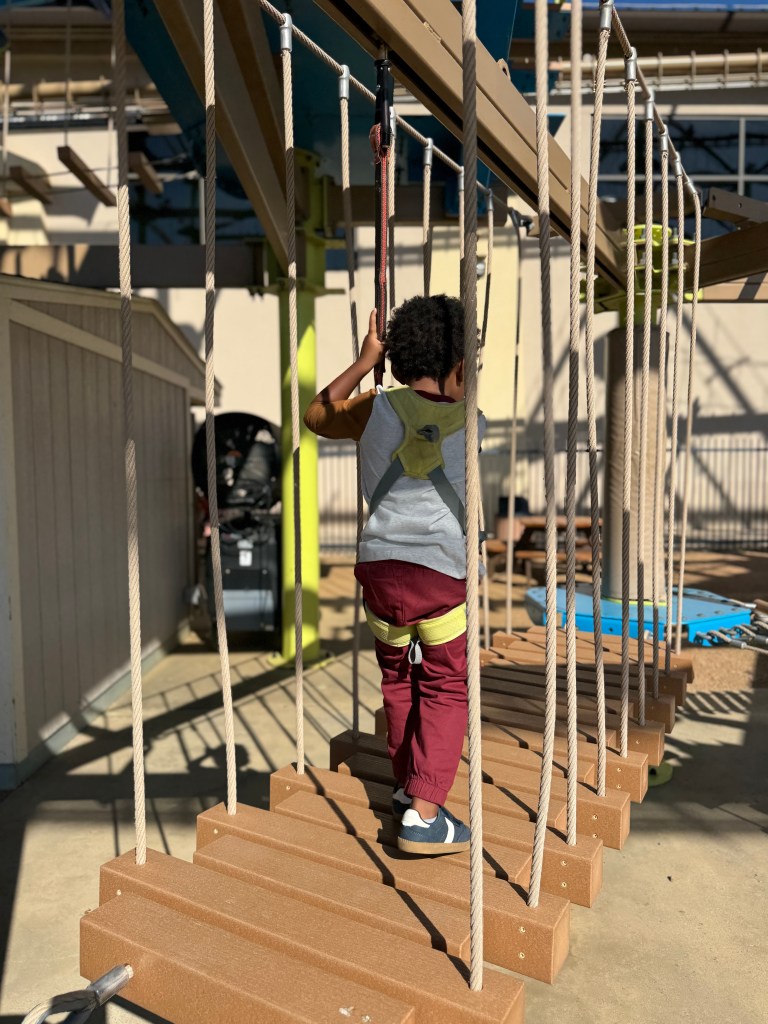

Perfect for: Families with adventurous kids, older children looking for a challenge, and younger climbers who meet the height requirements and are ready to try something new with an adult if needed.
Why It’s Great for Families with Different Ages
One thing I appreciate most about Great Wolf Lodge Grapevine is that it doesn’t expect every child to enjoy the exact same thing.
Our younger kids loved exploring and discovering new adventures, while the older kids couldn’t wait for the next challenge.
Having a variety of attractions meant everyone found something they genuinely looked forward to each day.
As a parent, that’s one of the biggest reasons I think the Wolf Pass adds value.
Great Wolf Lodge also works especially well for celebrations with older kids. We even celebrated a tween birthday at Great Wolf Lodge, and having so many activities in one place made the trip feel like an experience rather than just a hotel stay.
Ten Paw Alley Bowling
Sometimes it’s nice to take a break from the water park without slowing down the fun, and that’s exactly what Ten Paw Alley offered our family.
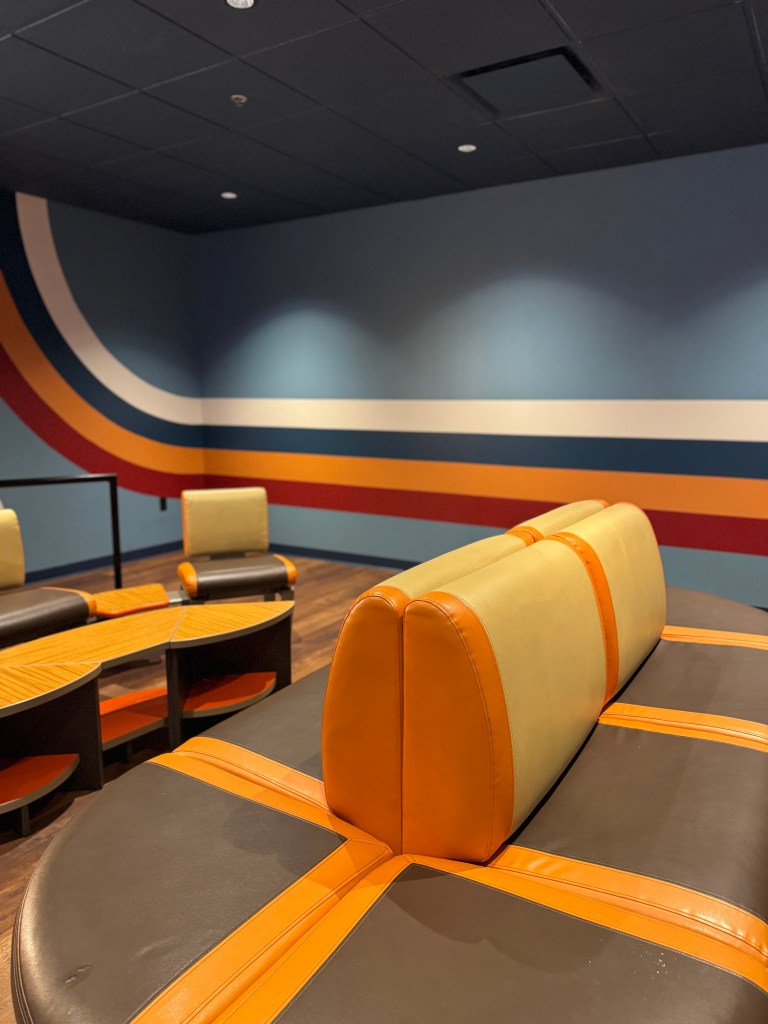
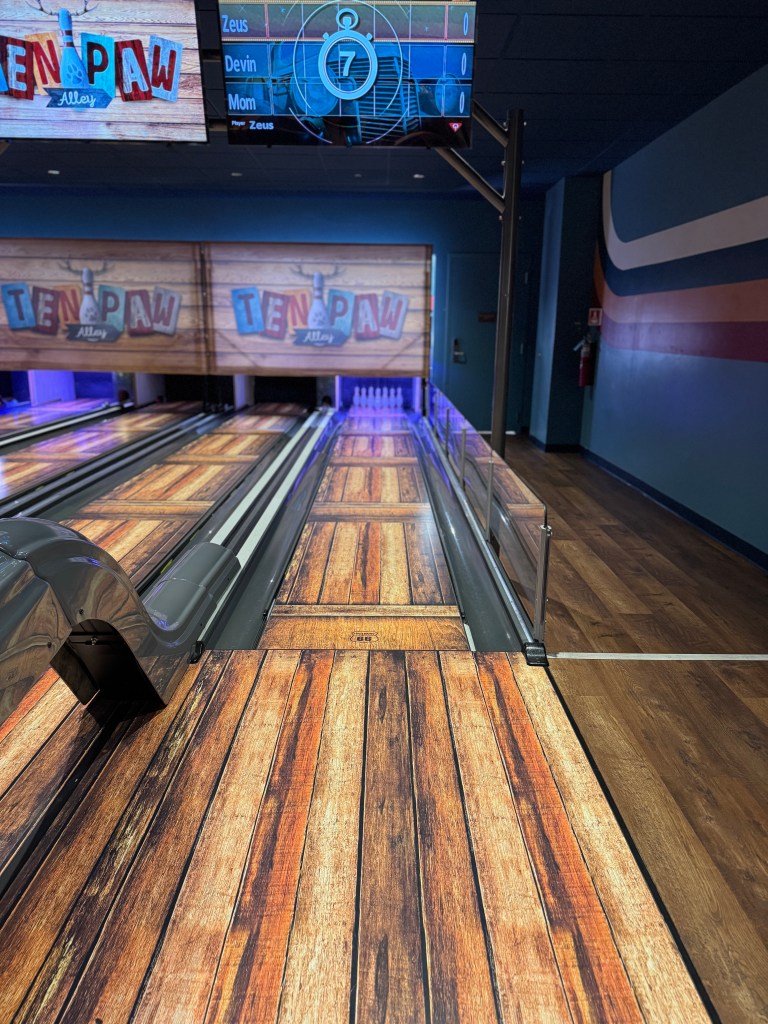
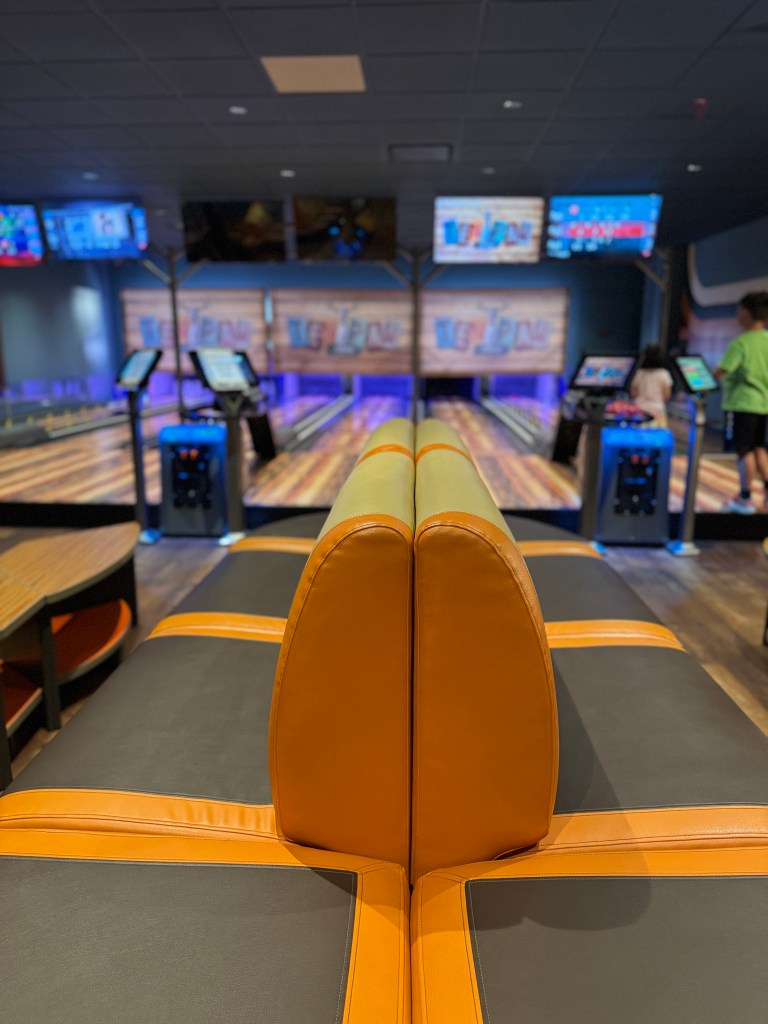
Bowling gave us a chance to relax, laugh together, and enjoy a little friendly competition before jumping back into the rest of our adventures around the resort.
It’s another activity that works well for multiple ages, making it easy for everyone to join in.
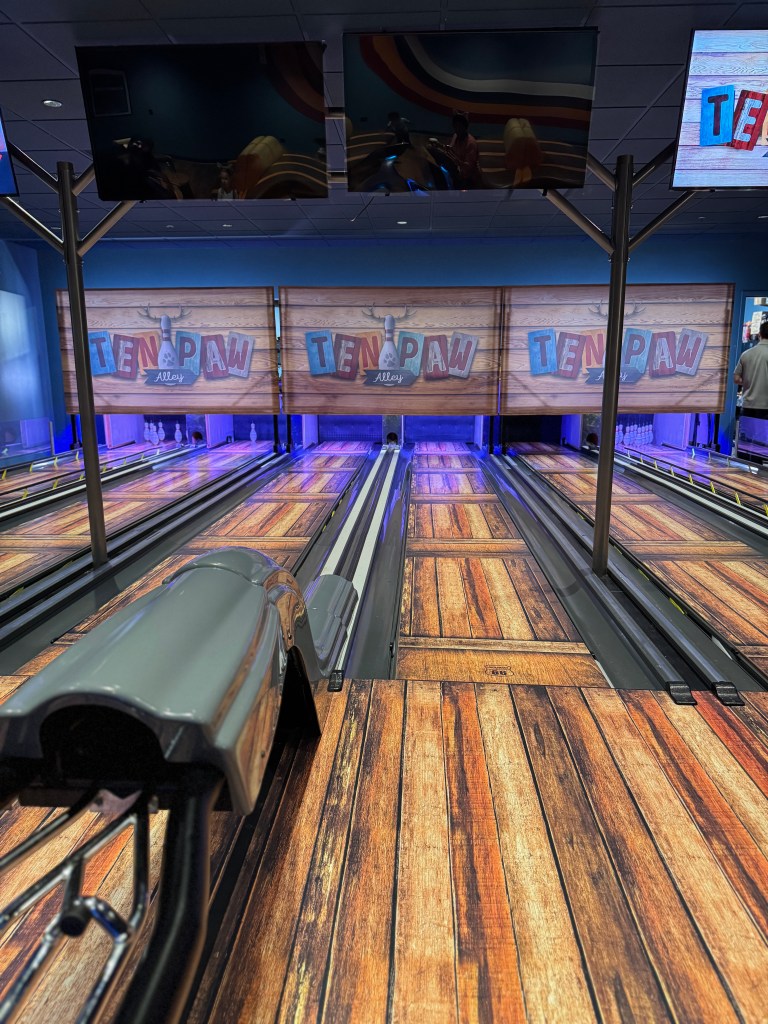
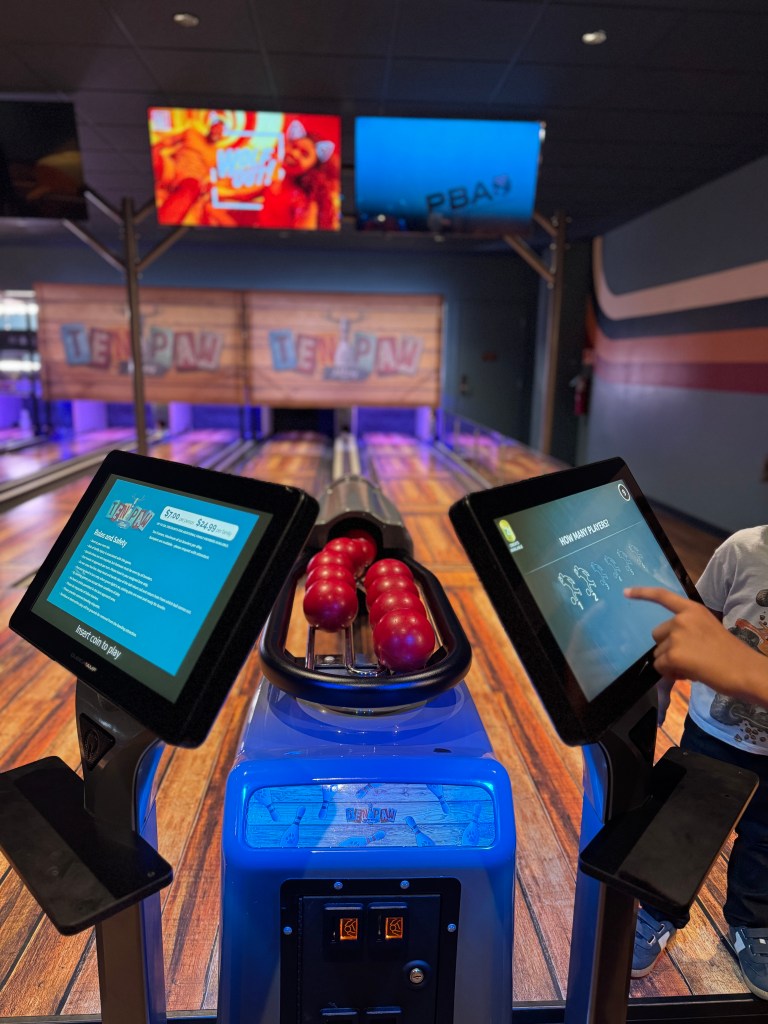
Perfect for: Families looking for a fun indoor activity everyone can enjoy together.
Northern Lights Arcade
No family vacation is complete without a trip to the arcade.
The Wolf Pass includes arcade credits, giving the kids a chance to play a few of their favorite games and collect tickets along the way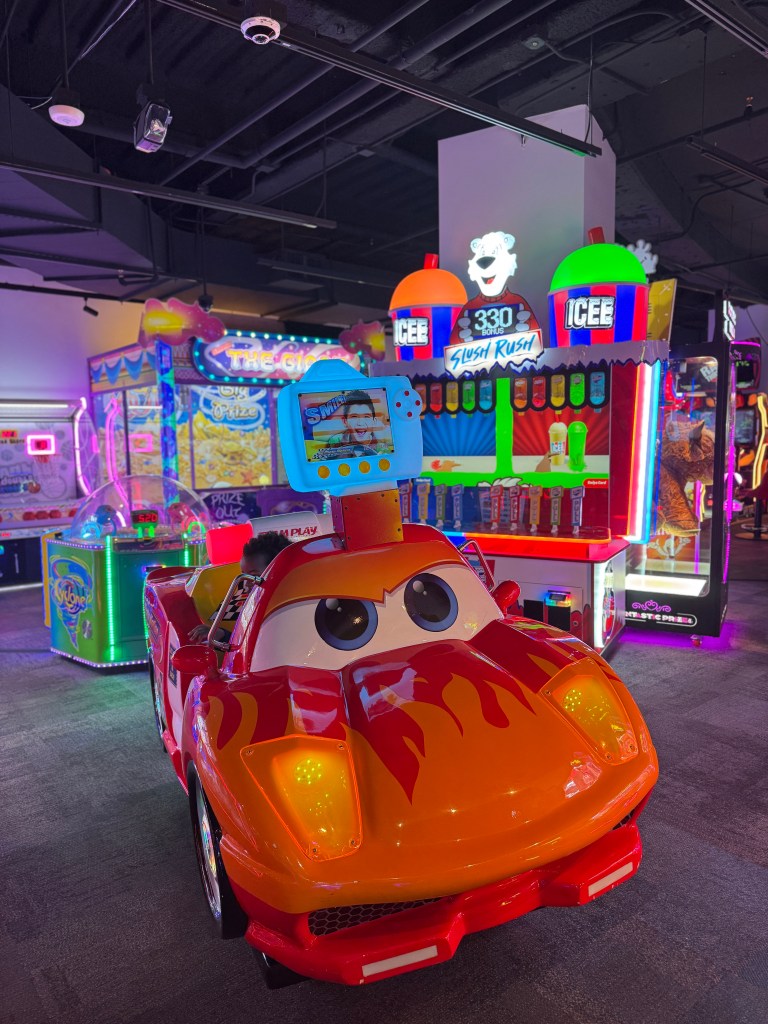
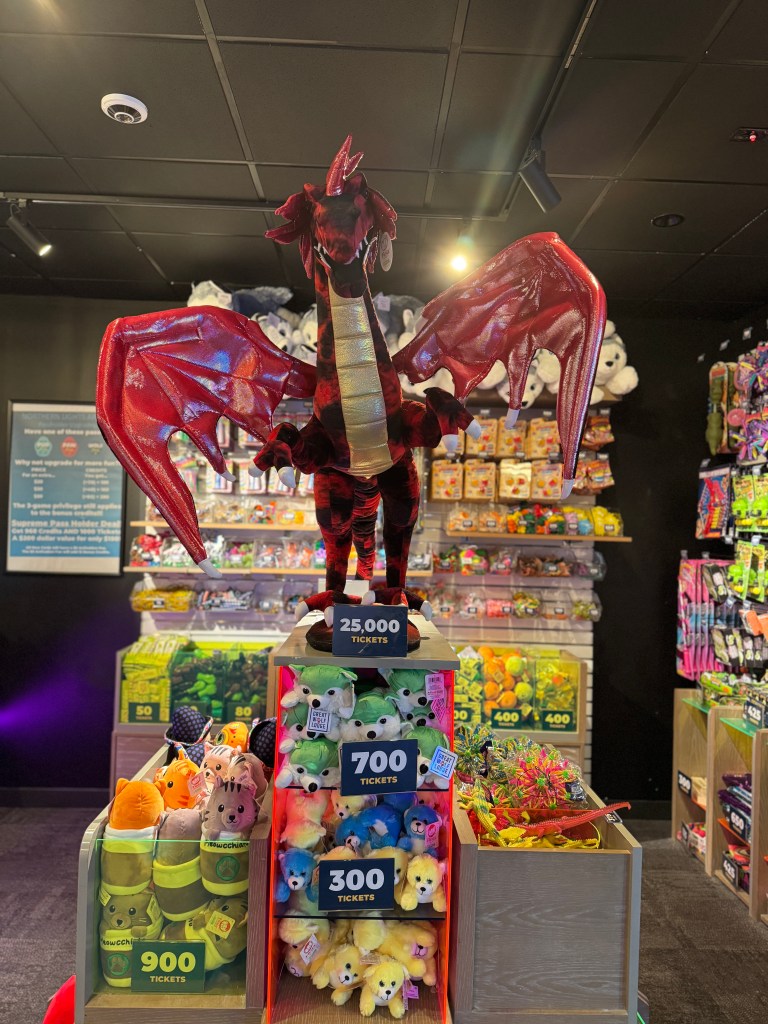
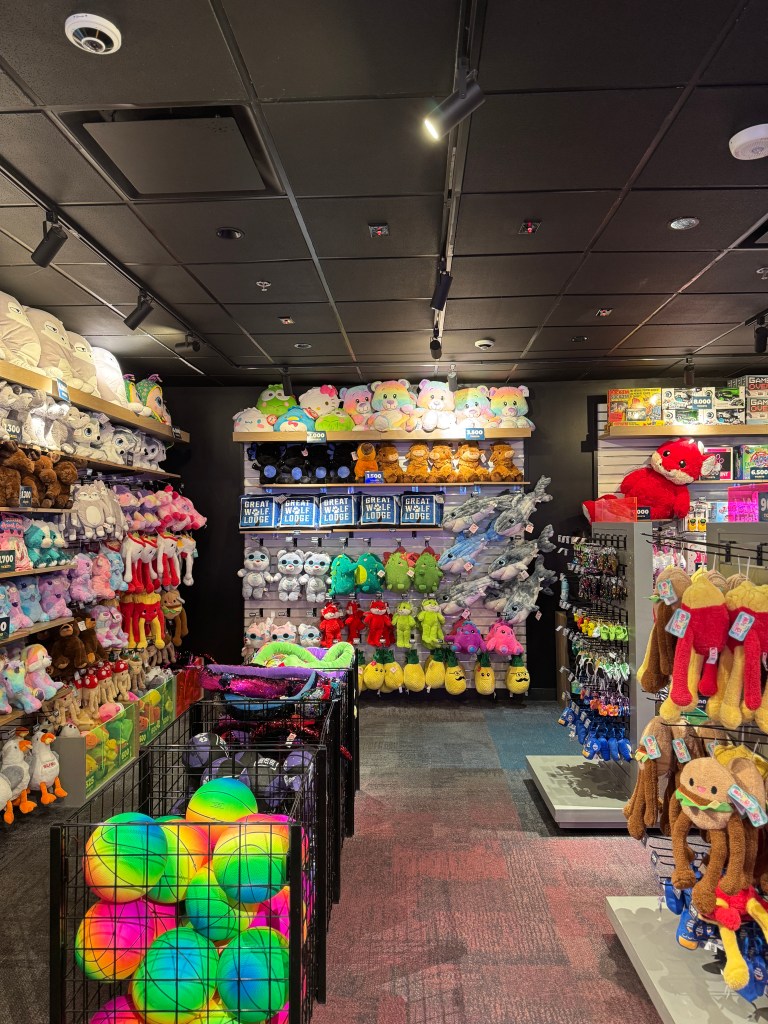
While you can always add more credits if you choose, having some already included was a fun bonus that let the kids jump right into the excitement.
From classic arcade games to newer interactive favorites, it’s another way Great Wolf Lodge keeps the fun going beyond the water park.
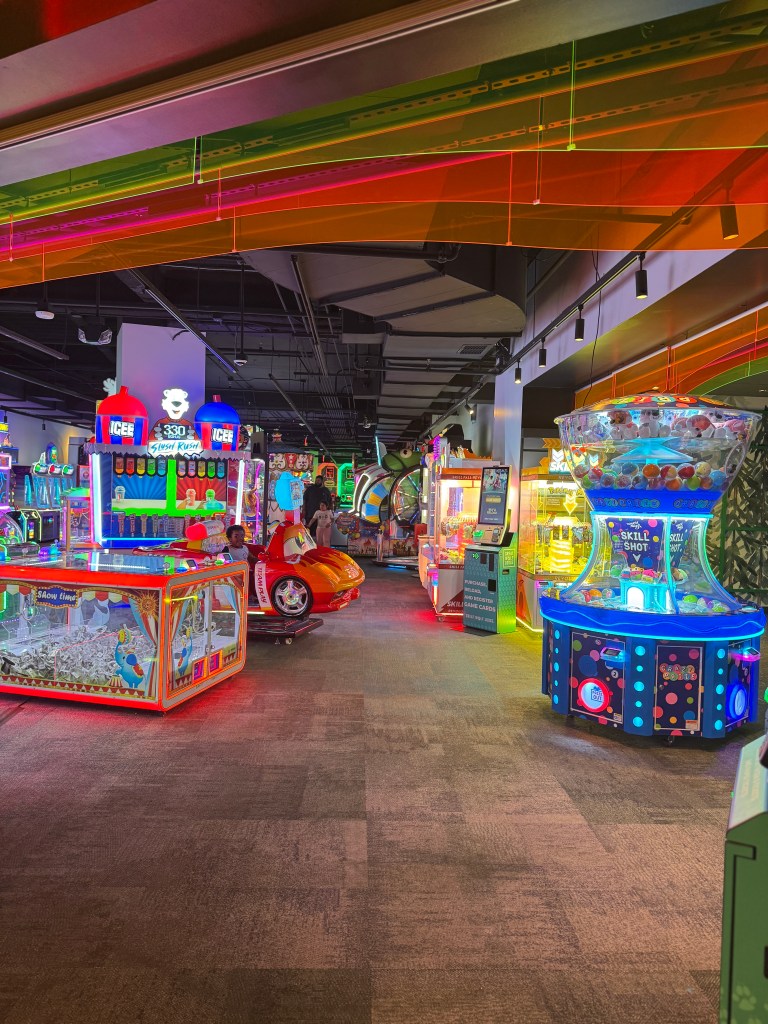
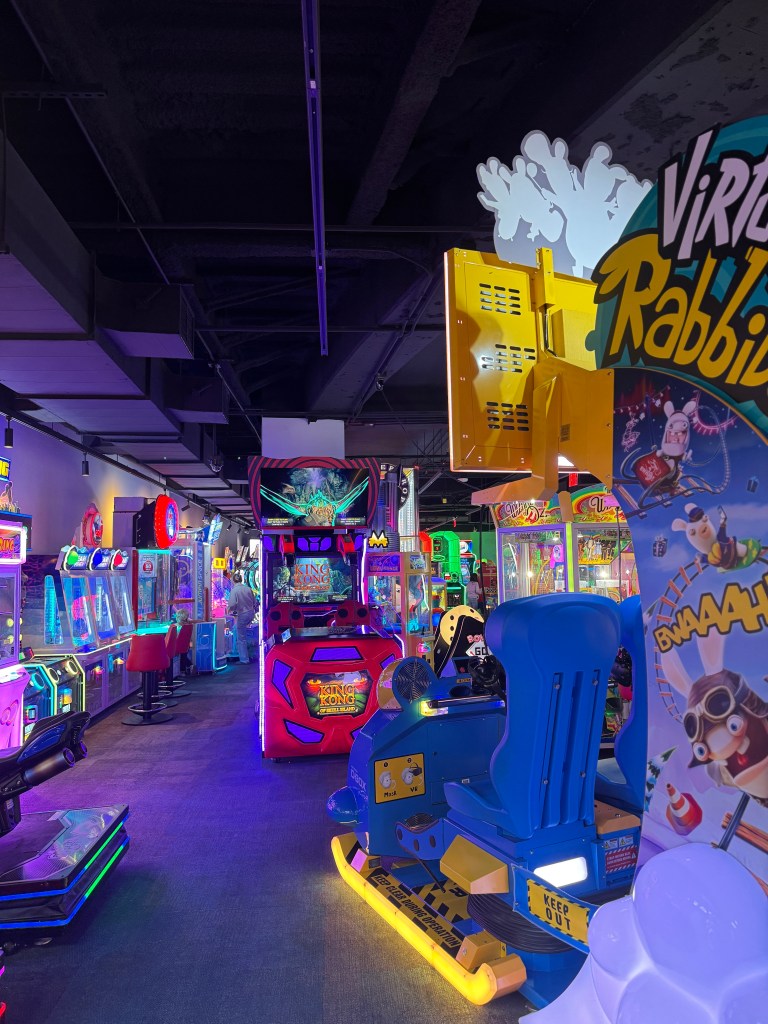
Perfect for: A little friendly competition and a fun way to end the evening before heading back to your room.
More Than Just the Water Park
The indoor water park is what brings most families to Great Wolf Lodge.
But the attractions included with the Wolf Pass are what helped round out our vacation.
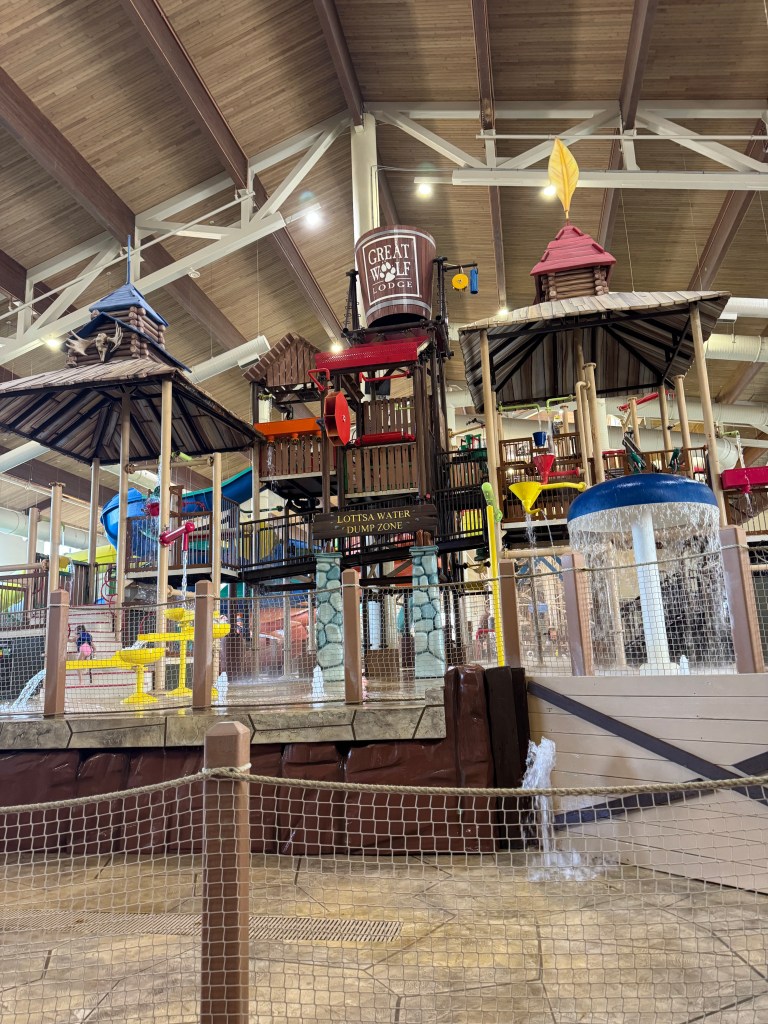
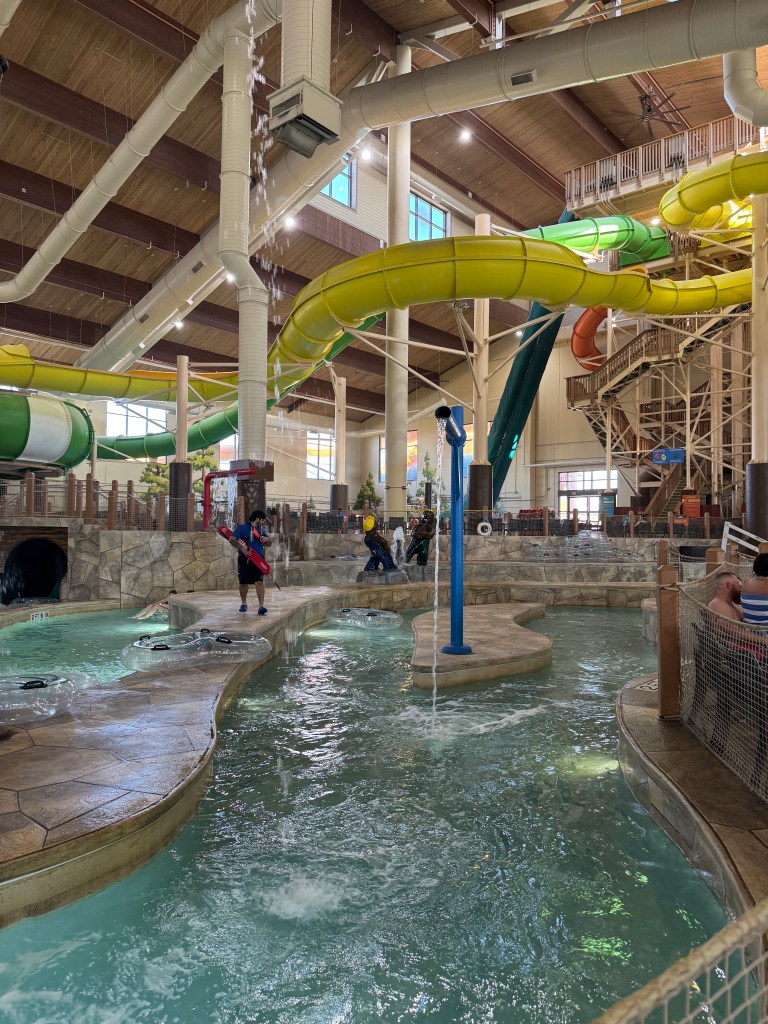
Instead of spending the entire day swimming, we naturally mixed in MagiQuest, laser tag, mining, shopping, meals, seasonal activities, and family time throughout the resort.
It made the trip feel more balanced and gave everyone something different to look forward to.
Who Should Buy the Wolf Pass?
I would especially recommend the Wolf Pass for:
- Families staying more than one day.
- Families with school-age kids.
- Kids who enjoy interactive adventures.
- Families planning to experience multiple attractions.
- Parents who want to maximize their time without making constant purchasing decisions.
If your family only plans to spend a few hours in the water park and head home, it may not be necessary.
But if you’re planning to truly experience everything Great Wolf Lodge Grapevine has to offer, I think it’s well worth considering.
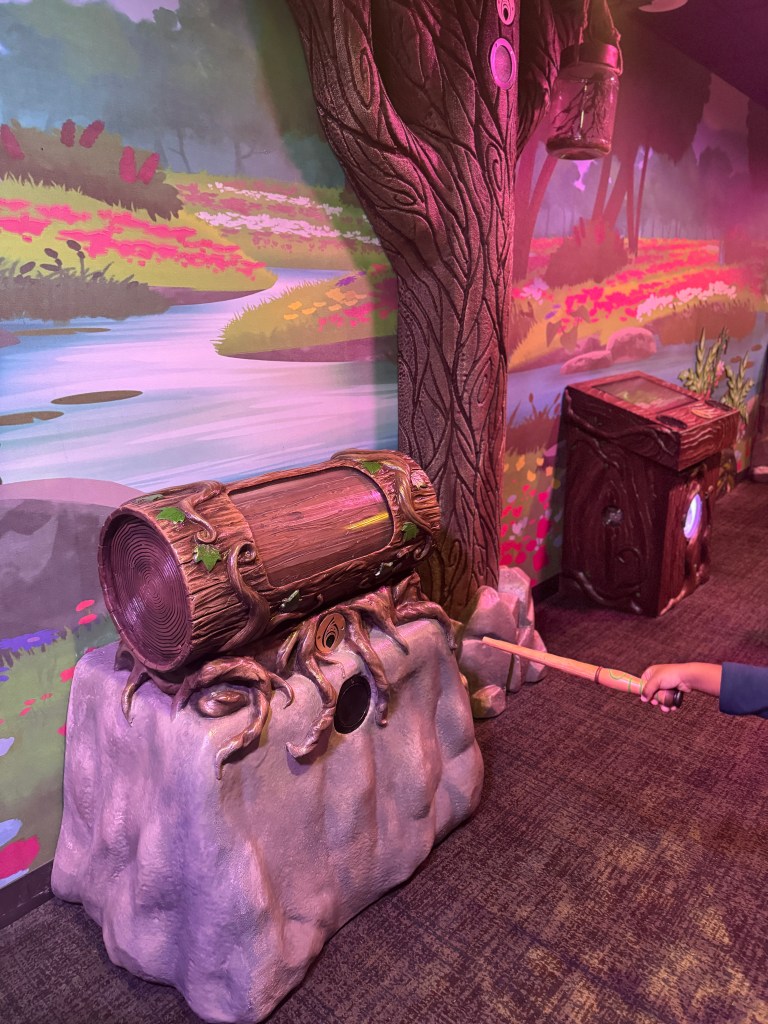
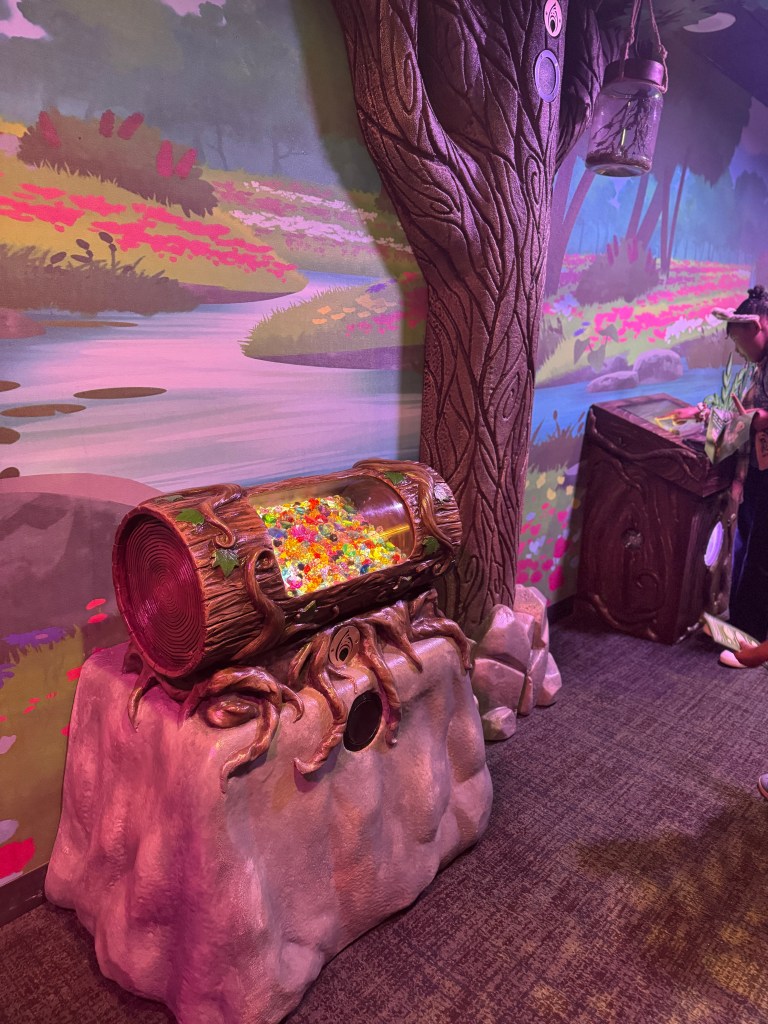
Final Thoughts
After using the Wolf Pass ourselves, I can absolutely see why it’s one of Great Wolf Lodge’s most popular add-ons.
It encouraged us to experience parts of the resort we may have otherwise skipped, and some of those attractions ended up becoming our kids’ favorite memories from the trip.
For our family, the Wolf Pass wasn’t just about saving money—it was about making the most of our vacation.
If you’re planning a stay at Great Wolf Lodge Grapevine, I’d definitely recommend looking at everything that’s included before you arrive.


And if you’re planning your trip, don’t miss my other Great Wolf Lodge Grapevine guides, where I share our complete Summer Camp-In experience, dining recommendations, and tips for making the most of your family getaway.
Have you used the Wolf Pass before? I’d love to know which attraction your family enjoyed most—or which one you’re most excited to try!
Frequently Asked Questions About the Wolf Pass at Great Wolf Lodge Grapevine
Is the Wolf Pass worth it at Great Wolf Lodge Grapevine?
The Wolf Pass can be worth it for families planning to enjoy several attractions outside the indoor water park. It bundles multiple activities into one package and may cost less than purchasing each experience separately. It also makes the visit more convenient because families do not have to make a new purchase every time their children want to try an attraction.
What is included in the Wolf Pass at Great Wolf Lodge Grapevine?
Wolf Pass inclusions may vary, but the package can include attractions such as MagiQuest, Oliver’s Mining Co., laser tag, Ten Paw Alley bowling, Howlers Peak Ropes Course, mini golf, arcade credits, and additional treats or souvenirs. Families should review the current Wolf Pass details before their stay because attractions and package benefits may change.
Does the Wolf Pass include the Great Wolf Lodge water park?
No. Indoor water park admission is typically included with an overnight stay at Great Wolf Lodge. The Wolf Pass is an optional attraction package that covers additional experiences outside the water park.
How much money can families save with the Wolf Pass?
The amount saved depends on the current Wolf Pass price, the attractions included, and how many of those activities your family completes. Families who plan to use several included attractions are more likely to save compared with purchasing each activity individually.
Is MagiQuest included with the Wolf Pass?
MagiQuest is often one of the featured Wolf Pass attractions. Depending on the current package, the pass may include game access and other MagiQuest-related items. Families should confirm whether a wand is included, rented, or purchased separately before arriving.
What ages is the Wolf Pass best for?
The Wolf Pass is generally best for families with school-age children who can participate in several of the included attractions. However, younger children may also enjoy mining, bowling, arcade games, and select attractions if they meet the age, height, and safety requirements.
Is the Wolf Pass good for families with children of different ages?
es. One of the benefits of the Wolf Pass is the variety of activities it can include. Younger children may prefer mining or bowling, while older children may enjoy MagiQuest, laser tag, the ropes course, and arcade games. This variety can help families with multiple children find activities that appeal to everyone.
Is the Wolf Pass worth it for a one-night stay?
The Wolf Pass can be worth it for a one-night stay if your family arrives early, stays through the checkout day, and plans time for several attractions. However, families focused mainly on the water park may not use enough of the pass to receive the full value.
How much time do you need to use the Wolf Pass?
Families should plan enough time to complete several attractions without feeling rushed. A two-night stay may make it easier to balance the water park, meals, seasonal activities, and Wolf Pass attractions. Families staying one night should decide which activities are priorities before arriving.
Can the Wolf Pass be shared between family members?
Wolf Passes are generally purchased for individual guests and may be connected to a specific wristband or participant. Families should review the current terms at Great Wolf Lodge Grapevine to determine which attractions can be used by each passholder.
Should every child in the family get a Wolf Pass?
Not necessarily. Parents should consider each child’s age, interests, height, and likelihood of completing the included attractions. A younger child who cannot participate in several experiences may not receive the same value as an older child who wants to try everything.
When should families purchase the Wolf Pass?
Families should compare pass options before their trip so they can understand what is included and plan their stay. Purchasing in advance may also make arrival easier and help parents budget for attractions before reaching the resort.
-
Is Great Wolf Lodge Grapevine Worth It? A Mom’s Summer Camp-In Review for Families
As a mom of four kids with a pretty wide age range, finding a family getaway that genuinely works for everyone isn’t always easy. Between the themed activities, indoor water park, family attractions, and dining options, I can confidently say that every one of my kids left with a different favorite memory.
Having children of various ages means everyone wants something different for fun. One wants thrilling water slides. One wants snacks. One wants adventure. One just wants to splash around and have fun.
That’s why I was excited to experience the newly renovated Great Wolf Lodge in Grapevine, TX during their Summer Camp-In celebration. The resort recently debuted new dining options, exciting new attractions, and an all-new interactive lobby show, making it an even more exciting destination for families.
Is Great Wolf Lodge Grapevine Worth It?
For our family of four, yes Grapevine Great Wolf Lodge was well worth it.
One of the biggest reasons is value. Your water park access begins before check-in and continues through the day you check out, allowing families to enjoy nearly two full days of fun at the water park, even during a shorter stay.
Beyond the water park, there are attractions, dining options, seasonal events, family activities, and entertainment all under one roof.
For families traveling with children of different ages, that convenience adds up quickly.
What Is Summer Camp-In at Great Wolf Lodge?
Summer Camp-In is Great Wolf Lodge’s seasonal summer celebration featuring additional themed activities, entertainment, food, drinks, and family experiences throughout the resort.
During our stay, we experienced:
- Splash and dance parties
- Camp-inspired seasonal drinks
- The Trailblazer Challenge
- Family activities throughout the resort
- Evening entertainment
- Special Summer Camp-In experiences
The seasonal touches made the entire resort feel festive and gave the trip an extra layer of excitement beyond the water park.
What’s Included with Your Stay at Great Wolf Lodge Grapevine?
One thing many families don’t realize is just how much is included with a Great Wolf Lodge stay.
In addition to your room, guests receive:
- Access to the indoor water park
- Character appearances and family activities
- Dance parties and evening entertainment
- Storytime and seasonal programming
- Access to many resort amenities and common areas
Additional attractions like MagiQuest, laser tag, mining, ropes courses, and arcade games can be purchased separately or through attraction packages like the Wolf Pass.
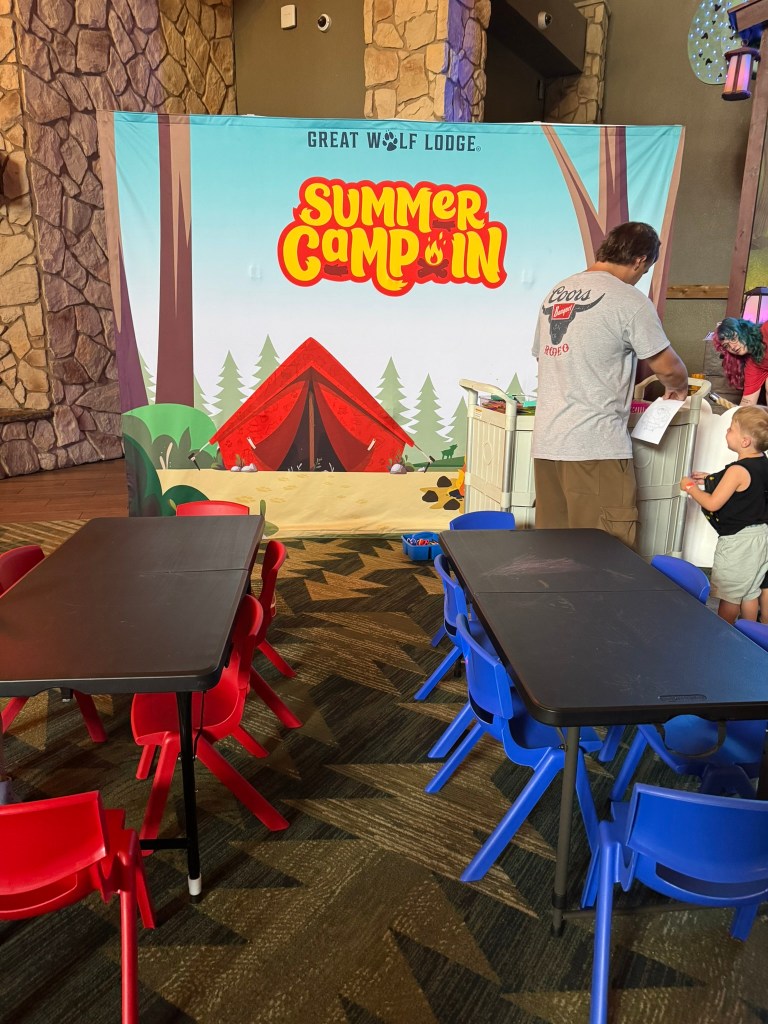
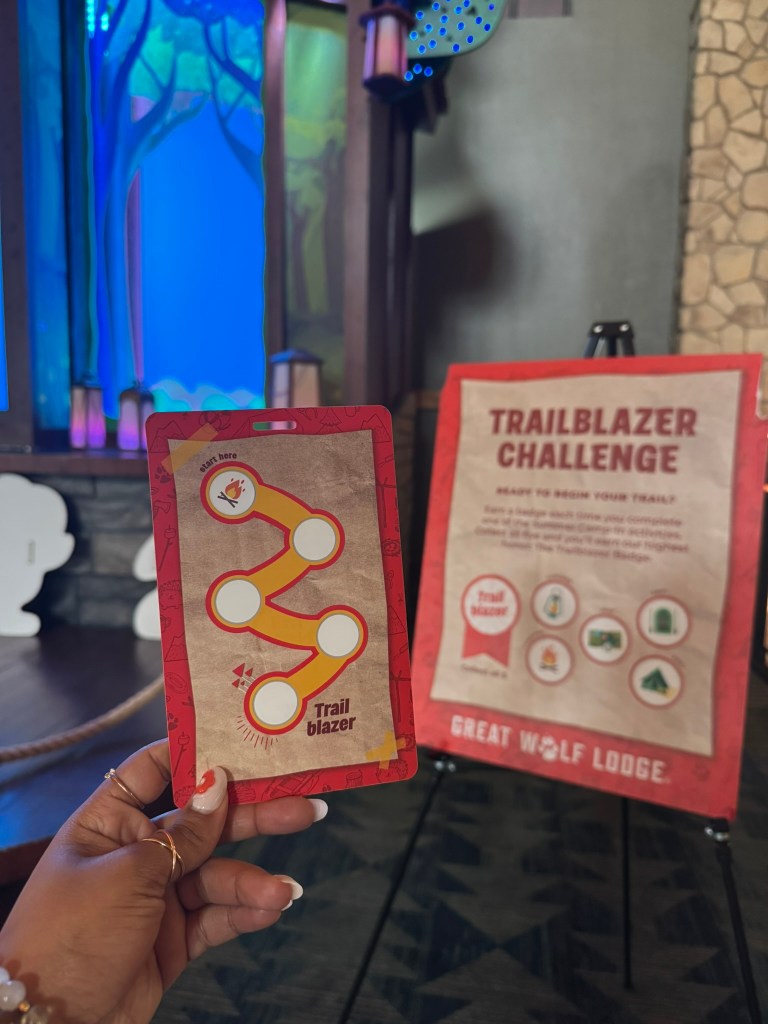
Is One Night Enough at Great Wolf Lodge?
Many families wonder if a one-night stay is worth it.
Because water park access begins before check-in and extends through checkout day, even a one-night stay can provide two days of water park access.
For families on a budget or those visiting for a quick getaway, this can make a short stay feel much longer.
That said, if your family plans to enjoy attractions like MagiQuest, laser tag, mining, and seasonal activities, two nights allows for a more relaxed pace.
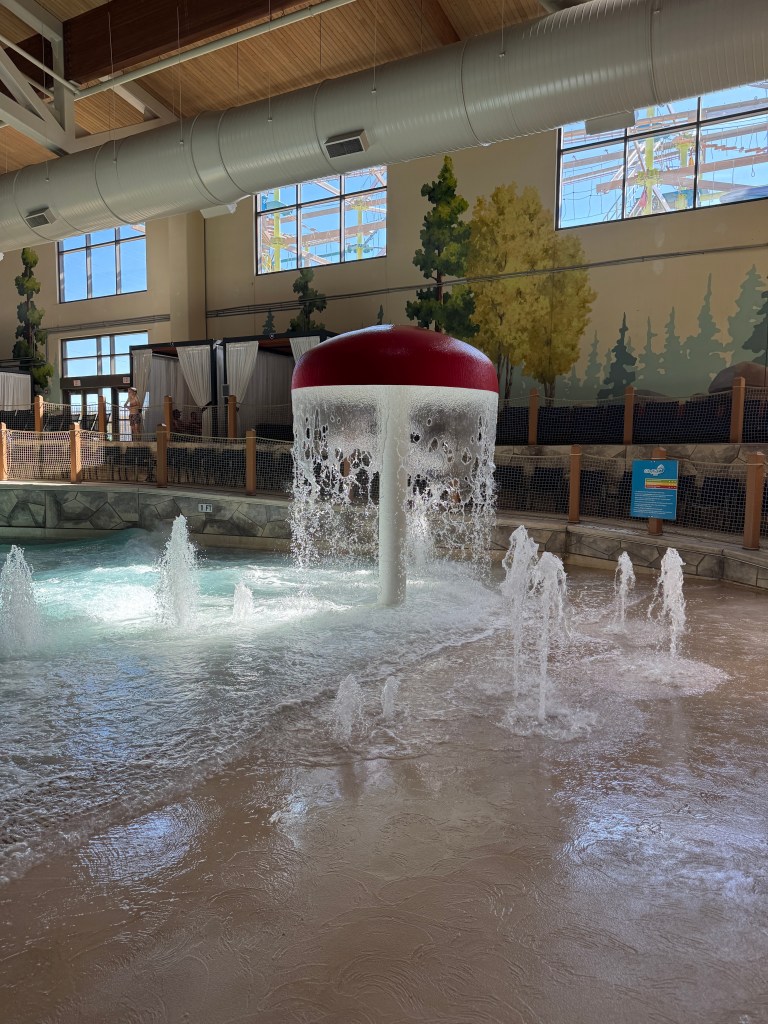
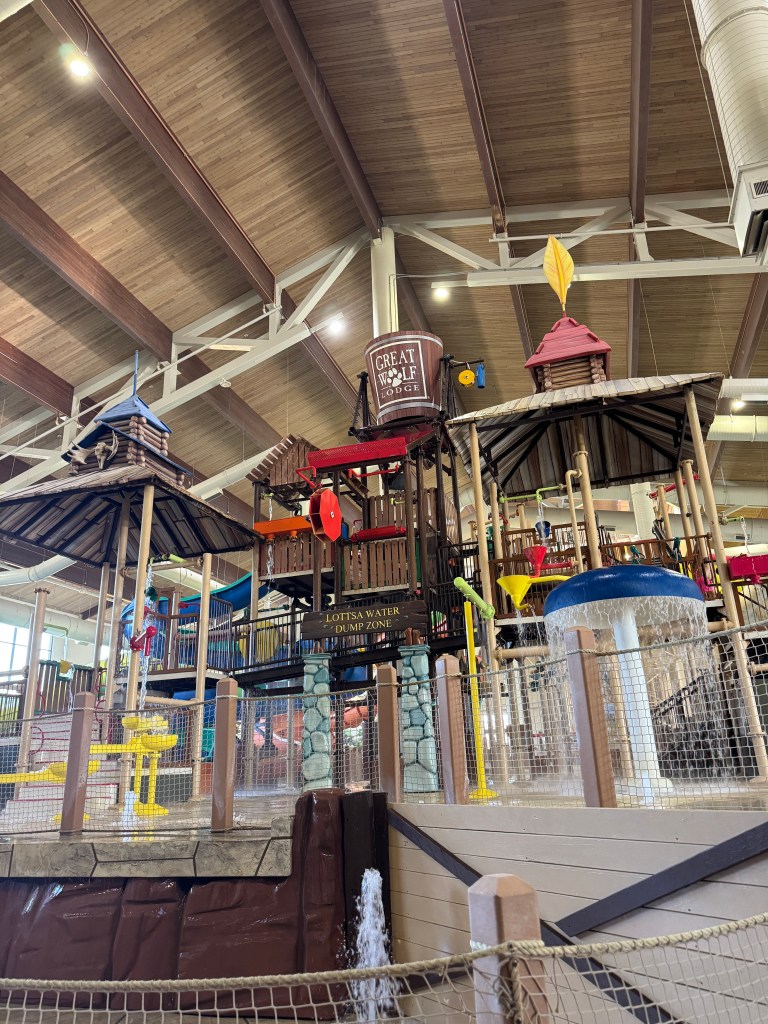
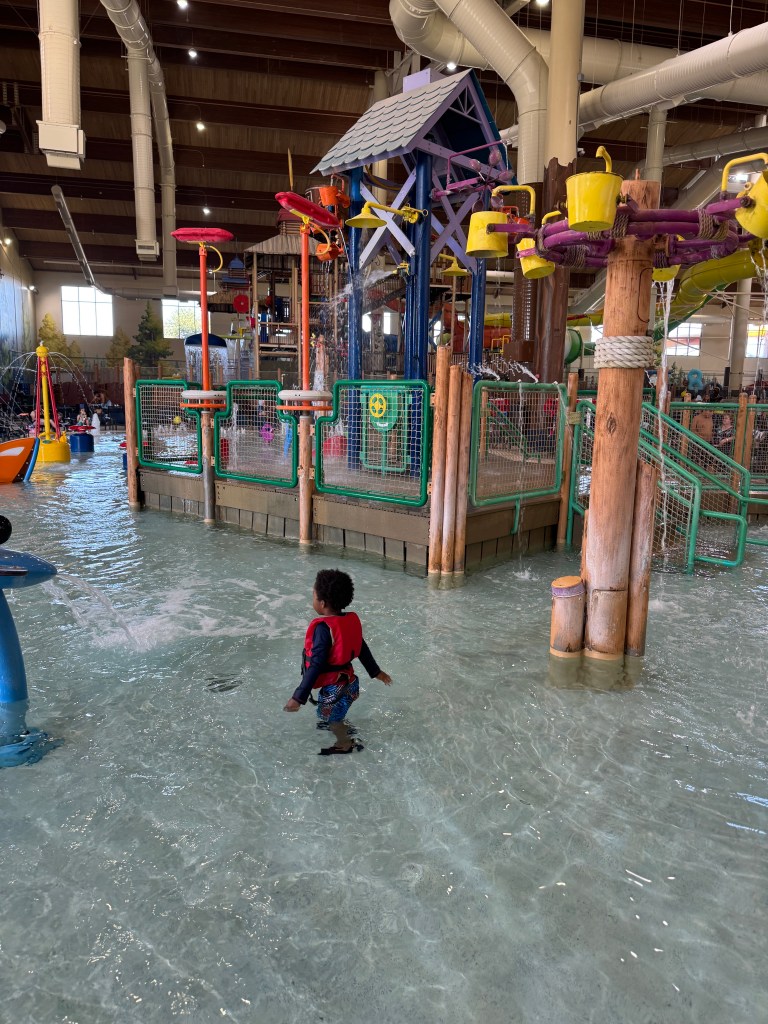
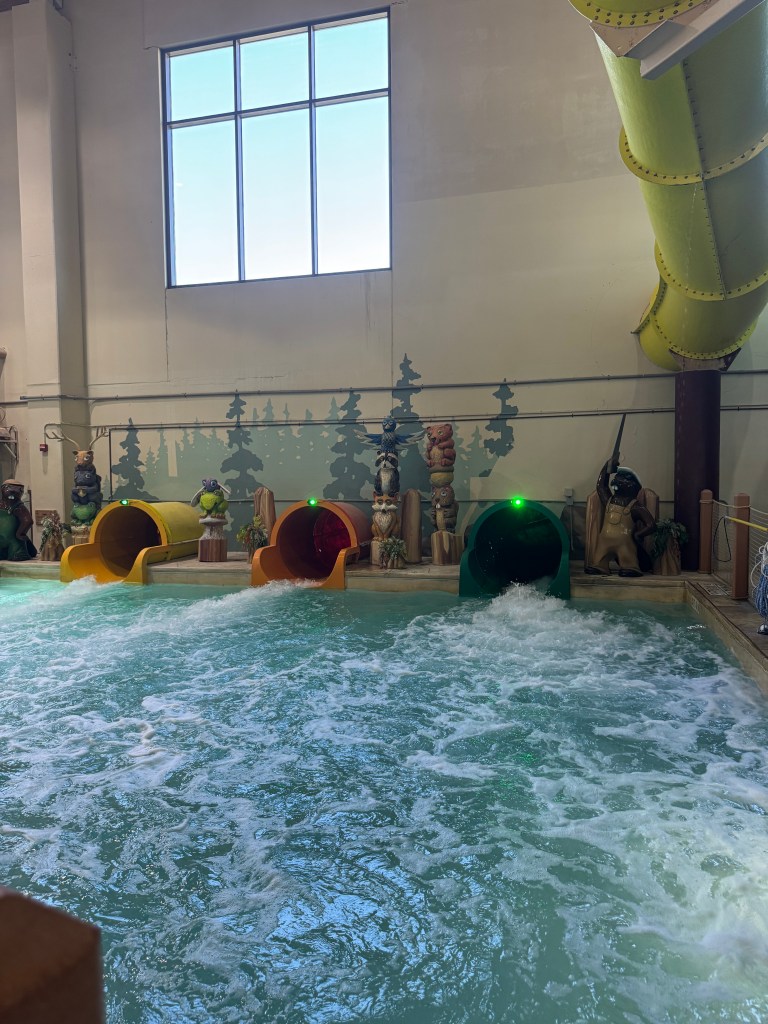
What Ages Is Great Wolf Lodge Best For?
One of the things I appreciated most about Great Wolf Lodge Grapevine was how well it worked for multiple age groups.
If you’re visiting with an older child, Great Wolf Lodge can also be a really fun celebration destination. We celebrated a tween birthday at Great Wolf Lodge, and there was plenty to keep that age group entertained beyond the water park.
Toddlers and Preschoolers
Younger children can enjoy:
- Splash areas
- Smaller slides
- Character meet-and-greets
- Dance parties
- Seasonal activities
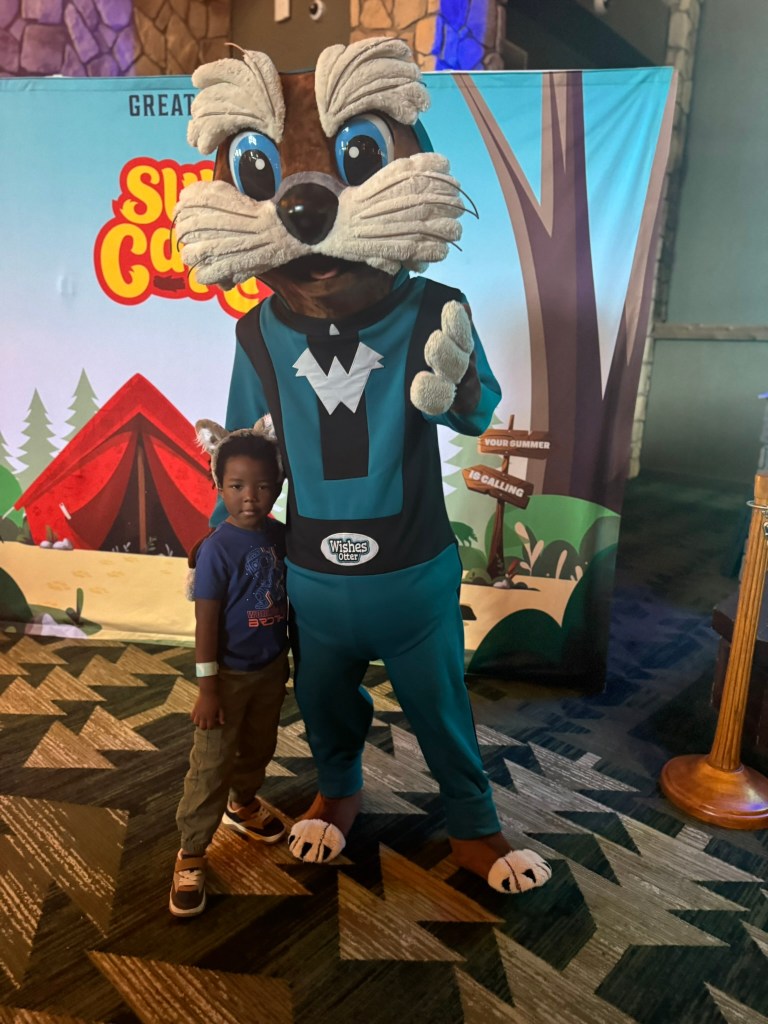
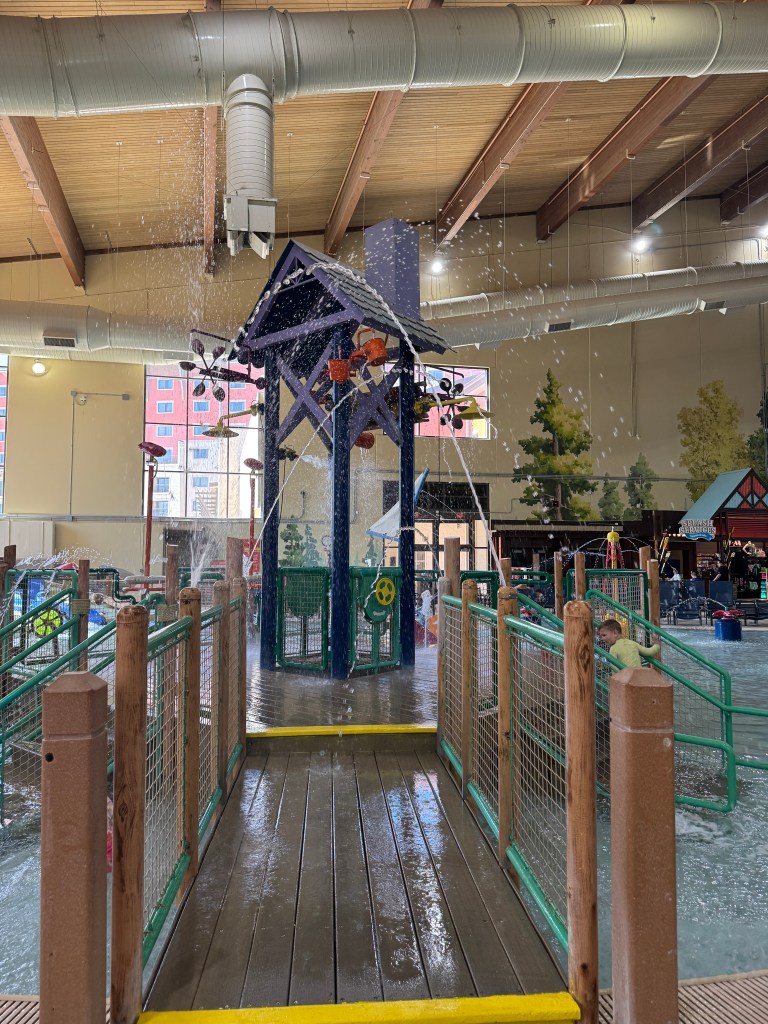
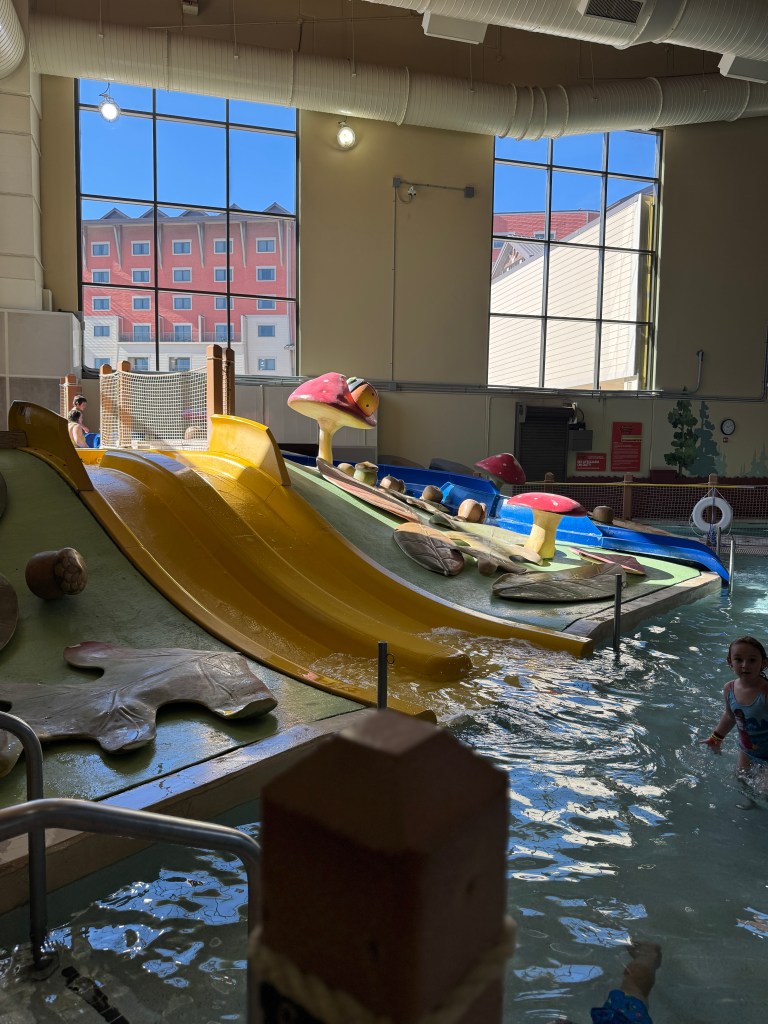
School-Age Kids
Our older children loved:
- MagiQuest
- Laser tag
- Mining for gems
- Larger water slides
- The Trailblazer Challenge
- Summer Camp-In activities
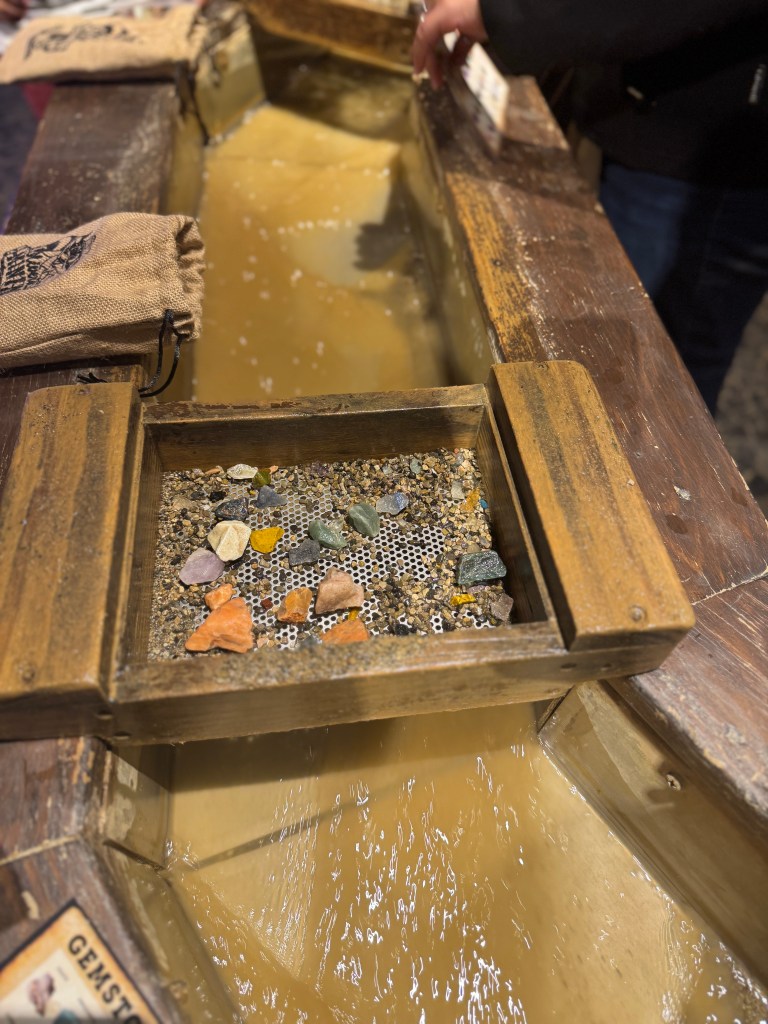
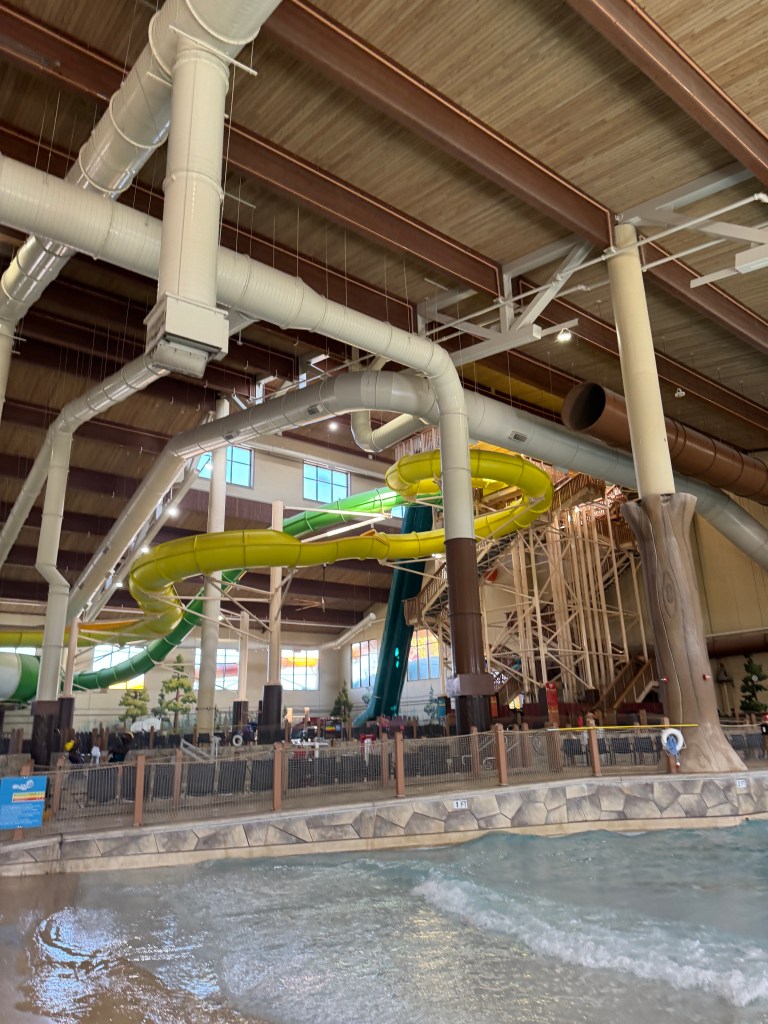
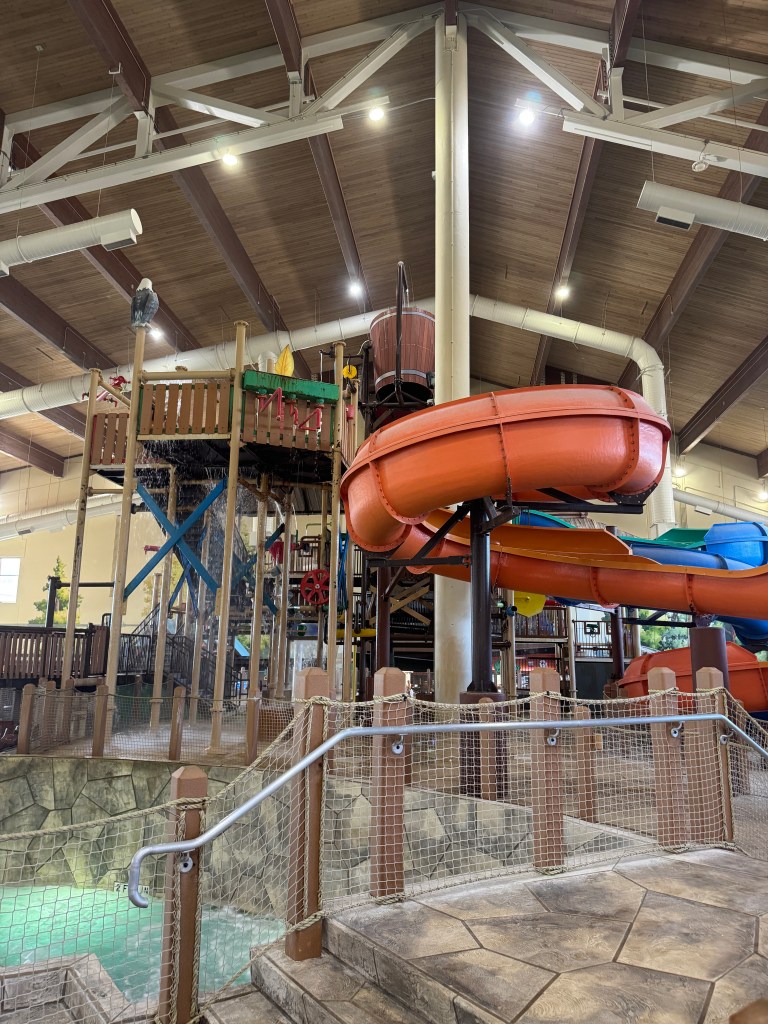
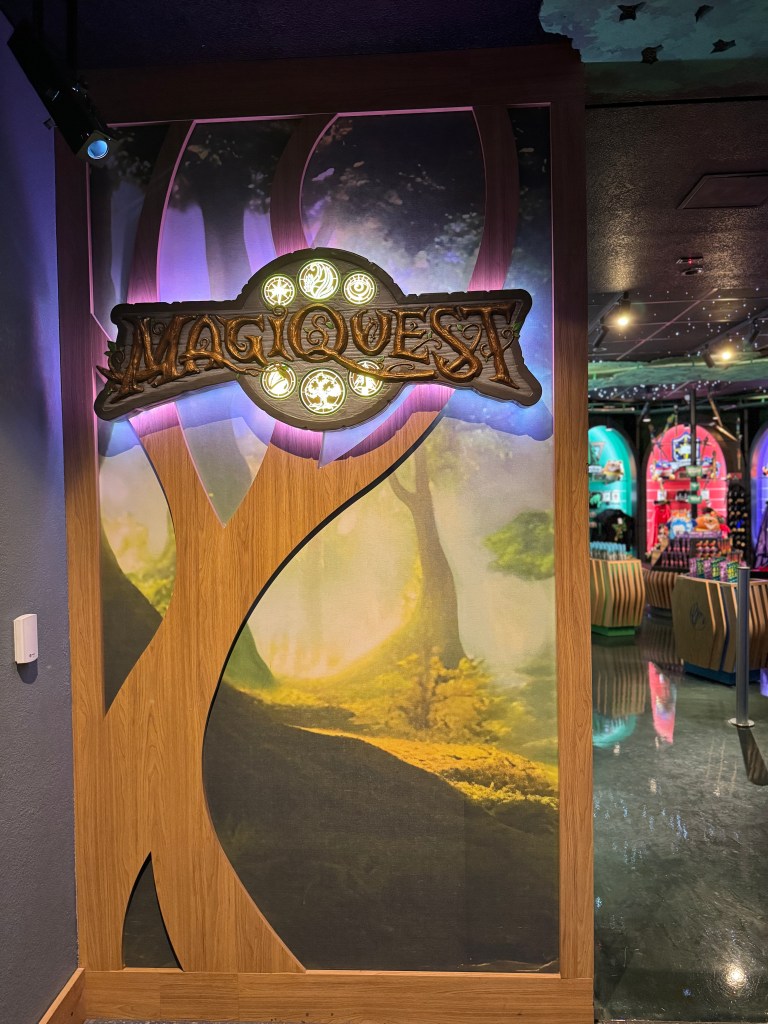
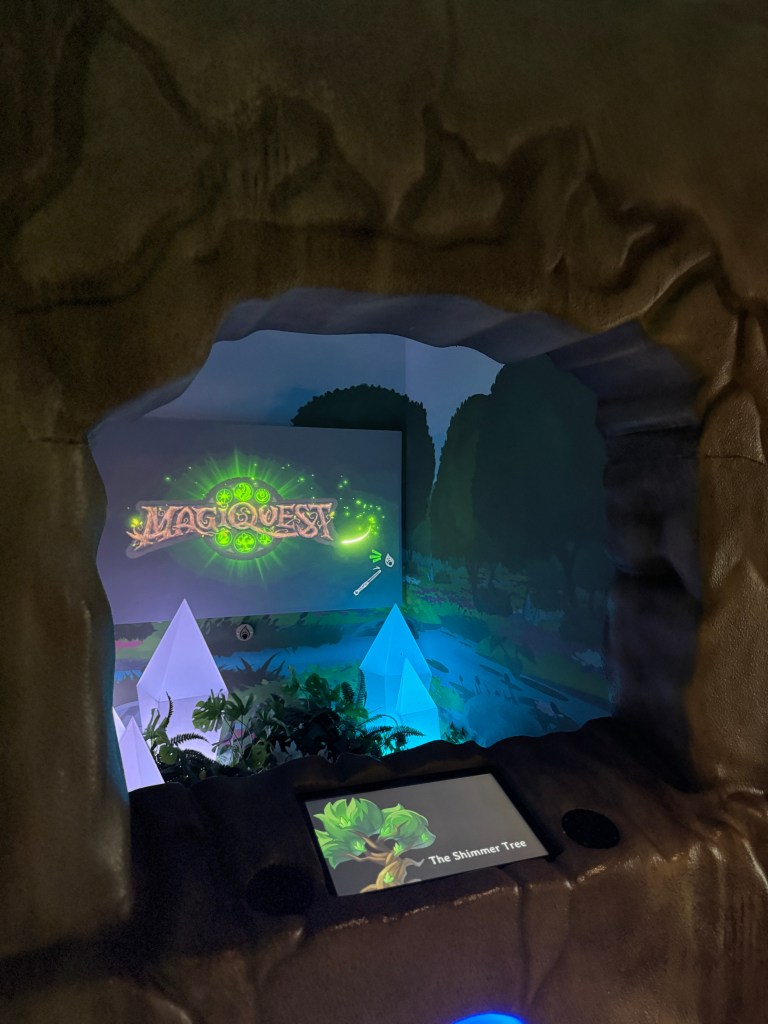
Parents
As parents, we appreciated:
- On-site dining
- Seasonal drinks and cocktails
- Spacious family accommodations
- Not having to leave the resort for entertainment
- Activities that kept everyone engaged
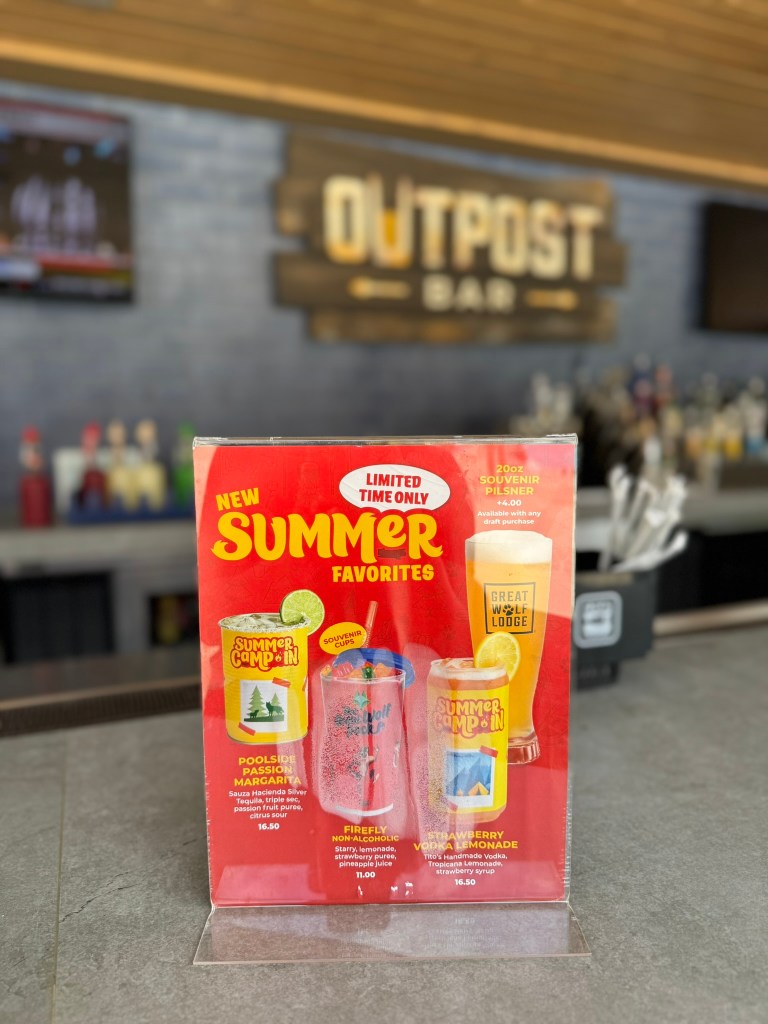

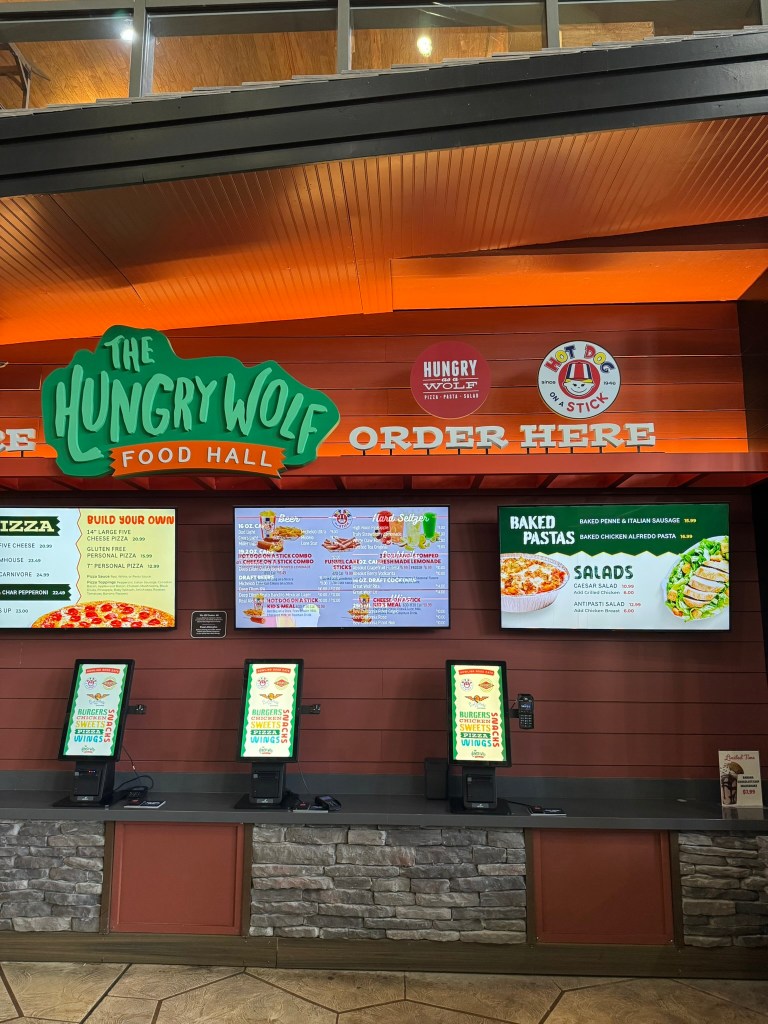
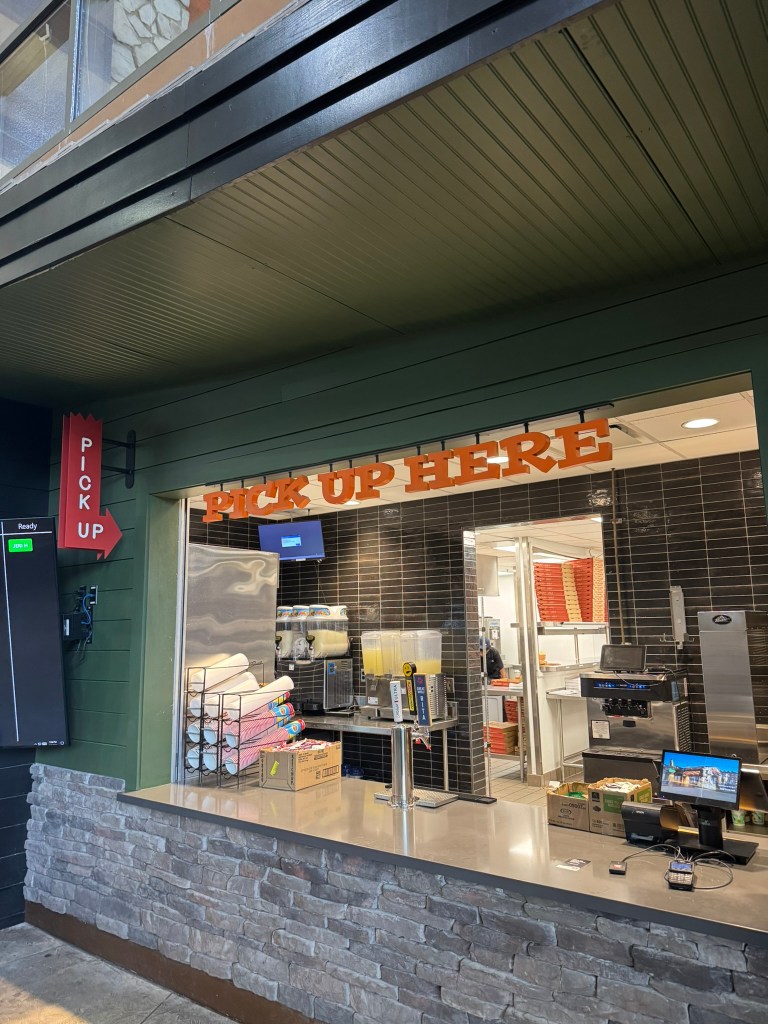
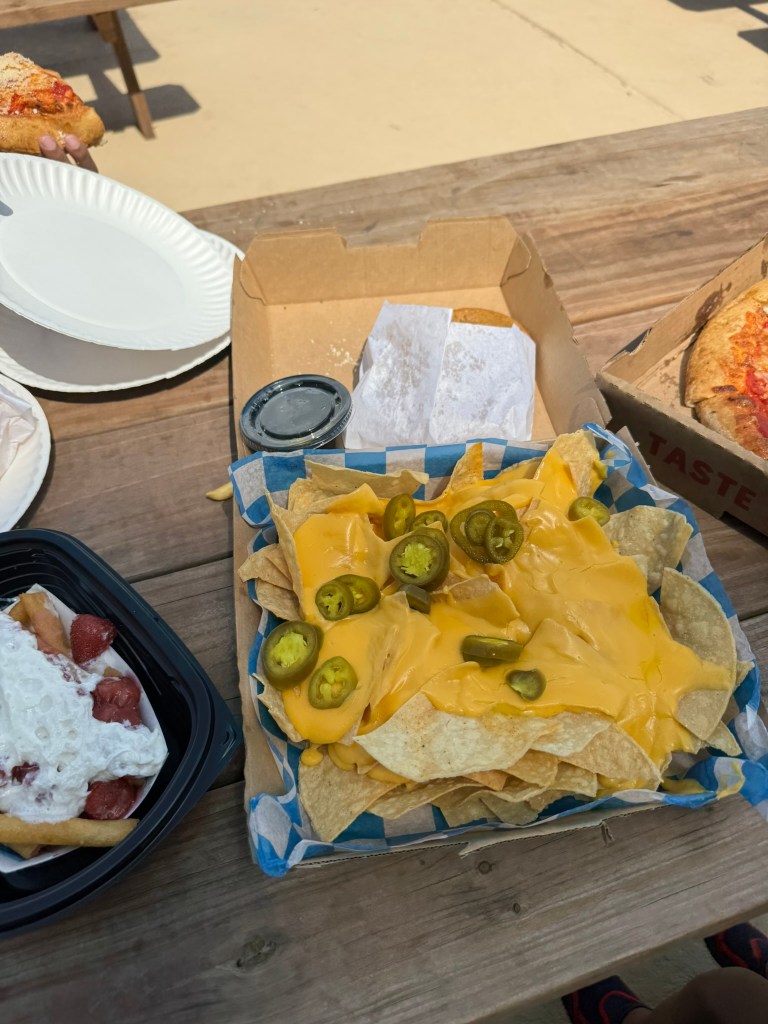
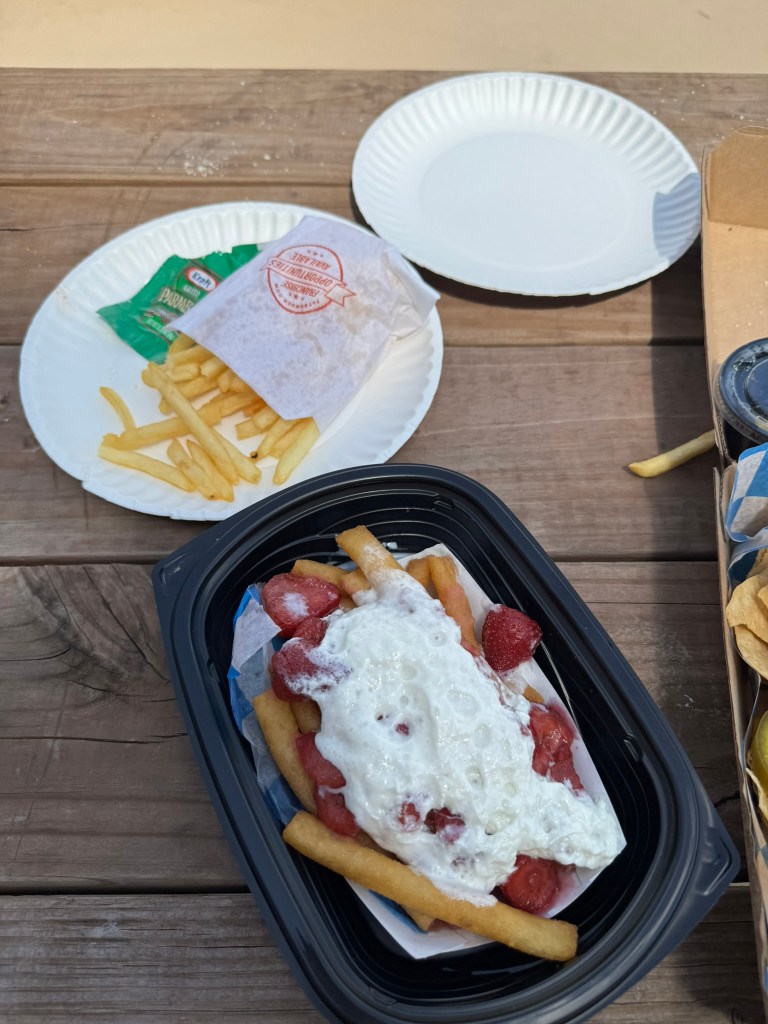
Our Favorite Summer Camp-In Activities
The water park was a huge hit, but it wasn’t the only thing we enjoyed. Some of our family’s favorite memories included:
MagiQuest
MagiQuest quickly became one of our kids’ favorite attractions. Exploring the lodge while completing quests made the entire resort feel interactive.
Trailblazer Challenge
The Trailblazer Challenge added a fun seasonal element to our visit and encouraged the kids to explore different parts of the resort.
Splash and Dance Parties
The dance parties were one of those unexpectedly fun moments that brought everyone together.
Water Park Fun
Of course, no Great Wolf Lodge trip would be complete without spending plenty of time in the indoor water park.
Is the Wolf Pass Worth It?
For our family, yes.
Because our kids wanted to experience multiple attractions, having the Wolf Pass made it easy to enjoy activities without constantly making separate purchases throughout the day.
If your family plans to enjoy MagiQuest, laser tag, mining, and other attractions, the Wolf Pass can provide significant value.
You can read my full Wolf Pass review here.
What Food Is Available at Great Wolf Lodge Grapevine?
One thing that surprised us was how many dining options were available throughout the resort. Some of our family favorites included:
Timbers Table & Kitchen
Breakfast here quickly became a family favorite.
The kids especially loved making their own waffles, and somehow, they taste even better when they come out shaped like adorable little wolf paws.
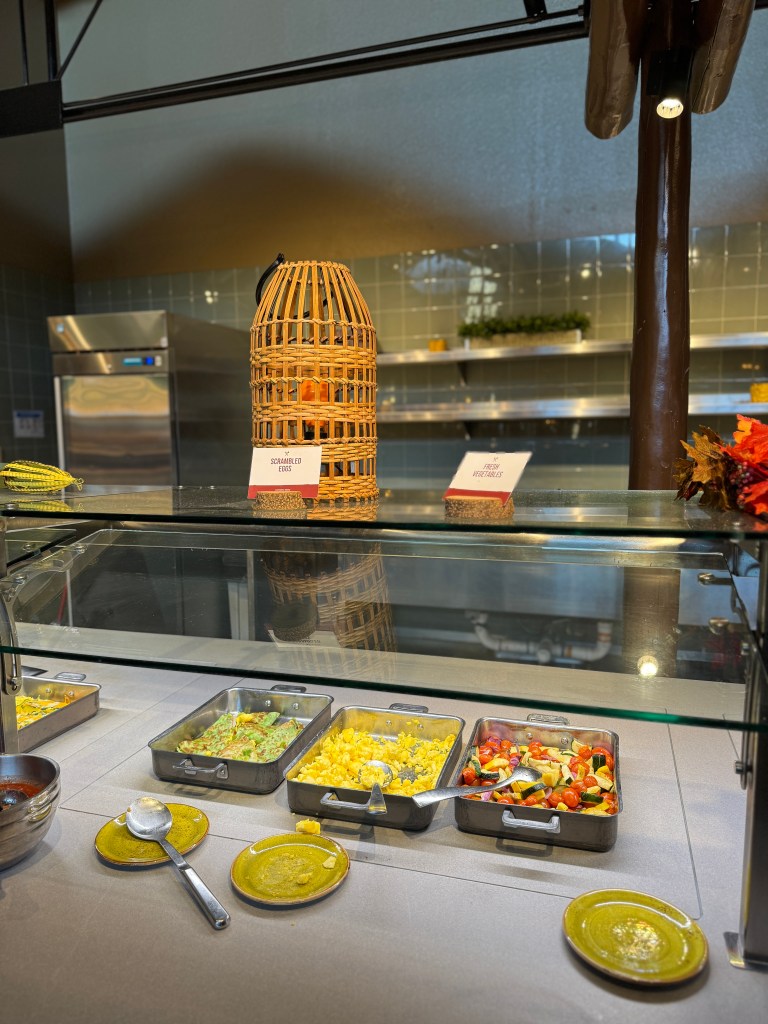
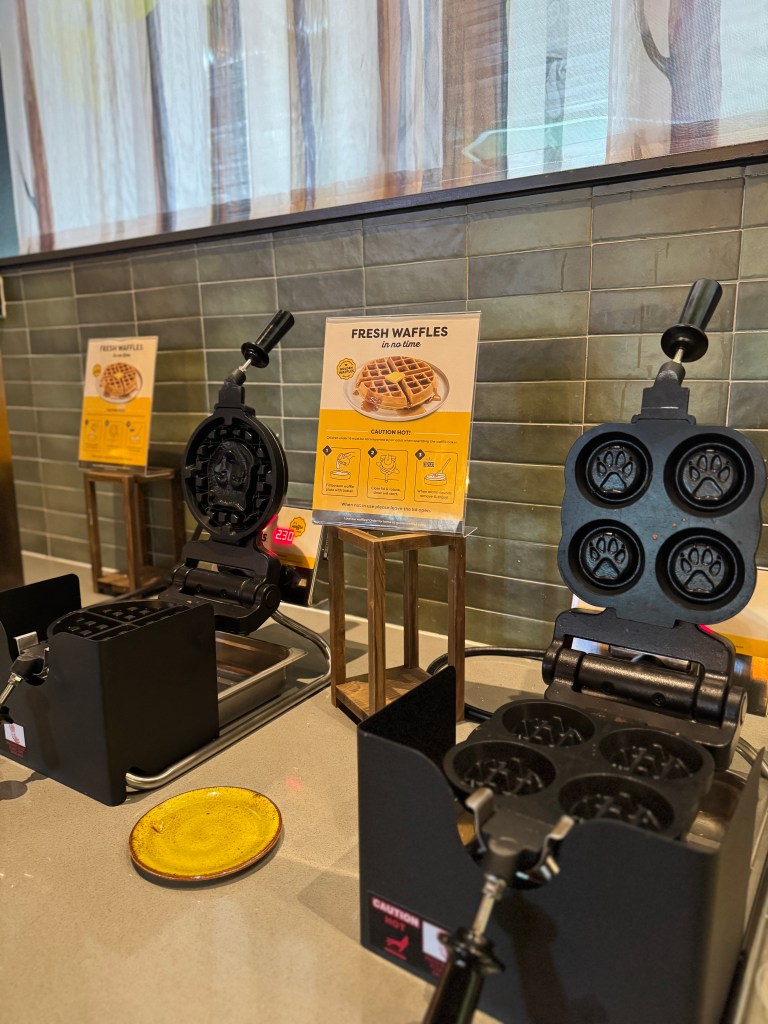
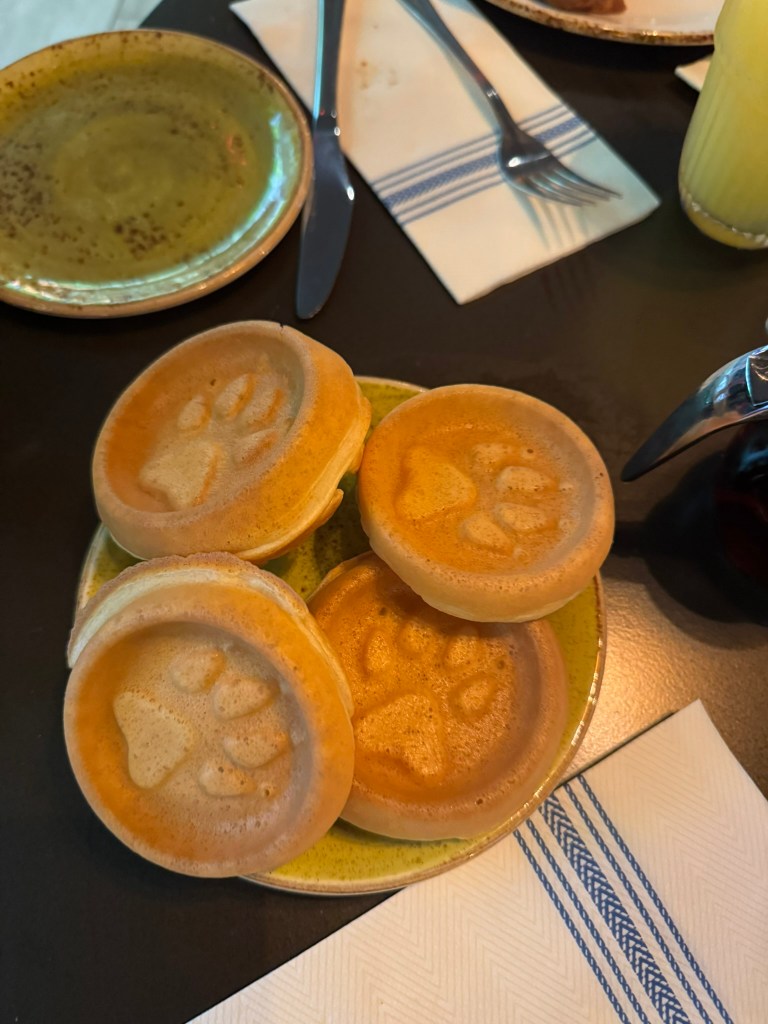
Fireside
As a family that leans pescatarian, we were happy to find seafood options on the menu.
Finding a restaurant that accommodates different tastes and dietary preferences always makes traveling easier.


Hungry Wolf Food Hall
This was one of our favorite spots between water park adventures.
Because it’s conveniently located near the water park area, we could grab food and sit down to eat without completely leaving the fun behind.
Starbucks
As a coffee-loving mom, I appreciated being able to grab my morning latte without leaving the resort.
Wood’s End Creamery
No family vacation is complete without ice cream, and this quickly became a favoritestop for the kids.
Summer Camp-In Drinks
The seasonal Summer Camp-In drink menu was one of my favorite details from the tripand helped make the experience feel unique to the season.
Is Great Wolf Lodge Grapevine Clean and Safe?
Safety is understandably a top concern for families.
During our stay, lifeguards were visible throughout the water park, and the resort felt clean, well-maintained, and family-focused.
The common areas, dining spaces, attractions, and guest areas all felt thoughtfully designed with families in mind.


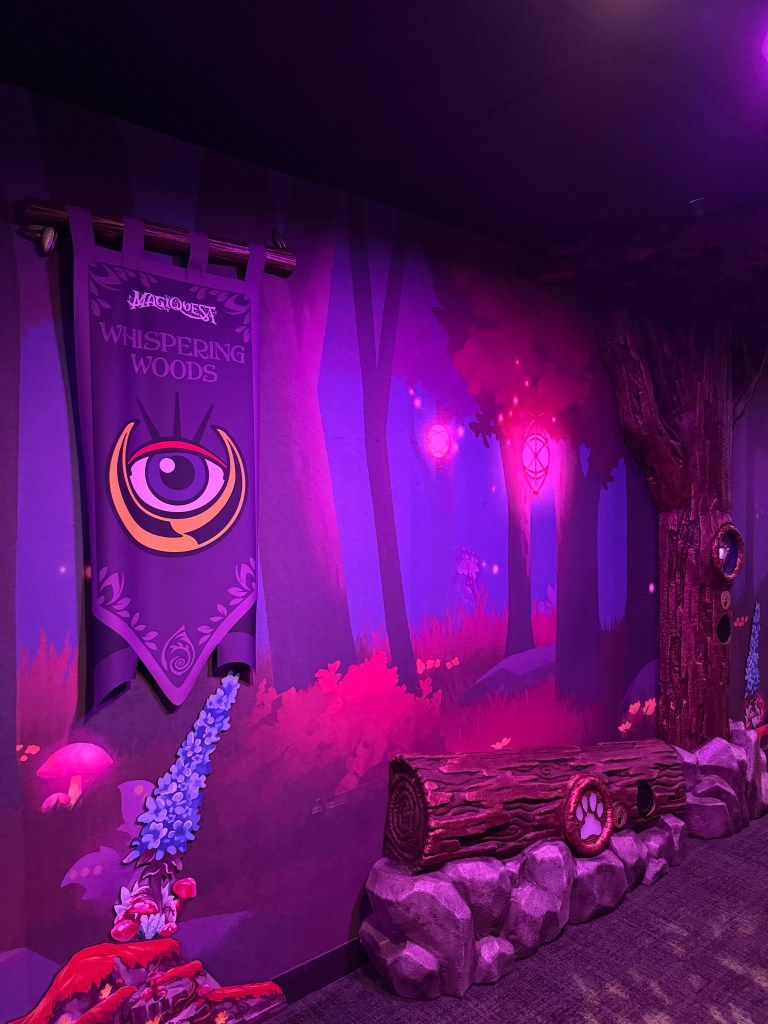

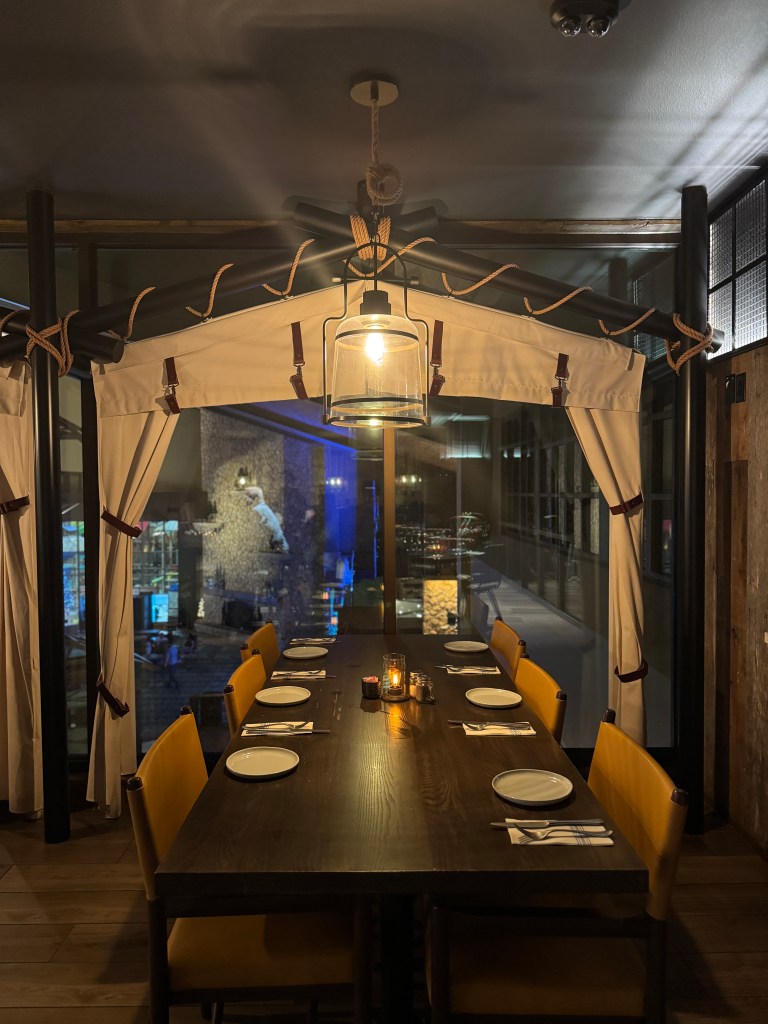
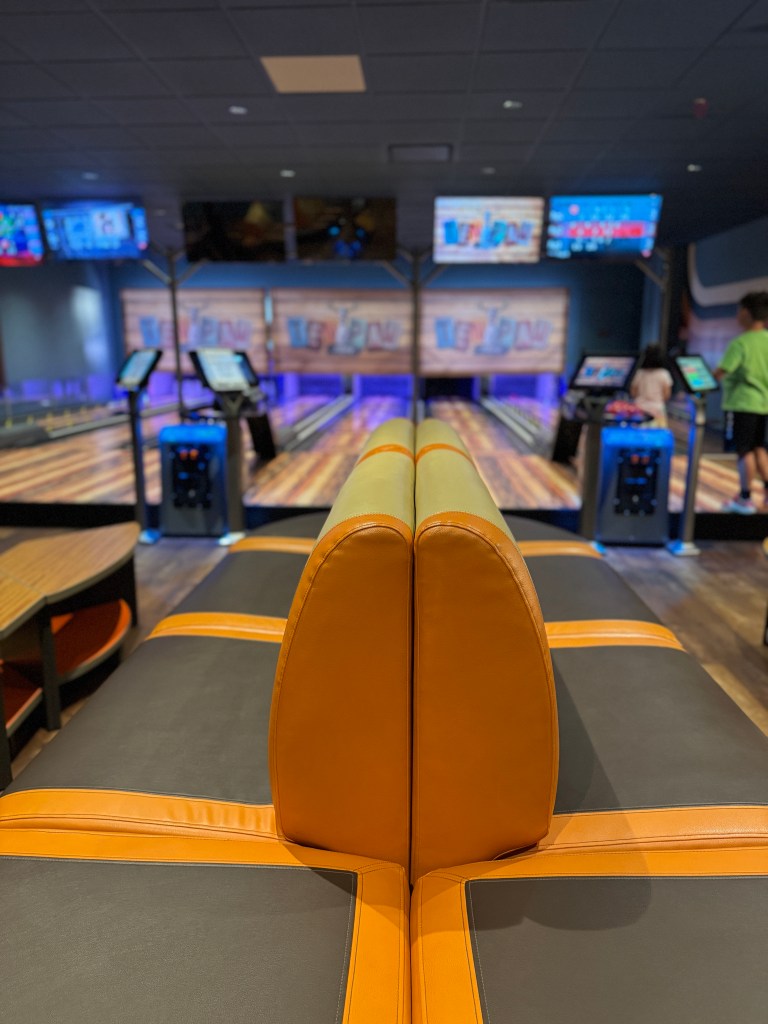
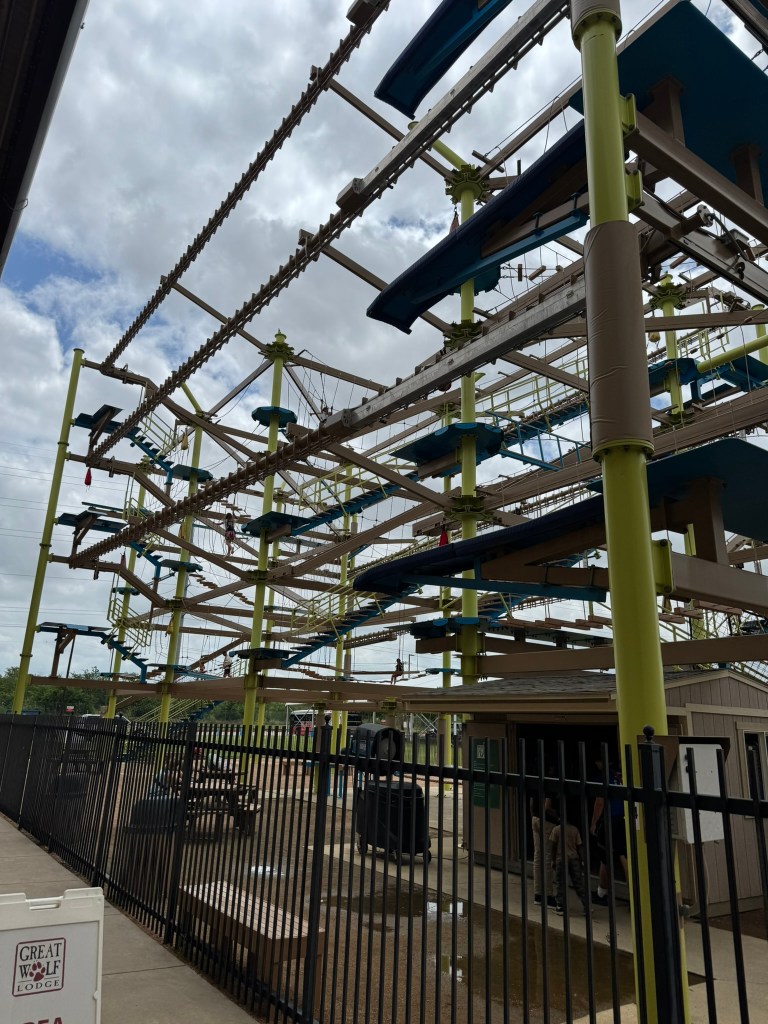
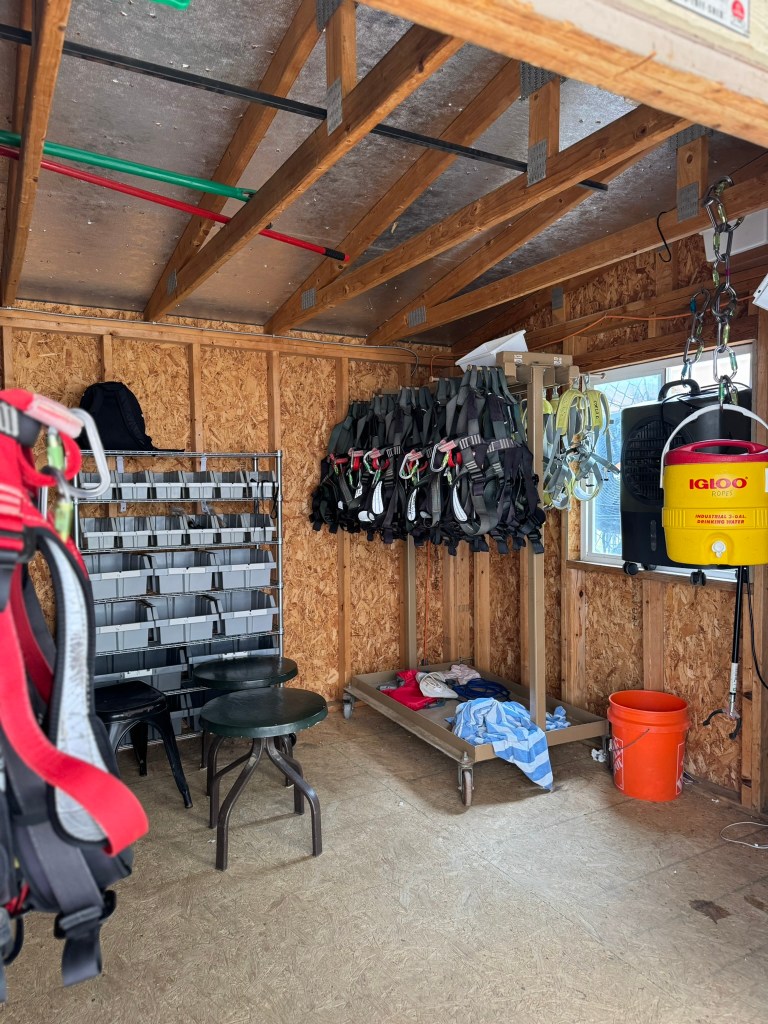
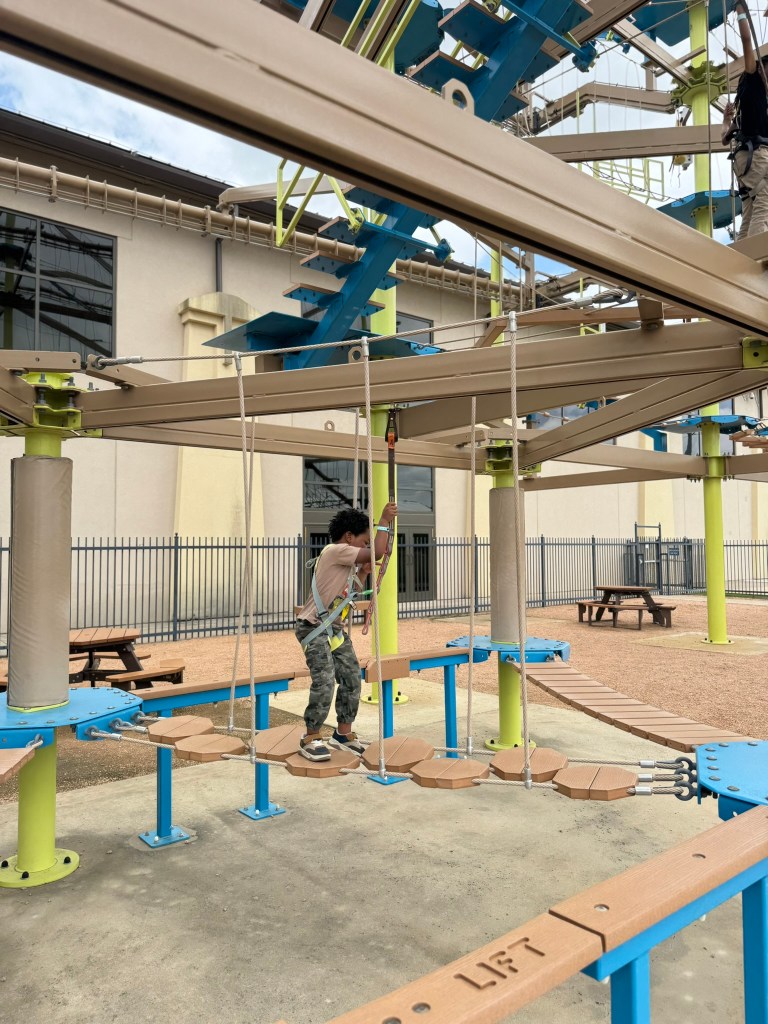
Final Thoughts: Is Great Wolf Lodge Grapevine Worth theMoney?
For our family, absolutely.
Between the water park, attractions, dining, seasonal activities, and family entertainment, Great Wolf Lodge Grapevine offered enough variety to keep all four of our children engaged.
What stood out most wasn’t any single attraction, it was how easy the entire experience felt.
Everything was designed with families in mind.
And if you ask my kids about their favorite part of the trip today, you’ll probably still get four different answers.
To me, that’s usually the sign of a successful family vacation.
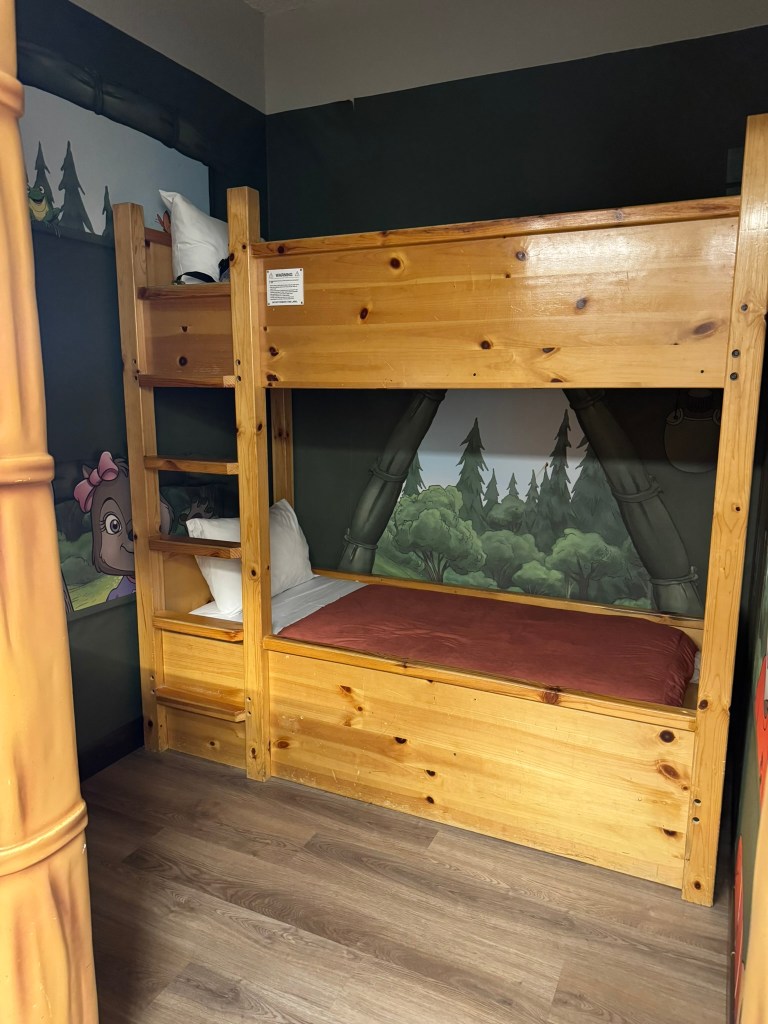
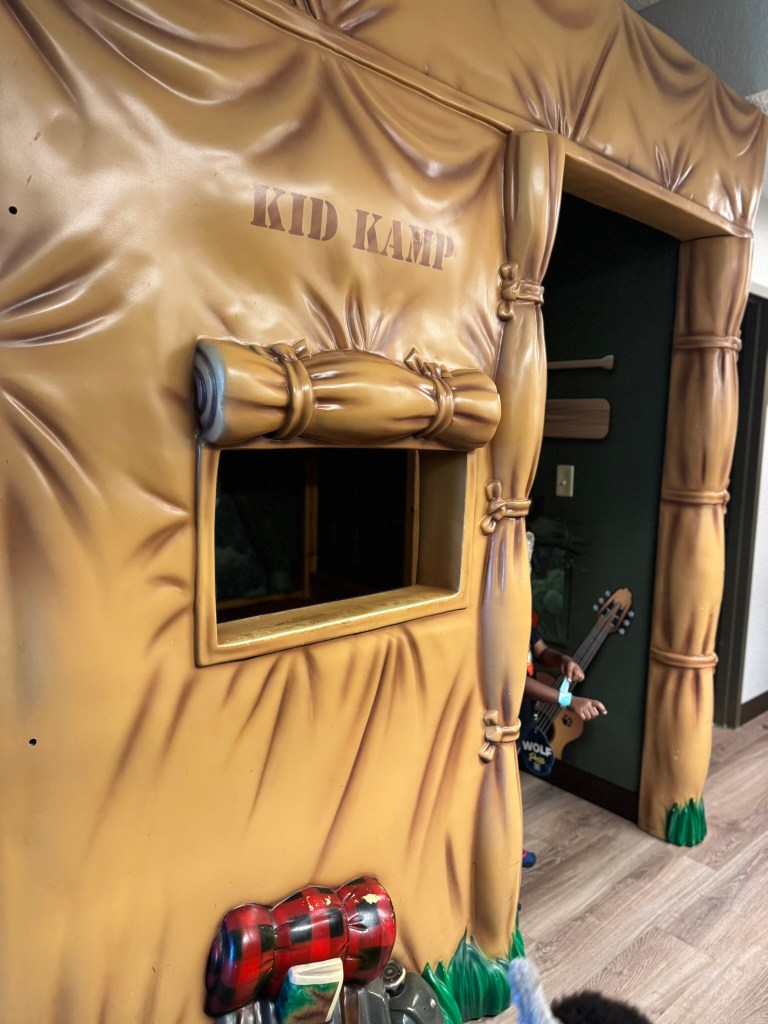

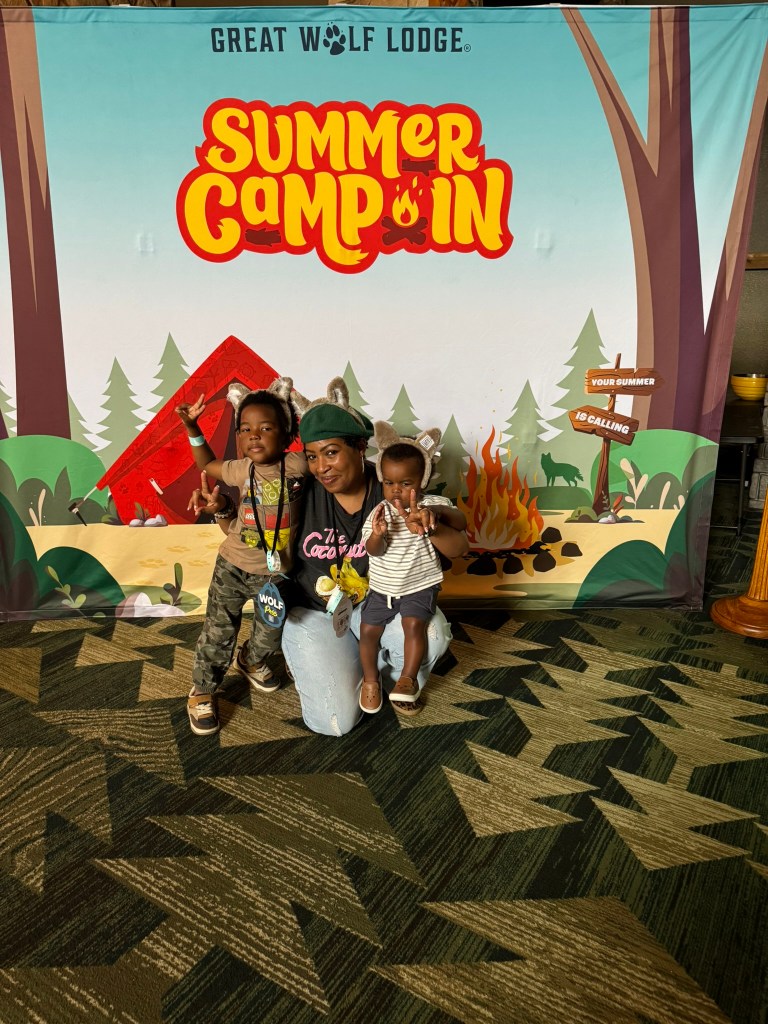
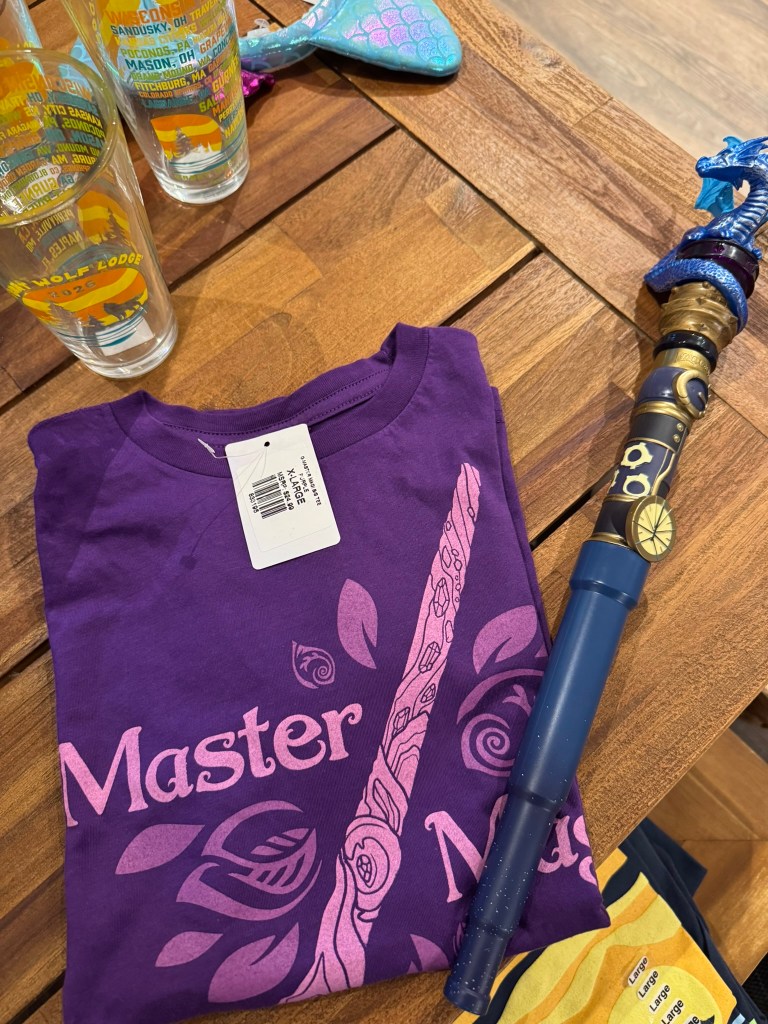
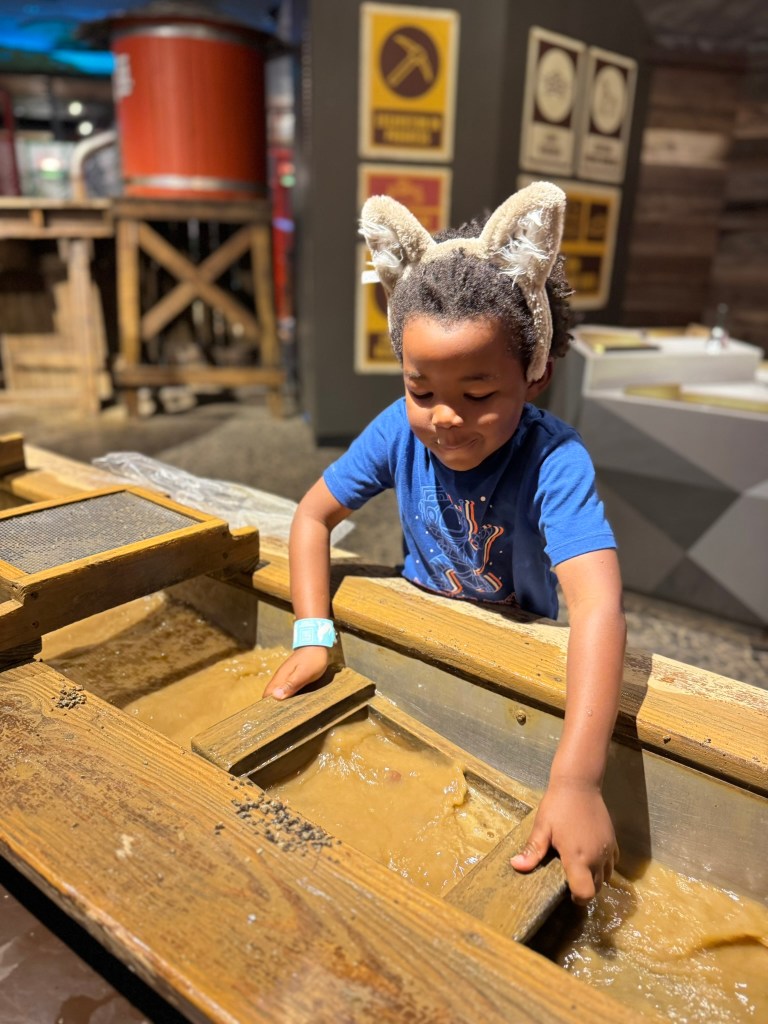
For our family, Great Wolf Lodge Grapevine ended up being one of those trips where everyone found their own favorite thing, and that’s not always easy when you’re traveling with four kids.
If you’re planning a visit, save this post for later and let me know: what’s the first thing your family would do, water park, MagiQuest, laser tag, or those adorable paw-print waffles?
And don’t forget to check out my other Great Wolf Lodge guides for dining tips, attraction recommendations, and ways to get the most value from your stay.
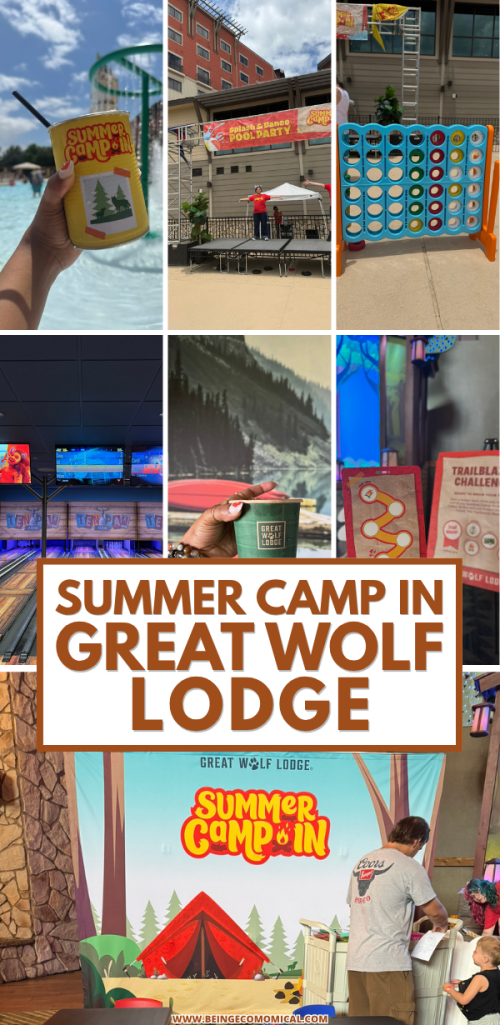
Frequently Asked Questions About Great Wolf Lodge Grapevine
Is Great Wolf Lodge Grapevine worth it for families?
Yes, Great Wolf Lodge Grapevine can be worth the cost for families who want a convenient getaway with an indoor water park, dining, entertainment, seasonal activities, and optional attractions all in one resort. It is especially helpful for families with children of different ages because there are activities for toddlers, school-age children, older kids, and parents.
Is one night enough at Great Wolf Lodge Grapevine?
One night can be enough for families mainly interested in the indoor water park. Water park access typically begins before hotel check-in and continues after checkout, which can give guests portions of two days to swim and enjoy the resort. A two-night stay may be better for families who also want to experience MagiQuest, laser tag, mining, dining, and seasonal activities at a more relaxed pace.
What is included with a stay at Great Wolf Lodge Grapevine?
A stay generally includes your hotel room, indoor water park access, character appearances, story time, dance parties, family entertainment, and select seasonal activities. Attractions such as MagiQuest, laser tag, arcade games, mining, and ropes courses usually cost extra or may be bundled into an attraction pass.
What ages is Great Wolf Lodge Grapevine best for?
Great Wolf Lodge Grapevine is designed for families with children across a wide age range. Toddlers and preschoolers can enjoy splash areas, smaller slides, character experiences, and dance parties. School-age children may enjoy larger slides, MagiQuest, laser tag, mining, and resort challenges. Parents benefit from on-site dining, family accommodations, seasonal drinks, and activities that keep children entertained.
Is the Wolf Pass worth it at Great Wolf Lodge Grapevine?
The Wolf Pass may be worth it for families planning to participate in several paid attractions. Bundling experiences such as MagiQuest, laser tag, mining, and other activities can be more convenient than purchasing each one separately. Families should compare the current pass price with the individual cost of the attractions they expect to use.
What is Summer Camp-In at Great Wolf Lodge?
Summer Camp-In is Great Wolf Lodge’s seasonal summer celebration. It may include themed family activities, dance parties, resort challenges, evening entertainment, seasonal food, and special drinks. Programming and available activities may vary by location and date.
Does Great Wolf Lodge Grapevine have food on-site?
Yes. Great Wolf Lodge Grapevine offers multiple on-site dining options, including sit-down meals, quick-service food, snacks, coffee, desserts, and family-friendly choices. Having food available inside the resort makes it easier for families to spend more time enjoying the water park and attractions without leaving the property.
-
Timberdoodle Kindergarten Curriculum Kit Unboxing: An All-in-One Homeschool Box for the Early Years
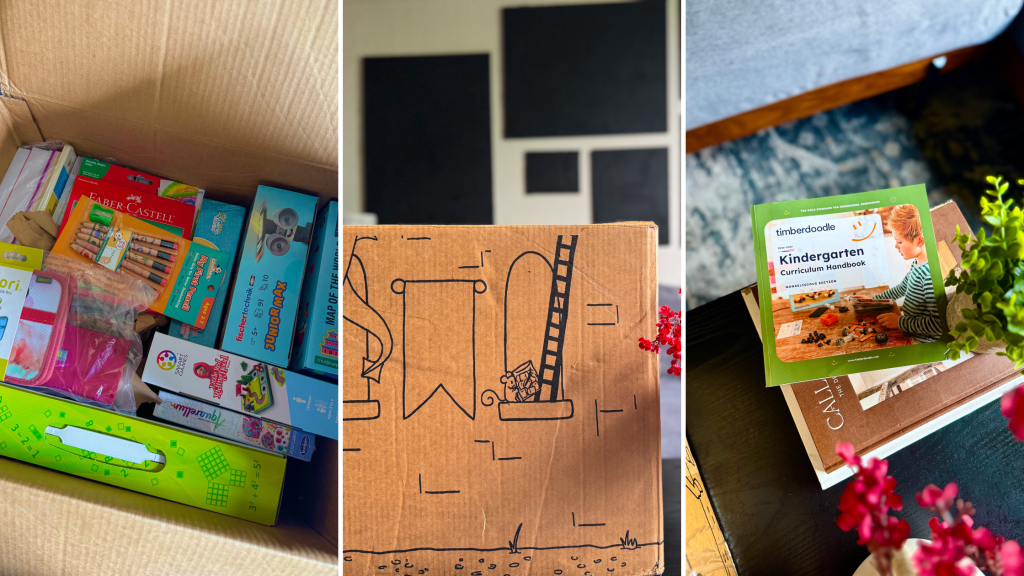
There is something about opening a brand-new homeschool curriculum box that makes me ridiculously excited, but this Timberdoodle Kindergarten Curriculum Kit might be one of my favorite unboxings yet.
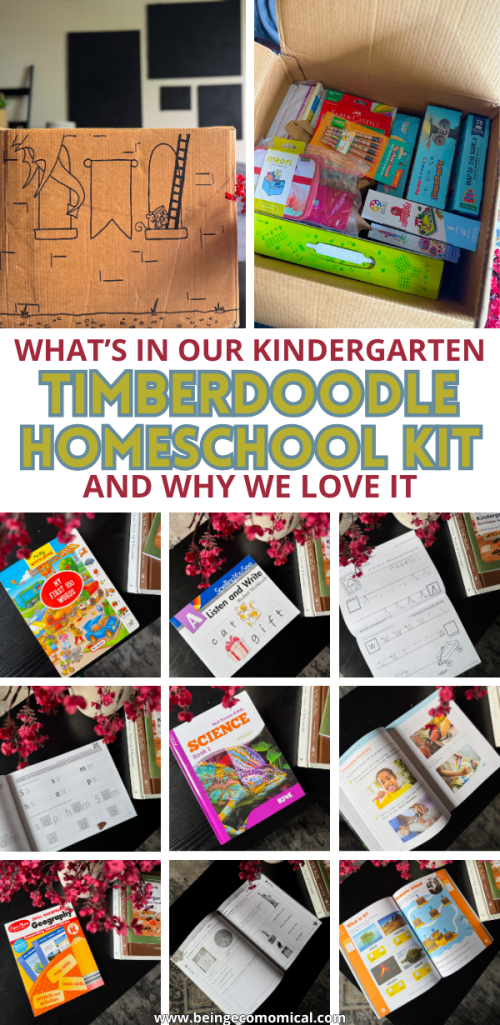
I kept pulling things out of the box thinking, Wait…there’s more?!
Math, science, geography, history, handwriting, art, puzzles, STEM, fine motor activities, logic games, books, school supplies — it is all here.
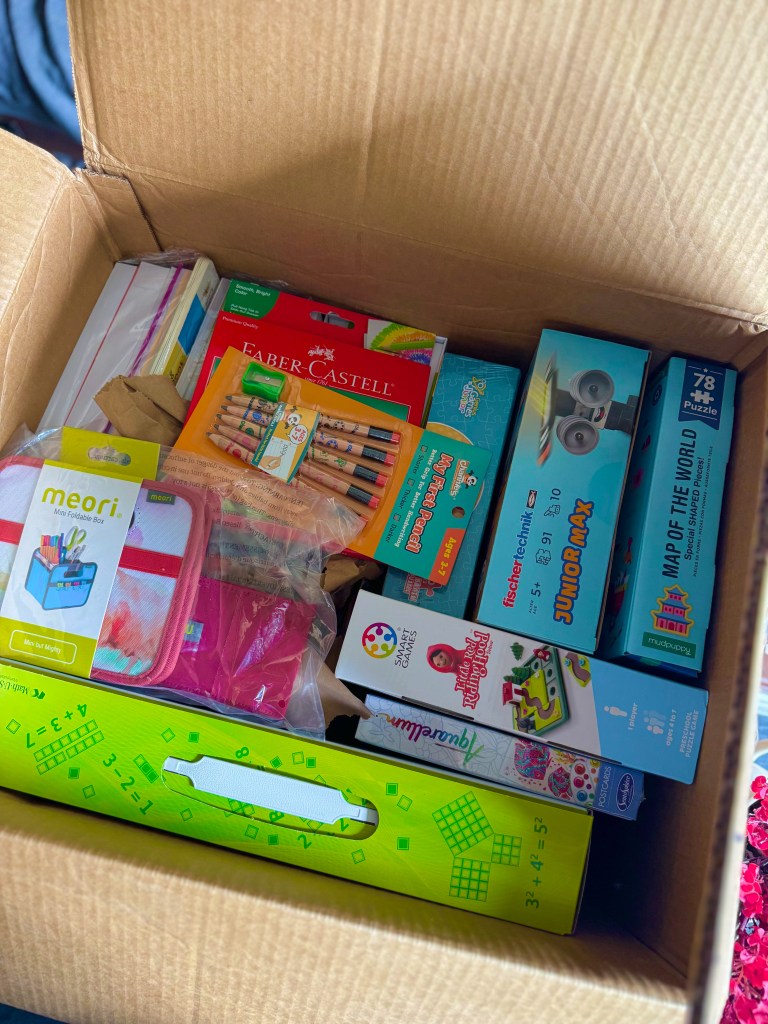
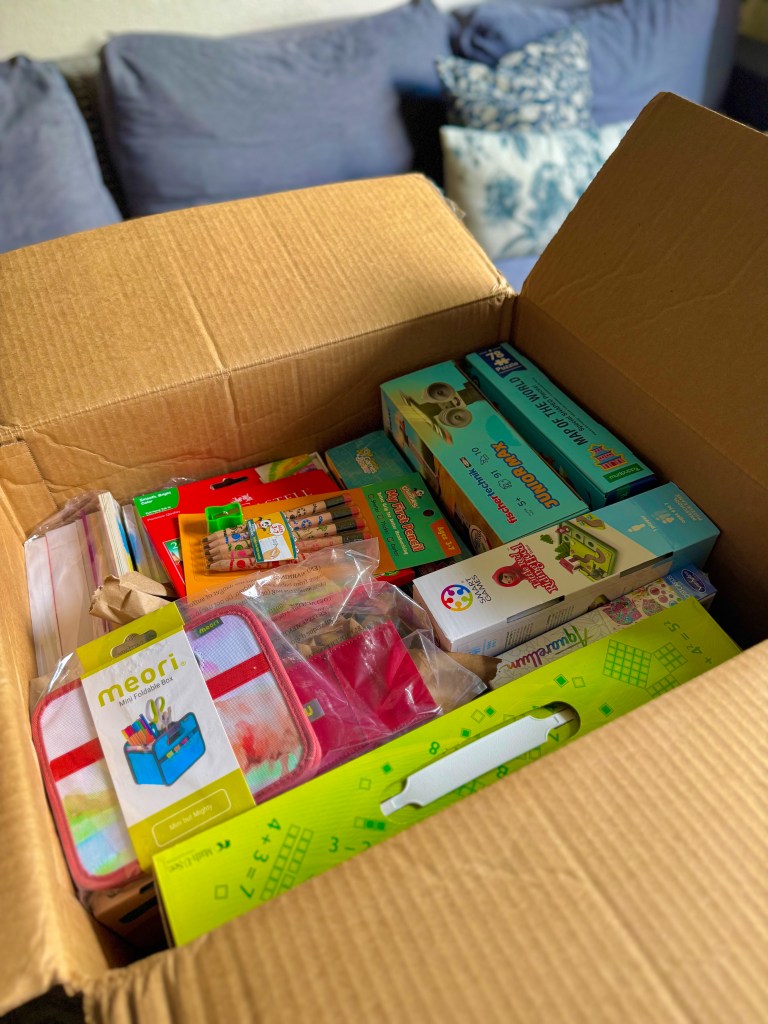
And after homeschooling for years, this kit genuinely makes me wish I had discovered Timberdoodle when my older kids were younger.
If you are just beginning your homeschool journey with a preschooler or kindergartener and the idea of figuring out which curriculum to buy for every subject feels overwhelming, this is exactly why an all-in-one homeschool curriculum kit can be so helpful.
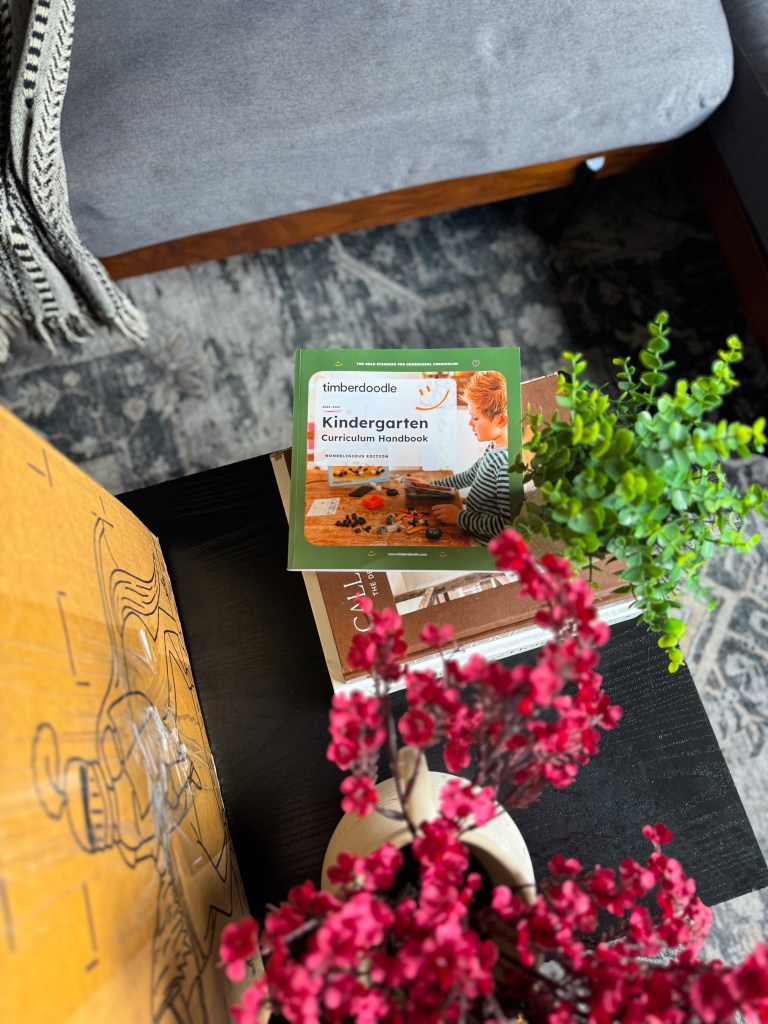
Timberdoodle has already done so much of the planning for you.
Instead of piecing together math from one company, science from another, handwriting somewhere else and then trying to remember art, STEM, geography and educational games, you open one box and have an entire year of learning ready to go.
And what I especially love is that it does not feel like a box filled with nothing but worksheets.
There is so much hands-on learning included!
What Is Included in the Timberdoodle Kindergarten Curriculum Kit?
Our kit is the Timberdoodle Nonreligious Kindergarten Curriculum Kit, and it includes resources covering the major academic subjects along with STEM, critical thinking, art, fine motor development and hands-on enrichment.
The included Kindergarten Curriculum Handbook helps bring everything together and gives parents guidance for using the curriculum throughout the school year.
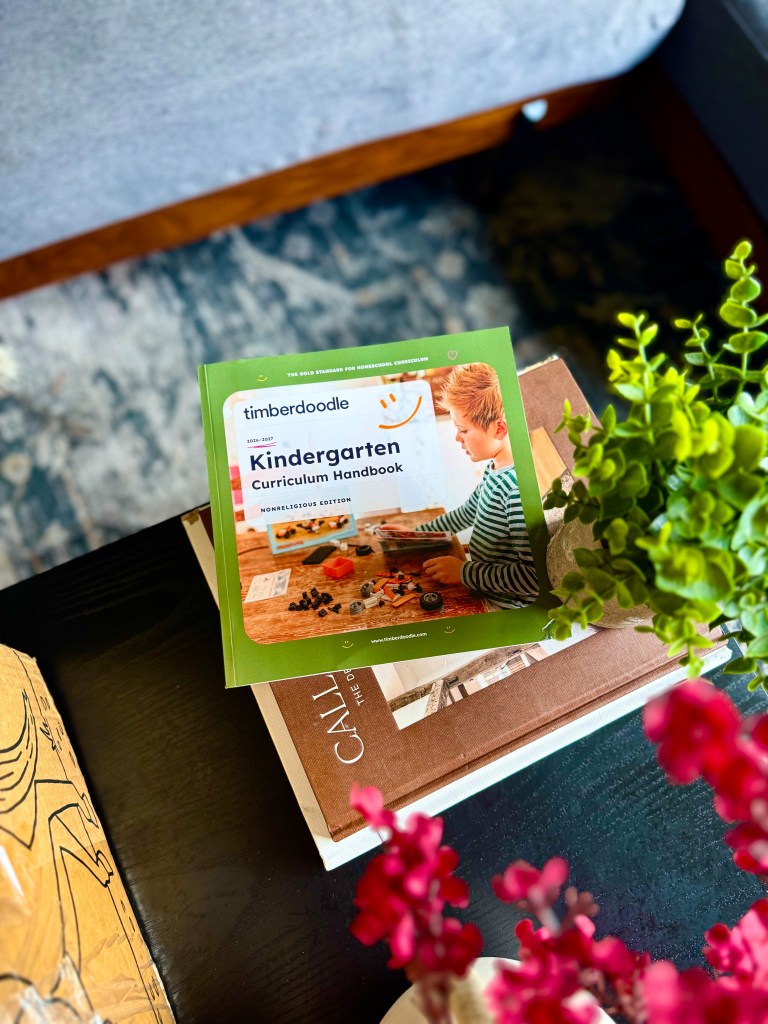
I will be sharing much more detailed reviews of many of these resources as we actually use them, so think of this post as your peek inside the box!
Math-U-See Primer
Math-U-See Primer introduces early math concepts using a combination of instruction and hands-on manipulatives.
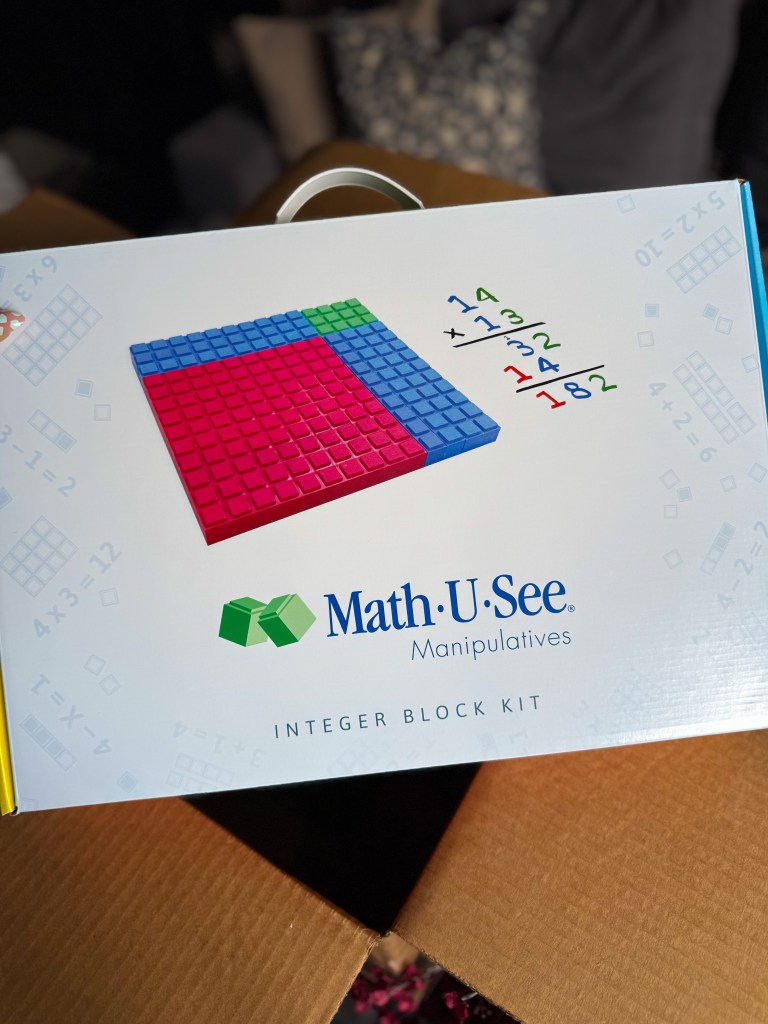
The kit also includes the colorful Math-U-See Integer Block Kit, which allows younger learners to physically build and visualize numbers instead of only seeing them on a worksheet.
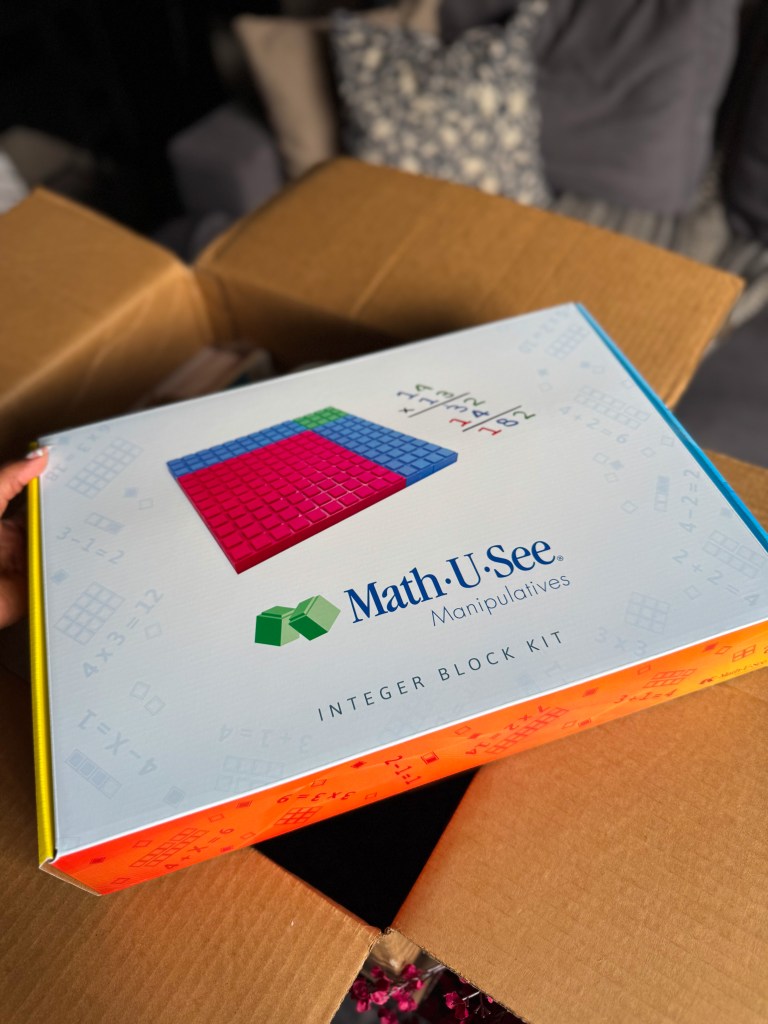
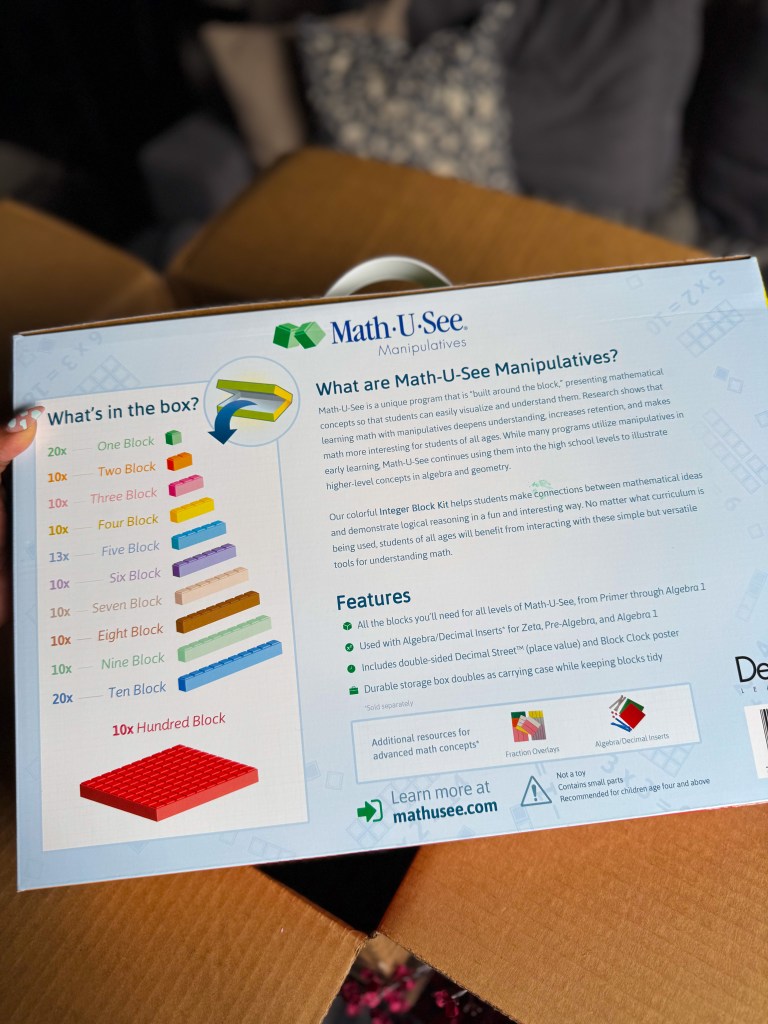
For little learners especially, I love having something they can actually touch and move while learning.
Spelling You See Listen and Write
The Listen and Write Student Workbook combines early spelling, letter formation, handwriting and sound recognition.
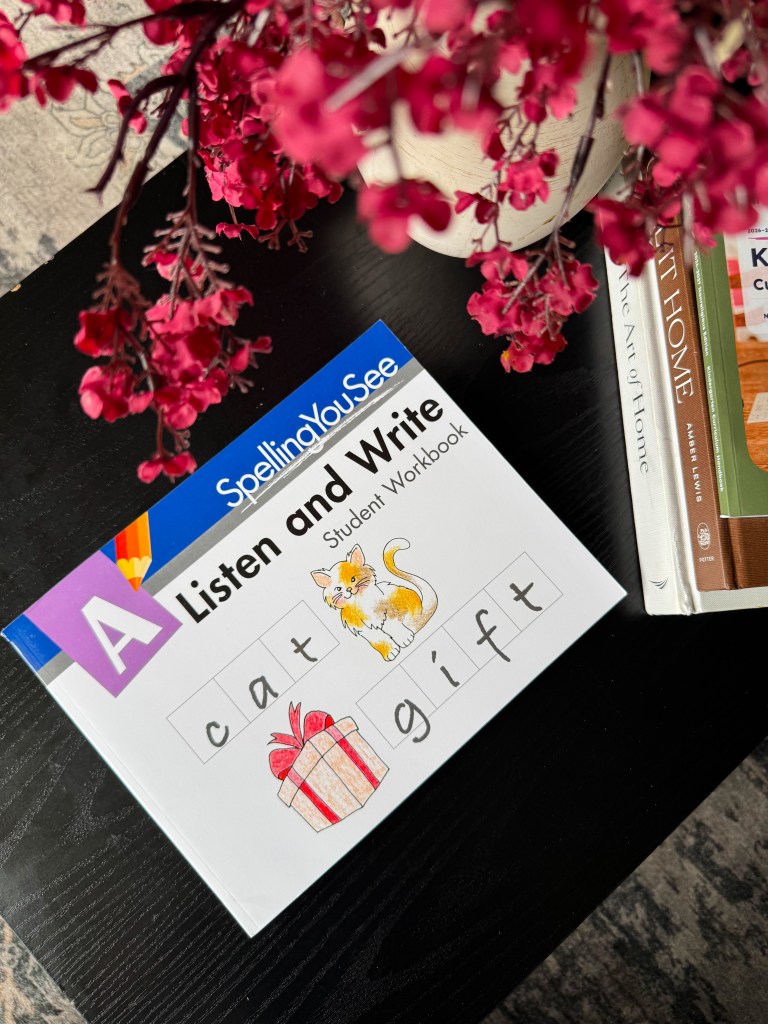
The pages are simple and approachable, which is exactly what I want during the early years when kids are still building confidence with writing.

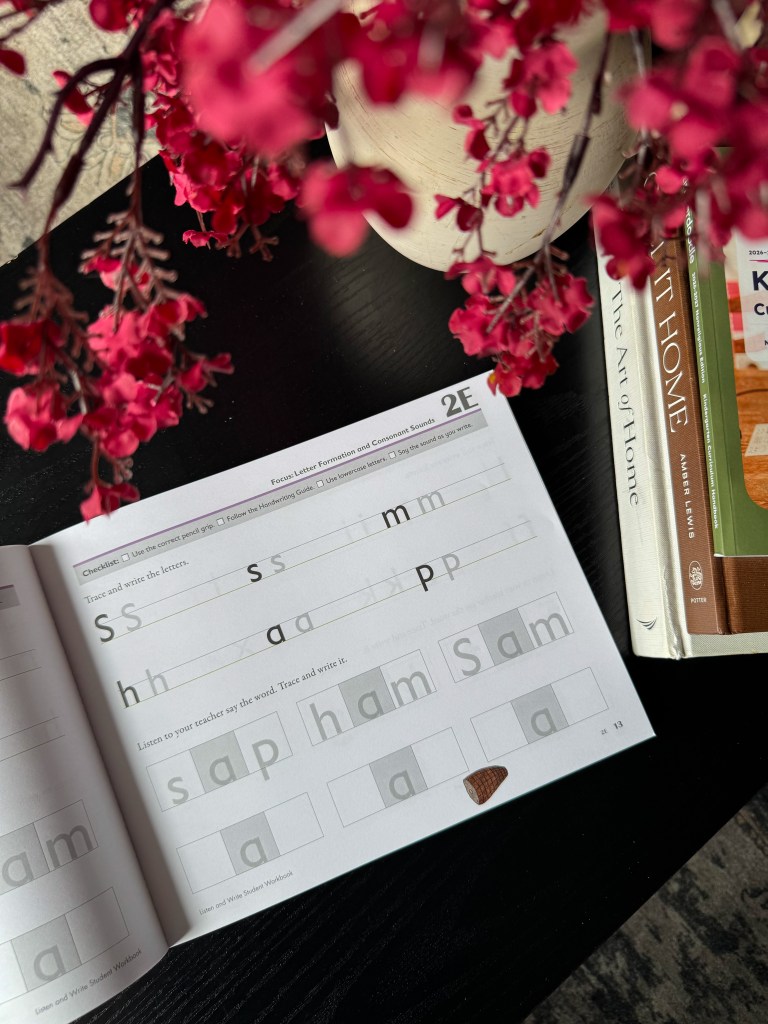
Getty-Dubay Italic Handwriting
The Getty-Dubay Italic Handwriting Series gives children structured handwriting practice while teaching a clean, natural writing style.
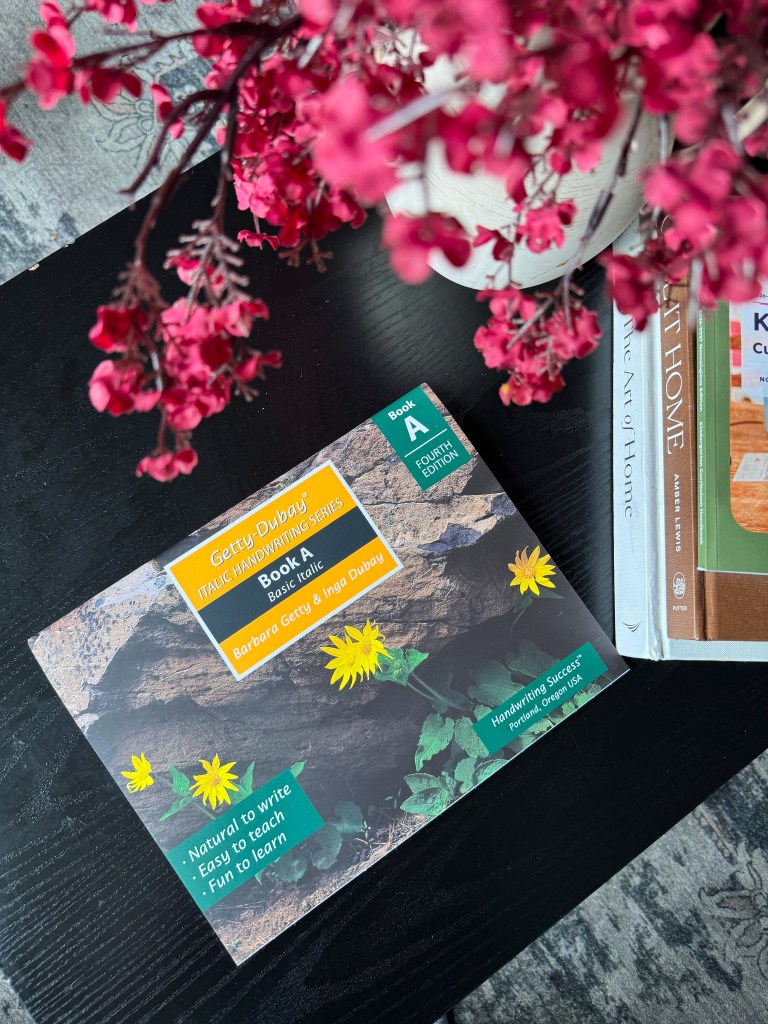
The pages provide plenty of guided letter formation without looking overwhelming.
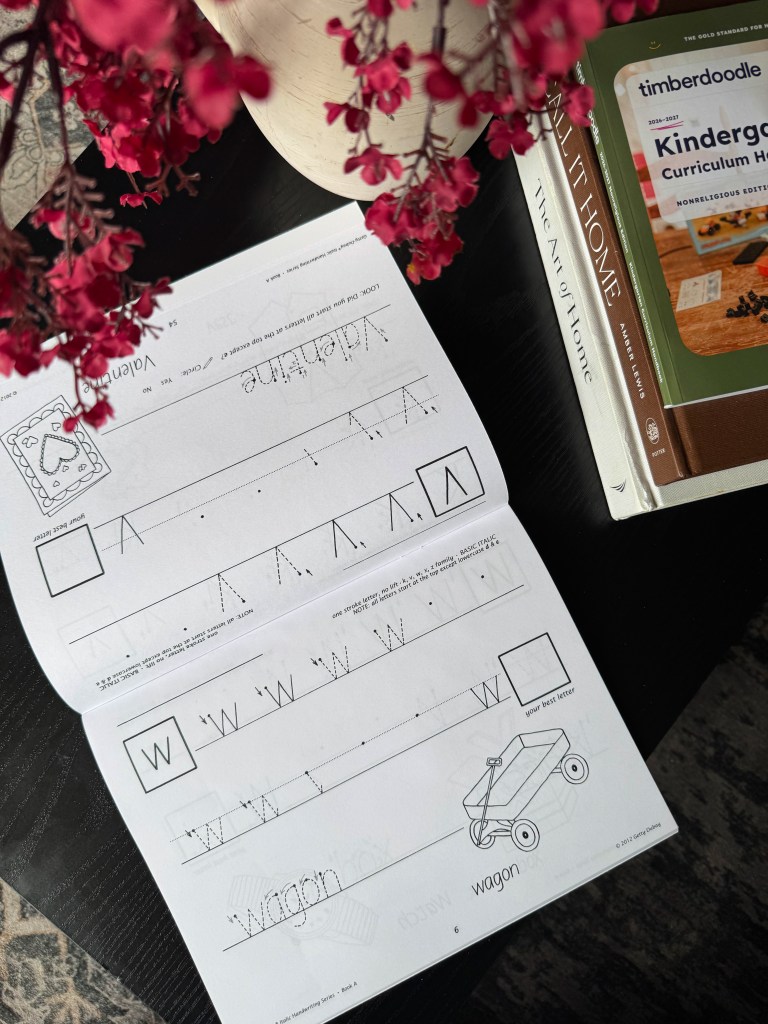
Channie’s My First Pencil
Even the pencils were thoughtfully chosen!
Channie’s My First Pencil set includes shorter, thicker pencils designed for smaller hands and early handwriting practice.
It’s such a small detail, but those little details can make a huge difference when you’re teaching a young child to write.
Real Science-4-Kids
This may be one of the resources I am most excited to explore.
The Real Science-4-Kids Science Book 1 introduces children to actual science concepts including chemistry, atoms and molecules, biology, physics, geology and more.
The lessons are colorful, visual and written in a way that connects science to things children already encounter in everyday life.
I love that the science isn’t being watered down simply because they’re young.
Doctor Livingston Jr. Human Brain Puzzle
Science also becomes hands-on with the Doctor Livingston Jr. Human Brain Floor Puzzle.
This large puzzle lets children build and explore the human brain while working on visual-spatial skills and problem solving at the same time.
Story of the World
For history, the kit includes The Story of the World: History for the Classical Child, Volume 1: Ancient Times along with supporting materials.
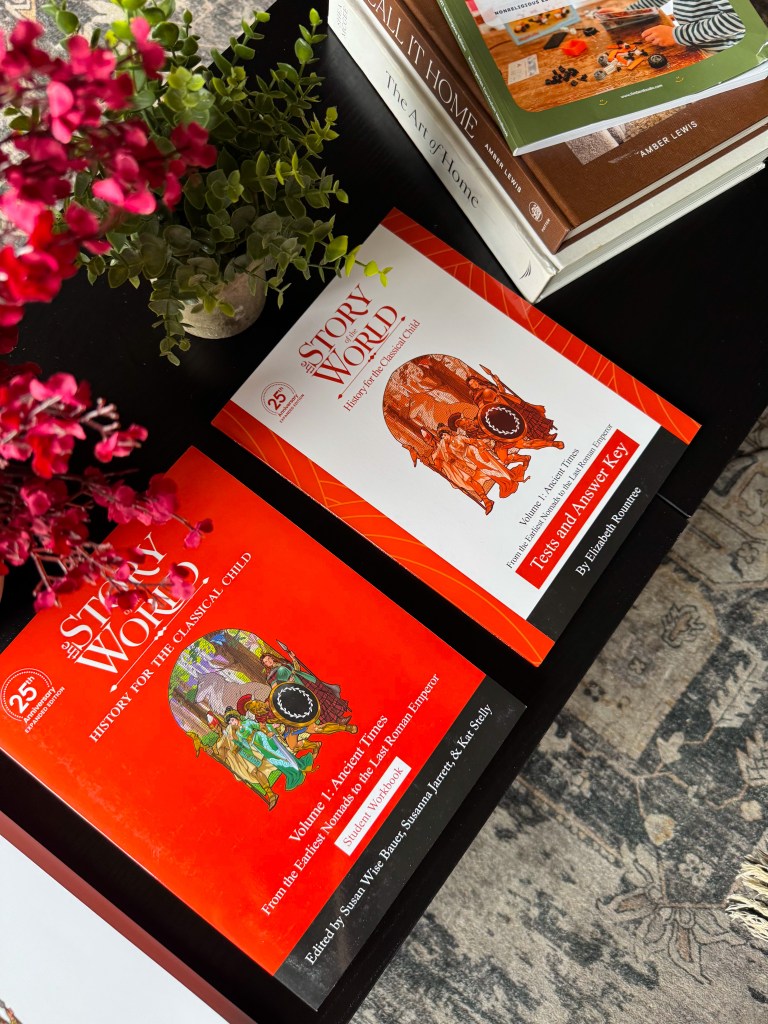
Children begin exploring ancient civilizations and history through stories and activities rather than simply memorizing dates.
180 Days of Social Studies for Kindergarten
The 180 Days of Social Studies workbook introduces kindergarten-level civics, economics, geography and history through short daily lessons.
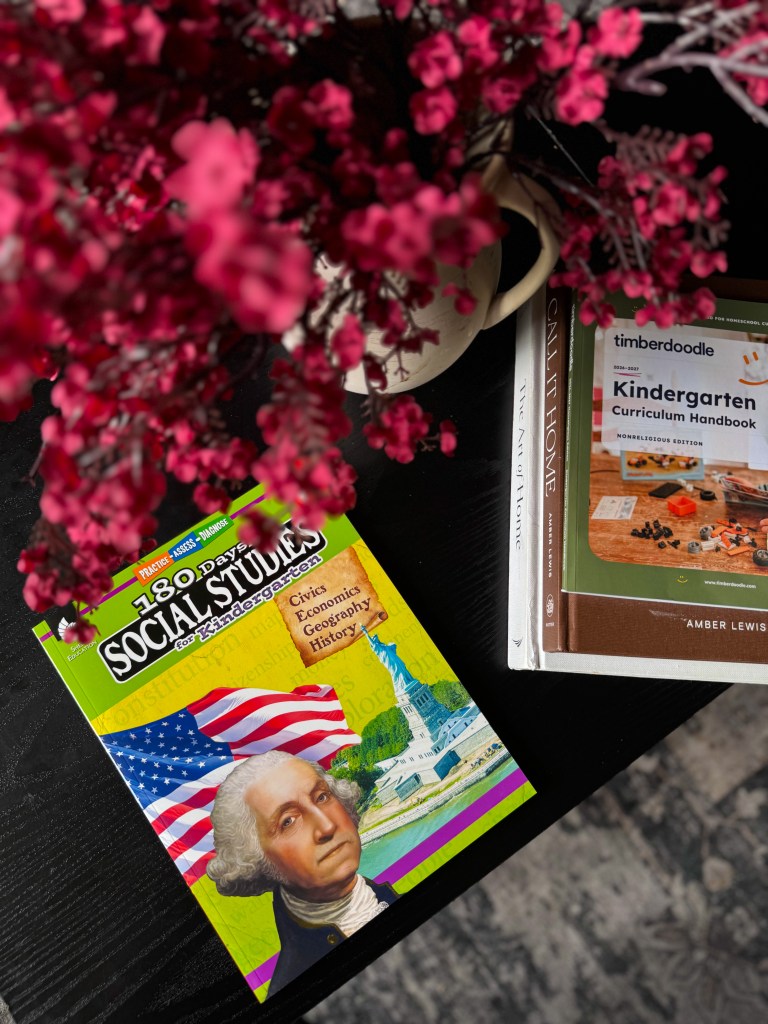
I especially like having this as an easy open-and-go option for days when we want something straightforward.
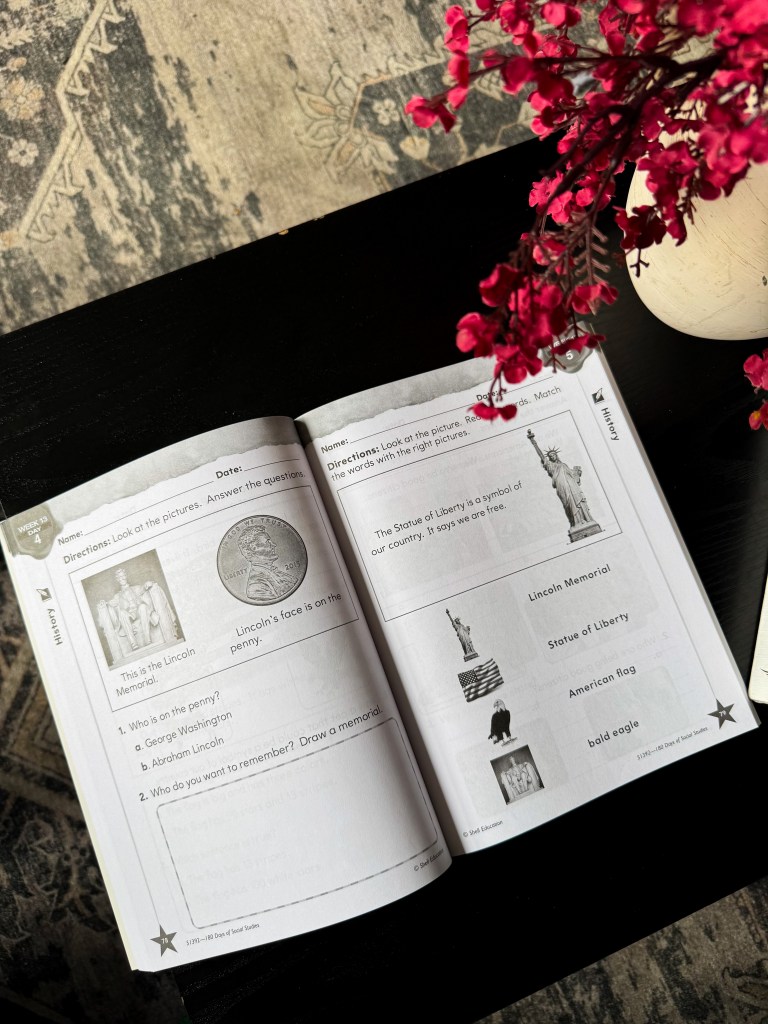
Skill Sharpeners Geography
Skill Sharpeners Geography Kindergarten gives younger children an introduction to maps, geography vocabulary and basic geography concepts through colorful activities.
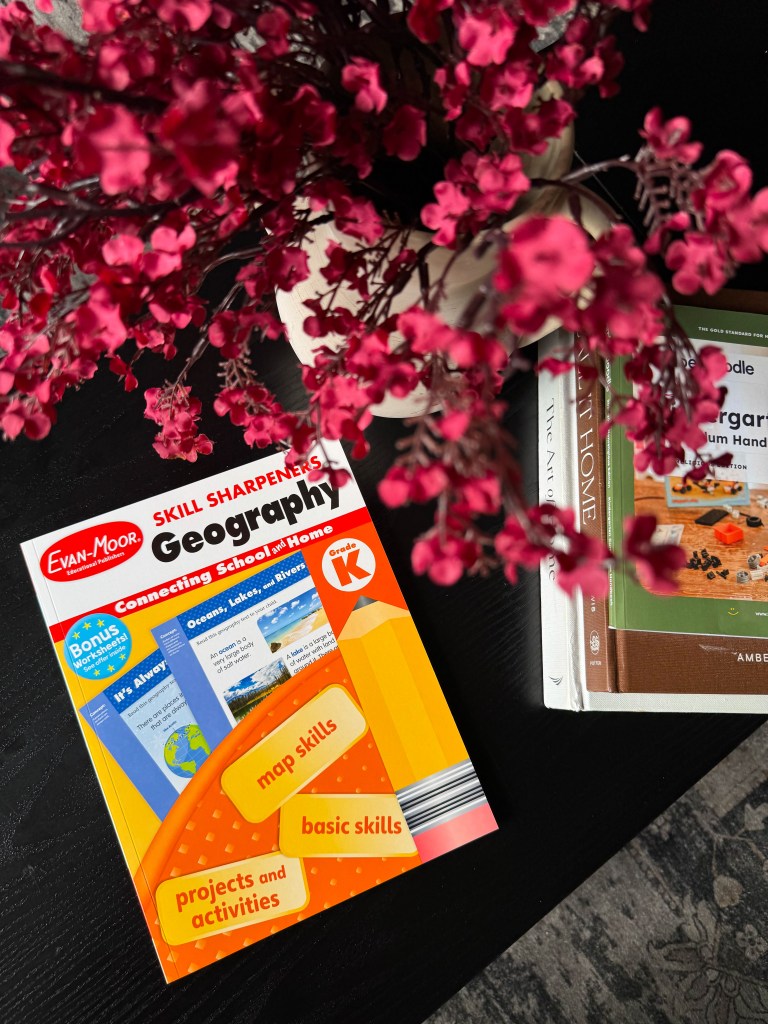
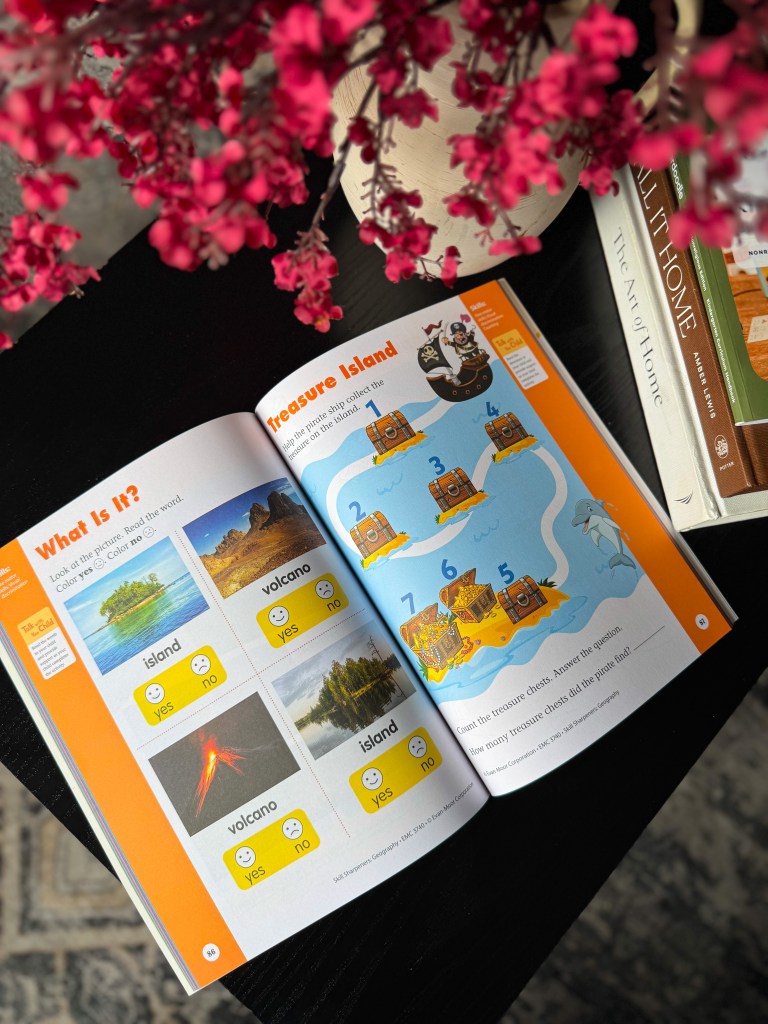
Mudpuppy Map of the World Puzzle
And then geography becomes hands-on again with the Mudpuppy Map of the World Puzzle.
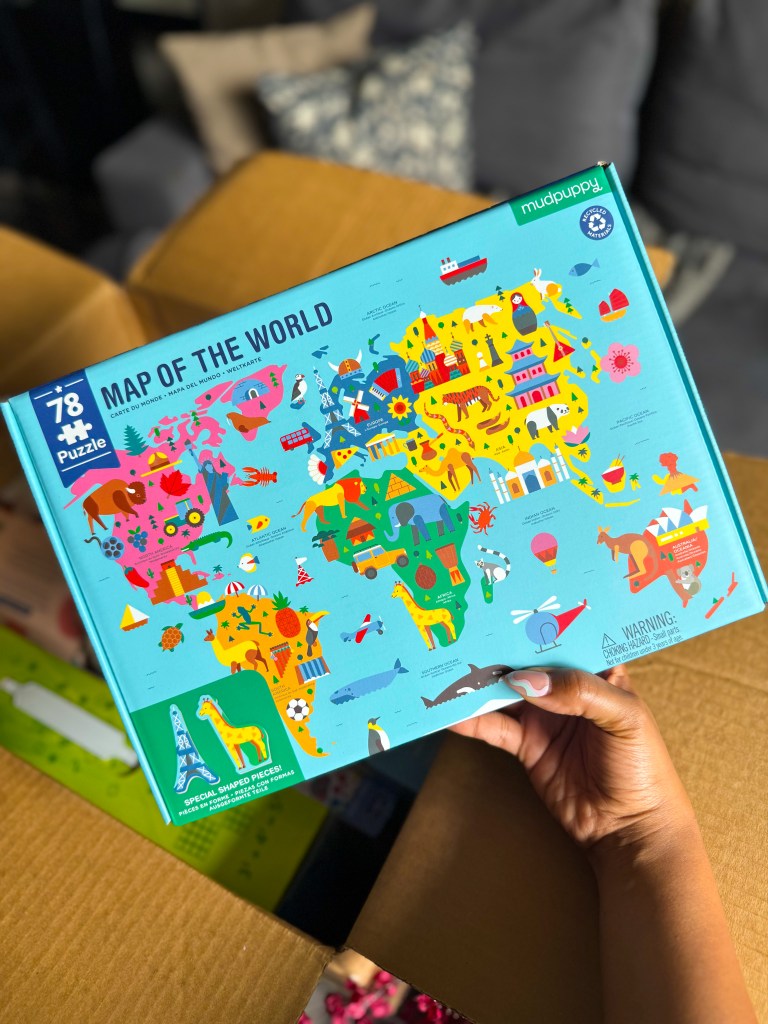
The colorful world map features animals, landmarks and other illustrations that make exploring different parts of the world much more interesting for younger kids.
Fischertechnik Junior Max
This one immediately caught my attention.
Fischertechnik Junior Max is a STEM construction set that allows kids to build different models while developing engineering, problem-solving and fine motor skills.
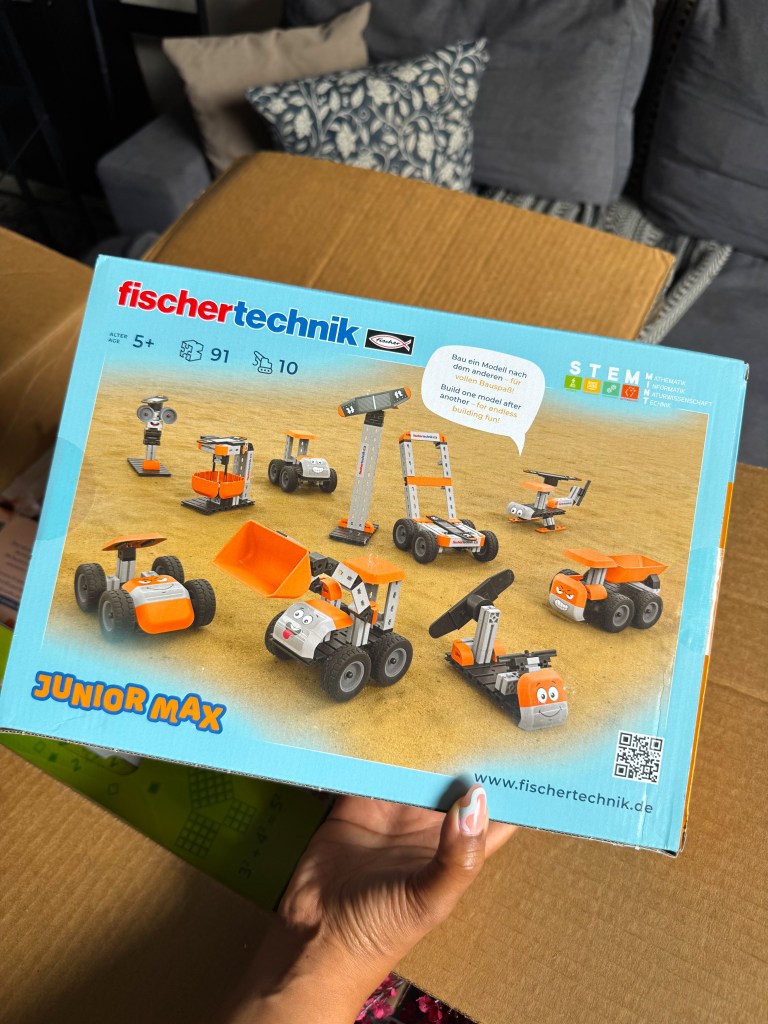
This is exactly the type of activity that makes homeschooling feel less like “school at home” and more like learning through exploration.
Language Builder Blocks
The Language Builder Blocks set combines colorful building blocks with activity cards to help children work on visual reasoning, attention and fine motor skills.
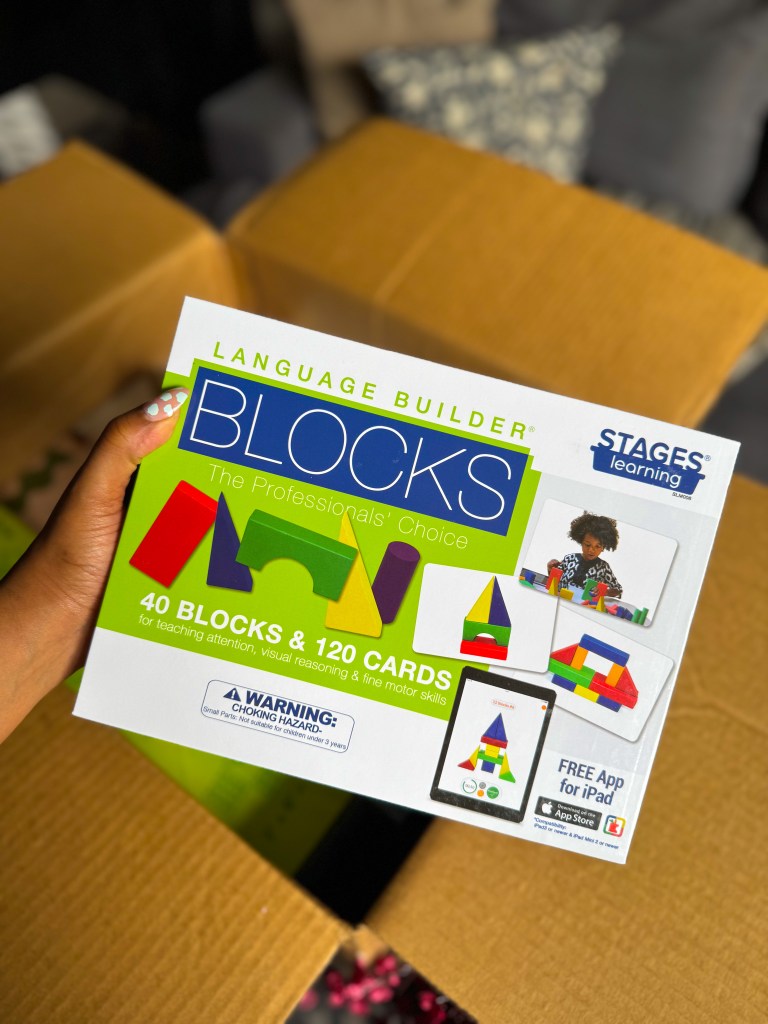
It’s another resource that feels like play while still building important foundational skills.
Little Red Riding Hood Deluxe
The Little Red Riding Hood Deluxe game from SmartGames is a logic puzzle where children build a path to Grandma’s house.
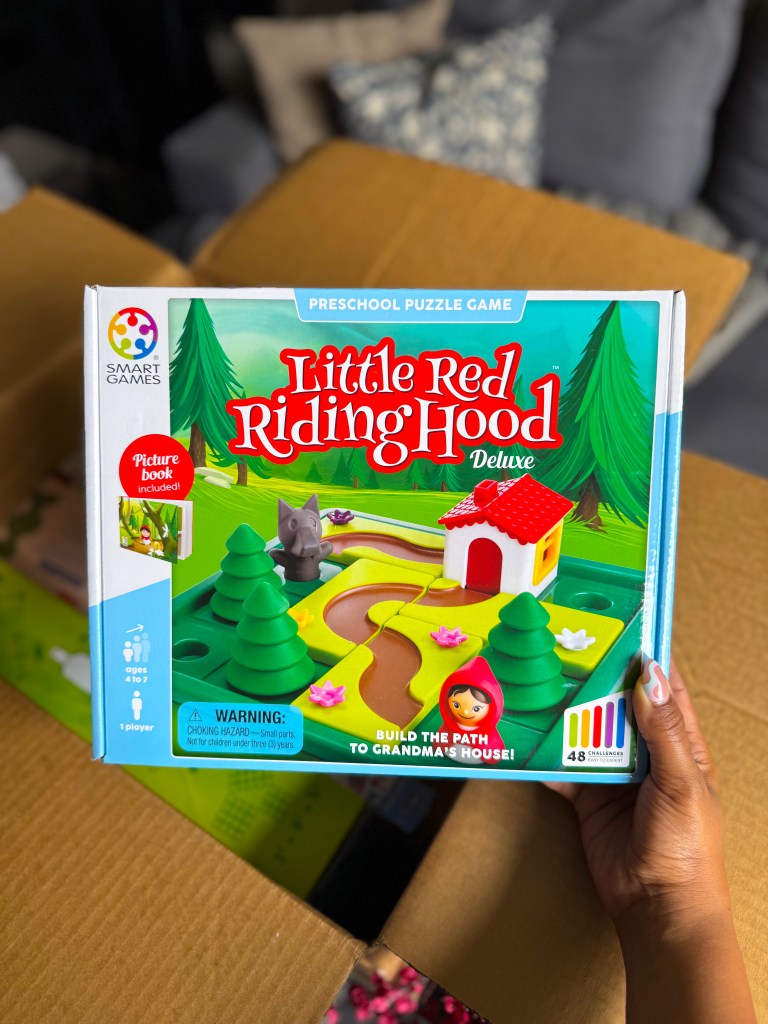
I love educational games like this because kids are practicing problem-solving without feeling like they’re completing another lesson.
Aquarellum Postcards
Art is definitely not forgotten in this curriculum.
The Aquarellum Postcards kit allows children to create colorful watercolor-style artwork using a really fun painting technique.
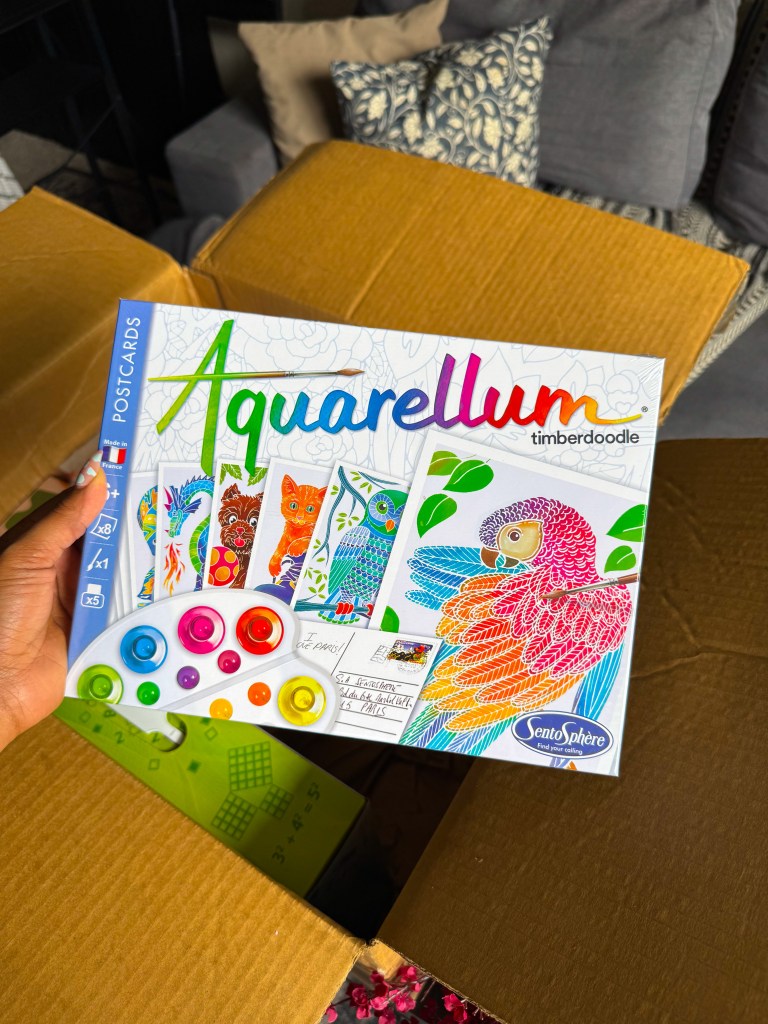
This one is going to be such a nice break between more academic subjects.
Faber-Castell Grip Colored EcoPencils
The kit also includes Faber-Castell Grip Colored EcoPencils, which will be used for art, coloring and activities throughout the year.
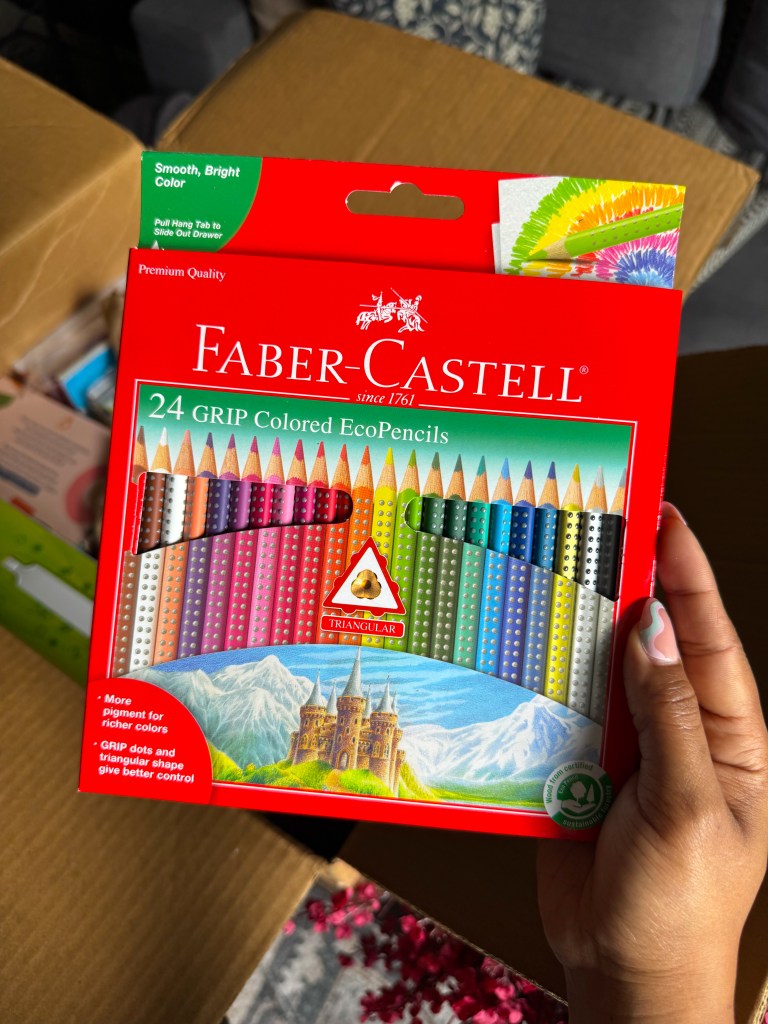
Mosaic Craft Kit
The Mosaic Craft Kit gives kids another creative, hands-on art experience and includes several mosaic projects.
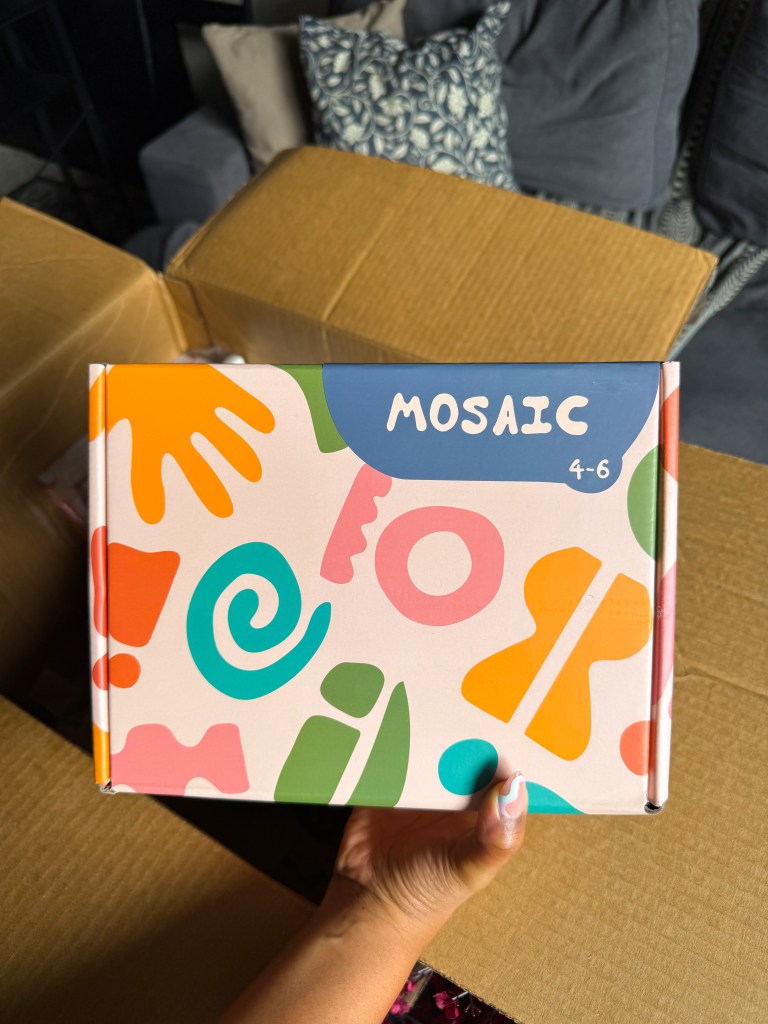
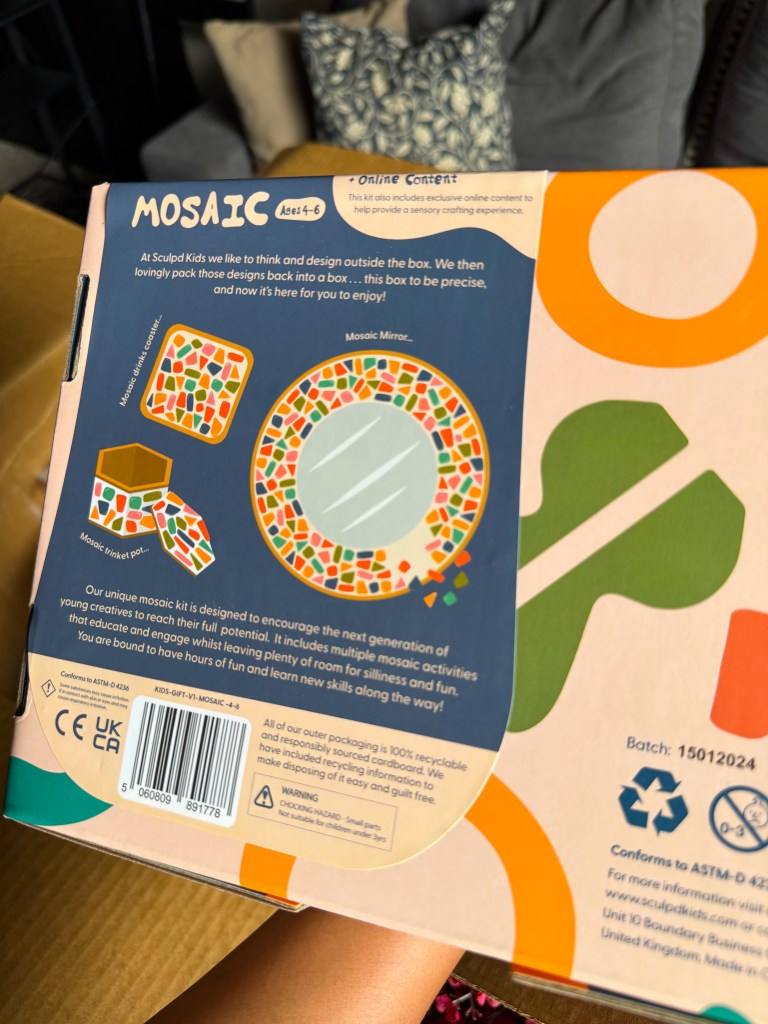
Sticker & Draw Animals
Sticker & Draw Animals combines stickers and step-by-step drawing to help children create different animals.
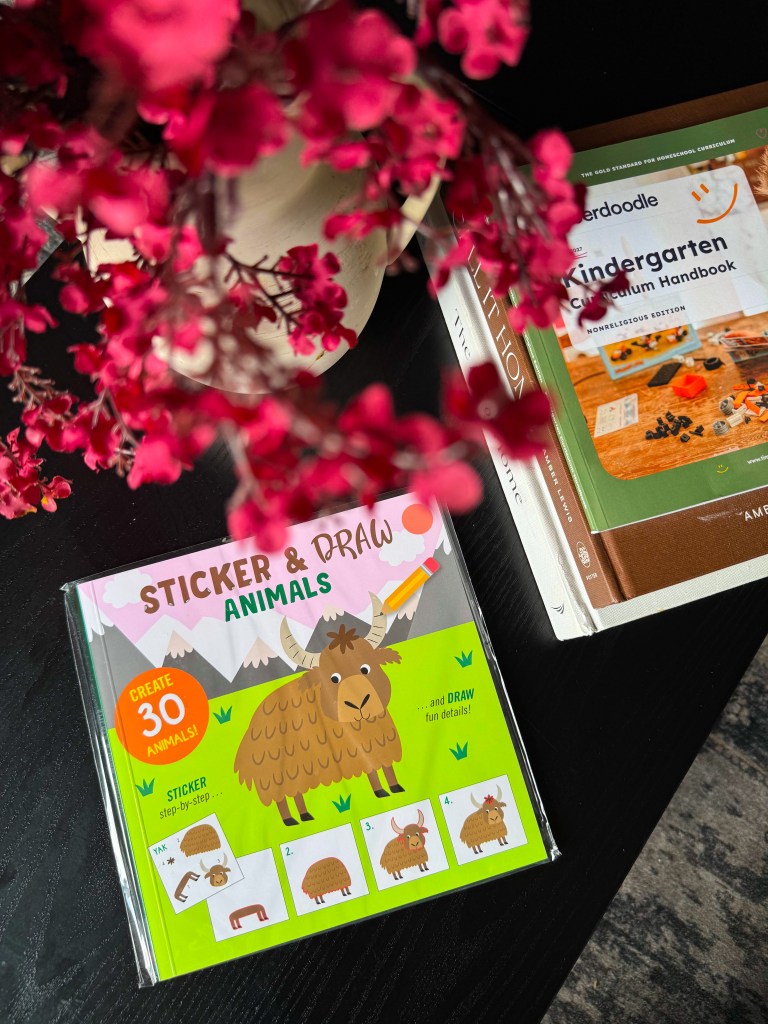
This is a fun way to encourage creativity while also practicing visual observation and fine motor control.
Happy, Sad, Feeling Glad
Happy, Sad, Feeling Glad is a draw-and-discover activity book that lets children explore feelings and emotions through drawing.
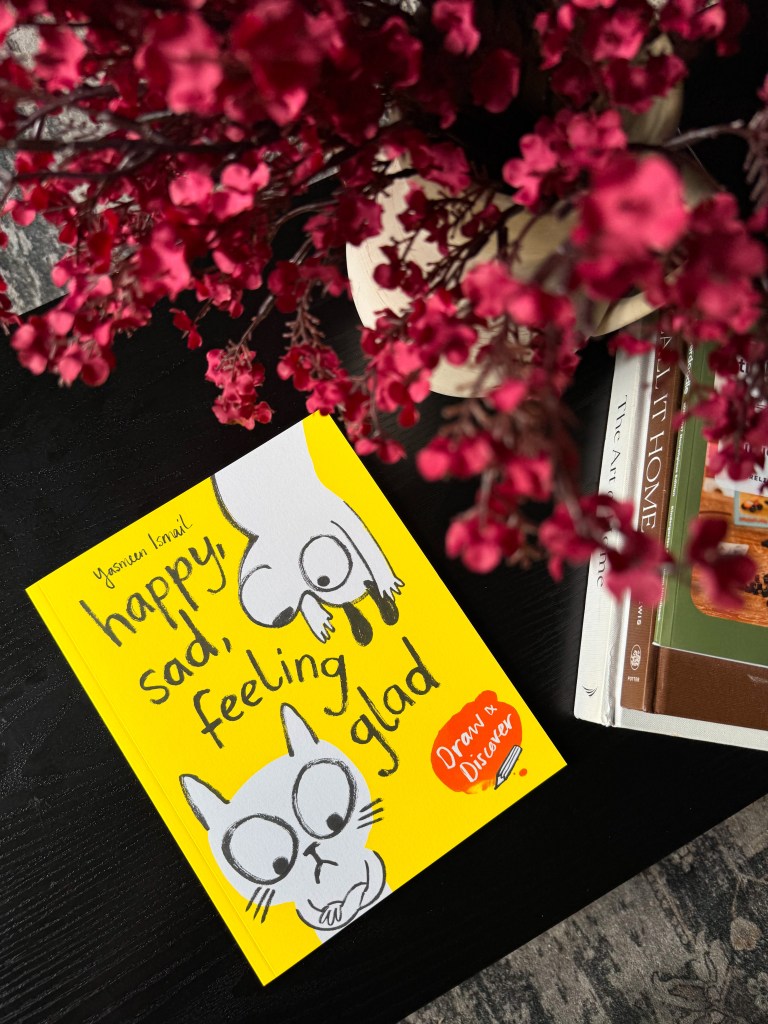
I really appreciate seeing social-emotional learning included alongside the traditional academic subjects.
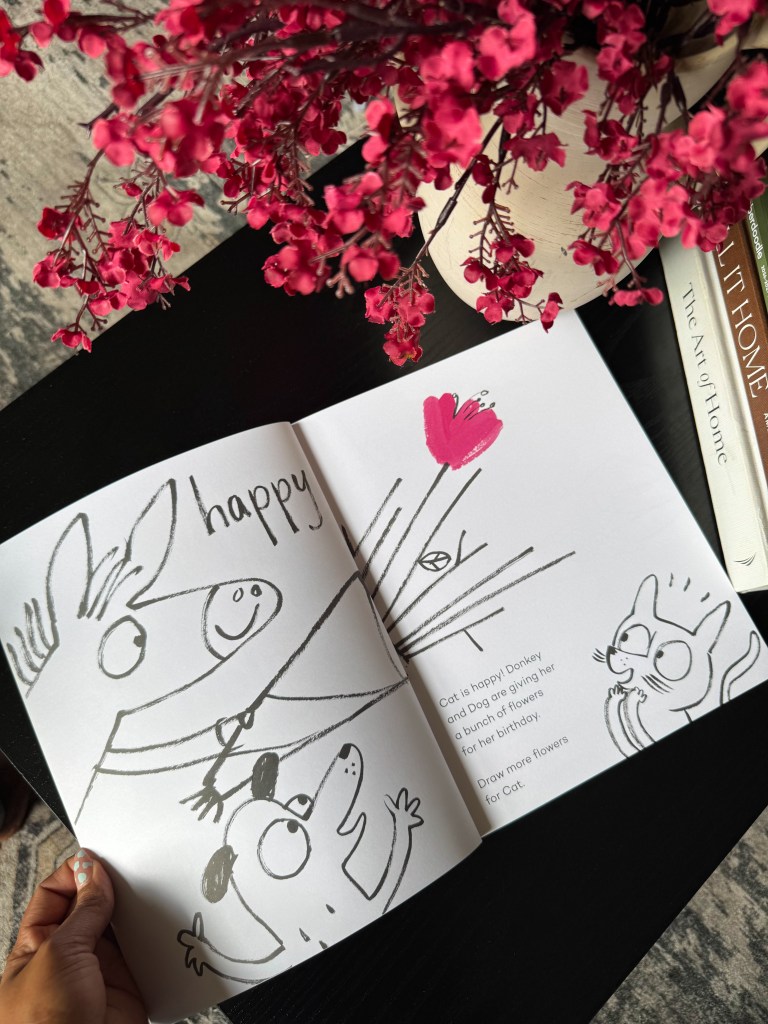
I Can Doodle Rhymes
I Can Doodle Rhymes combines drawing with early language skills and rhyming.
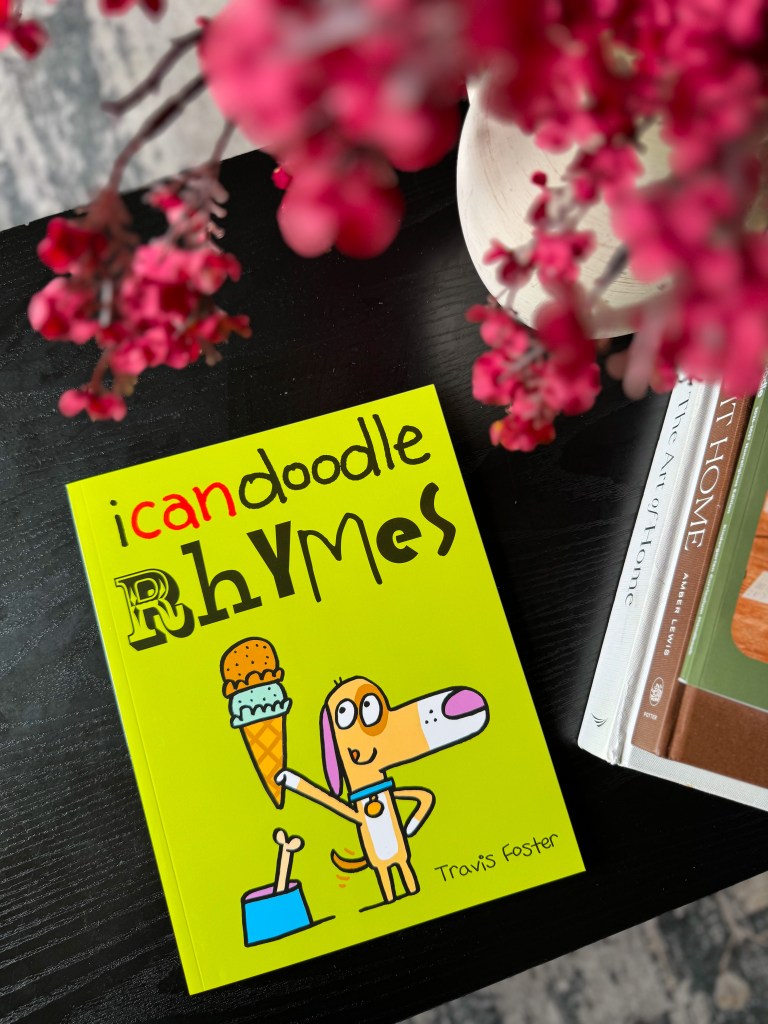
The pages invite children to finish pictures and interact with words rather than simply reading them.
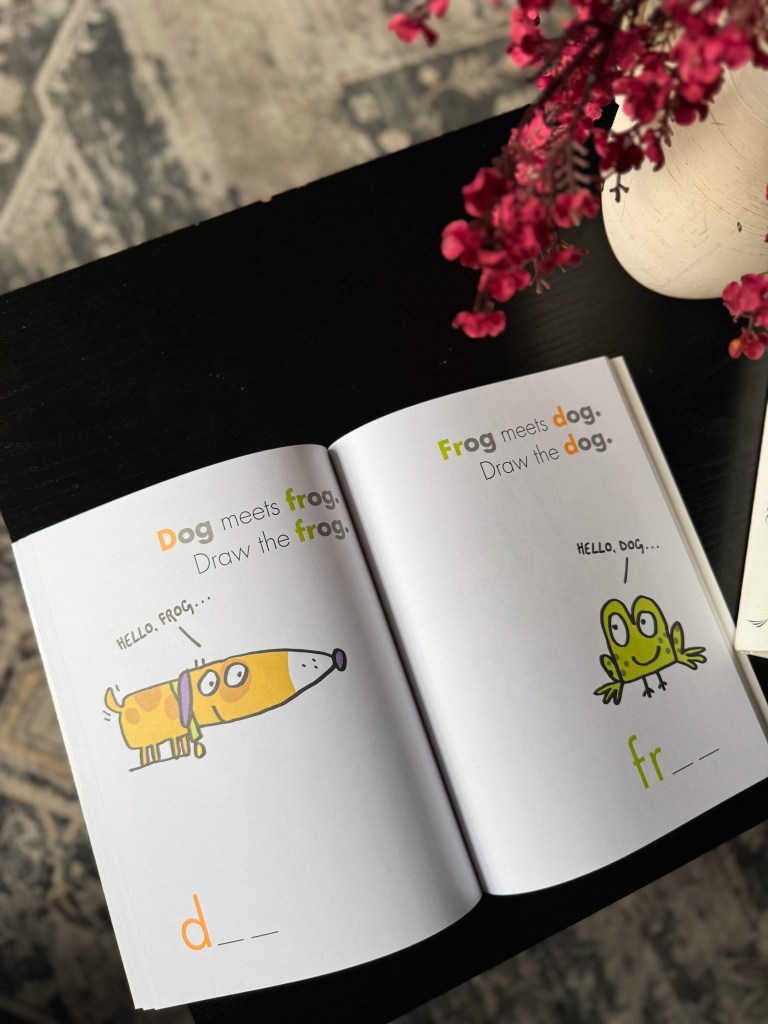
My First 100 Words
My First 100 Words is a bright picture vocabulary book that introduces familiar objects and words from everyday life.
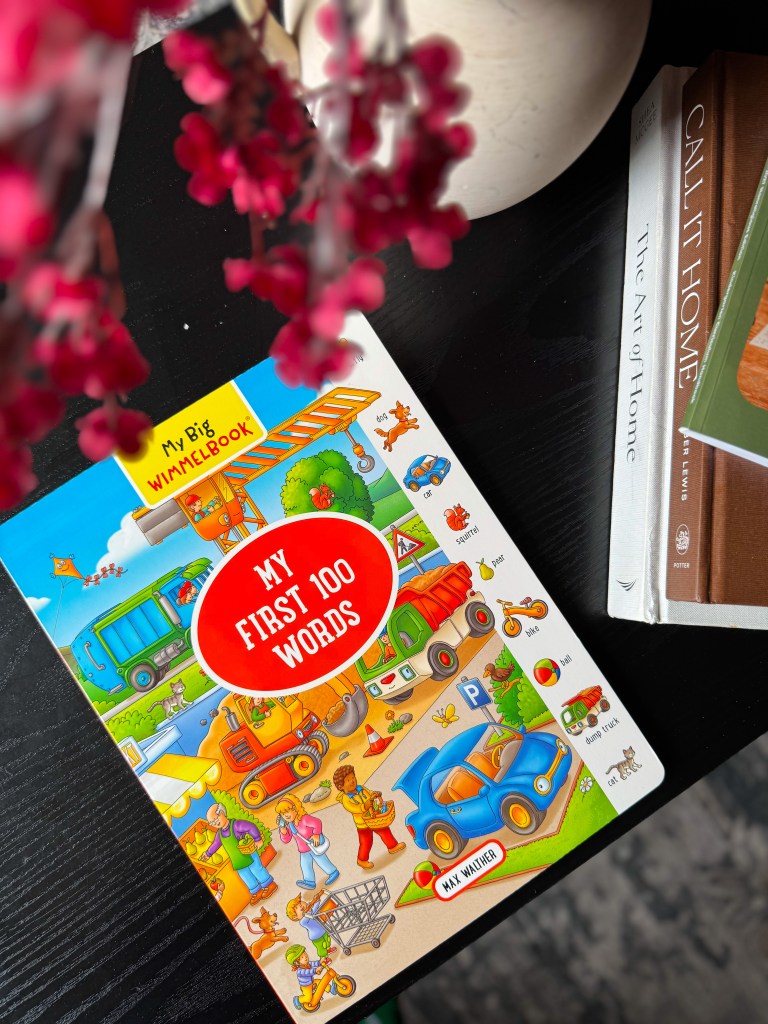
For kindergarteners who are building vocabulary and early reading skills, books like this are easy to incorporate throughout the day without making everything feel like a formal lesson.
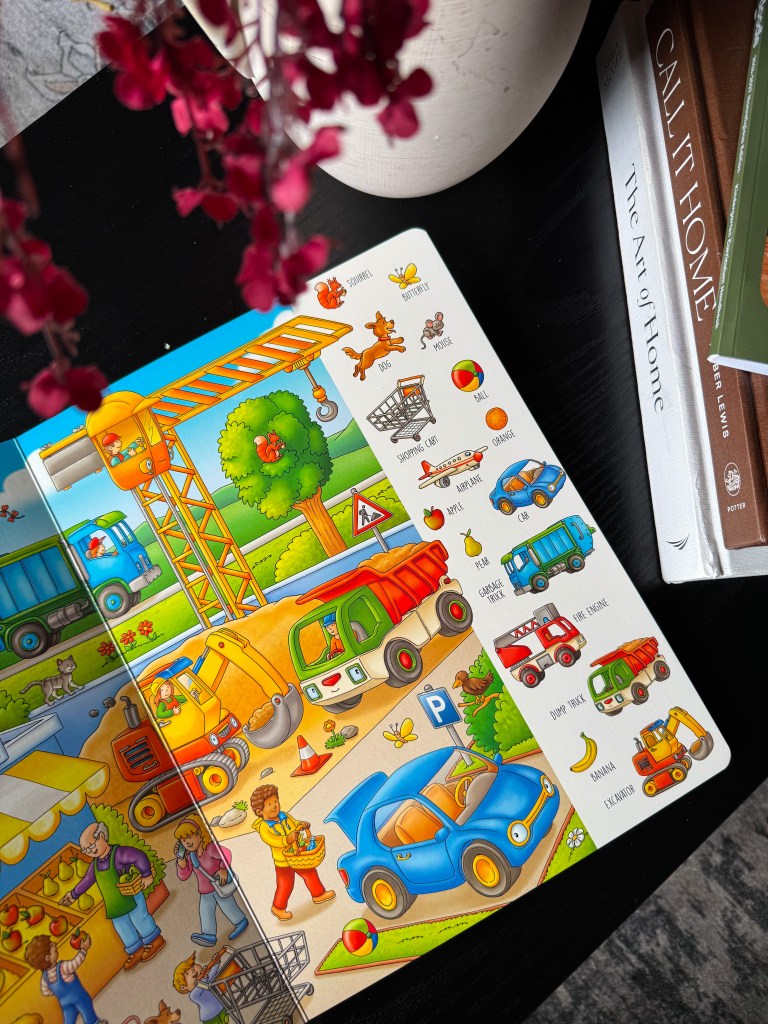
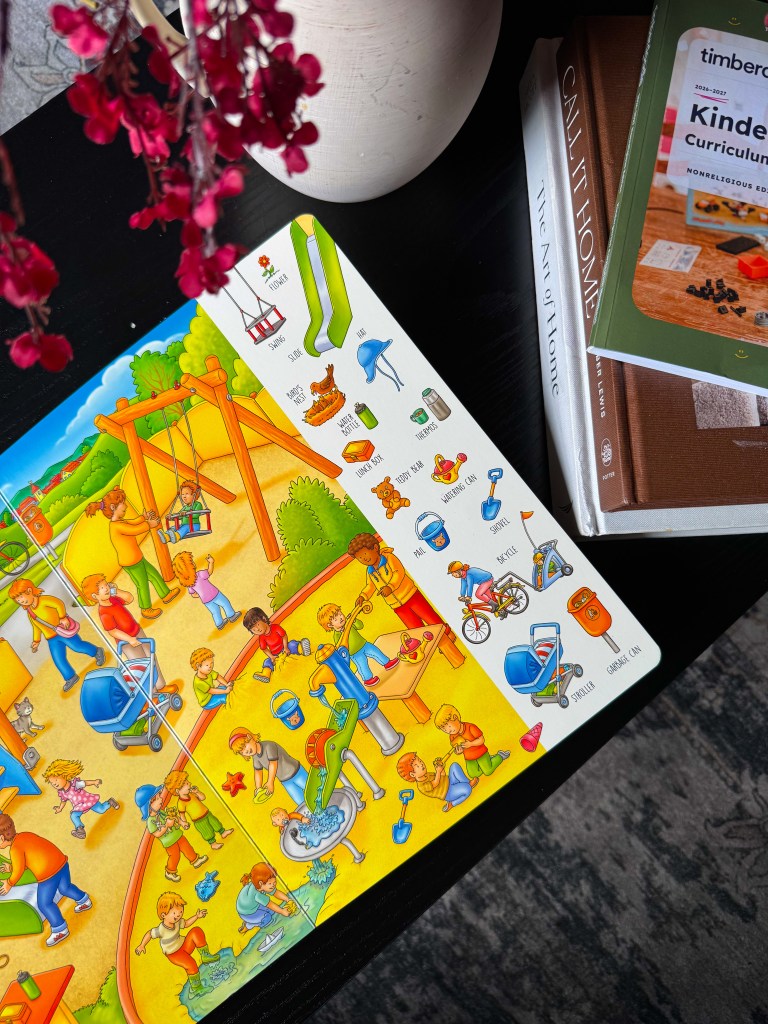
Meori Mini Foldable Box
And yes, Timberdoodle even thought about storage.
The Meori Mini Foldable Box can hold pencils, markers and other homeschool supplies and folds flat when you’re not using it.
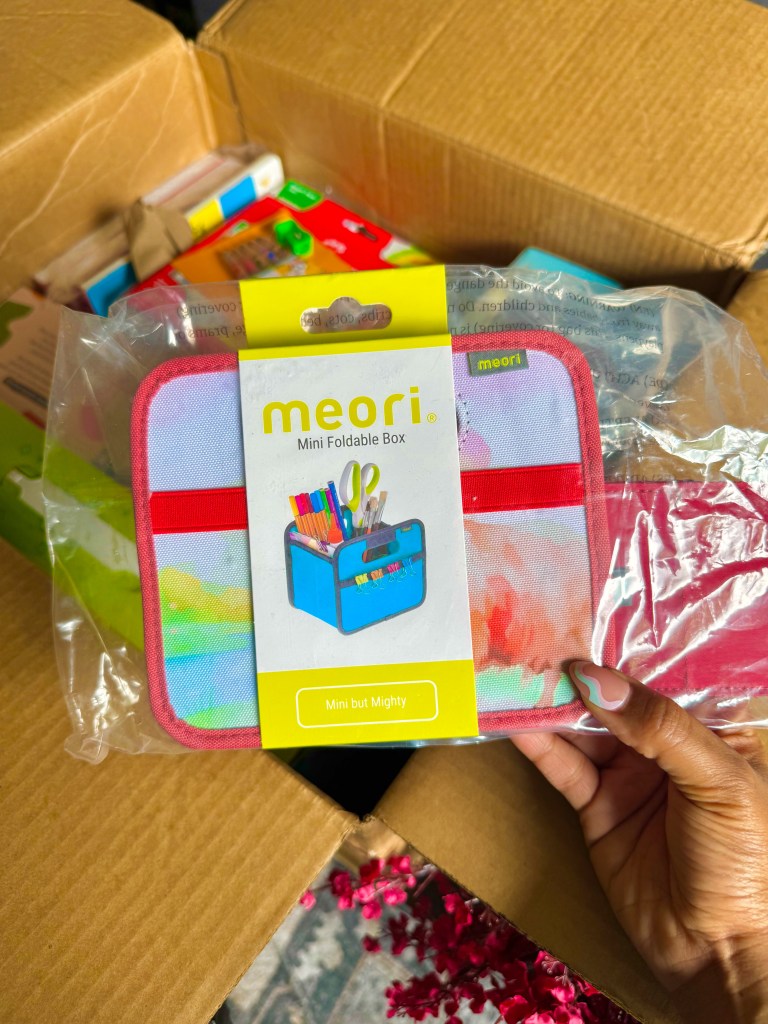
As someone who is always looking for ways to keep homeschool supplies from taking over the entire house, I appreciate this one.
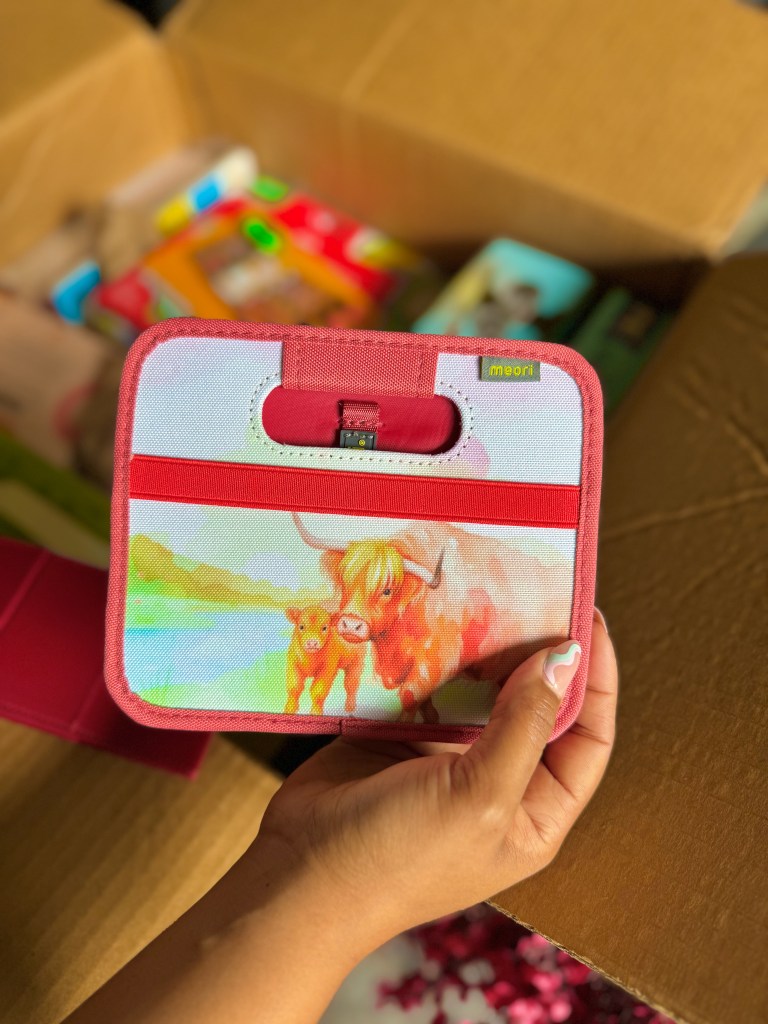
Why I Love the Timberdoodle Kindergarten Kit for New Homeschool Families
What stands out most to me isn’t just how much comes inside this box.
It’s the variety.
A five-year-old shouldn’t have to sit at a table filling out worksheets for hours to have a successful homeschool day.
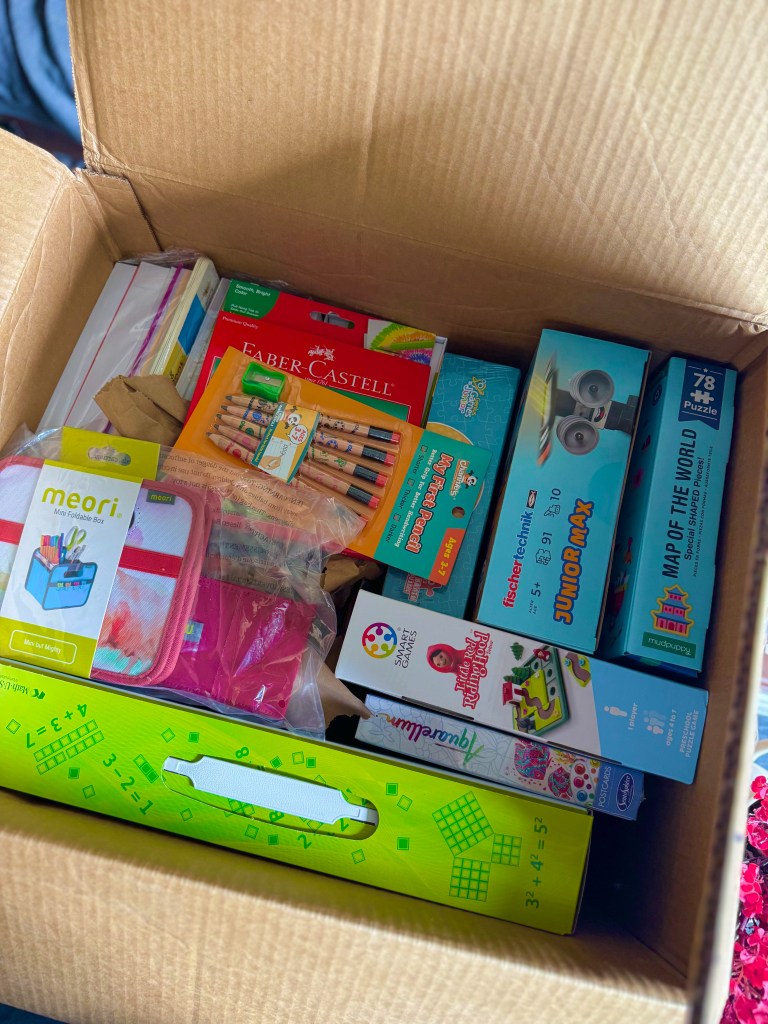
Young children learn through building, talking, drawing, moving, experimenting, puzzles, books, games and plenty of hands-on discovery.
And that is exactly what this kit feels designed around.
You still have the structure of a complete curriculum, but there are so many different ways for your child to interact with what they’re learning.
For a parent wondering:
Where do I even start with homeschooling kindergarten?
This is such an easy answer.
Start with a curriculum that already gives you the framework.
You can follow the Timberdoodle schedule closely, move things around, slow down, skip ahead or use the pieces in whatever way works best for your child and your family.
That’s one of the best parts of homeschooling in the first place.
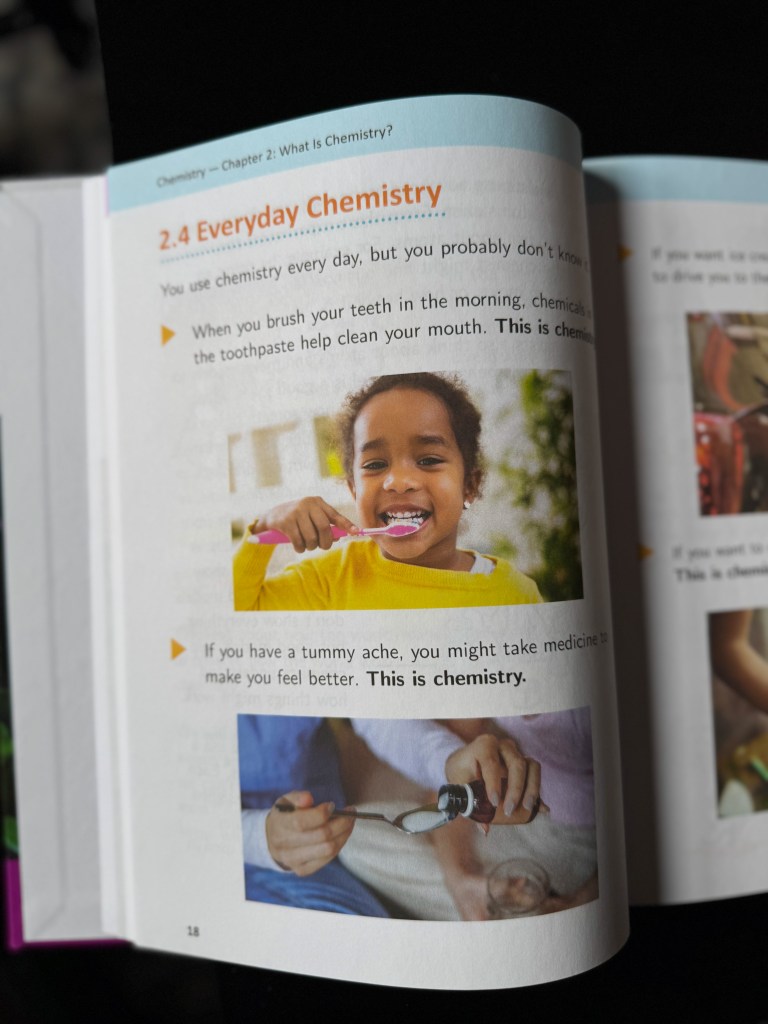
Is the Timberdoodle Kindergarten Curriculum Kit Worth It?
Based on this unboxing alone, I am genuinely excited about this school year.
The kit covers the traditional kindergarten subjects while also including the pieces that can easily get forgotten when you’re building a curriculum yourself — art, STEM, puzzles, geography, critical thinking, fine motor activities and creative learning.
For a first-time homeschool parent, I think having everything arrive together can remove so much of the uncertainty surrounding where to begin.
And for experienced homeschool families, it’s incredibly convenient to have a thoughtfully curated collection instead of spending weeks researching every individual subject.
Honestly, opening this box made me wish I had known about Timberdoodle much sooner.
There are so many resources in here that I would have loved to use when my older kids were beginning their homeschool years.
And now I get to experience it from the beginning with a little learner.
I cannot wait.
Follow Along With Our Kindergarten Homeschool Year
This is only the unboxing!
As we work through the Timberdoodle Kindergarten Curriculum Kit this year, I’ll be sharing individual reviews of the curriculum, games, books and hands-on resources you see here.
I’ll also update this post with links to those reviews so you can take a closer look at the individual products before deciding what might work for your own homeschool.
If you’ve been considering homeschooling kindergarten but aren’t sure how to put together an entire year of curriculum, the Timberdoodle Kindergarten Curriculum Kit is absolutely one I would put on your list to explore.
Having math, science, language arts, history, geography, STEM, art and enrichment all arrive in one thoughtfully curated box makes getting started feel a whole lot less intimidating — and a whole lot more exciting.
-
SmartGames IQ Circle Review: A Colorful Logic Game for Teens
If you’re looking for a hands-on logic game that actually feels fun instead of like another school assignment, IQ Circle from SmartGames is one worth adding to your homeschool shelf.
We received IQ Circle as part of our Timberdoodle homeschool materials, and one of the first things my son noticed was the color. The bright rainbow puzzle pieces immediately caught his attention—and honestly, they’re one of my favorite things about it too.
So much so that we’ve been keeping the game right on our coffee table.
It’s technically homeschool material in our house, but it doubles surprisingly well as decor.
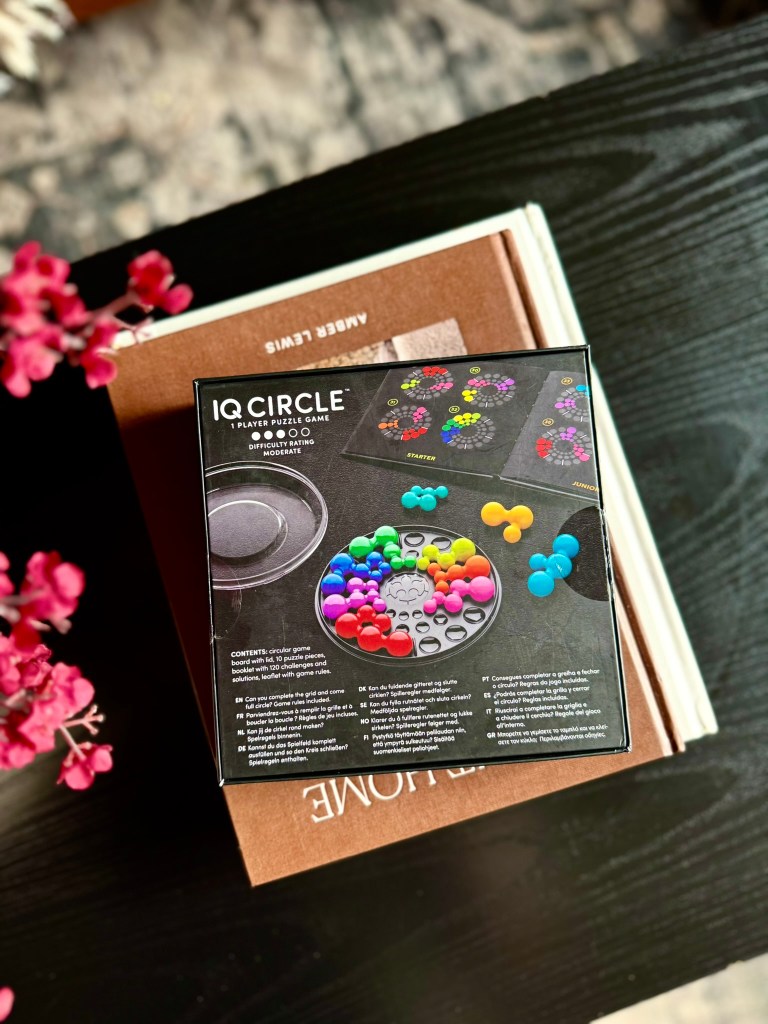
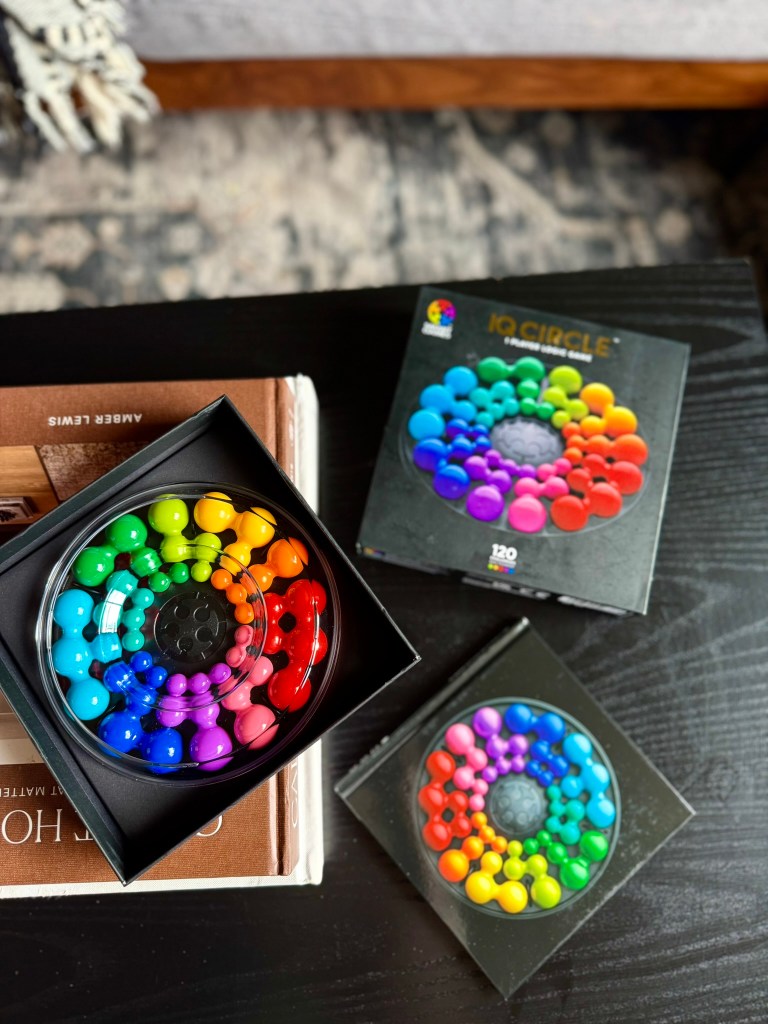
What Is IQ Circle?
IQ Circle is a one-player logic puzzle game built around a circular game board and colorful puzzle pieces of different shapes and sizes.
The included challenge booklet has 120 challenges that gradually become more difficult as you work through them.
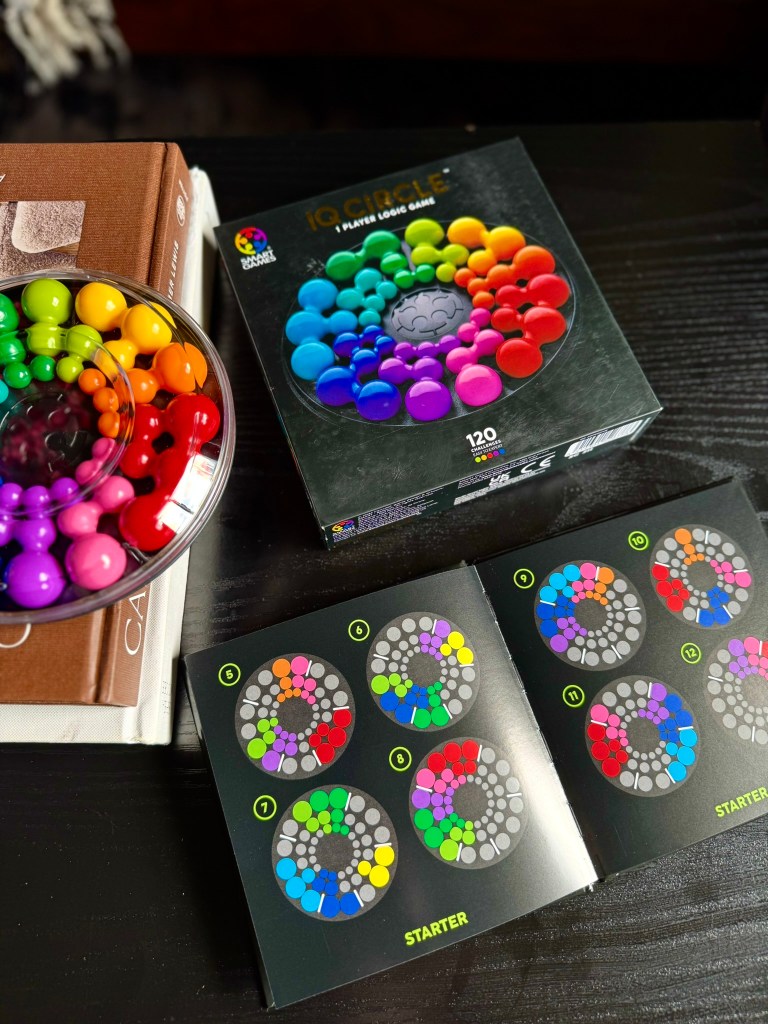
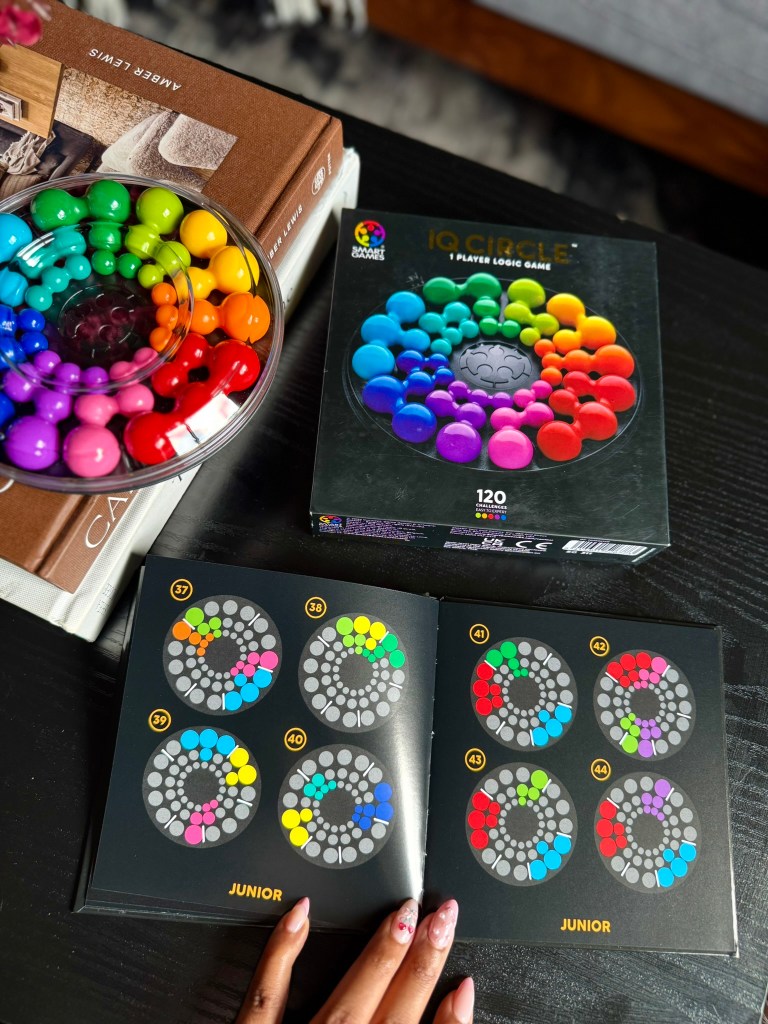
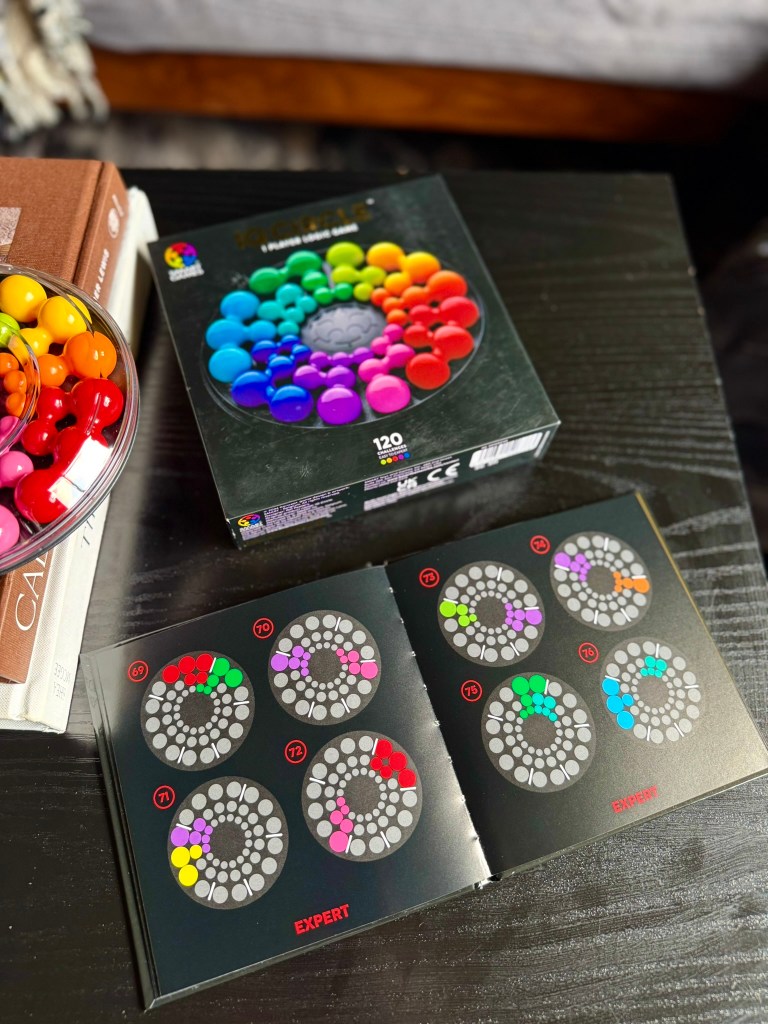
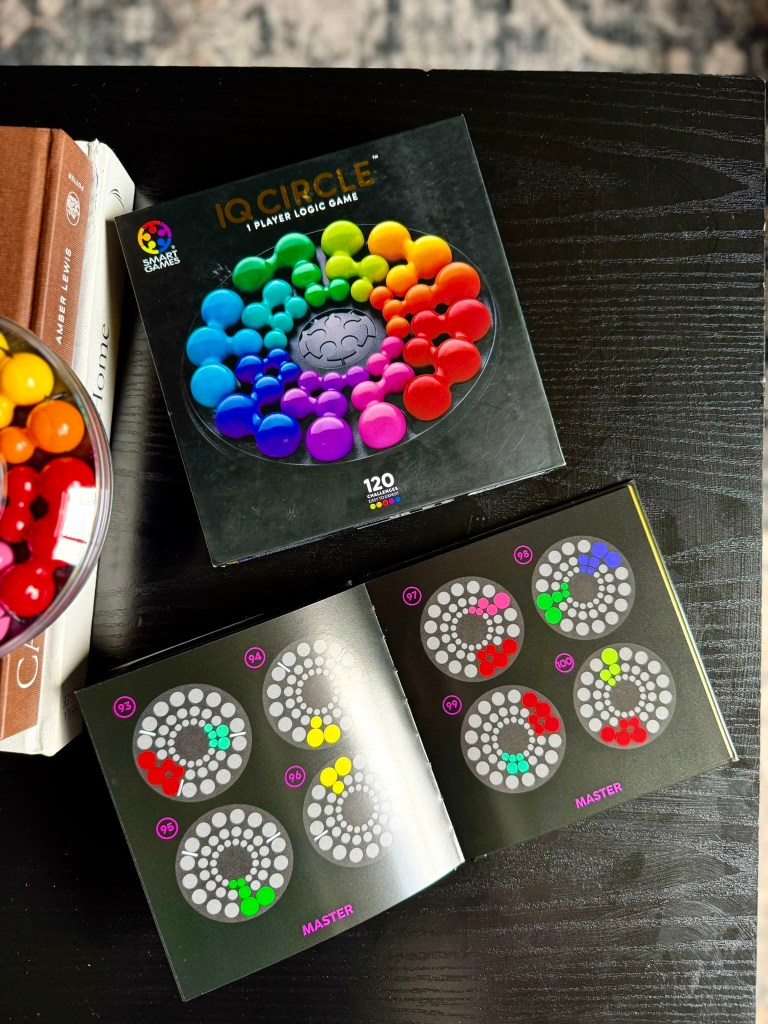
You begin each challenge with certain pieces already designated on the board. From there, the goal is to figure out how to fit all of the remaining pieces into the circle correctly.
It sounds simple.
It is not always simple.
And that is exactly what makes it good.
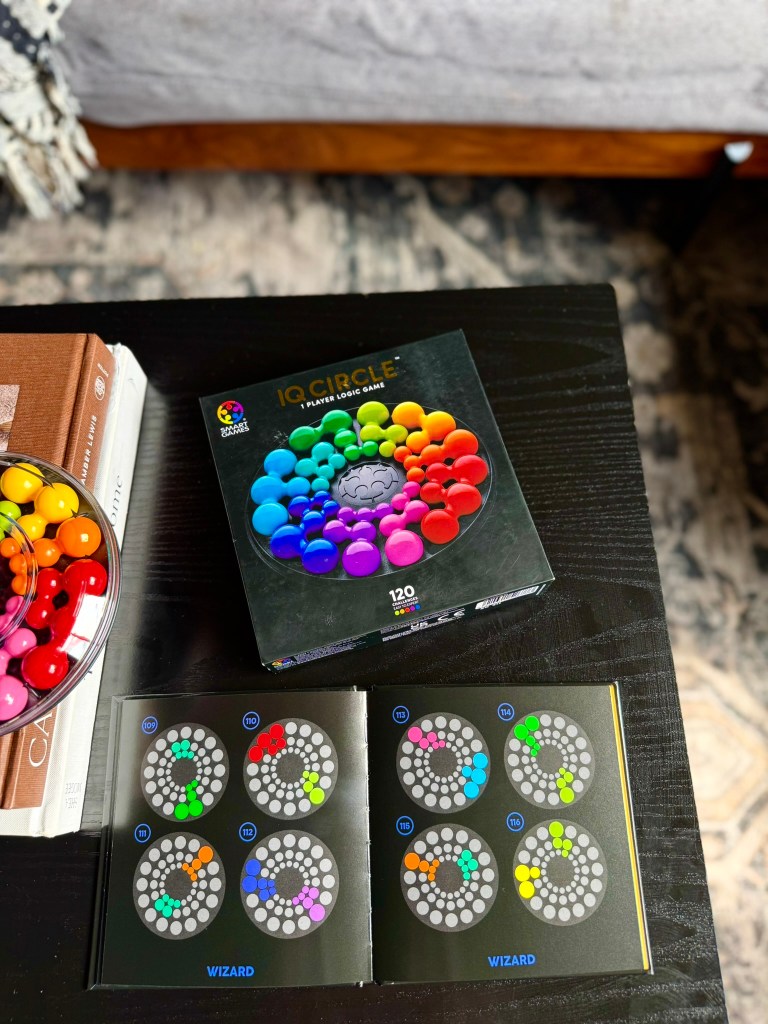
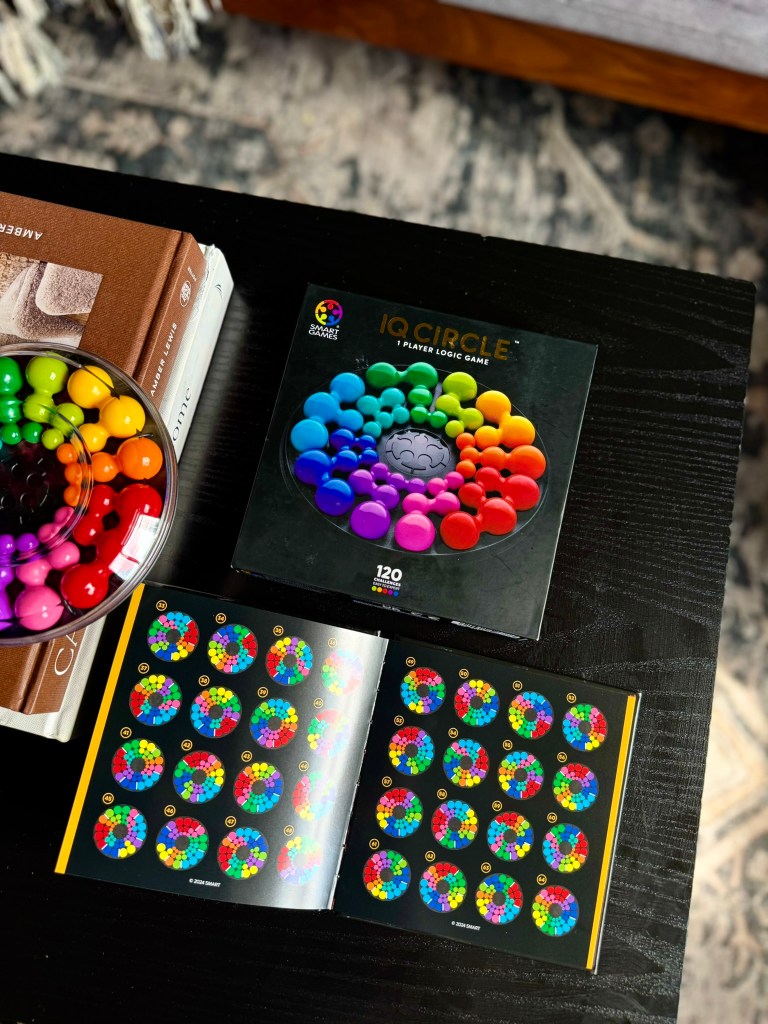
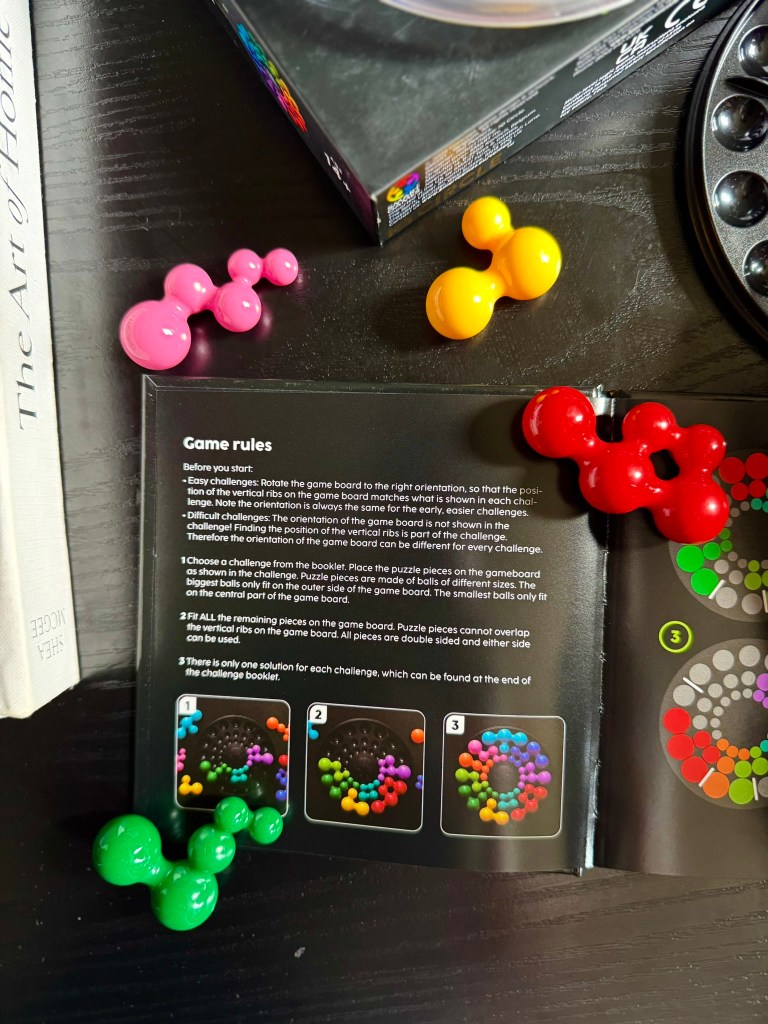
Why We Like IQ Circle for Homeschool
One of the things I appreciate most about games like this is that kids are practicing important thinking skills without sitting down for another traditional lesson.
IQ Circle encourages kids to work on:
- logic and problem-solving
- spatial reasoning
- visual perception
- concentration
- patience
- trial and error
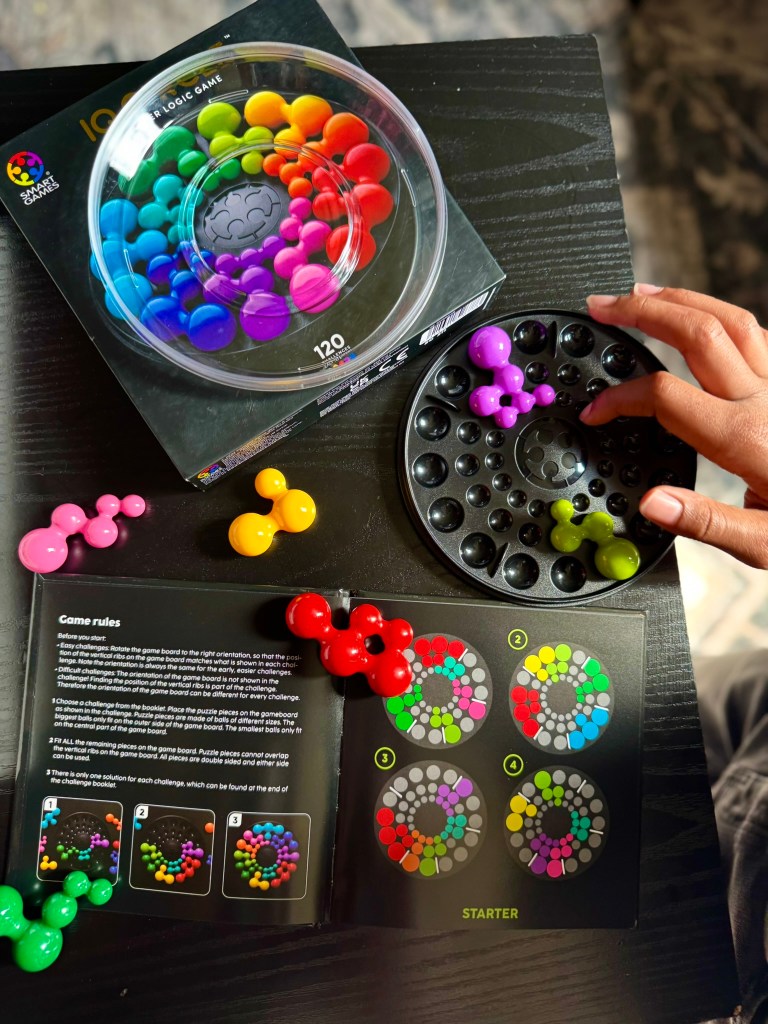
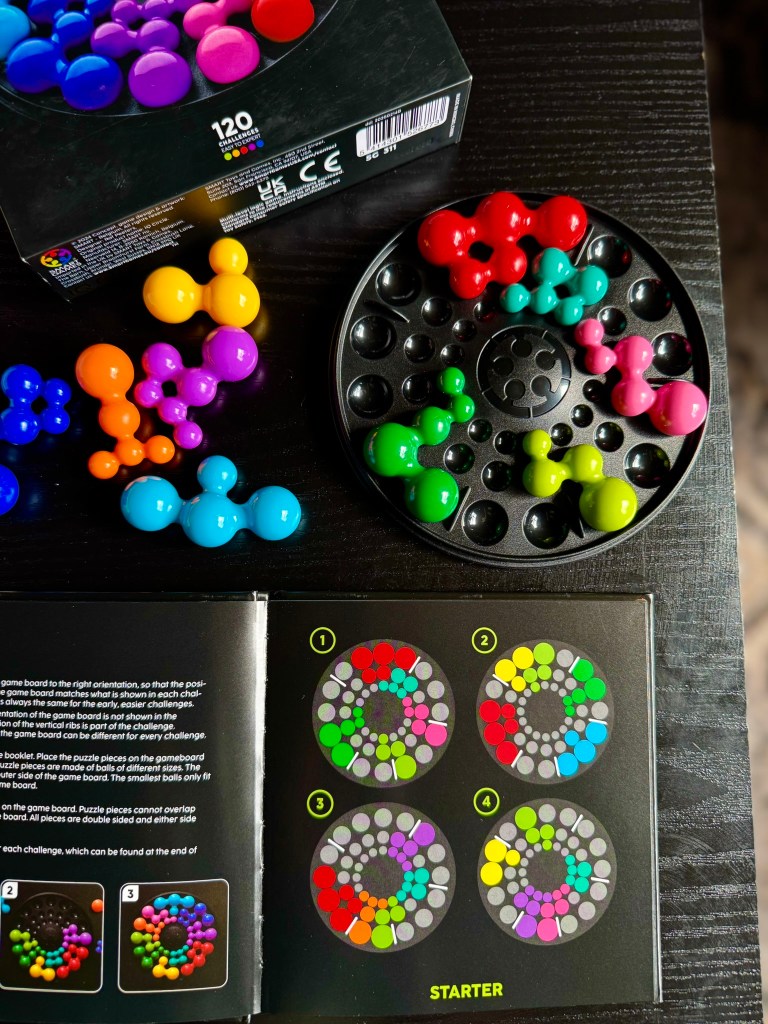
There isn’t a worksheet to complete or a long set of instructions to memorize. You choose a challenge, set up the board, and start figuring it out.
For homeschool families, I think it works especially well as something to pull out between subjects, during quiet time, or on a lighter school day.
The Challenges Actually Get Challenging
This is another reason I like IQ Circle.
There are multiple difficulty levels, including Starter, Junior, Expert, Master, and Wizard, so kids aren’t just completing the same type of easy puzzle over and over again.
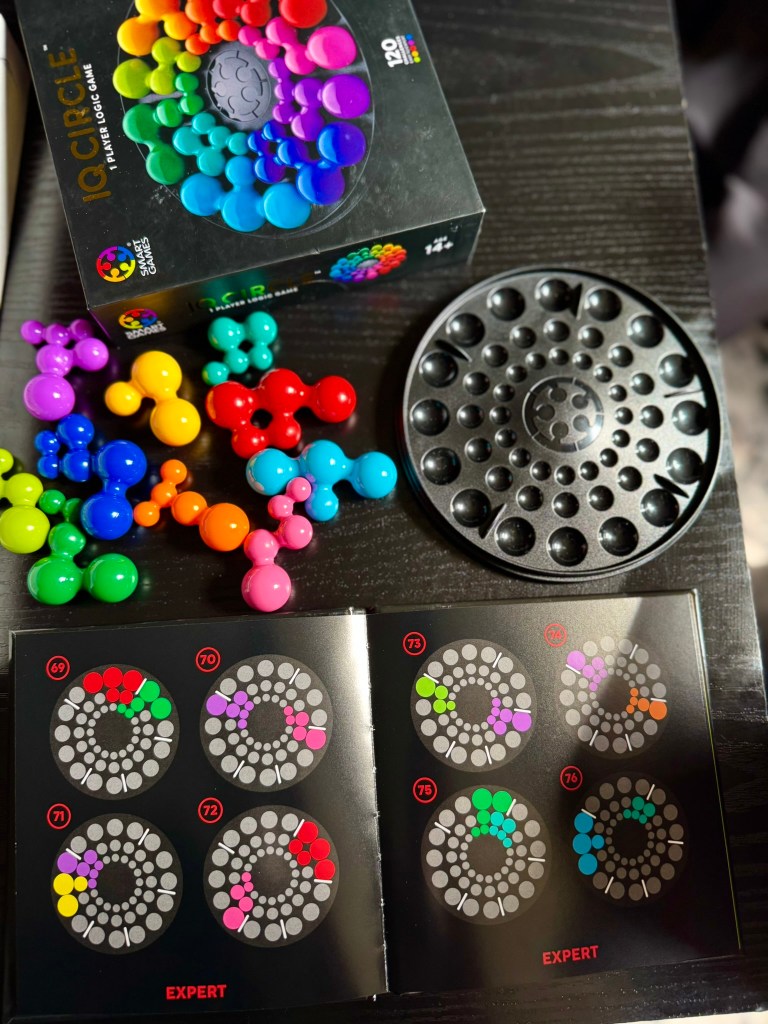
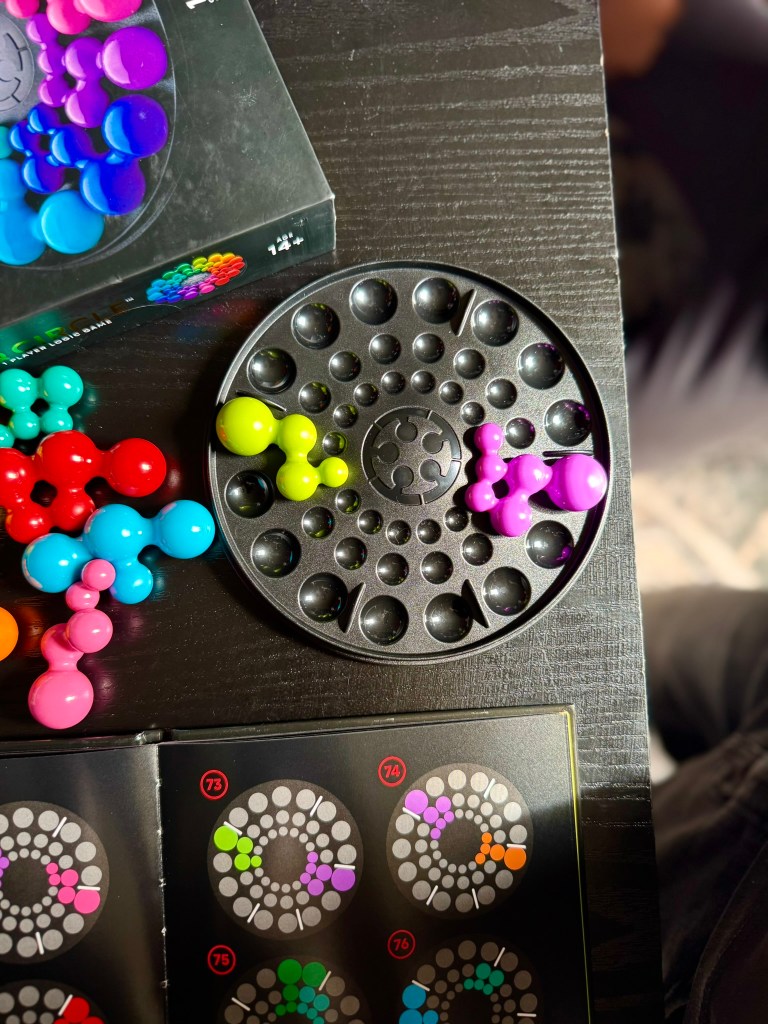
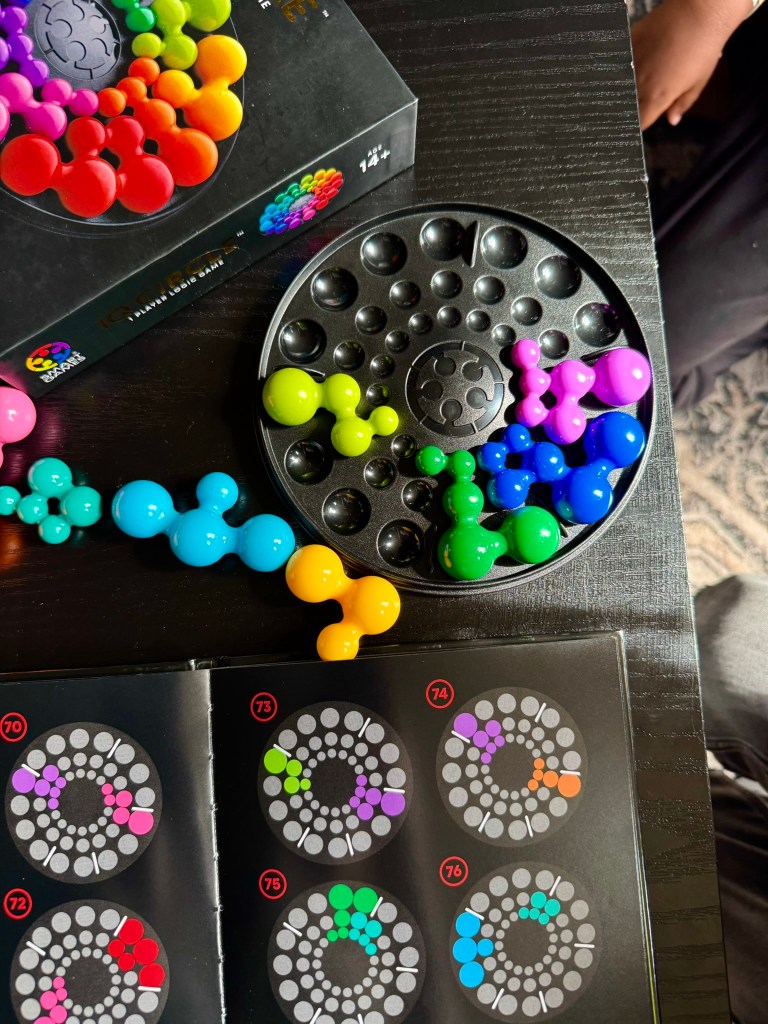
The early challenges help you understand how the pieces interact with the board, but the difficulty steadily increases.
That gives the game a lot more longevity than an activity your child figures out once and never touches again.
And because there are 120 challenges, there’s plenty to work through.
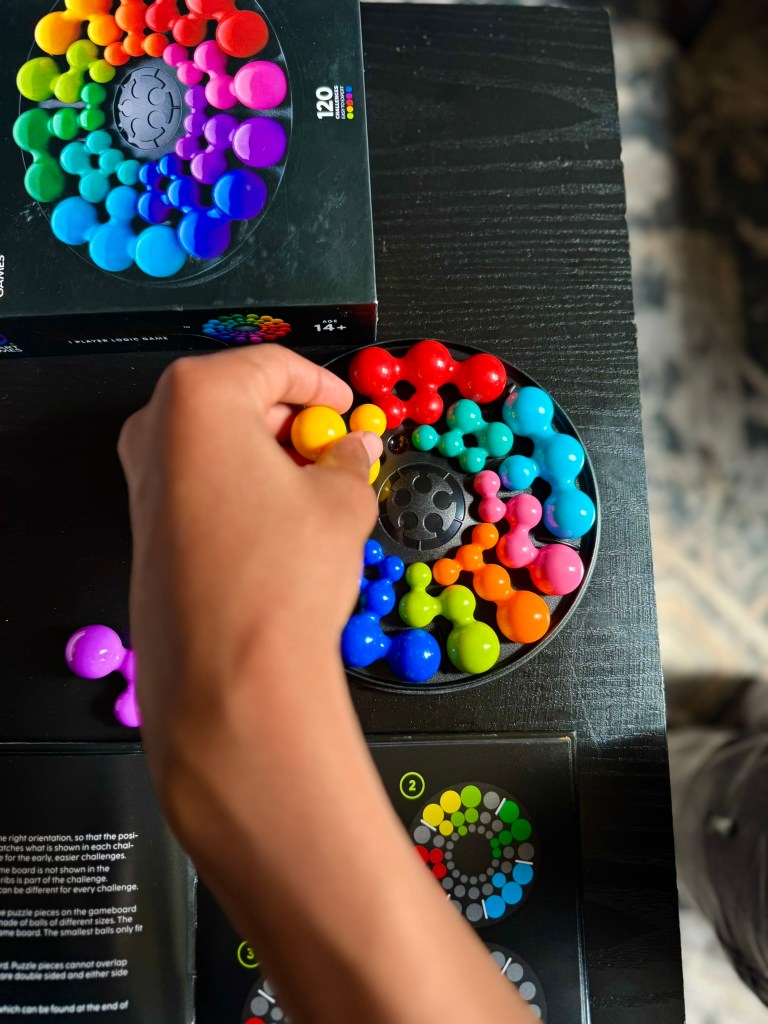
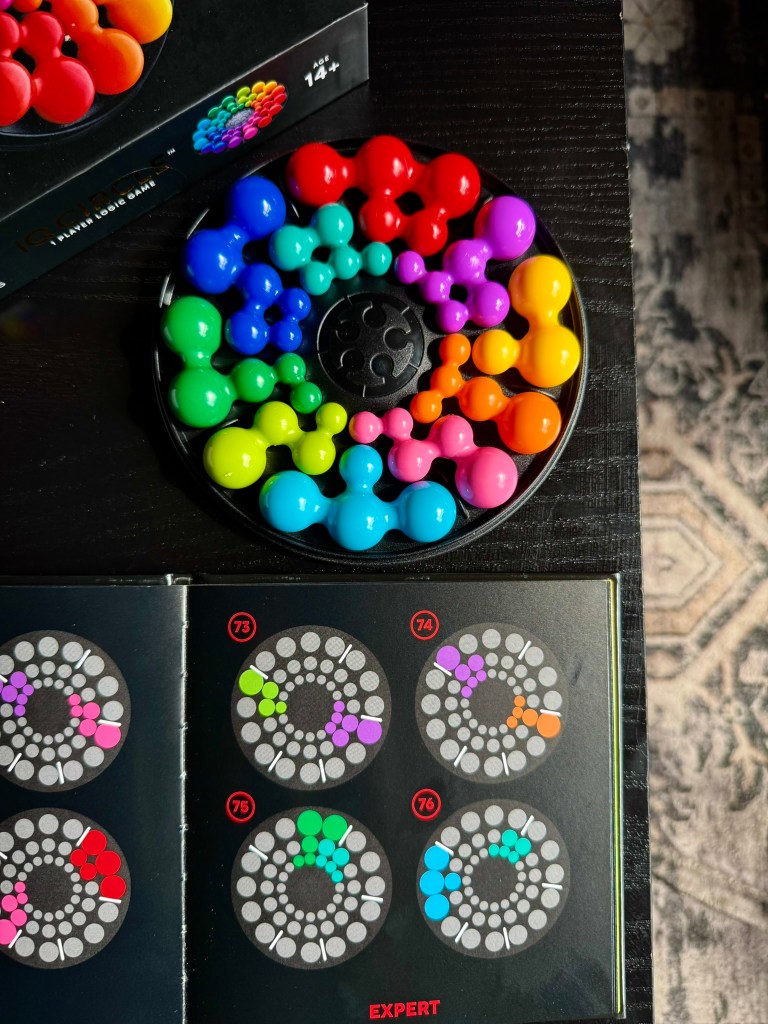
It’s Not Just for Kids
This might actually be one of my favorite parts.
IQ Circle is the kind of homeschool game I’ll leave sitting out because an adult will walk past it, look at the board and suddenly decide they need to solve one.
It feels more like a brain teaser than a children’s educational game.
That makes it great for teens, parents, older siblings, or really anyone who enjoys puzzles and logic games.
The packaging lists it for ages 14+, which also makes it a nice option if you’re specifically looking for educational games for teenagers rather than younger elementary-age kids.
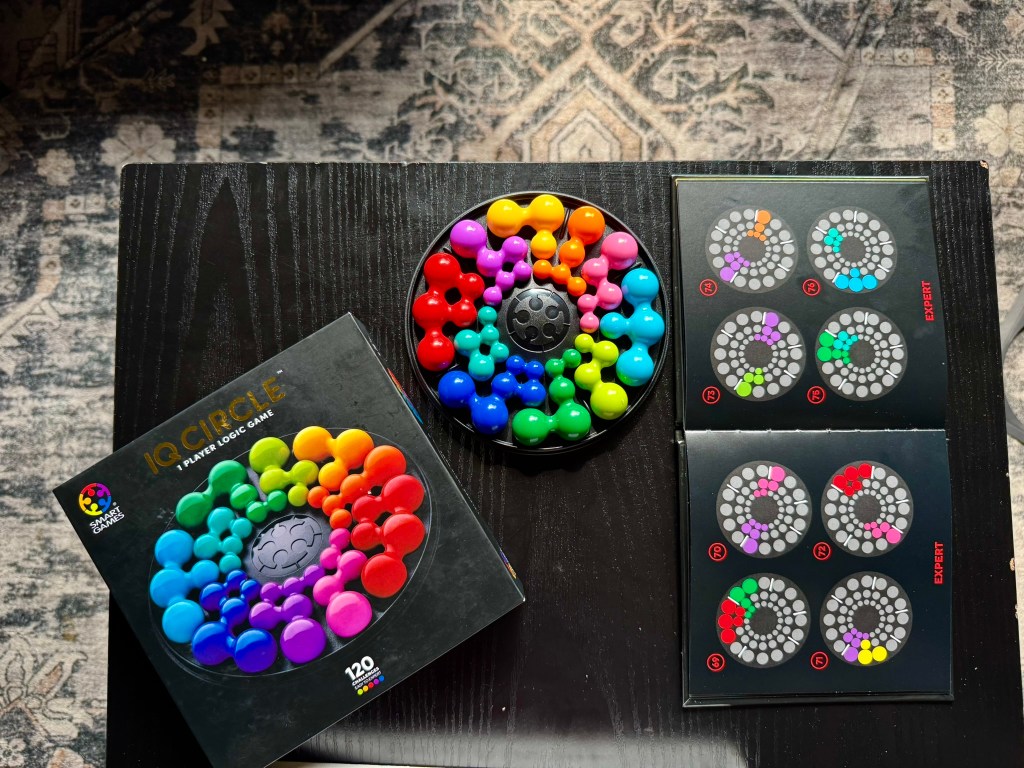
And Yes, It’s Pretty Enough to Leave Out
This has absolutely nothing to do with academics, but it matters to me.
The colorful pieces arranged around the black circular board are genuinely pretty.
We’ve been leaving ours on the coffee table, and it doesn’t look like random homeschool supplies took over the living room. It looks almost like a colorful little design piece—which also means someone is much more likely to actually pick it up and play with it.
That is a win in my book.
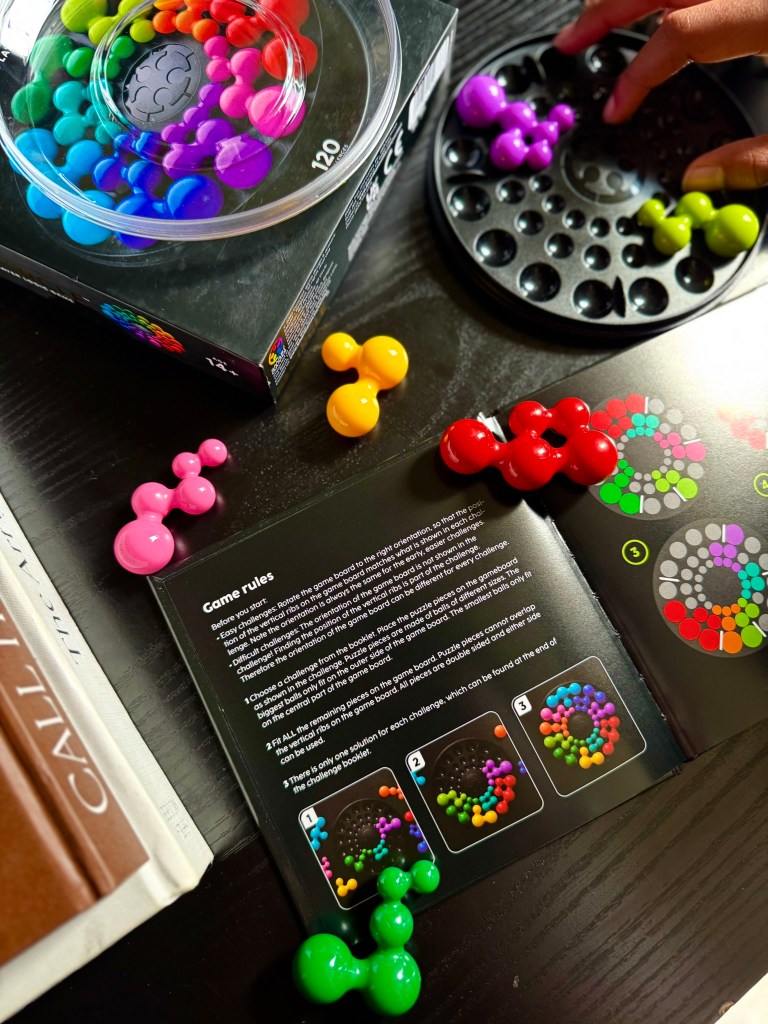
Is IQ Circle Worth It?
For our family, yes.
I especially recommend IQ Circle if you have a teen who enjoys puzzles, building, figuring out how things fit together, or hands-on activities.
It gives them something productive to do that requires real concentration without necessarily feeling educational.
And because the challenges progress in difficulty, this isn’t a game they’re likely to outgrow after one afternoon.
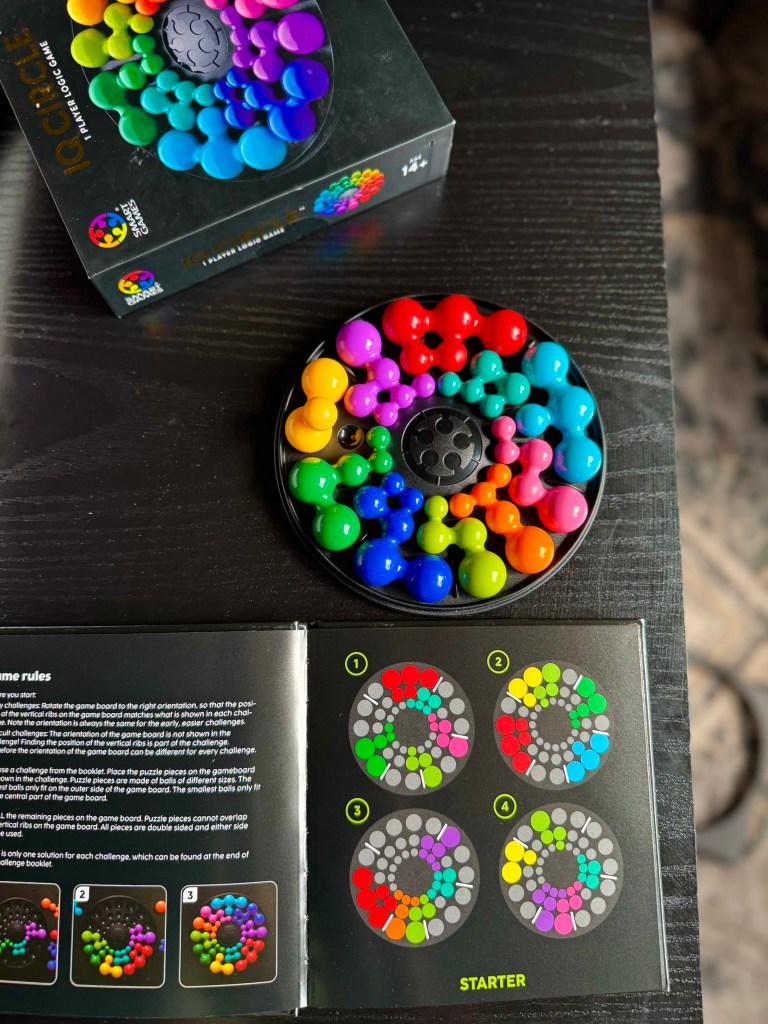
Where to Buy IQ Circle
We received SmartGames IQ Circle through Timberdoodle, and I think it makes an excellent addition to a homeschool curriculum, morning basket, game shelf, or collection of screen-free activities for teens.
If your child loves hands-on challenges—or you want a logic game the entire family will actually pick up and play—check out IQ Circle from Timberdoodle here.
-
iBrick Review: A Hands-On STEM Homeschool Curriculum Kids Actually Want to Do
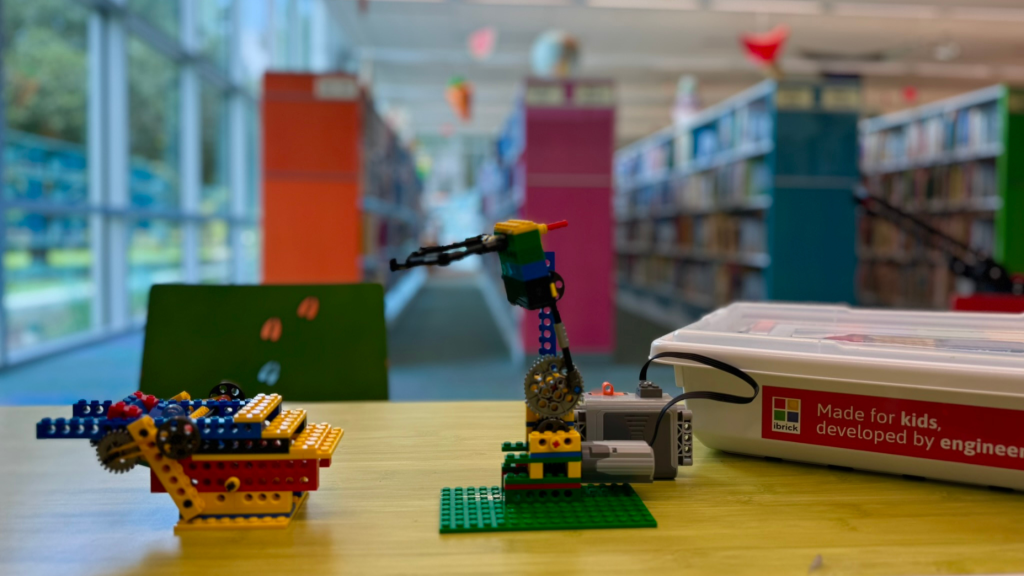
One thing I’ve learned from homeschooling is that sometimes the best curriculum doesn’t look like curriculum at all.
That’s exactly how I feel about iBrick.
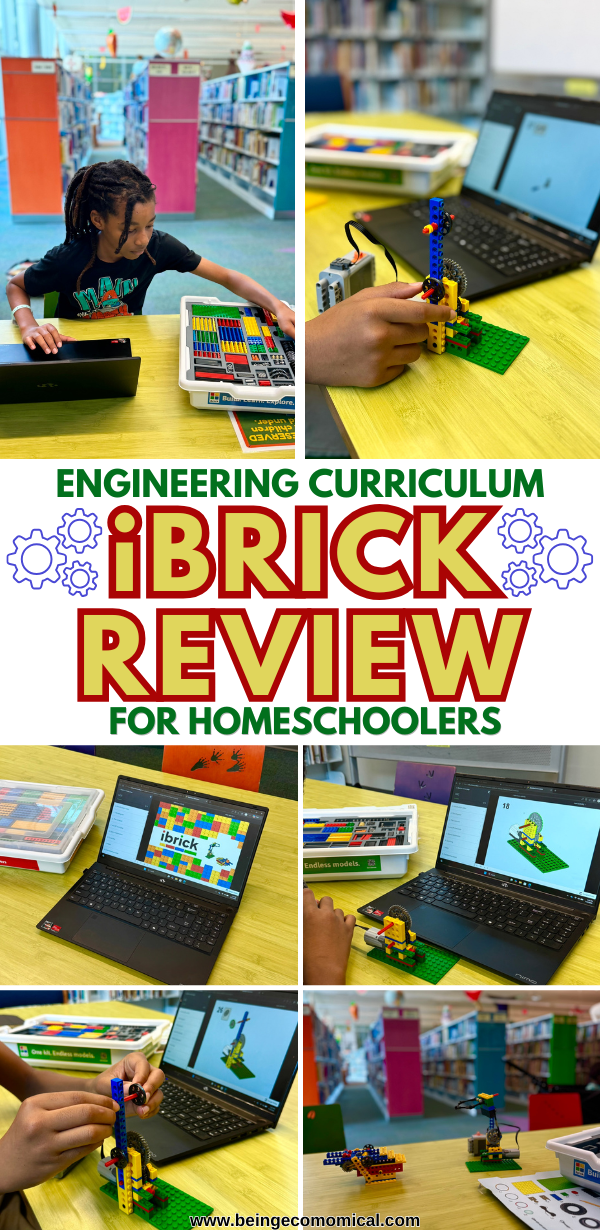
iBrick combines brick building with digital lessons, step-by-step instructions, engineering concepts, and challenges that encourage kids to actually use what they’ve learned.
And after watching my son sit down and work through the projects himself, I immediately understood why this was included in our Timberdoodle homeschool curriculum kit.
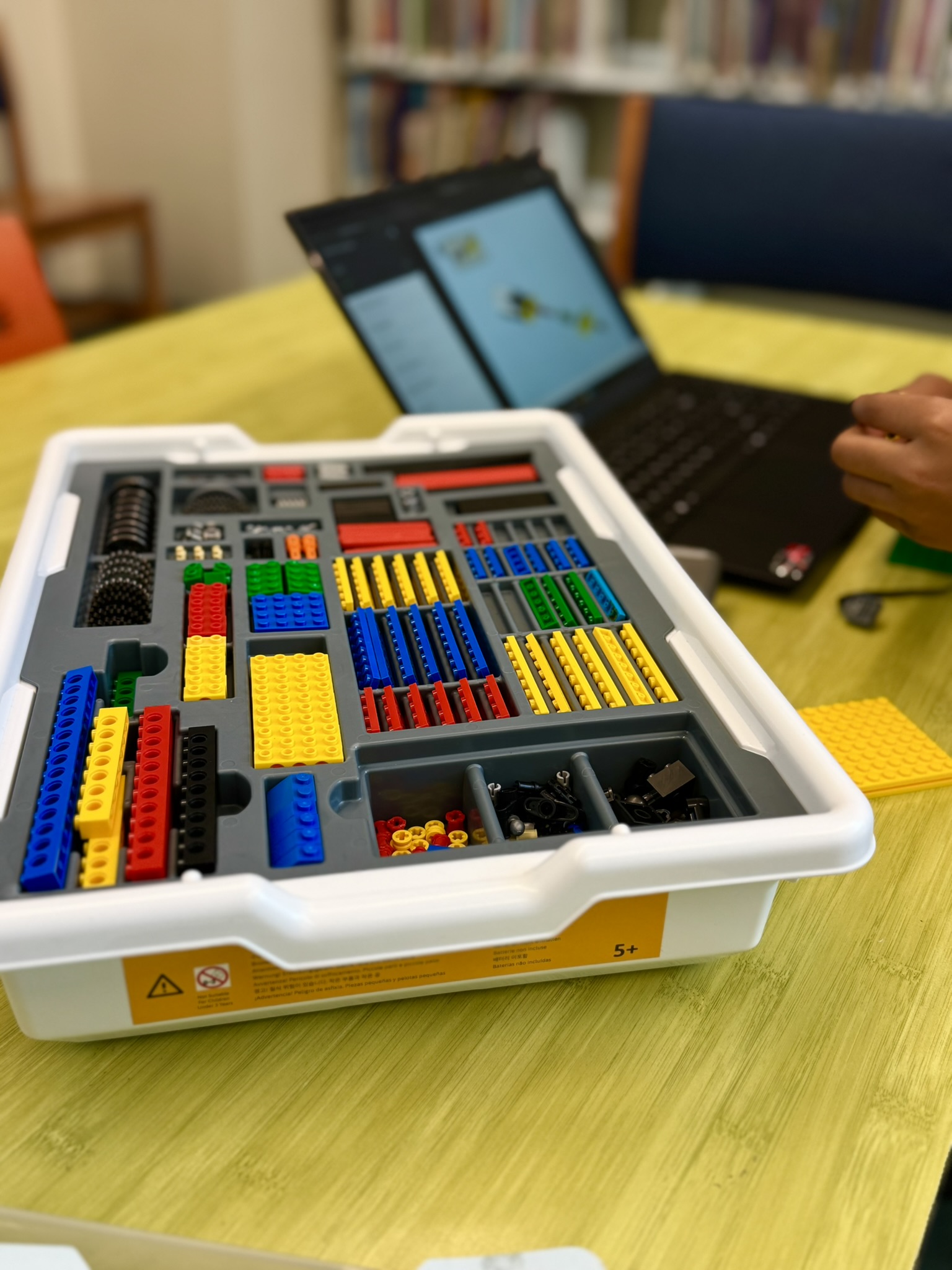
It’s hands-on. It’s engaging. And most importantly, it gives kids who love to build something productive to do with that interest.
What Is iBrick?
iBrick is a hands-on STEM program that uses LEGO-compatible bricks and an online learning platform to teach kids through building.
Students follow digital instructions to create working models using components like gears, axles, motors, beams, and bricks.
The projects are paired with STEM lessons and challenges designed to move kids beyond simply copying a model and into understanding how and why it works.
iBrick describes its approach as “one kit, endless models,” and that really is one of the biggest benefits. The same reusable set of pieces can be used to complete many different projects rather than building something once and being finished with the kit.
For this review, we focused on the iBrick basketball goal, and it was such a good example of what that looks like in practice.
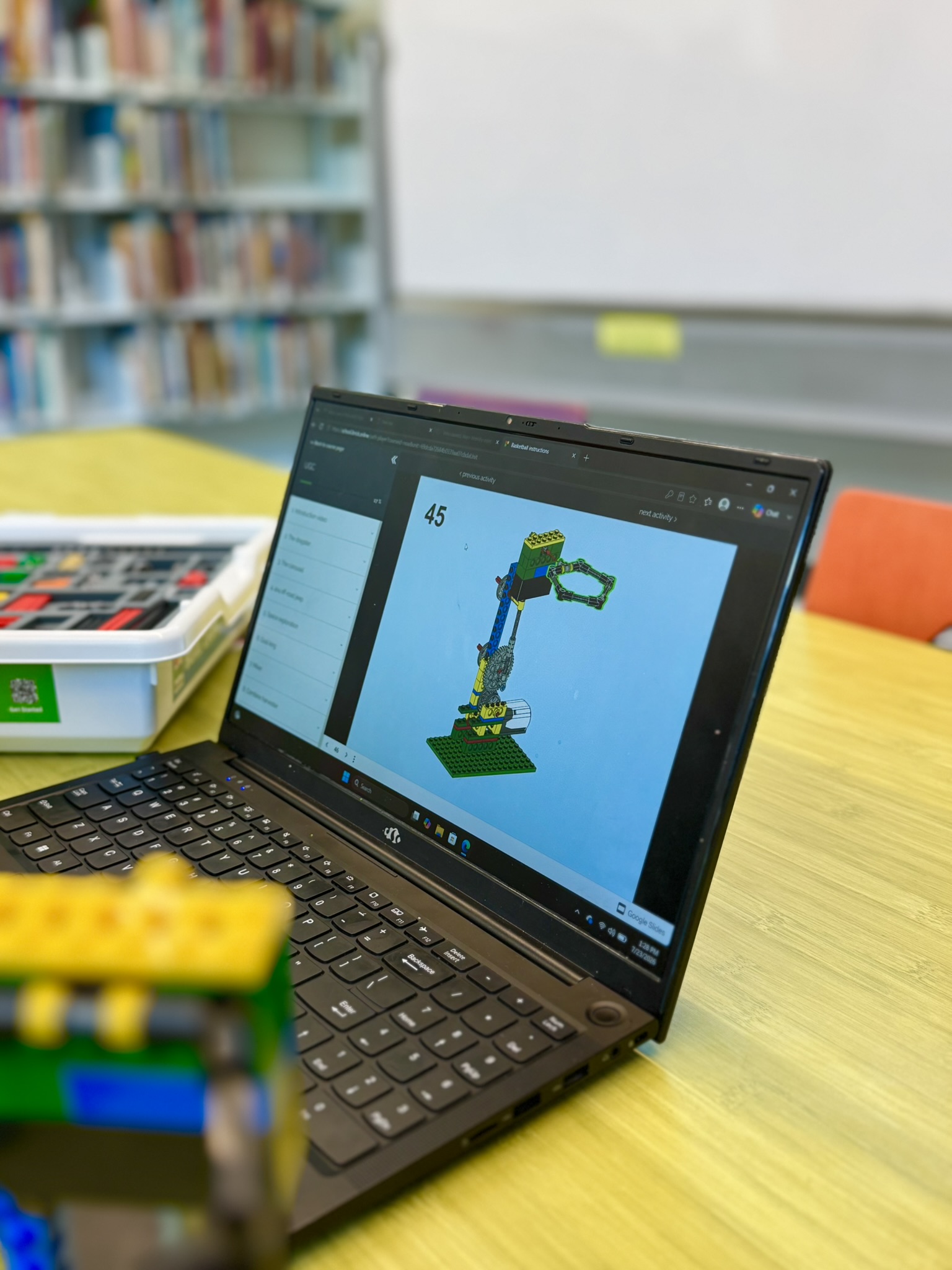
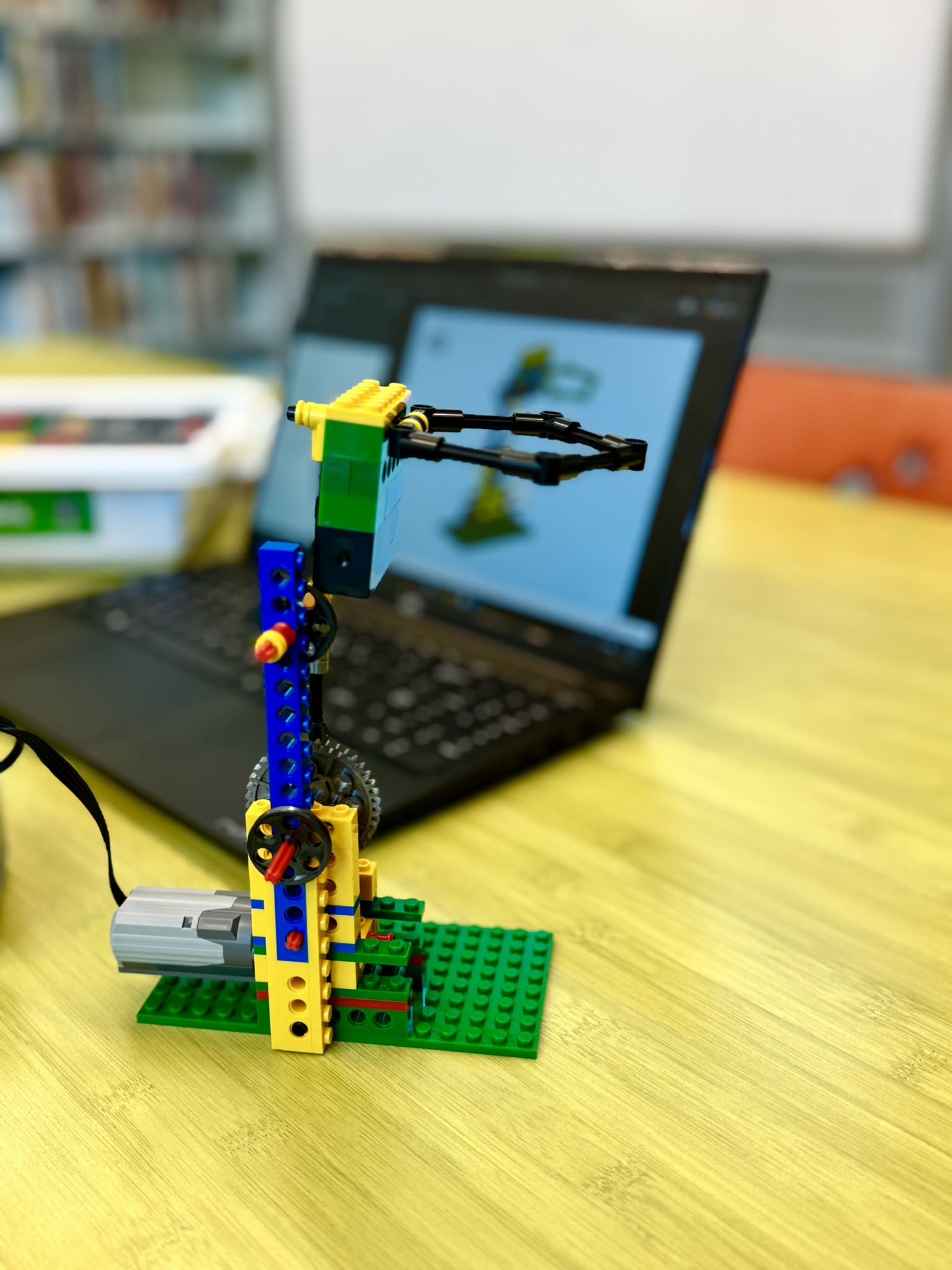
What started as a collection of bricks, gears, axles, and a motor slowly became a working basketball setup as my son followed the digital instructions step by step.
And because the build uses moving mechanical parts, he wasn’t simply stacking bricks to recreate something that looked like a basketball goal — he was building the mechanism that makes it work.
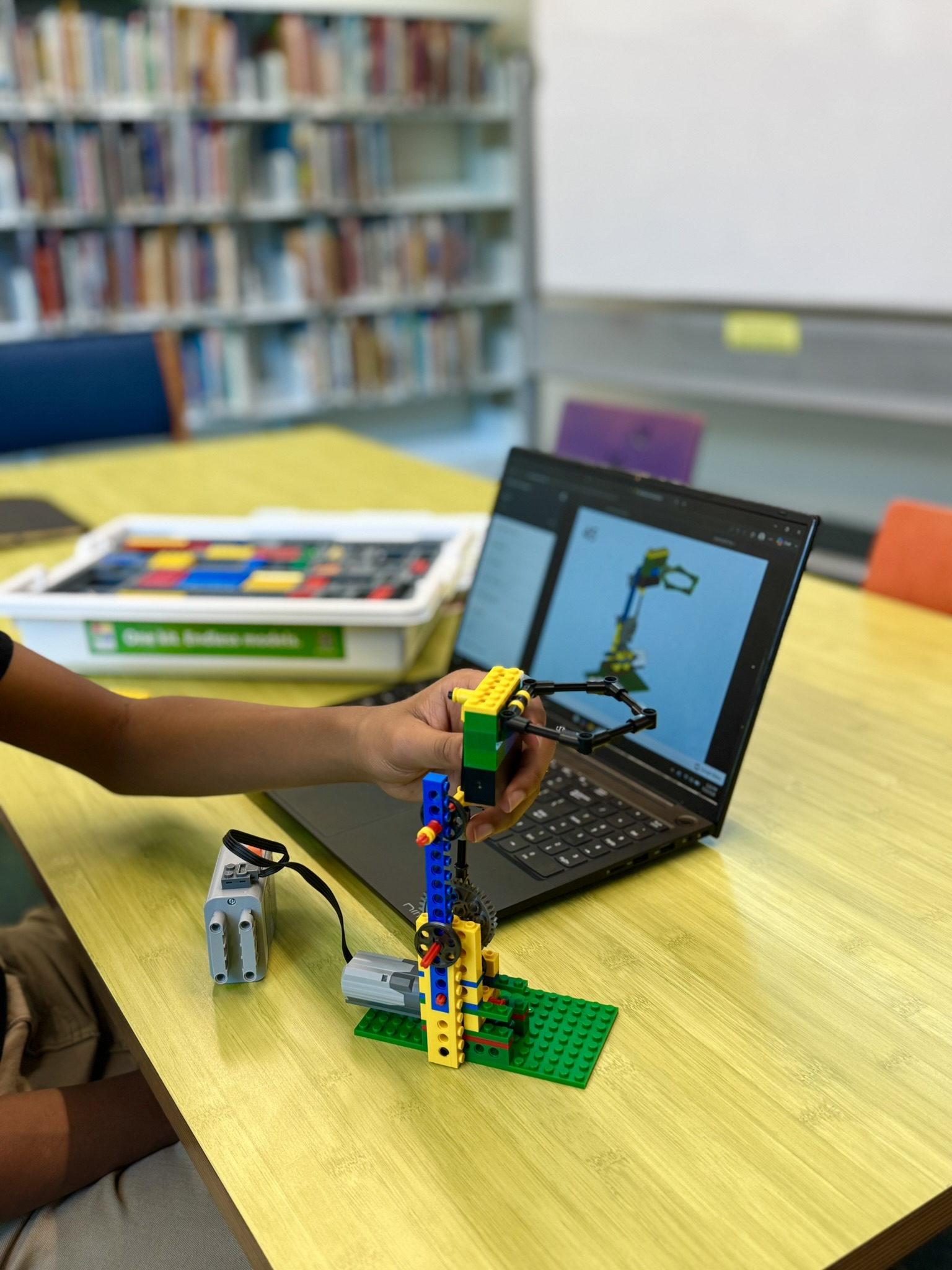
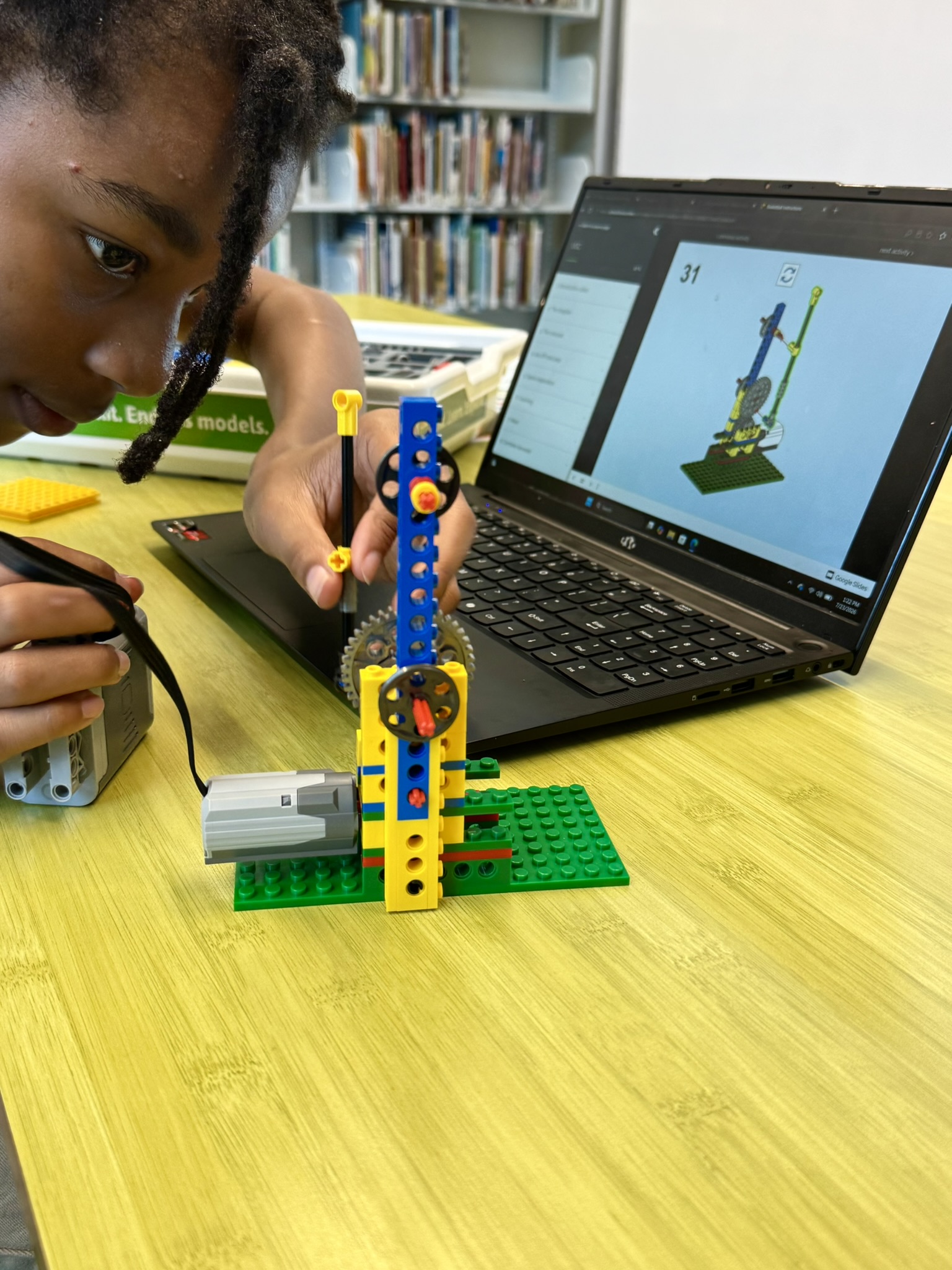
What Comes With iBrick?
The first thing I noticed was how organized everything is.
The kit contains the building pieces students need for the projects, including traditional brick-style pieces alongside mechanical components such as gears and axles. Everything fits into an organized storage tray, which I appreciate because STEM kits with hundreds of loose parts can become chaos quickly.
The physical kit works alongside iBrick’s digital platform, where students access their projects and instructions.
And this isn’t simply a box of bricks with a PDF telling kids what to make.
Each iBrick project follows a learning sequence that includes a hands-on build, STEM instruction, and a challenge that lets kids apply the concept they just explored.
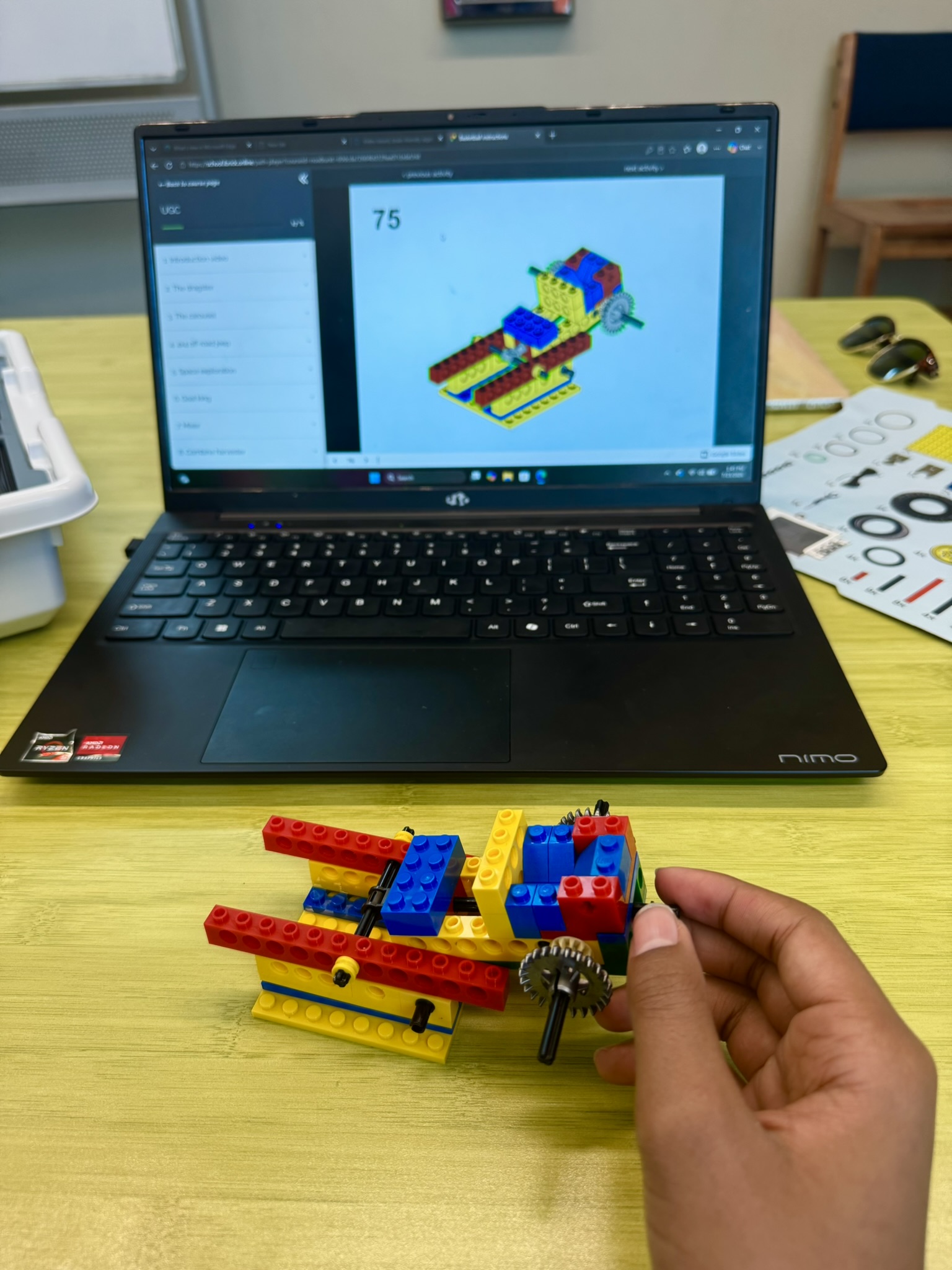
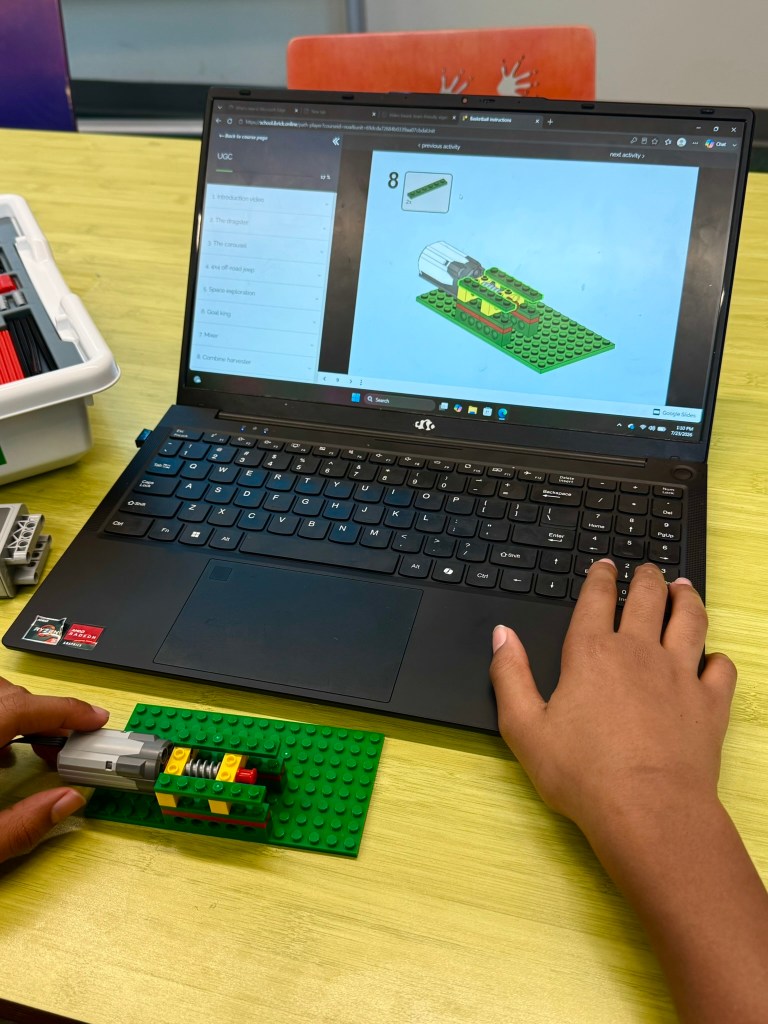
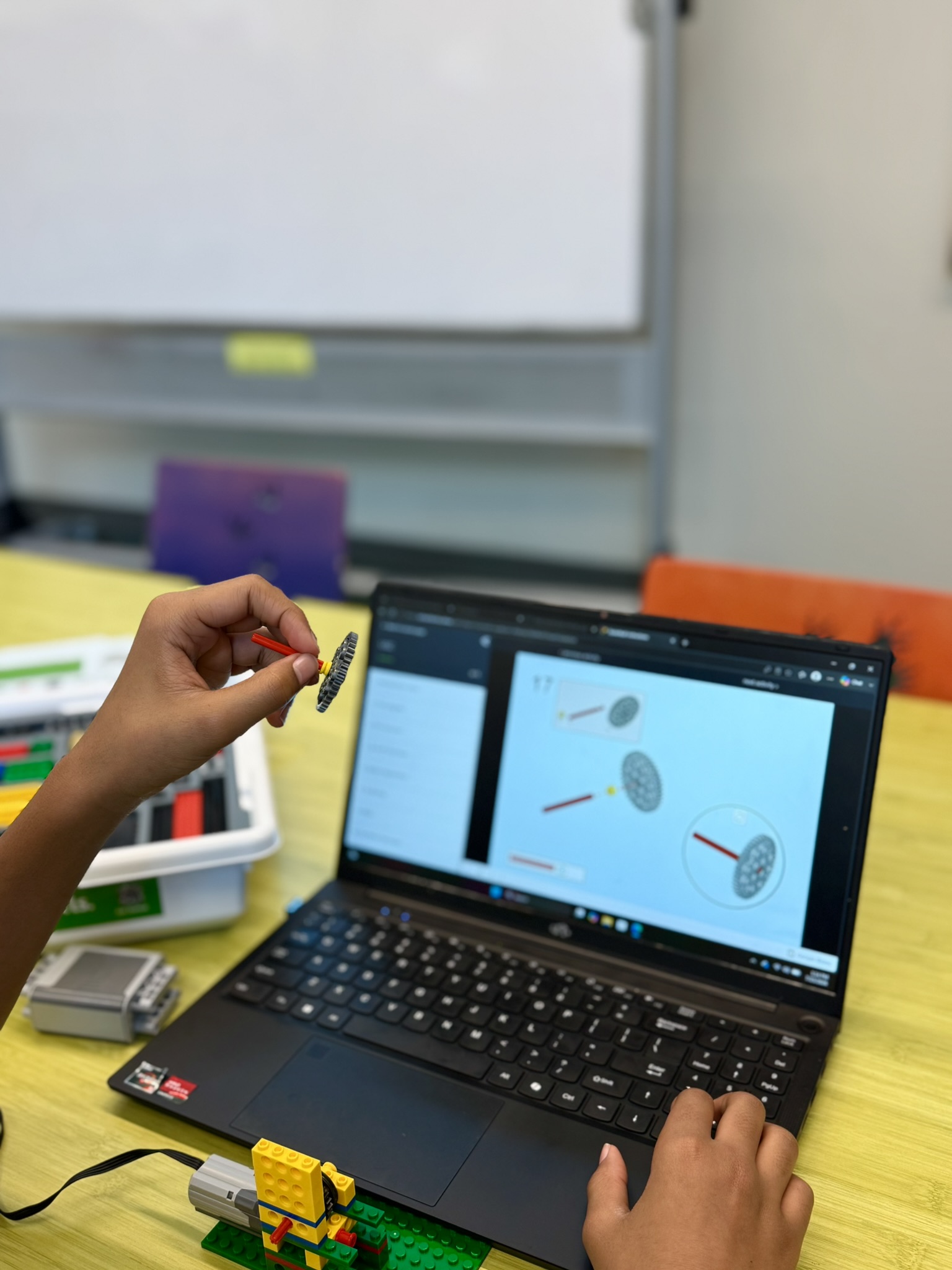
Our Experience Using iBrick
This is where iBrick won me over.
My son loves building. Give him something he can construct, take apart, figure out, modify, or make move, and he’s interested.
So when he opened iBrick, I didn’t have to convince him that this counted as school.
He logged into the digital curriculum, chose a project, pulled out the kit, and started building.
We worked through the basketball project, which turned out to be a pretty substantial build. The digital instructions walked him through it piece by piece, from the base and structural components to the gears and moving mechanism.
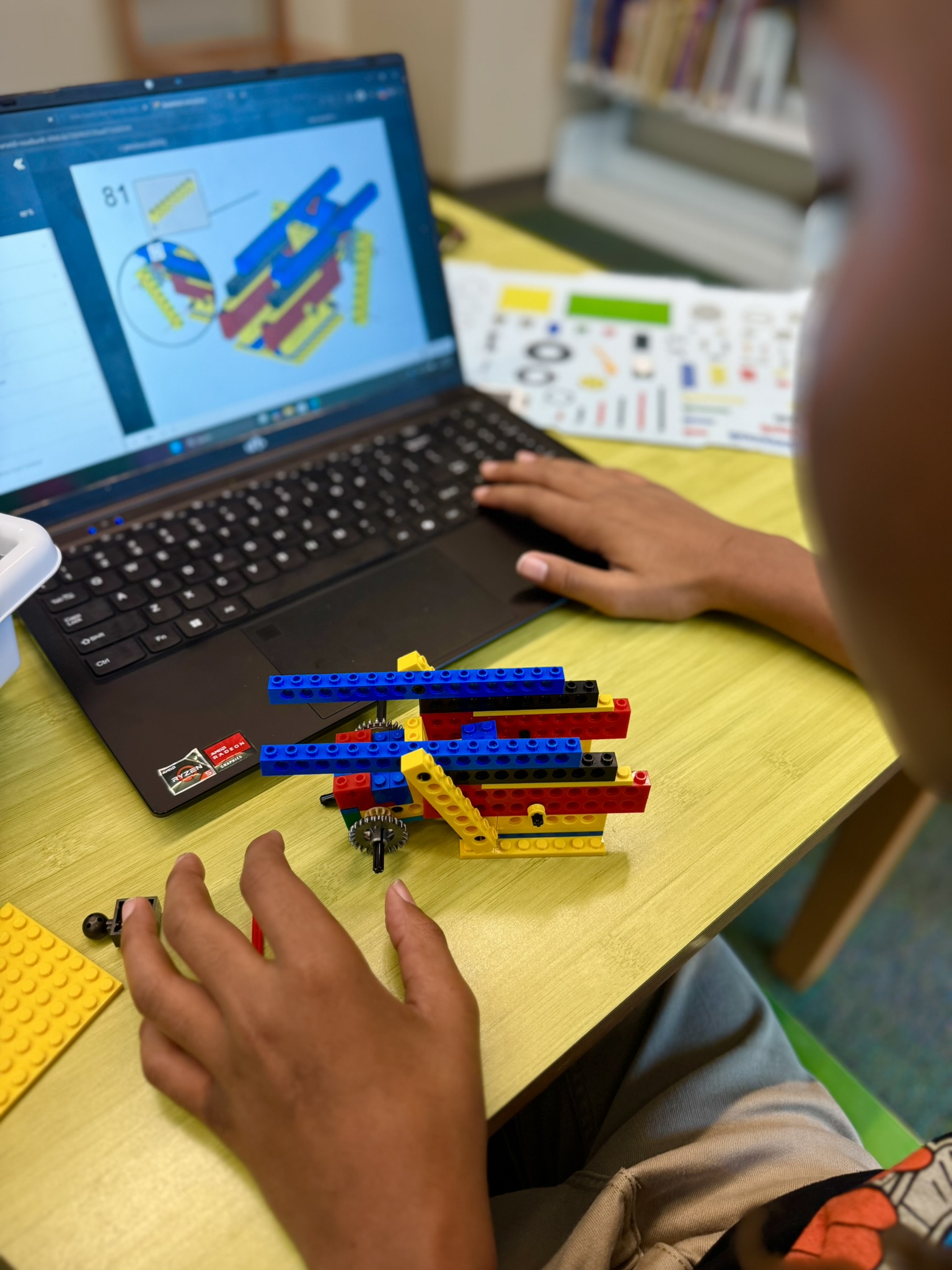
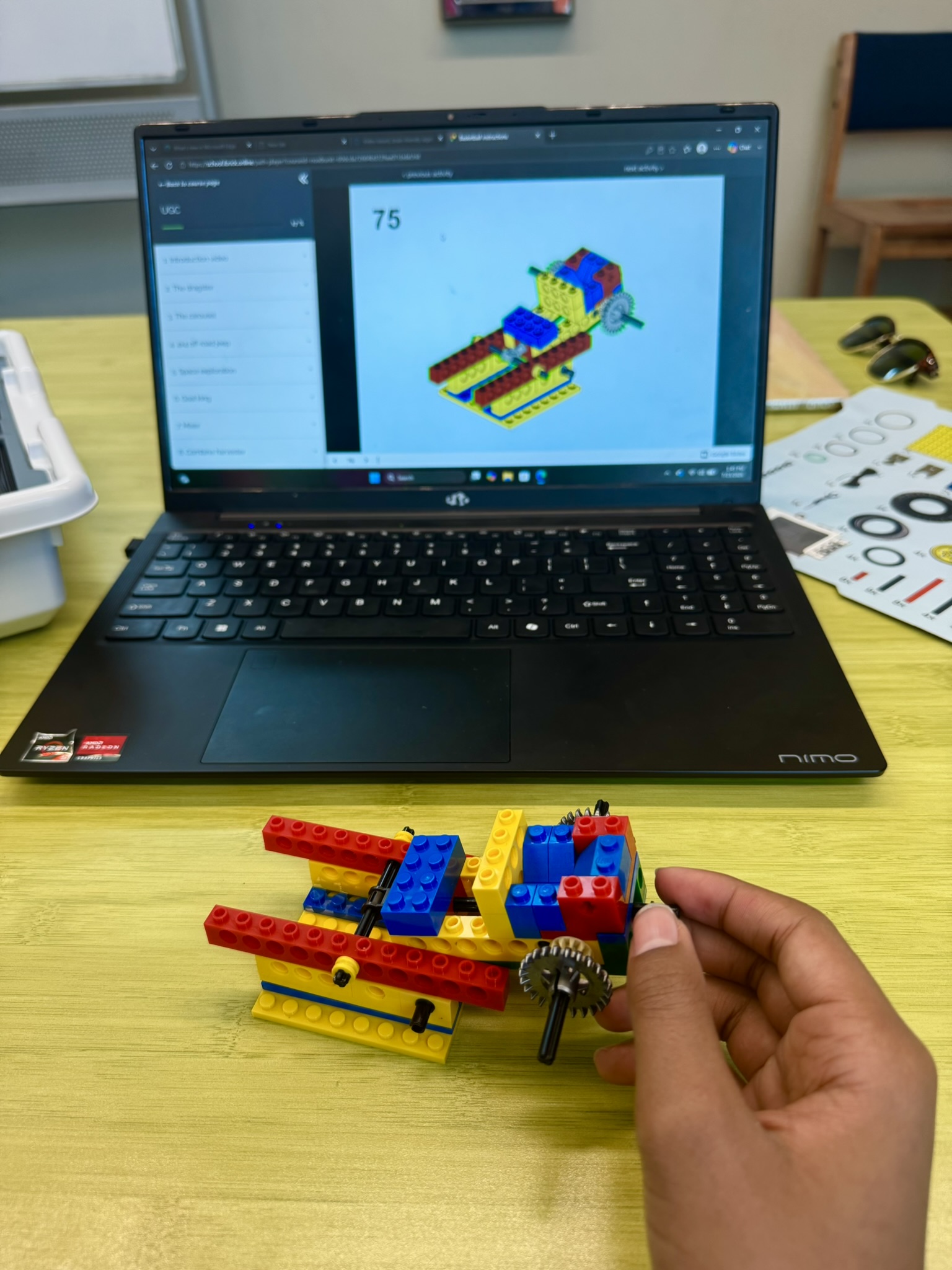
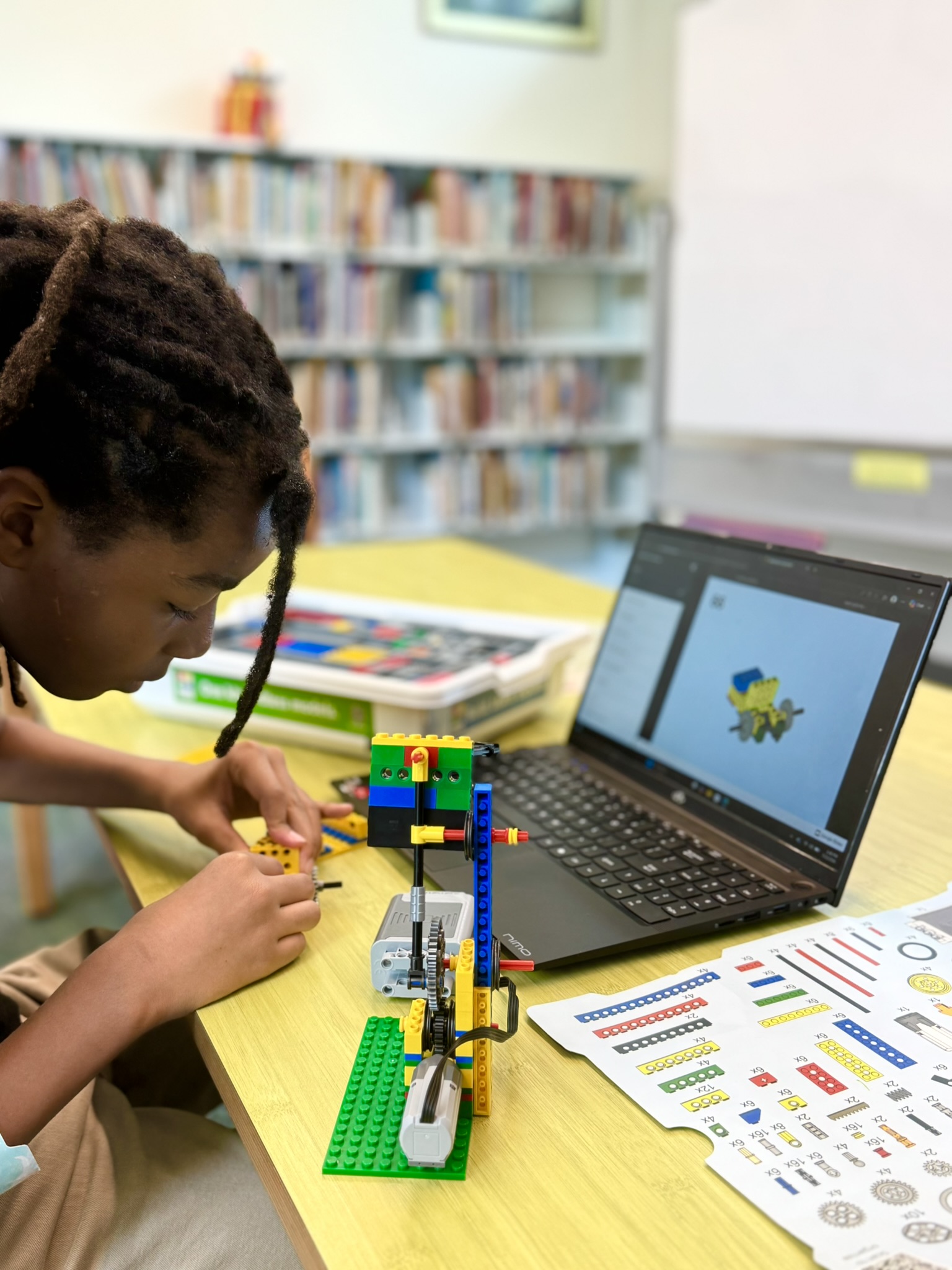
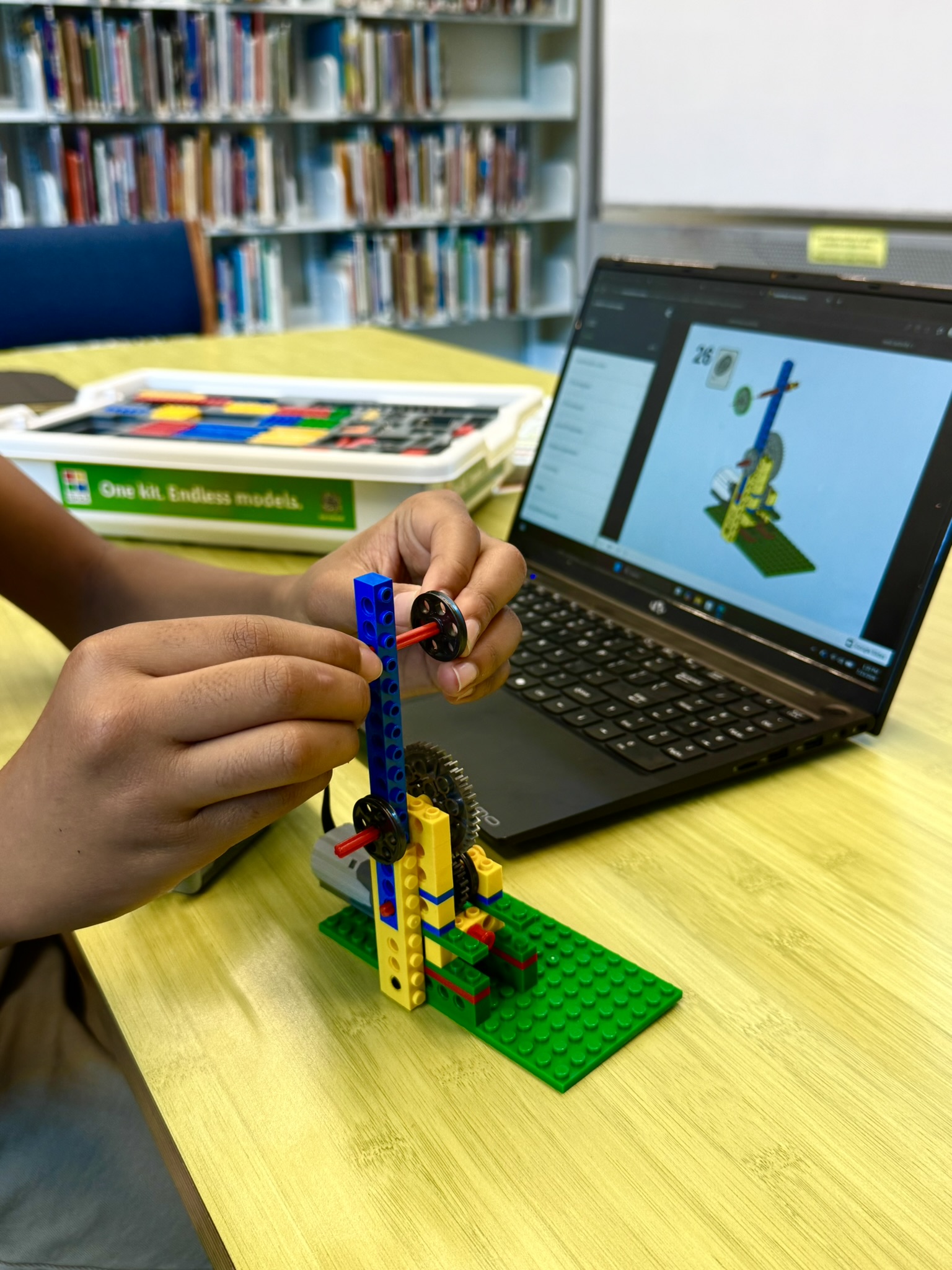
I loved watching the project change as he progressed because there was a point where it was just a handful of connected pieces on the table — and then suddenly you could see the basketball goal taking shape.
The instructions are visual and broken into individual steps, so he could look at the model on the screen, identify the pieces he needed, build that section, and continue.
And I got to sit there and watch him work.
Not listen to a lecture about engineering.
Not complete a worksheet about gears.
Actually use gears.
That distinction matters to me.
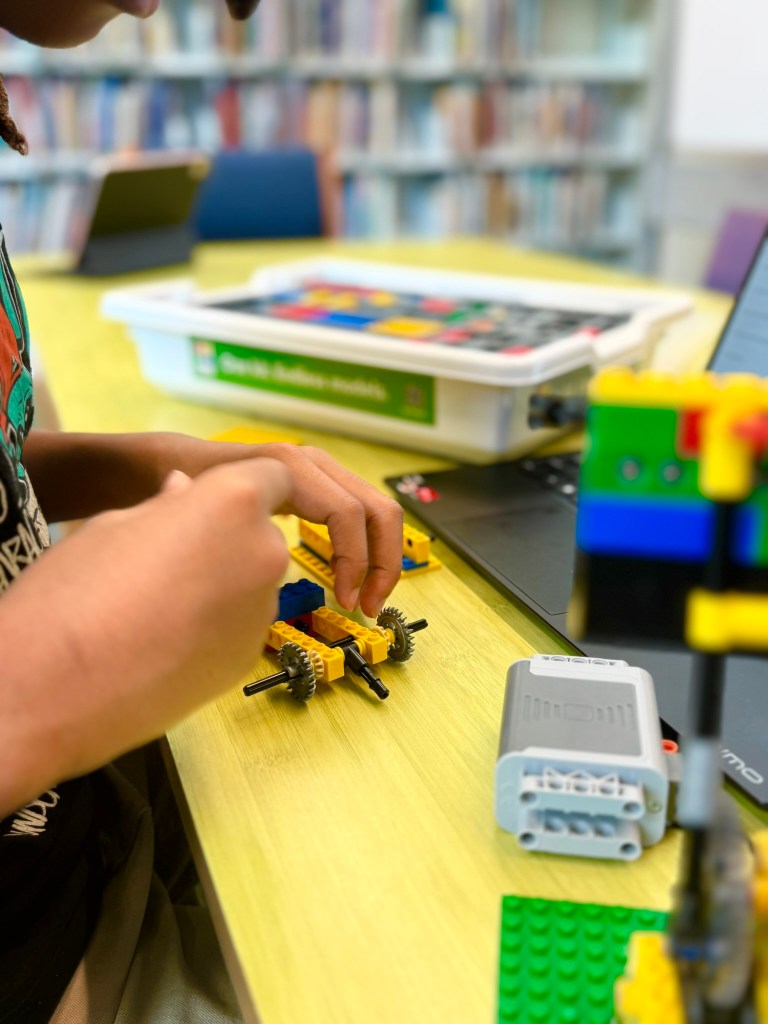
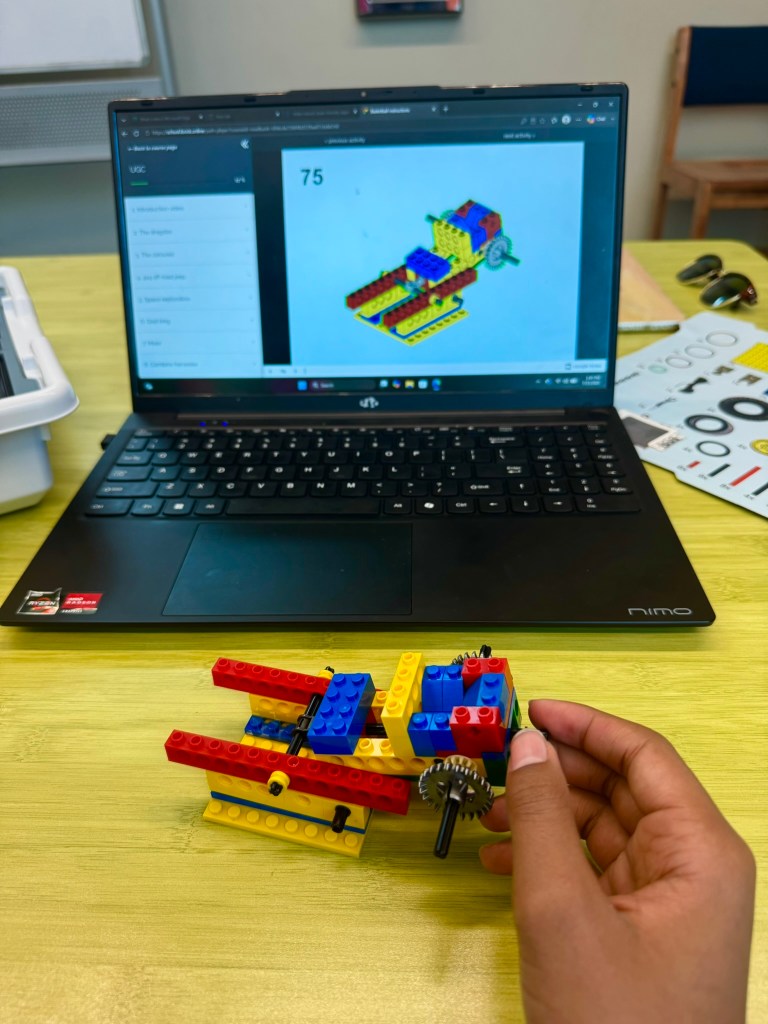
It Teaches Engineering Through Doing
My favorite part of iBrick is that the engineering isn’t theoretical.
As my son built, he was physically working with gears, axles, motors, structural pieces, connections, and moving parts.
He had to look closely.
He had to determine which piece matched the diagram.
He had to notice when something wasn’t lining up correctly.
And when a section didn’t work the way it was supposed to, he had to go back and figure out where the build went wrong.
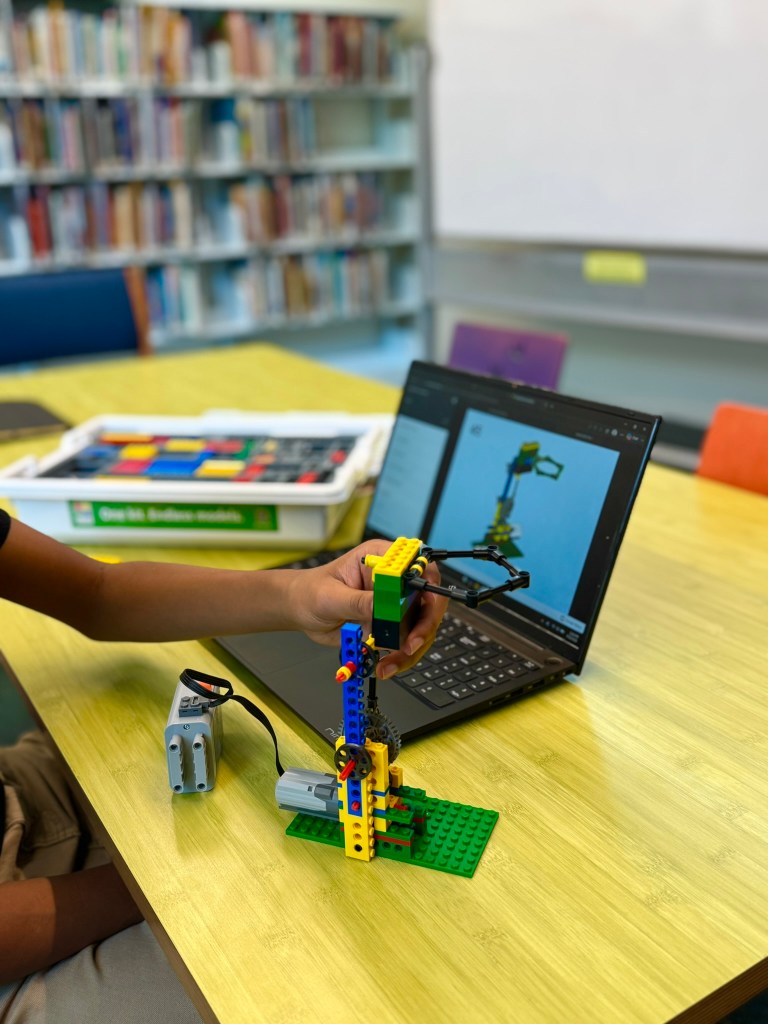
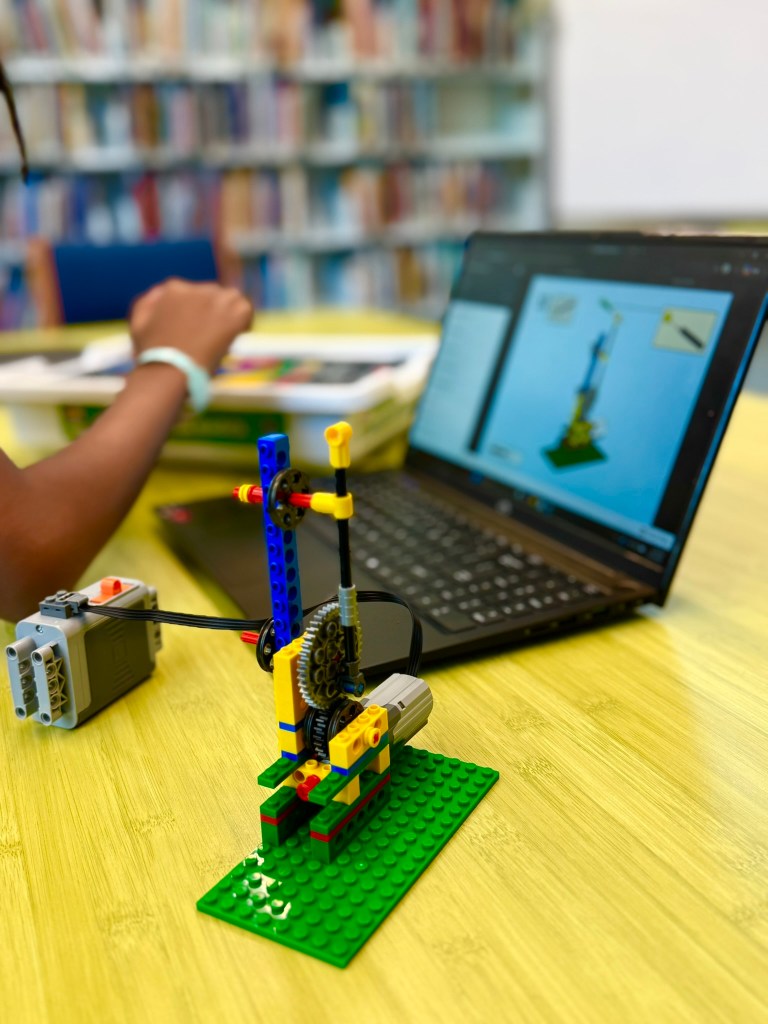
That’s problem-solving happening naturally.
According to iBrick, its projects are designed to introduce STEM and engineering concepts while developing skills such as problem-solving, creativity, and critical thinking. The curriculum was developed with engineers and education/child-development professionals.
But honestly, I didn’t need the website to tell me that part.
I could see it happening at the table.
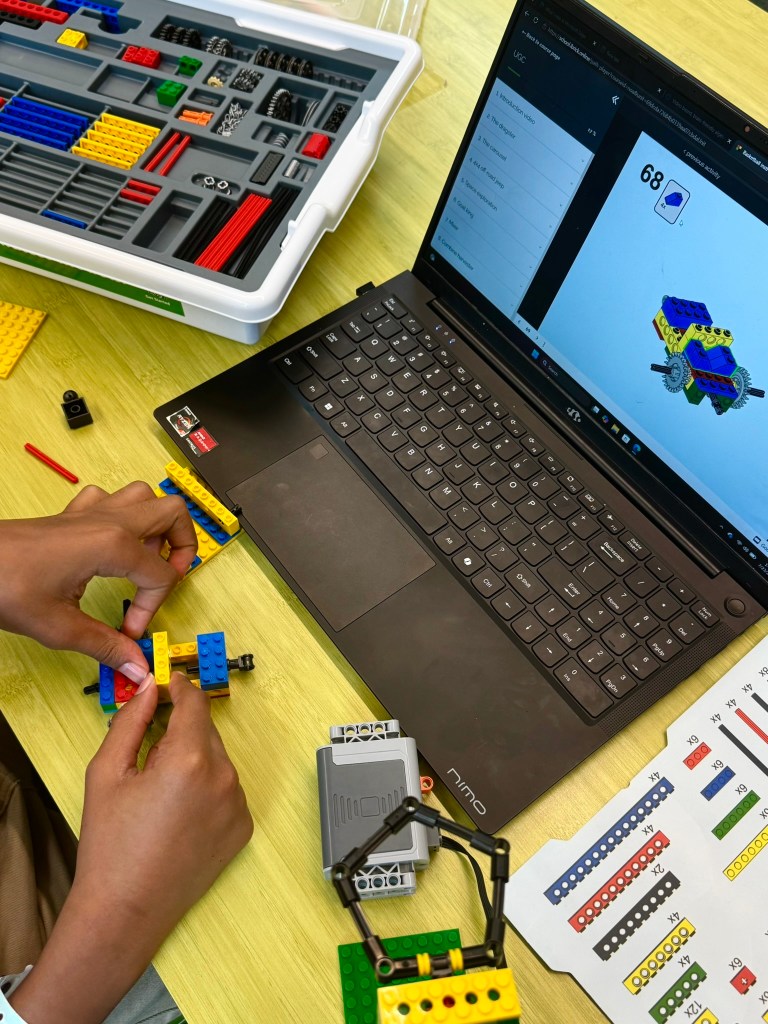
iBrick Is More Than Building Instructions
This was something I didn’t fully understand until we actually used it.
The building is only one part of the program.
After the hands-on portion, iBrick includes educational content explaining the STEM ideas behind the project, followed by challenges that encourage students to experiment and apply what they’ve learned.
That changes the experience from:
“Build this model.”
to:
“Build it. Understand it. Now see what you can do with it.”
And that is much closer to the type of STEM learning I want in our homeschool.
Once the basketball goal is built, the experience doesn’t simply end with, “Great, you made it!” The online curriculum continues into the basketball lesson and iBrick Challenges, giving students a reason to use and think about what they just created.
That was one of my favorite parts of the project because the finished model becomes part of the learning experience instead of just becoming something that sits on the table after the final instruction.
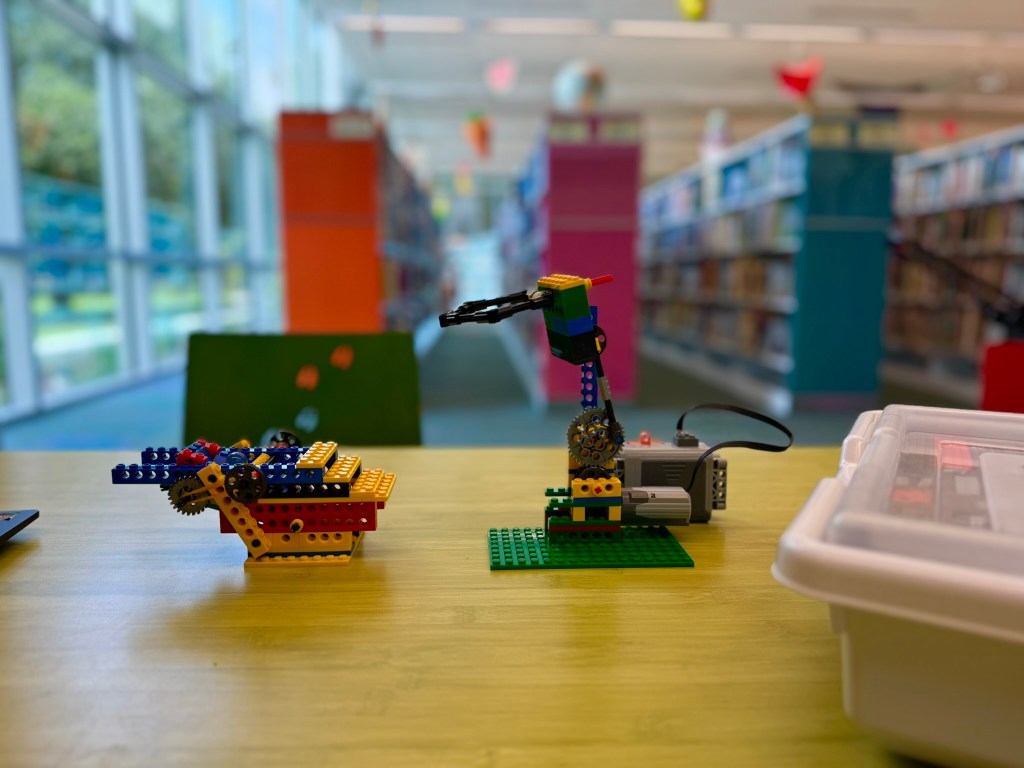
One Kit Can Be Used Again and Again
This may be my favorite feature as the person who has to store all of our homeschool materials.
You do not receive a completely new box of parts for every lesson.
The iBrick kit is reusable. Students take apart previous projects and use the pieces to create new models throughout the program. iBrick says its digital library supports hundreds of models using the same core kit.
That means the value isn’t in one impressive finished project.
The value is in everything they can build with the materials over time.
It also means we’re not collecting a shelf full of half-used STEM boxes with four specialty pieces in each one.
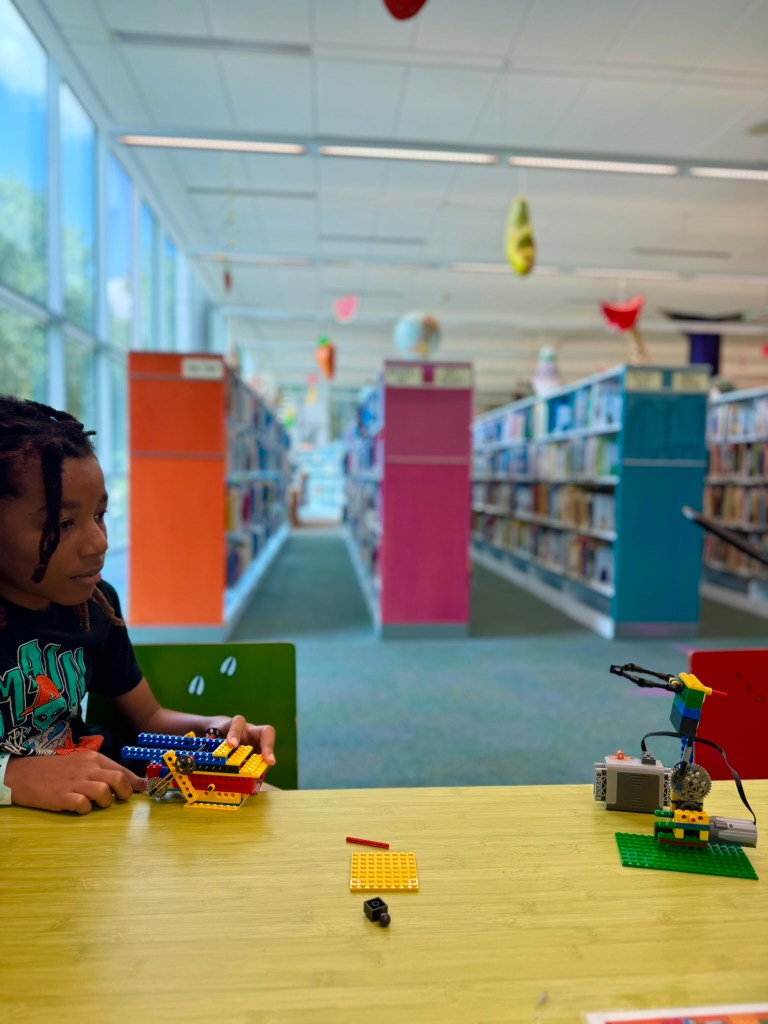
Can Kids Use iBrick Independently?
For us, this was one of its biggest strengths.
Once my son understood where everything was and how the platform worked, the format was straightforward enough for him to work through the building process largely on his own.
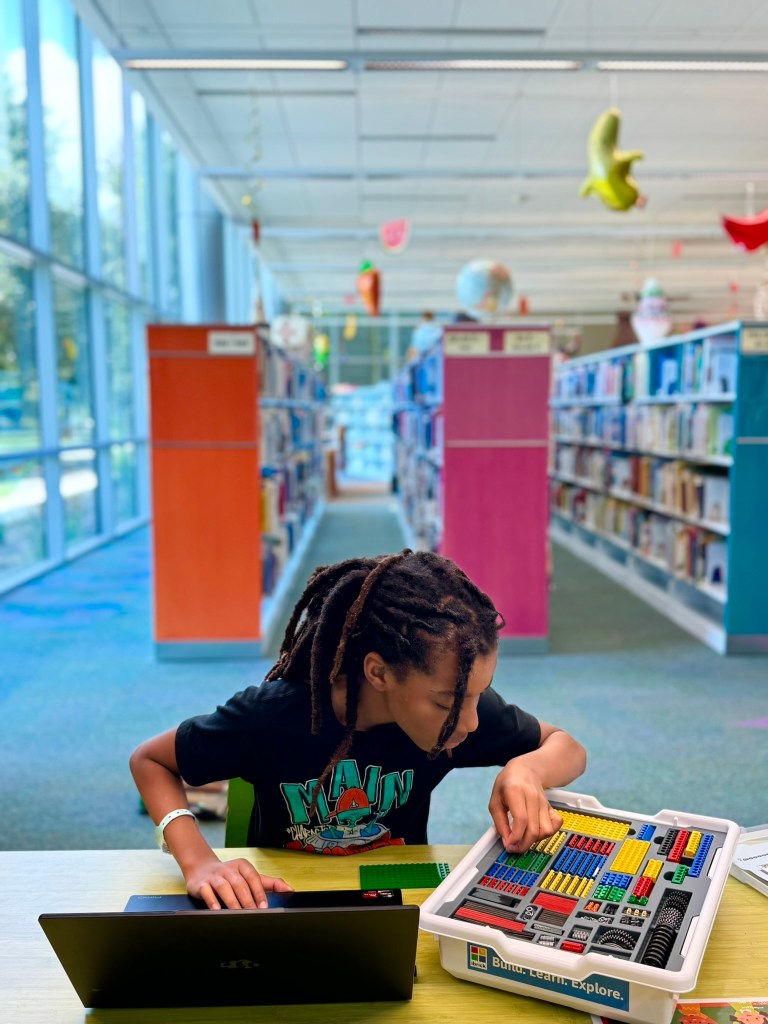
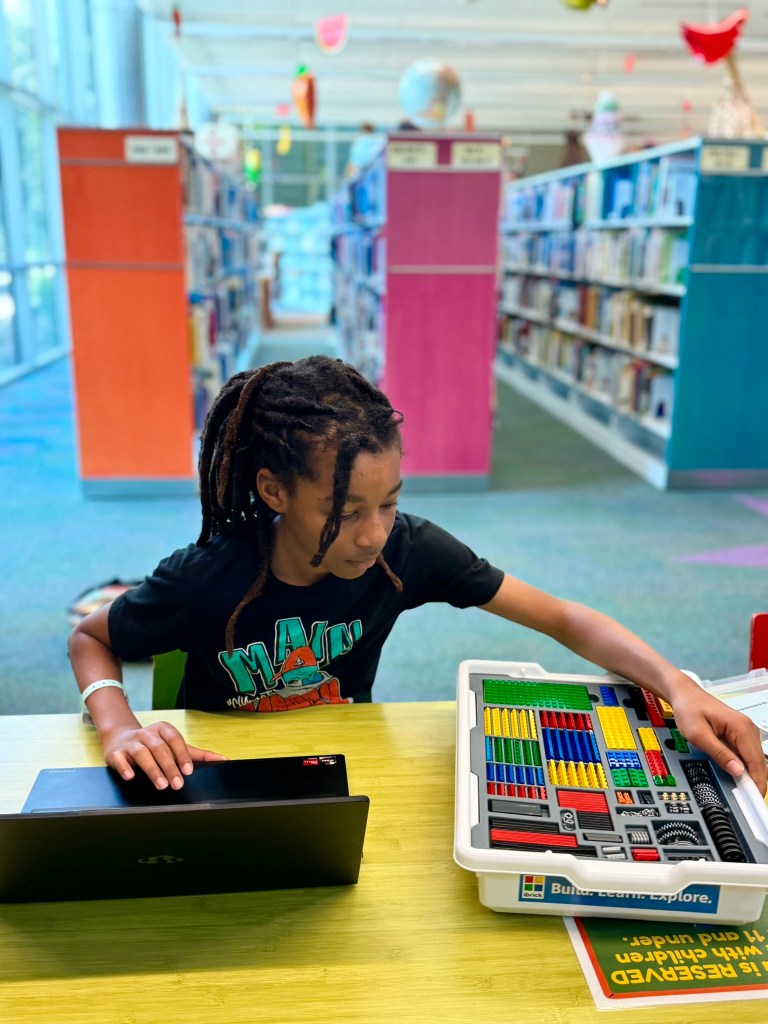
That doesn’t mean a child will never need help. Some projects are detailed, and occasionally figuring out what went wrong is part of the experience.
But I don’t have to teach an engineering lesson beforehand to make iBrick useful.
The curriculum provides the structure.
That makes it especially appealing for homeschool parents who want to incorporate more STEM but don’t necessarily feel confident teaching engineering themselves.
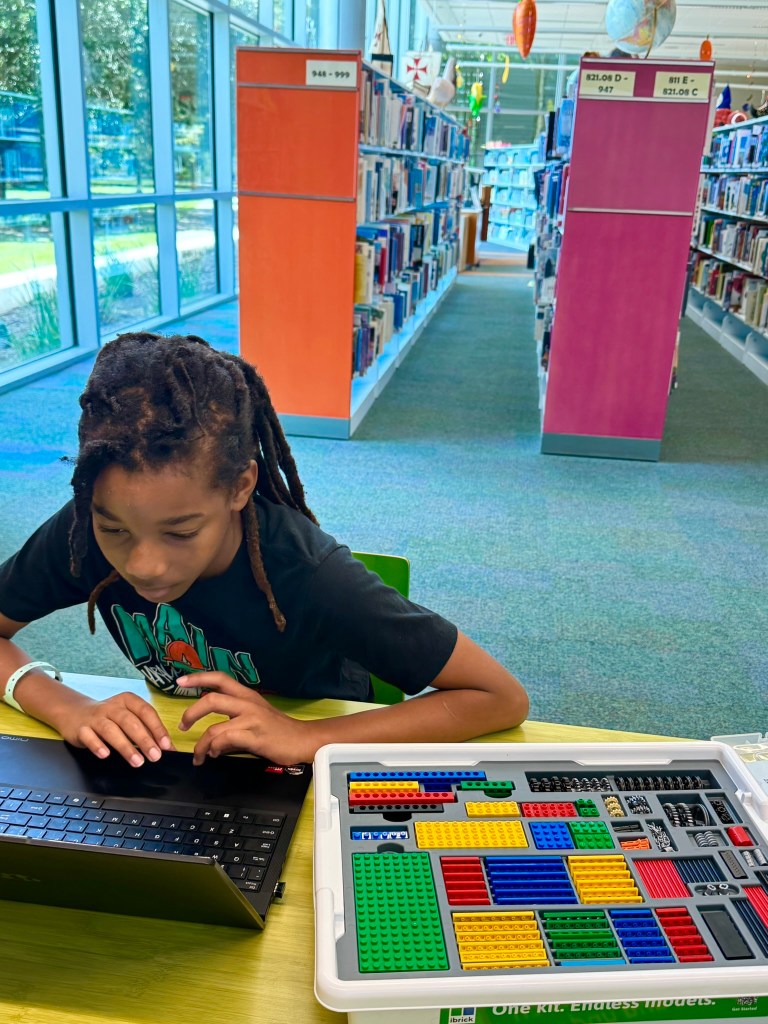
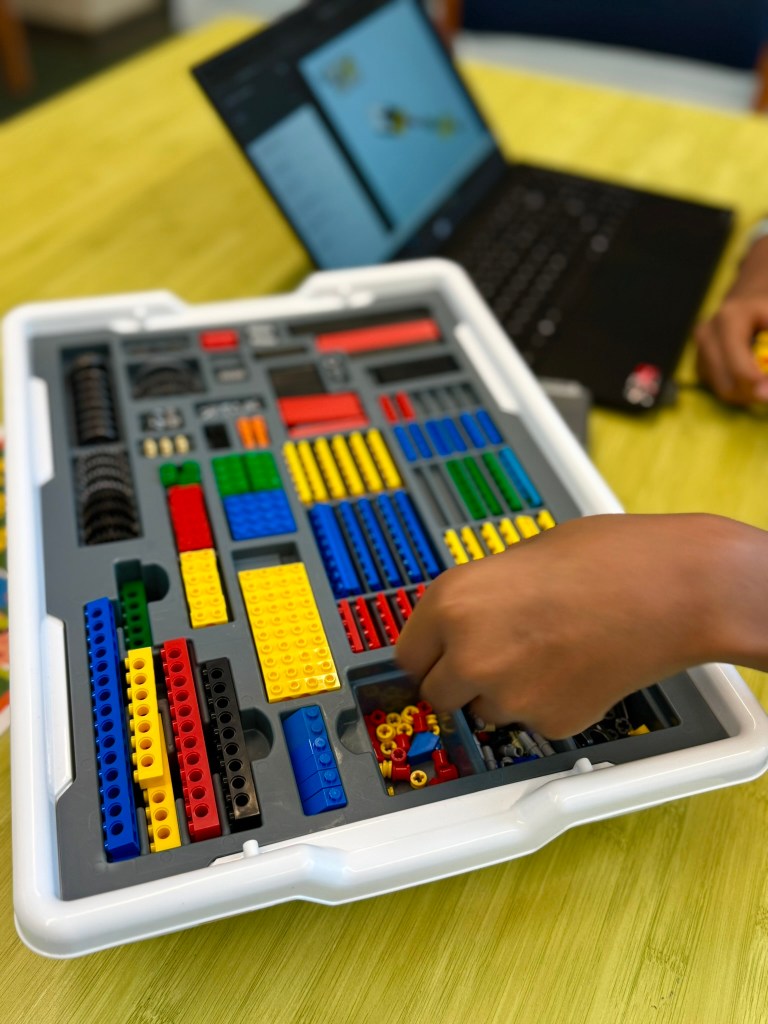
Who Would I Recommend iBrick For?
I would especially look at iBrick for a child who:
loves LEGO-style building, takes things apart to see how they work, enjoys machines or mechanical projects, learns better by doing, has an interest in engineering, or gets bored with traditional textbook-heavy lessons.
iBrick currently offers age-based programs and describes its broader educational program as serving children through the elementary and middle-school years.
But I think learning style is just as important as age here.
This is for the kid who needs to touch the lesson.
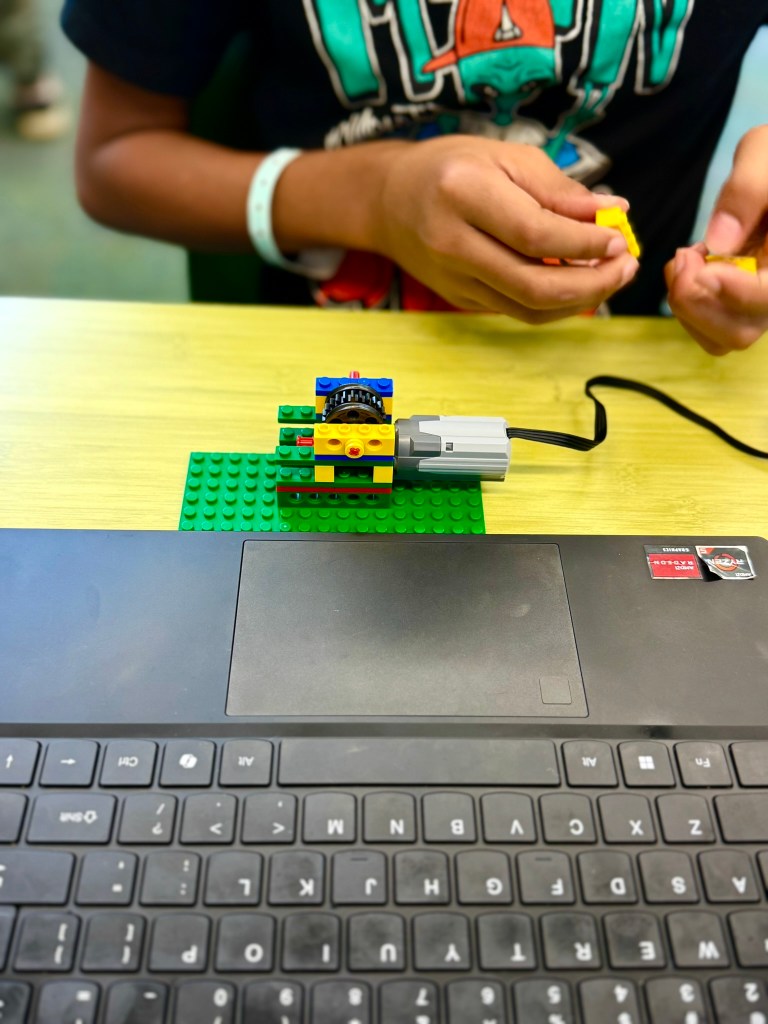
What I Like Most About iBrick
There are plenty of STEM products that are fun.
There are plenty of curricula that are educational.
Finding something that genuinely feels like both is harder.
iBrick gets pretty close.
My son wasn’t pretending to enjoy an educational activity because I told him it was fun. He was sitting at the table building something because building is already something he enjoys.
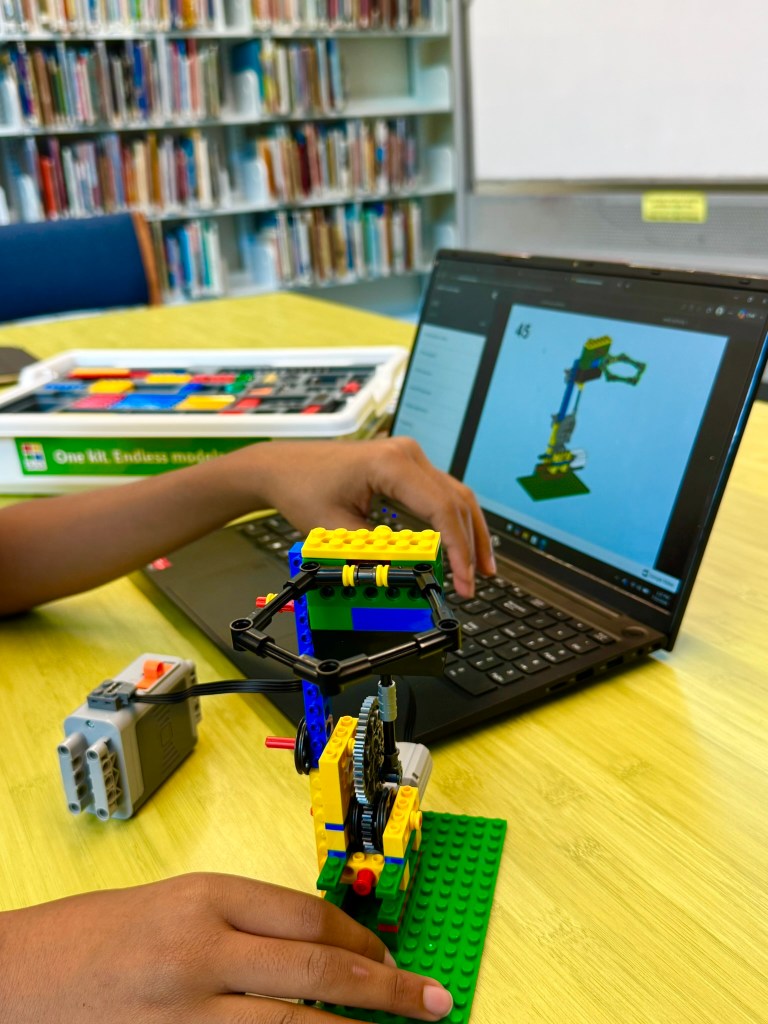
The education gets woven into that.
And as a homeschool mom, that’s exactly the kind of curriculum I want more of.
I don’t want every subject to require convincing.
Sometimes I want to put the materials on the table and watch curiosity take over.
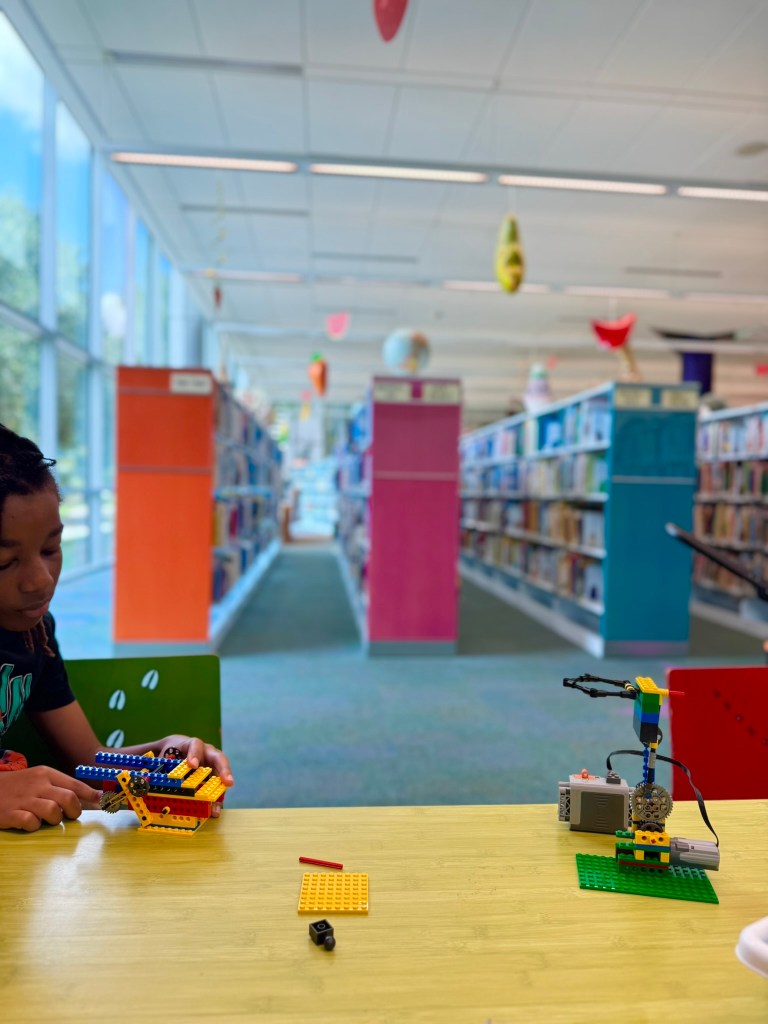
iBrick and Timberdoodle
We discovered iBrick through Timberdoodle, where it was included as part of our homeschool curriculum kit.
And honestly, this is one of the reasons I’ve enjoyed exploring Timberdoodle’s curriculum choices.
A complete homeschool education doesn’t have to mean math book, science book, language arts book, repeat.
There is room for building.
Creating.
Engineering.
Problem-solving.
And figuring out why the thing you just built isn’t moving until you realize one tiny gear is in the wrong place. 😂
For a child who genuinely loves to build, iBrick gives that interest a place in the school day instead of treating it as something they only get to do after school is finished.
And that may be my favorite thing about it.
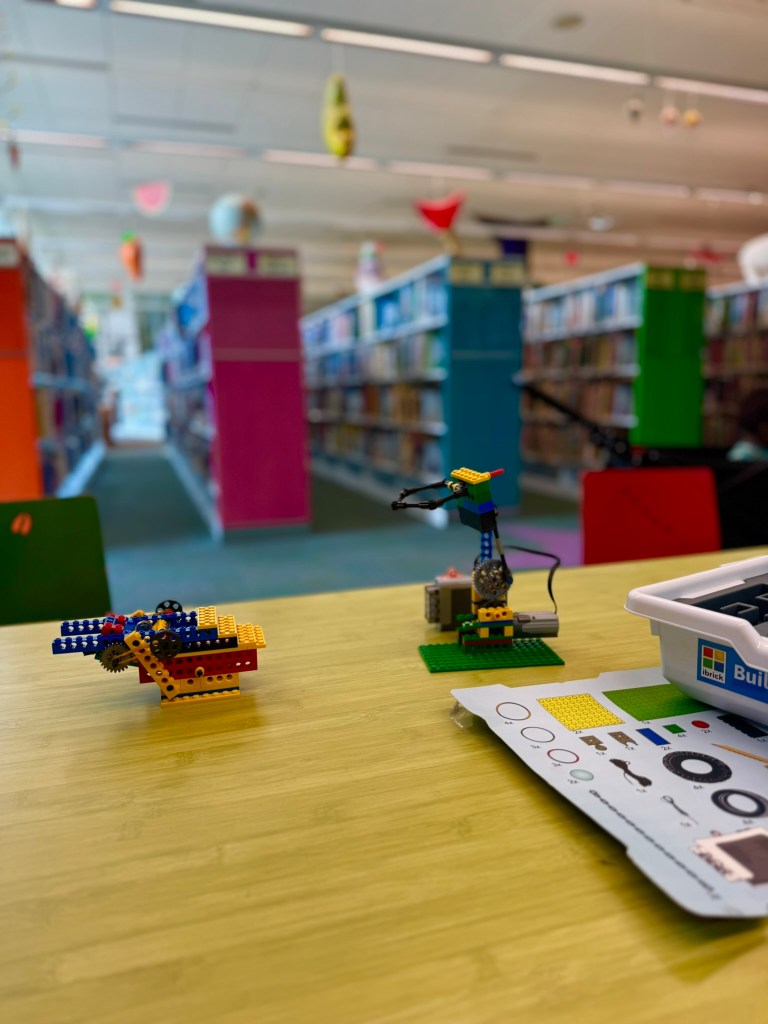
Is iBrick Worth It?
For a hands-on learner or a child interested in building and engineering, yes, I think iBrick is absolutely worth considering.
It combines a reusable building kit with structured digital lessons and STEM challenges, so it offers much more longevity and educational value than a single-build activity.
But the biggest win in our house?
He wanted to do it.
And sometimes that is the best homeschool curriculum review I can give.
You can find iBrick through Timberdoodle and see how it fits into their homeschool curriculum kits here: click here.
-
Hot Wheels Monster Trucks Live: What to Expect at the Glow-N-Fire Show
Our family received complimentary admission to Hot Wheels Monster Trucks Live. All opinions and experiences shared in this post are our own. This post may also contain affiliate links, which means I may receive a small commission if you purchase through one of my links, at no additional cost to you.
There are certain childhood experiences you already know your kids will talk about for years.
For our family, Hot Wheels Monster Trucks Live: Glow-N-Fire became one of those experiences before the actual show had even started.
We surprised our children with tickets to see Hot Wheels Monster Trucks Live at the Smoothie King Center in New Orleans. They thought we were heading into the city early for one of my work events, so they had absolutely no idea what was waiting for them.
The moment they realized they were about to see real-life Hot Wheels monster trucks, the entire morning changed.
And somehow, the experience became even more exciting than I expected—not only for the kids, but for me too.
Between walking beside the enormous trucks, meeting the drivers, collecting autographs, watching freestyle stunts and seeing the arena transform for Glow-N-Fire, this was much more than a traditional monster truck show.
Here is everything families should know before attending Hot Wheels Monster Trucks Live, including whether the Pre-Show Party is worth adding to your tickets.
Related Posts:
- Monster Jam Birthday Party Ideas
- Camping Themed Birthday Party Ideas
- Great Wolf Lodge Tween Birthday Review
What Is Hot Wheels Monster Trucks Live?
Hot Wheels Monster Trucks Live is a touring family show that brings some of the most recognizable Hot Wheels monster trucks from the toy aisle into a full-size arena.
Instead of watching miniature versions race across the living-room floor, children get to see enormous Hot Wheels trucks perform competitions, jumps, stunts and freestyle routines right in front of them.
The 2026 Glow-N-Fire tour features an enhanced production with theatrical lighting, glowing monster trucks, pyrotechnic effects and high-energy arena action.
The tour also introduced Rhinomite, a blue-and-white rhino-themed truck that quickly became one of our favorites.
Our New Orleans event included recognizable trucks such as:
- Rhinomite
- Mega Wrex
- Tiger Shark
- Bone Shaker
- Bigfoot
- HW 5-Alarm
The truck lineup may vary by city, so it is always a good idea to check the event listing for your specific tour stop before attending.
Our Hot Wheels Monster Truck Surprise
This experience was already special because our children did not know where we were taking them.
They thought we were heading to New Orleans for a brand event happening later that week. We allowed them to believe that right up until the moment we arrived.
Watching their expressions change when they realized they were going to a Hot Wheels monster truck show was priceless.
Our preschooler was especially excited, he’s also the reason we were interested in the first place. He is a monster truck fanatic. We even through him a monster truck inspired birthday party this past year.
He was a little shy when it was time to meet the drivers, but you could see how much the experience meant to him.
He carried his autograph sheet from truck to truck, posed for pictures and gave the drivers his serious little thumbs-up. By the end of the Pre-Show Party, that autograph sheet had become one of the most meaningful souvenirs we could have brought home.
We are framing it.
Not because it was expensive or elaborate, but because it represents one of those days when childhood felt enormous.
What Is the Hot Wheels Monster Trucks Live Pre-Show Party?
The Hot Wheels Pre-Show Party is an optional experience held on the arena floor before the main show.
Guests are able to walk around the performance area, see the Hot Wheels monster trucks up close, meet participating drivers, take photos and collect autographs. Pre-Show Party access is generally sold as a separate add-on to the main event ticket and may sell out.
For our Saturday morning New Orleans show, the Pre-Show Party was scheduled from 9:00 to 10:15 a.m., with the main show beginning at 11:30 a.m.
We arrived later than we originally planned, and I was worried that we had missed too much of it.
Thankfully, the experience continued long enough for us to walk around, see the trucks and collect the autographs that mattered most to our son. We were heading toward our seats at around 10:30 that morning.
That timing may not happen at every event, so I would still recommend arriving as close to the official start time as possible. We simply happened to get lucky.
Is the Hot Wheels Pre-Show Party Worth It?
For our family, yes—the Pre-Show Party was one of the best parts of the entire experience.
The main Hot Wheels monster truck show is exciting, but the preshow gives children a completely different perspective.
Once the show begins, the trucks appear huge from your seat. During the Pre-Show Party, you can stand close enough to see the scratched paint, enormous tires, suspension systems, frames and mechanical details.
You begin to understand just how massive these vehicles really are.
The tires were taller than our children. The inner frames looked like something from an engineering exhibit. Even as an adult who did not grow up obsessed with monster trucks, I found myself stopping to study how everything was built.
It was exciting for me too.
Meeting the Hot Wheels Monster Truck Drivers
The driver meet-and-greets made the Pre-Show Party feel incredibly personal.
Several drivers were stationed beside their trucks, where they signed autograph sheets, greeted children and posed for photos.
Our kiddo met the drivers associated with Rhinomite, Mega Wrex, Bone Shaker, Tiger Shark, Bigfoot and HW 5-Alarm. Each interaction only lasted a few moments, but no one made him feel rushed.
He was quiet and serious through most of it, which is how he reacts when he is truly overwhelmed with excitement. The drivers still met him at his level, smiled for his photos and returned every tiny thumbs-up he offered them.
Those pictures now tell the sweetest little story.
He began the Pre-Show Party as a child walking nervously toward these enormous trucks. He ended it holding a page full of autographs from the people who actually drive them.
Seeing Rhinomite Up Close
Rhinomite was one of the first trucks that immediately caught our attention.
The blue-and-white design resembles a giant rhinoceros, complete with a horn, ears and a tail. The enormous orange-rimmed tires and dramatic shape make it look even more impressive in person than it does in photos.
Because we could walk around the truck during the preshow, we were able to see both the decorative body and the heavy-duty frame underneath it.
The contrast is fascinating. From a distance, Rhinomite looks like a giant Hot Wheels toy. Up close, you see the suspension, reinforced bars, engine components and huge tires required to make a truck like this perform inside an arena.
Mega Wrex
Mega Wrex looks like a dinosaur brought to life as a monster truck.
It has a blue-and-green reptilian body, enormous teeth and a shape children can recognize immediately. The truck’s official display described it as a “reptilian creature” with the catchphrase “Smash and roar!”
Naturally, it was a hit with the kids.
The colorful body and oversized mouth make Mega Wrex one of the most visually exciting trucks to photograph during the Pre-Show Party.
Tiger Shark
Tiger Shark combines the shape of a shark with bold orange, black and white markings.
This was another truck that looked completely different once we were standing beside it. Its open mouth, sharp teeth and massive tires make it feel like a creature instead of a vehicle.
During the show, Tiger Shark became even more exciting once the arena lights changed and the trucks began performing.
Bone Shaker
Bone Shaker has one of the most recognizable designs in the Hot Wheels lineup.
The black body, flaming skull and bright red frame give it a classic Hot Wheels look. Seeing the exposed frame and mechanical components made it one of the most interesting trucks to examine up close.
Our preschooler also met the Bone Shaker driver and added another autograph to his growing collection.
Bigfoot
Bigfoot is known as the original monster truck, and its vintage pickup-truck design makes it stand out from the creature-inspired Hot Wheels trucks.

The blue, yellow and red paint looked beautiful under the arena lights. We were able to see the front, rear, wheels and suspension system from only a few feet away.
Bigfoot also gave us some of our best detail photos from the entire morning. Looking underneath the truck helped the kids see that these vehicles are not simply oversized toy designs. They are powerful machines built to withstand enormous jumps and hard landings.

HW 5-Alarm
HW 5-Alarm transforms a bright red fire truck into a giant monster truck.
The truck has flame graphics, silver details and a body resembling a fire department vehicle. Zeus met the driver during the Pre-Show Party and posed with his autograph sheet beside the enormous tire.
This was another moment that made the preshow feel especially worthwhile. Children were not merely seeing the trucks from behind a barrier across the arena. They were meeting the people who would soon drive them during the show.
Activities During the Hot Wheels Pre-Show Party
The trucks and drivers were the main attraction, but there were also interactive areas set up around the arena floor.
Children could stop at activity tables and explore displays connected to the Hot Wheels Monster Trucks Live experience. There were also designated photo areas and truck information signs that introduced families to the personalities and features of each vehicle.
The activities gave children something else to do between autograph lines, although our son was so focused on meeting the drivers that the trucks remained the priority for us.
You Can See the Arena Before the Show Begins
Another fun part of the Pre-Show Party is walking directly onto the same arena floor where the trucks will soon compete.
We could see the ramps, barriers and rows of crushed cars waiting for the show.
Before attending, I imagined the crushed vehicles would be hidden until the performance. Instead, we were able to stand close enough to see exactly how much damage monster trucks can cause.
The roofs were flattened, the windows were gone and the metal had been pushed and folded in every direction.
It made the kids even more eager to see what the trucks would do once the show started.

What Happens Between the Pre-Show Party and the Main Show?
This was one of my biggest questions before attending.
Our Pre-Show Party officially ended more than an hour before the main event was scheduled to begin. I could not imagine how we would keep four children entertained while waiting.
In reality, the transition did not feel nearly as long as I expected.
By the time we finished collecting autographs, took our last photos, walked out of the arena area, used the restroom, visited concessions and found our seats, there was not an uncomfortable amount of time left.
We also purchased one of the souvenir Hot Wheels popcorn buckets. It was practical during the show and gave the kids something fun to bring home afterward.
I would not leave the venue during the break unless you have a particularly long gap and are certain reentry is allowed. The time can move quickly once you begin navigating the concourse with children.
The Hot Wheels Monster Trucks Live Show
Once the lights dimmed, the entire feeling inside the arena changed.
The preshow had been bright and interactive. The main event felt like a full theatrical production.
The trucks entered the arena with dramatic music, colorful lights and glowing details. The audience was introduced to the competitors, and the children could cheer for their favorites as the trucks moved through different rounds of action.
The show included racing, challenges and freestyle performances. The trucks launched from ramps, spun across the floor and drove over obstacles as the audience reacted to every landing.
Even after seeing the vehicles up close, it was hard to understand their true power until we heard their engines inside the arena.
What Makes Glow-N-Fire Different?
Glow-N-Fire adds a nighttime-show feeling inside the arena, regardless of what time the performance begins.
The production uses glowing truck outlines, changing lights, smoke and fire effects to transform the arena floor. Official tour descriptions also highlight enhanced pyrotechnics, theatrical lighting and stunts as defining elements of the Glow-N-Fire experience.
This portion was especially fun because the trucks looked completely different from the way they appeared during the Pre-Show Party.
In daylight, we noticed paint, tires and machinery.
In the dark, they looked like glowing creatures racing across the arena.
The lights traced their body shapes while red, green and blue effects reflected across the floor. At one point, a vehicle released a stream of fire into the air, instantly becoming one of the biggest moments of the show.
There Is More Than Monster Truck Racing
One thing parents should know is that Hot Wheels Monster Trucks Live is not simply a sequence of trucks driving over cars.
The show is built as a complete family production.
Depending on the tour stop, families may also see theatrical characters, transforming vehicles, audience participation, freestyle motocross and other arena entertainment. The official tour describes the experience as including monster truck action, theatrical effects and freestyle motocross stunts.
The variety helped maintain the children’s attention and gave the trucks time to reset between different portions of the show.
Is Hot Wheels Monster Trucks Live Loud?
Yes. This is a real monster truck show, and the engines are extremely loud.
I strongly recommend bringing hearing protection for every child and for any adults who are sensitive to noise.
You may see ear protection available at the venue, but bringing your own ensures that your children have a pair that fits properly. We prefer protective earmuffs for younger children because they stay in place more easily than small earplugs.
Even children who usually tolerate loud environments may be surprised by the sound of multiple monster trucks inside an enclosed arena.
Do not wait until the engines start to put the earmuffs on. Have them ready before the show begins.
Is Hot Wheels Monster Trucks Live Good for Toddlers?
A toddler can enjoy Hot Wheels Monster Trucks Live, but whether it works for your family will depend on your child.
Consider:
- How your toddler responds to loud sounds
- Whether they will wear hearing protection
- How long they can remain seated
- Whether the event occurs near nap or mealtime
- How they respond to flashing lights, smoke and fire effects
Our younger children had plenty to look at, and the show’s colors and movement made it visually engaging. The Pre-Show Party also gave them an opportunity to move around before sitting for the performance.
A stroller policy can vary by arena, so check your specific venue’s rules before leaving home. I did see a couple get turned around for bringing in a wagon.
How Long Is Hot Wheels Monster Trucks Live?
The exact runtime can vary by event and venue.
I recommend planning for several hours at the arena when you combine parking, security, the Pre-Show Party, concessions, finding your seats and the main performance.
Families attending only the main show should still arrive early enough to pass through security and locate their seats without rushing.
When attending the Pre-Show Party, treat Hot Wheels Monster Trucks Live as a half-day family outing rather than a quick show.
What Should You Bring?
We kept our arena bag fairly simple. The most useful items were:
- Hearing protection
- A small clear “baby bag” that followed venue requirements
- A phone or camera
- Portable phone charger
- Baby or toddler necessities
- A little room in the budget for snacks or souvenirs
The autograph sheet was provided during our experience, but availability and materials can vary. Keep the sheet somewhere safe and bring a firm surface or folder if you want to prevent it from bending.
And take more photos than you think you need.
Your children may be too excited to appreciate all the details in the moment, but they will love looking through everything afterward. I know for sure, mine did!
Tips for Attending a Hot Wheels Monster Truck Show With Kids
Arrive early
Even without the preshow, arenas can take time to navigate. Parking, security and concessions can quickly use the extra time you thought you had.
Purchase the Pre-Show Party early
Pre-Show Party access is often sold as an add-on and can sell out.
Put hearing protection on before the engines start
The first loud sound can be startling. Prepare children while the arena is still calm.
Take a photo of your tickets and seating information
Arena service can sometimes become slow when thousands of people are using their phones.
Let your children choose a favorite truck
Cheering becomes even more fun once each child has selected a truck to support.
Prepare for souvenirs
The concession and merchandise areas are exciting for children. Decide what you are comfortable purchasing before arriving.
Photograph the little reactions
Of course, get the big truck pictures. But also capture your children studying the tires, approaching the drivers and holding their autograph sheets. Those photographs may become the ones you love most.
Was Hot Wheels Monster Trucks Live Worth It?
For our family, absolutely.
The show was loud, colorful, exciting and filled with moments our children had never experienced before.
However, the part that made it truly unforgettable was the Hot Wheels Pre-Show Party.
Seeing the trucks at eye level, meeting the drivers and collecting autographs transformed the day from a fun show into a full experience.
Our son did not simply watch Rhinomite, Mega Wrex, Tiger Shark, Bone Shaker, Bigfoot and HW 5-Alarm perform.
He stood beside them.
He met their drivers.
He carried home proof of every interaction on one very special autograph sheet.
There will always be another toy to purchase and another ordinary Saturday to fill. But there are certain opportunities that make childhood feel larger than life.
This was one of them.
And judging by how many times our children have already talked about the trucks, I have a feeling Hot Wheels Monster Trucks Live has officially become one of our family’s core memories.
Get Tickets to Hot Wheels Monster Trucks Live
Hot Wheels Monster Trucks Live continues to visit arenas in cities across the country and internationally. Families can view current tour dates through the official event calendar.
[CHECK HOT WHEELS MONSTER TRUCKS LIVE TICKETS HERE]
Affiliate disclosure: I may receive a commission when tickets are purchased through my link, at no additional cost to you.
When purchasing, check carefully to see whether the Pre-Show Party is included or available as a separate add-on.
Based on our experience, it is absolutely worth considering.
Hot Wheels Monster Trucks Live Frequently Asked Questions
Is Hot Wheels Monster Trucks Live appropriate for kids?
Yes. Hot Wheels Monster Trucks Live is designed as a family entertainment experience. Children who enjoy Hot Wheels, vehicles, dinosaurs, monster trucks or high-energy arena shows will likely find plenty to enjoy.
Is the Hot Wheels Monster Trucks Live Pre-Show Party included with admission?
It may require a separate ticket or add-on, depending on the event. Ticketmaster describes the Pre-Show Party as an add-on available during checkout, so check the details for your specific city.
Can you meet the Hot Wheels monster truck drivers?
The Pre-Show Party gives guests an opportunity to see the trucks up close and meet participating drivers for photos and autographs. Exact appearances may vary by event.
Do children need ear protection at a monster truck show?
Hearing protection is highly recommended. Monster truck engines are very loud, especially inside an enclosed arena.
Can you take pictures at Hot Wheels Monster Trucks Live?
We were able to take personal photos and videos with our phones. Professional camera policies may vary by arena, so check your venue’s rules before bringing detachable lenses or large equipment.
Are there souvenirs available?
Yes. Our venue offered Hot Wheels merchandise and themed concession items, including souvenir popcorn buckets. Offerings and prices may vary by location.
Which Hot Wheels monster trucks are in the show?
The lineup varies, but current tour materials feature trucks such as Rhinomite, Mega Wrex, Tiger Shark, Bone Shaker, Bigfoot, Gunkster and others. Check the official listing for your city before attending.
Is the Glow-N-Fire show different from a regular monster truck show?
Glow-N-Fire adds theatrical lighting, illuminated trucks, pyrotechnic effects and other production elements to the monster truck performance
Be sure to pin this post for later…
-
Subscribe
Subscribed
Have a WordPress.com account? Log in now.

