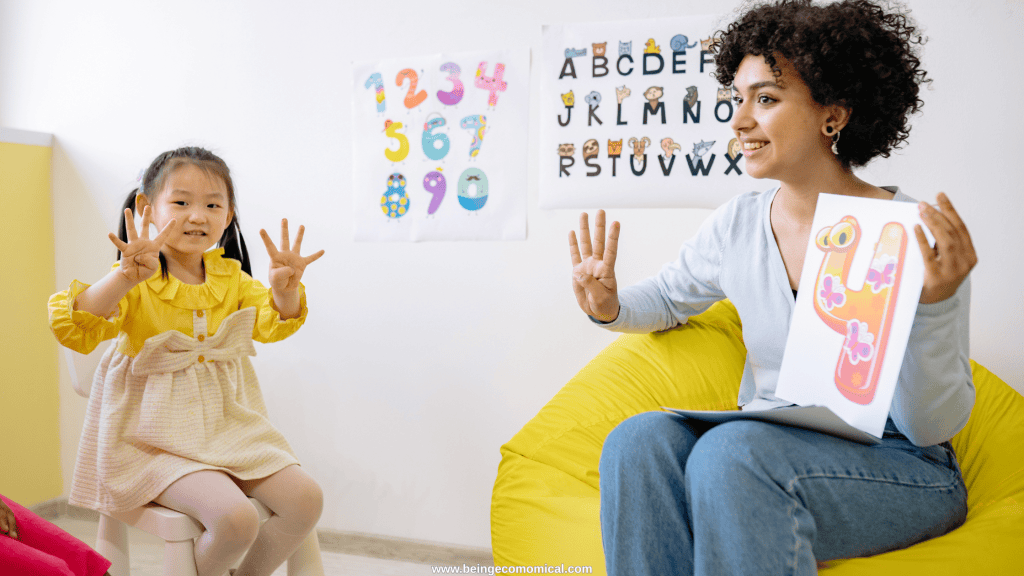
If you’re wondering how to homeschool preschool, here’s the first thing I want you to know: you do not have to recreate a traditional classroom inside your house.
Your preschooler doesn’t need to sit at a desk for hours. You don’t need an elaborate homeschool room, a color-coded lesson planner, or a different worksheet for every subject.
Preschool at home can actually be pretty simple.
At this age, so much learning happens through reading, talking, playing, moving, creating, counting, exploring, and doing everyday life with you.
As a former classroom teacher and now a homeschool mom, I’ve learned that one of the biggest advantages of homeschooling preschool is being able to meet your child where they are.
Some preschoolers love sitting down with a workbook. Others would much rather count dinosaurs, build something, paint, run outside, or practice letters for five minutes before they’re ready to move on.
Both can learn.
So if you’re ready to start homeschooling preschool but aren’t quite sure what you’re actually supposed to do all day, here’s how I would keep it simple.
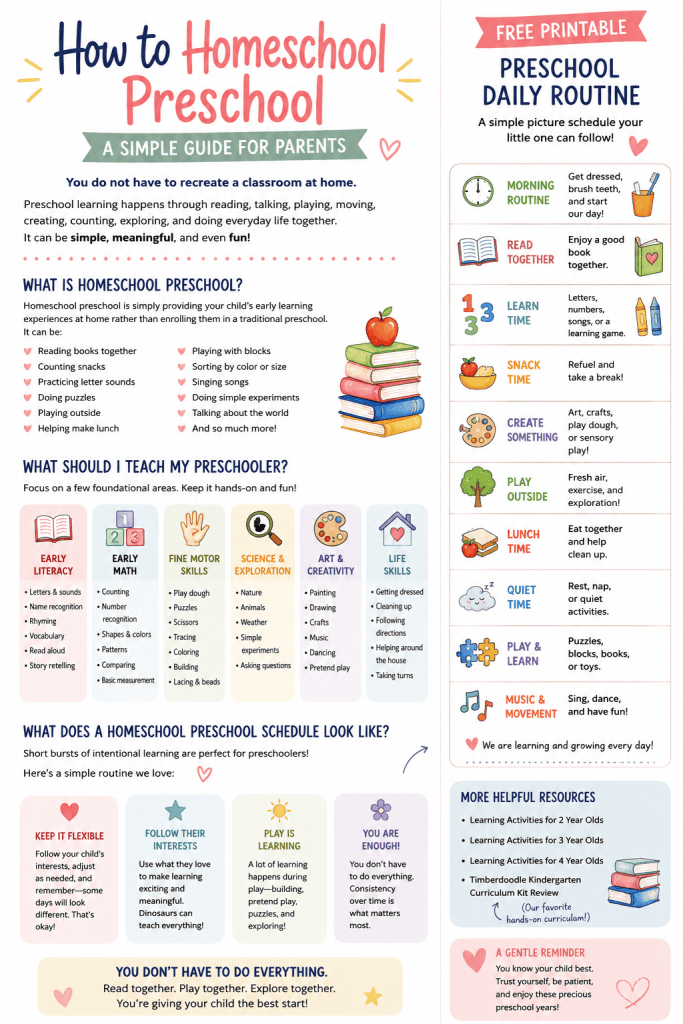
What Is Homeschool Preschool?
Homeschool preschool is simply providing your child’s early learning experiences at home rather than enrolling them in a traditional preschool program.
And “school” at this age can look very different from what we typically imagine.
It can be:
- Reading books together
- Counting snacks
- Practicing letter sounds
- Doing puzzles
- Coloring and painting
- Playing with blocks
- Sorting objects by color or size
- Going to the library
- Helping make lunch
- Playing outside
- Practicing scissors
- Singing songs
- Doing simple science experiments
- Talking about the things you see during a walk
You can absolutely use a preschool homeschool curriculum, but you don’t have to turn every moment into a formal lesson.
Preschool is a wonderful time to introduce learning while still leaving plenty of room for play.
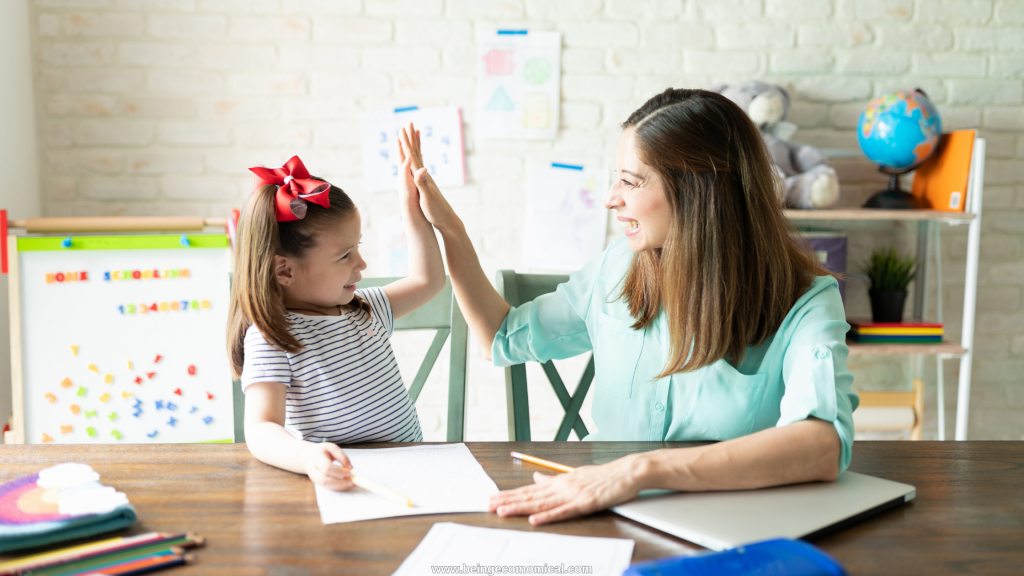
What Age Should You Start Homeschool Preschool?
Most families think of preschool as roughly ages 3 to 4, with Pre-K typically happening the year before kindergarten.
But I wouldn’t get too caught up in the exact age.
A newly three-year-old and an almost-five-year-old can have completely different abilities, attention spans, interests, and needs.
Start with what your child can currently do and build from there.
If you have a younger preschooler, you may also want to read my Learning Activities for 2 Year Olds and Learning Activities for 3 Year Olds posts.
And if your child is closer to kindergarten, I have an entire list of Learning Activities for 4 Year Olds that gives you plenty of easy ideas to work into your homeschool routine.
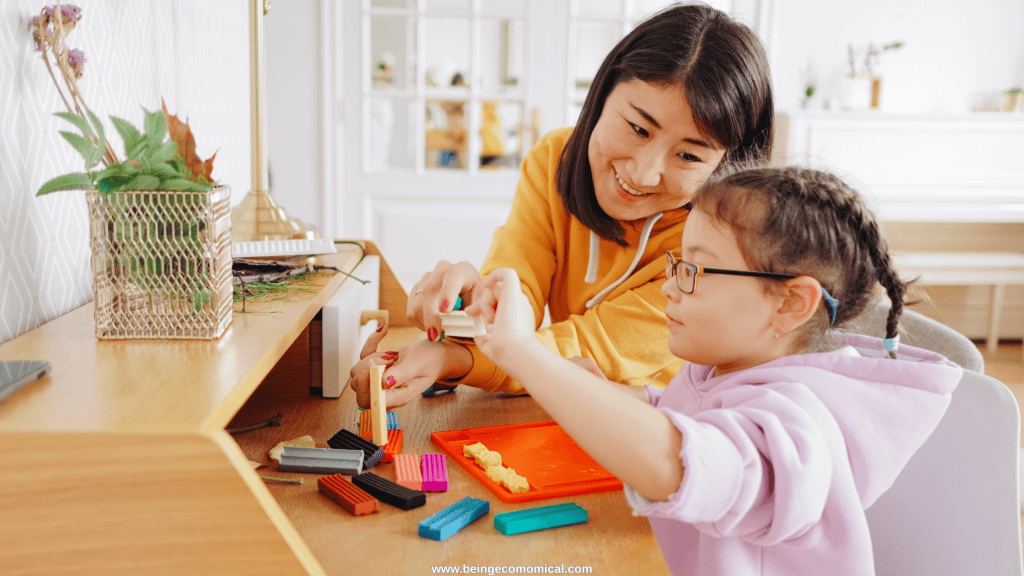
What Should I Teach My Preschooler at Home?
This is usually the biggest question.
And you don’t need 12 preschool subjects.
I would focus on a handful of foundational areas.
Early Literacy
For preschool, early literacy can include:
- Recognizing letters
- Learning letter sounds
- Recognizing their own name
- Practicing writing their name
- Listening to stories
- Retelling simple parts of a story
- Learning rhyming words
- Building vocabulary
- Talking about characters and pictures in books
One of the easiest things you can do is simply read aloud every day.
And don’t underestimate all the learning that happens when your preschooler wants to read the same book 47 times.
Repetition is doing a lot of work behind the scenes.
Early Math
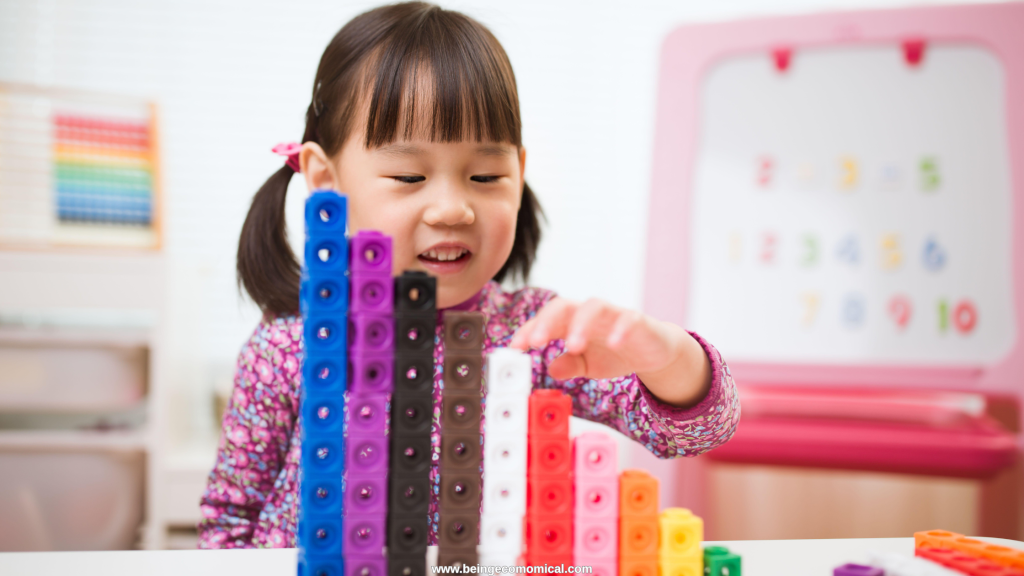
Preschool math can be very hands-on.
Work on things like:
- Counting
- Number recognition
- One-to-one correspondence
- Shapes
- Colors
- Sorting
- Patterns
- Comparing more and less
- Big and small
- Simple measurement
- Basic positional words like above, below, beside and behind
You don’t always need a worksheet.
Count blueberries at snack time. Sort LEGO pieces. Make patterns with blocks. Count stairs. Find circles around the house.
That’s math too.
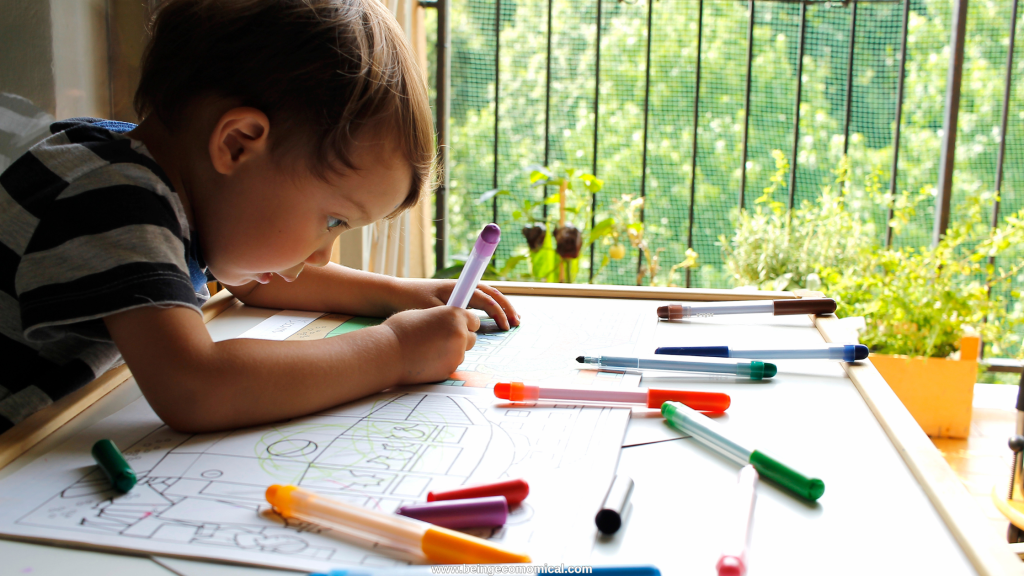
Fine Motor Skills
Fine motor development is a huge part of preschool learning because children are still building the hand strength and coordination they’ll eventually use for writing.
Try:
- Play dough
- Puzzles
- Stickers
- Lacing activities
- Tongs
- Beads
- Painting
- Cutting with child-safe scissors
- Building blocks
- Drawing
- Tracing
- Using crayons and markers
If your preschooler isn’t interested in writing pages of letters yet, that doesn’t mean you can’t prepare those little hands for writing in other ways.
Science and Exploration
Preschool science does not need to be complicated.
Let them investigate the world.
You can explore:
- Weather
- Seasons
- Animals
- Plants
- Bugs
- The human body
- Magnets
- Sink-or-float activities
- Baking
- Nature
- Simple experiments
Ask questions.
“What do you think is going to happen?”
“Why do you think that happened?”
“What do you notice?”
Sometimes the conversation is the lesson.
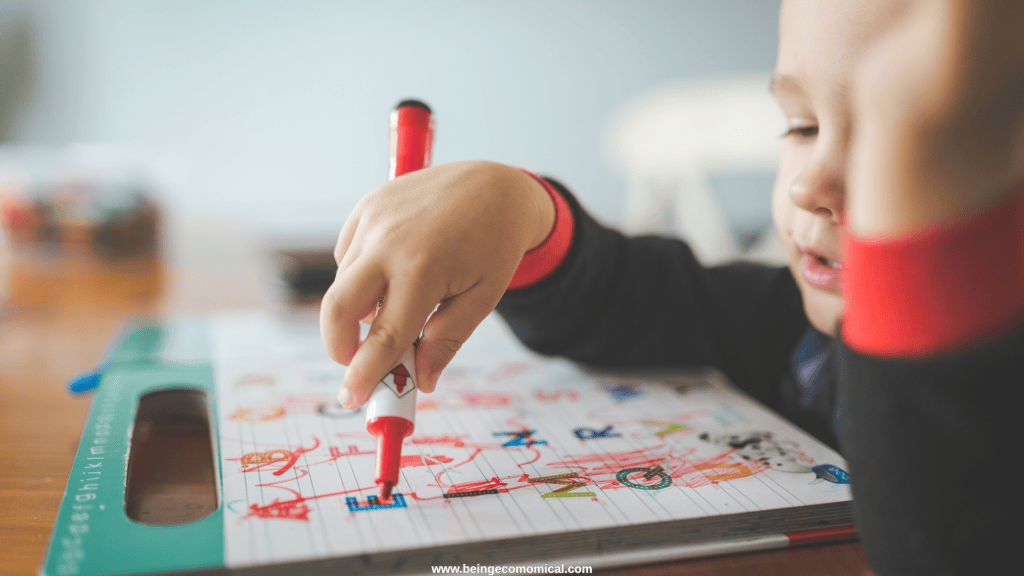
Art and Creativity
Make room for:
- Painting
- Drawing
- Coloring
- Crafts
- Music
- Dancing
- Building
- Pretend play
- Open-ended art
You do not need every craft to turn into something Pinterest-worthy.
Sometimes a piece of construction paper, glue, markers and a pile of random craft supplies is enough.
Life Skills
This is one area I think we sometimes forget to count as “school.”
Preschoolers are also learning how to:
- Get dressed
- Clean up
- Put toys away
- Wash their hands
- Help prepare simple foods
- Carry their plate to the sink
- Follow two-step directions
- Take turns
- Wait
- Ask for help
- Take care of their belongings
- Help around the house
Those are valuable skills too.
Do You Need a Preschool Homeschool Curriculum?
No.
But you might want one.
There is a difference.
A good preschool curriculum can make homeschooling easier because you’re not waking up every morning thinking, Okay…what am I teaching today?
That’s one reason I like having an actual curriculum available even though we still do plenty of informal learning throughout the day.
A curriculum can give you:
- A sequence of skills
- Activities already planned
- Books and materials
- Hands-on learning ideas
- A general idea of what to work on next
You can still skip activities, slow down, repeat something, or take an entire day off.
Curriculum should be a tool, not something running your house.
The Preschool/Kindergarten Curriculum We Use
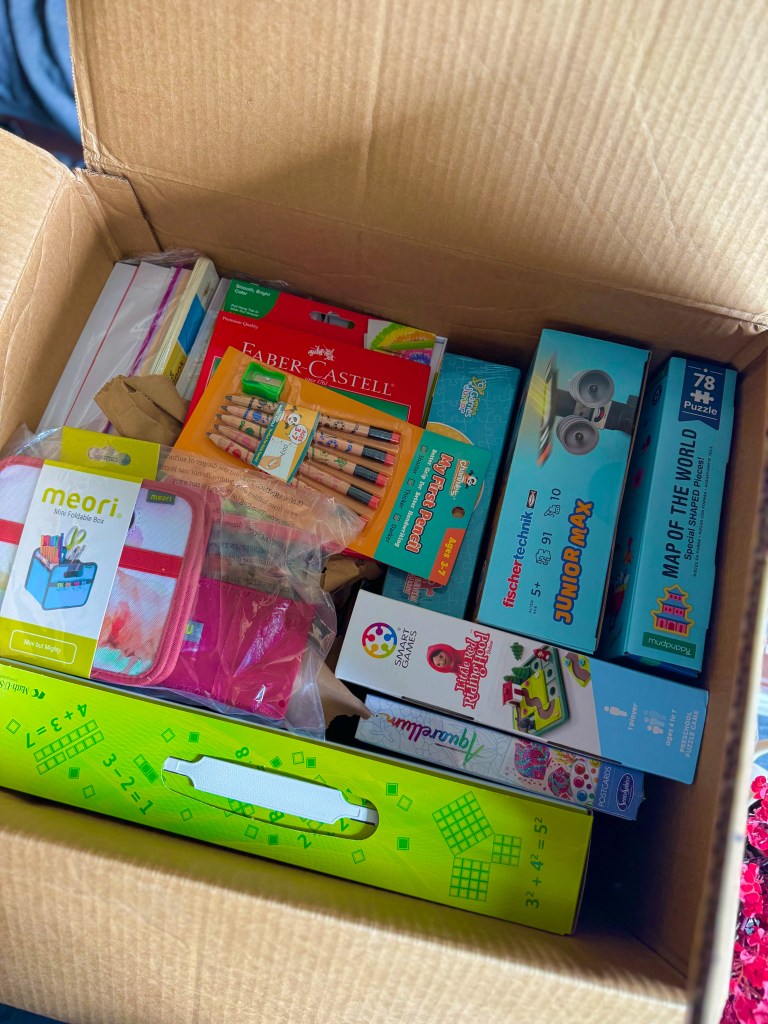
We’ve also been using the Timberdoodle Kindergarten Curriculum Kit, which I love because it includes so many hands-on materials instead of relying solely on worksheets.
There are games, thinking activities, books, manipulatives and other resources that allow me to work learning into our day in different ways.
You can read my full Timberdoodle Kindergarten Curriculum Kit review and unboxing here.
Even if your child isn’t doing a full kindergarten workload yet, having quality materials available can give you plenty to pull from based on what they’re ready for.
What Does a Homeschool Preschool Schedule Look Like?
Here’s where I want parents to release themselves from the idea that preschool needs to run from 8:00 a.m. until 3:00 p.m.
It doesn’t.
In our house, I prefer short bursts of intentional learning throughout the day rather than expecting a young child to sit through long lessons.
Your entire preschool day might contain only a few short periods of structured learning.
For example:
Simple Homeschool Preschool Routine
Morning
Breakfast
Get dressed and morning routine
Read aloud
10-15 minutes of literacy
Short math activity or game
Late Morning
Snack
Hands-on activity, craft or sensory play
Free play
Outside time
Afternoon
Lunch
Quiet time or nap
Books, puzzles or educational toys
Art, music or another relaxed activity
And you’re done.
Really.
You can even spread the structured activities throughout the day rather than completing them all together.
A preschooler who happily works for 10 minutes and comes back later for another activity is still learning.
You don’t win an award for making them sit for 45.
How Long Should Preschool Homeschool Take?
This will depend on the child.
I wouldn’t judge your homeschool preschool day by how many hours your child spends sitting at a table.
Instead, think about how much learning is happening throughout the entire day.
A short phonics activity + a counting game + two books + helping you cook + building a giant block tower + playing outside can make for a very full preschool learning day.
Some days your child may want to keep going.
Some days they’ll be completely uninterested.
Welcome to preschool.
Consistency over time matters more to me than forcing a perfect school day every single day.
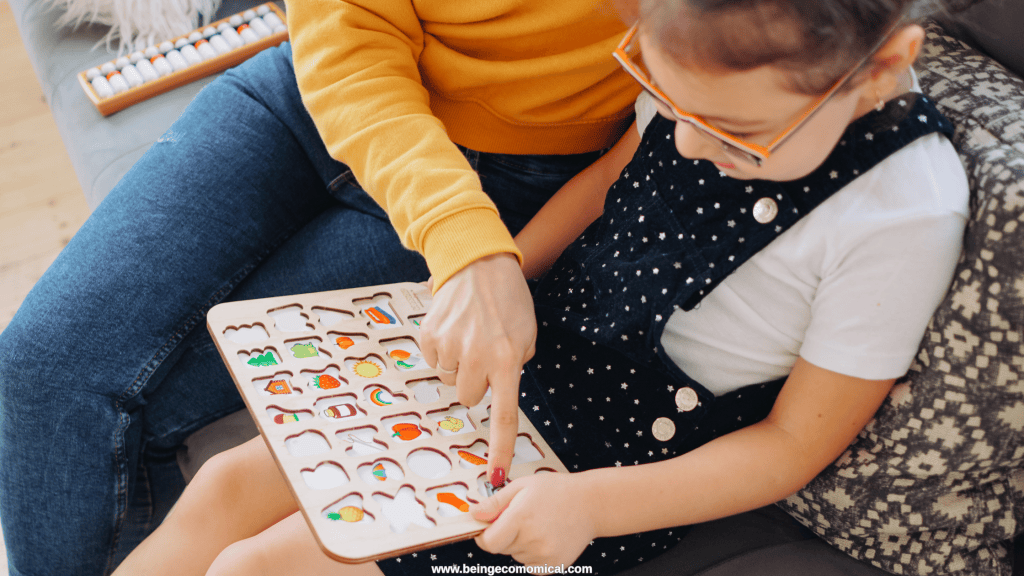
What If My Preschooler Doesn’t Want to Sit and Learn?
First: I wouldn’t automatically assume they’re not interested in learning.
They may just not be interested in learning that way.
This is where homeschooling becomes really useful because you can change the method.
If sitting down to practice numbers isn’t working, try:
- Jumping onto numbered pieces of paper
- Counting cars
- Building towers with a certain number of blocks
- Finding numbers around the house
- Counting while going up stairs
If writing letters isn’t happening today, try:
- Magnetic letters
- Letter puzzles
- Finger tracing
- Drawing letters in sand
- Making letters from play dough
- Finding letters in a favorite book
And if you get five focused minutes?
Use the five minutes.
You can come back later.
Young children don’t have to learn like older children.
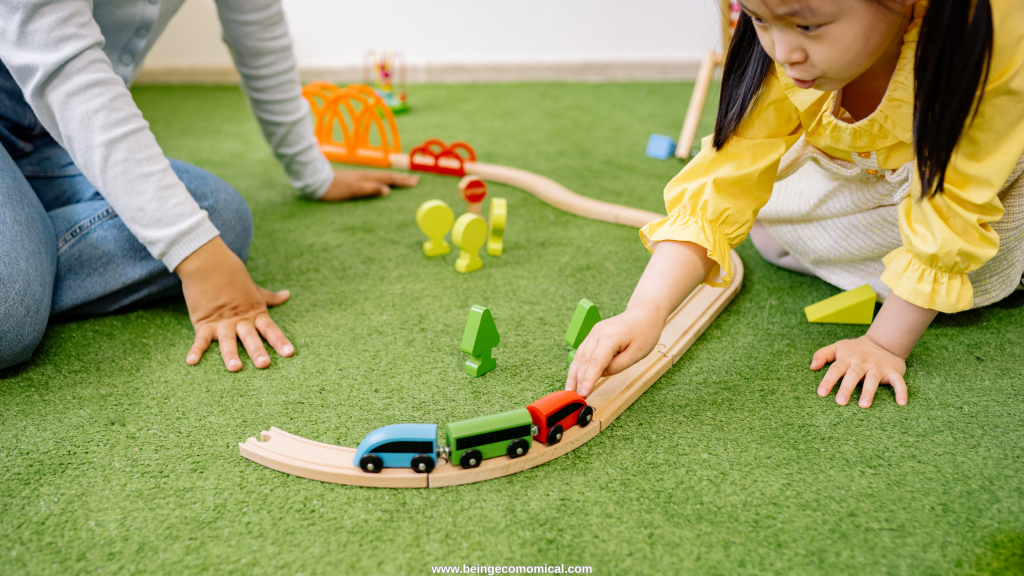
Use Your Preschooler’s Interests
This is one of my favorite homeschool tricks.
If your child currently loves dinosaurs, suddenly dinosaurs can teach almost everything.
Sort dinosaurs.
Read dinosaur books.
Draw dinosaurs.
Talk about herbivores and carnivores.
Make dinosaur footprints.
Measure dinosaurs.
Practice the letter D.
If it’s cars, superheroes, princesses, animals, space, bugs or construction trucks, use that.
You already have their attention.
Now sneak some learning into it.
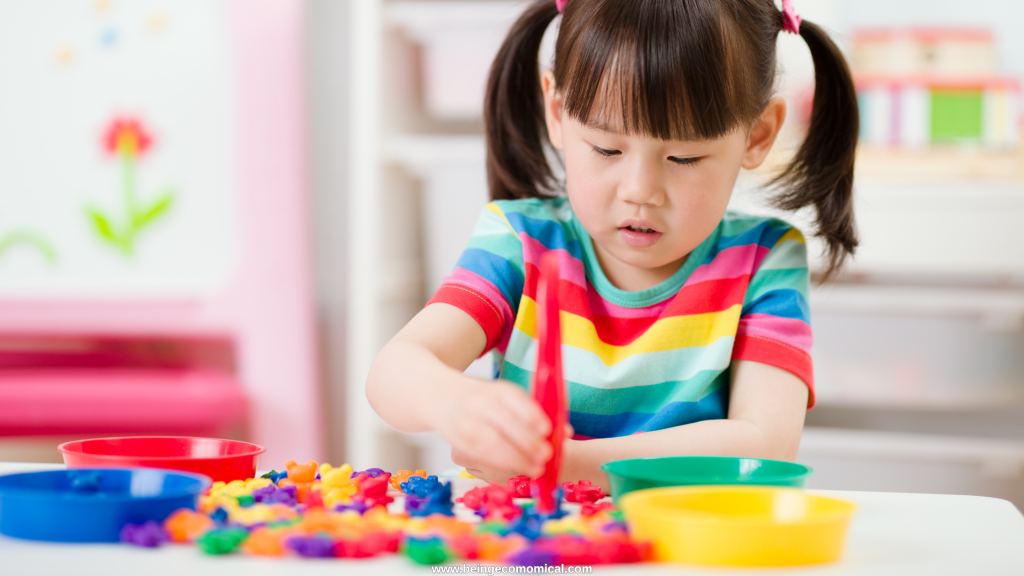
Don’t Forget Play
Play is not what preschoolers do after they’re finished learning.
A lot of learning happens during play.
While building with blocks, children are experimenting with balance, size, shapes and spatial relationships.
During pretend play, they’re practicing language, storytelling, cooperation and problem-solving.
While completing puzzles, they’re working on visual discrimination and persistence.
Even something that looks incredibly ordinary to us can involve a lot of thinking for a preschooler.
You can provide intentional learning opportunities without feeling like you need to direct every minute of their day.
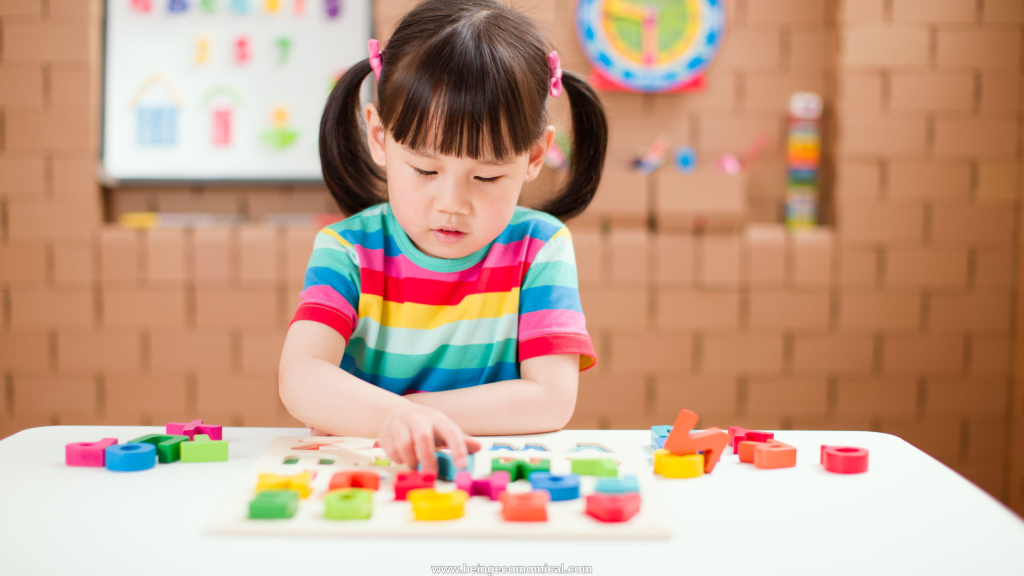
A Simple Weekly Preschool Homeschool Plan
If planning each day feels overwhelming, plan the week instead.
You could choose:
Monday: Letters + counting + art
Tuesday: Reading + shapes + sensory play
Wednesday: Letters + simple science + outdoor learning
Thursday: Numbers + fine motor activity + art
Friday: Review + library, baking, nature walk or field trip
And of course, keep reading throughout the week.
You can make this as structured or relaxed as your family needs.
What Supplies Do You Need to Homeschool Preschool?
You don’t need to buy an entire classroom.
I’d start with:
- Crayons
- Washable markers
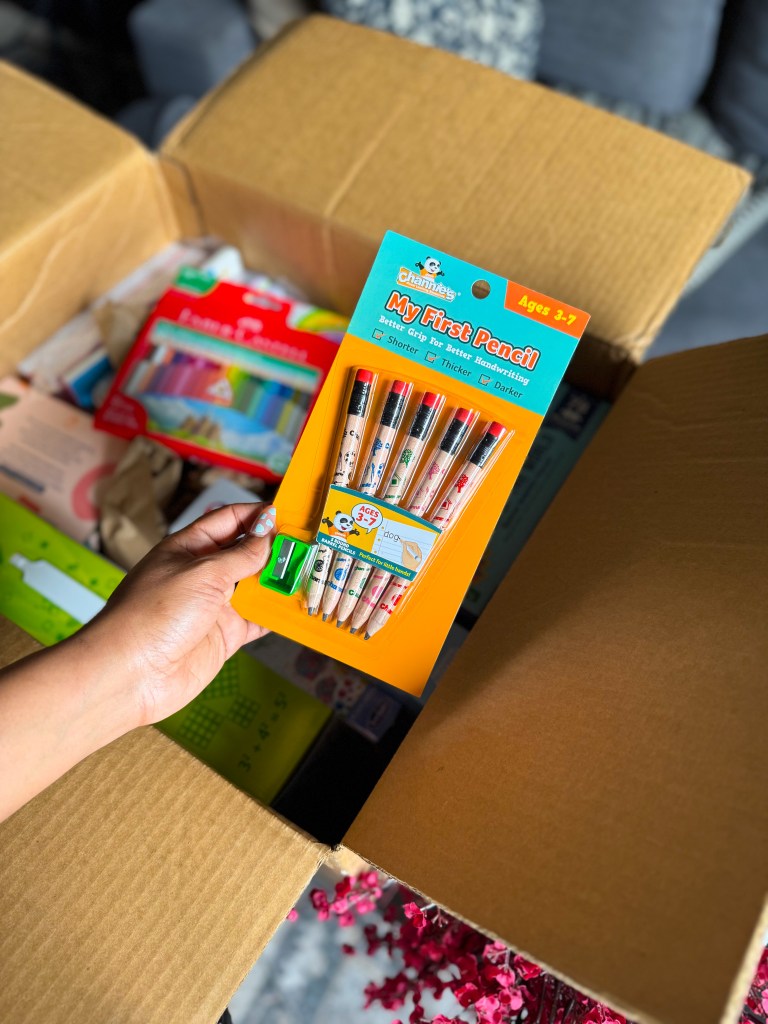
- Pencils
- Construction paper
- Child-safe scissors
- Glue sticks
- Play dough
- Counting manipulatives
- Blocks
- Puzzles
- Magnetic letters
- A few preschool workbooks
- Picture books
- Simple art supplies
Then add materials as you discover what your child actually enjoys.
Because there is nothing like buying a beautiful $40 preschool activity only to learn your child is far more interested in the cardboard box it arrived in.
Take Learning Outside the House
Homeschool preschool doesn’t have to happen exclusively at home either.
Take advantage of:
- Libraries
- Children’s museums
- Zoos
- Aquariums
- Parks
- Nature centers
- Farms
- Community events
- Homeschool groups
- Playdates
- Grocery shopping
- Family trips
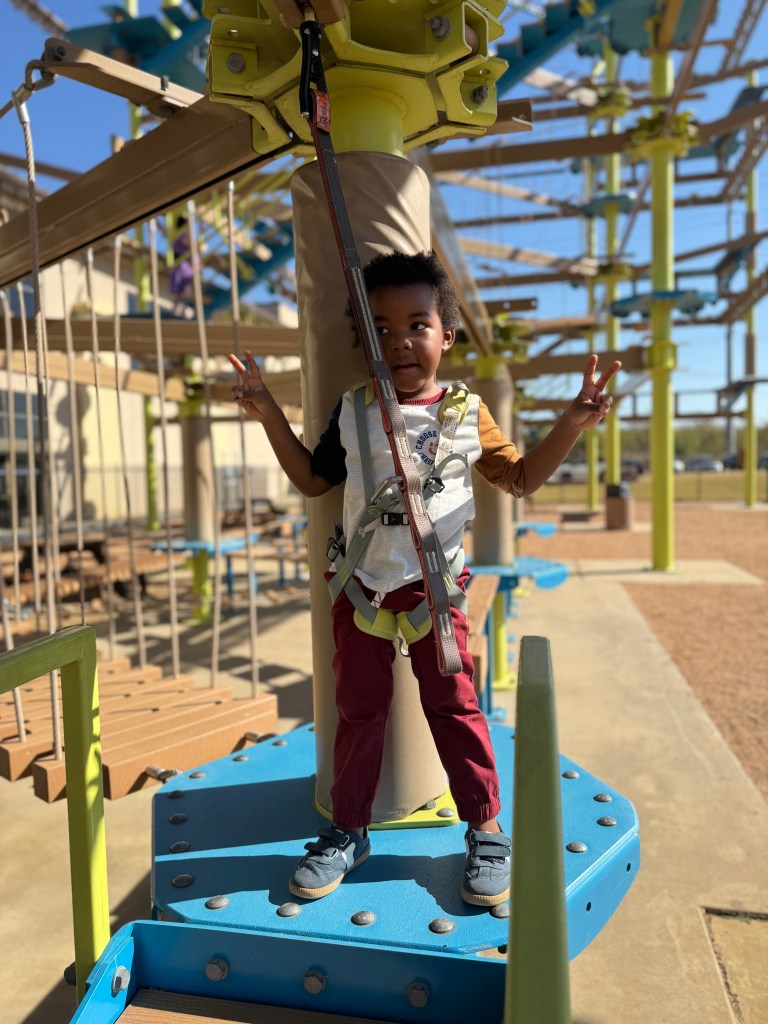
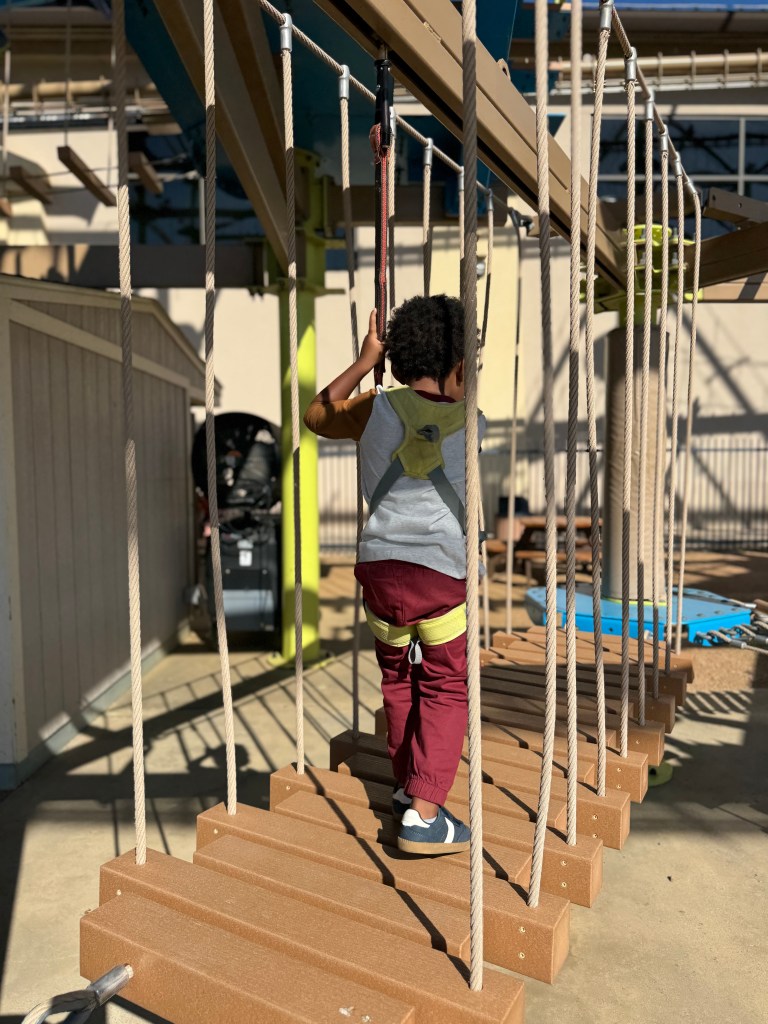
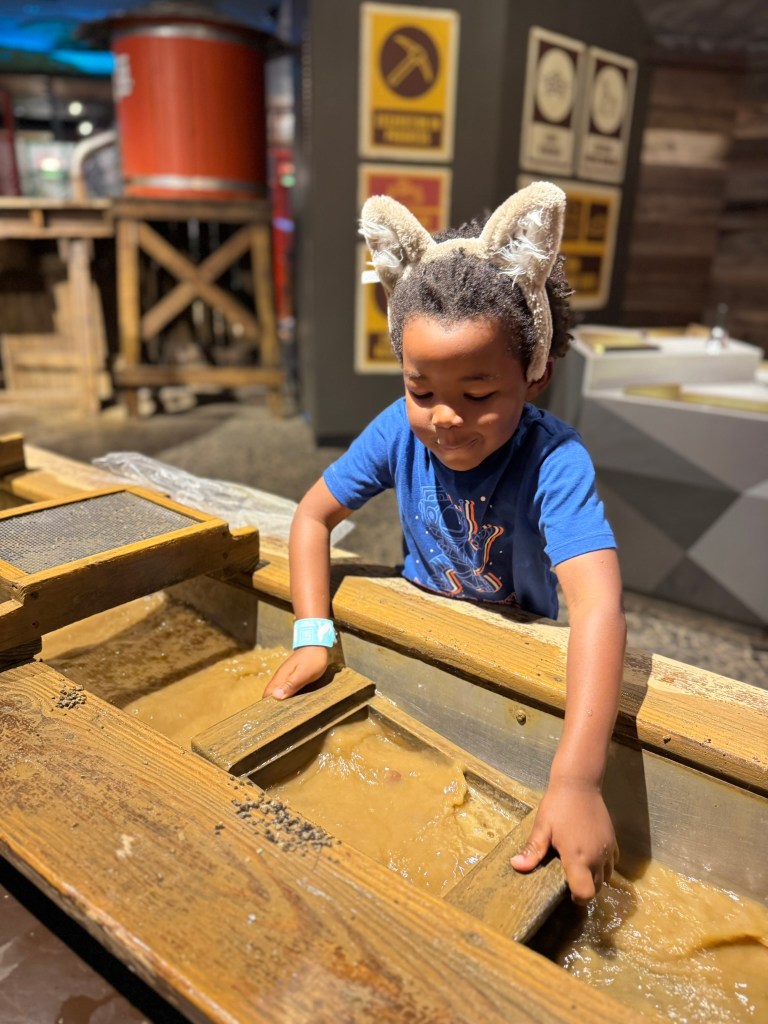
One of the things I love about homeschooling is realizing how much learning happens when we’re simply out experiencing the world.
A zoo trip can turn into animal science.
Grocery shopping involves counting, colors, categories, money and conversation.
Cooking involves measurement and following directions.
You don’t have to label every experience educational for it to count.
What About Socialization?
Your preschooler does not have to attend a traditional preschool classroom to interact with other children and adults.
Look for opportunities through:
- Library story times
- Homeschool groups
- Sports
- Church or community groups
- Playdates
- Classes
- Parks
- Children’s museums
- Family activities
- Neighborhood friends
Homeschooling doesn’t mean staying home.
Quite the opposite around here.
How Do I Know If I’m Doing Enough?
This is probably one of the hardest parts of homeschooling, especially at the beginning.
There will always be another activity you could do.
Another printable.
Another workbook.
Another curriculum.
Another mom on Pinterest whose four-year-old appears to be performing long division beside a perfectly organized sensory bin.
You don’t need to do everything.
Ask yourself:
Is my child making progress?
Are we reading?
Are we talking?
Are they playing?
Are they being exposed to letters and numbers?
Are their fine motor skills developing?
Are they becoming more independent?
Are they curious?
Are we giving them opportunities to explore?
That’s a much better picture of preschool than checking off 27 worksheets before lunch.
Homeschool Preschool Doesn’t Have to Be Complicated
If you’re trying to figure out how to homeschool preschool, start small.
Read together.
Practice letters and numbers.
Give them opportunities to create.
Let them move.
Go outside.
Play games.
Work on everyday life skills.
Add a curriculum if having a roadmap makes your life easier.
And most importantly, give yourself permission to adjust as you learn your child.
You don’t have to make your home look like school to give your preschooler a wonderful education.
In fact, one of the best parts about homeschooling is that you don’t have to.
More Preschool Learning Ideas
If you need ideas for what to actually do with your preschooler next, I’ve already put together tons of age-specific learning activities:
Learning Activities for 2 Year Olds – simple early learning ideas for toddlers who are ready to explore.
Learning Activities for 3 Year Olds – hands-on preschool activities for letters, numbers, fine motor skills, sensory play and more.
Learning Activities for 4 Year Olds – preschool and Pre-K activities for children getting closer to kindergarten.
And if you’re looking for a more complete homeschool option, don’t miss my Timberdoodle Kindergarten Curriculum Kit review to see exactly what came in our kit and how we’re using it at home.
Pin these for later…


Leave a Reply